Prof. Dr. Gudrun Oevel serves as an Adjunct Professor and CIO at the University of Paderborn , leading the Center for Information and Media Services (ZIM) . She also acts as an Information Security Officer since 2020. Appointed Adjunct Professor at University of Paderborn (2012) Role as CIO since 2012, advising on digitalization strategy Information Security Officer since 2020 Her research areas focus on: Technical and organizational implementation of E-Science and E-Learning Digital transformation in higher education Design of socio-technical infrastructures Open Educational Resources (OER) and digital editions Notable scientific awards include: DFG Postdoc Scholarship (1991-1993) for developing a graphics module for MuPAD Förderpreis (1987) for diploma thesis She actively contributes to scientific organizations : DFG NFDI Expert Panel (since 2019) Executive Board of ZKI e.V. (since 2015) Advisory Board of Deutsche Nationalbibliothek (since 2018)
James Shackleford serves as Associate Professor and Interim Associate Dean for Enrollment Management and Graduate Education in the Department of Electrical and Computer Engineering at Drexel University. His research bridges medical image processing, high performance computing, and emerging neuromorphic architectures with significant contributions to radiation therapy applications. Education: PhD in Electrical Engineering, Drexel University, 2011 MS in Electrical Engineering, Drexel University BS in Electrical Engineering, Drexel University Research Focus: Professor Shackleford's work centers on GPU-accelerated medical image registration (forming the core of the open-source Plastimatch software), real-time tumor motion management for radiation therapy, and digital spiking neuromorphic systems . His research integrates computer vision, machine learning, and embedded systems to solve clinical imaging challenges. Publication Trends: Recent work (2020-2024) reveals dual research trajectories: (1) advancing deformable image registration through CycleGAN-based domain adaptation for CT auto-segmentation in radiation oncology, and (2) pioneering neuromorphic computing with configurable hardware architectures, dataflow-based compilers, and resource-aware neural network mapping. These streams converge on high-performance solutions for medical imaging and efficient neural processing.
Dr. Walter McDonald is an Associate Professor in the Department of Civil, Construction and Environmental Engineering at Marquette University . He specializes in water resources engineering, with a strong focus on stormwater management, hydrology, and environmental monitoring. His work integrates remote sensing, machine learning, and green infrastructure to address urban water challenges. Education: Ph.D. in Civil Engineering, Virginia Tech (2016) M.S. in Civil Engineering, Texas A&M University (2012) B.S. in Civil Engineering, Texas Tech University (2010) Research Interests: Dr. McDonald’s research is centered on urban water systems , particularly the impact of stormwater on environmental and public health. His work spans the use of green infrastructure to mitigate pollution, the detection and modeling of emerging contaminants such as antibiotic resistance genes, microplastics, and PFAS, and the application of drone-based remote sensing and machine learning for real-time monitoring of water systems. Scientific Awards: Way Klingler Early Career Award from Marquette University (April 2022) Grants and Funding: NSF Water Equipment & Policy I/UCRC – Principal Investigator on "Remote sensing and machine learning to assess urban watershed best management practices (Phase II)" ($89,962, 2024) U.S. Department of Defense Engineering Research and Development Center – Co-PI on "Novel Technologies to Mitigate Water Contamination for Resilient Infrastructure – Phase II" ($3.8M, 2022–2024) NSF STTR – PI on "Machine learning and video-based sensor for measuring sewer flows" ($256,000 total; $138,926 to MU, 2022–2024) NSF Water Equipment & Policy I/UCRC – PI on "Determining flow rates and flow sources in pipes using temperature data" ($50,000, 2023) Research Labs and Facilities: Dr. McDonald works closely with the Transportation Research Center (MUTRC) and utilizes departmental labs such as the Engineering Materials & Structural Testing Lab (EMSTL) , Hydraulics Lab , and the Water Quality Center to support his research activities.
Christopher Cherry is a Professor and Associate Department Head of Undergraduate Studies in the Department of Civil and Environmental Engineering at the University of Tennessee, Knoxville. His research focuses on sustainable transportation, micromobility (e-bikes, e-scooters), pedestrian and bicycle safety, and the impacts of emerging technologies on urban mobility systems. PhD, Civil and Environmental Engineering–Transportation, University of California, Berkeley (2007) MS, Civil Engineering–Transportation, University of Arizona (2003) BS, Civil Engineering, University of Arizona (2000) Dr. Cherry’s research interests lie at the intersection of transportation engineering, behavioral science, and sustainability. He investigates travel behavior, transportation economics, and the safety implications of shared and electric micromobility systems. His work emphasizes non-motorized transportation and the integration of new technologies into urban planning. He leads the Light Electric Vehicle Education and Research (LEVER) Initiative and is an Associate Director of the Center for Pedestrian and Bicyclist Safety (CPBS), a multi-institutional UTC led by the University of New Mexico. His recent publications span topics such as e-bike adoption, micromobility safety, transit integration, and urban delivery systems. Collectively, these works reflect a strong emphasis on data-driven policy, behavioral modeling, and the environmental and public health impacts of transportation choices. NSF CAREER Award TCE Ferris Faculty Award (2015) TCE Professional Promise in Research Award (2014) CEE Research Recognition Award (2009, 2012) Member, Transportation Research Board Chair, SAE Micromobility Committee Dr. Cherry has supervised numerous PhD and MS students in transportation research and has led multiple federally and state-funded projects on micromobility, transit, and safety. He is actively involved in professional service and collaborates with institutions across the U.S. and internationally, including UC Berkeley, Tsinghua University, and the Asian Development Bank. His work bridges engineering, policy, and public health to advance sustainable and equitable urban mobility. He leads research initiatives on e-bike and e-scooter safety, urban logistics, and the integration of big data into transportation planning. His team utilizes smartphone-based data collection, video analysis, and simulation models to understand real-world behavior and improve system design.
Davide Nicolini is a Professor of Organization Studies and Director of the IKON Organisation and Work Group at Warwick Business School, University of Warwick. He concurrently serves as a Visiting Professor at BI Norwegian Business School in Oslo. His prior affiliations include faculty positions at the University of Trento (Italy) and a senior social scientist role at the Tavistock Institute of Human Relations in London, where he developed extensive experience in action-learning program design and action-research interventions. Professor Nicolini's research centers on practice-based approaches to understanding organizational phenomena through the lens of everyday work practices. He investigates how knowing, learning, and change emerge in complex environments—particularly healthcare systems—with significant contributions to innovation processes, safety management, and ethical decision-making frameworks. His work bridges theoretical rigor with practical application, employing ethnographic methods to uncover the micro-foundations of organizational life while advancing action-based methodologies for systemic change. His recent scholarly output reveals strong thematic continuity across publications spanning ethics, attention dynamics, and evidence mobilization. Articles like 'What is the right thing to do?' and 'Towards a practice-theoretical view of attention' demonstrate his focus on situated ethical sensemaking and cognitive processes in organizational contexts. The recurring healthcare setting in his work highlights practical relevance, while methodological innovations in video-based research and diffraction approaches showcase theoretical advancement. As Director of the IKON Organisation and Work Group, Professor Nicolini leads a research collective dedicated to exploring practice theory applications in organizational transformation. The group actively engages in collaborative projects that translate theoretical insights into practical interventions, particularly for improving complex systems like healthcare organizations through action-research methodologies.
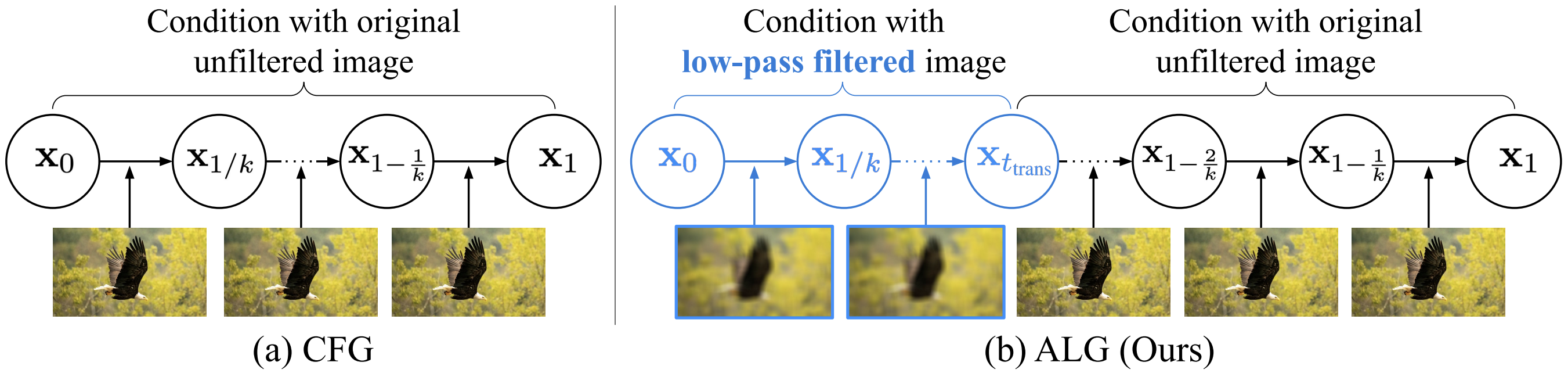
Kimin Lee is an assistant professor at the Graduate School of AI at Korea Advanced Institute of Science and Technology (KAIST), where he focuses on developing safe and capable decision-making agents. His research spans multiple aspects of artificial intelligence with a strong emphasis on safety and reliability. Dr. Lee completed his educational journey at KAIST, earning a Ph.D. in Electrical Engineering with a focus on Machine/Deep Learning (2015-2020), advised by Professor Jinwoo Shin. He also holds a Master's degree in Electrical Engineering (Wireless Communication Networks, 2013-2015) and a Bachelor's degree in Electrical Engineering (2009-2013), both from KAIST. His primary research interests include: Physical AI - developing AI systems that can interact safely and effectively with the physical world Alignment - particularly reinforcement learning from human feedback (RLHF) and scalable oversight techniques Monitoring - safety evaluation frameworks and benchmarking for AI systems LLM Agents - enhancing the capabilities and safety of large language model-based agents Dr. Lee's recent publications reveal a strong trajectory toward addressing critical challenges in AI safety. His work consistently bridges theoretical advances with practical applications, particularly in the areas of reinforcement learning, computer vision, and natural language processing. A notable trend in his research is the development of methods to evaluate and enhance the safety of AI systems, especially large language models and diffusion models, while maintaining or improving their capabilities. As an active member of the academic community, Dr. Lee serves as an area chair for major conferences including NeurIPS, ICLR, and ICML, and regularly reviews for top-tier AI venues. He has also organized workshops focused on safe and trustworthy AI agents. Dr. Lee's research group at KAIST appears to focus on AI safety and decision-making, with research projects spanning from theoretical foundations to practical implementations of safe AI systems. His collaborative work with institutions like UC Berkeley and Google Research demonstrates the interdisciplinary nature of his research approach.
Yannis Konstas is an Associate Professor (Reader in the UK system) at Heriot-Watt University’s School of Mathematical & Computer Sciences, Department of Computer Science. He co-leads the Safe and Secure AI for Robotics (SAIR) theme at the National Robotarium. His research focuses on Responsible, Safe, and Explainable AI applications using NLP, including Gender-Based Violence (GBV) detection via LLMs, Social Behavior Modeling, and Vision-Language-Action (VLA) models for robotics. He holds a PhD from the University of Edinburgh (2013), supervised by Mirella Lapata, and has held postdoctoral roles at the University of Washington and the University of Edinburgh. Research interests include Natural Language Generation (NLG), representations, modeling, and evaluation across domains like math problems and dialogue systems. His work spans Psycholinguistics, semantics, and Information Retrieval. He actively explores new fields, such as LLM interpretability and instruction-driven robotic manipulation. He accepts PhD students and collaborates on interdisciplinary projects, including regulatory compliance digitalization and embodied AI for egocentric video understanding. Education: PhD in Computer Science (2013), University of Edinburgh; Postdoctoral Researcher at University of Washington (2015–2017) and University of Edinburgh.
Gwenn Englebienne is an Assistant Professor at the Digital Society Institute and Human Media Interaction group of Utrecht University. Their research focuses on Artificial Intelligence, Computer Vision, and Human-AI Interaction, with applications in robotics, health, and social computing. They have contributed to over 80 research outputs since 2007, emphasizing embodied AI, social robotics, and explainable machine learning. Research interests span activity recognition, teleoperation systems, and ethical AI design. Notable work includes developing GNN-based group detection algorithms and evaluating chatbot reliability through automated question-answering frameworks. Their studies often bridge technical innovation with human-centered design, such as measuring embodiment via pupil dilation or addressing asymmetry in video-conferencing interactions. Key collaborations include work on social robotics, telepresence systems, and health monitoring using ambient sensors. Publications span conferences like IDA, CogMI, and LREC-COLING, reflecting interdisciplinary impact. A dataset on robot social positioning behavior is publicly accessible via 4TU.Centre for Research Data. Current work explores semi-supervised domain adaptation, spiking neural networks, and the psychological dimensions of AI trustworthiness. They lead initiatives in the Digital Society Institute to align technological advancements with societal needs.
Demetrios Karis serves as an Adjunct Lecturer in Experience Design at Bentley University while operating his independent consultancy Karis User Experience Evaluation. His academic foundation includes a BA from Swarthmore College, PhD from Cornell University, and Post Doctoral Fellowship at the University of Illinois, Urbana-Champaign, with current office location in Smith Technology Center (Room 121). Education background: BA, Swarthmore College PhD, Cornell University Post Doctoral Fellowship, University of Illinois, Urbana-Champaign Dr. Karis's research spans four decades with two distinct phases: early foundational work in Human-Computer Interaction focusing on speech recognition interfaces and cognitive psychology (1980s-2000s), followed by a radical pivot toward existential climate collapse analysis (2018-2025). His current scholarship integrates biophysical, political, economic, military, health, and psychological perspectives to model civilizational risks, while earlier contributions established key principles in usability testing, remote collaboration systems, and speech interface design. This evolution reflects both technical expertise in user experience methodologies and growing urgency regarding planetary-scale crises. Analysis of his 15 most recent publications reveals a clear methodological continuity—applying rigorous human factors frameworks from his HCI work to complex societal systems in his climate research—while demonstrating extraordinary disciplinary range from psychophysiology to geopolitical forecasting. Regarding academic service, no specific awards or honors are documented in available sources. His position as Adjunct Lecturer suggests primary industry engagement through his consultancy, though he maintains active teaching responsibilities in Bentley's Experience Design program. The absence of listed advisees or grants indicates his academic role may be primarily instructional rather than research-mentorship focused. Dr. Karis's independent research practice through Karis User Experience Evaluation represents his primary operational base for advancing both technical UX work and macro-scale collapse modeling.
Detlev Marpe is a leading researcher at the Fraunhofer Heinrich Hertz Institute (HHI), serving as Head of the Video Coding & Analytics Department and Head of the Image & Video Coding Group. His work focuses on advancing video compression standards, including HEVC (H.265) and its extensions. He has contributed significantly to tools like entropy coding, transform coding, and scalable video coding. His research emphasizes efficient compression techniques, such as adaptive context models and wavelet-based methods, with applications in multimedia communication and low-delay video encoding. Affiliations: Fraunhofer Institute for Telecommunications HHI, Berlin, Germany Roles: Department Head, Research Group Leader, and Adjunct Lecturer at TU Berlin (2013/14) Research Interests: Video coding standards (HEVC, H.264/AVC), entropy coding (CABAC), wavelet-based compression, scalable video coding (SVC), multiview video coding (MVC), and rate-distortion optimization. His work bridges theoretical advancements with practical implementations, addressing challenges in compression efficiency, scalability, and real-time applications. Publications & Awards: Over 200 publications in top-tier journals and conferences, including IEEE Transactions and SPIE. Notable awards include the Chester Sall Best Paper Award and multiple Best Paper Awards from IEEE journals. His contributions to video coding standards have been adopted in global specifications like MPEG and ITU-T. Grants & Labs: Involved in major research projects on HEVC extensions, 3D video coding, and low-delay applications. Collaborates with industry partners and academic institutions globally. His team at HHI develops reference software and test models for emerging standards.
Lynne Grewe serves as a Professor in the Department of Computer Science at California State University, East Bay, where she maintains active research and teaching responsibilities with current office hours and contact information. Her work bridges theoretical computer science with real-world applications across healthcare, education, and emergency response domains. Her research portfolio centers on three interconnected thrusts: Medical Technology : Development of computer vision systems for stroke detection through facial pattern analysis (StrokeChange), infrared-based disease monitoring, and assistive navigation tools for the visually impaired (Seeing Eye Drone) Educational Innovation : Creation of multimodal systems like ULearn that detect student frustration using deep learning, alongside community college partnerships to broaden participation in computing Sensor Fusion Applications : Integration of multi-modal data for disaster response, infrastructure monitoring, and mobile health platforms using advanced machine learning techniques Publication analysis reveals consistent evolution toward real-time, deployable systems—particularly mobile health applications and educational tools—while maintaining foundational work in sensor fusion. Her 2020-2024 output shows increasing emphasis on healthcare applications (40% of recent work) and educational technology (25%), often combining computer vision with mobile platforms. Grewe demonstrates significant commitment to educational equity through the Faculty in Residence program, collaborating with community colleges to prepare underrepresented students for computing careers. Her Google partnership and focus on practical applications indicate strong industry engagement, though specific grant details aren't documented in source materials. Current projects suggest ongoing expansion into in-situ health monitoring and AI-driven educational support systems.
Ayush Tewari is an Assistant Professor at the University of Cambridge. Previously, he was a postdoctoral researcher at MIT CSAIL under Bill Freeman, Josh Tenenbaum, and Vincent Sitzmann, and completed his Ph.D. at the Max Planck Institute for Informatics under Christian Theobalt. His research focuses on visual perception, developing methods to infer 3D structured representations from images and videos, aiming to bridge the gap between human perceptual capabilities and machine learning systems. Key research interests include neural rendering, inverse rendering, 3D reconstruction, and generative models. Notable contributions include advancements in Neural Radiance Fields (NeRF), diffusion models for inverse problems, and human-centric perception studies. His work has been published in top venues such as SIGGRAPH, CVPR, ICCV, and NeurIPS. Recent research trends emphasize ambiguity-aware inverse rendering, stochastic inverse problem solving using diffusion models, and integrating forward models for 3D scene inference. His work on Diffusion with Forward Models (NeurIPS 2023) proposes a novel framework for solving inverse problems without direct supervision. Awards: Best Paper Honorable Mention at BMVC 2022 (VoRF: Volumetric Relightable Faces). Labs/Projects: Core contributor to the DFM (Diffusion with Forward Models) project, advancing 3D scene understanding via probabilistic methods.
Dr. Lisa Lin is a Lecturer in Screen Industries and Cultures at King’s College London, based in the Department of Culture, Media & Creative Industries within the Faculty of Arts & Humanities. She holds a PhD in Media and Communications from Royal Holloway, University of London, alongside an MA in International Broadcasting and a Diploma in Factual Development and Production from the National Film and Television School. Her research focuses on Chinese television and digital streaming industries, emphasizing convergent production cultures, media work precarity, and documentary storytelling. Key projects include investigating environmental documentaries’ role in highlighting social injustice linked to air pollution (GCRF-funded, 2019-2020) and analyzing Tencent Video’s impact on creative freedoms in Chinese talk shows. She has extensive industry experience as a documentary producer for networks like National Geographic, BBC, and Channel 4. Teaching specialties include Global Media Industries, TV Platform Studies, and Chinese Media. Her pedagogical approach integrates critical theory with industry practices, emphasizing student-centered learning. Notable grants include a Knowledge Transfer Partnership with the UK Antarctica Heritage Trust (2022-2023) and leadership on the Sustainable Futures Research Fund project (2022). Recent academic contributions include chapters in Streaming Video: Storytelling Across Borders (2023) and her monograph Convergent Chinese Television Industries (2022). She actively engages with public events such as organizing screenings of independent Chinese documentaries to discuss societal issues like rural education.
Professor Vincent Wade is a prominent academic and co-founder of the ADAPT SFI Research Centre, holding the Professorial Chair of Computer Science (established 1990) and a Personal Chair in Artificial Intelligence at Trinity College Dublin's School of Computer Science and Statistics. He co-directs the DREAL Centre for Research Training and leads ADAPT, a globally recognized centre for digital media technology and AI research. His work spans intelligent systems, personalisation, machine learning, and ethical AI applications in healthcare and education. Research interests include AI-driven personalisation, multimodal interaction, knowledge graphs, and ethical considerations in digital technologies. He has published over 350 peer-reviewed papers, earned the prestigious Provost Innovation Award (2018), and holds patents in personalisation technologies. He co-founded EmpowerTheUser, a TCD spin-out focused on simulation-based learning analytics. Major Achievements: 2018 Provost Innovation Award (Trinity College Dublin) 2010 European Language Label Award Fellow of Trinity College Dublin Over 350 scientific publications Key Contributions: Developed the ADELE corpus for social conversation analysis Pioneered cross-site personalisation frameworks Advanced adaptive e-learning systems through platforms like Slicepedia and AMASE His research bridges technical innovation with societal impact, addressing challenges in healthcare, education, and digital ethics.
Dr. Maya Aghaei is a Lecturer and Researcher in Computer Vision & Data Science at NHL Stenden University of Applied Sciences, part of the Academy Technology & Innovation. She holds a M.Sc. in Artificial Intelligence and a Ph.D. in Computer Vision from the University of Barcelona. Her academic role includes supervising Minor and Master students while focusing on applying cutting-edge AI techniques to real-world challenges. Prior to her current position, she served as a Postdoctoral Researcher at the Italian Institute of Technology, developing AI solutions for industrial applications. Her research spans Computer Vision, Machine Learning, and General AI with a focus on surveillance systems, autonomous drones, hyper-spectral imaging for environmental analysis, and social signal processing through egocentric data. Notable projects include crime scene classification via trajectory analysis, obstacle detection for BVLOS drones, and psychological trait prediction based on clothing analysis. Dr. Aghaei's work emphasizes real-world applicability, bridging theoretical advancements with practical implementations in industries like agriculture, waste management, and public safety. Her interdisciplinary approach combines technical innovation with societal relevance, addressing challenges from plastic recycling to social distancing compliance through computer vision systems.