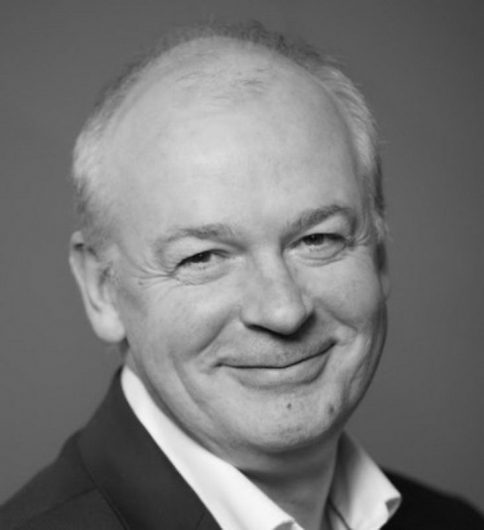
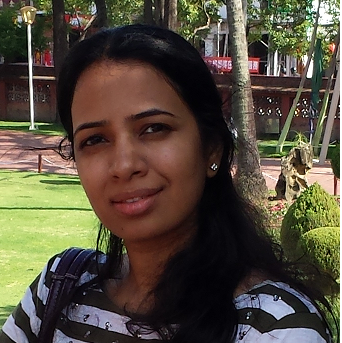
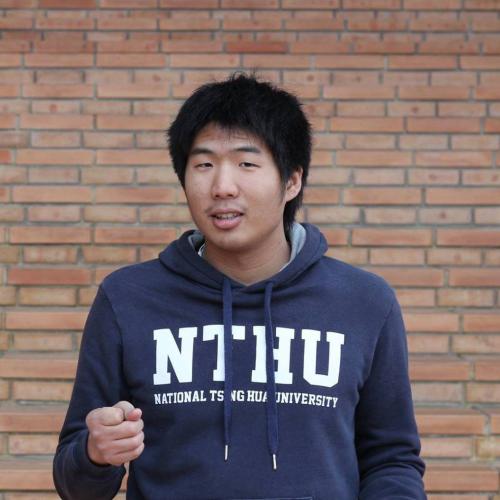
Dimitri Darzentas is a Lecturer at the School of Computing Engineering and the Built Environment , Edinburgh Napier University. His work bridges Interaction Design , Internet of Things , and Cultural Informatics , focusing on hybrid digital-physical experiences in museums and sustainable technology practices. Research Themes: Museum technology, hybrid gifting, IoT sustainability, data-driven co-design Projects: Library of Inspiration (Royal Academy of Engineering grant), UbiFix (repairability in smart devices) His design practice emphasizes emotional interpretation, temporal engagement, and ethical technology use. Recent work explores substitutional reality with museum objects and user-generated content in historical games. PhD Supervision: Guided students in Digital Storytelling (Gengyi Wang) and Mixed Reality Education (Suzi Cathro).
Reza Bosagh Zadeh is an Adjunct Professor at the Institute for Computational and Mathematical Engineering (ICME) at Stanford University. His research focuses on machine learning, deep learning, and their applications in video classification, healthcare analytics, and distributed algorithms. He specializes in developing scalable computational methods for real-time data processing and has contributed to advancements in neural networks and optimization techniques. Reza's work spans theoretical and applied domains, with notable contributions to TensorFlow frameworks, video summarization systems, and medical imaging analysis. His research often integrates interdisciplinary approaches, leveraging both academic and industrial collaborations. Notable projects include developing machine learning models for glaucoma detection and creating efficient algorithms for large-scale data processing in environments like Apache Spark. His publications emphasize real-time video stream analysis, distributed computing architectures, and practical implementations of deep learning. Reza holds a strong presence in both academic and tech sectors, with contributions to platforms like Twitter's Who-to-Follow system and innovations in edge computing for video surveillance.
Ahmet Tekalp is a Professor in the Department of Electrical and Computer Engineering at Koc University's College of Engineering since 2001. He holds dual citizenship in Turkey and the USA, with prior academic roles at the University of Rochester (1986-2005) and research positions at Eastman Kodak (1984-1987) and Rensselaer Polytechnic Institute (1981-1984). He chairs the Electronics and Informatics Group at TUBITAK since 2004 as a part-time position. B.S. (1980) in Electrical Engineering & Mathematics, Bogaziçi University M.S. (1982) and Ph.D. (1984) in Electrical, Computer, and Systems Engineering, Rensselaer Polytechnic Institute His research focuses on digital image and video processing, including video compression, motion-compensated filtering for high-resolution applications, video segmentation, object tracking, content-based video analysis, multi-camera surveillance processing, and digital content protection. He has led numerous European and U.S. grants, including FP7 STREP projects and NSF awards, emphasizing applications in sensor networks, visual databases, and medical imaging. His scholarly work spans diverse areas such as superresolution reconstruction, head gesture animation, 3DTV streaming, and reversible data hiding. He has played pivotal roles in editorial boards, including serving as Editor-in-Chief of Signal Processing: Image Communication, and has contributed to major standards bodies like ISO MPEG and ANSI NCITS. Member, Turkish Academy of Sciences (TUBA) Fellow, IEEE Fulbright Senior Scholarship (1999) TUBITAK Science Award (2004) IEEE Signal Processing Society Distinguished Lecturer (1998) He has led multiple international research collaborations and projects, including European FP6/FP7 networks and NATO programs, with substantial grant funding from NSF, NYSTAR, and industry partners like Eastman Kodak, Xerox, and Siemens.
Raphaël Troncy is an Assistant Professor at EURECOM's Data Science Department, specializing in Semantic Web technologies, Knowledge Graphs, and Natural Language Understanding. He teaches courses like 'Human-computer interaction for the Web' and 'Semantic Web technologies.' His research focuses on semantic data integration, knowledge graph applications, and recommender systems. Notable projects include DOREMUS (musical work graph), entity2rec (knowledge graph-based recommendations), and 3cixty (city exploration knowledge bases). He actively contributes to semantic web challenges and conferences, winning multiple awards including the 2018 Best Poster Award at ESWC and 2015 First Prize in the Semantic Web Challenge. Troncy's work spans cultural heritage digitization (e.g., Odeuropa olfactory data modeling), cybersecurity anomaly detection (NORIA-O ontology), and interdisciplinary projects like SILKNOW's silk textile knowledge graph. He leads development of tools like DAGOBAH for semantic table interpretation and KG Explorer for knowledge graph exploration. Education: Not explicitly stated in text Labs/Teams: Active in EURECOM's Data Science group, collaborating on projects involving knowledge graphs, AI, and semantic technologies
Lukas Fischer is a researcher specializing in Natural Language Processing and Machine Translation, currently affiliated with the Language, Technology and Accessibility project. He holds an M.Sc. in Artificial Intelligence from the University of Edinburgh (2017-2018) and a B.A. in Computational Linguistics from the University of Zurich (2012-2016). His recent roles include lead developer for the Digilinguo online platform since 2025 and contributions to multimodal machine translation projects like IICT and Bullinger Digital. Research Focus: Machine translation for historical languages (Latin, Early New High German) Text simplification and accessibility technologies Multimodal translation systems Data curation for multilingual historical corpora Code-switching detection in early modern texts Publications highlight his work on SwissADT (audio description translation for Swiss languages), LLM-based Latin translation, and medieval text processing. His projects span both computational linguistics and practical accessibility applications.
Andrey Vladimirovich Savchenko is a prominent researcher and educator in computer vision and artificial intelligence at the National Research University Higher School of Economics (HSE) in Nizhny Novgorod. He holds multiple positions including Professor at the Faculty of Informatics, Mathematics, and Computer Science, Leading Researcher at the Faculty of Computer Science and Institute of Artificial Intelligence and Digital Sciences, and Academic Director of the "Artificial Intelligence and Computer Vision" educational program. His educational background includes: 2016: Doctor of Technical Sciences from Nizhny Novgorod State Technical University 2015: Academic title of Associate Professor 2011: Candidate of Technical Sciences 2008: Specialist degree in Applied Mathematics and Computer Science Savchenko's research focuses on computer vision, pattern recognition, and artificial intelligence, with particular emphasis on facial recognition, emotion analysis, and efficient deep learning algorithms. His work bridges theoretical foundations with practical applications, especially in mobile computing environments where computational resources are limited. He has developed innovative methods for making AI systems more efficient without significant loss in accuracy. His recent publications demonstrate a strong trend toward multimodal analysis, combining visual, audio, and textual data for more robust recognition systems. There's a clear emphasis on making AI systems more efficient, especially for mobile devices, and on developing methods that can work with limited computational resources while maintaining high accuracy. His work spans fundamental research on neural network architectures and practical applications in education, healthcare, and human-computer interaction. Among his notable scientific achievements: Gratitude from the Governor of Nizhny Novgorod region (2022) Multiple gratitude awards from HSE (2021-2022) Best Teacher Award (2018-2019) Leaders of IT Industry Award from NEYMARK IT Campus (2023) Academic Success Bonus at HSE (2011-2013) Savchenko has successfully supervised numerous master's students and currently mentors PhD candidates working on cutting-edge topics like large language models for recommendation systems and document analysis. He has secured significant research funding, including projects with Huawei, Sberbank, and the Russian Science Foundation, totaling millions of rubles. His laboratory focuses on developing efficient algorithms for computer vision and multimodal data analysis. He leads the Laboratory of Theoretical Foundations of Artificial Intelligence Models and has established strong industry partnerships that ensure his research has practical impact. His NVIDIA Deep Learning Institute certification demonstrates his commitment to staying current with the latest AI technologies.
Professor Vincent Wade is a prominent academic and co-founder of the ADAPT SFI Research Centre, holding the Professorial Chair of Computer Science (established 1990) and a Personal Chair in Artificial Intelligence at Trinity College Dublin's School of Computer Science and Statistics. He co-directs the DREAL Centre for Research Training and leads ADAPT, a globally recognized centre for digital media technology and AI research. His work spans intelligent systems, personalisation, machine learning, and ethical AI applications in healthcare and education. Research interests include AI-driven personalisation, multimodal interaction, knowledge graphs, and ethical considerations in digital technologies. He has published over 350 peer-reviewed papers, earned the prestigious Provost Innovation Award (2018), and holds patents in personalisation technologies. He co-founded EmpowerTheUser, a TCD spin-out focused on simulation-based learning analytics. Major Achievements: 2018 Provost Innovation Award (Trinity College Dublin) 2010 European Language Label Award Fellow of Trinity College Dublin Over 350 scientific publications Key Contributions: Developed the ADELE corpus for social conversation analysis Pioneered cross-site personalisation frameworks Advanced adaptive e-learning systems through platforms like Slicepedia and AMASE His research bridges technical innovation with societal impact, addressing challenges in healthcare, education, and digital ethics.
Swapna Gottipati is a Full-time Associate Professor of Information Systems (Education) and Associate Dean (Undergraduate Education) at the School of Computing and Information Systems , Singapore Management University . Holding a PhD from SMU (2014) , she specializes in text analytics, education technology, and digital business. Current focus areas: Artificial Intelligence, Data Science, Technology-Enhanced Learning Interdisciplinary applications: Health Informatics, Social Media Analytics Research Interests span text analytics, opinion mining, curriculum analytics, and digital transformation. She applies machine learning and data mining to educational systems, business processes, and health domains. Scientific Contributions: 2016 Best Paper Award (AIS SIG-ED) 2016 MOE TRF Grant 2017-2020 Conference Best Paper Nominations 2013 Best Paper Finalist (CIKM) Academic Leadership includes: Director of Undergraduate Education Co-developer of SMU-X pedagogy Founder of MyCompetencies mobile platform Organizer of curriculum analytics workshops Grant Projects include the Learning Analytics on Qualitative Student Feedback system (MOE TRF 2016) and ICDL-funded digital literacy studies. She has delivered 12+ invited talks on digital transformation in education and industry.
Natalia Latini is a postdoctoral fellow at the Department of Education , University of Oslo, Norway. Her research focuses on reading comprehension , digital learning environments , and special education with an emphasis on specific learning disabilities. She actively contributes to research groups like Development, Equity, and Literacy in Learning Contexts (DEAL) , and projects including CrossREAD (Reading across mediums, devices, and contexts) . Education: Ph.D., Department of Education, University of Oslo (2022) Master in Special Education, Specific Learning Disabilities, University of Oslo (2017) Bachelor in Special Education, University of Oslo (2015) Psychology, year unit, University of Oslo (2012) Her research investigates how digital reading impacts comprehension, with a focus on multimedia integration , media multitasking , and self-efficacy in academic writing . She utilizes methodologies like eye-tracking and verbal protocols to analyze behavioral engagement and cognitive processing across mediums. Recent studies examine belief bias in adolescents and the role of main idea summarization in multiple-document comprehension. Key collaborations include work with researchers such as Ivar Bråten , Ymkje Elisabeth Haverkamp , and Helge Ivar Strømsø . Her publications span journals like Journal of Research in Reading , Literacy Research and Instruction , and Contemporary Educational Psychology . Natalia's research contributes to understanding how technology-mediated learning affects educational outcomes, particularly for individuals with learning challenges. She explores the interplay of screen size , text movement , and media multitasking on comprehension and motivation, offering insights for adaptive teaching strategies in digital contexts.
Dr. Mahdi Jampour is a Researcher at the Centre for the Study of Manuscript Cultures (CSMC), University of Hamburg, and a member of the Cluster of Excellence ‘Understanding Written Artefacts’ (UWA). He holds a Ph.D. in Computer Science (Artificial Intelligence) from Graz University of Technology (2016), with postdoctoral research at Iran Telecommunication Research Center (ITRC) (2016–2017). He previously served as Assistant Professor at Quchan University of Technology (2017–2024) and led Project RFA05 (2022–2025) focusing on visual pattern similarity in written artefacts. Education: Ph.D. in Computer Science (Artificial Intelligence), TU Graz, Austria (2016) Postdoctoral Fellowship, ITRC, Iran (2016–2017) Assistant Professor, Quchan University of Technology (2017–2024) Research Interests: Dr. Jampour specializes in applying AI and computer vision to cultural heritage preservation, including palimpsest analysis, historical document digitization, and pattern recognition. His work integrates generative models, deep learning, and semi-supervised methods to address challenges in manuscript analysis and multispectral imaging. Publications Trends: Recent work focuses on generative AI for palimpsest deciphering, dataset creation for sports and cultural heritage analysis, and facial expression recognition surveys. His articles bridge computer science with digital humanities, emphasizing cultural artifact preservation through technological innovation. Awards: Kazemi-Ashtiani Award (2019) Chamran Award (2017) KUWI Prize (2015) Marshal Plan Fellowship (2015) Best MSc Thesis Award (2009) Advising & Grants: Led UWA’s Project RFA05 (2022–2025) and contributed to international preservation initiatives like the Timbuktu Manuscript Training Project. His research is supported by grants from the Iran National Elites Foundation and the Iranian Ministry of Science. Labs & Collaborations: Active in CSMC’s labs, including the Written Artefact Profiling Guide and Mobile Lab Container projects. Collaborates with institutions globally on digitization and cultural heritage safeguarding.
Ahmet M. Tekalp is a Professor of Electrical and Computer Engineering at Koc University , Istanbul, Turkey, since 2001. Previously, he held a full-time professorship at the University of Rochester (1986-2005) and part-time roles such as Chair of the Electronics and Informatics Group at TUBITAK, Turkey. His work bridges academic and industrial research, with affiliations to institutions like Eastman Kodak Company and Rensselaer Polytechnic Institute. Education: BS (1980), Electrical Engineering & Mathematics (High Honors), Bogaziçi University MS (1982) & PhD (1984), Electrical, Computer, and Systems Engineering, Rensselaer Polytechnic Institute (RPI) Research Interests: Digital image and video processing Video compression and streaming Motion-compensated video filtering for high-resolution Video segmentation and object tracking Content-based video analysis and summarization Multi-camera surveillance video processing Digital content protection Scientific Awards: Member, Turkish Academy of Sciences (TUBA) Fellow, IEEE Fulbright Senior Scholarship (1999) TUBITAK Science Award (2004), Turkey's highest science award Grants and Contracts: FP6 Network of Excellence, SIMILAR (2003-2007), Euro 6 Million FP6 Network of Excellence, 3DTV (2004-2008), Euro 6 Million FP7 STREP projects (DIOMEDES, SARACEN) with Euro 3 Million budgets NSF grants spanning wireless sensor networks, visual databases, and MRI motion artifact suppression Industry partnerships with Eastman Kodak, Xerox, Siemens Corporate Research Professional Activities: Editor-in-Chief, Signal Processing: Image Communication (Elsevier) Member, ERC-Advanced Panel on Informatics Editorial roles in IEEE journals and other publications Active in ISO/IEC and ANSI standards committees
Hao-Chuan Wang is an Associate Professor in the Department of Computer Science at the University of California, Davis, with affiliations in the Electrical and Computer Engineering Graduate Program. He previously served as a faculty member at National Tsing Hua University, Taiwan, from 2012 to 2018, where he was promoted to tenured Associate Professor. He holds a Ph.D. in Information Science from Cornell University and has conducted postgraduate research at Carnegie Mellon University and Academia Sinica. His research lies at the intersection of Human-Computer Interaction (HCI), Computer-Supported Cooperative Work (CSCW), and Human-Centered AI, with a strong emphasis on collaborative systems, hybrid and remote work, video-mediated communication, and inclusive design for education and wellbeing. He employs mixed-method, human-centered approaches to design systems that support knowledge transfer, equity, and social interaction in distributed environments. His recent publications focus on AI-supported learning, fairness in group work, reflective tools, and cross-cultural interactions with large language models. These works are published in top-tier venues such as CHI, CSCW, CUI, and WWW, reflecting his impact in the HCI community. His scientific contributions have been recognized with several awards, including Best Student Paper at The Web Conference 2021, Best Demo Award at Augmented Humans 2021, Distinguished Paper Award at PACM IMWUT 2018, and multiple Honorable Mention awards at CHI and CSCW. Best Student Paper Award, The Web Conference (WWW) 2021 Best Demo Award, Augmented Humans International Conference 2021 PACM IMWUT Distinguished Paper Award, Ubicomp 2018 Honorable Mention Paper Award, CHI 2015 Honorable Mention Paper Award, CHI 2018 Honorable Mention Paper Award, CSCW 2018 Best Poster Award, ITS 2006 Wang actively contributes to the academic community through leadership roles in ACM SIGCHI, including serving as VP Finance (2024–2027), Workshop Chair for CHI 2025–2026, and Associate Editor for the Journal of Information Science and Engineering. He has advised numerous students whose research appears in major conferences, and his work bridges computer science, communication, design, and learning sciences, reflecting a deeply interdisciplinary and impactful scholarly profile.
Emmanouil Z. Psarakis is an Associate Professor at the Department of Computer Engineering & Informatics , University of Patras, Greece. Born in 1963, he has been affiliated with the university since 2005 and is a member of the Signal Processing and Communications Lab . His academic journey includes teaching courses such as Signals and Systems Theory , Digital Signal Processing , and Computer Vision and Graphics . PhD in Computer Engineering and Informatics, University of Patras (1991) Dr. Psarakis is renowned for his research in image processing , computer vision , and signal processing , with applications in biomedical imaging , seismology , and robotics . His work spans deep learning , filter design , and 3D reconstruction , reflecting a multidisciplinary approach. His 15 most recent publications (2020–2025) focus on sign language recognition , adversarial defense , 3D shape analysis , and medical imaging . These works integrate machine learning , stochastic modeling , and computer vision to address challenges in video summarization , image inpainting , and seismic signal analysis . Dr. Psarakis has supervised over 10 PhD students , including Fotini Fotopoulou (2016–2019) and Panagiotis Georgantopoulos (2020–2023). He has participated in EU-funded , Hellenic , and bilateral R&D projects related to biomedical signal processing , robot vision , and forest fire monitoring . He leads the Signal Processing and Communications Lab , which collaborates with institutions like the Computer Technology Institute and international universities. His contributions include filter design , image alignment , and stereopsis techniques , with a focus on practical implementations in telecommunications and medical diagnostics .
Eugene Yang is a Research Scientist at the Human Language Technology Center of Excellence (HLTCOE) at Johns Hopkins University, where he focuses on cross language and multilingual information retrieval, multilingual multimodal report generation, and retrieval-augmented generation systems. He received his Ph.D. in Computer Science from Georgetown University in 2021 under the supervision of Ophir Frieder, David D. Lewis, and Jeremy Fineman. His research spans multiple domains within information retrieval, with particular emphasis on high recall retrieval systems, technology-assisted review frameworks, and multilingual processing. He is the developer of TARexp, an open-source Python framework for Technology-Assisted Review experiments, which demonstrates his commitment to creating practical tools for the research community. Yang's publication record shows a clear trend toward increasingly sophisticated multimodal and multilingual retrieval systems, with his recent work focusing on retrieval-augmented generation evaluation, cross-language model distillation, and modular fusion approaches for complex information needs. His research bridges theoretical advances with practical applications in legal technology, healthcare informatics, and multilingual information access. As an active contributor to the information retrieval community, Yang has presented at numerous conferences including SIGIR, ECIR, and TREC, and has collaborated extensively with researchers across institutions. His work demonstrates a strong commitment to reproducibility and practical evaluation methodologies in information retrieval research.
Nitin Agarwal is the Jerry L. Maulden-Entergy Chair & Donaghey Distinguished Professor of Information Science at the University of Arkansas – Little Rock (UALR), where he has been a faculty member since Fall 2009. He serves as the Founding Director of the Collaboratorium for Social Media and Online Behavioral Studies (COSMOS) and holds a Faculty Fellowship at the International Computer Science Institute, University of California, Berkeley. His work spans social computing, behavior-cultural modeling, collective action, and social cyber forensics. Education: Ph.D. in Computer Science, Arizona State University (2009) Bachelor of Technology in Information Technology, Indian Institute of Information Technology (2003) Dr. Agarwal’s research focuses on understanding digital/cyber social behaviors, particularly coordinated disinformation campaigns. He has secured over $25 million in federal grants from agencies like DoD, DARPA, and NSF. His tools (Blogtracker, VTracker) are used by NATO, DHS, and WHO. Recent work includes modeling toxicity propagation, analyzing algorithmic biases, and combating misinformation via AI-driven frameworks. His publications cover social cyber forensics, AI, and computational epidemiology, with 11 books and over 300 peer-reviewed articles. His 2025 articles emphasize YouTube’s recommendation algorithms, Instagram’s visual media impact, and TikTok’s role in political mobilization. Themes include anomaly detection, semiotic analysis, and toxicity mitigation using epidemiological models. Scientific Awards: University-wide Faculty Excellence Awards (2015, 2021) Social Media Educator of the Year (2015) NATO Innovation Hub Top 10 Solution (2021) WHO Recognition for COVID-19 Misinformation Tracker (2022) IEEE Senior Member (2022) Dr. Agarwal advises Little Rock-based FinTech firms and collaborates with global governments and defense agencies. His COSMOS lab leads projects on cognitive warfare, disinformation, and social network simulations, supported by extensive media coverage in Bloomberg, US News, and local outlets.

.jpg.jpg)