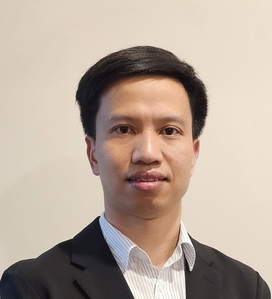
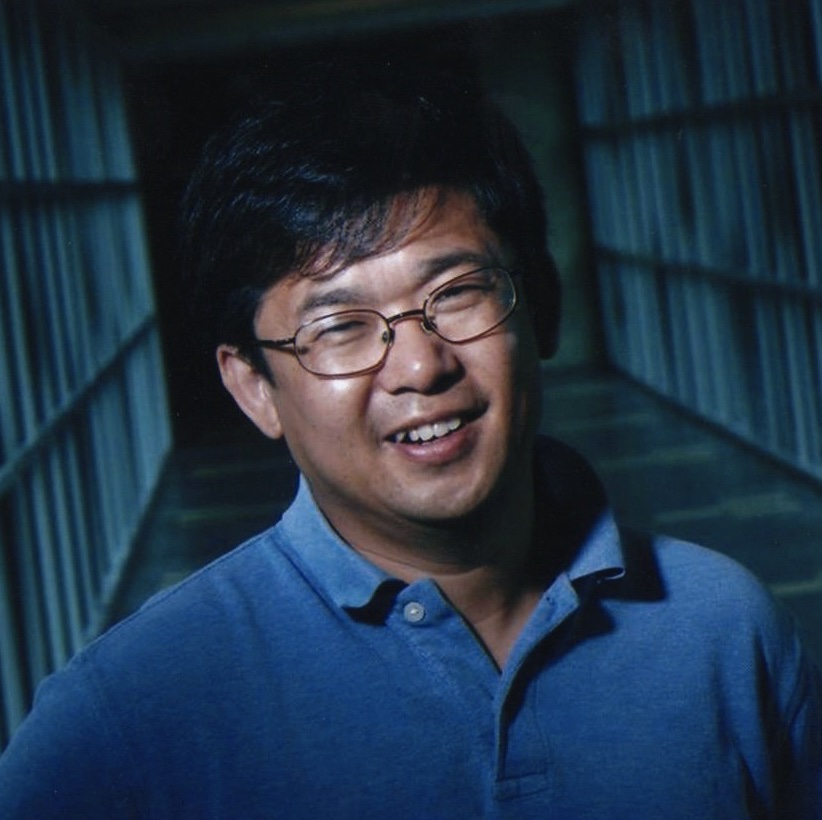
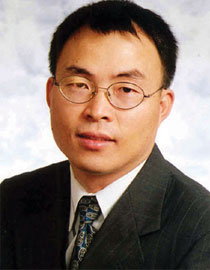
George Kesidis is a Professor in Computer Science and Engineering and Electrical Engineering at Penn State University. His research spans deep learning security, virtual reality optimization, and cloud computing. College of Engineering (Penn State University) Research Focus: Backdoor Attacks, DNN Robustness, Edge Caching Active in NSF and U.S. Navy-funded projects (2022-2026) His work addresses backdoor data poisoning , test-time evasion attacks , and DNN overfitting mitigation . He develops techniques like activation clipping, perturbation analysis, and statistical defense models. Recent projects include edge caching systems for VR and security-driven AI frameworks. Key article trends reveal expertise in adversarial deep learning, immersive media delivery, and cloud resource optimization. Current grants focus on multi-user VR, GPU scheduling, and serverless-cloud hybrid architectures. He collaborates extensively with researchers like David J. Miller and Xinyu Li, particularly on cloud-based adversarial defense mechanisms and VR streaming benchmarks.
Felix Xiaozhu Lin serves as Associate Professor and William Wulf Faculty Fellow in the Department of Computer Science at the University of Virginia's School of Engineering and Applied Science, where he directs the Computer Science Ph.D. Program and MCS/MS Program. Previously a tenured Associate Professor at Purdue University's School of Electrical and Computer Engineering, Lin joined UVA Engineering in August 2020 after completing his doctoral research at Rice University. His educational credentials include: Ph.D. in Computer Science, Rice University (2014) M.S. in Computer Science, Tsinghua University (2008) B.S. in Automation, Tsinghua University (2006) Lin's research centers on systems software at the intersection of operating systems, compilers, and computer architecture, with emphasis on accelerating and safeguarding software systems. His current projects target on-device large language models and speech processing for low-cost hardware ( Analysis of his recent publications reveals a strong trajectory in edge computing and efficient AI systems. His research demonstrates increasing focus on hardware-software co-design for autonomous devices, with significant contributions in video analytics for energy-constrained cameras, kernel virtualization for heterogeneous architectures, and stream processing frameworks leveraging emerging memory technologies. The work consistently addresses real-world constraints like power limitations and network intermittency while maintaining rigorous academic standards. His scientific recognition includes: National Science Foundation CAREER Award (2019) Google Faculty Research Award (2016) NSF CISE Research Initiation Initiative Award (2015) ACM ASPLOS Best Paper Award (2014) Lin leads the XSEL research group mentoring graduate and undergraduate students in systems software development. His educational initiatives include CS4414/CS6456, a modern operating systems course featuring Arm64 baremetal kernel development, multicore systems, trusted execution environments, and filesystem forensics. The course's experiential approach has received strong student feedback for its modern content and practical relevance. His group actively recruits for projects spanning on-device AI, hardware-accelerated speech processing, and next-generation OS development. Based in Charlottesville, Virginia, Lin's research benefits from UVA's proximity to Shenandoah National Park and collaborative opportunities within the university's vibrant computing ecosystem, including the 2024 LLM Workshop he co-organized with Professor Yangfeng Ji.
Richard Szeliski is a Distinguished Scientist at Google DeepMind and Affiliate Professor at the University of Washington's Department of Computer Science & Engineering. He previously led the Interactive Visual Media Group at Microsoft Research and founded the Computational Photography group at Facebook. His research focuses on computer vision, computer graphics, and numerical methods, with specialties in 3D modeling from imagery, computational photography, and neural rendering. Education details are not explicitly listed, but his career trajectory indicates advanced academic training in computer science. Research interests include algorithms for 3D reconstruction, image stitching, and optimization techniques. His recent work emphasizes neural rendering, volumetric representations, and large-scale scene modeling. Key contributions include the widely cited textbook Computer Vision: Algorithms and Applications and foundational papers on multi-view stereo, panorama stitching, and energy minimization in MRFs. Publications span 40+ years, with recent focus on radiance fields (NeRF), 3D scene understanding, and real-time rendering systems. Though no explicit awards are listed, his textbook adoption and industry roles reflect significant academic and industrial impact. He advises through his academic role and has contributed to open-source projects like the Bundle Adjustment Library (BAL). Labs/teams include collaborations with Google DeepMind, prior work at Microsoft Research's Interactive Visual Media Group, and academic partnerships at UW's Graphics & Imaging Lab. His work bridges theory and application, addressing challenges in both academic research and industrial-scale systems.
Associate Professor Sonny Pham leads research in artificial intelligence at Curtin University's School of EECMS. His work balances theoretical foundations with practical applications in computer vision, data mining, and deep learning. As head of the IAMAI research group, he collaborates with industry partners on security systems, healthcare AI, and sustainable technologies. His research explores: Computationally efficient deep learning architectures Compressed sensing for high-dimensional data Robust statistical methods for real-world problems Applications in computer vision and industrial automation Recent publications demonstrate a focus on medical imaging interpretation and efficient neural networks, with applications spanning radiology report generation, semantic segmentation for autonomous systems, and cybersecurity. His team's work consistently bridges theoretical AI advancements with industrial applications. Honors include: Multiple WANMA Awards (2021-2024) for industry-impactful research INCITE Award for social impact technology (2024) IEEE Young Author Best Paper Award (2010) Over $5M in competitive research funding including MRFF and DFAT grants He leads the IAMAI research group with 12+ graduate students and coordinates Curtin's Master of Artificial Intelligence program. Industry collaborations include Alcoa Australia, iCetana, and HyprFire.
Shuaishuai Wang is a Lecturer in Digital Media and Culture at the University of Manchester, specializing in platform studies, critical algorithm studies, and queer media. His research explores queer communities' digital presence across platforms like Douyin, TikTok, and Blued, with a focus on algorithmic governance, data-driven social media operations, and geopolitical-economic contexts. He holds a PhD in Media Studies from the University of Amsterdam and previously served as Assistant Professor at Xi’an Jiaotong-Liverpool University and Lecturer at the University of Amsterdam. Shuaishuai leads two university-funded projects: 'Douyin Data Economies' (100,000 CNY) and 'Algorithmic Configurations of Sexuality' (30,000 Euros). His work appears in journals like Big Data & Society , Television & New Media , and Social Media + Society , and he contributes to media outlets including The Conversation and Sixth Tone. His research interests emphasize the interplay between algorithms, queer identities, and platform economies. Recent studies analyze Douyin's shift to e-commerce, LGBTQ+ visibility challenges in algorithmic systems, and the political dimensions of TikTok. He has also examined business models of LGBTQ platforms and the impact of censorship on digital queer spaces. Key grants include projects investigating data economies and algorithmic configurations of sexuality, reflecting his commitment to understanding technology's societal implications. Collaborations span global institutions, with notable work on misinformation, playful political performances, and transgressive digital cultures.
Dr. Frank Loh is a researcher at the Department of Computer Science III, University of Würzburg, specializing in energy efficiency, network performance, and Quality of Experience (QoE) in communication networks. His work focuses on optimizing LoRaWAN deployments, serverless computing, and edge-cloud environments, with an emphasis on reducing message collisions and improving resource utilization. He actively contributes to methodologies for gateway placement, traffic modeling, and energy consumption metrics. Research Areas Energy Efficiency in Communication Networks Quality of Service (QoS) and Quality of Experience (QoE) LoRaWAN Network Planning Edge and Serverless Computing Network Resource Analysis Recent Publications 2025: Energy modeling for 6G base stations 2025: Server cluster resilience via Markov models 2024: Serverless computing in edge-cloud environments 2024: LoRaWAN channel access optimization
Jarno Vanne is a Professor at the Department of Computing Sciences, Faculty of Information Technology and Communication Sciences at Tampere University. His research focuses on video coding standards, real-time systems, and hardware acceleration, particularly in the context of FPGA implementations and open-source tools. He leads projects involving VVC (Versatile Video Coding), V-PCC (Volumetric Video Coding), and HEVC (High Efficiency Video Coding), with an emphasis on efficiency, low latency, and machine learning integration. Key research interests include point cloud compression, saliency-guided encoding, parallelization schemes, and real-time video communication protocols. His work often addresses challenges in multi-party video streaming, embedded systems, and encryption mechanisms for privacy protection. He has contributed to open-source projects like the UVG dataset, Kvazaar encoder, and CiThruS simulation frameworks. Recent publications highlight advancements in VVC intra encoding optimizations, machine learning-driven partitioning schemes, and FPGA-accelerated solutions for edge computing. His research bridges theoretical video coding algorithms with practical implementations, aiming to improve compression efficiency while maintaining real-time performance.
Mohamed Hefeeda is a Professor in the School of Computing Science at Simon Fraser University (SFU), Canada. He leads the Network and Multimedia Systems Lab (NMSL) and previously served as Director of the School from 2018 to 2023. His research focuses on multimedia networking, mobile computing, cloud systems, and hyperspectral imaging. He holds an ACM Distinguished Member designation and has received prestigious awards including the NSERC Discovery Accelerator Supplements (2011) and multiple best paper awards at top conferences like ACM MM and IEEE Infocom. Education: Ph.D., Purdue University, 2004 M.Sc., University of Connecticut, 2001 B.Sc., Mansoura University, Egypt, 1994 Research Interests: Design of efficient multimedia systems and protocols for wired/wireless networks Cloud gaming optimization and video encoding techniques Hyperspectral imaging for healthcare and mobile applications AI-driven multimedia systems and mobile computing innovations Grants & Industry Collaborations: Funded by NSERC, CFI, and companies like AMD, Huawei, and CBC Co-founded Video Semantics (acquired by tech firm) Partnered with CBC on peer-assisted content distribution systems Awards Highlights: 2025: ACM Distinguished Member 2019: Best Student Paper Award at ACM MMSys 2015: NSERC Discovery Accelerator Supplements Labs & Leadership: Network and Multimedia Systems Lab (NMSL) at SFU Contributed to creation of Qatar Computing Research Institute (QCRI)
Hui Zhang is a Professor in the Computer Science Department at Carnegie Mellon University. His research focuses on data-driven networking systems, video streaming optimization, and network control frameworks. He has contributed to innovations in adaptive resource allocation, real-time analytics, and sustainable strategies for resource utilization. Key research themes include time-state analytics, network anomaly detection, and integrating machine learning for enhanced performance. His work addresses challenges in content delivery networks (CDNs), peer-to-peer systems, and environmental applications like waste management. Recent publications (2021–2024) highlight advancements in neural network-based prediction, timeline frameworks, and sustainable material science innovations. No scientific awards are mentioned in the provided text. His research emphasizes practical solutions for improving video quality of experience (QoE), network efficiency, and cross-disciplinary applications.
Andres Kwasinski is a Professor in the Department of Computer Engineering at Rochester Institute of Technology (RIT), part of the Kate Gleason College of Engineering. He serves as Graduate Program Director for the Ph.D. in Electrical and Computer Engineering and M.Sc. in Computer Engineering. He co-directs the Networking and Information Processing (NetIP) Lab and holds editorial roles with IEEE publications, including Chief Editor of the IEEE Signal Processing Repository and Associate Editor of IEEE Signal Processing Magazine. Education: Ph.D. and M.Sc. in Electrical and Computer Engineering from the University of Maryland, College Park (2004 and 2000), and B.Sc. in Electrical Engineering from the Buenos Aires Institute of Technology (1992). Prior to RIT, he worked at Texas Instruments, Lucent Technologies, and the University of Maryland. Research Interests: Cognitive radios, machine learning for dynamic spectrum access, 5G/6G networks, VR communications, cross-layer resource allocation, smart infrastructures, and signal processing. His work emphasizes sustainable and resilient communication systems, integrating renewable energy and AI-driven solutions. Notable Contributions: Authored/co-authored books on cooperative communications and 3D visual communications. Over 70 peer-reviewed publications, including works on energy-efficient wireless networks, microgrid integration for base stations, and deep reinforcement learning in cognitive radio. His research is funded by the NSF, Harris Corporation, and the Air Force Research Laboratory. Grants & Awards: Supported by grants from NSF and industry partners. Recognized for contributions to IEEE standards and technical leadership in signal processing and communications. Labs & Teams: Co-director of the NetIP Lab, focusing on networking, signal processing, and smart infrastructure. Collaborates on interdisciplinary projects in robotics, warehouse automation, and 5G/B5G systems.
Wenzhong Li is a Professor at the School of Computer Science, Nanjing University, where he leads research at the State Key Laboratory for Novel Software and Technology. His academic career spans over 15 years with significant contributions to AI-empowered distributed systems, big data mining, and networking applications. He teaches Computer Networks and guides graduate students in Distributed Computing Research. Professor Li's research focuses on cutting-edge areas including AI-Empowered Distributed Systems and Applications (MultiModal Large Models, Embodied Intelligence, Edge Computing), Big Data Mining (Time Series Analysis, Graph Computing, Social Networks Analysis), and AI-Based Distributed Resource Scheduling. His work bridges theoretical foundations with practical implementations in real-world systems. His recent publications demonstrate a strong trend toward integrating deep learning with graph theory and time series analysis, with applications in human activity recognition, network optimization, and multimodal systems. The research spans multiple disciplines including artificial intelligence, computer vision, networking, and data mining, with a particular emphasis on practical implementations for real-world problems. Best Paper Runner Up at KSEM 2023 for 'Learning-based Dichotomy Graph Sketch for Summarizing Graph Streams with High Accuracy' Best Paper Award at APNet 2018 for 'Toward Effective and Fair RDMA Resource Sharing' Professor Li has advised numerous PhD and Master's students who have gone on to prominent positions at institutions like Nanjing University, Huawei, Alibaba, Microsoft, and various international universities. His research is supported by substantial grants from the National Natural Science Foundation of China, Natural Science Foundation of Jiangsu Province, National Power Grid, and other major funding bodies, totaling multiple multi-year projects with significant budgets. He leads the AINet Group and is affiliated with the Sino-German Institute of Social Computing and MobileCloud research initiatives. His DISLAB provides the organizational framework for his research team, which includes dozens of graduate students and collaborators working on cutting-edge problems in AI, networking, and distributed systems.
John Breslin is a Personal Professor in Electronic Engineering at the College of Science and Engineering, University of Galway, serving as Director of the TechInnovate and AgInnovate programmes. Associated with two Taighde Éireann – Research Ireland Centres, he is a Principal Investigator at Insight Centre for Data Analytics (specializing in data analytics) and a Funded Investigator at VistaMilk (Agri-Technology), while also leading the EDIH Data2Sustain project. With an h-index of 50, over 12,000 citations, and 300+ peer-reviewed publications including seminal books on the Social Semantic Web, he ranks among Ireland's most influential researchers in digital technologies. Breslin's research fundamentally bridges Semantic Web technologies, AI-driven data analytics, and practical innovation. His co-creation of the SIOC framework—implemented across 65,000+ websites by entities like Yahoo and Boeing—demonstrates real-world impact in social data interoperability. Current work leverages blockchain and federated learning for sustainable Agri-Technology through VistaMilk, while his TechInnovate programmes translate academic research into commercial ventures across healthcare, smart manufacturing, and energy systems. Analysis of his 15 most recent publications reveals dominant themes in AI-enhanced security (35% of works), blockchain applications for sustainability (27%), and multimodal AI for healthcare (20%). His team pioneers privacy-preserving techniques for IoT and medical devices, neurosymbolic visual reasoning frameworks, and federated learning architectures addressing data heterogeneity—directly supporting his roles in national research infrastructures like Insight and VistaMilk. John has received several prestigious awards: IIA Net Visionary Award (twice) ITAG Outstanding Contribution to the ICT Sector Award Galway Chamber President’s Award Best Irish-Published Book Award (2020 for Old Ireland in Colour) Multiple Best Paper Awards He leads major research initiatives funded by Taighde Éireann – Research Ireland: Insight Centre for Data Analytics (as Principal Investigator) VistaMilk SFI Research Centre (as Funded Investigator) EDIH Data2Sustain (as Principal Investigator) His entrepreneurial programs TechInnovate and AgInnovate have mentored 200+ startups, securing €50M+ in follow-on funding. Breslin co-founded PorterShed (Galway City Innovation District) and serves on Scale Ireland's Steering Group, creating Ireland's most active regional innovation ecosystem outside Dublin. He maintains active industry partnerships with Vodafone, Boeing, and agricultural cooperatives through VistaMilk's testbed facilities.
Professor Yue Rong is a Full Professor at Curtin University's Department of Electrical and Computer Engineering, within the School of Electrical Engineering, Computing and Mathematical Sciences. He holds editorial roles at IEEE Transactions on Signal Processing and IEEE Wireless Communications Letters. His research focuses on signal processing for communications, underwater acoustic systems, wireless networks, and healthcare IoT. Rong has authored over 140 journal and conference papers and received multiple awards, including the 2010 Young Researcher of the Year Award. Education: B.E. (Electrical Engineering), Shanghai Jiao Tong University (1999) M.Sc. (Electrical Engineering), University of Duisburg-Essen (2002) Ph.D. (Electrical Engineering), Darmstadt University of Technology (2005) Research Interests: Rong's work spans cooperative MIMO communications, underwater acoustic systems, OFDM modulation, radar-based healthcare monitoring, and secure wireless protocols. His innovations include adaptive modulation schemes for underwater environments and radar-based vital signs detection. Recent trends in his publications emphasize AI-driven signal processing for healthcare IoT and underwater optical communication systems. Awards: Best Paper Awards (WCSP 2011, APCOMM 2010) Chinese Government Award (2004) DAAD/ABB Fellowship (2001-2002) Grants & Labs: His research is supported by grants focusing on UAV-enabled data collection and underwater network optimization. He leads projects in the Distributed Data Fusion and Emerging Technologies (DDFE) lab, advancing radar-cardiography and wearable health monitoring systems.
Zixiang Xiong is a Professor and Associate Department Head in the Department of Electrical and Computer Engineering at Texas A&M University, holding the Robert M. Kennedy '26 Endowed Professorship II. He earned his Ph.D. in Electrical Engineering from the University of Illinois at Urbana-Champaign in 1996. His career includes roles at Princeton University, University of Hawaii, and Texas A&M since 1999. Education: Ph.D., Electrical Engineering, University of Illinois at Urbana-Champaign, 1996 Visiting Research Associate, Princeton University, 1995–1997 University of Hawaii, 1997–1999 Research Interests: Focuses on machine learning, image/video processing, federated learning, network information theory, biomedical engineering, and communications. His work spans distributed source coding, genomic signal processing, and energy-efficient systems. Publications & Awards: Over 200 publications, including seminal works on distributed video coding and network information theory. Notable awards include the NSF Career Award (1999), ONR Young Investigator Award (2001), IEEE Fellow (2006), and the ECE Outstanding Faculty Award (2024). His research has led to patents in video compression and multimedia systems. Grants & Advising: Active in NSF-funded projects on coding theory and energy-delay tradeoffs. Advises numerous PhD and MS students, with over 50 alumni in academia and industry. Collaborates on biomedical imaging, remote sensing, and federated learning initiatives. Labs & Teams: Leads a dynamic research group at Texas A&M, focusing on cutting-edge projects in signal processing and machine learning applications. Collaborates with industry and governmental agencies on applied research.
Heiko Schuldt is a Full Professor of Computer Science at the University of Basel and leads the Databases and Information Systems (DBIS) group. His research spans databases, transaction management, cloud data systems, digital libraries, and multimedia retrieval, with a focus on distributed systems, data streams, and service-oriented architectures. He studied at the University of Karlsruhe (KIT) and received his PhD from ETH Zurich in 2001. From 2003-2006, he served as an associate professor at UMIT, Austria. Education: University of Karlsruhe (Computer Science), ETH Zurich (PhD, 2001) Research Interests: His work integrates databases, cloud computing, and multimedia retrieval, emphasizing scalable systems for lifelog data, sports analysis, and VR/AR environments. Projects include vitrivr, Polypheny-DB, and StreamTeam. Recent Publications: Trends focus on VR/AR multimedia retrieval, cross-modal analysis, and polystore systems. Key contributions include open-source frameworks for video/image retrieval and immersive analytics. Advising: Supervised over 50 theses in areas like mixed reality, polystore optimization, and gesture-based interfaces.