Giacomo Boracchi is a researcher at the Polytechnic University of Milan , focusing on machine learning, computer vision, and signal processing. His work spans anomaly detection, change detection in data streams, 3D imaging, and biomedical applications. Key Collaborations : Diego Carrera, Luca Magri, Cesare Alippi Industries : Embedded systems, medical imaging, environmental monitoring Recent research explores adaptive Kalman filtering for battery estimation, zero-shot anomaly detection, and explainable AI for vision-language models. Publications highlight applications in waste sorting, histological data generation, and cardiac monitoring. His technical focus includes convolutional networks, ensemble learning, and domain adaptation. Boracchi's work bridges theoretical advancements with real-world systems in fraud detection, semiconductor manufacturing, and wearable health devices.
Gita Reese Sukthankar is a Professor at the University of Central Florida, specializing in artificial intelligence, multi-agent systems, and social network analysis. Her work integrates machine learning, human-robot interaction, and collaborative systems to address challenges in decentralized task allocation, online community dynamics, and human-machine teaming. She has contributed to projects involving agent-based modeling, reinforcement learning, and ethical AI applications in open-source software and policy discourse moderation. Affiliations: University of Central Florida Key Research Areas: Multi-Agent Systems, Social Network Analysis, Reinforcement Learning, Human-Computer Interaction Her research explores topics such as conflict prediction in team dialogues, bot impact on GitHub workflows, and chess mastery analysis using language models. She has co-authored over 185 publications in top venues like AAAI, AAMAS, and IROS, often collaborating with researchers like Rahul Sukthankar, Katia Sycara, and Kiran Lakkaraju. Her work bridges theoretical AI advancements with practical applications in robotics, software development, and policy analysis, emphasizing ethical considerations and scalable solutions.
Benjamin Bross is a part-time lecturer at HTW University of Applied Sciences Berlin and heads the Video Coding Systems group at Fraunhofer Heinrich Hertz Institute. He specializes in video coding standards, including HEVC (H.265) and VVC (H.266), contributing to their development and standardization. His work emphasizes open-source implementations like VVenC and VVdeC, deployed in broadcast and streaming systems. Education: Dipl.-Ing. in Electrical Engineering (RWTH Aachen University, 2008). Active in ITU-T VCEG and ISO/IEC MPEG since 2010, leading core experiments and editing key standards. Recognized with IEEE Best Paper (2013), SMPTE Merit (2014), and an Emmy (2017) for HEVC contributions. Research focuses on advanced compression techniques, machine learning integration, and real-time encoding. His team develops VVC tools for 4K/UHD, low-latency streaming, and adaptive bitrate systems. Recent work includes optimizing partitioning strategies and reducing encoding complexity in VVC implementations. Awards highlight his impact on video technology: IEEE Consumer Electronics Best Paper (2013), SMPTE Journal Certificate (2014), and an Emmy for HEVC (2017). Teaching emphasizes practical coding standards and their applications in multimedia systems.
Kyoungwon Seo is a Professor affiliated with Hanyang University, actively contributing to interdisciplinary research spanning Human-Computer Interaction (HCI), Machine Learning, and Cognitive Science. His work focuses on applying advanced technologies like VR, EEG analysis, and large language models to address challenges in healthcare diagnostics, education, and workplace design. Co-founded the Imagine Lab at Hanyang University, exploring innovative HCI applications. Expertise in gamification strategies for manufacturing workforce behavior modification. Pioneer in developing EEG-SSVEP based machine learning models for early detection of Mild Cognitive Impairment (MCI). His research bridges theoretical foundations in decision theory (e.g., ambiguity models) with applied work in educational technology, including AI-enhanced learning platforms and chatbot systems for career counseling and critical thinking assessment.
Arash Mohammadi is an Assistant Professor in the Department of Electrical and Computer Engineering at Concordia University, Montreal, Canada. He holds a PhD from the University of Toronto (2015) and was formerly affiliated with Amirkabir University of Technology, Iran. His research bridges signal processing, artificial intelligence, and biomedical applications. Research Interests: Signal and image processing for healthcare (e.g., lung cancer detection, ECG analysis) Machine learning for smart grids and cyber-physical systems AI in mobile edge computing and 6G networks Transformer and diffusion models for medical and motion data Federated and efficient deep learning for edge devices His recent publications (2021–2025) in top venues like IEEE TSP, ICASSP, and AAAI demonstrate a strong focus on applying cutting-edge AI—especially vision transformers, Mamba architectures, and diffusion models—to critical domains such as medical diagnostics, gesture recognition, and network security. Trends include multimodal fusion, uncertainty quantification, and efficient model design. Scientific Contributions: Developed novel frameworks like NYCTALE and MIXCAPS for lung nodule malignancy prediction Introduced CacheMamba and TEDGE-Caching for edge network optimization Advanced EMG-based gesture recognition using hybrid and transformer models Contributed to cybersecurity in smart grids via attack detection models He actively advises students and collaborates with researchers such as Konstantinos N. Plataniotis and Jamshid Abouei. He has contributed to special issues on neurorehabilitation and AI for COVID-19 diagnosis. His work often involves interdisciplinary teams and real-world applications in healthcare and smart infrastructure.
Ivan DeAndres-Tame is an Assistant Professor in the Department of Signal Theory and Communications at the School of Engineering, Universidad Autónoma de Madrid. His research focuses on advancing biometric systems with particular emphasis on face recognition and behavioral biometrics using cutting-edge computer vision and machine learning techniques. His research interests span face recognition systems, synthetic data generation for biometric applications, explainable AI in biometric contexts, and keystroke verification systems. DeAndres-Tame has made significant contributions to the field through his leadership in major international challenges including the FRCSyn Challenge at CVPR and WACV, and the Keystroke Verification Challenge at IEEE BigData. His work bridges theoretical advances with practical applications in biometric security systems. Analysis of his recent publications reveals a strong focus on evaluating and improving face recognition systems using synthetic data, with a growing interest in the intersection of large language models and biometric systems. His research demonstrates consistent innovation in benchmarking methodologies and evaluation frameworks for biometric systems. Throughout his career, DeAndres-Tame has collaborated extensively with leading researchers in the biometrics community, including Ruben Tolosana, Rubén Vera-Rodríguez, Aythami Morales, Julian Fiérrez, and Javier Ortega-Garcia, contributing to the advancement of biometric technologies through both theoretical and applied research.
Prof. Dr.-Ing. Gerd-Jürgen Giefing serves as Professor of Information and Communication Technology at Georg Agricola University of Applied Sciences since 2003, concurrently leading the Electrical and Information Engineering Master's Program, Digital Signal Processing Laboratory, and serving as Deputy Head of the Software Engineering Laboratory. His academic foundation includes: Electrical engineering studies with data processing focus at University of Karlsruhe and Technical University of Munich (1983-1988) Doctorate in neuroinformatics and technical vision from Ruhr University Bochum (1988-1993) Research spans cognitive robotics with emphasis on behavior-oriented scene analysis and distributed communication frameworks, augmented reality systems, and traffic telematics applications including driver face recognition. His foundational work in biologically inspired computer vision established video-based facial capture systems using multiprocessor architectures, later evolving into cognitive robotics frameworks. Current investigations focus on brain-computer interfaces and nomadic point cloud calibration for mobile robotics. Publication trends reveal a progression from neurobiological vision models (1990s) to cognitive robotics infrastructure (2010s), consistently addressing real-world applications in automation and human-machine interaction through IEEE conference proceedings. Key recognitions: Innovation Award '94 from Bochum Technology Transfer Association European Information Technology Award 1996 from European Council for Applied Sciences and Engineering As IEEE Systems Man and Cybernetics Society member, he maintains active research leadership without documented grant specifics. His laboratory direction fosters applied research in signal processing and software engineering for cognitive systems development.
Tobias Hallmen is a Researcher at the University of Augsburg 's Chair of Human-Centered Artificial Intelligence within the Faculty of Applied Computer Science . His work focuses on multimodal conversation analysis using machine learning and artificial intelligence in psychotherapy and medical/educational training contexts. Research interests include: Automated evaluation of conversational quality through multimodal data (audio, video, text) AI-based assessment systems for therapy sessions and parent-teacher interviews Development of real-time feedback mechanisms for skill improvement Integration of behavioral signal processing and empathy modeling Recent publications demonstrate expertise in vocal burst analysis , emotional mimicry prediction , and multimodal foundation models for behavioral annotation. Key technical domains: deep learning architectures , cross-modal data correlation , and computer vision applications . The Chair team under Prof. Dr. Elisabeth André currently includes 23 members with 10 projects active, including TherapAI (psychotherapy analysis) and KodiLL (medical training systems). Tobias Hallmen's work particularly addresses speaker classification , reception signal analysis , and remote physiological measurement techniques like video-based heart rate detection .
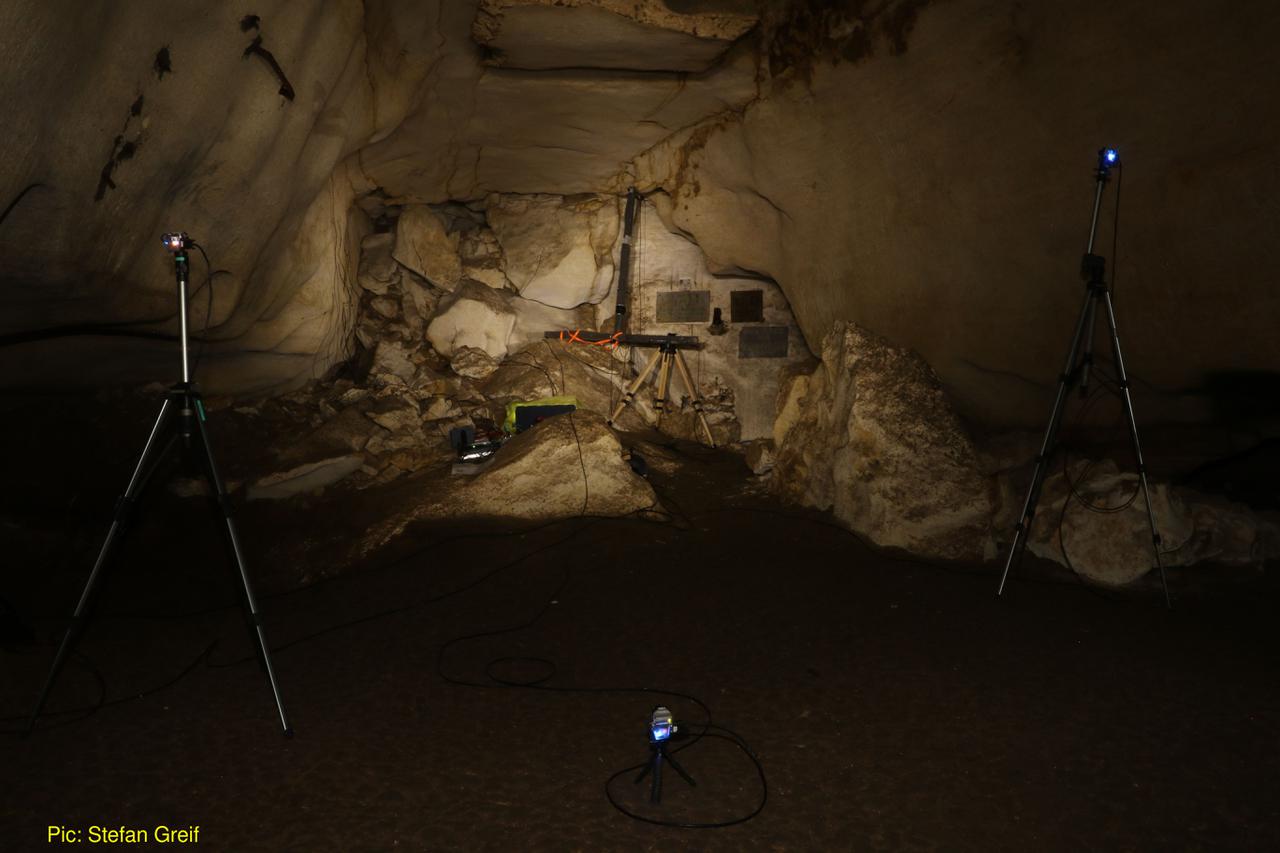
Dr. Thejasvi Beleyur is a Group Leader of the Active Sensing Collectives Lab at the Centre for the Advanced Study of Collective Behaviour, University of Konstanz, and holds an affiliated position at the Max Planck Institute of Animal Behavior. She also serves as IMPRS Faculty, contributing to interdisciplinary research at the intersection of animal behavior, sensory biology, and collective systems. Current: Group Leader, Active Sensing Collectives Lab (2025-present) Previous: Postdoc at Centre for the Advanced Study of Collective Behaviour (2021-2025) PhD: Max Planck Institute for Ornithology (2015-2021) Education: BS-MS in Biological Sciences, IISER-TVM (2008-2013) Dr. Beleyur's research program investigates how active-sensing agents like echolocating bats navigate complex sensory environments when operating in groups. Her work combines field observations, computational modeling, and swarm robotics to understand the sensorimotor strategies animals employ in information-limited settings. She has pioneered the development of the Ushichka dataset—a multichannel audio-video system for recording echolocating bats in natural habitats—which provides unprecedented insights into how bats modify flight and echolocation behaviors as group sizes change. Her publication record reveals a consistent trajectory examining sensory challenges in collective animal systems, with emphasis on echolocating bats. The research spans experimental field work, computational modeling, and methodological innovations in acoustic and video tracking. Recent work has expanded into developing computational tools like the beamshapes Python package for sound source modeling and exploring robot platforms to simulate bat collective behavior. Carl-Zeiss Nexus grant for inter-disciplinary research (2025) DFG Walter Benjamin postdoc grant (2021-2023) Early Career Researcher Award at International Bioacoustics Congress Google Cloud Platform Research Credits award ($1000) DAAD-GSSP Stipend for doctoral studies (2015-2020) Dr. Beleyur actively mentors students in her lab, currently supervising PhD student Frithjof and Master's student Aditya, following the completion of Gabriele's Master's thesis on the active-sensing Ro-BAT platform. Her research program is supported by competitive grants including the Carl-Zeiss Nexus grant and previously the DFG Walter Benjamin fellowship, which funded her work on 'The How and What of Active Sensing Collectives.' The Active Sensing Collectives Lab brings together an interdisciplinary team working at the interface of sensory biology, robotics, and collective behavior. The lab develops novel computational methods for analyzing complex datasets from multi-sensor field recordings, with emphasis on creating tools for long-term community use. Current projects include characterizing echolocating groups in the field and studying sensorimotor strategies using computational modeling.
Sidney S. Fels is a Professor at the University of British Columbia, affiliated with the Human Communication Technologies Lab in Vancouver. His research spans Human-Computer Interaction (HCI), Virtual Reality, Biomechanical Engineering, Speech Synthesis, and Medical Imaging. He focuses on innovative interfaces, surgical simulation, and AI-driven educational tools. Recent work includes advancements in touch interaction systems (e.g., HaloTouch), chatbot-assisted learning, and biomechanical modeling for medical applications. His research interests emphasize bridging computational models with real-world applications, particularly in healthcare and education. Notable contributions include contributions to CHI conferences, SIGGRAPH, and INTERSPEECH, showcasing work on AI ethics in learning environments, vocal tract modeling, and pervasive computing systems. Fels collaborates extensively with researchers in engineering, medicine, and computer science, reflecting his interdisciplinary approach to solving complex human-centric challenges. Labs/Teams: Human Communication Technologies Lab at UBC.
Kristian Kersting is an Associate Professor in the Computer Science Department at Technical University of Darmstadt, Germany, having moved from TU Dortmund in 2017. He holds additional affiliations including Adjunct Assistant Professor roles and has contributed to institutions like the University of Bonn and Wake Forest University. His research focuses on data mining, machine learning, and statistical relational AI, with applications in medicine, plant phenotyping, and traffic analysis. He has authored over 150 peer-reviewed publications and received numerous awards, including the ECCAI Dissertation Award 2006 and Best Student Paper Award at ECML 2006. Education includes a Ph.D. from the University of Freiburg and postdoctoral research at MIT. He has held roles such as Assistant Professor at the University of Bonn and co-chaired major conferences like ECML PKDD 2013. His work emphasizes interdisciplinary applications, including collaborations with industries like goedle.io and pflegix.de. Scientific contributions span probabilistic logic learning, lifted inference, and neuro-symbolic systems. His research group's activities include projects on plant disease detection, traffic prediction, and collective attention analysis. Key awards highlight his impact in AI and data science.
Timothy K. Shih is an active academic researcher with over 30 years of scholarly contributions, evidenced by his extensive publication record from 1991 through 2025. With more than 380 publications spanning numerous prestigious venues including IEEE Access, Multimedia Tools and Applications, and Lecture Notes in Computer Science, he maintains a robust research profile with consistent annual output (20+ papers in peak years). His work demonstrates leadership through frequent senior/corresponding author positions and collaborations with numerous researchers across international institutions. Dr. Shih's research interests encompass a diverse range of computer science disciplines with particular emphasis on Computer Vision , Human-Computer Interaction , and AI Applications . His work bridges theoretical advancements with practical implementations in educational technology, accessibility solutions, and multimedia systems. Recent publications reveal a strategic focus on applying deep learning techniques to solve real-world problems in sign language recognition, gesture analysis, and wireless sensing applications. Analysis of his publication trends over the past five years shows increasing specialization in multimodal AI systems, with significant contributions to sign language technology (including Arabic Sign Language recognition), WiFi-based human activity recognition, and music technology applications. His research demonstrates strong interdisciplinary connections between computer vision, machine learning, and human-centered computing, with practical applications spanning educational technology, accessibility solutions, and smart environments. Through his mentorship, Dr. Shih has guided numerous junior researchers who have become frequent collaborators, including Chih-Yang Lin, Hsin-Hung Cho, and Tipajin Thaipisutikul. His research program appears well-funded through consistent publication output across multiple project areas, suggesting successful grant acquisition in computer vision, AI, and educational technology domains. Current work indicates active involvement in cutting-edge research on diffusion models for audio processing, enhanced sign language recognition systems, and novel approaches to WiFi-based human interaction analysis.
Maria G. Martini is a Professor at Kingston University London, UK, with an extensive research portfolio spanning over two decades in multimedia quality assessment, video compression, and medical imaging. Her work demonstrates strong international collaboration, particularly with European researchers including Péter A. Kara (31 publications) and Nabajeet Barman (30 publications). Her primary research interests focus on Video Quality Assessment , Medical Imaging , Light Field Displays , Neuromorphic Vision Sensors , and Quality of Experience modeling. Recent work has centered on medical image quality assessment, neuromorphic vision sensor data compression, and gaming video streaming applications, reflecting her ability to adapt to emerging technologies while maintaining core expertise in quality metrics. Analysis of her recent publications (2022-2025) reveals a strong trend toward specialized quality assessment methodologies for emerging visual technologies, including neuromorphic sensors, light field displays, and medical imaging applications. Her work bridges theoretical quality metrics with practical implementation challenges, often addressing standardization needs and dataset documentation to improve research reproducibility. Martini has contributed significantly to quality metric standardization efforts, particularly regarding the Bjøntegaard Delta metric and SSIM-PSNR relationships for compressed content. Her recent publications in IEEE Transactions and other high-impact journals demonstrate continued research leadership in the field. Her research methodology consistently combines objective quality metrics with subjective evaluation frameworks, addressing both technical implementation challenges and human perception aspects. This dual approach has positioned her work as influential in both academic and standardization contexts.
Prof. Dr.-Ing. A. Rothermel is a leading academic at Ulm University's Institute of Microelectronics, specializing in biomedical implants, neural prosthetics, and microelectronics. His work focuses on subretinal implants to restore vision in blind patients, with notable contributions to the Alpha AMS retinal implant project. He has authored over 135 publications, including key papers on power control systems, spatial filtering, and clinical trials of retinal implants. His research integrates electronics design, signal processing, and clinical applications, with a strong emphasis on improving visual perception through advanced chip technology. Prof. Rothermel has been granted multiple patents, including foundational work on active retinal implants and biomedical circuit designs. His interdisciplinary approach bridges electrical engineering and medical science, addressing challenges in energy efficiency, neural stimulation, and implantable device reliability.
Dr. Svenja Papenmeier is a Researcher in the Marine Geophysics Working Group at the Leibniz Institute for Baltic Sea Research Warnemünde . She previously worked at the Alfred Wegener Institute (2012–2019) and the Christian-Albrechts-University of Kiel (2008–2012). She holds a PhD in Marine Geology from Kiel University, a Master’s in Marine Geosciences from the University of Bremen, and a Bachelor’s in Geosciences from the same institution. Research Focus: Hydroacoustic habitat mapping in the North Sea, Baltic Sea, and Siberian Arctic Development of seabed mapping standards (BSH No: 7201) Automated stone/boulder detection in acoustic datasets using neural networks Paleogeographic evolution of the Elbe River valley and Sylt Outer Reef Long-term analysis of dynamic bedforms and sediment distribution Scientific Contributions: Published 15+ peer-reviewed articles on marine sedimentology, AI applications in acoustic data, and coastal dynamics Key projects: OTC Stone (BMBF-funded), DAM CREATE , LABS , PaleoElbe , AMIN Regular presenter at international conferences (GeoHab, EGU, AGU) on topics like AI-based habitat mapping and sediment dynamics