Pamela Palmer Jones is a Professor (Lecturer) at the University of Utah, School of Music , where she specializes in Historical Performance Practice , Music Theory , and Harpsichord . Her teaching includes courses like Doctoral Performance Practice Seminars, Form & Analysis, and Early Music Ensemble, alongside extensive experience in musicianship and class piano instruction. DMA - University of Utah MFA - University of California, Los Angeles BM - University of Utah ARCM - Royal College of Music, London Dr. Jones’ research focuses on historical keyboard performance practices , baroque music pedagogy , and the reincorporation of lost teaching methods into 21st-century keyboard education. She has conducted original research on the Fitzwilliam Virginal Book, Pietro Castrucci’s Op. 1 Sonatas, Beethoven’s piano sonatas, and Carl Czerny’s pedagogical works, often using historical instruments in her creative projects. Her scholarly activities include a world-premier recording of Castrucci’s Op. 1 Sonatas (Centaur Records CRC 3932/3933) and pedagogical video production funded by University Teaching and Research Grants. She has collaborated with artists like Gerald Elias and Noriko Kishi on historically informed performances. College of Fine Arts Faculty Excellence in Teaching Award (2016-17) Dr. Jones has taught at institutions including Salt Lake Community College , Harper College , and College of Lake County before joining the University of Utah. She has also served as Coordinator for Musicianship and Class Piano and continues to perform extensively with ensembles such as the Beethoven Park City International Chamber Music Festival and Utah Flute Association .
Jia Di serves as Professor and Department Head of the Department of Electrical Engineering and Computer Science at the University of Arkansas, holding the Rodger S. Kline Endowed Leadership Chair. He has been with the institution since 2004, progressing from Assistant Professor to his current leadership position within the College of Engineering. Education: B.S. in Automatic Control, Tsinghua University (1997) M.S. in Automatic Control, Tsinghua University (2000) Ph.D. in Electrical and Computer Engineering, University of Central Florida (2004) Research Focus: Dr. Di's work centers on asynchronous integrated circuit design and hardware security , with emphasis on Multi-threshold Null Convention Logic (MTNCL) for ultra-low-power secure systems. His research spans hardware Trojan detection, polymorphic logic gates, extreme environment electronics, and security solutions for IoT infrastructure. His Trustable Logic Circuit Design Lab has pioneered techniques for side-channel attack mitigation and cold boot attack prevention through self-destructive memory mechanisms. Publication Trends: Recent publications reveal a strategic shift toward hardware security applications for renewable energy systems and IoT edge devices, while maintaining core expertise in asynchronous circuit design. His work increasingly integrates machine learning (e.g., graph neural networks for hardware Trojan detection) and cross-platform verification frameworks, demonstrating evolution from pure circuit design to holistic cybersecurity solutions for critical infrastructure. Scientific Recognition: Senior Member of IEEE Eminent Member of Tau Beta Pi Elected Member of the National Academy of Inventors Research Leadership: Dr. Di has secured over $23 million in research funding for his Trustable Logic Circuit Design Lab, supporting development of 6 U.S. patents and two authoritative books. His lab collaborates with federal agencies and industry partners on hardware security challenges, with recent grants focusing on photovoltaic system protection and extreme-environment electronics. While specific student names aren't documented here, his extensive publication record indicates significant graduate mentorship in hardware security and asynchronous design. Lab Infrastructure: The Trustable Logic Circuit Design Lab maintains specialized capabilities for testing circuits in extreme environments (high temperature/radiation) and developing polymorphic security mechanisms. Current projects include RF aperture security, hardware-based IoT verification systems, and digital twin implementations for power electronics with integrated trust verification.
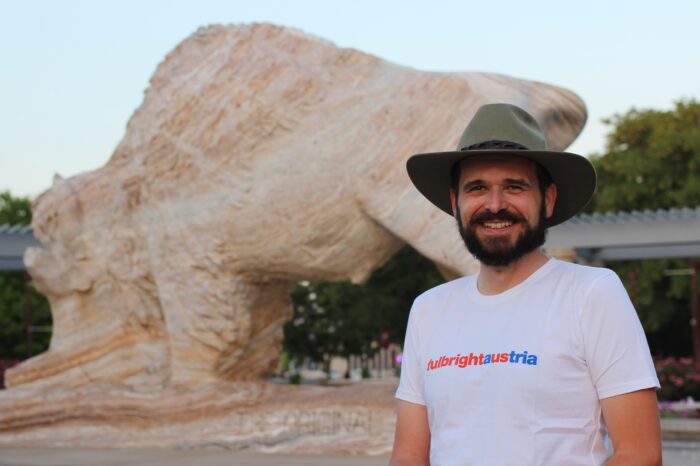
Stefan Rabitsch is an Associate Professor in American Studies with the Department of Literature, Area Studies and European Languages (ILOS) at the University of Oslo, Norway. His academic work bridges cultural studies, cultural history, and popular culture with a focus on audio-visual media including television, film, and video games, as well as comics and graphic novels. Position: Associate Professor Institution: University of Oslo, Department of Literature, Area Studies and European Languages (ILOS) Contact: stefan.rabitsch@ilos.uio.no | Room NT 717 Rabitsch's educational journey began from a working-class background as a "first gen" college student studying English and American Studies at the University of Klagenfurt, Austria, with a semester abroad at the University of North Carolina at Greensboro. His PhD centered on the transatlantic double consciousness in Star Trek's worldbuilding, followed by postdoctoral work at the University of Graz that evolved into his monograph project on the cultural history of cowboy hats, which is under contract with University of Oklahoma Press. He also held a Fulbright visiting scholarship at the Center for the Study of the American West at West Texas A&M in 2019. Rabitsch's research interests span American cultural studies and cultural history with particular focus on eighteenth- and nineteenth-century America, popular culture, and audiovisual media. His work explores the intersections of the American West, science fiction (particularly Star Trek), country music, and entrepreneurial culture. He approaches American Studies through historical and historiographic literacy combined with critical media literacy, emphasizing how narrative forms shape our understanding of the world. His specific interests include nineteenth-century American westward expansion, New Western History, livestock economies, remediations of historical topoi in popular media, American presidential history, and fan studies. Analysis of Rabitsch's recent publications reveals a consistent focus on the American West, Star Trek, and the intersection of popular culture with historical narratives. His work demonstrates how contemporary media like television series (Yellowstone), video games, and comics reinterpret historical themes and myths. A significant thread throughout his scholarship is the examination of how American cultural narratives travel internationally and are reinterpreted in different contexts, such as his work on teaching the American West in Norwegian settings. He frequently examines how Western iconography (particularly cowboy hats) functions as cultural symbols and how science fiction narratives engage with American historical consciousness. Fulbright visiting scholarship (2019) Co-Director of the Dress and Body Association (since 2022) Co-Founder of the "West of the Rest" research network (since 2022) Founding member and president of the Austrian Association for Cultural Studies (since 2021) Official Country Representative for the Science Fiction Research Association (since 2019) Rabitsch serves in multiple leadership roles including Co-Director of the Dress and Body Association, Co-Founder of the "West of the Rest" research network, and Founding member and president of the Austrian Association for Cultural Studies. He co-founded "ENGLABS at the movies," an initiative that brings together scholars and students to watch and discuss films related to British and American culture. His teaching approach emphasizes creating classroom environments focused equally on in-class work and extramural impact, challenging students to develop historical literacy and critical media skills through popular culture entry points. His notable lectures include "Petasus Americanus, or a Cultural History of Cowboy Hats," "Entrepreneurship as Popular National Storytelling Tradition," and "Playing [with] the West: Teaching, Research, and Video Games."
Janine Butler serves as an Associate Professor in the Department of Liberal Studies at the National Technical Institute for the Deaf (NTID), Rochester Institute of Technology. Her teaching portfolio includes Writing Seminar, Leadership and Accessible Technology, and Science, Technology, and Values, where she emphasizes critical thinking, rhetorical strategies, and accessible communication practices for diverse learners. Dr. Butler's academic credentials span foundational and advanced studies in rhetoric and writing: BA in English (Language, Writing, and Rhetoric; minor in Philosophy), University of Maryland MA in English (Writing Studies), Montclair State University PhD in Rhetoric, Writing, and Professional Communication, East Carolina University Her research centers on captions as critical accessibility infrastructure, examining multimodal communication and embodiment through rhetorical, pedagogical, and experiential lenses. She investigates how caption design impacts Deaf and hard-of-hearing audiences across digital media, live performances, and educational contexts, advocating for socially just communication practices that center accessibility as an ongoing communal process. Analysis of her 2017-2024 publications reveals a cohesive scholarly trajectory focused on captioning's rhetorical dimensions. Her work systematically explores caption integration in video composition, live performance, and television while addressing broader implications for digital equity, multilingual accessibility, and embodied learning. This research bridges composition studies, deaf studies, and media theory, establishing captions as dynamic sites for rhetorical invention and social change. Scientific awards were not documented in the provided materials. Dr. Butler's mentorship philosophy emphasizes reciprocal learning between educator and students, reflected in her course designs that cultivate leadership through accessible technologies. While specific grant funding and advisee details remain unspecified, her Leadership and Accessible Technology course demonstrates active engagement with real-world accessibility advocacy, including legal frameworks and emerging technologies like CART services.
Mauro Barni serves as a Full Professor in the Department of Information Engineering and Mathematical Sciences at the University of Siena, where he teaches Cybersecurity, Information Theory, and Mathematical Statistics. His office hours are held Fridays from 3:00 PM to 5:00 PM via online appointment, reflecting his active engagement with students. Professor Barni's research spans multimedia security and digital forensics, with emphasis on deep learning applications for digital watermarking, deepfake detection, and synthetic image attribution. His work addresses critical challenges in adversarial machine learning, steganography, and image manipulation detection, contributing significantly to cybersecurity and intellectual property protection frameworks. Analysis of his 2021-2025 publications reveals dominant trends in neural network watermarking robustness, synthetic media detection, and defenses against backdoor attacks. His research consistently bridges theoretical foundations with practical implementations, focusing on real-world applications like printer source attribution and physical-domain adversarial scenarios. He leads the VIPP (Vision, Image Processing, and Pattern Recognition) research group, which maintains dedicated virtual classrooms for collaborative projects in computer vision and multimedia security. The group actively develops methodologies for image forensics, synthetic media analysis, and security countermeasures against emerging threats.
Jamal Atif is a Professor at Paris-Dauphine University and holds multiple significant leadership positions including Project Manager for 'Data Science and Artificial Intelligence' at the Institute of Information Sciences and their Interactions (INS2I) of the CNRS, Deputy Scientific Director of 3IA PRAIRIE, Head of the MILES team/project at LAMSADE (UMR CNRS-Université Paris-Dauphine), Co-leader of the Transverse Artificial Intelligence Program at PSL University, and Director of the Dauphine Numérique program. Professor Atif's primary research focuses on the foundations of responsible artificial intelligence, with specific expertise in privacy preservation in machine learning, robustness of deep learning algorithms to malicious attacks, causality, and explainability. His work bridges theoretical foundations with practical applications in security and reliability of AI systems. He has developed innovative approaches to address adversarial vulnerabilities in machine learning models and has made significant contributions to privacy-preserving techniques in data analysis. His publication record demonstrates a consistent focus on robust and trustworthy AI systems, with recent work exploring differential privacy in clustering, adversarial robustness, and explainable AI. The research spans theoretical foundations in logic and knowledge representation to practical applications in finance, healthcare, and computer vision. His publications appear in top-tier venues including Machine Learning journal, Neural Information Processing Systems, and International Joint Conferences on Artificial Intelligence. Scientific Awards: Recipient of two awards from the North American Society of Radiology for his thesis work Professor Atif has co-supervised or is currently supervising around fifteen doctoral students, demonstrating his commitment to mentoring the next generation of AI researchers. His leadership extends to directing major institutional programs including Dauphine Numérique and the Transverse Artificial Intelligence Program at PSL University, where he shapes strategic research directions in AI. He leads the MILES team/project at LAMSADE, which focuses on foundational aspects of machine learning and artificial intelligence. The team's research spans theoretical aspects of learning algorithms to practical applications requiring robust and reliable AI systems, with particular emphasis on security and privacy considerations in modern machine learning deployments.
Prof. Gerhard Weber holds the Chair in Human-Computer Interaction at Technische Universität Dresden, Germany. Previously, he served as Chair for Human-Centered Interfaces at Christian-Albrechts-Universität zu Kiel (2000–2007) and Professor for Operating Systems and Graphical User Interfaces at Harz University of Applied Sciences (1996–2000). His research focuses on accessible computing, assistive technologies, haptics, and multimodal interaction. Key projects include development of tactile charts (SVGPlott), robotic guidance systems (HapticRein), and indoor navigation solutions for visually impaired users. Current work explores voice interfaces for social robots, autism-inclusive technologies, and accessibility maturity models for higher education institutions. Over 70 publications span conferences like CHI, IEEE, and ACM, emphasizing practical applications in assistive tech. Education & Professional Journey: 2007–Present: Chair in Human-Computer Interaction, TU Dresden 2000–2007: Chair for Human-Centered Interfaces, Kiel University 1996–2000: Professor of Operating Systems and GUIs, Harz University Research Interests: Prof. Weber's work bridges theory and practice in accessibility, emphasizing tactile interfaces, inclusive design, and assistive robotics. Recent projects include: Mosaik : Enabling blind users to create and share graphics via audio-tactile tools Cloud4All : Personalized web accessibility solutions Range-IT : Real-time object detection for navigation aids Advising & Grants: Managed €3.2M in EU and national grants (2011–2020) Supervised 12+ graduate projects on assistive tech Labs & Teams: Leads TU Dresden's Human-Computer Interaction Lab, collaborating with industry partners like Siemens and rehabilitation centers to deploy assistive systems in real-world settings.
Noah Glaser is an Assistant Professor at the University of Missouri’s School of Information Science & Learning Technologies, where he directs the Information Experience Lab. He holds a PhD in Instructional Design and Technology from the University of Cincinnati. His research focuses on leveraging cutting-edge technologies like virtual reality (VR), video games, artificial intelligence (AI), and mobile devices to design inclusive educational interventions, particularly for neurodiverse populations and individuals with disabilities. Key projects include NSF-funded initiatives such as uSucceed (VR/AI-driven cybersecurity curriculum for neurodiverse learners) and Gaming4Good (computational thinking education via Nintendo’s Game Builder Garage). He also develops The Things Left Behind , a video game celebrating neurodivergent experiences, and leads Mizzou Cloud DevOps , advancing cloud computing training for scientific communities. Glaser’s expertise spans mixed-reality learning environments, formal/informal STEAM education, and AI applications in education. His work emphasizes participatory design involving neurodivergent users, resulting in over 30 peer-reviewed publications and frequent conference presentations. He actively mentors students interested in game development, extended reality (XR), and AI. His interdisciplinary collaborations bridge instructional design, neuroscience, and technology, with a focus on promoting equity in STEM education. Notable grants include multiple NSF awards supporting his research into inclusive technologies. His lab develops tools like the Museum of Instructional Design (3D virtual learning environment) and Maria Martinez VR training program for autistic adults. Glaser advocates for universal design principles in online education and has explored emerging technologies such as ChatGPT’s educational potential and VR’s impact on environmental attitudes.
Prof. Hermann Hellwagner is a Full Professor at the Department of Information Technology, University of Klagenfurt. He has held roles such as Vice President (Natural and Technical Sciences) at the Austrian Science Fund (FWF) and Vice Dean of the Faculty of Technical Sciences. His research focuses on multimedia communication, network engineering, and future internet architectures. Notable projects include work on adaptive streaming, edge computing, and drone networks. He holds a Ph.D. in Systolic Architectures from the University of Linz (1988). Research interests span distributed multimedia systems, information-centric networking (ICN), and optimizing video streaming quality-of-experience (QoE). Recent work emphasizes edge computing solutions for low-latency streaming and dynamic codec adaptation. His contributions include frameworks like ALPHAS and MEDUSA for bitrate optimization, and studies on point cloud streaming in augmented reality. Publications (2021–2025) highlight advancements in edge-assisted streaming, hybrid P2P-CDN architectures, and transcoding techniques. His work often bridges theoretical models with real-world implementations, addressing challenges in latency, cost, and device adaptability. Current projects involve 6DoF video streaming and multi-robot system optimization. Labs/Teams: Part of the Institute of Information Technology (ITEC), Klagenfurt. Collaborates on EU-funded projects and industry partnerships in 5G edge computing and drone networks. Active in standards groups for HTTP adaptive streaming protocols.
Professor Dorothy Monekosso holds a PhD in Spacecraft Engineering from the University of Surrey and is currently a Professor of Computer Science at Durham University. She also serves as Chief Technical Officer (CTO) at More Life UK Ltd, a health-focused company contracted with NHS England. Her research focuses on applying AI and machine learning to healthcare technologies, including assistive and rehabilitation systems. Notable projects include the Virtual Physiotherapist for stroke recovery and the Digital Health Hub. Education: PhD (2000) in Spacecraft Engineering (University of Surrey), Master’s in Satellite Engineering, Bachelor in Electronic Engineering. Research Interests: Behavior Analytics, Digital Twin Computing, Anomaly detection, Medical Image Analysis, Smart Environments, and Wearables. Her work bridges robotics, AI, and healthcare to improve independent living and clinical decision support. Awards: Royal Academy of Engineering Foresight Award (2000), Honorary Fellowship of the British Computer Society (2020). Grants/Projects: Innovate UK-funded weight management programs, MRC-funded Virtual Physiotherapist studies, collaborations with NHS and Assisted Living Leeds. Labs/Teams: Leads development of assistive technologies through Durham’s Computer Science department and industry partnerships. Current supervision includes Strahinja Klem.
Helen Berg is an Associate Professor in the Department of Health Sciences at NTNU Ålesund. Her research focuses on integrating Virtual Reality (VR) and simulation-based training into healthcare education, particularly in clinical observation, preoperative handovers, and healthcare communication. She has led projects developing VR tools for systematic clinical approaches like ABCDE and ISBAR, emphasizing their efficacy for nursing and medical students. Her work bridges technology and education, aiming to enhance clinical skills through innovative methods. Research Interests: Simulation-based training methodologies VR applications in medical education Clinical communication protocols (ISBAR/ABCDE) Healthcare technology adoption Telehealth and rehabilitation technology Key Projects: VRINK: VR for youth inclusion in outdoor activities Development of ISBAR and ABCDE VR training modules Evaluation of video communication in elderly care Teaching: Courses include SYA1000 - Basic Nursing, focusing on practical healthcare skills. Labs/Teams: Collaborates with institutions like VID Stavanger and NTNU’s simulation centers on VR and healthcare innovation.
Dr. Mike Ryder is a Lecturer in Marketing at Lancaster University's Management School, specializing in interdisciplinary research bridging literature, philosophy, technology studies, and marketing. He teaches modules such as Digital Marketing, Social Media, and serves as Programme Director for the MSc Digital and Social Media Marketing. His research explores the intersection of new technologies with ethics, biopolitics, and science fiction. He holds a PhD ('Citizen Robots: Biopolitics, the Computer and the Vietnam Period') and is a Senior Fellow of Advance HE. Education: PhD in Literature/Technology, MA English (Distinction), BA (Hons) English with Creative Writing (First Class). Prior to academia, he worked in video games, healthcare ghostwriting, and digital communications. He directs Mental Capacity Ltd, a healthcare training firm. Awards include the Pilkington Award for Teaching. Research interests include AI ethics, digital marketing pedagogy, and science fiction's role in conceptualizing societal futures. He participates in interdisciplinary groups like the Lancaster Intelligent, Robotic and Autonomous Systems Centre and Centre for Consumption Insights. Supervision focuses on digital marketing, AI ethics, and interdisciplinary projects combining philosophy and technology.
Professor Dinesh Kumar is a faculty member in the School of Engineering at RMIT University, specializing in Biomedical Engineering and Artificial Intelligence. He holds the role of Chair of the IEEE Biosignals and Biorobotics Conference since 2009, demonstrating leadership in interdisciplinary research. His research focuses on biomedical signal processing, medical imaging, and AI-driven diagnostics, with applications in neurology, cardiology, and telemedicine. Professor Kumar oversees projects addressing challenges like Parkinson’s disease diagnosis, cardiac arrhythmia classification, and wound assessment using advanced computational methods. His work bridges clinical and engineering domains, emphasizing practical solutions for healthcare challenges. Recent contributions include developing algorithms for ECG analysis, facial expression recognition for neurological disorders, and chatbot-based vocal screening systems. Despite no explicit mention of awards, his extensive publication record and conference leadership highlight significant scholarly impact. Professor Kumar collaborates with industry and academic partners to advance technologies such as thermal imaging for ulcers, deep learning for medical image segmentation, and wearable sensors for gait analysis. His research often involves interdisciplinary teams, reflecting a commitment to translating technical innovations into real-world healthcare tools.
Leong Shu Min is a Lecturer in the School of Information Technology at Monash University Malaysia. She holds a Ph.D. in IT from Monash University Malaysia (2023), focusing on privacy-preserving and emotional understanding of human faces using machine learning. She earned her Master of Engineering Science (2020) and B.Eng. (Hons) in Electronics with Computer specialization (2018) from Multimedia University. Her research emphasizes face analysis, emotion recognition, and security-related image processing. Education Ph.D., IT, Monash University Malaysia (2019–2023) M.Eng.Sc., Multimedia University (2018–2020) B.Eng., Multimedia University (2014–2018) Research Interests Her work centers on facial recognition systems, emotion analysis, and privacy-preserving techniques. She explores Local Binary Pattern algorithms and micro-expression recognition, aiming to enhance security and ethical AI applications. Recent projects include detecting synthetic music and uncovering biases in video-based emotion recognition systems. Projects Chief Investigator in the Æinstein: Adversarial AI amongst Materials Discovery Domains project (2024–2026), focusing on AI-driven material discovery and ethical AI challenges. Advising She has been accepting PhD students since 2020, mentoring research in facial analysis and machine learning applications.
Kolbjørn Kallesten Brønnick is a Professor and Dean at the Faculty of Social Sciences, University of Stavanger. His research spans neuroscience, healthcare technology, and digitalization impacts in academia. He has contributed to studies on EEG-based disease classification, digital stressors in academic environments, and telemedicine efficacy. His work emphasizes cross-disciplinary approaches, integrating clinical neuroscience with public health challenges. Key research interests include neurodegenerative disorders, olfactory dysfunction assessment, and healthcare practitioner resilience. His recent publications explore EEG biomarkers for Parkinson’s disease, validation of digital consultation tools, and pandemic-related communication strategies. Brønnick collaborates internationally on projects addressing neuropsychiatric symptoms in dementia and multisite EEG data harmonization. His work is published in high-impact journals like Clinical Neurophysiology and Frontiers in Psychology. Notable contributions include developing the Digital Stressors Scale and the PARPHAIT olfactory assessment tool. Brønnick’s academic leadership role underscores his commitment to advancing social science and health research methodologies.