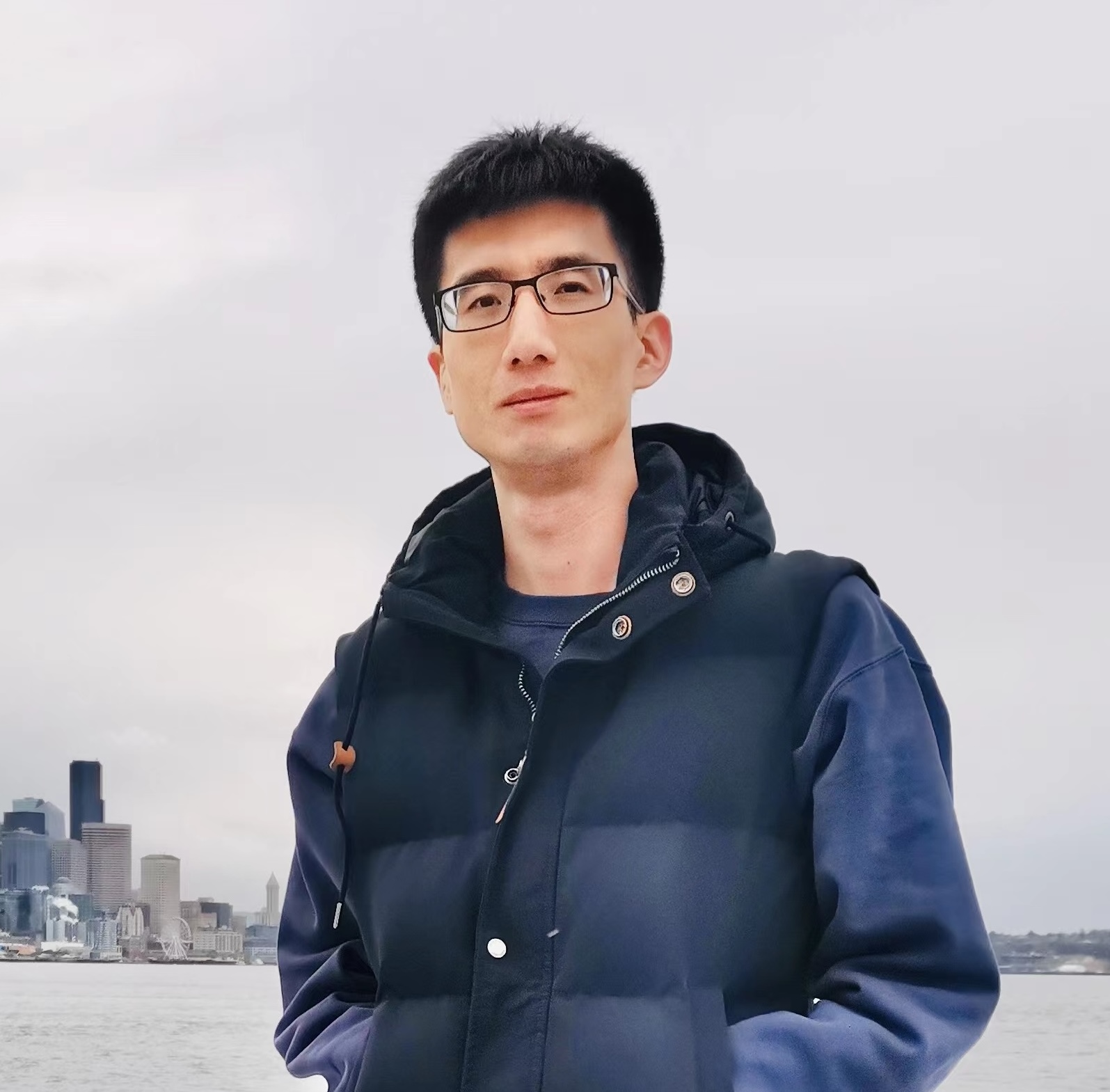
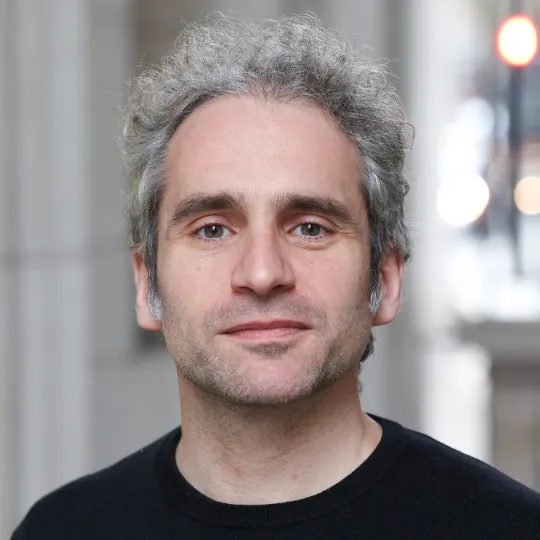
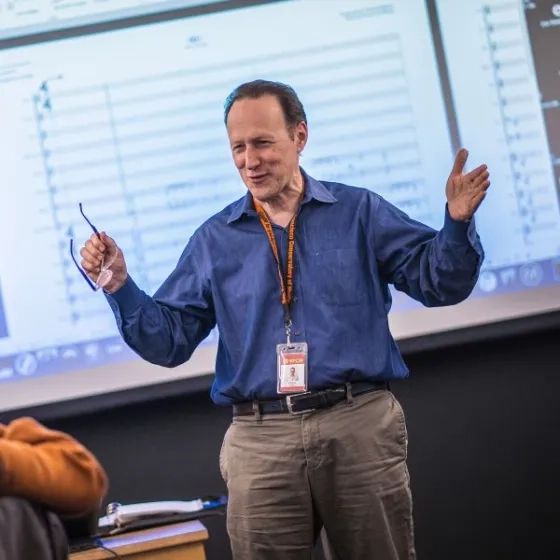
Jingchao Ni is an Assistant Professor in the Department of Computer Science at the University of Houston. He previously worked as a researcher at NEC Labs America (2018-2022) and AWS AI Labs (2022-2024). He earned his Ph.D. in Computer Science from The Pennsylvania State University's College of Information Sciences and Technology in 2018 under Prof. Xiang Zhang. Research Interests: Machine Learning, Time Series Analysis (Cross-Modal/Multimodal Integration, LLM Reasoning), Graph Learning, Anomaly Detection, Generative Models, and applications in Healthcare (personalized systems, Cyber-Physical Systems, AIOps). His recent publications focus on multimodal time series analysis, vision models for temporal data, and interpretable graph neural networks, with deployments in AWS cloud systems. He has advised students on projects involving LLM agents, causal discovery, and robust forecasting. Awards include a AAAI 2019 Most Influential Paper (PaperDigest) and an ICLR 2022 Spotlight Presentation. He leads the Data-Driven Intelligence (D2I) Group and has contributed to tutorials at KDD 2025 and IJCAI 2025.
Md Saifuddin Khalid is an Associate Professor in the Department of Applied Mathematics and Computer Science at the Technical University of Denmark (DTU). His research focuses on digital training technologies, learning analytics, and human-computer interaction in educational contexts. He leads and collaborates on projects exploring AI applications in education, adaptive learning systems, and the impact of digital tools on teaching and learning outcomes. His work contributes to UN Sustainable Development Goals related to quality education and industry innovation. Khalid actively supervises PhD students and has published extensively on topics such as generative AI for literature reviews, user satisfaction in AI chatbots, and usability of digital training technologies in industries like pharmaceuticals. Key Projects: MIXAP-EU: Developing mixed reality tools for teachers in Europe. HEGenAI: Integrating generative AI into higher education assessments. Methods for evaluating digital training technologies in pharmaceutical production. Editorial Roles: Peer reviews for journals like International Journal of Human-Computer Interaction and Computers & Education . Khalid’s research emphasizes practical applications of technology in education and industry, with a focus on improving user experiences and outcomes through systematic evaluations and design frameworks.
George N. Papageorgiou is a Professor of Management & Information Systems at the Gregoriou School of Business Administration, European University Cyprus. He serves in leadership roles including Deputy Dean (2012–2017) and PhD Programme Coordinator (2015–2017). He holds a PhD in Systems Modelling and Simulation from City University, London (1997), along with an MBA (1994) and First Class Honours in Engineering (1992). His research focuses on digital marketing competencies, smart urban mobility systems, entrepreneurship education, and system dynamics modeling for healthcare and sustainability. Notable projects include the SPN (Smart Pedestrian Network) system, funded by Horizon 2020, and the DIMAS project addressing digital marketing frameworks. Awarded the IEEE Best Paper Award (2017) and Innovation Distinction (SPARKS 2019), his work spans over 50 publications in journals like IEEE and Emerald. He actively reviews for IEEE, Emerald, and the System Dynamics Society. His consulting roles include EU research proposal evaluation and editorial work for Emerald. Key achievements include developing frameworks for sustainable urban mobility and green entrepreneurship education. He has led EU-funded projects totaling millions in grants, emphasizing interdisciplinary approaches to innovation and education.
Antonio Dello Iacono is an Associate Professor (Reader) in Strength and Conditioning at the University of the West of Scotland's Division of Sport, Exercise, and Health within the School of Health and Life Sciences. With 20 years of combined experience in elite sport practice, teaching, and research, his work focuses on elite performance conditioning, training load monitoring, and technology integration in sports. He leads the Sports Performance Interest Group, coordinating industry-collaborative applied research projects. His research aims to develop personalized exercise prescription models to enhance individualized training outcomes, reduce overtraining risks, and improve health outcomes. Education & Positions Scientific Associate at University of Split (since 2017) Research Focus His primary research goals involve transitioning from rigid exercise protocols to personalized approaches tailored to individual abilities and stressors. Key areas include autoregulation methods in resistance training and interdisciplinary research integration. He contributes to UN Sustainable Development Goals related to health and well-being. Collaborations & Activities Peer reviewer for Frontiers in Physiology (2022) Invited speaker at ECSS conferences (2018–2021) Media engagements include discussions on mental training's physical benefits and collaborative partnerships Lab/Teams Leads the Sports Performance Interest Group, fostering applied research with industry partners.
Dr. Lora Sariaslan is an Assistant Professor of Modern and Contemporary Art at Utrecht University's Department of History and Art History, affiliated with the Humanities Research Institute. She holds a PhD from the University of Amsterdam and has extensive curatorial experience globally, including roles at the Dallas Museum of Art and Istanbul Modern. Her academic work focuses on transnational art practices, migration, urban mapping, and postcolonial studies. Sariaslan teaches courses such as Curating the Art Exhibition: Past, Present and Future and contributes to programs like the Art History of the Low Countries (RMA). Education: B.A. Art History, Knox College, Illinois M.A. Art History, University of Texas at Austin Ph.D., University of Amsterdam ( Pins on the Map: Urban Mappings in European-Turkish Contemporary Art ) Research Interests: Modern/contemporary art's intersection with migration, cultural identity, and urban space. She explores how artists negotiate belonging through transnational practices, particularly in post-Yugoslav Europe and Turkey. Her work bridges curatorial praxis and academic research, emphasizing critical museum studies and heritage politics. Recent Themes in Publications: Focus on humor in Turkish contemporary art, geopolitical affect through 'oriental rugs,' and artistic responses to displacement. Her articles analyze artists like Mounira Al Solh, Nilbar Güreş, and Servet Koçyiğit, highlighting themes of memory, spatial politics, and cultural hybridity. Affiliations: Member of International Association of Art Critics (AICA), National Correspondent for European Museum Forum (EMF-Turkey). Curatorial projects include Uncharted (Bergen, 2023) and the Mardin Biennial (2012). Teaching & Training: Oversees courses on global art history, museum studies, and transcultural encounters. Previously taught at University of Texas at Austin and University of Amsterdam.
Affiliations and Roles Professor Wang holds dual appointments as Professor of Physics and Mechanical and Aerospace Engineering at Cornell University. She is affiliated with the Sibley School of Mechanical and Aerospace Engineering and the College of Arts and Sciences. Education B.S. in Physics, Fudan University, Shanghai, China (1989) Ph.D. in Physics, University of Chicago (1996) NSF-NATO Postdoctoral Fellow, Theoretical Physics, Oxford University (1997) Visiting Member, Courant Institute of Mathematical Sciences, NYU (1997-1999) Research Her research focuses on the physics of living organisms, particularly insect flight dynamics , biophysics , and computational modeling . Key projects include: Dragonfly righting reflex mechanisms Neuro-mechanical control in fruit flies Unsteady aerodynamics and fluid-structure interactions Awards and Honors Simons Fellowship in Theoretical Physics (2020) Radcliffe Fellowship (2007) Cornell Provost's Award for Distinguished Scholarship (2005) David and Lucile Packard Fellowship (2002) Labs and Collaborations Her work integrates experimental and computational approaches, often conducted in collaboration with institutions like the Janelia Research Campus (HHMI) and the Joint Texas Experimental Tokamak (J-TEXT).
Dr. Debbie Palmer is a Senior Lecturer in Research Methods and Epidemiology at the Moray House School of Education and Sport, University of Edinburgh. She holds adjunct roles including Adjunct Associate Professor at the University of Calgary and Honorary Assistant Professor at the University of Nottingham. Her research focuses on injury epidemiology, athlete health, and long-term consequences of sports injuries, particularly among Olympians and elite athletes. She co-founded the Versus Arthritis Significant Ankle Ligament Injury (SALI) Cohort and co-directs the Edinburgh-Bath UK Collaborating Centre on Injury and Illness Prevention in Sport, an IOC Research Centre of Excellence. Education: PhD in Injury Epidemiology, University of Bath (2009) MSc Exercise Physiology, Loughborough University (2003) BSc (Hons) Sport Science, University of Greenwich (1998) Research Interests: Dr. Palmer’s work spans injury prevention in elite and recreational cohorts, long-term health outcomes for athletes, and sport-related concussion. Key areas include Olympian health surveillance, rugby injury prevention, and cycling safety. Her projects involve collaborations with organizations like World Rugby, the IOC, and the Scottish FA. Recent Projects: IOC Olympian Health Cohort (2022–present) World Rugby Activate Program Evaluation (2022–present) Edinburgh Sports Medicine Research Network (ESMRN) Tackle Height Law Change Evaluation in Scottish Rugby Awards & Grants: IOC Research Centre of Excellence (2022) $218k UK Sport/English Institute of Sport grant (2011–2014) $120k World Olympians Association grant (ROMHS Study) Advising & Grants: Supervises 6 current PhD students and has graduated 5 students. Active in securing funding for injury prevention initiatives and athlete health programs. Labs & Teams: Leads the Edinburgh Sports Medicine Research Network and co-directs the UKCCIIS, fostering international collaboration in athlete health research.
Li Wei is a distinguished academic affiliated with Tsinghua University, with a focus on interdisciplinary research spanning artificial intelligence, machine learning, and computer vision. His work often intersects with medical informatics, remote sensing, and signal processing, demonstrating a commitment to advancing technological solutions in healthcare, environmental monitoring, and engineering systems. Research interests include deep learning applications in clinical diagnostics, satellite data analysis for climate modeling, and optimization of energy storage systems. He has contributed to innovative solutions in areas such as UAV-enabled edge computing, privacy-preserving blockchain protocols, and thermal-based surveillance systems. His collaborative projects often involve multidisciplinary teams across institutions. Publications reflect a strong emphasis on practical applications, such as mobile health tools for tumor recognition, transformer-based super-resolution techniques for oceanography, and AI-driven risk classification models for respiratory diseases. While no specific awards or grants are listed, his prolific output across top-tier journals indicates sustained research impact. Professional activities include contributions to conferences like RecSys, MICCAI, and AAAI, and editorial roles are implied through his extensive publication record. Collaborations with industry partners (e.g., in energy systems and medical imaging) suggest engagement with real-world problem-solving.
Paolo Ruffino is a Senior Lecturer in Digital Curation and Computational Creativity at the Department of Digital Humanities, King's College London, and currently serves as Postgraduate Research Lead. His work bridges academia and artistic practice through collaborations with the artist group IOCOSE, which explores future narratives in technology and society. He previously held positions at the University of Liverpool, University of Lincoln, and others. Education background includes prior academic roles rather than explicit degree details Research focuses on videogames’ role in the Anthropocene, posthumanism, media philosophy, and labor dynamics in the games industry. Current projects include a monograph on post-Anthropocene imaginaries in games and studies on game engines’ impact on visual culture. His work intersects cultural studies, semiotics, and media theory. Publications span critical analyses of game mechanics, labor practices, and independent game development. He contributes to interdisciplinary initiatives like the Digital Humanities Game Lab and the Centre for Digital Culture at King’s. Teaching includes modules on digital culture, media studies, and game studies at undergraduate and postgraduate levels. Active in fostering collaborative research between academics and game developers.
Pasquale Cascarano is a fixed-term Assistant Professor at the University of Bologna , affiliated with the Department of the Arts . His research bridges computer science with creative industries (cinema, art, fashion) and biomedical applications, focusing on Artificial Intelligence and Extended Reality paradigms. He collaborates with national and international institutions on interdisciplinary projects. Institutional Affiliation: University of Bologna Academic Role: Assistant Professor (fixed-term) Research Interests center on integrating AI and XR into creative sectors and healthcare, with emphasis on: Generative AI for immersive environments Medical imaging and diagnostics Digital heritage preservation XR-based educational tools 3D visualization techniques Creative technology applications Recent Publications highlight trends in: Medical XR for surgical training AI-driven image restoration LLM integration with AR/VR Privacy in collaborative AR Fashion and cultural heritage digitization Deep learning for video enhancement
Associate Professor Darrin Verhagen is an award-winning sound designer and composer at RMIT University's School of Design, where he teaches in the Sound Design specialization within the Digital Media Program and directs the Audiokinetic Experiments (AkE) Lab. His academic work bridges creative practice with scientific inquiry into multisensory perception. Verhagen's research centers on the neurobiology of aesthetic experience, particularly exploring how sound interacts with vision, movement, and vibration. His work in the AkE Lab utilizes motion simulators, 4D cinema seating, and light to create installations that investigate the relationship between hearing, vision, movement and vibration. His academic background includes postgraduate research on musical extremes - lowercase sound for his Masters and Noise for his Doctorate. His creative output spans sound design for contemporary dance, theatre, installation, film, television and computer games. Verhagen has released over 20 albums internationally and performs audiovisual live shows globally. He was founder and curator of Dorobo records, which showcased Australian sound art for 15 years. Industry collaborations include work with Melbourne Theatre Company, Malthouse, Chunky Move, Australian Dance Theatre, and others. Notable awards include multiple Green Room Awards for Sound Design, Australian Academy of Cinema & Television Arts award finalist status, APRA Art Music awards finalist for experimental music, RMIT Research Award for technical innovation, and RMIT Teaching Award for excellence in teaching practice. Verhagen's supervision projects reveal a trajectory toward increasingly sophisticated explorations of sound in relation to space, perception, and human experience, with recent work focusing on transdisciplinary design, spatial sound applications, distributed audio systems, and vocal ecology. His work consistently bridges artistic practice with technological innovation and scientific inquiry into perceptual phenomena.
Melissa Tully is a Professor and CLAS Collegiate Scholar at the University of Iowa, serving as Director of the School of Journalism and Mass Communication. She holds the Easton Professorship of Research and is a Senior Research Fellow at the Public Policy Center. Her research focuses on news literacy, misinformation, and global media with emphasis on African contexts. She teaches courses on social/digital media and leads the Global Media Studies Working Group at the Obermann Center. Tully earned her Ph.D. from the University of Wisconsin-Madison in 2011. Recent grants include projects on media literacy impact measurement and combating misinformation in Kenya/Senegal. She has advised numerous grants totaling over $2M, including roles as Principal Investigator for studies on WhatsApp misinformation and news literacy frameworks. Her work spans Sub-Saharan Africa and the U.S., addressing topics like mobile money adoption, cyberbullying, and sponsored content ethics. Key research themes include media literacy behaviors, misinformation countermeasures, and digital inequalities. Over 60 peer-reviewed articles highlight her contributions to Science Communication, Journalism Theory, and African media studies. Collaborations with international organizations like Innovations for Poverty Action reflect her commitment to applied research.
Giulia Boato is an Associate Professor at the University of Trento’s Department of Information Engineering and Computer Science (DISI). She teaches courses in Probability and Multimedia Data Security. Her expertise spans Cyber Security, Digital Forensics, and Multimedia Analysis, focusing on image and signal processing for data protection, forensics, and anti-forensics. She collaborates internationally with institutions like Tampere University of Technology and Dartmouth College, co-advising PhD students and contributing to European projects like LIVINGKNOWLEDGE and GLOCAL. Education: PhD in Information and Communication Technology (2005), M.Sc. in Mathematics (2002), Scientific Lyceum (1998) with bilingual Italian-German certification. Past roles include Assistant Professor at DISI (2006–2018) and visiting researcher at the University of Vigo (2006) and University of Innsbruck (2018). Research interests include multimedia data protection, image forensics (tampering detection, computer vs. natural data discrimination), and intelligent data management. She leads projects on social media forensics, event-based retrieval, and synthetic media detection. Awards include Best Paper at IEEE WIFS 2012 and Top 10% Paper at MMSP 2012. Professional contributions include roles as co-chair of workshops, Technical Program Committee member for ICIP and ICC, and reviewer for journals like IEEE Transactions on Information Forensics and Security. She has advised PhD theses and contributed to datasets like TrueFace and WILD for synthetic media analysis.
Lennie Moore serves as a faculty member in the Technology and Applied Composition (TAC) program at the San Francisco Conservatory of Music (SFCM), where he teaches Applied Lessons, Tools, Techniques and Analysis, and Orchestration for the Media Composer. With decades of experience as a composer, arranger, and orchestrator for video games, commercials, film, and television, Moore brings real-world industry expertise to his academic role. His teaching extends beyond SFCM, having developed and taught courses in Composing for Video Games at USC and UCLA Extension. Moore's research interests focus on the complex puzzle of video game scoring, emphasizing the deconstructionist approach required for interactive media. His work explores how to break down compositions into vertical layers and horizontal procedural components that can be implemented into music playback systems in real-time based on player choices. He specializes in open-world environments where music must smoothly transition through different game areas. His passion for building computers and video games outside of traditional music informs his innovative approach to media composition. His recent work includes the 2024 release of Outcast: A New Beginning , a sequel to his groundbreaking 1999 score for the original Outcast game, which was one of the first live orchestra and choir scores in gaming history. This new project involved approximately two hours and fifteen minutes of music with complex interactive elements, recorded during the pandemic with remote sessions. Best Soundtrack Album, G.A.N.G. Awards, 2011 Best Interactive Score, G.A.N.G. Awards, 2011 Best Audio — Other, G.A.N.G. Awards, 2008 Moore actively mentors students in the TAC program, with notable alumni including Kyle Randall (winner of the American Prize in composition), Shengyuan Li (Top 10 Finalist in the Berlin International Film Scoring Competition 2023), and Shawne Workman (now SFCM TAC faculty). His 2023 album Mentors pays tribute to his influences including Weather Report, Steps Ahead, Arif Mardin, Michael Gibbs, Don Grolnick, David Mash, Nick & Andy, Ken Kraintz, and Toshiko Akiyoshi. Moore emphasizes to students that 'Failure is an option' and encourages them to consider 'Who am I as an artist?' early in their development.
Jenelle Troxell is an Associate Professor of English and Co-Director of Film Studies at Union College. She holds a B.A. from Johns Hopkins University and M.A./Ph.D. from Columbia University. Her research focuses on transnational cinema, race/ethnicity studies, and feminist theory. Troxell has curated numerous film series including Cinémature Féminine , Specters of Empire , and Decolonial Beats , often blending live performance with film screenings. She directed the experimental film Marcilla , which explores feminist reimaginings of classic horror narratives. Troxell’s work has been supported by DAAD, Mellon, and other prestigious grants. Her academic credentials include visiting professorships at Pratt Institute and Al-Quds University-Bard Honors College, along with a Scholar in Residence position at NYU. She contributes to Convolution: Journal for Critical Experiment and Aster(ix) , and frequently engages in media discussions such as the Cinematologists podcast. Troxell’s interdisciplinary approach bridges film studies, literature, and visual art, with recent projects addressing pre-code Hollywood cinema and decolonial narratives. Troxell’s grants and fellowships reflect institutional recognition of her scholarly contributions. Her film curation highlights global voices in cinema, often centering marginalized perspectives. She collaborates with artists like Farah Saleh to create politicized visual works, such as the Jerusalem-exhibited “a hundred visions and revisions.” Current activities include organizing the 2025 LGBTQ+ film series QFEST and co-hosting the Reel One: Eyes Wide Shut vodcast.