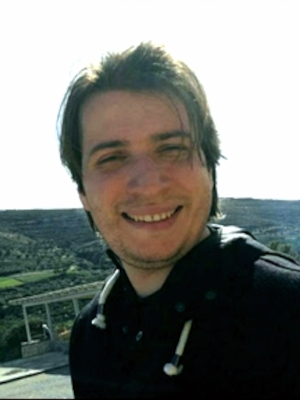
Maria Chiara Fiorentino is a Research Fellow at the Department of Information Engineering, Polytechnic University of Marche, Italy. Her work focuses on applying deep learning techniques to medical image analysis, particularly in ultrasound, MRI, and CT imaging. Education Master’s in Biomedical Engineering, Università Politecnica delle Marche (Honors) Ph.D. in Information Engineering, Università Politecnica delle Marche (Laude) Research Interests: Dr. Fiorentino specializes in deep learning for medical imaging, with applications in diagnosing neurodegenerative diseases like Parkinson’s, cardiovascular conditions, and musculoskeletal disorders. Her recent work includes federated learning for fetal ultrasound analysis, AI-driven vocal fold pose estimation, and domain adaptation in MRI segmentation. Scientific Awards: Paolo Marziali Thesis Prize for her Master’s research Gruppo Nazionale di Bioingegneria award for her Ph.D. thesis Publications: Dr. Fiorentino’s work spans fetal brain image synthesis, zero-shot learning robustness, and machine learning for catheterization management and stenosis detection.
Pier Cesare Rivoltella is a Full Professor of Educational Technology at the University of Bologna's Department of the Arts. He holds leadership roles in academic organizations such as the Italian Society of Pedagogy (SIREM) and the Accademia Nazionale dei Lincei. His academic career spans over three decades, including roles as Associate Professor (2000–2005) and Full Professor (2005–2023) at the Catholic University of the Sacred Heart before joining Bologna in 2023. He earned a Philosophy degree from the Catholic University of the Sacred Heart and a PhD in Social Communication Sciences from the Pontifical Salesian University. His research focuses on media literacy, education technology, and pedagogical innovation, with notable contributions to neurodidactics and AI in education. Rivoltella founded the CREMIT research center (2006–2023) and co-leads editorial initiatives like REM – Research on Education and Media . He has received prestigious awards, including the Italian Pedagogy Prize (2014) and the REN Award for Educational Neuroscience (2021). His teaching includes courses on Media and Technologies for Teaching at the University of Bologna. He actively collaborates with institutions worldwide, including Brazilian universities through CNPq-funded projects.
Sarah Azimi is a fixed-term researcher at the Department of Control and Computer Science (DAUIN) within the College of Computer, Film and Mechatronics Engineering at Politecnico di Torino. She actively contributes to research and teaching in the domains of reliable computing, reconfigurable systems, and AI applications for space and smart city security. Research Interests: Reliability and fault tolerance in safety-critical and space systems RISC-V and FPGA-based architectures High-performance computing (HPC) and reconfigurable computing AI resilience and real-time gesture recognition for public safety Radiation effects and hardening techniques for aerospace applications Publication Trends: Her recent publications focus on RISC-V reliability, radiation effects in space missions, AI resilience in reconfigurable platforms, and smart city security through gesture recognition. Her work spans both journal and conference venues, emphasizing practical and mission-tailored solutions in embedded and aerospace computing. Scientific Awards: No awards explicitly mentioned in the provided text. Advising and Grants: Sarah Azimi supervises multiple PhD students including Federico Buccellato, Aobo Cui, and Giorgio Cora. She leads the competitive research project Safe Smart City: Detecting Violence and Requests for Help in Real Time Through Video Surveillance Devices (2024). She is also a member of the RAMSES CubeSat-1 Development project (2025–2026) and led the commercial research project on the Rempro fault-tolerant processor (2022–2023). Labs and Teams: She is a key member of the CAD - Electronic CAD & Reliability Group (DAUIN) at Politecnico di Torino, contributing to cutting-edge research in electronic design automation and system reliability for aerospace and terrestrial applications.
Prof. Tomaso Fontanini is a researcher at the Department of Engineering and Architecture, University of Parma. His academic contributions span multiple disciplines, including computer science, artificial intelligence, and computer vision. 2025/2026: Deep Learning and Generative Models (Master's in Computer Engineering) 2024/2025: Processing Systems (Bachelor's in Prevention Techniques) 2023/2024: Processing Systems (Bachelor's in Prevention Techniques) 2022/2023: Processing Systems (Bachelor's in Prevention Techniques) Research Focus: His work primarily explores generative models, image synthesis, and style transfer with a strong emphasis on semantic control and attention mechanisms. Recent research has advanced state space models for efficient style transfer (Mamba-ST), semantic image synthesis via class-adaptive cross-attention, and diffusion model acceleration through U-shape architectures. Scientific Contributions: Publications include breakthroughs in controllable face synthesis, mask-based generative modeling, and video anomaly detection. His work bridges theoretical advancements in neural architectures with practical applications in remote sensing and educational technology. 2025: FLAV (audio-video generation), Swin2-MoSE (remote sensing) 2024: MARS (text-based person search), MCGM (mask conditioning) 2023: FrankenMask (face part editing), Student attendance systems
Guido Masera is a Full Professor at the Department of Electronics and Telecommunications (DET) at the Polytechnic University of Turin, where he has been actively involved in teaching and research for over two decades. He serves as a Member of the Board of Directors, Member of the GEDI Observatory for Gender Equality, Diversity and Inclusion, and Member of the Permanent University Observatory for monitoring the academic supply chain. His research interests span across channel decoders, circuits for communications, cryptography, deep learning, digital integrated circuits, field programmable gate arrays (FPGA), and hardware design. His work focuses on VLSI architectures for image and video coding, digital architectures for error correcting codes, application specific approximate computing, VLSI architectures for machine learning, digital architectures for bio-inspired processing, digital architectures for post-quantum cryptography, bio-inspired electronics for robotics and biomedical applications, RISC-V extensions and hardware accelerators, and circuit architectures for efficient machine learning and artificial intelligence. His recent publications (2025) demonstrate a strong focus on RISC-V architecture, particularly in the context of cryptographic implementations, hardware security, and post-quantum cryptography. His research group VLSILAB is actively engaged in cutting-edge research in hardware security, efficient processor design, and specialized computing architectures. Among his notable recognitions are the Premio Francesco Carassa awarded by the Telecommunications and Information Technologies Group Association (gtti) in 2010, and his recognition as a Fellow of the Institute of Electrical and Electronics Engineers (IEEE) since 2007. He also serves as an Associate Editor for several prestigious journals including ELECTRONICS (2019-present), IEEE TRANSACTIONS ON CIRCUITS AND SYSTEMS (2015-2019), and IET CIRCUITS, DEVICES & SYSTEMS (2013-2016). Professor Masera has advised numerous PhD students working on advanced topics in VLSI design, post-quantum cryptography, hardware accelerators, and machine learning implementations. His current research projects include ISOLDE (2023-2026) and TRISTAN (2022-2025), both EU-funded projects focused on RISC-V technology and domain-specific ecosystems. He leads the VLSILAB research group at the Department of Electronics and Telecommunications, which focuses on cutting-edge research in VLSI architectures, hardware security, and specialized computing systems. The group collaborates with industry partners and participates in major European research initiatives.
Pasquale Cascarano is a fixed-term Assistant Professor at the University of Bologna , affiliated with the Department of the Arts . His research bridges computer science with creative industries (cinema, art, fashion) and biomedical applications, focusing on Artificial Intelligence and Extended Reality paradigms. He collaborates with national and international institutions on interdisciplinary projects. Institutional Affiliation: University of Bologna Academic Role: Assistant Professor (fixed-term) Research Interests center on integrating AI and XR into creative sectors and healthcare, with emphasis on: Generative AI for immersive environments Medical imaging and diagnostics Digital heritage preservation XR-based educational tools 3D visualization techniques Creative technology applications Recent Publications highlight trends in: Medical XR for surgical training AI-driven image restoration LLM integration with AR/VR Privacy in collaborative AR Fashion and cultural heritage digitization Deep learning for video enhancement
Giulia Boato is an Associate Professor at the University of Trento’s Department of Information Engineering and Computer Science (DISI). She teaches courses in Probability and Multimedia Data Security. Her expertise spans Cyber Security, Digital Forensics, and Multimedia Analysis, focusing on image and signal processing for data protection, forensics, and anti-forensics. She collaborates internationally with institutions like Tampere University of Technology and Dartmouth College, co-advising PhD students and contributing to European projects like LIVINGKNOWLEDGE and GLOCAL. Education: PhD in Information and Communication Technology (2005), M.Sc. in Mathematics (2002), Scientific Lyceum (1998) with bilingual Italian-German certification. Past roles include Assistant Professor at DISI (2006–2018) and visiting researcher at the University of Vigo (2006) and University of Innsbruck (2018). Research interests include multimedia data protection, image forensics (tampering detection, computer vs. natural data discrimination), and intelligent data management. She leads projects on social media forensics, event-based retrieval, and synthetic media detection. Awards include Best Paper at IEEE WIFS 2012 and Top 10% Paper at MMSP 2012. Professional contributions include roles as co-chair of workshops, Technical Program Committee member for ICIP and ICC, and reviewer for journals like IEEE Transactions on Information Forensics and Security. She has advised PhD theses and contributed to datasets like TrueFace and WILD for synthetic media analysis.
Dr. Shervin Shirmohammadi is a Professor at the University of Ottawa's Faculty of Engineering, specifically within the School of Electrical Engineering and Computer Science. With an impressive h-index of 41 and over 6,800 citations across 473 publications, his research has made significant contributions to the fields of computer vision, biomedical instrumentation, and health monitoring systems. His academic journey spans over two decades, beginning with work on communication architectures for virtual environments in 2001 and evolving toward practical healthcare applications. Dr. Shirmohammadi's research interests center on Computer Vision , Image Processing , and Embedded Systems with a strong focus on healthcare applications including nutrition monitoring, mental health assessment, and driver safety systems. His most influential work examines computer vision applications for health monitoring, particularly food calorie measurement systems that use smartphone cameras to analyze nutritional content. His research has evolved to include EEG-based systems for ADHD detection and serious games for autism therapy, demonstrating a consistent trajectory toward practical healthcare solutions using advanced instrumentation techniques. Dr. Shirmohammadi maintains active collaborations with researchers including A. Yassine (118 joint publications), D. Ahmed, Ali Asghar Nazari Shirehjini, and B. Hariri. His publications appear primarily in IEEE Transactions on Instrumentation and Measurement, reflecting his strong connection to the instrumentation and measurement community.
Mauro Barni serves as a Full Professor in the Department of Information Engineering and Mathematical Sciences at the University of Siena, where he teaches Cybersecurity, Information Theory, and Mathematical Statistics. His office hours are held Fridays from 3:00 PM to 5:00 PM via online appointment, reflecting his active engagement with students. Professor Barni's research spans multimedia security and digital forensics, with emphasis on deep learning applications for digital watermarking, deepfake detection, and synthetic image attribution. His work addresses critical challenges in adversarial machine learning, steganography, and image manipulation detection, contributing significantly to cybersecurity and intellectual property protection frameworks. Analysis of his 2021-2025 publications reveals dominant trends in neural network watermarking robustness, synthetic media detection, and defenses against backdoor attacks. His research consistently bridges theoretical foundations with practical implementations, focusing on real-world applications like printer source attribution and physical-domain adversarial scenarios. He leads the VIPP (Vision, Image Processing, and Pattern Recognition) research group, which maintains dedicated virtual classrooms for collaborative projects in computer vision and multimedia security. The group actively develops methodologies for image forensics, synthetic media analysis, and security countermeasures against emerging threats.
Andrea Saracino is an Associate Professor specializing in cybersecurity, privacy-preserving technologies, and machine learning applications. His research focuses on enhancing security in IoT systems, smart homes, and mobile devices, with a particular emphasis on Android malware detection and usage control frameworks. He has received the IEEE TCCPS Early-Career Award 2023 for his contributions. Key projects include the SIFIS-Home initiative for privacy in globalized smart homes and the ACE framework for access control. His work addresses challenges in balancing privacy, utility, and explainability in machine learning models, particularly in image and tabular data analysis. He actively explores cybersecurity in emerging domains like software-defined vehicles and industrial control systems.
Prof. Vincenzo Romei is a Full Professor at the University of Bologna's Department of Psychology, leading the Consciousness Group. He holds a Ph.D. from the University of Rome 'La Sapienza' and has held roles at Harvard Medical School, Geneva Neurology Department, and the University of Essex, where he was a Full Professor. His research focuses on neural correlates of consciousness, using EEG, neurostimulation, and behavioral studies. He directs the Second Cycle Degree in Neuroscience and Neuropsychological Rehabilitation. Education : Ph.D. in Psychology, University of Rome 'La Sapienza' (2005) BSc/MSc in Psychology (110/110 cum laude), University of Rome 'La Sapienza' (2001) Research Interests : His work examines temporal properties of brain communication, alpha oscillations' role in sensory selection, and consciousness mechanisms. Techniques include EEG, TMS, and tACS to study perception, memory, and attention. Awards : 2020 Best Contribution Award (Transcranial Brain Stimulation Workshop) 2019 BIAL Grant (€47k) for boosting working memory 2016 Most Cited Current Biology Article (Thut et al., 2011) Grants & Leadership : Directed grants totaling over €400k, including an ERC Starting Grant and a BIAL-funded study. Serves as a Reviewer for journals like Current Biology and Neuron . Labs/Teams : Leads the Consciousness Group at the University of Bologna, collaborating internationally on neurostimulation and predictive coding models.
Francesco Strada is a Fixed-term Assistant Professor at the Department of Control and Computer Engineering (DAUIN) at Politecnico di Torino. He serves as a Course Lecturer for Virtual Reality and Technical Art for Cinema and Video Games, and as a Course Collaborator for multiple courses across Computer Engineering, Film and Media Engineering, and Architecture programs. He is an active member of the College of Computer, Film and Mechatronics Engineering and the College of Architecture and Design teaching committees. Dr. Strada's research focuses on Computer Graphics, Virtual Reality, Augmented Reality, and Human-Computer Interaction with particular emphasis on Embodied Conversational Agents, emotion recognition, and serious games applications. His work bridges technical computer science with psychological and human factors considerations to create more believable and effective virtual experiences. His research spans applications in education, healthcare, automotive interfaces, cultural heritage, and emergency response training. His recent publications demonstrate a strong trend toward emotionally intelligent virtual agents, VR/AR applications in specialized domains, and technical innovations in latency management and digital human representation. His work often combines psychological principles with technical implementations to enhance user experience and system effectiveness. Dr. Strada actively supervises PhD students including Alessandro Emmanuel Pecora, Stefano Calzolari, and Leonardo Vezzani, whose research focuses on Emotionally Aware Embodied Conversational Agents (E2CA) and Car AR-HUD design. He leads significant research projects including Holo-BLSD (2024-2025), a Mixed Reality tool for first aid emergency response training, and '50 shadows of AI' (2025), focusing on personalized education in corporate settings. He is a member of the CGVG - Computer Graphics and Vision Group at DAUIN, where his team develops cutting-edge applications in AR/VR, Human-Computer Interaction, User Experience, Computer Vision, Machine Learning, and Artificial Intelligence. His research has practical applications in education, training, healthcare, automotive interfaces, and cultural heritage preservation.
Luca Guarnera is a Fixed-term Assistant Professor (RTDA) of Informatics at the Department of Mathematics and Computer Science, University of Catania. Born in Catania on October 26, 1992, he has been a research fellow in Computer Science at the University of Catania since January 1, 2022. His academic journey includes a PhD in Computer Science (XXXIII cycle, PON number E37H18000330006) from the University of Catania, with part of his research conducted at the University of Hertfordshire under Prof. Salvatore Livatino. PhD in Computer Science, University of Catania (2018-2021) Master's Degree in Computer Science (cum laude), University of Catania (2015-2017) Bachelor's Degree in Computer Science, University of Catania (2011-2015) Guarnera's research focuses on Computer Vision, Machine Learning, and Multimedia Forensics, with special emphasis on Deepfake Detection across images, video, audio, and multimodal data. His work explores intrinsic traces left during content creation processes, VR applications for forensic analysis, and deep learning approaches to forensic problems. He has contributed significantly to forensic firearms ballistics analysis through immersive VR observation and handwritten document analysis. His publication record shows a strong trajectory in deepfake detection technologies, evolving from early work on convolutional traces to current research distinguishing between GAN and Diffusion Model outputs. His research spans both theoretical foundations and practical applications in digital forensics, with increasing focus on multimodal approaches and real-world implementation challenges. Guest Editor for Special Issue 'Advancements in Deepfake Technology, Biometry System and Multimedia Forensic' in MDPI Journal of Imaging Guarnera actively participates in the academic community as a reviewer for international journals and has contributed to prestigious international events as a Technical Program Committee member. His research is supported through collaborations with industry partners like iCTLAB srl and academic institutions. He is involved in the HEALTHY-UNICT project studying dietary habits of college students through ecological momentary assessment approaches. As a member of IPLab (Image Processing Lab) since 2015, Guarnera has been involved in various research initiatives including participation in Mohamed Bin Zayed International Robotics Challenge (MBZIRC) competitions and international summer schools (ICVSS, MISS, S3P). His work bridges theoretical computer science with practical forensic applications, particularly in the rapidly evolving field of deepfake detection and multimedia authentication.
Salvatore Rampone is an Associate Professor at the Department of Law, Economics, Management and Quantitative Methods (DEMM) of Università degli Studi del Sannio (Unisannio). His research focuses on Machine Learning , Internet of Things (IoT) , and Cybersecurity , with applications in intrusion detection, bioinformatics, and financial systems. Research Interests : Privacy-preserving Machine Learning Hybrid Cloud-IoT Architectures Genetic Programming Neural Network Applications Data Processing in Distributed Environments Recent Publication Trends : His work spans federated learning for IoT security ( 2025 ), DNA splicing site prediction ( 2020 ), meningitis classification ( 2019 ), RFID-based traceability systems ( 2015 ), and geological data analysis using neural networks ( 1995-1996 ). Key technologies include Apache Spark , MLlib , and Wavelet Transform . Teaching Activities : He teaches courses like Applied Machine Learning and Principles of Computer Sciences across multiple degree programs including Statistical and Actuarial Sciences and Economics and Management .
Marco Buzzelli is an Assistant Professor at the Department of Informatics, Systems and Communication (DISCo) at the University of Milan-Bicocca, where he also obtained his PhD in Computer Science in 2019. His academic career is centered around cutting-edge research in signal, image, and video processing with a specialized focus on color imaging and machine learning applications. Dr. Buzzelli's research interests span multiple interconnected domains within computer vision and image processing. He has established himself as a leading researcher in color constancy, with numerous publications exploring illuminant estimation, white balance algorithms, and perceptual aspects of color imaging. His work extends to video restoration, particularly addressing challenges in low-light conditions and HEVC-compressed video processing. Additional research areas include hyperspectral imaging applications for historical document analysis, food authentication technologies, and neural architecture search for various computer vision tasks. His publication record demonstrates a clear evolution from foundational work in logo recognition and saliency detection toward increasingly sophisticated approaches to color science and video processing. Recent work shows strong emphasis on uncertainty estimation in color constancy, Bayesian optimization for night photography, and multimodal approaches combining spectral information with traditional RGB imaging. His research often bridges theoretical advances with practical applications across diverse domains including cultural heritage preservation, food safety, and computational photography. As an active ELLIS member, Dr. Buzzelli maintains significant European collaborations with institutions including Universitat Autònoma de Barcelona, Universidade Nova de Lisboa, Université Jean Monnet, and Universidad de Granada. His research group participates in major challenges such as the NTIRE series on night photography rendering and spectral recovery, contributing both methodological innovations and comprehensive surveys of the field. His laboratory work focuses on developing practical imaging solutions with real-world applications, particularly evident in projects addressing food authentication, historical document analysis, and vision-based monitoring systems. The integration of traditional image processing techniques with modern deep learning approaches characterizes his methodological approach across multiple research domains.