Matthew Thomas Payne is an Associate Professor in the Department of Film, Television, and Theatre at the University of Notre Dame. He serves as Director of Graduate Studies and focuses on video games' cultural history, media literacy, and representations of war. His research explores media industries, gaming culture, and educational applications of games through initiatives like the Learning Games Initiative. Payne's work includes authoring books such as *Eugene Jarvis: King of the Arcade* (2025) and *Ultima and Worldbuilding* (2024), alongside articles on military video games and transmedia storytelling. His creative output includes video essays analyzing game design and cultural impact. Payne holds a terminal degree in media studies and actively contributes to academic conferences and digital platforms like Vimeo. Education: Ph.D. in Media Studies (assumed based on faculty role). Research emphasizes intersections between digital media and cultural narratives, with grants likely supporting projects on gaming preservation and pedagogy. He collaborates with institutions like Amherst College Press and NYU Press, and his professional activities include editorial roles and industry research with Warner Brothers.
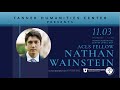
Nathan Wainstein is an Assistant Professor in the English Department at the University of Utah's College of Humanities, where he has been teaching since July 2023. His academic work bridges literary studies with contemporary digital media, particularly focusing on video game aesthetics alongside modernist literature. Wainstein maintains an active scholarly presence through publications, editorial work, and his podcast "Authors Die Twice" co-hosted with Bryan Counter. Wainstein's educational background includes: PhD from Stanford University (2013-2020) BA from Swarthmore College (2007-2011) His research interests span video game aesthetics, modernism, the novel, literary theory, narrative theory, and the intersection of literature and philosophy. Wainstein approaches these fields with a particular focus on paradox, difficulty, and aesthetic experiences that challenge conventional interpretations. His work often examines how seemingly simple literary devices like light descriptions can reveal deeper theoretical tensions within texts. Wainstein's recent publications demonstrate a consistent trajectory exploring the boundaries of literary aesthetics, from his analysis of James Joyce's photomimesis to his examination of narrative glitches in Faulkner's work. His scholarship connects historical literary theory with contemporary concerns, particularly in how he applies these frameworks to video game analysis. The upcoming book "Grant Us Eyes: The Art of Paradox in Bloodborne" exemplifies this interdisciplinary approach, bridging literary criticism with video game studies. Wainstein has held prestigious postdoctoral positions including an ACLS Emerging Voices Fellowship at the University of Utah and a Stanford Humanities and Sciences Dean's Fellowship. As an educator, Wainstein teaches innovative courses that reflect his research interests, including "On Difficulty," "Aesthetics of Violence in Video Games and Literature," "Games with Time," and "Videogame Storytelling." His teaching philosophy appears to emphasize the connections between traditional literary studies and contemporary digital media forms.
Amanda Phillips is an Associate Professor at Georgetown University, affiliated with the Departments of English, Film and Media Studies, Women’s and Gender Studies, and American Studies. Their research focuses on feminist and queer theory in digital media, with a particular emphasis on critical game studies and digital humanities. Selected publications include Gamer Trouble: Feminist Confrontations in Digital Culture and co-editing the Queer/Trans/Digital book series. Their scholarship appears in journals such as ROMchip , Feminist Media Histories , and Games and Culture . Research Interests: Digital media and gender politics Queer theory in gaming contexts Decolonial and anti-racist digital humanities Critical analysis of game mechanics Digital labor and precarity Affective histories of gaming Scientific Awards: Mellon/ACLS Dissertation Completion Fellow Academic Leadership: Former chair of the American Studies Association Digital Humanities Caucus Co-founder of the #transformDH Collective Editorial work on special issues of Game Studies and Antares: Letras e Humanidades Previous Institutions: IMMERSe Postdoctoral Fellow at University of California, Davis Ph.D. recipient from University of California, Santa Barbara with emphasis in Feminist Studies
California State University, Dominguez HillsUnited States
John Vanderhoef serves as Assistant Professor of Film, Television, and Media within the Communications Department at California State University, Dominguez Hills' College of Arts & Humanities. Currently on academic leave for the 2025-2026 year, he maintains an active research profile centered on contemporary media production. His educational foundation includes: Ph.D. in Film and Media Studies (University of California, Santa Barbara) M.A. in Communication (University of Wisconsin-Milwaukee) B.A. in Communication (University of Wisconsin-Milwaukee) Professor Vanderhoef's research critically examines media industries through the dual lenses of digital labor and identity politics . His scholarship exposes tensions between corporate structures and creative autonomy, particularly in indie media spaces where romanticized notions of 'passion work' often mask exploitative conditions. His groundbreaking book Passion, Pixels, and Profit establishes him as a leading voice in video game production studies, revealing how neoliberal economics reshapes creative labor in digital entertainment. His teaching portfolio bridges theoretical rigor with practical application through courses like Media Industries and Emerging Media Production. While specific grant details aren't public, his sustained publication record in top-tier journals and university press monographs demonstrates robust research momentum. Students interested in media production cultures should reconnect after his 2025-2026 leave concludes.
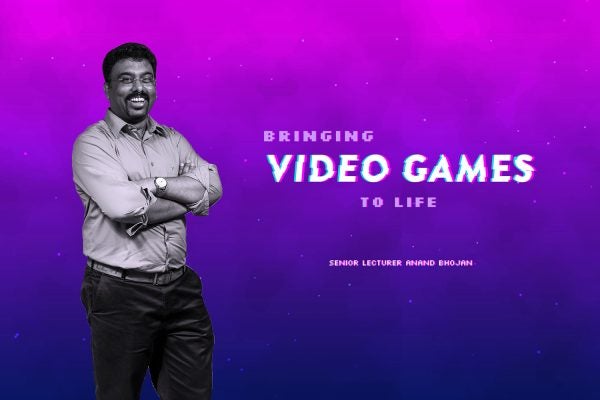
Anand Bhojan is an Associate Professor (Educator Track) at the Department of Computer Science, School of Computing, National University of Singapore (NUS). He is a member of the Communication and Internet Research Lab and serves on the Graduate Studies Committee. Dr. Bhojan is also the founder of Anuflora Systems and Virtual and Augmented Reality Labs (www.varlabs.org), and serves as Associate Editor of Computers and Electrical Engineering Journal, Elsevier, and Vice President of International Researchers Club, Singapore. Dr. Bhojan earned his Ph.D. in Computer Science & Engineering from NUS in 2011, where his thesis was nominated for the Best PhD Thesis Award. He also holds a Professional Master's in Computer Applications from Bharathidasan University (1999), a Bachelor's degree in Computing with Gold Medal (University topper) from Bharathiar University (1994), and a Postgraduate Certificate in Teaching Higher Education from University of Sheffield, UK (2003). His research spans multiple domains including Distributed Computing and Wireless Networks (IoT, Security, Blockchain), Artificial Intelligence (Generative AI, FinTech), and Entertainment Computing with focus on Games, VR/AR/Metaverse technologies. Dr. Bhojan leads the Metaverse Foundry research group which focuses on content generation for games & XR simulations across multiple domains including entertainment, healthcare, and architecture, while also experimenting with innovative teaching methods for entertainment media technologies. Dr. Bhojan's recent research has pioneered hybrid rendering techniques that strategically combine ray tracing and rasterization to create more realistic video game graphics without compromising performance. His work addresses critical challenges in real-time rendering, particularly in depth of field and motion blur effects, with the goal of making Hollywood-quality graphics accessible on a wider range of hardware. Earlier work focused on energy efficiency in mobile gaming, including power management techniques and latency optimization for cloud gaming. Among his notable achievements: 2012 Nominated for Best PhD Thesis Award (Wang Gungwu Medal & Prize), NUS 2011 Dean's Graduate Research Achievement Award (PhD), SoC, NUS 2006 Best R&D Project award from TOTE Board, Singapore 1995 Gold medal for first Rank (out of 4000) in Computing, Bharathiar University Dr. Bhojan has served as Organizing Chair and Program Chair for multiple international conferences and has delivered keynote talks at IEEE/ACM International Conferences. He teaches courses including Computer Networks Practice, Game Development, Interaction Design for Virtual and Augmented Reality, and Game Development Project. He leads the Metaverse Foundry research group and the Virtual and Augmented Reality Labs, where undergraduate and graduate students have won multiple research and innovation awards. His research bridges entertainment, education, and emerging technologies with practical applications in making immersive experiences more accessible across different hardware capabilities while maintaining energy efficiency.
Dr. Damien Charrieras is an Associate Professor at the School of Creative Media , City University of Hong Kong, where he serves as Program Leader for the Master of Art in Creative Media and deputy program leader for the PhD in Creative Media. His work bridges cultural studies, new media theory, and the intersection of financial technologies with artistic practices through the ACIM Laboratory for Interventions in Speculative Finance . Doctoral research on digital artists' trajectories in Montreal FRQSC Postdoctoral Fellowship at McGill University Research spans game engine design , datafication of creativity , blockchain in art , and post-anthropocentric creative processes . With over HK$3.14M in grants as Principal Investigator, he explores situated digital creativity in urban contexts, critical worldbuilding pedagogy , and the mediation of technical systems in cultural production. His publications in Cities , Organized Sound , and Human Relations analyze the reconfiguration of artistic practices through software infrastructures and automation paradigms. Scientific awards include: FRQSC Postdoctoral Fellowship
Dr. Heather Inwood serves as University Associate Professor in Modern Chinese Literature and Culture within the Faculty of Asian and Middle Eastern Studies at the University of Cambridge. She is also a Fellow and Director of Studies at Trinity Hall, maintaining dual institutional affiliations that support her teaching and research activities across undergraduate and postgraduate programs. Her educational background includes a BA in Chinese Studies from the University of Cambridge (Trinity Hall), followed by advanced studies at Tsinghua University and Peking University, culminating in a PhD in modern Chinese literature from SOAS, University of London in 2008. Prior academic appointments include Assistant Professor at The Ohio State University (2008-2013) and Lecturer in Chinese Cultural Studies at the University of Manchester before returning to Cambridge in 2016. Professor Inwood's research program investigates the dynamic interactions between digital media and literary production in contemporary China, with particular focus on poetry communities, genre fiction, and transmedia storytelling. Her work bridges traditional literary analysis with digital humanities approaches, examining how online platforms transform authorship, reception, and cultural value. She has pioneered scholarship on internet poetry scenes, demonstrating their vitality despite public perceptions of poetry's decline in modern China. Her publication trajectory reveals a clear evolution from early work on poetry communities ( Verse Going Viral: China's New Media Scenes , 2014) toward broader investigations of digital narrative forms, game studies, and Sinophone cyberspace. Recent publications increasingly engage with science fiction, transmedia storytelling, and the algorithmic structures shaping literary production, reflecting both the changing digital landscape and her expanding methodological toolkit. Professor Inwood actively supervises five PhD students working on diverse projects spanning Misty poetry, queer narratives, gender studies, and poetic animality, demonstrating her commitment to nurturing next-generation scholarship in Chinese literary studies. Her research has been supported by British Academy Small Grants and similar funding mechanisms that enable sustained fieldwork and publication. Her teaching responsibilities include undergraduate courses on East Asian media and popular culture, Modern Chinese texts, and Modern Chinese literature, connecting classroom instruction directly to her research expertise. She also maintains public engagement through Chinese-language columns for BBC China and other media outlets, bridging academic and public discourse on contemporary Chinese culture.
Shiri Azenkot is an Associate Professor at the Jacobs Technion-Cornell Institute at Cornell Tech and Cornell University, affiliated with the Information Science Department and Technion’s Computer Science Department. Her research focuses on accessibility innovations in emerging technologies, particularly addressing needs of people with vision impairments and neurodiverse populations. She holds a PhD from the University of Washington, advised by Richard Ladner and Jacob Wobbrock, and has been recognized with prestigious awards including the NSF Graduate Research Fellowship. Education: PhD in Computer Science & Engineering from University of Washington (advisors: Richard Ladner, Jacob Wobbrock). Research interests include VR/AR accessibility, assistive technology design, inclusive education tools, and ethical AI applications. Current projects explore social VR avatars for invisible disabilities, AR navigation aids, and AI moderation systems against ableist hate speech. Her work is funded by NSF, AOL, Verizon, and Facebook. Recent publications address video accessibility for ADHD users, AI-driven scene descriptions for blind users, and tactile learning materials co-designed with educators. She leads the XR Access initiative promoting inclusive virtual/augmented reality. Awards include the UW Graduate Medal (2020), NSF CRII Award (2017), and AT&T Labs Fellowship (2014). Her research bridges academic innovation with industry impact through collaborations with tech companies and disability advocacy groups.
Kiri Miller is a Professor of American Studies and Chair of the American Studies department at Brown University. Her research focuses on participatory culture, digital media, and performance studies, with a particular emphasis on interactive media like video games and their cultural implications. She holds a Ph.D. in Music (Ethnomusicology) from Harvard University and has held prestigious fellowships, including from the Radcliffe Institute and the American Council of Learned Societies. Her major works include Playable Bodies: Dance Games and Intimate Media (Oxford, 2017), which examines the cultural and kinesthetic impact of dance games, and Playing Along: Digital Games, YouTube, and Virtual Performance (Oxford, 2012), exploring game culture and virtual communities. She also authored Traveling Home: Sacred Harp Singing and American Pluralism (Illinois, 2008), studying participatory music traditions. Miller’s research interests span digital media, ethnography, gender studies, and popular music. Her current work investigates 'insomniac listening' through sleepcasts and meditation apps, analyzing their role in wellness culture and sonic comfort. She teaches courses such as Virtual Bodies, Music and Technoculture, and Popular Music Studies. Her awards include the de la Torre Bueno Book Award and the Alan Merriam Prize, recognizing her contributions to dance studies and ethnomusicology. Miller’s interdisciplinary approach bridges media studies, cultural anthropology, and technology, making her a leading voice in digital humanities and performance studies.
Matthew Payne is an Associate Professor in the Department of Film, Television, and Theatre at the University of Notre Dame. His affiliations include roles as Director of Graduate Studies and regional director for the Learning Games Initiative, a multi-institute research collective focused on game archiving and education. His research spans video game studies, media literacy, military entertainment, and the cultural history of video games. He explores play theory, media and war, and the intersection of media production with new technologies. The 15 most recent articles highlight his focus on video game studies, transmedia narratives, and the cultural implications of gaming. These works cover topics from Nintendo Amiibo to slow game time mechanics in Red Dead Redemption 2, with recurring themes of military representation and ludic storytelling. Matthew Payne has co-edited notable works including How to Play Video Games and Joystick Soldiers , emphasizing collaborative approaches to game studies and critical analysis of military gaming.
Dr Jamie Woodcock is a Senior Lecturer in Digital Economy at King's College London, based in the Department of Digital Humanities within the Faculty of Arts & Humanities. He holds a PhD in sociology from Goldsmiths, University of London, and has held academic positions at institutions including the University of Leeds, University of Manchester, LSE, and the Open University. His research focuses on labour processes, platform work, gig economy dynamics, and worker organizing, with a particular emphasis on critical global capitalism and digital culture. Woodcock’s research interests include the games industry, unionization strategies, and resistance to algorithmic management. He is an editorial board member of Notes from Below and Historical Materialism , and contributes to interdisciplinary initiatives such as the Research Centre for Digital Culture and the Critical Global Capitalism Studies Collective at King’s. His work has been widely covered in media and he frequently speaks on digital labour issues. He has authored influential books like The Fight Against Platform Capitalism and The Gig Economy: A Critical Introduction , co-authored Guerrilla Democracy: Mobile Power and Revolution in the 21st Century , and published extensively on topics ranging from delivery platform strikes to gamification critiques. His recent recognition includes a 2025-26 Digital Futures Institute Fellowship.
Dr. Fabian Schulz is a Senior Researcher in Ancient History at the University of Tübingen, where he works in the Department of History within the Faculty of Humanities. He leads a prestigious Junior Research Group under the Emmy Noether Programme of the German Research Foundation (DFG), titled 'Power and Influence: Influencing Emperors between Antiquity and the Middle Ages.' His academic profile also includes association with the Collaborative Research Center (SFB) 923 'Threatened Order - Societies under Stress' and active participation in the 'Tübingen Theosophy' research group. Previously, he contributed to the Heidelberg Academy of Sciences and Humanities project on John Malalas' Chronicle and the University of Tübingen's DFG project 'East and West 400-600 AD.' Dr. Schulz earned his PhD in Classics from Freie Universität Berlin (2006-2010), where he also served as a teaching assistant. During his doctoral studies, he was a Pensionnaire étranger at the École Normale Supérieure Paris. Prior to that, he completed an MA equivalent degree in Classics at Freie Universität Berlin, with time spent as a visiting student at the University of Oxford (1999-2005). His early career included teaching Latin and Greek at a grammar school in Lübeck (2006). His research specializes in power structures and influence mechanisms in ancient societies, with particular focus on how advisors shaped imperial decisions in Late Antiquity. He has made significant contributions to understanding councils of elders in Archaic Greece (especially the Spartan Gerousie), Byzantine chronography (particularly John Malalas' works), and the complex dynamics between Eastern and Western Roman empires during the 5th and 6th centuries. His methodological innovation lies in applying modern sociological models of interpersonal influence to historical analysis of ancient political culture, bridging literary representation with political reality in pre-modern monarchical states. Young researchers award for 'Ratgeber, Experten, Manipulatoren: Einfluss als Machtfaktor und Diskursobjekt in der Antike' As principal investigator of his Emmy Noether project, Dr. Schulz has secured substantial research funding from the German Research Foundation. His collaborative work includes multiple edited volumes on Late Antique history and Byzantine chronography, reflecting his strong international scholarly network. He currently serves as a deputizing member (non-professorial academic staff) on the faculty board of Humanities at the University of Tübingen. His research often intersects with contemporary concerns about power dynamics, political influence, and historical memory, as evidenced by his work on video game representations of ancient history. Dr. Schulz is an active contributor to the online commentary project on John Malalas' chronicle, specifically editing sections of Book XVIII. His work frequently involves detailed textual criticism and analysis of historical sources, with particular attention to how narratives are transmitted and reinterpreted across different cultural contexts. His scholarly approach combines philological precision with broader historical and sociological perspectives.
Olle Sköld is a Senior Lecturer at the Department of ABM (Archives, Libraries, and Museums) at Uppsala University. He is also the Head of the Department of ABM and holds an Associate Professor position in Library and Information Science. His research spans digital humanities, documentation practices, knowledge production, and digital preservation, with a particular focus on archaeological data processes and virtual world communities. Archaeological data documentation and reuse Digital game preservation Paradata theory and applications Information practices in social media His recent publications explore paradata in data papers, literacy challenges in research data management, and trust technologies like blockchain in digital archives. Olle is involved in the CAPTURE project, investigating documentation workflows for archaeological data. He has contributed to the Master's Programme in Digital Humanities at Uppsala University, blending digital humanities with library and information science education.
Daniel Wolpert is a Professor of Neuroscience at Columbia University , where he is also Vice-Chair of the Department of Neuroscience and a key member of the Zuckerman Mind Brain and Behavior Institute . Additionally, he holds a part-time position as Director of Research at the Department of Engineering, University of Cambridge, and is a Fellow of the Royal Society and the Academy of Medical Sciences . Education: Medical Doctor (1989), D.Phil. in Physiology from the University of Oxford (1992) Previous Positions: Lecturer at Sobell Department of Motor Neuroscience (Institute of Neurology), Professor of Engineering at University of Cambridge (2005–2018) Wolpert is a world leader in sensorimotor control , combining computational neuroscience , Bayesian inference , and robotic/virtual reality technologies to reverse-engineer how the brain generates movements. His work emphasizes the brain's role in reducing sensorimotor uncertainty through predictive modeling and has implications for understanding disorders like autism and Parkinson’s disease. His awards include: Royal Society Ferrier Medal (2020) Minerva Foundation Golden Brain Award (2010) Royal Society Francis Crick Prize Lecture (2005) Daniel Wolpert actively contributes to public science communication, including a 2011 TED Talk on the computational role of the brain in movement, and leads the Wolpert Lab at Columbia, which investigates the neural basis of decision-making , motor learning , and reinforcement learning in both healthy and clinical populations.
Shaker A. Zahra is the Robert E. Buuck Chair of Entrepreneurship and Professor of Strategy and Entrepreneurship at the Carlson School of Management, University of Minnesota. He has served as department chair for 9 years, Director of the Holmes Center for Entrepreneurship for 10 years, and Academic Co-Director of Carlson Ventures Enterprises. Previously, he held positions as Paul T. Babson Distinguished Professor of Entrepreneurship at Babson College and Professor of Strategy & Entrepreneurship at Georgia State University. His educational background includes: PhD in Business Administration, Business Policy & Managerial Economics from University of Mississippi MBA (with Distinction) in Management/MIS from National University B. Commerce (with Honors) in Management from Al-Azhar University Dr. Zahra's research focuses on international entrepreneurship, corporate entrepreneurship, technological innovation in global industries, and dynamic capabilities. His work examines how firms navigate global markets, develop innovative capabilities, and create value through strategic entrepreneurship. He studies industry emergence, strategic choices in entrepreneurial firms, and the evolution of novelty in company strategies, contributing significantly to knowledge-based and dynamic capabilities perspectives. His extensive publication record spans leading journals including Academy of Management publications, Strategic Management Journal, Journal of International Business Studies, and Journal of Business Venturing. His research covers diverse industries such as robotics, software applications, mobile applications, video games, pharmaceuticals, and nanotechnology across multiple countries including China, Brazil, India, and several European nations. Scientific recognition includes: 2014 Global Award for Entrepreneurship Research Multiple Best Paper Awards from leading journals Five honorary PhD degrees from prestigious institutions worldwide Research.com Business and Management in United States Leader Award (2022-2025) Fellowships in Academy of Management and other professional associations Dr. Zahra has advised or served on committees for over 75 PhD students and has received multiple teaching awards including the Mentor Award from the Entrepreneurship Division of the Academy of Management. His leadership extends to editorial roles on over 25 journal editorial boards and service as Chair of the Entrepreneurship Division of the Academy of Management. He has been a keynote speaker at more than 40 international conferences and has consulted for major global technology companies. His research projects span multiple countries and industries, examining how firms develop capabilities to compete in global markets. He has established several research centers including the Center for Integrative Leadership at the University of Minnesota and has directed major entrepreneurship research conferences including the Babson Kauffman Entrepreneurship Research Conference.