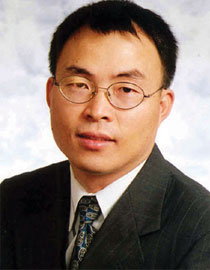
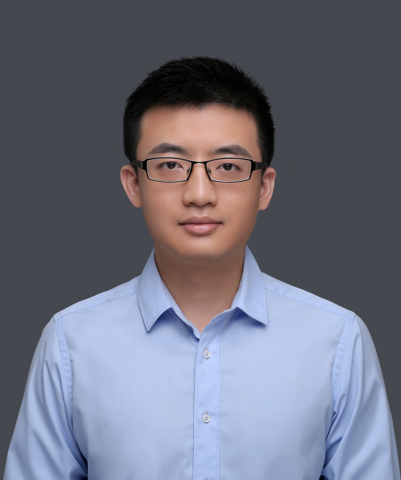
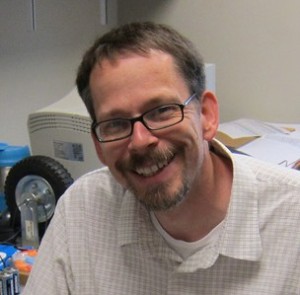
Mohamed Hefeeda is a Professor in the School of Computing Science at Simon Fraser University (SFU), Canada. He leads the Network and Multimedia Systems Lab (NMSL) and previously served as Director of the School from 2018 to 2023. His research focuses on multimedia networking, mobile computing, cloud systems, and hyperspectral imaging. He holds an ACM Distinguished Member designation and has received prestigious awards including the NSERC Discovery Accelerator Supplements (2011) and multiple best paper awards at top conferences like ACM MM and IEEE Infocom. Education: Ph.D., Purdue University, 2004 M.Sc., University of Connecticut, 2001 B.Sc., Mansoura University, Egypt, 1994 Research Interests: Design of efficient multimedia systems and protocols for wired/wireless networks Cloud gaming optimization and video encoding techniques Hyperspectral imaging for healthcare and mobile applications AI-driven multimedia systems and mobile computing innovations Grants & Industry Collaborations: Funded by NSERC, CFI, and companies like AMD, Huawei, and CBC Co-founded Video Semantics (acquired by tech firm) Partnered with CBC on peer-assisted content distribution systems Awards Highlights: 2025: ACM Distinguished Member 2019: Best Student Paper Award at ACM MMSys 2015: NSERC Discovery Accelerator Supplements Labs & Leadership: Network and Multimedia Systems Lab (NMSL) at SFU Contributed to creation of Qatar Computing Research Institute (QCRI)
Andres Kwasinski is a Professor in the Department of Computer Engineering at Rochester Institute of Technology (RIT), part of the Kate Gleason College of Engineering. He serves as Graduate Program Director for the Ph.D. in Electrical and Computer Engineering and M.Sc. in Computer Engineering. He co-directs the Networking and Information Processing (NetIP) Lab and holds editorial roles with IEEE publications, including Chief Editor of the IEEE Signal Processing Repository and Associate Editor of IEEE Signal Processing Magazine. Education: Ph.D. and M.Sc. in Electrical and Computer Engineering from the University of Maryland, College Park (2004 and 2000), and B.Sc. in Electrical Engineering from the Buenos Aires Institute of Technology (1992). Prior to RIT, he worked at Texas Instruments, Lucent Technologies, and the University of Maryland. Research Interests: Cognitive radios, machine learning for dynamic spectrum access, 5G/6G networks, VR communications, cross-layer resource allocation, smart infrastructures, and signal processing. His work emphasizes sustainable and resilient communication systems, integrating renewable energy and AI-driven solutions. Notable Contributions: Authored/co-authored books on cooperative communications and 3D visual communications. Over 70 peer-reviewed publications, including works on energy-efficient wireless networks, microgrid integration for base stations, and deep reinforcement learning in cognitive radio. His research is funded by the NSF, Harris Corporation, and the Air Force Research Laboratory. Grants & Awards: Supported by grants from NSF and industry partners. Recognized for contributions to IEEE standards and technical leadership in signal processing and communications. Labs & Teams: Co-director of the NetIP Lab, focusing on networking, signal processing, and smart infrastructure. Collaborates on interdisciplinary projects in robotics, warehouse automation, and 5G/B5G systems.
Professor Maja Pantic is a Professor of Affective & Behavioural Computing at the Department of Computing, Faculty of Engineering, Imperial College London. Her research focuses on artificial intelligence, image processing, and audio-visual speech recognition. She leads projects in multimodal systems, including facial analysis, emotion recognition, and speech-driven animation. Affiliations include the AI for Healthcare initiative, the Artificial Intelligence Network, and the Machine Learning Network. Her work addresses challenges in real-time speech enhancement, cross-modal learning, and synthetic data generation. Recent publications emphasize advancements in audiovisual speech synthesis, lip-reading, and emotion-aware systems. She has contributed to datasets like KAN-AV and SEWA DB, advancing research in face analysis and affective computing.
Kok Sheik Wong is a Professor and Deputy Head (Research) at the School of Information Technology, Monash University Malaysia. He holds a Doctor of Engineering from Shinshu University, Japan, and Master’s and Bachelor’s degrees in Computer Science and Mathematics from Utah State University, USA. His academic leadership and research excellence are central to his role at Monash. B.S. Computational Mathematics, Utah State University (2002) M.S. Computer Science, Utah State University (2006) M.S. Mathematics, Utah State University (2004) Doctor of Engineering, Shinshu University, Japan (2009) His research focuses on multimedia signal processing and cybersecurity , particularly in data hiding , reversible data hiding , coverless steganography , and multimedia encryption . He is also expanding into digital health , applying AI to mental health in workplace environments. His work aligns with UN SDGs, particularly in health and education. The recent publication trends show a strong emphasis on reversible data hiding , image watermarking , and AI-driven health applications . His interdisciplinary work spans computer science, engineering, and public health, with increasing focus on real-world impact through EU and national grants. He has received several honors, including: Academic of Science Malaysia - Young Scientist Network (2020) Best Paper Award, IWDW 2019 ITEX 2021 Gold Medal for BAITRADAR School of IT Excellence in Research Award (2022) Dr. Wong actively supervises PhD students and leads major research projects, including the EU-funded WAge project. He has served as an associate editor for IEEE Signal Processing Letters and the Journal of Information Security and Applications, and is a member of IEEE IFS and APSIPA technical committees. His grants reflect strong external collaboration and funding in cybersecurity and digital health. He is involved in key research labs and teams through Monash University and international consortia, particularly in the areas of multimedia security and digital health innovation. His leadership in the WAge project connects him with European and Asia-Pacific research networks, enhancing global impact.
Konstantin Vodopyanov is a Professor and 21st Century Scholar Chair in Optics & Photonics at the University of Central Florida (UCF), affiliated with CREOL, the College of Optics and Photonics, and the Department of Electrical & Computer Engineering. He holds academic appointments in both Optics and Physics. His career includes roles as a Royal Society postdoctoral fellow at Imperial College London, industry leadership at Inrad, Inc., and technical guidance for multiple companies. He is a Fellow of APS, OSA, SPIE, and the UK Institute of Physics. Education: MS from Moscow Institute of Physics and Technology, PhD and DSc (Habilitation) from Lebedev Physical Institute (Moscow). Research focuses on mid-IR and terahertz photonics, frequency combs, nonlinear optics, and their applications in spectroscopy and biomedical diagnostics. His group develops ultra-broadband mid-IR combs, trace gas sensors, and nano-IR technologies. He has authored over 350 publications and chairs major conferences like CLEO. Research Interests: Nonlinear optics, mid-IR/THz generation, frequency combs, biomedical sensing, supercontinuum generation, and spectroscopic applications. Awards: 2023 CREOL Teaching Award, multiple fellowships in optics societies. Lab Team: Includes postdocs (Dmitrii Konnov), research scientists (Andrey Muraviev), graduate students (Woraprach Kusolthossakul), and undergraduates in CREOL labs. Publications emphasize dual-comb spectroscopy, electro-optic sampling, and novel mid-IR sources. His work bridges academia and industry, with innovations in laser systems and biomedical diagnostics. Current projects include real-time spectral analysis and high-resolution molecular sensing across 2–200 µm wavelengths.
Zixiang Xiong is a Professor and Associate Department Head in the Department of Electrical and Computer Engineering at Texas A&M University, holding the Robert M. Kennedy '26 Endowed Professorship II. He earned his Ph.D. in Electrical Engineering from the University of Illinois at Urbana-Champaign in 1996. His career includes roles at Princeton University, University of Hawaii, and Texas A&M since 1999. Education: Ph.D., Electrical Engineering, University of Illinois at Urbana-Champaign, 1996 Visiting Research Associate, Princeton University, 1995–1997 University of Hawaii, 1997–1999 Research Interests: Focuses on machine learning, image/video processing, federated learning, network information theory, biomedical engineering, and communications. His work spans distributed source coding, genomic signal processing, and energy-efficient systems. Publications & Awards: Over 200 publications, including seminal works on distributed video coding and network information theory. Notable awards include the NSF Career Award (1999), ONR Young Investigator Award (2001), IEEE Fellow (2006), and the ECE Outstanding Faculty Award (2024). His research has led to patents in video compression and multimedia systems. Grants & Advising: Active in NSF-funded projects on coding theory and energy-delay tradeoffs. Advises numerous PhD and MS students, with over 50 alumni in academia and industry. Collaborates on biomedical imaging, remote sensing, and federated learning initiatives. Labs & Teams: Leads a dynamic research group at Texas A&M, focusing on cutting-edge projects in signal processing and machine learning applications. Collaborates with industry and governmental agencies on applied research.
Wenzhong Li is a Professor at the School of Computer Science, Nanjing University, where he leads research at the State Key Laboratory for Novel Software and Technology. His academic career spans over 15 years with significant contributions to AI-empowered distributed systems, big data mining, and networking applications. He teaches Computer Networks and guides graduate students in Distributed Computing Research. Professor Li's research focuses on cutting-edge areas including AI-Empowered Distributed Systems and Applications (MultiModal Large Models, Embodied Intelligence, Edge Computing), Big Data Mining (Time Series Analysis, Graph Computing, Social Networks Analysis), and AI-Based Distributed Resource Scheduling. His work bridges theoretical foundations with practical implementations in real-world systems. His recent publications demonstrate a strong trend toward integrating deep learning with graph theory and time series analysis, with applications in human activity recognition, network optimization, and multimodal systems. The research spans multiple disciplines including artificial intelligence, computer vision, networking, and data mining, with a particular emphasis on practical implementations for real-world problems. Best Paper Runner Up at KSEM 2023 for 'Learning-based Dichotomy Graph Sketch for Summarizing Graph Streams with High Accuracy' Best Paper Award at APNet 2018 for 'Toward Effective and Fair RDMA Resource Sharing' Professor Li has advised numerous PhD and Master's students who have gone on to prominent positions at institutions like Nanjing University, Huawei, Alibaba, Microsoft, and various international universities. His research is supported by substantial grants from the National Natural Science Foundation of China, Natural Science Foundation of Jiangsu Province, National Power Grid, and other major funding bodies, totaling multiple multi-year projects with significant budgets. He leads the AINet Group and is affiliated with the Sino-German Institute of Social Computing and MobileCloud research initiatives. His DISLAB provides the organizational framework for his research team, which includes dozens of graduate students and collaborators working on cutting-edge problems in AI, networking, and distributed systems.
Kede Ma is an Associate Professor in the Department of Computer Science at City University of Hong Kong (CityUHK). He received his B.E. from the University of Science and Technology of China (USTC) in 2012, and MASc and Ph.D. degrees from the University of Waterloo in 2014 and 2017, respectively. From 2018 to 2019, he was a Research Associate with the Howard Hughes Medical Institute and New York University. Prof. Ma has been named to the Highly Cited Researchers list by Clarivate Analytics in 2024 and currently serves on the editorial boards of IEEE Transactions on Image Processing, IEEE Transactions on Information Forensics and Security, and IEEE Signal Processing Letters. Prof. Ma leads the Multimedia Analytics (MA) Laboratory, an interdisciplinary research group focused on computational vision, computational modeling of human visual perception, perceptual multimedia signal processing, quality assessment, and multimedia forensics. His research spans computational photography, high dynamic range imaging and rendering, omnidirectional video analysis, camera processing pipeline design, and artificial intelligence safety in multimedia systems. His work integrates machine learning techniques including reinforcement learning, generative modeling, self-supervised learning, and continual learning for multimedia signal processing applications. His recent publications demonstrate a strong focus on image quality assessment, deep learning for multimedia processing, and multimedia forensics. His work bridges theoretical computer vision principles with practical applications in multimedia systems. The research trends show increasing integration of foundation models with specialized multimedia processing tasks, particularly in quality assessment and security applications. Highly Cited Researchers list by Clarivate Analytics (2024) Best Paper Award at IEEE International Conference on Virtual Reality and Visualization (2021) Best Paper Runner-Up at International Joint Conference on Artificial Intelligence Workshop (2021) Top 10% Award at IEEE International Conference on Image Processing (2015) Finalist for the Governor General's Gold Medal, University of Waterloo (2017) Spotlight presentation at NeurIPS (2022) Highlight paper at ICCV (2025) Oral presentation at ICLR (2025) Prof. Ma advises numerous PhD students and postdoctoral fellows in the MA Laboratory. His research is supported by various grants enabling work in multimedia analytics, image processing, and computer vision. The laboratory maintains active collaborations with researchers at institutions including SUSTech, ZJU, and HIT. Current projects focus on advancing image quality assessment methodologies, developing more robust deep learning techniques for multimedia forensics, and exploring new approaches to HDR imaging and omnidirectional video processing. The Multimedia Analytics Laboratory maintains a strong focus on both theoretical foundations and practical applications of multimedia processing. Current research directions include integrating large language models with image quality assessment, developing more robust deepfake detection methods, and advancing techniques for continual learning in multimedia applications. The lab emphasizes rigorous evaluation methodologies and maintains multiple datasets for multimedia quality assessment research.
Vincent Sitzmann is an Assistant Professor at the Massachusetts Institute of Technology (MIT), affiliated with the Computer Science and Artificial Intelligence Laboratory (CSAIL). He leads the Scene Representation Group and is part of the Visual Computing research community at CSAIL. His work focuses on advancing artificial intelligence's ability to perceive and interact with the physical world, particularly through neural fields, 3D scene representations, and robotics. His research bridges computer vision, machine learning, and robotics, aiming to create systems that emulate human perception and decision-making. He holds a dual role in the PI Core/Dual program at MIT and contributes to interdisciplinary efforts in AI & ML, Graphics & Vision, and Robotics. His recent projects include developing generative models for 3D avatars, robust camera pose estimation, and learning-based control for soft robots. He collaborates widely within MIT’s engineering ecosystem and has led initiatives such as the Collaborative Research grant on compositional implicit representations for 3D scene understanding (2022). His lab, the Scene Representation Group, emphasizes scalable 3D reconstruction, material estimation, and embodied AI. Notable technologies include Flowmap for camera calibration and Dittogym for soft robotics control. While no awards are explicitly listed, his work has been featured in top conferences like SIGGRAPH and IEEE Robotics.
Dr. Tim Oates is a Professor in the Department of Computer Science and Electrical Engineering at the University of Maryland, Baltimore County . His research spans machine learning, artificial intelligence, and brain-machine interfaces, with a focus on weakly supervised methods, human-in-the-loop reinforcement learning, and grounded policy development for robotics. Ph.D., Computer Science, University of Massachusetts, Amherst, 2000 M.S., Computer Science, University of Massachusetts, Amherst, 1997 B.S., Computer Science and Electrical Engineering, 1989 Current research threads include: Developing non-invasive brain injury severity assessment via medical time series Modeling human brain development through computational frameworks Designing algorithms for autonomous robotic learning Recent publications highlight AI security mechanisms (backdoor detection via tensor decomposition, matrix factorization) Medical applications (3D artery reconstruction, skin lesion diagnosis, EEG denoising) Neuro-symbolic integration (holographic representations, language-guided reinforcement learning) Mathematical reasoning (schema-based problem solving, subitizing algorithms) Contact: oates@cs.umbc.edu | Office: 336 Information Technology and Engineering (ITE) Building
Brian Kulis is an Associate Professor at Boston University with appointments in the Department of Electrical and Computer Engineering, Computer Science, Systems Engineering, and the Faculty of Computing and Data Sciences. He holds the Peter J. Levine Career Development Professorship and has previously been an Amazon Scholar at Alexa AI (2019–2023) and an assistant professor at Ohio State University (2012–2015). His research focuses on machine learning, including large-scale optimization, metric learning, deep learning, Bayesian methods, and applications in audio and visual data analysis. He earned his PhD in Computer Science from the University of Texas at Austin (2008) and a BS in Computer Science and Mathematics from Cornell University. Key awards include the NSF CAREER Award (2015), CVPR Best Student Paper (2008), and ICML Best Student Paper (2007, 2005). His work spans publications in top venues like CVPR, NeurIPS, ICML, and ECCV, emphasizing scalable algorithms and domain adaptation. Current research explores metric learning, adversarial audio augmentation, and HPC anomaly detection. He advises multiple PhD students and collaborates on grants such as the NSF Traineeship for Sustainable Energy Solutions (2024). He teaches advanced courses in machine learning, deep learning, and data structures. His lab focuses on foundational and applied ML challenges, with affiliations in the Intelligent, Autonomous & Secure Systems group. Recent service includes senior area chair roles at AAAI, NeurIPS, and ICML.
Dr. Shahram Shirani is a Professor and holds the L.R. Wilson/Bell Canada Chair in Data Communications in the Department of Electrical & Computer Engineering at McMaster University. He also serves as Acting Chair of the department. His research focuses on multimedia communications, image/video processing, medical imaging, and hardware architectures. He teaches courses like Image Processing (COMPENG 4TN4) and 3D Image Processing and Computer Vision (ECE 736). Shirani earned his B.Sc. from Isfahan University of Technology (1989), M.Sc. from Amirkabir University of Technology (1994), and Ph.D. from the University of British Columbia (2000). His achievements include the Faculty of Engineering Leadership Fellowship (2014–15) and leadership roles in editorial boards for IEEE Transactions on Multimedia and Circuits and Systems for Video Technology. Research interests include video quality assessment, biomedical signal processing, and edge computing for traffic monitoring. His lab develops algorithms for multimedia representation, compression, and hardware implementation. Recent work includes AI-driven medical sound datasets, real-time noise removal in MRI, and efficient CNN pruning techniques. He advises over 15 graduate students and collaborates on projects like the HLS-CMDS dataset and cardiac segmentation reviews. His lab’s contributions span biomedical engineering, autonomous systems, and smart sensor technologies.
Yang Wang is an Associate Professor in the Department of Computer Science and Software Engineering at Concordia University, holding an adjunct position since 2022. Previously, he served as an Associate Professor at the University of Manitoba (2012–2022) and worked as Chief Scientist in Computer Vision at Huawei Canada (2020–2022). He holds a PhD from Simon Fraser University, MSc from the University of Alberta, and BEng from Harbin Institute of Technology. His research focuses on computer vision, machine learning, and deep learning, particularly in meta-learning, test-time training, and continual learning. Key areas include crowd counting, anomaly detection, video highlight detection, and gaze estimation. His work has been recognized with awards such as the Falconer Emerging Researcher Rh Award (2017) and a Faculty of Science Research Chair (2019–2022). Recent research emphasizes AI models that are personalized and adaptable, leveraging techniques like meta-learning and few-shot learning. He has published extensively in top venues (CVPR, ICCV, ECCV) and holds patents in related fields. His group collaborates with industry partners like Huawei and Sightline Innovation.
Robert Xiao is an Assistant Professor in the Department of Computer Science at the University of British Columbia (UBC), affiliated with the Designing for People research cluster. He holds a Ph.D. from Carnegie Mellon University and a BMath from the University of Waterloo. His research focuses on interactive technologies, including VR/AR interfaces, sensing systems, and cybersecurity. Notable contributions include Lumitrack (tracking system), TouchTools (touch interaction), and CVE-2023-37271 (Python sandbox exploit). Education: Ph.D., Human-Computer Interaction Institute, Carnegie Mellon University; BMath, Computer Science & Combinatorics, University of Waterloo Affiliations: Core member of UBC's Designing for People cluster Research interests span novel input modalities, mixed-reality systems, and security challenges. He actively competes in DEF CON CTF (multiple 1st places) and publishes in top venues like CHI, UIST, and ISMAR. Recent work explores VR decision-making, low-latency tracking, and collaborative AR/VR environments. Awards: SIGCHI Outstanding Dissertation Award, CHI Honorable Mention, DIS Honourable Mention Teaching includes courses on computer systems (CPSC 213), human-computer interaction (CPSC 554X), and cybersecurity (CPSC 436S). His lab develops tools like SurfShare (surface sharing) and VirtualNexus (collaborative AR).
Professor Xue Li is a faculty member in the School of Electrical Engineering and Computer Science at the University of Queensland. His research focuses on machine learning, data mining, and their applications in healthcare, materials science, and computer vision. He has authored over 300 publications, including seminal works on knowledge graph completion, video quality enhancement, and alloy design using machine learning. His work bridges theoretical advancements with real-world applications, such as clinical diagnosis andTinyML systems. Key research interests include graph representation learning, medical informatics, and efficient algorithms for multimedia data. Notable contributions include developing commonsense-enhanced relation extraction models and frameworks for compressed video reconstruction. His research also addresses challenges in federated learning and privacy-preserving genomics. Prof. Li has collaborated extensively with industry and academia, contributing to projects in RFID systems, electronic nose pattern recognition, and cybersecurity. His work is published in top-tier venues like IEEE Transactions and ACM conferences. Despite no listed awards, his prolific output underscores academic impact.