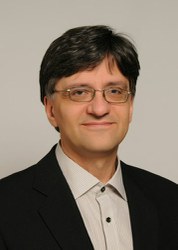
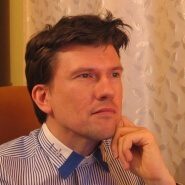
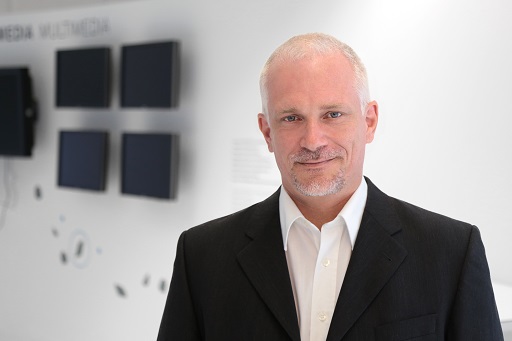
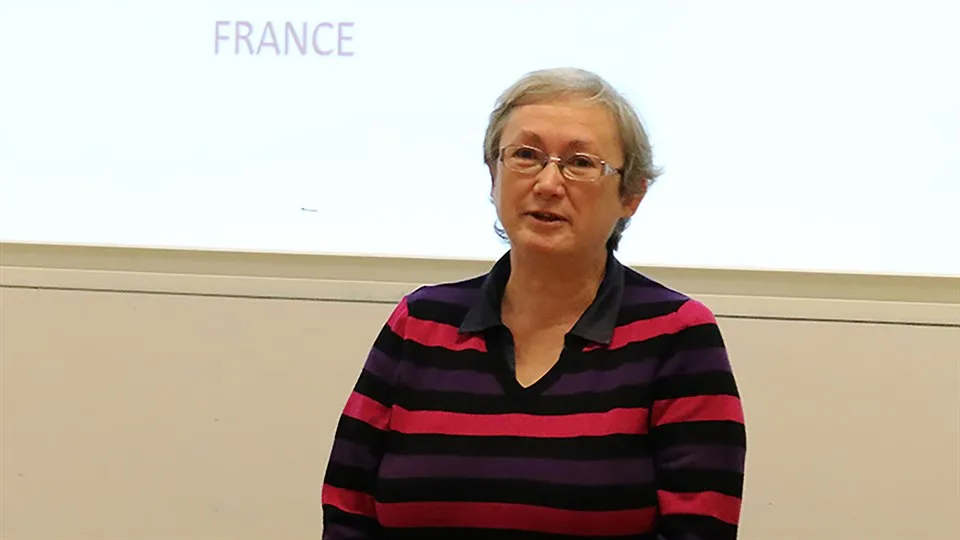
Jiyoung Kim is a Researcher in computer science, with a focus on computer vision , natural language processing , and geospatial data analysis . She has collaborated extensively across disciplines, particularly in robotics , educational technology , and signal processing . Her research interests include: Developing advanced diffusion models for high-fidelity talking head generation . Creating automated pipelines for detoxifying Korean language in AI systems. Applying deep learning to haze removal and indoor navigation for accessibility. Exploring 6G communication through computer vision-aided beamforming . Recent publications highlight trends in multi-task learning , unsupervised segmentation , and geospatial knowledge graphs . Her work bridges theoretical and applied domains, from hardware design to educational interventions for computational thinking in early childhood.
Christian Herglotz is a researcher affiliated with the University of Erlangen-Nuremberg , Germany. His work focuses on energy efficiency in video coding and decoding systems, with a particular emphasis on HEVC and VVC standards. He has published extensively in IEEE journals and conferences like ICIP, ICASSP, and QoMEX, often collaborating with André Kaup and Matthias Kränzler. Key research themes: energy-aware video compression, decoding power optimization, rate-energy-distortion modeling. Co-edited special sections on deep learning-based video coding. Recent Publications (2022-2025): Explored power reduction in HDR video encoding, motion prediction for 360-degree video, and heterogeneous quantization for DNN accelerators. His studies integrate machine learning with traditional codec design to improve energy efficiency. Technical Contributions: Developed models for decoding energy estimation, analyzed carbon impact of streaming devices, and proposed methods for viewport-adaptive motion compensation. Collaborative work spans thermal imaging for power analysis and reliability-aware DNN hardware optimization.
Dr. Kiki Adhinugraha is a Lecturer in the Department of Computer Science and Information Technology at La Trobe University, Melbourne, Australia. He holds a PhD in Information Technology from Monash University and is certified as an Oracle 11g OCA DBA. His research focuses on Spatial Data Science, Database Management, and Big Data applications, particularly in GIS, spatial query processing, and spatial crowdsourcing. He teaches courses such as Programming Environment, Cloud-based Web Applications, and Database Fundamentals. His academic contributions span geospatial accessibility analysis, machine learning applications in public health (e.g., tracking pandemic impacts), and optimizing video compression and network scheduling. He has published widely on spatial data structures, including Voronoi diagrams for IoT networks and trajectory analysis. Notable works include studies on education accessibility in Melbourne and AI-driven approaches for analyzing ALS comorbidity trajectories. Teaching responsibilities include programming, web development, and database management courses. His research often bridges theoretical computing with practical applications in urban planning, transportation systems, and healthcare analytics. He collaborates on interdisciplinary projects combining GIS, machine learning, and data-driven methodologies.
Dr. John See is an Associate Professor at the School of Mathematical and Computer Sciences, Heriot-Watt University (Malaysia Campus). He holds roles as Programme Director for BSc Computing Science and Head of the Multimedia Data Analysis (MuDA) Lab. His research focuses on multimedia signal processing, computer vision, and affective computing, particularly in emotion understanding from visual media, surveillance tasks, and classical image processing algorithms. He has published over 140 articles in top-tier journals/conferences like IEEE T-PAMI and CVPR, and secured MYR 3 million+ in research funding. He serves on editorial boards for journals such as Signal Processing and IEEE Transactions on Multimedia . Education: BSc, MSc, and PhD from Multimedia University, Malaysia. Previously, he was a Senior Lecturer at Multimedia University and a Visiting Research Fellow at Shanghai Jiao Tong University (2017-2019) under the Belt and Road Initiative. His work contributes to UN SDGs through technology-driven solutions. Research interests include facial micro-expression analysis, image aesthetics, activity recognition, and defect inspection. He organizes workshops like the ACM Multimedia Facial Micro-Expression Grand Challenge and chairs technical committees for IEEE.
Xu Wang is an Associate Professor at Heriot-Watt University's School of Engineering & Physical Sciences, affiliated with the Institute of Photonics and Quantum Sciences. His research focuses on optical communication systems, underwater wireless optical communication, fiber Bragg grating (FBG) sensing, and signal processing using machine learning. He leads efforts in secure optical communication, nanotechnology for sensing, and turbulence-resistant underwater systems. Notable projects include developing deep learning-based signal processing for UWOC and reviewing novel FBG sensing materials. His work contributes to UN Sustainable Development Goals related to industry, innovation, and infrastructure. Dr. Wang has published extensively, with over 150 peer-reviewed articles since 1999. Recent trends in his publications emphasize underwater communication systems, secure optical encryption, and interdisciplinary applications of photonics. Collaborations span international institutions, particularly in Europe and Asia. Key Research Areas: Underwater Communication, Optical Sensing, Secure Networks, Nanomaterials Recent Achievements: 2024 Review on FBG Sensing, 2023 Deep Learning in UWOC, 2021 Quantum-Enhanced Encryption Systems No scientific awards are explicitly listed, though his prolific output suggests significant recognition. His lab focuses on translating theoretical innovations into practical systems for harsh environments and secure data transmission.
Dr. Venceslav Kafedzhiski is a Professor at the Department of Telecommunications, Faculty of Electrical Engineering and Information Technologies (FEIT) at the Ss. Cyril and Methodius University in Skopje. He holds a Ph.D. from Arizona State University (2000) and has held academic positions since 1983, progressing through ranks including Assistant Professor (2001), Associate Professor (2005), and Full Professor (2010). His roles include coordinating Master's programs in Wireless and Mobile Communications and Wireless Systems, Services, and Applications, and leading the Signal Processing in Telecommunications Laboratory. Education: Bachelor's and Master's in Electrical Engineering from FEIT (1982, 1989) Ph.D. in Electrical Engineering from Arizona State University (2000) Research focuses on wireless communications, signal processing, information theory, MIMO/OFDM systems, and compressed sensing. He has authored over 80 publications in IEEE journals and conferences. Key contributions include work on channel estimation, radar systems, and telecommunication standards (e.g., WiMAX, LTE, 5G). He has led and participated in projects funded by NATO, EU (TEMPUS), and national grants, including initiatives on broadband strategies and spectrum measurement techniques. He serves as Senior Member of IEEE and has organized conferences like the Information Theory and Complex Systems (TINKOS). He has advised students on projects involving video transmission over MIMO channels and interference alignment in distributed storage systems. His leadership roles include chairing national strategy committees for electronic communications and broadband internet, and leading the Technical Committee for Electronic Communications at Macedonia's Standards Institute. Notable awards include honorary membership in Phi Kappa Phi (top academic honor society). His research extends to applied projects like radar systems for landmine detection and MRI signal processing, showcasing interdisciplinary impact in telecommunications and engineering.
Björn Lundell is a Professor of Computer Science at the University of Skövde's School of Informatics. His research focuses on open source software, ICT standards, software engineering practices, and their applications in public sector and industrial contexts. He is actively involved in projects addressing challenges like standard compliance, lock-in effects, and sustainable digitalization. Lundell has collaborated extensively with organizations such as Combitech, Saab, and Husqvarna, and his work often bridges academic research with practical industrial needs. Key areas of research include open source ecosystems, governance of software standards, and cybersecurity in public sector IT. He has contributed to major initiatives like the EDU4Standards project (EU Horizon 2020) and the ORIOS project on open source reference implementations. His work emphasizes long-term maintenance of digital assets, interoperability, and compliance with regulations like the Cyber Resilience Act (CRA). Lundell has authored over 150 publications in journals like IEEE Software and Empirical Software Engineering, and conferences such as EGOV and OpenSym. His recent focus includes GenAI data governance, SaaS contract terms in public sectors, and IoT standardization. He serves as an advisor to governmental bodies, including the Swedish Public Procurement Agency, and has provided expert opinions on IT policy frameworks. Grants and projects include leadership in the LIM-IT (2016–2020) and SUDO (2020–2024) initiatives, addressing lock-in effects and sustainable innovation. His research team collaborates internationally, with partners in academia and industry across Europe and beyond.
Dr. Mariusz Jakubowski is an Assistant Professor at Vistula University's Faculty of Computer Science, Graphics and Architecture. He holds a Ph.D. in Computer Science (with distinction) from the Faculty of Electronics and Information Technology, Warsaw University of Technology (2012), focusing on hardware-based motion estimation algorithms for video data compression. His research interests include digital signal processing, embedded systems, and wireless technologies. He has authored multiple articles in international conferences and Philadelphia-listed journals. Education: Ph.D. in Computer Science, Warsaw University of Technology (2012) Professional Experience: 2002–2008: Researcher at Industrial Telecommunications Institute (PIT-RADWAR), designing microprocessor systems for military radar control/diagnostics. 2016–Present: Employed at the Integrated Circuits and Electronic Systems Design Department, Institute of Microelectronics and Photonics. 2013–Present: Assistant Professor at Vistula University, teaching Electronics for IT Specialists, Digital Technology, Computer System Architecture, and Embedded Systems. Awards: Recipient of the First Degree Team Award from Warsaw University of Technology's Rector (2012–2013). Projects: Involved in EU-cofunded projects at Vistula University. His work bridges hardware design, signal processing, and embedded systems applications in both academic and defense sectors.
Prof. Heiko Schwarz is a Professor at Freie Universität Berlin and Head of the Image & Video Coding Group at the Fraunhofer Heinrich Hertz Institute (HHI). He holds a Dipl.-Ing. (1996) and Dr.-Ing. (2000) in Electrical Engineering from the University of Rostock. Research & Expertise: Specializes in video coding standards including HEVC (H.265) and H.264/MPEG-4 AVC. Key contributions include scalable video coding (SVC), multiview video coding (MVC), and rate-distortion optimized encoding. His work has been integral to international standards through participation in ITU-T VCEG and ISO/IEC MPEG. Developed core tools for HEVC and its 3D video extensions Co-designed H.264/AVC's motion compensation and entropy coding Co-editor of H.264/AVC and SVC reference software Awards & Recognition: 2014 SMPTE Certificate of Merit 2012 German Future Prize Nomination 2011 Karl Heinz Beckurts Award 2009 IEEE Best Paper Award Academic Engagement: Associate Editor of IEEE Transactions on Circuits and Systems for Video Technology (2016–present). Teaches Data Compression at FU Berlin. Leads a research group focusing on next-generation video coding technologies. Labs/Teams: Directs the Image & Video Coding Group at Fraunhofer HHI, advancing standards like HEVC and exploring wavelet-based video coding techniques.
Sandor Plosz is a Researcher at Heriot-Watt University, affiliated with the School of Engineering & Physical Sciences and the Institute of Sensors, Signals & Systems. His work focuses on advanced lidar technology, 3D imaging, and real-time data reconstruction using single-photon sensors. He holds a position in the Institute of Sensors, Signals & Systems, specializing in photonics and signal processing applications. Research interests include developing algorithms for 3D reconstruction, optimizing lidar systems, and leveraging graphics processing units (GPUs) for efficient data handling. His recent studies address challenges in reconstructing 3D videos under environmental obscurants, emphasizing robustness and real-time performance. Publications highlight contributions to multiscale 3D reconstruction methodologies and real-time processing techniques. No scientific awards are explicitly mentioned, and no advising/grant information is provided. His primary affiliation is through the Institute of Sensors, Signals & Systems, contributing to interdisciplinary research in computational imaging.
Christine Guillemot is a Visiting Professor at STC Research Centre, Mid Sweden University, and Research Director at Inria (France). She holds a PhD from ENST Paris (1985–1997) and previously worked at France Telecom, Bellcore (USA), and as Director of Research at Inria. Her research focuses on visual data modeling, compression, and processing (2D/3D video, light fields, 360° video) for applications in multidimensional imaging and visualization. She leads a team of 20 researchers at Inria and is Senior Area Editor of IEEE Trans. on Image Processing. Education: PhD in Telecommunications, ENST Paris (Year unspecified) Research Interests: Christine’s work spans image and video compression, 3D capture and visualization, and signal processing for multimedia. She emphasizes practical applications of advanced imaging technologies, including multiscopic 3D systems and light field analysis. Editorial & Leadership: She serves as Senior Area Editor for IEEE Transactions on Image Processing and regularly participates in major conferences (e.g., SPIE-VCIP, IEEE-ICIP). Her team at Inria develops cutting-edge solutions for visual data representation and communication. Labs/Teams: Head of a research group at Inria and affiliated with the Realistic 3D research group at STC, focusing on multidimensional imaging and visualization.
Do Lee is a Researcher at the COPPER Center within the Yale School of Medicine at Yale University. She holds a B.S. in Elementary Education from the University of Maryland, College Park, and an MPH in Biostatistics from George Washington University. Her research focuses on addressing racial and socio-economic disparities in cancer care to advance equitable healthcare. She contributes to interdisciplinary efforts in health equity, biostatistics, and public health, leveraging her expertise to improve patient outcomes through data-driven strategies. Affiliated with both the COPPER Center and the Department of Internal Medicine, her work integrates statistical methodologies with clinical and translational research. While no awards are explicitly noted, her contributions to health disparities research reflect a commitment to impactful translational science. Her scholarly publications span neuromorphic computing, artificial synapse electronics, and efficient machine learning techniques, demonstrating a blend of computational innovation and applied health research. Collaborations likely bridge engineering and medical domains to address complex healthcare challenges.
Yun Raymond Fu is the COE Distinguished Professor of Electrical and Computer Engineering at Northeastern University, with a joint appointment in the Khoury College of Computer Sciences. His research focuses on Artificial Intelligence, Machine Learning, Computer Vision, and Big Data Analytics, leading the SMILE Lab. He holds a PhD from the University of Illinois at Urbana-Champaign and joined Northeastern in 2012. His work spans anomaly detection, video analysis, and multimodal learning, with over 200 publications in top journals and conferences. Education: PhD in Electrical and Computer Engineering, University of Illinois, 2008. Research Interests: Machine Learning, Computer Vision, Pattern Recognition, Deep Learning, and Cyber-Physical Systems. His lab develops algorithms for video anomaly detection, social media analytics, and domain adaptation. Awards: Includes 7 Young Investigator Awards, 12 Best Paper Awards, and fellowships from IEEE, IAPR, AAAS. Recently recognized as a AAAI Fellow and recipient of the Edward J. McCluskey Technical Achievement Award (2024). Labs & Entrepreneurship: Founded AI startup Giaran (acquired by Shiseido in 2017). SMILE Lab explores cutting-edge AI applications in healthcare, autonomous systems, and multimedia.
David Li serves as Program Director for Data Analytics and Visualization at the Department of Graduate Computer Science and Engineering, part of the Katz School of Science and Health at Yeshiva University. His research focuses on algorithmic modeling, machine learning, and interdisciplinary applications in fields such as computational chemistry, finance, and ecology. He has published extensively on topics including MapReduce optimization, reinforcement learning frameworks, and ecological forecasting. Notable work includes the Best Regional Paper Award-winning Dual-Path Deep Learning Framework for Video Quality Assessment presented at IEEE ICCE 2025. Education: Details not provided in current text. Courses Taught: Deep Reinforcement Learning, Numerical Methods, Data Acquisition & Management, Independent Study. Grants & Collaborations: Collaborates with students on projects across algorithm design, machine learning, and interdisciplinary applications. His work bridges theoretical computer science with practical challenges in diverse domains, emphasizing scalable solutions for complex systems.
Marialuigia Sangirardi is a Postdoctoral Research Associate at the University of Oxford's Department of Engineering Science, affiliated with Mansfield College. Prior to Oxford, she worked at UMinho - ISISE (Portugal), La Sapienza, and Roma Tre (Italy). Her research focuses on masonry constitutive modeling , historic buildings , and soil-structure interaction , with emphasis on low-impact retrofitting strategies and computer vision-based structural monitoring . Current projects include MINT (in-situ testing methods for historic masonry) and collaborations with Professor Sinan Acikgoz. Publications highlight her expertise in lime mortar elasticity , seismic retrofitting , and numerical simulation of historical structures. She serves as a reviewer for international journals in structural preservation and mechanics.