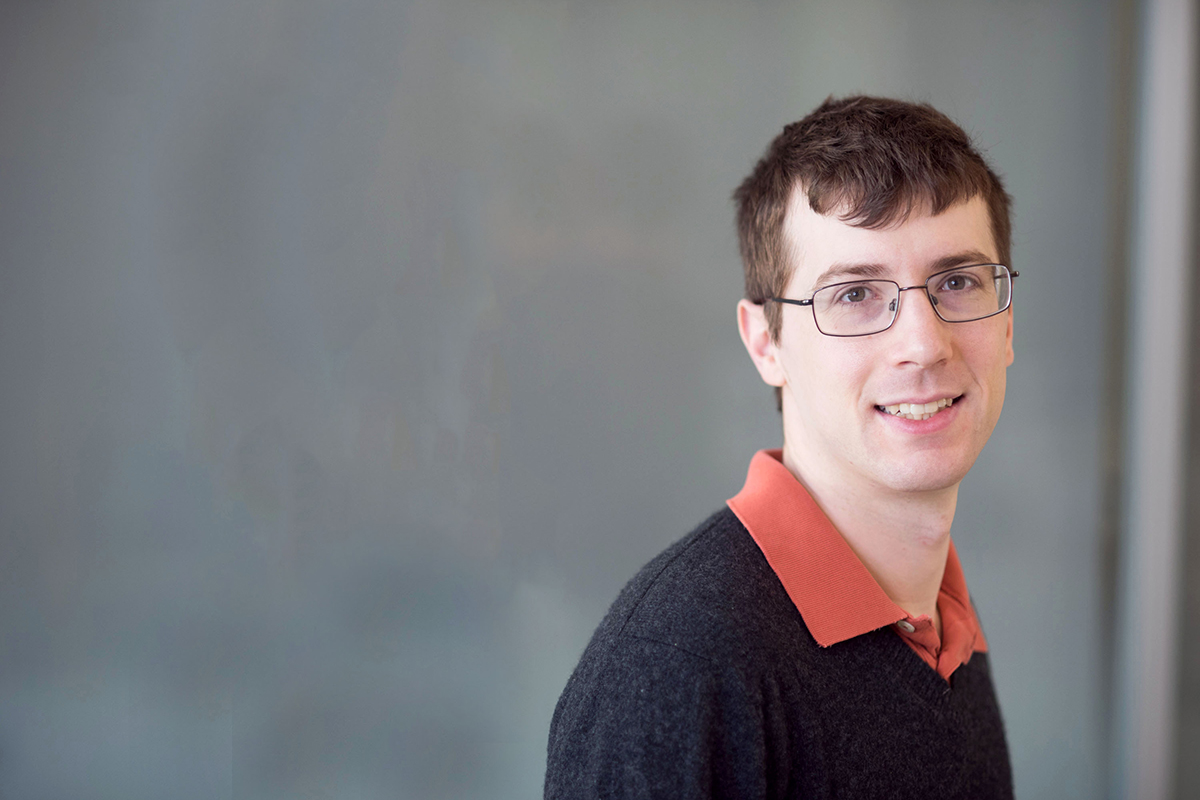
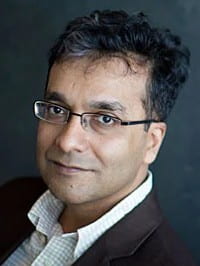
Eric Price is an Associate Professor in the Department of Computer Science at the University of Texas at Austin. He received his undergraduate and graduate degrees from MIT under the advisement of Piotr Indyk, and held postdoctoral positions at the Simons Institute (Berkeley) and IBM Almaden Research Center before joining UT in Fall 2014. Starting Fall 2024, he is on leave at Microsoft AI. Education: MIT (Undergraduate and Graduate), advised by Piotr Indyk Research Interests: Theoretical computer science, focusing on data-limited computational problems Algorithms and lower bounds for sparse recovery, streaming, and compressed sensing Integrating deep learning with traditional signal processing Provably efficient methods for high-dimensional estimation Connections between neural networks and algorithmic analysis Computational limits of modern architectures Article Trends: Recent work spans attention mechanisms, diffusion models, and LoRA fine-tuning Focus on theoretical guarantees for generative models, gradient dynamics, and security analysis Active in improving efficiency and robustness of AI systems Benchmark design for evaluating model limitations Scientific Awards: SODA Best Student Paper (2014) George M. Sprowls Award (2013) Simons Graduate Fellowship (2012) NSF Graduate Research Fellowship (2009) Multiple math/CS competition accolades Advising: PhD advisee Zhao Song (2019)
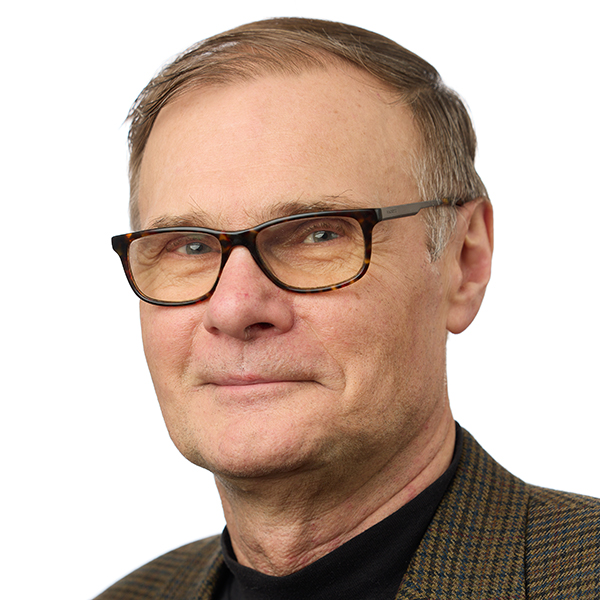
Josef Bigun is a Professor at the School of Information Technology, Halmstad University , Sweden, since 1998. His research focuses on Computer Vision, Biometric Signal Analysis, and Artificial Intelligence , with emphasis on periocular recognition, iris biometrics, and motion analysis . He has been recognized as a Fellow of the IAPR (2000) and Fellow of the IEEE (2003) , becoming Sweden's first IEEE Fellow in image analysis. Education : M.Sc. and Ph.D. from Linköping University (1983, 1988) Key Projects : EU projects (BBfor2, BIOSECURE, ACTS-M2VTS), Swedish VR/SSF projects, Swiss Fonds National projects His recent publications focus on CNN optimization, periocular biometrics, and cross-spectral recognition . He has developed innovative Continuous Examination systems using spiral codes for educational assessment and contributed to biometric standards for the European Association for Biometrics . Scientific Awards : Fellow of the IAPR (2000) Fellow of the IEEE (2003) Top 10 Scientist in Sweden (Scopus AI & Image Processing, 2024 Stanford study) Listed on research.com's top Computer Science researchers (Sweden) He has served on organizing committees for ICPR, ICIP, ICB conferences and co-founded the Audio and Video Based Person Authentication conference (now ICB). His work appears in journals like Pattern Recognition Letters and IEEE Image Processing .
Dr. Ryan Hoult is a Senior Lecturer in Structural and Earthquake Engineering at the University of Newcastle , with a research focus on enhancing seismic resilience of reinforced concrete (RC) structures through experimental testing, advanced modeling, and design innovation. His work addresses critical areas such as RC wall behavior under in-plane/out-of-plane demands, low-damage systems, torsion in asymmetric sections, and sustainable GFRP-compatible concrete. He holds a PhD and MEngStruct from the University of Melbourne. His career spans multiple institutions including UCLouvain (Marie Skłodowska-Curie Fellow), EPFL (Swiss Government Excellence Fellow), and the University of Melbourne (Lecturer/Senior Tutor). Key research areas: Earthquake Engineering, Structural Resilience, GFRP Reinforcement, Performance-Based Design Major contributions: Understanding non-ductile concrete vulnerabilities in Australia, developing SMA/GFRP reinforcement systems, and creating simplified seismic demand estimation tools Recent publications focus on plastic hinge lengths, torsion analysis, and climate-resilient concrete systems Scientific Awards Marie Skłodowska-Curie Postdoctoral Fellowship (2022) Swiss Government Excellence Scholarship (2018) Learning and Teaching Initiatives Grant (2020) As academic leader, he has supervised one PhD completion (Xiangzhe Weng, 2024) while developing sustainable construction solutions and improving seismic design standards through experimental programs.
Ming Zhao is an Associate Professor at Arizona State University's School of Computing and Augmented Intelligence (SCAI) with additional affiliations at the School of Medicine and Advanced Medical Engineering (SOMME). He directs the NSF-funded Center for Accelerated Real Time Analytics (CARTA) and the Research Laboratory for Virtualized Infrastructures, Systems, & Applications (VISA), focusing on experimental computer systems research at the intersection of cloud/edge computing, big data, and machine learning. His educational background includes: Ph.D. in Electrical and Computer Engineering, University of Florida (2008) M.S. in Pattern Recognition and Intelligent Systems, Tsinghua University, China (2001) B.S. in Automation, Tsinghua University, China (1999) Dr. Zhao's research centers on experimental computer systems with emphasis on cloud/edge infrastructure , big-data/machine-learning systems , and high-performance computing . His work bridges systems research with biomedicine, neuroscience, transportation, and social sciences, generating both fundamental scientific contributions and practical industry impact. His publications exceed 90 peer-reviewed articles with over 3,200 citations, and his research outcomes have been adopted in production systems. Analysis of his 15 most recent publications reveals strong trends in storage systems innovation (particularly ZNS SSDs and hybrid memory), edge computing optimization (benchmarks, privacy-preserving techniques), and machine learning efficiency (quantization, knowledge distillation). His work consistently addresses real-world constraints while pushing theoretical boundaries in systems research. His scientific recognition includes: National Science Foundation CAREER award ASEE Air Force Summer Faculty Fellowship AWS Machine Learning Research Award VMware and Intel Faculty Awards Best Paper award at International Conference on Autonomic Computing Multiple university-level excellence awards As an educator and mentor, Dr. Zhao has created innovative courses in virtualization and cloud computing while revitalizing operating systems curriculum. He has mentored numerous doctoral, master's, undergraduate, and high-school students - with his PhD students receiving prestigious fellowships including McKnight Doctoral Fellowship and VMware Graduate Fellowship. His research is funded by National Science Foundation, Department of Homeland Security, Department of Defense, and industry partners through CARTA's collaborative model. His leadership extends to the VISA Research Lab which explores virtualization and autonomics for large-scale computing systems, and CARTA which unites ASU, Rutgers, UMBC, and University of Miami in industry-collaborative research on real-time analytics. Current projects focus on cloud computing, high-performance computing, big data systems, and storage optimization for diverse domain applications.
Abduljalil Saif serves as a Research Fellow in the Department of Computer Science at Aalto University, conducting advanced research in artificial intelligence with emphasis on multimodal integration of visual, auditory, and linguistic data streams. His core research domains include Computer Vision , Natural Language Processing , and Audio-Visual Multimodal Learning , where he develops techniques for weakly-supervised pre-training, speaker detection systems, and parameter-efficient adaptation frameworks. Specific methodologies involve attention mechanisms, deep learning architectures, and vision-language alignment strategies. Recent publications (2023-2025) reveal consistent innovation in multimodal system design, with applications spanning active speaker identification, efficient cross-modal transfer, and information retrieval. His work appears in premier venues including SIGIR and VISAPP, demonstrating technical rigor in audio-visual fusion challenges. Dr. Saif actively collaborates within the Laaksonen Jorma research group, contributing to Aalto University's multimedia and computer vision initiatives through joint publications with researchers like Zixin Guo and Selen Pehlivan.
Giulia Fracastoro is a Fixed-term Assistant Professor at the Department of Electronics and Telecommunications (DET) of Politecnico di Torino , where she contributes to teaching and research in Systems and Control Engineering (scientific sector IINF-04/A). Her research focuses on Machine Learning , Neural Networks , and Multimedia Signal Processing , with a strong emphasis on Deep Learning and Automatic Control applications. Teaching Roles: Course Lecturer for Discrete-Event Models and Systems in Computer Engineering (2021–2025), Automatic Controls in Electronic Engineering (2024–2025), and collaborations on courses like Optimization for Machine Learning . Research: Member of the Automatica (DET) research group , supervised PhD student Luca Savant Aira , and contributed to projects involving neural implicit world models , image/video processing , and deep neural network sparsification . Her publications span topics such as financial network stability, 3D super-resolution, and neural network quantization, reflecting interdisciplinary applications of machine learning. She holds multiple patents for image/video encoding/decoding technologies and has co-authored works with researchers like Enrico Magli and Sophie Fosson.
Hamed Tabkhi serves as Associate Professor in the Department of Electrical and Computer Engineering at the University of North Carolina at Charlotte's William States Lee College of Engineering. He directs the Transformative Computer Systems and Architecture Research (TeCSAR) laboratory, focusing on real-time edge computing solutions for community safety and smart infrastructure. University: University of North Carolina at Charlotte School: William States Lee College of Engineering Department: Electrical and Computer Engineering Office: EPIC 2162 Contact: htabkhiv@uncc.edu | 704-687-0291 His research spans Real-time Edge Intelligence, Domain-Specific Computing, and Cyber-Physical Systems with emphasis on privacy-preserving AI for public safety. Core projects include AI for Highway Work Zone Safety (NSF-funded), Real-time Edge Intelligence for Smart Communities, and Scalable Reconfigurable Architecture for Deep Learning. His work integrates computer architecture innovations with community-driven applications in transportation safety, healthcare diagnostics, and retail security. Analysis of recent publications (2023-2025) reveals strong focus on human-centric video analytics, with 60% of works addressing anomaly detection through pose estimation and transformer architectures. Significant contributions appear in medical imaging (OCT-SelfNet frameworks) and transportation systems (real-time bus prediction, highway safety). His research consistently bridges hardware acceleration with real-world deployment constraints. NSF SaTC: $2M grant for community safety systems NSF CPS: $500K grant for highway work zone safety Collaborations with Leidos, AWS, Xilinx, and community stakeholders As TeCSAR director, he mentors graduate students in hardware-software co-design for edge AI systems, emphasizing FPGA acceleration and real-time processing. His lab maintains active GitHub repositories with open-source tools for edge computing. Current projects address predictive road maintenance, digital twins for power electronics, and AI-driven policing technologies developed through community co-creation processes.
Professor Janusz Konrad is a distinguished faculty member in the Department of Electrical and Computer Engineering at Boston University's College of Engineering, where he has served since 1992 with increasing responsibilities, becoming a full Professor in 2008. He leads the Visual Information Processing (VIP) laboratory and is a key member of the Machine Learning, Information and Data Sciences (MINDS) group, the Center for Information and Systems Engineering (CISE), and the Rafik B. Hariri Institute for Computing and Computational Science & Engineering. Dr. Konrad earned his PhD from McGill University in 1989 and his M.Eng. from the Technical University of Szczecin, Poland in 1980. His academic journey began as a Lecturer in Poland (1980-1984), followed by research positions at McGill University and INRS-Telecommunications in Montreal before joining Boston University. His research focuses on computer vision, visual sensor networks, image and video processing, stereoscopic and 3-D imaging, and multidimensional digital signal processing. Recent work includes developing the COSSY (Computational Occupancy Sensing System) for energy-efficient HVAC control, plasmonic phase-imaging meta-sensors for cell classification, and privacy-preserving techniques for human activity recognition. His work bridges theoretical signal processing with practical applications in biomedical imaging, cybersecurity, and sustainable building technologies. Analysis of his recent publications reveals a strong trajectory toward practical applications of computer vision in public health (particularly post-pandemic social distancing monitoring), energy conservation through intelligent building systems, and biomedical diagnostics using advanced optical techniques. His work increasingly integrates machine learning with traditional signal processing approaches, particularly in the development of optical-digital hybrid neural networks. IEEE Fellow (2008) IEEE Signal Processing Society Distinguished Lecturer (2019-2020) ECE Outstanding Faculty Teaching Award, BU (2011) Faculty Service Award, BU (2024) EURASIP Fellow (2025) Multiple best paper awards including PETS Challenge Winner (2021), AVSS Best Paper (2010) Professor Konrad has secured significant research funding from diverse sources including NSF, DOE, NIH, DOD, and NSERC of Canada. His $1 million DOE ARPA-E contract for the COSSY project exemplifies his ability to translate theoretical research into practical solutions addressing energy conservation and public health concerns. As Deputy Editor-in-Chief of IEEE Transactions on Image Processing and through extensive service on conference committees, he has significantly shaped his field. He leads the VIP laboratory, which focuses on computer vision applications including event recognition, clutter analysis, human-computer interfaces, fisheye camera networks, and visual privacy. His lab collaborates extensively with the MINDS group and CISE, creating synergies between theoretical signal processing and practical applications in healthcare, cybersecurity, and sustainable infrastructure.
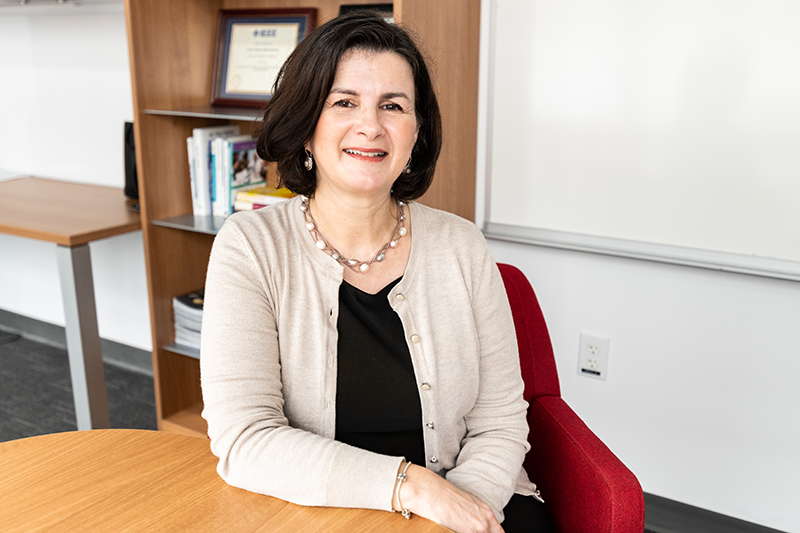
Diana Marculescu is Department Chair, Cockrell Family Chair for Engineering Leadership #5, and Professor, Motorola Regents Chair in Electrical and Computer Engineering #2 at the University of Texas at Austin. She previously served as the David Edward Schramm Professor at Carnegie Mellon University, where she was Founding Director of the College of Engineering Center for Faculty Success (2015-2019) and Associate Department Head for Academic Affairs (2014-2018). Her educational background includes: Dipl.Ing. degree in computer science from Polytechnic University of Bucharest, Romania (1991) Ph.D. degree in computer engineering from University of Southern California, Los Angeles (1998) Dr. Marculescu's research bridges hardware design and machine learning, focusing on energy- and reliability-aware computing, hardware-aware machine learning, and computing for sustainability. She leads the EnyAC (ENergY Aware Computing) research group and founded the iMAGiNE Consortium for industry-university collaboration in engineering intelligent machines from cloud to edge. Her work addresses the critical need for efficient AI systems across diverse hardware platforms. Analysis of her recent publications reveals a strong trend toward hardware-efficient machine learning, with emphasis on neural architecture search, model compression, and energy-aware deep learning systems. Her research tackles the fundamental challenge of co-designing machine learning models and hardware to achieve optimal performance and efficiency. Dr. Marculescu has received numerous prestigious awards: National Science Foundation Faculty Career Award (2000-2004) ACM SIGDA Technical Leadership Award (2003) Carnegie Institute of Technology George Tallman Ladd Research Award (2004) IEEE Circuits and Systems Society Distinguished Lecturer (2004-2005) Australian Research Council Future Fellowship (2013-2017) Marie R. Pistilli Women in EDA Achievement Award (2014) Barbara Lazarus Award from Carnegie Mellon University (2018) Fellow of ACM, IEEE, and AAAS Dr. Marculescu has advised more than a dozen doctoral students, 35+ master students, and more than two dozen undergraduates. Her research has been supported by significant grants including the NSF Career Award and Australian Research Council Future Fellowship. She has served as Technical Program Chair and General Chair for multiple major conferences including ACM/IEEE International Symposium on Low Power Electronics and Design, IEEE/ACM International Symposium on Networks-on-Chip, and IEEE/ACM International Conference on Computer-Aided Design. She leads the EnyAC research group which focuses on sustainable computing and computing for sustainability, and founded the iMAGiNE Consortium to foster industry-university collaboration in engineering intelligent machines from cloud to edge.
Aravinthan Samuel is a Professor of Physics at Harvard University leading the Samuel Lab, where he investigates neural circuit mechanisms underlying behavior in model organisms like C. elegans and Drosophila larvae. His research integrates biophysics, neuroscience, and computational approaches to decode how sensory inputs transform into behavioral outputs through quantifiable neural algorithms. His work centers on neural circuits, sensory processing, and behavioral plasticity using advanced microscopy and connectomics. The lab employs C. elegans and fruit fly larvae to map entire neural circuits at synaptic resolution, focusing on chemotaxis and thermotaxis behaviors. Recent innovations include machine learning applications for neuron tracking (e.g., Membrain, SmartEM) and novel microscopy techniques for recording neural activity in freely moving animals, revealing how neural ensembles encode sensory information and generate behavioral motifs. Publications from 2023-2025 demonstrate a strong trend toward machine learning-driven neuroscience, with emphasis on automated connectome segmentation, behavioral plasticity mechanisms, and multi-neuronal imaging. Key themes include combinatorial odor coding, context-dependent mating behaviors, and hardware/software co-design for microscopy, spanning biophysics, computational neuroscience, and optical engineering disciplines. Scientific Awards: No awards documented in provided materials Professor Samuel actively mentors undergraduate, graduate, and postdoctoral researchers, seeking candidates with biophysics, neuroscience, or physics backgrounds for projects involving microscopy development and neural circuit analysis. His lab receives research funding supporting interdisciplinary work in neural computation and imaging technology, though specific grants are not detailed in the source texts. The Samuel Lab operates within Harvard's Physics Department, maintaining a collaborative environment that bridges experimental biophysics and computational neuroscience. Current initiatives focus on real-time neuron tracking in deforming animals, interhemispheric neural integration, and efficient electron microscopy workflows, with infrastructure supporting high-throughput connectomics and live behavioral imaging.
Dr. Benjamin Bejar Haro is a researcher at the Paul Scherrer Institute (PSI) , specializing in computational methods for scientific applications. His work spans machine learning, signal processing, and computer vision, with recent publications focusing on EUV mask inspection, sparse signal recovery, and biomedical video analysis. Research Interests Deep learning for optical imaging Multi-channel signal processing Algorithm development for crystallography Biomedical video analysis Sparse signal reconstruction Ensemble forecasting systems Publications His recent work includes contributions to EUV mask inspection using neural networks (2025), cross-channel unlabeled sensing (2025), and kilohertz serial crystallography algorithms (2024), reflecting interdisciplinary expertise in computational modeling and scientific data analysis.
Sun-Yuan Kung is a Professor of Electrical and Computer Engineering at Princeton University specializing in high-performance learning networks and explainable AI. His research develops beyond back-propagation paradigms to create optimal neural architectures through structural learning and discriminant information metrics. His academic credentials include: Ph.D. in Electrical Engineering, Stanford University (1977) M.S. in Electrical Engineering, University of Rochester (1974) B.S. in Electrical Engineering, National Taiwan University (1971) Professor Kung pioneered Explainable Neural Networks (XNN) incorporating Internal Neuron's Learnability (INL) using internal teacher labels and discriminant information (DI) for node/layer ranking. This enables deep compression while enhancing model robustness and adaptability for real-time applications in image processing, privacy protection, and security-sensitive environments. His work directly addresses DARPA's Explainable AI (XAI) initiatives through end-user-adaptive labeling mechanisms. Recent publications (2023-2025) demonstrate sustained innovation in efficient deep learning architectures, with dominant themes in remote sensing applications (object detection, image captioning, change detection), quantum-inspired algorithms, and multimodal representation learning. Key trends include neural architecture search, model compression techniques, and reinforcement learning integration for specialized domains. His distinguished honors include: Life Fellow of IEEE (2016) IEEE Third Millennium Medal (2000) IEEE Signal Processing Society Best Paper Award (1996) IEEE Signal Processing Society Technical Achievement Award (1992) IEEE Fellow (1988) Professor Kung mentors graduate researchers including Katherine Shu-Min Li, Xiaxin Shen, and Zhuoqing Song, with funding supporting projects in deep compression, privacy-preserving ML, and XAI frameworks. His group develops foundational techniques for discriminant information-based network pruning and structural gradient methods. He leads a research team advancing the XNN framework for DARPA's Explainable AI initiatives, focusing on real-time decision support through internal neuron explainability and channel exploration for model optimization.
Julien Mille is an Associate Professor at INSA Centre Val de Loire and Ecole Polytechnique de l'Université de Tours , France. He conducts research with the RFAI team (Reconnaissance des Formes et Analyse d'Images) at the Laboratoire d'Informatique Fondamentale et Appliquée in Tours. Previously, he was an associate professor at Université Claude Bernard Lyon 1 (2009-2015), affiliated with the LIRIS laboratory and Imagine team . Key research areas: Pattern recognition, image analysis, active contours/surfaces, optimal transport, human activity recognition Technical contributions: Developed open-source tools for image labeling ( PixelLabeling ), DeepFlowCUDA optimization Scientific contributions span computer vision, biomedical imaging, and plant science applications. Notable work includes: Optimal transport methods for image restoration Hierarchical skeletonization for shape matching Pose-driven attention mechanisms for video analysis 3D segmentation of medical images His research has been published in leading journals like SIAM Journal on Imaging Sciences , International Journal of Computer Vision , and Computer Vision and Image Understanding , along with major conferences including CVPR , ECCV , and ICIP .
Dr. Murat Tahtali is a Senior Lecturer at UNSW Canberra within the School of Engineering and Information Technology at the University of New South Wales. His academic career spans multiple engineering disciplines with a strong focus on interdisciplinary research connecting engineering principles with medical applications. Dr. Tahtali's research interests span several interconnected fields including Medical Imaging , particularly Light Field CT and SPECT (L-SPECT), Adaptive Optics , Computer-Aided Design , Finite Element Analysis , Vibration Analysis , and Image Processing . His work bridges theoretical engineering concepts with practical medical applications, developing novel imaging techniques that can operate through challenging environments and media. His research has significant implications for both defense applications and medical diagnostics. An analysis of Dr. Tahtali's recent publications reveals a strong trend toward integrating machine learning techniques with traditional engineering approaches. His work spans medical imaging innovations, structural health monitoring using vibration analysis, computer vision for challenging environments, and deep learning applications. The interdisciplinary nature of his research connects mechanical engineering principles with computational methods and medical applications, demonstrating consistent innovation across multiple domains. Dr. Tahtali actively supervises research students and offers PhD scholarships ($35,000 per year) for high-achieving students in Computer Science, Electrical Engineering, or Mechanical Engineering. His research group works on cutting-edge problems at the intersection of engineering disciplines, with particular emphasis on medical imaging technologies and computational methods for challenging environments. His laboratory work focuses on developing novel imaging systems, particularly Light Field SPECT technology, as well as computational methods for image restoration through turbulent media. The research team combines experimental work with sophisticated computational modeling to advance imaging capabilities in both medical and defense contexts.
Roberto Sarmiento Rodríguez is a University Professor at the Department of Electronic and Automatic Engineering within the IU of Applied Microelectronics at the University of Las Palmas de Gran Canaria. His work focuses on integrated electronic systems for data processing and hyperspectral imaging technologies. Current affiliation: Department of Electronic and Automatic Engineering (University of Las Palmas de Gran Canaria) Research group: GIR IUMA - Design of Integrated Electronic Systems for Data Processing Research interests revolve around Electronic Engineering , FPGA Design , and Data Compression techniques applied to satellite systems. His group has developed hardware accelerators for CCSDS standards (121.0-B-3, 123.0-B-2) and explored GPU-based optimization for hyperspectral image processing. Advising Highlights : Supervised 21 final degree and master's projects (2013-2025) on topics including: RISC-V hardware compression accelerators CABAC entropy encoding for satellites H.264/AVC decoder modules GPU-accelerated spectral unmixing Calorimetric sensor design Technical Collaborations include partnerships with: Xilinx (Zynq FPGA platforms) CCSDS standards implementation Medical imaging systems development