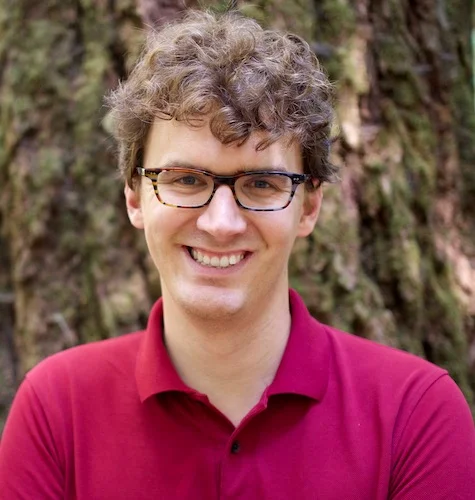
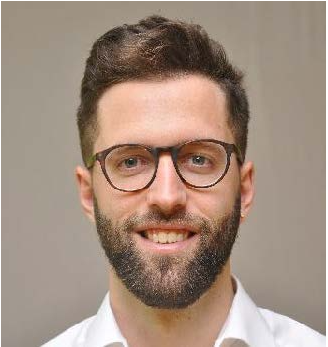
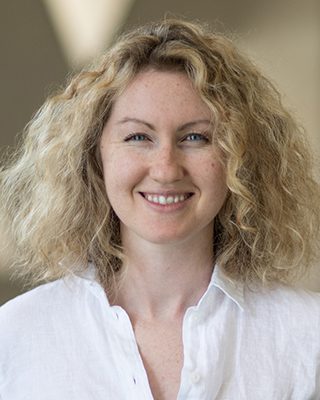
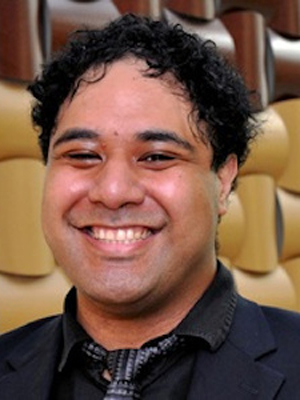
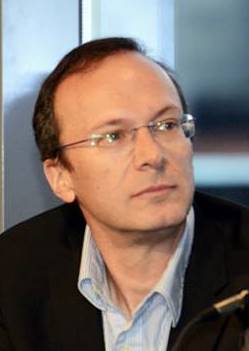
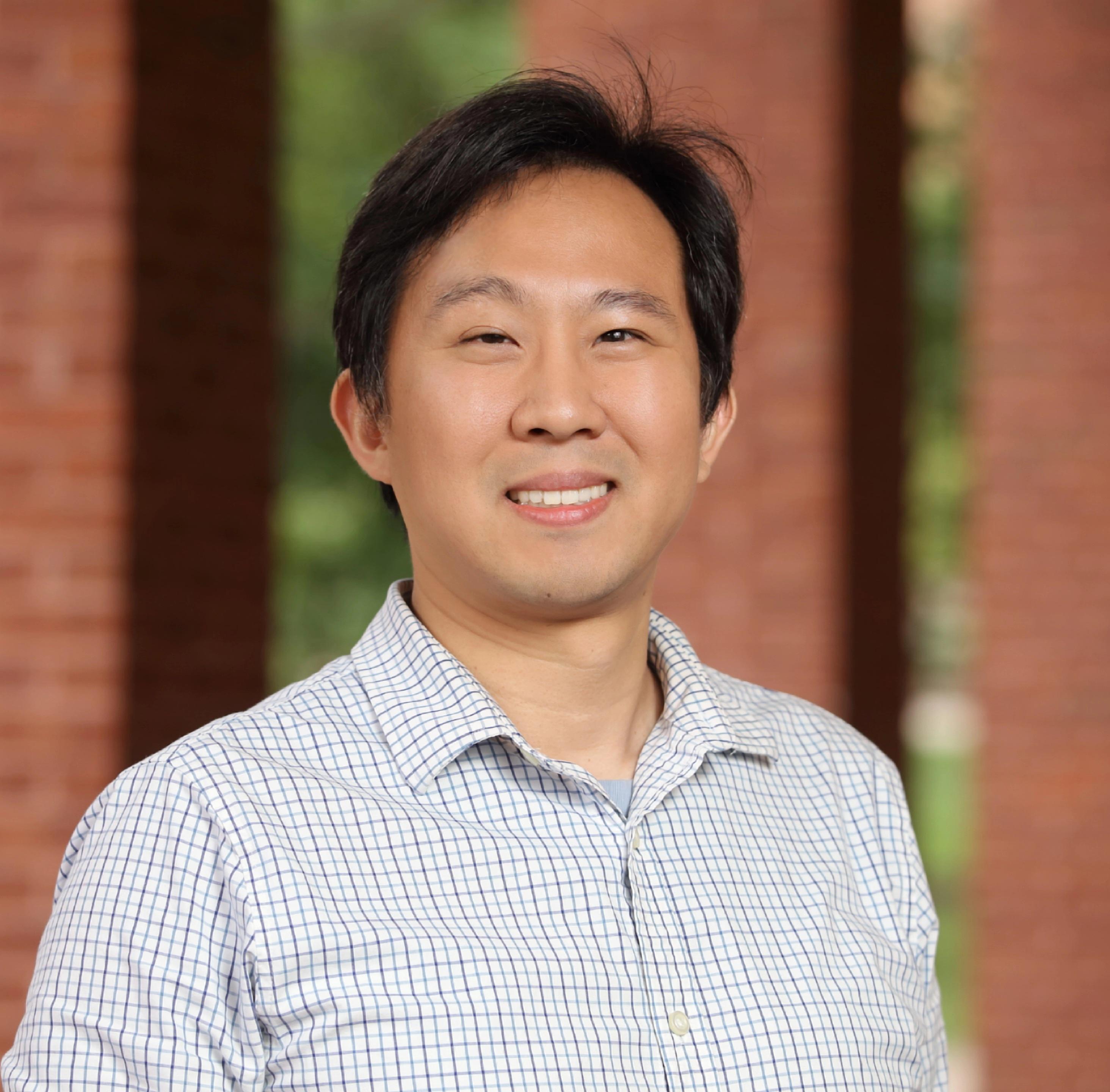
Carl Vondrick is a Professor in the Department of Computer Science at Columbia University. His research focuses on creating robust and versatile perception systems that leverage video and interaction with the natural world, with applications in 3D reconstruction, visual question answering, and robot manipulation. Former research scientist at Google Visiting researcher at Cruise Education: PhD (2017) from MIT, advised by Antonio Torralba BS (2011) from UC Irvine, advised by Deva Ramanan His research explores multimodal approaches for cross-task and cross-modal transfer, scene dynamics, audiovisual perception, interpretable models, and spatial awareness systems. The lab emphasizes zero-shot generalization and neuro-symbolic methods while addressing safety and robustness in AI systems. Key publication trends include: 2025: Video generation for robotics 2024: Differentiable rendering and cross-modal reasoning 2023: Robust perception and 3D modeling Scientific Awards: 2024 PAMI Young Researcher Award 2021 NSF CAREER Award Teaching Roles: Teaching Computer Vision II (2021-2025), Computer Vision I (2018-2019), and Representation Learning (2020-2022). Advising: Advises 8 current PhD students and has mentored 5 graduated students now at institutions like MBZUAI and UMD. The lab recruits 1-2 PhD students annually through Columbia’s PhD program. Grants and Collaborations: Funded by NSF, DARPA, Toyota Research Institute, Amazon Research, and Google.
Dr. Adrian Müller is a Researcher at the University of Bern's Tourism Research Unit (CRED-T) within the Center for Regional Economic Development (CRED). His work focuses on sustainable aviation, decarbonization of business travel, and the intersection of climate strategies with organizational practices. He holds a scientific role in advancing research on travel behavior, policy implications, and alternative modes of transportation. Research interests include sustainable aviation fuel adoption, post-pandemic travel trends, and the misalignment between corporate climate goals and actual travel practices. His studies explore behavioral economics aspects of travel decisions, including social norms in rail business travel and decision-making autonomy among travelers. Key articles highlight themes like decarbonization challenges in knowledge-intensive industries, preferences for sustainable aviation fuels, and the shift toward video conferencing post-COVID-19. Müller’s research often bridges environmental science, transportation economics, and policy analysis, emphasizing actionable solutions for reducing aviation’s ecological footprint. He is affiliated with the Economic Institute at the University of Bern and contributes to initiatives like the Oeschger Center for Climate Change Research. No scientific awards are explicitly listed, but his work reflects engagement with cutting-edge climate and travel research.
Ira Kemelmacher-Shlizerman is a Full Professor of Computer Science at the Paul G. Allen School of Computer Science & Engineering at the University of Washington and Director of the UW Reality Lab. She also serves as a Principal Scientist at Google, where she leads the Shopping Gen AI visuals teams focusing on Virtual Try-On, 3D, and product videos. Her research spans computer vision, computer graphics, and Generative AI, with particular contributions to virtual try-on technology, 3D modeling, and augmented reality applications. Professor Kemelmacher-Shlizerman's research interests focus on Generative AI applications in visual computing. Her work bridges the gap between theoretical computer vision and practical applications, particularly in e-commerce and virtual reality. She has made significant contributions to virtual try-on technology, 3D editing with generative models, and AI applications for shopping experiences. Her research combines deep learning with traditional computer vision techniques to solve challenging problems in image and video synthesis. Her recent publications demonstrate a strong trend toward Generative AI applications for visual shopping experiences, virtual try-on technology, and 3D content creation. The work spans multiple top conferences including CVPR, SIGGRAPH, and ICCV, with a focus on practical applications of computer vision and graphics. Her research has evolved from foundational work in face reconstruction and aging to current applications in virtual shopping and 3D content generation. Google faculty award Madrona prize GeekWire Innovation of the Year Award Covers of CACM and SIGGRAPH Best student paper honorable mention at CVPR'21 Best demo runner up MobiSys'22 Senior member of IEEE Distinguished Member of ACM Professor Kemelmacher-Shlizerman has successfully tech-transferred multiple research projects to industry. She founded Dreambit, a startup acquired by Meta, and previously built and launched the Face Movies feature at Google. She currently leads Google's Shopping Gen AI visuals teams, focusing on 10x improvements to shopping journeys. Her UW Reality Lab serves as a hub for AR/VR research with industry partnerships. She has mentored numerous PhD students who have become researchers in both academia and industry, with several publications featuring student co-authors receiving recognition at top conferences. Professor Kemelmacher-Shlizerman leads the Graphics and Imaging Laboratory (GRAIL) and the UW Reality Lab, which focuses on augmented and virtual reality research with industry partnerships including Google. The labs work on cutting-edge projects in virtual try-on, 3D modeling, and immersive experiences, bridging academic research with real-world applications.
Dr. Kyle Jamieson is a Professor of Computer Science at Princeton University, leading the Princeton Advanced Wireless Systems (PAWS) lab within the Department of Computer Science. He is also Affiliated Faculty in the Department of Electrical and Computer Engineering. His research focuses on wireless networking systems, 5G architecture, IoT networks, and quantum computing applications in wireless communication. He has pioneered work in reconfigurable intelligent surfaces, MIMO detection algorithms, and metamaterials for millimeter-wave networks. Dr. Jamieson has developed courses such as COS 597S: Recent Advances in Wireless Networks (graduate seminar), COS 463: Wireless Networks , and COS 418: Distributed Systems . His teaching emphasizes interdisciplinary approaches to networking challenges, including physical-layer design, computational structures for wireless processing, and cross-layer optimization. His lab’s research spans smart surfaces for 5G networks, quantum annealing for MIMO processing, and edge computing for live video analytics. Recent work includes deploying reconfigurable metamaterials for enhanced mmWave networks and developing tools like NR-Scope for 5G telemetry. While no awards are listed in the provided text, his contributions to wireless systems have advanced both academic and industrial applications in areas such as network resilience, IoT scalability, and quantum-enabled wireless processing. Dr. Jamieson’s advising focuses on graduate and undergraduate students working in wireless systems, though specific advisee names are not provided. His lab collaborates on projects like Wall-Street for roadside networking and Spider for multi-hop mmWave video analytics. External collaborations include work with Microsoft Research and guest lecturing roles at Berkeley. His research bridges theoretical foundations with practical implementations, often addressing real-world challenges in wireless infrastructure and next-generation communication systems.
Paul Taele is an Instructional Assistant Professor and Deputy Lab Director in the Sketch Recognition Lab at Texas A&M University's Department of Computer Science & Engineering. He holds a Ph.D. (2019), M.S. (2010), and dual B.S. degrees in Computer Science and Mathematics from the University of Texas at Austin (2006). His research focuses on sketch recognition, haptics, and intelligent interfaces for education and accessibility, with notable work in mid-air gesture recognition, educational sketching tools, and assistive technologies for disabilities. He has contributed to projects like Kanji Workbook , Hashigo , and HaptiMoto , and has published over 50 peer-reviewed articles across venues like CHI, IUI, and AAAI. Taele has received awards including the NSF Student Travel Grant (2014) and Ford Foundation Honorable Mention (2015). He teaches courses in capstone design, programming, and sketch recognition, and mentors students across all academic levels through strict eligibility criteria for research collaborations. Education : Ph.D. Computer Science, Texas A&M University (2019) M.S. Computer Science, Texas A&M University (2010) B.S. Computer Science & Mathematics, University of Texas at Austin (2006) Concentration in Mandarin Chinese, National Chengchi University (2007) Research Interests : Taele's work bridges HCI and AI to create accessible educational interfaces. His projects emphasize: Sketch Recognition : Developing algorithms for mid-air gestures, children's developmental assessments, and language learning Accessibility : Haptic systems for visually impaired learners and algebra education Educational Tech : Intelligent tutoring systems for music, math, and East Asian languages Awards & Grants : EAAI-20 Travel Grant (2020) Ford Foundation Dissertation Honorable Mention (2015) NSF East Asia-Pacific Summer Institutes (2013, 2012) Royce E. Wisenbaker Fellowship (2009) Lab & Teams : Director of the Sketch Recognition Lab (SRL) and collaborator with global institutions like Singapore Management University and National Taiwan University. Active in organizing workshops like SketchRec at IUI conferences.
Ellen Zegura is the Stephen Fleming Chair and Professor in the School of Computer Science at Georgia Tech's College of Computing. She holds multiple degrees from Washington University in St. Louis: BS in Computer Science, BS in Electrical Engineering, MS in Computer Science, and DSc in Computer Science. Her research focuses on computer networking, social responsibility in STEM education, and computing for development. She co-founded the Computing for Good initiative, emphasizing project-based learning to address societal challenges. Zegura is an IEEE and ACM Fellow, and serves on the Computing Research Association (CRA) Executive Board. Her education spans interdisciplinary fields at Washington University, combining computer science and electrical engineering. She has held leadership roles at NSF and CRA, advocating for equitable technology policies. Notable contributions include advancing QoE metrics for video conferencing, analyzing mobile broadband infrastructure disparities, and developing ethics education frameworks for computing curricula. Research interests include network measurement, community-empowered data practices, and bridging technical innovation with social impact. Recent work examines tribal mobility during pandemics, sensor co-design with Indigenous communities, and ethical pedagogy for teaching assistants. Her labs and collaborations, such as CERCS, emphasize interdisciplinary problem-solving. Zegura’s awards reflect her dual impact in technical innovation and societal engagement.
Niko Troje is a Professor at York University, affiliated with the Departments of Psychology, Biology, and Electrical Engineering & Computer Science. He holds cross-appointments and leadership roles, including Director of the BioMotion Lab. His research focuses on perceptual representations, biological motion, and vision science. Education: Ph.D. in Biology (1994) - Albert-Ludwigs Universität B.Sc. in Biology (1990), Physics & Mathematics (1987) - Albert-Ludwigs Universität Research Interests: Troje investigates how the brain processes biological motion, perception of human and animal movement, and applications in virtual reality. His work bridges neuroscience, psychology, and computer science. Key Contributions: Pioneered point-light displays for motion perception, explored gait analysis in mental health, and developed tools for motion capture and analysis (e.g., bmlTUX). Awards: Humboldt Research Prize (2014) NSERC Steacie Fellowship (2008-2009) Canada Research Chair (2003-2013) Grants & Labs: Led funded projects on movement perception, collaborated with institutions like the Max Planck Institute, and directs the BioMotion Lab at York University.
Francis Y. Yan is an Assistant Professor of Computer Science at the University of Illinois Urbana-Champaign (UIUC), holding an affiliate appointment in Electrical & Computer Engineering within the Grainger College of Engineering. He leads the Illinois Networked Systems and AI (NSAI) research group, focusing on building intelligent networked systems that are safe, robust, and performance-optimized through practical machine learning integration. Prior to joining UIUC in January 2025, he served as a Senior Researcher at Microsoft Research Redmond under Victor Bahl. His educational background includes: Ph.D. in Computer Science from Stanford University (2020), advised by Keith Winstein and Philip Levis B.S. in Computer Science (Yao Class) and B.A. in Economics from Tsinghua University (2015) Additional undergraduate studies at MIT Yan's research adopts a holistic approach to practical machine learning for networked systems, emphasizing judicious application rather than indiscriminate use. He builds real-world systems and research platforms to lay ML foundations, devises deployable algorithms using domain insights, and validates performance through extensive empirical evidence. His work consistently addresses operator concerns regarding ML deployment—focusing on safety, robustness, generalization, and efficiency—while strategically combining ML with classical networking and systems techniques. Analysis of his 15 most recent publications (2023-2025) reveals dominant themes in resource allocation for microservices (DeDe, Autothrottle), real-time video optimization (Mowgli, GRACE), and LLM-driven network algorithm design. His work bridges theoretical advances with industrial deployment, evidenced by platforms like Puffer (400,000+ users) and OpenNetLab that have become community standards for validating congestion control algorithms. His research has been recognized with top honors: USENIX NSDI Outstanding Paper Award (2024) for Autothrottle APNet Best Paper Award (2022) IRTF Applied Networking Research Prize (2021) USENIX NSDI Community Award (2020) USENIX ATC Best Paper Award (2018) for Pantheon Yan actively recruits master's and undergraduate researchers for his NSAI group, prioritizing self-motivated students for projects in networked systems and AI. His research is supported by industry collaborations (notably Microsoft) and manifests in deployable platforms like Puffer—which has enabled award-winning research at NSDI and SIGCOMM—and OpenNetLab for real-time communications. His work directly impacts production systems including Microsoft Teams and Bing. He founded and directs the Illinois Networked Systems and AI (NSAI) research group, which operates critical infrastructure including Puffer (a live TV service and research platform) and OpenNetLab. These platforms facilitate community-wide validation of novel algorithms, with Puffer alone supporting multiple best-paper awards at top conferences. Current workstreams span cloud resource management (Teal, Autothrottle, DeDe), low-latency video (Puffer, Tambur, Mowgli), and LLM-augmented systems (Nada, Designing Network Algorithms via LLMs).
Satoshi Miyazaki is a Professor at Waseda University's Graduate School of Japanese Applied Linguistics and affiliated with the Faculty of International Research and Education . With a Ph.D. from Monash University, his work bridges Japanese language education, second language acquisition, and cross-cultural communication. Education Background: Doctor of Philosophy (Japanese Applied Linguistics) - Monash University (1997) Graduate School of Japanese Applied Linguistics - Waseda University (1982) Research Interests focus on Japanese language pedagogy, natural acquisition mechanisms, and interactional strategies for non-native learners. His innovative use of Eye Mark Recorders (EMR) and Event-Related Potentials (ERP) has advanced understanding of cognitive processes in language learning. Recent Articles (2011-2001) reveal trends in Japanese language education reform, cross-cultural learning challenges, and technology-enhanced teaching methods. Key themes include correctional language programs for foreign inmates, immersion environments, and brain processing studies using advanced neuro-linguistic techniques. Research Projects have received continuous funding from Japan Society for the Promotion of Science, including prison language education programs, foreign care worker competence frameworks, and EMR-based lecture comprehension analysis. His work extends to international collaborations with institutions in Australia, the U.S., and Europe.
Andrea Stevenson Won is a researcher at Cornell University in the Department of Communication , focusing on virtual reality (VR), human-computer interaction, and social dynamics in immersive environments. Her work explores avatar embodiment , nonverbal behavior , and accessibility in VR for users with disabilities. Research Themes : Virtual embodiment and its psychological effects Accessibility solutions for blind and low-vision users in social VR Nonverbal communication analysis in immersive environments Pro-social behavior through VR interventions Collaborative VR systems and AI integration Recent Article Trends : 2024: Investigated avatar behavior transformation in mixed reality ( MRTransformer ), AI-guided accessibility tools, and nonverbal cue adaptations 2023-2022: Focused on educational VR applications, 360° video narratives, and longitudinal team dynamics 2021-2014: Pioneered avatar embodiment studies, anxiety detection via movement tracking, and homuncular flexibility in VR
Christy Thomas, EdD serves as Dean of the School of Education and Associate Professor at Ambrose University, where she joined as a sessional instructor in Fall 2019, became Assistant Professor in August 2020, and was promoted to Associate Professor in March 2024. She concurrently holds an Adjunct Assistant Professor position at the Werklund School of Education, University of Calgary, where she has taught since 2016. Her academic credentials include: EdD in Education (University of Calgary, 2016) MEd (University of Alberta, 2011) BEd (University of Calgary) Dr. Thomas's research centers on collaborative leadership frameworks and professional learning ecosystems in educational settings. She employs mixed-methods approaches including design-based research and action research to investigate how communities of practice foster teacher development. Her work bridges theoretical scholarship with practical implementation, focusing on creating environments where educators and students can thrive through collaborative risk-taking and supportive structures. Current projects examine digital-age pedagogies and leadership development models that integrate care ethics. Analysis of her 2021-2024 publications reveals strong thematic convergence around educational transformation through collaboration. Key trends include decolonization of teacher education (evident in Métissage leadership frameworks), pandemic-responsive teaching strategies, and technology-mediated social connectedness. Her scholarship consistently addresses systemic challenges in K-12 education while proposing actionable solutions through professional learning communities and leadership development. Dr. Thomas has secured substantial research funding as Principal Investigator (PI) and Co-Investigator (Co-I), including: Alberta Education Research Partnership Program Grant (2025-2027): New Teacher Transition: Early Career Supports (PI) SSHRC Insight Grant (2025-2029): Examining Implementation of Policies Restricting Mobile Devices in K-12 Schools (Co-I) SSHRC IDG (2021-2023): Exploring Online Pedagogies for Social Connectedness (Co-PI) Ambrose Research Fund (2021-2022): Building Faculty Capacity for Online Teaching (PI) She actively translates research into practice through instructional design consulting at Ambrose University and faculty development workshops at both Ambrose and the University of Calgary's Taylor Institute. Her consulting specializes in bridging academic theory with classroom application, particularly in online pedagogies and collaborative leadership models. Dr. Thomas emphasizes creating partnerships between researchers and practitioners to address real-world educational challenges.
Craig Gotsman is a Professor and Dean at the Ying Wu College of Computing, New Jersey Institute of Technology. He previously held roles at Cornell Tech, Technion, ETH Zurich, and MIT. His research focuses on computational geometry, computer graphics, and 3D animation. Ph.D. in Computer Science, Hebrew University of Jerusalem (1991) His work spans geometric modeling, mesh processing, and applications in animation and visualization. Recent research trends include gaze correction in video conferencing, mesh parameterization, and spectral compression techniques. Notable awards include Fellowships in the US National Academy of Inventors and the Academy of Europe, multiple best paper awards, and the Technion's Hewlett Packard Chair in Computer Engineering. Gotsman has mentored over 50 postgraduate students and holds ten US patents. He co-founded three companies: Virtue 3D Inc. (acquired by NVIDIA), Estimotion Inc. (now ITIS Israel Ltd.), and CatchEye.
Fengqing Maggie Zhu is an Associate Professor at the Elmore Family School of Electrical and Computer Engineering within Purdue University , West Lafayette campus. Her research spans image processing , video compression , computer vision , and smart health , with notable contributions to learned image compression , 3D reconstruction , and nutrition analysis via computer vision . Educational background: BS in Electrical Engineering, Purdue University (2004) MS in Electrical and Computer Engineering, Purdue University (2006) PhD in Electrical and Computer Engineering, Purdue University (2011) Her work focuses on developing machine learning-based compression techniques for 2D/3D images and videos, with applications in food portion estimation , wearable dietary monitoring , and virtual reality facial expression tracking . She explores structured pruning , mixed precision quantization , and continual learning to create efficient, robust systems for edge-cloud collaboration. The 2025-2024 article collection reveals concentrated efforts in learned image compression (with 8 papers on quantization, pruning, hierarchical VAEs), food-related computer vision (12+ papers on portion estimation, databases, classification), and 3D reconstruction (MetaFood3D dataset, ICP-3DGS algorithm). Emerging themes include privacy-preserving AI for wearable cameras and class-incremental learning frameworks. Contact: zhu0@purdue.edu
Hyojoon Kim is an Assistant Professor in the Department of Computer Science at the University of Virginia. His research focuses on computer networks and distributed systems, emphasizing in-network computing, programmable networks, software-defined networking (SDN), network measurement, and security. He received his Ph.D. from Georgia Tech (2015) and B.S. from the University of Wisconsin-Madison (2005). Prior to UVA, he worked as an Associate Research Scholar at Princeton University. Education: Ph.D. in Computer Science, Georgia Institute of Technology, 2015 B.S. in Computer Science, University of Wisconsin-Madison, 2005 Research Interests: Programmable Networks & SDN Network Measurement & Performance Analysis Network Security & Privacy In-Network Computing & Real-Time Monitoring Teaching: CS 7457: Advanced Computer Networks (Graduate) CS/ECE 4457: Computer Networks (Undergraduate) CS 6501: Software-Defined Networking & Programmable Networks (Graduate) Lab & Group: The Network Mechanics Group at UVA focuses on improving network monitoring, troubleshooting, and configuration through SDN, P4, and programmable data planes. Advising: Current advisees include Di Zhu (PhD) and Carson Kuzniar. The group actively seeks PhD students interested in systems and networking research.
Dina Katabi is the Thuan and Nicole Pham Professor of Electrical Engineering and Computer Science at MIT, leading the Katabi Lab and directing the MIT Center for Wireless Networks and Mobile Computing. Her research bridges AI, wireless systems, and digital health, focusing on non-invasive health monitoring via wireless signals and machine learning. She is a MacArthur Fellow and holds the Andrew & Erna Viterbi Professorship. Key research areas include emotion recognition (EQ-Radio), sleep posture monitoring (BodyCompass), and through-wall human pose estimation. Her lab develops AI systems for biosensors, leveraging RF signals to detect diseases like Parkinson's and Alzheimer's. Notable awards include the ACM Prize in Computing and SIGCOMM's Lifetime Achievement Award. Publications span wireless networks, computer vision, and health tech, with impactful work in CVPR, ECCV, and Nature Medicine. She advises over 20 students/postdocs and collaborates on technologies like in-body backscatter communication and AI-driven drug development monitoring. Labs: Katabi Lab (MIT CSAIL) and the MIT Wireless Center. Ongoing work explores digital biomarkers, self-supervised learning, and scalable health monitoring systems for chronic diseases.