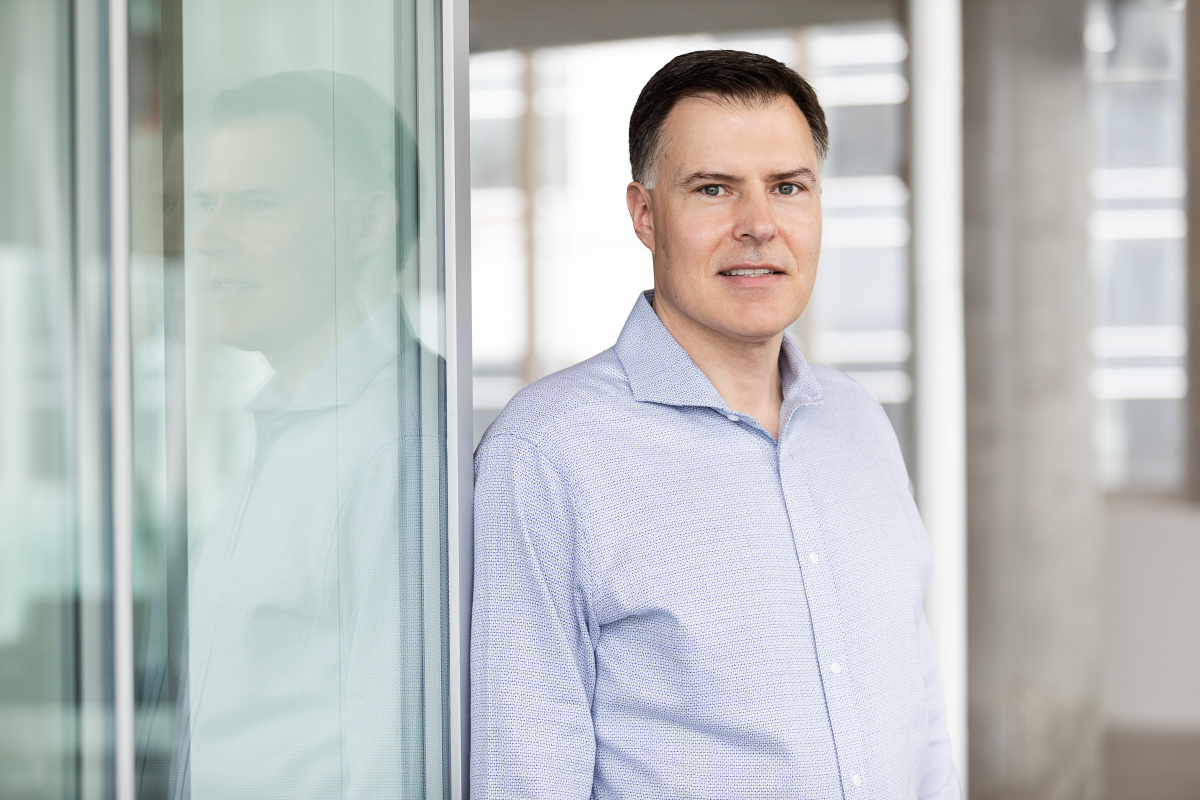
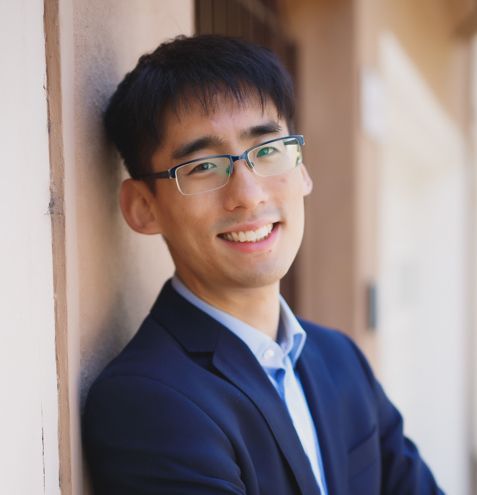
Stéphane Coulombe is a Professor in the Department of Software Engineering and IT at École de technologie supérieure (ÉTS). He holds a B.Eng. from Polytechnique Montréal and a Ph.D. from INRS Telecommunications. His research focuses on video processing, compression, immersive video systems, and reliable video transmission. He co-leads the Summit Tech Research Chair in Immersive and Interactive Video, aiming to advance immersive video technologies through compression optimization, AI integration, and low-latency transmission methods. Key collaborations include the LABMULTIMEDIA and SYNCHROMÉDIA research laboratories. Research interests span video quality assessment, error correction, and real-time video delivery. Notable achievements include the 2012 Best Paper Award and the 1997 Director General’s Award of Excellence. He has advised numerous doctoral and master’s students, contributing to breakthroughs in HEVC transcoding, deep learning-based error correction, and immersive video standards. Publications highlight advancements in no-reference quality metrics, CRC-based error correction, and 360-degree video compression. Over 50 patents reflect his work on video encoding, transcoding systems, and adaptive multimedia messaging. Current projects address MPEG immersive video standards, VR streaming, and AI-driven video analytics.
Katie Biittner is an Associate Professor at MacEwan University's Department of Anthropology, with a research focus on archaeogaming, ethnoarchaeology, and Paleolithic archaeology. She applies archaeological methods to diverse contexts including Stone Age artifacts, Tanzanian basket-weaving traditions, and digital artifacts in video games. PhD in Archaeology from University of Alberta Her interdisciplinary research program combines computer science with anthropological frameworks to analyze early video game implementation. She specializes in the chaîne opératoire method and ethnoarchaeology, examining both physical and digital material culture. Biittner's current work explores the cultural and technological significance of video games as artifacts. Recent publications demonstrate her focus on digital heritage preservation and software archaeology , particularly in Atari 2600 games and graphic adventure creators. She has received multiple SSHRC grants for her archaeological research in Alberta, Tanzania, and digital domains. Insight Grant (2024, 2017) Best Paper Award (2022) New Foundations in Research Fund (2021) Biittner actively supervises senior students in independent study projects and maintains an 'aggressively human' teaching philosophy. Her work bridges traditional archaeology with new media studies, examining both ancient technologies and contemporary digital culture.
Dr. Daniel Kang is an Assistant Professor at the University of Illinois at Urbana-Champaign (UIUC) in the Department of Computer Science and Department of Electrical and Computer Engineering (by courtesy). His research focuses on integrating machine learning with data systems and zero-knowledge proofs to enhance privacy and trust in AI deployments. He previously worked as a postdoctoral researcher at UC Berkeley's Sky Lab and earned his PhD at Stanford University under Peter Bailis and Matei Zaharia. Developed frameworks like ZKML and ZK-IMG Co-creator of DawnBench and MLPerf benchmarks Research funded by Google, Open Philanthropy Project, and Emergent Ventures His research spans machine learning systems , privacy-preserving AI , and security risks in LLMs . Recent work includes optimizing zero-knowledge proofs for ML inference and studying adversarial attacks on AI agents. Articles reveal expertise in benchmark design , video analytics , and ML deployment systems . Dr. Kang actively recruits students at all levels and focuses on trustless AI verification and efficient query processing . His work addresses critical challenges in ML reproducibility , code generation , and web security .
Ravin Balakrishnan is Professor and former Chair (2015-2019) in the Department of Computer Science at the University of Toronto, where he co-directs the Dynamic Graphics Project laboratory. He earned his PhD from University of Toronto under Bill Buxton. A pioneer in HCI, his research spans input devices, interactive displays, 3D interaction, and tabletop computing. Balakrishnan has developed innovative interaction techniques including the Rockin'Mouse (integral 3D control), Digital Tape Drawing (sketch-based 3D modeling), and BumpTop (physics-enhanced desktop). His recent work explores muscle-computer interfaces, mid-air interactions, and VR storytelling tools. Honors include ACM CHI Academy (2011), MacArthur Fellowship (1993), Guggenheim Fellowship (2016), Royal Netherlands Academy induction (2018), and best paper awards at CHI/UIST. He co-founded Bump Technologies (acquired by Google) and holds 15+ patents. Current research examines novel input techniques for AR/VR, eye-free interaction, and high-DOF devices. He teaches graduate courses in HCI and advises PhD candidates in areas like gesture interfaces and video manipulation systems.
Chris Joslin is a Professor at the School of Computer Science, Carleton University. His office is located in 4302 Canal Building, and he can be reached at Chris.Joslin@carleton.ca. He specializes in interdisciplinary research areas including computer graphics, medical imaging, virtual reality, computer vision, and human-computer interaction. His work bridges theoretical advancements with practical applications in animation, 3D modeling, and medical visualization. Research interests include developing novel techniques for 3D editing, medical image processing, and immersive virtual environments. Notable contributions include advancements in 3D Gaussian splatting, AI-driven MRI analysis, and robust sensor fusion for autonomous systems. His publications span from foundational studies on motion retargeting to applied work in procedural audio generation for soft-body simulations. Recent trends in his articles emphasize integration of deep learning with traditional computer vision tasks, optimization of medical imaging workflows, and enhancing accessibility in virtual reality systems. Despite prolific output, no scientific awards are explicitly mentioned in the provided texts. Advising and grant details remain unspecified, though his involvement in collaborative projects like VPARK and ISIS suggests engagement with interdisciplinary teams. His work is anchored at Carleton’s Herzberg Laboratories, a hub for advanced computational research.
Fiona Fang is an Assistant Professor in the Department of Electrical and Computer Engineering and Department of Computer Science at Western University, Canada. She holds a Ph.D. from the University of British Columbia (2017) and has prior academic experience at Durham University (2020–2022) and the University of Manchester (2018–2020). Her research focuses on machine learning for intelligent wireless communications, NOMA, RIS, MEC, and Edge AI. She serves as an editor for IEEE Transactions on Wireless Communications and has received awards including the IEEE SPCC Early Achievement Award (2023) and the 2024 Junior Faculty Award of Excellence in Research. Education: Ph.D. (UBC), M.Sc. and B.Sc. (Lanzhou University). Research emphasizes interdisciplinary applications of machine learning in wireless systems, with contributions to energy-efficient resource allocation and network design. Key publications include surveys on multi-access edge computing and RIS-assisted NOMA networks. She actively organizes conferences like IEEE Globecom and ICC, and her work bridges theoretical advancements with practical network implementations.
Diana Skrzydlo is an Associate Professor, Teaching Stream in the Department of Statistics and Actuarial Science at the University of Waterloo, where she has been teaching since 2007. She currently serves as the Math Faculty Teaching Fellow and previously directed the MActSc program from 2019-2024. Her work focuses on innovative teaching and assessment techniques in actuarial and statistical education, with extensive contributions to the READI project in Indonesia. Dr. Skrzydlo holds a BMath (2006) and MMath (2007) from the University of Waterloo and achieved her ASA designation from the Society of Actuaries in 2018. She has served on multiple Society of Actuaries committees, including the Education & Research Section council and Advanced Actuarial Mathematics exam grading. Her research interests include: Teaching methodologies and pedagogical approaches in quantitative disciplines Assessment design that promotes deeper learning and professional skills development Implementation of Universal Design for Learning principles Technology-enhanced teaching, including flipped classroom models Ethical considerations in data science and actuarial practice Dr. Skrzydlo's scholarly work demonstrates a consistent focus on aligning educational practices with professional expectations. Her publications and presentations reveal strong emphasis on practical, student-centered approaches that develop the professional skills actuaries need beyond technical knowledge. She has been particularly active in exploring flexible teaching models and assessment methods that better reflect real-world professional challenges. Her significant contributions to education have been recognized with multiple prestigious awards: SAS department teaching award (2016) Faculty of Math Award for Distinction in Teaching (2019) University Distinguished Teacher Award (2023) Robert V Hogg award for Excellence in Teaching Introductory Statistics (2023) Society of Actuaries Outstanding Educator Award (2024) Dr. Skrzydlo has supervised educational research projects with undergraduate students focusing on assessment practices and the impact of generative AI on education. She is currently planning an international 'ActuEras Tour' for May-August 2025 to discuss actuarial and statistical education innovations with institutions worldwide.
Jun Jin is an Assistant Professor in the Department of Electrical & Computer Engineering at the University of Alberta and a Fellow of the Alberta Machine Intelligence Institute (Amii). His research focuses on robotic reinforcement learning, embodied artificial intelligence, and human-centered autonomy. He holds a PhD and has eight years of industry experience in autonomous systems, including autonomous driving and construction automation. He teaches ECE 720 B01 Robot Learning: Principles and Advances and leads the Human-Centered Autonomy (HCA) Lab, which hosts a weekly reading club. His research interests include developing scalable learning architectures for robots to adapt to dynamic environments, ensuring safe human-robot interaction, and advancing open-ended learning agents. Notable achievements include the ICRA 2022 Outstanding Student Paper Award and the KUKA Innovation Award 2018. He emphasizes applying robotics to construction (e.g., infrastructure maintenance robotics) and healthcare. Dr. Jin actively mentors students through competitive research assistant positions and collaborates with Amii for computational and industrial resources. His lab fosters a community-driven approach to advancing robotics through interdisciplinary research and public engagement.
Josh Tenenbaum is a Professor of Computational Cognitive Science at the Massachusetts Institute of Technology , affiliated with the Department of Brain and Cognitive Sciences , CSAIL , and CBMM . His research focuses on computational models of human cognition, integrating Bayesian inference, probabilistic programming, and machine learning with behavioral experiments in adults and children. Research spans concept learning, causal reasoning, word meaning acquisition, and theory-of-mind modeling. Recent publications emphasize neuro-symbolic integration, physical reasoning, and adaptive world modeling. Awards include multiple Cognitive Science Computational Modeling Prizes and IEEE CVPR/NIPS recognitions.
Paulo Blikstein is a Professor in the Department of Mathematics, Science and Technology at Teachers College, Columbia University, where he leads the Transformative Learning Technologies Lab (TLTL) . He previously held faculty positions at Stanford University and maintains strong interdisciplinary ties across computer science, education, and human-computer interaction. His research spans constructionist learning, learning analytics, data science education, and maker-based pedagogy. Research Interests: Core focus on constructionism , inspired by Seymour Papert, emphasizing learning through creating. Development of tangible and embodied interfaces for STEM learning. Innovation in multimodal learning analytics to assess student behavior in open-ended tasks. Advancing equitable and inclusive models for AI and computing education. Design and scaling of biology cloud labs and no-code data science tools for youth. Recent Research Trends: His latest work (2022–2025) shows a strong focus on integrating computational modeling with real-world data in middle school science, developing no-code platforms for community data science, and analyzing sustainability challenges in classroom technology adoption. He emphasizes teacher-driven curriculum design and systemic implementation of maker education globally. Scientific Awards: Best Pictorial Award Honorable Mention (ACM) Honorable Mention Short Paper Advising and Grants: He actively mentors graduate students, postdocs, and visiting scholars in the TLTL. His lab partners with schools, museums (e.g., New York Hall of Science), and policy makers to translate research into practice. Projects are funded by competitive grants, including awards from Columbia University’s School of Engineering and national competitions like the Learning Engineering Tools Competition. Labs and Teams: He directs the Transformative Learning Technologies Lab (TLTL) , a multidisciplinary research group focused on designing, researching, and scaling innovative STEM education technologies. The lab collaborates with institutions in Brazil, Switzerland, and China, and works closely with educators to ensure real-world impact.
Pierrich Plusquellec is an Associate Professor at the School of Psychoeducation, Université de Montréal, with affiliations to multiple research units including the Centre d'études sur le stress humain (CESH) and Centre de recherche de l'Institut universitaire en santé mentale de Montréal (CR-IUSMM). His research focuses on nonverbal communication, stress management, and biological factors influencing human adaptability. His work integrates objective behavioral coding from video recordings physiological measurements epidemiological tools to study stress indicators and adaptive capacities in children and adults. Recent publications highlight trends in nonverbal behavior analysis stress system regulation autism and service dogs environmental contaminants' mental health impacts with studies spanning from 2010 to 2024. Scientific awards include Prix La collectivité branchée (2015) Prix Excellence de la recherche (2013) Prix d'excellence sur pratiques innovantes (2012) CIHR Postdoctoral Fellowship (2004) He has supervised numerous students in psychoeducation and psychology, including Marie-Laure Watrelot (M.Sc. 2025) Isabelle Faille (M.Sc. 2024) Yannick Hubert Fouda Mah (Ph.D. 2023) and directed projects funded by the Canadian Institutes of Health Research, FRQSC, and industry partners. His lab, CESCNOV (Centre d’études en sciences de la communication non verbale), collaborates with institutions like the Institut universitaire en santé mentale de Montréal and conducts fieldwork with Arctic populations.
Vass Bednar serves as an Adjunct Lecturer in the Department of Political Science, Faculty of Social Sciences, at McMaster University. Their teaching portfolio includes core courses for the Master of Public Policy in Digital Society program such as Capstone (PUBPOL 705), Data Analysis I and II, Leadership series, and Digital Society and Public Policy (ARTSSCI 4DS3), with continuous instructional engagement since 2021 across foundational policy curriculum. Research interests center on public policy intersections with digital transformation, emphasizing competition regulation in data-driven markets, gig economy labor dynamics, and societal impacts of platform capitalism. Key investigations address digital resiliency (evident in CrowdStrike outage analysis), children's vulnerability to manipulative app design, and equitable economic restructuring, bridging political science, economics, and technology governance through policy-relevant scholarship. Recent publications (2022-2023) demonstrate consistent focus on translating academic insights into actionable policy frameworks, covering competition law in Canadian digital markets, child protection mechanisms, economic inequality diagnostics, urban planning critiques, and work culture evolution. This output predominantly appears in public-facing media and policy commentary formats, reflecting direct engagement with contemporary governance challenges. No scientific awards are documented in available institutional records, though scholarly contributions are featured in McMaster University news analyses regarding tech outage implications and gig platform regulation gaps requiring provincial competition law intervention. Teaching responsibilities constitute a significant professional commitment, encompassing technical skill development (data analysis, coding) and policy application across multiple program cohorts. Bednar's educational role supports capacity-building for future policy professionals navigating digital society complexities, particularly within the Master of Public Policy in Digital Society cooperative program structure.
Michel Desmarais is a Full Professor in the Department of Computer Engineering and Software Engineering at Polytechnique Montreal since 2002. He has established himself as a prominent researcher in the fields of Artificial Intelligence, Cognitive Modeling, and Educational Data Mining. His work bridges the gap between human factors engineering and advanced computational techniques, with a strong focus on practical applications in learning environments and software systems. Dr. Desmarais holds a Ph.D. in Psychology from the University of Montreal. Prior to joining Polytechnique Montreal, he spent ten years at the Montreal Computer Research Institute (CRIM) as scientific lead of a research team, followed by management and R&D positions in a private firm specializing in Web applications. His interdisciplinary background spanning psychology and computer science has informed his unique approach to human-centered AI systems. Professor Desmarais' research focuses on applying artificial intelligence techniques to educational contexts, with particular expertise in cognitive modeling, knowledge representation, and recommender systems. His work in educational data mining has significantly contributed to understanding how students learn through technology-mediated environments. He has developed innovative approaches for short answer grading using sentence similarity, knowledge tracing, and Q-matrix refinement. His research also extends to human factors engineering, where he examines how intelligent systems can be designed to better align with human cognitive processes. His recent publications demonstrate a clear trajectory toward leveraging advanced AI techniques, particularly large language models and deep learning, to solve complex problems in software engineering and education. The recurring themes across his work include expertise modeling, latent dimension analysis, and the development of adaptive learning environments that respond to individual learner needs. Professor Desmarais has been editor of the Journal of Educational Data Mining from 2013 to 2017 and remains highly involved in both the Educational Data Mining and User Modeling research communities. His leadership in these fields is reflected in his numerous collaborations and his role as a sought-after expert, as evidenced by media appearances such as his commentary on Google's inner workings in La Presse+ in 2018. He has supervised 11 Ph.D. students and 24 Master's students, mentoring the next generation of researchers in AI and educational technology. His students have pursued diverse research topics including technology-mediated peer instruction, latent dimension analysis, video interaction patterns in MOOCs, knowledge tracing, and recommender systems. Professor Desmarais is affiliated with the Institute for Data Valorization (IVADO) as a Member and with LAMA-WeST (Web, Semantics and Text) as a Collaborating member. These affiliations reflect his commitment to interdisciplinary research that bridges computer science, cognitive science, and practical applications in information systems.
Dr. Amanda Maranzan is an Associate Professor in the Department of Psychology at Lakehead University, where she also serves as Director of Clinical Programs. A registered Clinical Psychologist in Ontario, she specializes in mental illness stigma, mood and anxiety disorders, and mental health outcome research. Dr. Maranzan teaches undergraduate and graduate courses, including Abnormal Psychology and Clinical Supervision, and operates as a scientist-practitioner with a cognitive-behavioral orientation. M.A., Ph.D., Lakehead University Residency in Professional Psychology, Memorial University Registered Clinical Psychologist, Ontario Her research focuses on stigma reduction, particularly in Indigenous populations and college students, alongside exploring self-care practices in psychology trainees during the pandemic. She has contributed to interprofessional education and anti-stigma interventions, often employing innovative methods like Photovoice. Dr. Maranzan co-developed the Honest, Open, Proud-College program and advocates for equitable training opportunities in clinical psychology. Selected trends in her publications include stigma in injured workers, ethical governance in training programs, and the role of technology in advancing clinical psychology education. She is actively involved in mental health outreach and community-based initiatives, especially in rural and Indigenous contexts. Dr. Maranzan leads the Mental Health Research Lab, which emphasizes interdisciplinary collaboration and practical applications of psychological research to improve mental health outcomes in vulnerable populations.
Nicolas Arnaez currently serves as Research Coordinator at the College of Social Sciences and Humanities , University of Alberta, and as Lecturer in the Department of Music. He also holds roles as Production Manager at New Music Edmonton and Sound Technician at Yardbird Suite. Doctor of Music Composition (University of Alberta) Master of Music Composition (University of Alberta) Licentiate in Music Composition (University of Alberta) A leading figure in interactive sound composition , Arnaez merges electroacoustic music , multichannel spatialization , and real-time processing to create immersive sonic experiences. His work explores the spatial dimension as a compositional parameter , employing tools like ambisonics , VBAP , and self-coded software to manipulate sound trajectories and audience perception. His recent compositions, including Requiem 13 (2024) and SinData (2023-present), demonstrate consistent innovation in interactive installations , quadraphonic sound design , and human-technology collaboration . Key trends include site-specific works , cross-disciplinary projects , and experimental music education through tools like Wavegenerator and SpaCO software. Notable grants include funding from the Social Sciences and Humanities Research Council (SSHRC) for his Lost Garden video game project (2017-2021), which explored interactive sound as game mechanic . He has developed specialized software for 3D spatialization (HPSC, Trajectory Recorder) and live processing (TallaD, ReDo Synth) used in both academic and performance contexts. Arnaez collaborates with Mile Zero Dance Company (The Disaster Show, 2020-2025) and leads Blackout Over Rio (2018-present), an improvisation trio. His Audio Games Lab at University of Alberta and SpaCO spatialization software have become institutional resources for computer music research and Canadian sound art development .