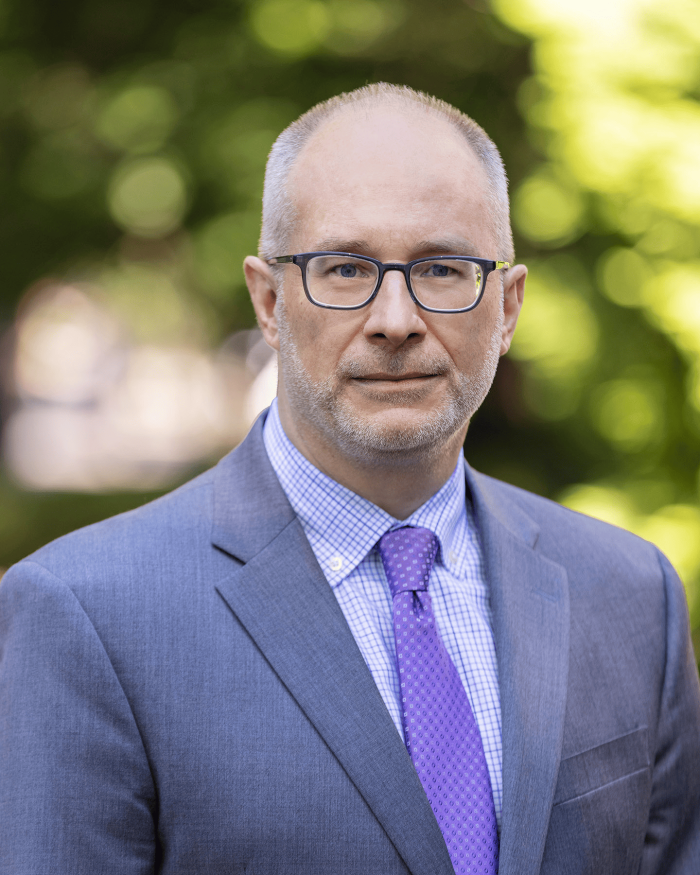
Karl Gustafsson is a Professor at Stockholm University within the Department of Economic History and International Relations. His work bridges security studies , collective memory , and digital research methods in international relations. Current Role: Professor of International Relations, Stockholm University Previous Positions: Post-Doc at Lund University, Researcher at Swedish Institute of International Affairs Visiting Appointments: University of Tokyo, Osaka University, Keio University, Academia Sinica, Nordic Institute of Asian Studies Research Focus: Karl specializes in memory politics , ontological security , and anxiety-driven international dynamics , particularly in Sino-Japanese relations and digital platforms . His studies explore how historical narratives and online memory construction influence state identity and policy. Awards & Grants: Recipient of the Wang Gungwu Prize (2014) and Stockholm University Association’s award (2011). Holds Swedish Research Council and Marianne & Marcus Wallenberg Foundation grants for projects on apologies in international politics and digital memory in East Asia . Publications: His work appears in journals such as International Studies Quarterly , European Journal of International Relations , and Memory Studies , addressing topics like narrative power in East Asia, anxiety’s role in policy change , and digital humanities applications in IR.
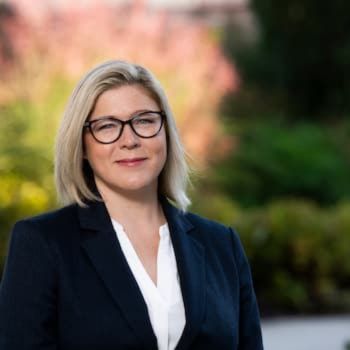
Dr. Jeni Mitchell is a Lecturer in the Department of War Studies at King’s College London, affiliated with the School of Security Studies under the Faculty of Social Science & Public Policy. She specializes in future war studies, space security, and the evolution of rebellion, serving as co-director of the Future Threats Lab within the Centre for Science & Security Studies. Her work emphasizes human-centric approaches to analyzing existential threats and their societal impacts. Her education includes a PhD from King’s College London, where her doctoral research focused on civilian victimization by non-state armed groups. She has held positions at Chatham House, the Brookings Institution, and the Middle East Institute. Teaching responsibilities include MA modules on future warfare, spacepower, and insurgency, while she also directs the MA International Relations and War program. Mitchell’s research explores future threat perceptions (particularly in space), futures research methodologies, and the intersection of war, genocide, and utopian ideologies. Her methodological innovations, termed ‘future-crafting,’ employ creative formats like films and games to model conflict scenarios. Notable collaborations include work with the Freeman Air and Space Institute and King’s Wargaming Network. Recent publications address Ukraine’s apocalyptic imaginary, space-based threat analysis, and refugee-warrior dynamics. Her research group activities include the Environmental Security research group and contributions to widening participation initiatives like the 2024 Summer School in international security.
Terrence Chapman is a Professor of Government at the University of Texas at Austin, affiliated with the Robert S. Strauss Center for International Security and Law, Center for European Studies, and Clements Center on History Strategy, and Statecraft. His research focuses on international organizations, conflict resolution, and political economy frameworks. Key research areas include: International institutional legitimacy Global regulatory regimes Public opinion in international affairs Conflict management mechanisms Formal modeling of diplomatic interactions Recent scholarly trends reveal expertise in climate governance negotiations, digital surveillance politics, and regulatory effectiveness. His work spans theoretical modeling and empirical analysis of international collaboration dynamics. Scientific recognition includes: 2011-2012 APSA Conflict Processes Section Book Award Teaching portfolio covers: Science Fiction and Politics International Organization and Law Research Methods in International Politics Previously served as associate/senior editor for International Studies Quarterly .
Dr. Auzeen Shariati is an Associate Professor and Director of Undergraduate Programs in the Department of Criminology, Law and Society at George Mason University. She holds a Ph.D. in Public Affairs and Criminal Justice from Florida International University (2017), an M.A. in Criminal Law and Criminology from Allameh Tabataba’I University (2010), and a B.A. in Judicial Law from the University of Tehran (2006). Prior to academia, she practiced as a defense attorney at the Iranian Bar Association. Her research focuses on environmental criminology, crime prevention, victimization, policing strategies, and comparative criminal justice systems. Key areas include pandemic impacts on domestic violence, school safety through Crime Prevention Through Environmental Design (CPTED), and policy evaluation in criminal justice. She has published extensively in journals like American Journal of Criminal Justice , Journal of Family Violence , and Security Journal . Recent work examines how the Covid-19 pandemic and social upheavals like the murder of George Floyd influenced domestic violence reporting and victim experiences. Her studies combine quantitative and qualitative methods, emphasizing real-world policy implications. Dr. Shariati teaches courses such as Introduction to Criminology , Law and Justice Around the World , and Evaluation of Crime and Justice Policies . She actively presents at conferences like the American Society of Criminology and has contributed to public discourse on campus safety and criminal justice reform through media engagements.
Alexander B. Downes is a Professor of Political Science and International Affairs at The George Washington University, serving as Director of the Institute for Security and Conflict Studies within the Elliott School of International Affairs. He holds a Ph.D. in Political Science from the University of Chicago. His research focuses on international security with expertise in civilian victimization during war, foreign-imposed regime change, military effectiveness, coercion, nuclear weapons, and civil war. He has authored two influential books: Targeting Civilians in War (2008) and Catastrophic Success: Why Foreign-Imposed Regime Change Goes Wrong (2021). Downes has received major recognition including the Joseph Lepgold Prize (2008), Emerging Scholar Award (2016), Michael E. Brown Research Prize (2022), and Harry Harding Teaching Prize (2020). His work has been funded by the Department of Defense Minerva Initiative, Carnegie Corporation, and others. He has held fellowships at Harvard's Belfer Center and Stanford's CISAC. Teaching responsibilities include courses on international security, modern warfare theory, and coercion strategies. His research emphasizes policy-relevant analysis of global security challenges, combining historical case studies with contemporary strategic dilemmas.
Dr Maria Bada is a Lecturer in Cyberpsychology at the School of Biological and Behavioural Sciences, Queen Mary University of London. She is an active researcher in the field of cyberpsychology with a specific focus on the human element of cybersecurity. Dr Bada is also a member of the committee of the Artificial Intelligence, Ethics and Society Group at QMUL. Dr Bada's research spans multiple critical areas in cyberpsychology and cybersecurity. Her primary research interests include: The effectiveness of cybersecurity awareness campaigns and factors leading to their success or failure in changing information security behavior Development of prevention activities to enhance the resilience of Small and Medium Enterprises (SMEs) against cybercrime Cybersecurity awareness initiatives for school learners in South Africa and the UK Youth delinquency and interventions to prevent cybercrime, in collaboration with the National Crime Agency and Home Office Social and psychological impacts of cyber-attacks on vulnerable groups Exploration of the cybercrime ecosystem, including cybercriminal profiles, pathways, and risk perceptions Dr Bada's publication record demonstrates a consistent focus on the intersection of psychology and cybersecurity. Her recent work shows increasing specialization in SME cybersecurity challenges, ethical considerations in security behavior change, and the psychological impacts of cybercrime on individuals and organizations. She frequently collaborates with researchers from diverse disciplines including computer science, criminology, and healthcare, reflecting the interdisciplinary nature of her work. Dr Bada has secured significant research funding for her work, including: "Enhancing national cyber resilience via SME cyber security and digital responsibility" (£328,119 from EPSRC, 2023-2026) "REPHRAIN: Supporting organisations in making effective privacy related decisions" (£50,801 from EPSRC, 2022-2023) "Assessing Organisational DSbD Awareness and Readiness" (£15,554 from ESRC, 2022-2024) She works closely with research staff including Dr Matthew Rand and collaborates with various UK government agencies including the National Crime Agency and Home Office on cybercrime prevention initiatives.
Jonathan Santo is a Professor of Psychology at the University of Nebraska at Omaha (UNO), where he serves as Director of the Graduate Developmental Psychology Program and as a faculty member in the Office of Latino/Latin-American Studies. His research explores peer relations, cultural differences in self-esteem, and classroom-level influences on child and adolescent development, with a focus on improving school environments and fostering positive social interactions. ORCA Faculty Fellow His research spans broad areas including Developmental Psychology , Social Support Systems , and Cross-Cultural Peer Dynamics , with specific attention to peer victimization , self-continuity , school climate , and developmental trajectories in Brazilian and Colombian youth . Recent publications analyze topics like hikikomori experiences , friendship security , and HPA axis dysregulation in adolescents. Scientific awards include the ORCA Faculty Fellow recognition. His work often involves longitudinal assessments of peer relationships cross-cultural comparisons (Brazil, Colombia, China, Nigeria, Singapore, U.S.) policy-focused blog posts on family separations and school interventions
Dr. Steven Kemp is a Senior Lecturer in the Department of Public Law at the University of Girona, Spain. His research focuses on the intersection of criminal law, cybercrime, and criminological analysis, with affiliations to institutions like UNICRI, Open University of Catalonia, and the Institute of Public Security of Catalonia. His work spans digital security, fraud victimization, and sentencing disparities. Current roles: Serra Hunter Fellow, University of Girona (2023–present); Collaborating Teacher, UNICRI (2024–present) Previous roles: Associate Professor, University of Girona (2015–2021); Postdoctoral Researcher, Pompeu Fabra University (2021–2023) and University of Manchester (2021) His research interests include: Cybercrime dynamics during global crises (e.g., pandemic-related fraud trends) Victimization patterns in digital societies, particularly among older adults Legal implications of smart technologies and cybersecurity frameworks Comparative criminal justice systems, especially plea bargaining and sentencing disparities Key trends in his recent publications (2025–2019) highlight: Rising cyberfraud incidents and their societal impacts Interdisciplinary approaches to digital security and legal systems Statistical modeling of crime trends post-COVID-19 Behavioral responses to cybercrime risks Scientific recognition includes: Serra Hunter Fellow He actively collaborates with research groups like the Research Group in the Seminar of Criminal and Criminological Sciences and contributes to public policy initiatives in cybersecurity and fraud prevention.
Jennifer Lavoie is an Associate Professor at Wilfrid Laurier University's Faculty of Human and Social Sciences, affiliated with the Department of Psychology and Criminology. She specializes in mental health crisis response, policing strategies, de-escalation techniques, and scenario-based training. Wilfrid Laurier University: Faculty of Human and Social Sciences, Psychology and Criminology Departments Research Interests : Her work focuses on integrating virtual reality and scenario-based training to improve police de-escalation skills. She examines violence risk assessment , correctional systems , and housing first programs for homeless individuals with mental illness. Recent studies address big data governance , cyberstalking victimization , and community-driven policing approaches . Publication Trends : Her research spans mental health policy , police training efficacy , and technological integration in crisis management . She explores virtual reality applications and community co-designed interventions , alongside longitudinal studies on stress and coping mechanisms in correctional and psychiatric settings. Scientific Awards : No scientific awards listed in available data. Advising : Actively supervises students in psychology and criminology, with unlisted advisees. Her work bridges academic research and practical policing applications .
Pardis Emami-Naeini is an Assistant Professor of Computer Science at Duke University, with joint appointments in the Sanford School of Public Policy and the Department of Electrical and Computer Engineering. She serves as the Director of the Duke Interdisciplinary Security, Privacy, and Interaction Research (InSPIre) lab and is a Duke Science and Technology Scholar. Her interdisciplinary work bridges computer science, public policy, and electrical engineering, with a focus on developing usable privacy and security solutions that empower individuals from diverse sociodemographic backgrounds. Dr. Emami-Naeini earned her Ph.D. in Computer Science from Carnegie Mellon University in 2020, followed by postdoctoral research at the University of Washington (2020-2022). Her research sits at the intersection of security, privacy, and human-computer interaction, with particular expertise in IoT security, technology-enabled abuse, reproductive health privacy, and smart city security. She has published extensively at flagship venues including IEEE S&P, CHI, CSCW, and SOUPS, with her work covered by major media outlets such as Wired and The Wall Street Journal. Her recent publications reveal a clear trajectory toward examining the human dimensions of security and privacy in emerging technologies, from LLM chatbots for mental health to social robots and period-tracking apps in the post-Roe v. Wade landscape. Her work consistently emphasizes the need for privacy-aware design that accounts for diverse user needs and contexts, particularly for vulnerable populations. Google Systems and ML Research Gift Award (2025) Google AI Research Scholar Program Award (2024) Top 5% Instructor in Duke Trinity College (2024) ORAU Ralph E. Powe Junior Faculty Enhancement Award (2023) Duke Science and Technology Scholar (2022) IEEE S&P paper highlighted in IEEE Security and Privacy Magazine (2021) CyLab Presidential Fellowship (2019) Dr. Emami-Naeini actively mentors several Ph.D. students including Jabari Kwesi, Jessie Cao, and Hiba Laabadli, as well as undergraduate and master's students. Her research has influenced key organizations including the National Institute of Standards and Technology (NIST), Consumer Reports, and the World Economic Forum in creating usable security and privacy labels for smart devices. She serves on numerous program committees including USENIX Security and CHI, and has participated in NSF grant review panels, demonstrating her growing leadership in the security and privacy community. Her InSPIre lab conducts user-centered research to uncover security and privacy needs of diverse stakeholders, with a particular focus on marginalized communities. The lab's work spans multiple domains including intimate partner violence, reproductive health, virtual reality, and smart cities, always with a strong emphasis on translating research findings into practical tools and policy recommendations.
Dr. Hideko Hamada Bassett is an Assistant Professor at the School of Integrative Studies, George Mason University, specializing in child development, socialization, and interdisciplinary studies. Her research focuses on social-emotional development, emotion socialization, and school readiness in early childhood education. Education: Ph.D. in Applied Developmental Psychology, George Mason University M.S. in General Psychology, University of Memphis B.A. in English, Kansai Gaidai University Her research emphasizes the interplay between executive functioning, emotional competence, and classroom behavior, with a particular interest in cross-cultural comparisons and teacher-child interactions. Recent publications explore themes such as emotion knowledge, self-regulation, and social information processing in preschoolers. Dr. Bassett’s work includes the development of assessment tools like the BRACE Coding System and the Preschool Self-Regulation Assessment, aiming to improve social-emotional learning frameworks. She has contributed to studies examining gender differences, socioeconomic risk factors, and the role of maternal emotion teaching in shaping preschoolers' developmental outcomes. Contact: hhamada@gmu.edu | Office: Enterprise Hall
Professor Philip Birch is a distinguished academic in Criminology at the University of Technology Sydney (UTS), Faculty of Design & Society, School of International Studies & Education. With over 15 years of academic experience across British, American, and Australian university systems, he has established himself as a leading expert in policing, community safety, and criminal justice. His extensive practical background in criminology, including roles as a Specialist Crime Team Manager, Community Safety Research Manager, and Through Care Worker in UK correctional facilities, informs his applied research approach. Professor Birch's educational background includes a BSocSci. (Hons) in Social Policy (Crime & Justice) from the University of Manchester, multiple postgraduate qualifications from the Open University (including an MSc. in Social & Criminological Research Methods), a Post Graduate Certificate in Higher Education Practice from the University of Huddersfield, and a PhD in Criminology from the University of New South Wales. He also holds a Fellowship with the Higher Education Academy. His research centers on six key areas: Police & Policing; Community Safety & Crime Prevention; Prisons, Probation & Parole Policy & Practice; Assessment, Treatment & Management of Offenders; Gender & sexuality inclusive Domestic and Family Violence; and Sex Work, Sex Workers and Procurement. His work emphasizes the practical application of criminological research to real-world justice issues, with strong industry engagement across law enforcement and correctional services. Recent publications reveal a clear trend toward police mental health, aging in policing, hate crime identification, trauma-informed policing approaches, and digital community safety initiatives. His research employs diverse methodologies including qualitative case studies, Delphi methods, rapid evidence assessments, and comparative analyses across multiple jurisdictions. Teaching award (2019) from Australian College of Educators for outstanding contribution to education Literati Award (2019) for published work Fellowship of the Higher Education Academy Professor Birch has supervised numerous Honours, Masters by Coursework, Masters by Research and PhD students in Criminology, Criminal Justice and Policing, with several completions to date. He has secured over $1.3 million in research funding, including an ARC Linkage grant, and has acted as an external assessor for domestic and international funding bodies. His research projects address critical issues in criminology and policing, often with direct policy implications. He established the Crime & Security Science (CaSS) Research Group at UTS in 2022, a cross-faculty initiative connecting academia with industry to advance evidence-based criminology, criminal justice, policing, and community safety research. This group serves as a hub for collaborative projects addressing contemporary security challenges through translational research.
Karen Panetta is a Professor at Tufts University School of Engineering with appointments in Electrical and Computer Engineering, Computer Science, Mechanical Engineering, and Academic Services. She currently serves as Dean of Graduate Education for the School of Engineering and holds the title of Distinguished Professor. Ph.D. in Electrical Engineering, Northeastern University M.S. in Electrical Engineering, Northeastern University B.S. in Computer Engineering, Boston University Dr. Panetta's research focuses on developing efficient algorithms for simulation, modeling, and signal and image processing for security and biomedical applications. Her work brings together artificial intelligence, machine learning, and visual sensing systems to create solutions for robot vision and biomedical imaging. She develops algorithms inspired by the human visual system to enable machines to 'see' like humans, with applications in homeland security, biomedicine, facial recognition, and search and rescue operations. Her research has significant humanitarian applications, addressing global challenges facing women and children. Dr. Panetta has received numerous prestigious awards including induction into the National Academy of Engineering (2023), the Presidential Award for Science and Engineering Education and Mentoring (2011), and the IEEE Award for Distinguished Ethical Practices (2013). She is a fellow of multiple prestigious academies including the National Academy of Inventors, European Academy of Sciences and the Arts, and IEEE. Member, National Academy of Engineering (2023) Presidential Award for Science and Engineering Education and Mentoring (2011) IEEE Award for Distinguished Ethical Practices (2013) Fellow, National Academy of Inventors Fellow, European Academy of Sciences and the Arts Fellow, Asia-Pacific Artificial Intelligence Association As an educator and mentor, Dr. Panetta founded the nationally acclaimed Nerd Girls program to promote engineering to young students, particularly women. She previously served as worldwide director for IEEE Women in Engineering and editor-in-chief of the IEEE Women in Engineering magazine. Her approach to graduate education emphasizes the importance of building strong collaborative relationships between faculty and students, with a focus on proactive communication and documentation of research progress. Dr. Panetta's humanitarian research applies engineering solutions to global challenges, including developing technology to help doctors find cancerous tumors, security screeners find concealed weapons, and law enforcement agencies find criminals and missing children. Her work demonstrates a commitment to 'Doing The Right Thing' by addressing issues affecting populations with limited resources or 'voice' in society.
Jacqueline Woerner is Associate Professor in Sociology and Psychology at the University of Central Florida, where she directs the Social Theory, Relationships, and Interpersonal Violence Exposure (STRIVE) Lab. Her research examines the intersection of gender-based violence, substance use, and health risk behaviors. Education includes: PhD in Social Psychology from Wayne State University BS in Psychology from Appalachian State University Her NIH-funded research investigates how violence victimization relates to health behaviors through motivational frameworks. Current projects examine technology-facilitated sexual violence on dating apps and alcohol's role in intimate partner cyber abuse. She employs diverse methods including surveys, experiments, and daily diaries. As member of the Violence Against Women Faculty Cluster, she develops prevention strategies addressing sexual violence and health disparities. Funded projects include NIJ grants examining transitional housing models for domestic violence survivors. Honors include Rising Star Award for undergraduate mentoring and multiple teaching awards. She serves on editorial boards for Psychology of Violence and leads NIH-funded projects on dating app-facilitated violence.
Prof. Dr. Andreas Zick is a leading scholar at Bielefeld University, serving as Scientific Director of the Institute for Interdisciplinary Conflict and Violence Research (IKG) and Professor for Socialization and Conflict Research at the Faculty of Education. He also co-leads the ConflictA initiative since 2023 and contributes to migration education through the Faculty of Education. 2008: Professor for Socialization and Conflict Research, Bielefeld University 2013: Director of IKG 2023: Scientific Head of ConflictA His research focuses on intergroup conflicts , group-based antipathy , right-wing extremism , radicalization , and socialization processes . He investigates spatial dimensions of radicalization, societal integration challenges, and prejudice dynamics through comparative studies. Recent publications analyze radicalization spaces (2024-2025) using spatial sociology, democratic conflict perceptions (2025), and cross-cultural prosocial behavior during pandemics. Key methods include ethnography, longitudinal surveys, and multi-perspective comparative analysis. Scientific contributions recognized by: Communicator Award (2016) Nevitt Sanford Lifetime Award (2022) Active in public policy as member of the Federal Agency for Civic Education's advisory board and Federal Commissioner's Antiracism Expert Council. Leads major projects on radicalization prevention and spatial conflict dynamics with national/international partners.