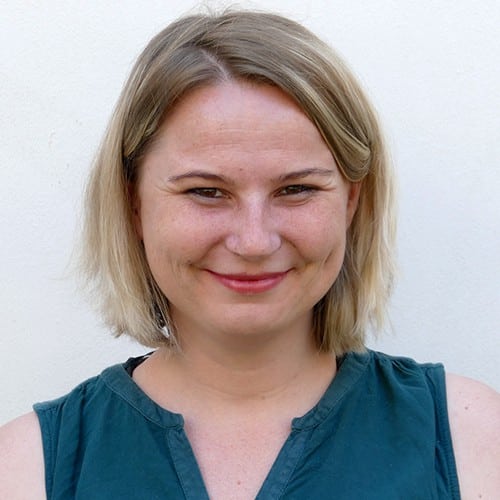
Aisha Ameen is a Researcher in the Department of Veterinary and Animal Sciences (Pathobiological Sciences) at the University of Copenhagen's Faculty of Health and Medical Sciences, holding dual appointments as Research Assistant and Guest Researcher. Her research centers on Alzheimer's disease mechanisms with emphasis on astrocyte metabolism, glucose/glutamate dynamics, and short/medium-chain fatty acid roles. She employs functional metabolic mapping, dMRI, immunohistochemistry, and hiPSC models to investigate neurodegenerative processes at cellular and systemic levels. Analysis of her 2022-2025 publications reveals consistent focus on metabolic dysregulation in Alzheimer's pathology, particularly astrocyte energy substrate competition and fatty acid interventions. Her work bridges neuroscience, metabolism, and translational disease modeling with significant citation impact and media attention.
Beate Conrady is an Associate Professor in Infectious Disease Epidemiology and Animal Health Economics at the Department of Veterinary and Animal Sciences, Faculty of Health and Medical Sciences, University of Copenhagen, where she joined in April 2021. She has been affiliated with the Centre for Sustainable Health (CSH) since May 2020. Previously, she led the working group on Epidemiology and Animal Health Economics at the University of Veterinary Medicine in Vienna for eight years. Her research focuses on the development and application of mathematical and economic models to assess prevention and intervention strategies for infectious diseases in veterinary and public health contexts. Key areas include zoonoses, cattle disease control, biosecurity, and One Health. She has extensive experience in international consultancy, including with EFSA, the Austrian Government, and European scientific networks. Beate's recent publications (2020–2024) demonstrate a strong emphasis on disease transmission modeling, surveillance systems, and economic evaluation of health interventions. Her work spans Salmonella, foot-and-mouth disease, Cryptosporidium, and vector-borne diseases, often employing advanced modeling techniques and large-scale data analysis. She has received more than 11 scientific awards for her contributions to infectious disease epidemiology and animal health economics. Consultant for European Food Safety Authority (EFSA) Member of international scientific committees (Med-Vet-Net, DISCONTOOLS) Principal investigator and consortium leader with over 7.5 million EUR in research funding, including more than 1 million EUR in third-party funds She is actively involved in editorial and peer-review activities for leading journals and contributes to policy development in animal health and zoonotic disease control.
Patrick Munk is an Associate Professor at the National Food Institute, Technical University of Denmark (DTU), where he leads research in the Research Group for Genomic Epidemiology and contributes to the DTU Microbes Initiative. His work integrates genomics, metagenomics, and bioinformatics to study antimicrobial resistance (AMR) across human, animal, and environmental systems. He is actively involved in global surveillance efforts and is currently accepting PhD students. PhD, MSc Member, The Danish Young Academy (2024–2029) Patrick Munk’s research focuses on antimicrobial resistance, genomic epidemiology, metagenomics, and bioinformatics . His work leverages large-scale sequencing of sewage, livestock, and environmental samples to understand the global spread of resistance genes. He has led and contributed to major international studies, including the global sewage surveillance project across 101 countries, and has developed key genomic resources such as the PanRes and MetalResistance databases. His recent publications span high-impact journals like Nature Communications and Nature Microbiology , with themes centered on sewage-based surveillance, fecal resistomes in livestock, source attribution of microbial communities, and novel sequencing methodologies . His research has been widely covered in media and policy documents, reflecting its societal impact. Genomic analysis of sewage from 101 countries (Nature Communications, 2022) Time-series metagenomics for source-attributed surveillance (Nature Communications, 2024) High-throughput single-cell metagenomic sequencing (Frontiers in Microbiology, 2025) Patrick Munk has received recognition through significant media coverage, policy citations, and widespread academic engagement. His work has been highlighted in over 40 news outlets, referenced in policy sources and patents, and discussed across social media and academic platforms like Mendeley and Wikipedia. He supervises multiple PhD students and is a Principal Investigator or Supervisor on several active and completed projects, including Bioinformatic methods for multi-metagenome integration and Host range and epidemiology of antibiotic resistance . He is also a co-creator of key datasets that support open science in AMR research. His lab is part of a broad collaborative network involving DTU, international consortia, and public health agencies.
Tine Hald is a Professor at the National Food Institute, Technical University of Denmark (DTU), where she leads the Research Group for Risk Benefit. Her work focuses on foodborne disease epidemiology, risk modeling, and the control of zoonotic pathogens (e.g., Salmonella, Campylobacter) with emphasis on antimicrobial resistance. She serves on expert panels for EFSA and WHO, and co-directs the One Health International Summer School. Education: PhD in Veterinary Epidemiology, Royal Veterinary and Agricultural University (2001) DVM, Royal Veterinary and Agricultural University (1994) Business Administration (HD), HHC Business School Centre (1996) Research: Her group develops quantitative risk assessments (QMRA), source attribution models, and surveillance frameworks for foodborne pathogens. Key areas include antimicrobial resistance dynamics, spatial-temporal analysis of outbreaks, and policy advice for global food safety authorities. Publications: Recent work (2025) emphasizes source attribution modeling, multi-country pathogen transmission studies, and systematic reviews of antimicrobial resistance. Research consistently integrates genomics, epidemiology, and One Health approaches. Projects & Supervision: She manages the Danish Salmonella Source Account and the Global Decision Support Initiative (GDSI), and supervises PhD students in projects on foodborne pathogen genomics and antimicrobial resistance mitigation.
Tine Alkjær is an Associate Professor in the Department of Biomedical Sciences at the University of Copenhagen's Faculty of Health and Medical Sciences (SUND). She maintains a significant affiliation with the Parker Institute at Bispebjerg-Frederiksberg Hospital in Copenhagen, Denmark. Additionally, she serves as Vice Head of Studies for the Biomedical Engineering (Medicine and Technology) program, a collaborative education initiative between the Technical University of Denmark (DTU) and the University of Copenhagen. Dr. Alkjær's research focuses on human movement, specifically the biomechanics and motor control of human locomotion, musculoskeletal function, and adaptation to various interventions and clinical conditions. Her work particularly emphasizes human walking (both healthy and clinical aspects) and knee joint function following anterior cruciate ligament (ACL) injury. She employs biomechanical analysis, motion capture technology, muscle strength measurements, and electromyography in her investigations. Her recent research demonstrates strong interdisciplinary collaboration across medical, engineering, and sports science domains, with notable contributions in ACL injury recovery, sports injury prevention (particularly in women's football), pain mechanisms in fibromyalgia, and musculoskeletal modeling. Her publications span multiple disciplines within biomechanics and rehabilitation science, showing trends toward clinical applications of biomechanical analysis and growing interest in sports injury prevention. Dr. Alkjær's work has received attention from news outlets and social media platforms, with multiple publications being discussed on X (formerly Twitter) and read by researchers on Mendeley, indicating impact within the research community. Through her leadership role in the Biomedical Engineering program, she contributes to interdisciplinary education at the intersection of medicine and engineering, preparing students to address complex health challenges through engineering solutions.
Anna Christine Nilsson is a Clinical Associate Professor at the Clinical Institute of the Karolinska Institute (KI) and University of Southern Denmark (SDU), affiliated with the Research Unit for Clinical Immunology (Odense) . Her work bridges immunology , autoimmune diseases , and microbiome research , with a focus on neurological and rheumatological conditions. Key research themes include autoantibody profiling in disorders like Multiple Sclerosis and SLE, microbiota transplantation in psoriatic arthritis, and pediatric autoimmune liver diseases . Recent publications highlight her contributions to understanding GFAP-associated syndromes , TRIM46 autoantibodies in animals , and gut-immune interactions . Collaborations : Active in international networks (e.g., Dresden Symposium on Autoantibodies, Encephalitis Congress). Teaching : Regular instructor in FADL Immunology courses and specialist dermatology training.
Marina Bergen Jensen is a Professor in the Department of Geosciences and Natural Resource Management at the University of Copenhagen, specializing in climate-adaptive urban landscape design. Holding a PhD in Soil Science (1998), she has pioneered nature-based solutions for stormwater management and urban biodiversity since joining the university in 2003, becoming a full Professor in 2011. Education: PhD in Soil Science (1994-1998), Royal Veterinary & Agricultural University, Denmark Research Focus: Jensen's work centers on Climate Change Adaptation through innovations like dual porosity filtration technology, bio-SUDS (biodiversity-integrated stormwater systems), and green climate-screens. Her interdisciplinary approach bridges environmental science, engineering, and urban planning to create resilient cities with enhanced ecosystem services. Publication Trends: Recent work (2023-2025) emphasizes GIS-based flood screening, urban ecosystem service quantification, chemical sensitivity-informed design, and heritage-integrated greening. Key themes include sustainable drainage in dense urban areas, biodiversity enhancement through landscaping, and climate-resilient urban transitions across Global North and South contexts. Advising & Funding: She currently supervises 11 PhD students and has mentored over 20 graduates. As principal investigator, she secured DKK 30 million for major projects including the 'Water in Urban Areas' Strategic Partnership (150+ partners), 'Cities in Water Balance' Innovation Consortium, and 'Water Resilient Cities for Africa' Danida project. Professional Networks: Jensen founded the nationwide knowledge-sharing network 'vandibyer.dk' (www.vandibyer.dk) in 2010, now with 150+ industry, government, and academic partners, and serves on committees for the Danish Ministry of Environment and Capital Region of Denmark.
Luiz Gustavo Ribeiro Pereira serves as an Associate Professor in the Department of Veterinary and Animal Sciences at the University of Copenhagen's Faculty of Health and Medical Sciences, affiliated with the Animal Welfare and Disease Control research group. His institutional contact includes phone +4535331254 and email luiz.pereira@sund.ku.dk, located at Grønnegårdsvej 3, 1870 Frederiksberg C. His research specializes in animal nutrition with emphasis on ruminant systems, investigating rumen microbiome dynamics, methane emission mitigation strategies in tropical dairy operations, and feed efficiency optimization across cattle breeds. This work integrates environmental sustainability with animal welfare concerns, particularly in resource-constrained production environments. Key focus areas include nutritional interventions for methane reduction and breed-specific dietary adaptations. Recent 2024 publications reveal concentrated activity on methane-yield associations in dairy cattle microbiomes and comparative analyses of ration particle size effects between Holstein and Girolando breeds. His longitudinal research trajectory, including 2011 work on Santa Inês sheep dry matter intake prediction, demonstrates consistent contributions to precision feeding methodologies across ruminant species. These studies collectively advance sustainable livestock management through evidence-based nutritional science.
Rikke Gade is an Associate Professor at the Department of Architecture, Design and Media Technology within The Technical Faculty of IT and Design at Aalborg University. Her research focuses on Visual Analysis and Perception, AI for the People, and Mobility and Tracking Technologies. She has established herself as a leading researcher in computer vision applications across multiple domains including sports analytics, animal welfare, and human-computer interaction. Dr. Gade earned her PhD in Computer Vision from Aalborg University in 2015 with her dissertation "Taking the Temperature of Sports Arenas - Automatic Analysis of People." Prior to this, she completed her M.Sc. in Informatics with specialization in Vision, Graphics and Interactive Systems in 2011, and her B.Sc. in Electronic and Electrical Engineering in 2009. Her research interests span Computer Vision, Image Processing, Robot Vision, and Thermal Imaging with applications in diverse fields. She has pioneered work in using thermal imaging for sports analytics, developing systems for tracking athletes and analyzing movement patterns in sports arenas. More recently, her research has expanded into AI applications for animal welfare, particularly developing computer vision systems for detecting pain and stress in horses through facial expression analysis. Dr. Gade's publications reveal a clear progression from foundational work in thermal imaging and sports analytics toward more complex applications in healthcare, animal welfare, and smart building systems. Her most recent work shows increasing focus on ethical AI applications that serve societal needs, as evidenced by projects like "AI for the People" and research on equine pain detection. Best Paper Award at Conference CISBAT 2021 (Lausanne, Switzerland) Dr. Gade actively supervises PhD students, including Alves, J.M. on equine affective state assessment. She has secured significant research funding, including a major grant from the Independent Research Fund Denmark for developing AI systems to detect pain in horses. Her collaborative approach is evident in her involvement in multiple interdisciplinary projects spanning computer science, veterinary medicine, and building science. She leads the Visual Analysis and Perception research group at Aalborg University, focusing on practical applications of computer vision technologies. Her team works closely with industry partners on real-world implementations, particularly in sports analytics and animal welfare applications. Current projects include developing AI systems for road damage detection in collaboration with Faxe Kommune and creating advanced tracking systems for sports performance analysis.
Amélie Desvars-Larrive is an Associate Professor in Infection Epidemiology at the University of Veterinary Medicine Vienna and a Faculty Member at the Complexity Science Hub (CSH) in Vienna, Austria. Her work bridges veterinary medicine, public health, and data science, with a strong emphasis on the One Health approach to understanding zoonotic and emerging infectious diseases. She holds a Doctor of Veterinary Medicine from the National Veterinary School of Toulouse, France, with a specialization in tropical diseases and epidemiology, and earned her PhD in epidemiology from the University of Saint-Denis, La Réunion, in 2013. Her professional journey includes eight years as a field epidemiologist and veterinary research engineer in the Indian Ocean region, focusing on livestock and wildlife diseases. She completed postdoctoral research at Umeå University, Sweden, on tularemia modeling, followed by work at the University of Veterinary Medicine Vienna on urban brown rats and their role in zoonotic disease transmission and antimicrobial resistance. Her research interests include infectious disease epidemiology, zoonotic diseases, veterinary public health, disease modeling, antimicrobial resistance, and the application of data science to animal and human health. She has led and contributed to major open data initiatives, such as the SARS-ANI dataset on SARS-CoV-2 in animals and the CSH’s global dataset on governmental pandemic responses. The most recent articles highlight a strong trend in One Health research, integrating veterinary, environmental, and public health data. Key themes include zoonotic pathogen surveillance (e.g., Leptospira, SARS-CoV-2, E. coli), network modeling of animal trade, biosecurity assessments, and policy analysis of national One Health strategies. The work spans diverse systems—from urban rats in Vienna to dairy cows in Rwanda—demonstrating a global and interdisciplinary approach to disease prevention. Scientific Awards and Recognition: Her work on national One Health strategic plans was featured as an Editors' monthly favorite on the Cell Press Sustainability Hub. Her research on SARS-CoV-2 in animals has been widely covered in international media, including the San Francisco Chronicle and Kurier. She co-developed the CSH’s COVID-19 Control Strategies List (CCCSL), one of the largest datasets of governmental pandemic interventions. Advising and Grants: While specific advisees are not listed, she collaborates extensively with multidisciplinary teams across institutions. She has secured funding for data-driven projects in One Health, including those supported by the Complexity Science Hub. Her work on SARS-ANI and zoonotic web visualization reflects strong grant-supported research initiatives. She actively mentors early-career researchers, as seen from her involvement in the CSH PostDoc Program. Labs and Research Teams: She is a key member of the Health Across Species research group at the Complexity Science Hub, which focuses on zoonotic disease dynamics. She also leads research within the Unit of Conservation Medicine and the Institute of Animal Hygiene and Veterinary Public Health at the University of Veterinary Medicine Vienna. Her team employs data science, network analysis, and field epidemiology to study urban wildlife, livestock, and pathogen transmission.
Adelina Rogowska-Wrzesinska is an Associate Professor at the Department of Biochemistry and Molecular Biology, University of Southern Denmark. Specializing in Biomedical Mass Spectrometry and Systems Biology , her research spans proteomics, oxidative stress, protein oxidation, and 3D cell culture models. Affiliation : Department of Biochemistry and Molecular Biology, University of Southern Denmark Academic Role : Teaching and research leadership Her research interests focus on: Redox biology and protein oxidative modifications 3D spheroid models for disease and toxicity studies Mass spectrometry-based proteomics and lipidomics Oxidative stress in cellular senescence and disease Plant stress responses and proteomics Scientific Trends : Recent publications highlight advancements in 3D culture modeling (NAFLD, genotoxicity), redox proteomics (glutathionylation, disulfide bonds), and multi-omics integration (chromatin proteomics, lipidome mapping). Teaching and Supervision : She has supervised multiple PhD students (e.g., Christina Erika Hagensen, Helle Frandsen) and taught courses like Basic Biochemistry (BMB530) and Fundamental Molecular Biology (BMB504) .
Henrik Elvang Jensen is a Professor of Veterinary Pathology at the University of Copenhagen's Faculty of Health and Medical Sciences, Department of Veterinary and Animal Sciences, Pathobiological Sciences section. He holds appointments at Ridebanevej 9, 1870 Frederiksberg C, Denmark, and serves as Head of the Section of Pathology. His professional credentials include DVM (1984), PhD (1988), DVSci (1994), and DECVP (1996). His research focuses on infectious diseases and inflammatory reactions in animals, particularly pathogenetic and diagnostic studies of bacterial and fungal infections in animal models (primarily mice and pigs). With over 250 peer-reviewed publications, he has established expertise in veterinary pathology related to production animals. His recent work (2025) demonstrates continued activity in porcine wound models, omphalitis in piglets, peri-prosthetic joint infections, and forensic pathology applications. His research spans veterinary pathology, infectious disease mechanisms, and diagnostic methodologies with specific emphasis on bacterial and fungal pathogens. He employs animal models including pigs, mice, and equines to investigate wound healing, infection dynamics, and inflammatory responses. His work bridges basic pathology with practical applications in meat inspection, animal welfare, and forensic veterinary medicine. Diplomate of the European College of Veterinary Pathologists (1997) Fellow of the European Confederation of Medical Mycology (2020) Member of European Food Safety Authority since 2011 Professor Jensen has supervised 16 PhD projects as principal supervisor and 28 as co-supervisor since 1994. He has led research projects funded by private companies, national research councils, and EU institutions. His teaching encompasses veterinary students, biotech students, and human biology students, covering special veterinary pathology through practicals (necropsy, histopathology) and lectures. He regularly provides courses in forensic pathology and meat inspection at various levels. His diagnostic work includes over 25 years of necropsies and histopathological examinations on domestic mammals and laboratory animals.
Lars Erik Larsen is a Professor in the Department of Veterinary and Animal Sciences at the University of Copenhagen's Faculty of Health and Medical Sciences. He holds a full professorship in veterinary virology with a focus on virus infections in production animals, particularly swine viruses. He serves as head of the enzootic/zoonotic virus research group at UCPH and is scientifically responsible for the national surveillance program for Avian and Swine influenza viruses. Additionally, he chairs the Danish expert committee for avian influenza and Newcastle disease viruses and is a board member of the Danish Society of Virology. His educational background includes: D.V.M. from The Royal Veterinary and Agricultural University, Denmark (1991) Ph.D. from The Royal Veterinary and Agricultural University, Denmark (1998) Diplomate of European College of Porcine Health Management (2008) Lars Erik Larsen's research primarily focuses on influenza viruses in birds and pigs, investigating factors determining zoonotic potential and viral determinants controlling disease severity. His group was the first to demonstrate the distribution and composition of influenza A virus receptors in pig lungs. His work extends to other important viral infections in pigs including PRRSV, PCV-2, Hepatitis E, as well as viruses affecting calves, poultry, mink, and wildlife. His research employs cell cultures, animal models, reverse genetics systems for influenza virus manipulation, and both conventional and Next Generation Sequencing for viral evolution analysis. This research contributes to far-sighted contingency planning, up-to-date diagnostics, and assessment of zoonotic risks from emerging influenza viruses. His recent publications (2025) demonstrate continued leadership in veterinary virology, with focus areas spanning wildlife virology, swine influenza diagnostics, avian influenza epidemiology, PRRSV transmission dynamics, and influenza receptor biology. These works reflect his dual focus on fundamental virological mechanisms and practical applications for disease control in livestock. His notable scientific awards include: O. Jensen's Memorial Award for work on BRSV in calves (2002) European PCV2 Award from Boehringer Ingelheim, Germany (2008) European PRRSV Award from Boehringer Ingelheim, Germany (2019) PRRSV award from Boehringer Ingleheim AH, Germany (2020) Professor Larsen has extensive experience mentoring students, having served as main supervisor for 10 PhD students and co-advisor for 25 master students. He is study responsible and main teacher of "Virology for Veterinary Students." His research is supported by substantial grants including FluZooMark (Novo Nordisk Foundation, 60 mill. DKK, 2020-2025), PRRSV research projects with SEGES (400,000 DKK), and swine influenza virus research (490,000 DKK). He leads the enzootic/zoonotic virus research group at the University of Copenhagen, which currently consists of one post doc, one molecular biologist, three PhD students, and lab technicians. His work is conducted in close cooperation with The Danish Agriculture & Food Council, SEGES, and Kopenhagen Fur, contributing to Denmark's competitiveness in livestock production while improving animal welfare, productivity, and food safety.
Anders Tolver is an Associate Professor at the Department of Mathematical Sciences, Faculty of Science, University of Copenhagen. He specializes in applied statistics, particularly in veterinary and agricultural sciences, with a focus on functional data analysis and statistical methods for hidden Markov models and Cox processes. He has extensive teaching experience in applied statistics for non-statisticians, including courses like Stochastic Processes and Functional Data Analysis. He is actively involved in the Laboratory of Applied Statistics, providing consultancy services for students and researchers within the Faculty of Sciences. His research spans diverse applications, including equine lameness classification, prenatal nutrition effects on glucose-insulin homeostasis in sheep, and canine cardiac health. He has contributed to peer-reviewed publications in journals like Journal of Applied Statistics , Equine Veterinary Journal , and Journal of Endocrinology . Teaching responsibilities include introductory stochastic processes and advanced courses in functional data analysis. His work bridges theoretical statistical methods with practical applications in veterinary medicine, biology, and oncology rehabilitation.
Annette Nygaard Jensen serves as a Senior Researcher at the National Food Institute, Technical University of Denmark (DTU), within the Research Group for Food Microbiology and Hygiene. Her work focuses on enhancing food safety throughout production chains, with particular emphasis on primary production systems including organic farming and novel food sources like insect production. Her educational background includes a PhD from The Royal Veterinary and Agricultural University / Danish Institute for Food and Veterinary Research (2002-2005) and an M.Sc. in Biology from University of Aarhus (1991-1998). Prior to her current position, she worked as a Research Assistant at the Danish Institute for Food and Veterinary Research (1999-2002) followed by a Postdoc at DTU's National Food Institute starting in 2006. Dr. Jensen's research centers on transmission and control of food-borne pathogenic bacteria including Salmonella, Campylobacter, and E. coli. She has developed significant expertise in food safety within organic farming systems, insect production for food/feed, and pathogen control interventions. Her work has important implications for circular bioeconomy initiatives, particularly regarding the use of organic side-streams as insect feed substrates. She has pioneered research on housefly transmission of Campylobacter to chicken flocks and developed models to investigate pathogen survival in flies. Her publication portfolio demonstrates consistent focus on Campylobacter interventions across multiple food production chains, with recent work examining slurry ice technology for poultry decontamination and feed additives for pathogen reduction in broilers. Her research shows strong alignment with practical food safety applications in both conventional and organic production systems. Dr. Jensen currently supervises PhD research on Campylobacter across the broiler production chain and participates in multiple active research projects including SafeChicken (2022-2025) and Combating Campylobacter (2024-2027). She has been involved in numerous European collaborative projects such as SafeOrganic, inVALUABLE, and CamChain, demonstrating her standing in the international food safety research community. Her external engagement includes regular participation in workshops, conferences, and seminars, with recent activities including the Zoonoseseminar 2025, Optimizing utilization of industrial organic waste streams workshop, and the 19th workshop of the EURL/NRLs CPS. She has also contributed to media discussions on food safety topics, particularly regarding insect production and feed additives for pathogen control.