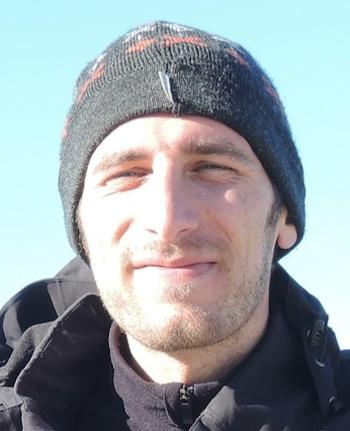
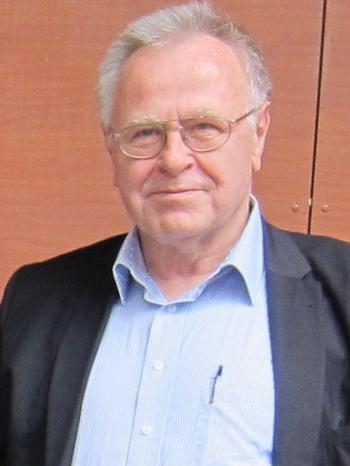
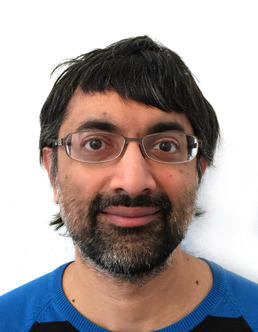
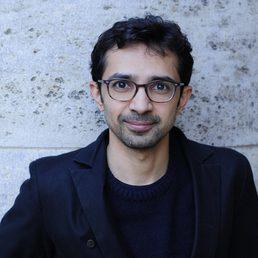
Ariana Neumann is a Research Fellow at the Institute of Health Economics and Health Care Research within the Faculty of Medicine at the University of Hamburg. Her work focuses on telemedicine adoption, patient satisfaction, and mental health service delivery, particularly during the COVID-19 pandemic. Specializes in health economics and psychosocial medicine Publishes extensively on telehealth utilization and digital health equity Active in cross-sectional and longitudinal studies analyzing healthcare behavior Email: ar.neumann@uke.de
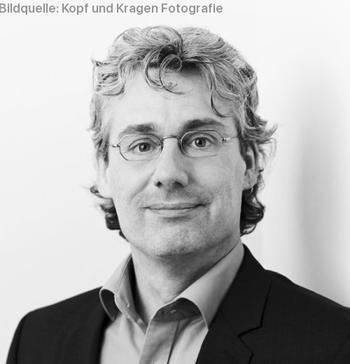
Dr. Sebastian Müller is a Lecturer at the Department of Computer Science, affiliated with the Databases and Information Systems group at Freie Universität Berlin. His work focuses on database systems, medical informatics, and veterinary information systems. He contributed to projects such as CliniScale, mCIS.vet (mobile Clinical Information System for Veterinary Medicine), and the mHealth Atlas, emphasizing practical applications in healthcare and veterinary medicine. His research integrates database technologies with clinical and veterinary diagnostics, including tools like BoCAVis (Blood Count Analysis and Visualization) and XRay2Model. He is also involved in veterinary infection surveillance through the VISKIT project. His professional activities are detailed on his homepage: http://userpage.fu-berlin.de/semu .
Lukas Minogue is a researcher at the Leibniz Institute for Agricultural Engineering and Bioeconomy (ATB) Potsdam , affiliated with their Sensor Technology and Modeling department. He holds a Master's degree in Mathematics (University of Potsdam, 2019-2023) with focus on machine learning and statistical data analysis, and a prior Bachelor's degree in Mathematics (University of Potsdam, 2013-2019) concentrating on statistical modeling. His research specializes in applying machine learning models to agricultural sensor data , particularly for mastitis detection in dairy cows through automated milking systems (AMS). Key projects include: MEDICow (German-Irish collaboration): Developing AI-driven mastitis risk assessment using multisensor data AMRAfrica : Strengthening antibiotic resistance monitoring through data management systems in DR Congo INNOVAFRIKA (DFG-funded): Digital innovations in crop-livestock systems Recent publications demonstrate his work on: Time series analysis of AMS data with ML classifiers (logistic regression, random forest, neural networks) Comparative performance of SMOTE resampling techniques Feature engineering for dairy health metrics (e.g., fat-protein ratio) His technical expertise spans Python (scikit-learn, NumPy), data visualization (Matplotlib), and statistical modeling frameworks.
Lars Lewejohann is a Professor at the Institute for Animal Welfare, Animal Behavior and Laboratory Animal Science , Department of Veterinary Medicine, Freie Universität Berlin. He also serves as head of the "Tierschutz und Versuchstierkunde" research group at the Bundesinstitut für Risikobewertung (BfR). His career spans key roles at Universität Osnabrück and Georg-August-Universität Göttingen. Education : Biology (WWU Münster, 1992-1999); Doctorate in Natural Sciences (University of Münster, 2004) Research focuses on: Gene-environment interactions in serotonin transporter knockout mice Environmental enrichment effects on Alzheimer's disease models Refinement in laboratory animal science Behavioral phenotyping in semi-naturalistic settings Article analysis reveals strong emphasis on animal welfare science , neurobehavioral adaptation , and experimental refinement , with key subfields including: Stress response mechanisms 5-HTT gene function Cognitive bias testing Neuroplasticity Home-cage monitoring Alzheimer's disease models His work has been supported by the German Research Foundation (DFG SFB/TRR58) and frequently appears in journals like Behavioural Brain Research , Neurobiology of Aging , and Molecular and Cellular Biology . Collaborations with leading institutions across Germany and Europe underpin his research impact.
Dr. Thore Wilder is a veterinarian and researcher at the Institute of Animal Breeding and Animal Husbandry, University of Kiel, Germany. He specializes in animal behavior and husbandry systems, with a focus on integrating informatics into livestock management practices. His research interests include: Behavioral Informatics in Livestock Husbandry Animal Welfare Monitoring Data-Driven Farming Systems Veterinary Epidemiology Dr. Wilder contributes to interdisciplinary projects and software development in animal breeding, including tools like AniFair for analyzing livestock data.
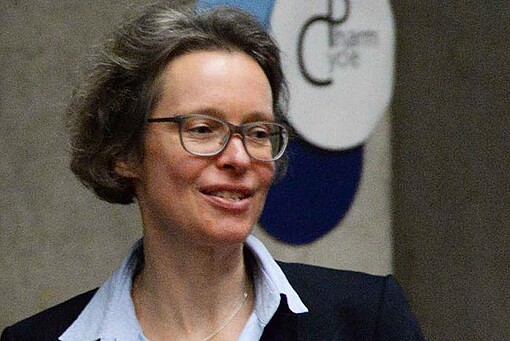
Carolin Floeter is a Professor for Biology, Environmental Risk Assessment, and Environmental Law at the Department of Environmental Engineering, Hamburg University of Applied Sciences. Her work bridges biological research, environmental policy, and legal frameworks to address contamination in aquatic ecosystems. Education: PhD in marine ecotoxicology and environmental law, Diploma in biology with public and environmental law specializations Her research focuses on environmental risk assessment, pharmaceutical pollution mitigation, and legal compliance under frameworks like the Water Framework Directive. She leads the PharmCycle project and investigates bat conservation at wind turbines. Notable activities include heading the biological laboratory, serving on academic boards, and collaborating with institutions like Technical University Berlin. She co-authored articles on pharmaceutical contamination, radar-based bat detection, and regulatory transparency in environmental data. Her supervised students include Kim Teppe, who received the Körber Foundation's German Study Award (2022) for work on pharmaceutical environmental data accessibility. Current projects: PharmCycle , MONO4ERA , FLEDERWIND
Prof. Dr. Heiko Scholz is a Professor at the Department of Agriculture, Ecotrophology, and Landscape Development at Hochschule Anhalt, specializing in livestock production and economics. He holds a doctorate in agricultural sciences from Martin-Luther-Universität Halle-Wittenberg. His research focuses on animal nutrition, dairy cow metabolism, and sustainable livestock farming systems. He advises degree programs in Agriculture (B.Sc.), Agricultural Management (B.Eng.), and Agriculture (M.Sc.). Education: Agricultural Engineering diploma, Technical College in Haldensleben (Agrarian Informatics), 5-year agricultural studies at Hochschule Anhalt, and a PhD in animal breeding and husbandry. Research: Investigates plant alkaloid effects on livestock, vitamin metabolism in dairy systems, and sustainable protein sources. Organizes workshops on plant-based feed and livestock management trends. Professional Role: Teaches and conducts research in livestock production economics since 2008. Active in workshops addressing future dairy production challenges and animal welfare. Labs/Teams: Leads projects on tierernährung (animal nutrition) and collaborates with institutions like the Saxony-Anhalt State Livestock Production Institute.
Dr. Markus Mühling is a Research Fellow in the Department of Mathematics and Computer Science at Philipps-Universität Marburg, working under Prof. Bernd Freisleben. His research focuses on deep learning applications for audio/video content analysis and biomedical data interpretation. He joined the group in 2015 and has contributed to projects involving wildlife monitoring, medical imaging, and heritage digitization. His work spans sensor networks, neural network architectures, and edge computing solutions for real-world challenges. Key research areas include: Deep learning for bioacoustic and visual species recognition Automated analysis of biomedical and histological images Edge-based AI systems for resource-constrained environments Content-based retrieval in video and image archives Publications highlight advancements in biodiversity monitoring (e.g., acoustic sensor networks), medical imaging (e.g., blood cell counting), and cultural heritage (e.g., organ tablature transcription). His work bridges theoretical machine learning with practical ecological and biomedical applications.
Prof. Dr. Heinz Schweppe is a retired (a.D.) Professor at the Institute of Computer Science, Department of Computer Science at Freie Universität Berlin. His contact email is schweppe@inf.fu-berlin.de , and office hours are by appointment via email. Research focuses on databases and information systems, with projects including mHealth applications (e.g., mCIS.vet for veterinary medicine), clinical decision support (DiDi.vet), and visualization systems like VISKIT and BoCAVis for medical diagnostics. Notable areas include veterinary informatics, mobile health, and clinical information systems. No specific scientific awards are mentioned in the provided text. Active projects highlight contributions to healthcare technology and veterinary medicine systems integration.
Dr. Kashif Rasul is affiliated with the Database and Information Systems group at the Department of Mathematics and Computer Science, Freie Universität Berlin. His research focuses on database systems, information systems, and their applications in medical informatics and healthcare technology. He contributed to projects such as BoCAVis (Blood Count Analysis and Visualization), the Cancer Recognition System (CRS), and CliniScale, demonstrating expertise in data-driven solutions for clinical and veterinary diagnostics. Additionally, his work involves mobile health (mHealth) applications, as seen in projects like mCIS.vet and the mHealth Atlas initiative. His research interests span healthcare data visualization, clinical decision support systems, and the integration of information systems in veterinary medicine. While no specific publications are listed here, his involvement in interdisciplinary projects highlights contributions to both technical and applied domains within computer science. No scientific awards or grants are explicitly mentioned in the provided text. He previously served as part of the research staff, contributing to the development of systems like DiDi.vet (Differential Diagnostics in Veterinary Medicine) and VetSIM, indicating a focus on practical applications of database technologies in specialized fields.
Shoaib Burq is a Researcher affiliated with the Department of Databases and Information Systems at Freie Universität Berlin. His work focuses on healthcare informatics and database systems, contributing to projects such as Blood Count Analysis (BoCAVis), Cancer Recognition System (CRS), and mobile clinical information systems for veterinary medicine (mCIS.vet). He has been involved in developing tools for veterinary diagnostics, infection surveillance (SurgeRate), and spatial data analysis (e.g., TIE mapsforge). His research bridges database technologies with practical applications in healthcare and veterinary medicine. Key projects include CliniScale, DiDi.vet, and the mHealth Atlas, emphasizing data-driven solutions for clinical decision-making and mobile health applications. Though no formal awards or grants are explicitly mentioned, his contributions to interdisciplinary projects reflect expertise in integrating databases with medical and veterinary domains. Shoaib Burq is listed under former members of the group, indicating past affiliation with the university.
Rabab K. Ward is a Professor in the Department of Electrical and Computer Engineering at the University of British Columbia, Faculty of Applied Science, Vancouver, Canada. She is a leading figure in signal processing with extensive contributions to biomedical engineering, image reconstruction, and machine learning. She served as President of the IEEE Signal Processing Society (2016–2017) and continues to be actively involved in research and leadership. Her research focuses on signal processing , biomedical signal analysis , compressed sensing , medical image fusion and reconstruction , and deep learning for healthcare applications . She has pioneered methods in EEG and CT image processing, epileptic seizure detection, and 3D human pose estimation. The recent publications highlight her work in 3D face and human modeling , GAN-based forensics , brain-computer interfaces , and medical video analysis . Her research integrates advanced machine learning with practical engineering solutions for clinical and robotic systems. Her scientific awards include being an IEEE Fellow , Distinguished Lecturer of the IEEE Signal Processing Society , and serving as President of the IEEE Signal Processing Society . She has advised numerous students and researchers in areas such as compressed sensing , EEG signal processing , image reconstruction , and deep learning . Her collaborative work includes significant grants and projects in biomedical engineering , neurotechnology , and autonomous systems . Dr. Ward is associated with research labs and teams focused on signal processing for healthcare , medical imaging , and intelligent systems at UBC, fostering interdisciplinary collaboration in engineering and medicine.
Christian Martin is a Researcher at the University of Leipzig since 2019, affiliated with the ScaDS.AI Center for Scalable Data Analytics and Artificial Intelligence in Dresden/Leipzig. His work focuses on integrating Machine Learning and Biomedical Data Analysis for applications in Life Science & Medicine , particularly in Personalized Medicine and Medical Imaging . Current affiliation: ScaDS.AI Center, University of Leipzig Previous roles: Software Developer & Research Associate at Loeser/Meierhofer Medizintechnik GmbH (2008-2019), Research Associate at Biodata Mining Group, University of Bielefeld (2003-2008) His research spans Deep Learning , Radiomics , and Image Processing for medical applications, with notable projects like: GRAMMY (Integrative analysis of gastric cancer, microenvironment, and patient outcomes) MIRACLE (Machine learning for lung cancer relapse prediction) SaxoCell Omics (Systems biology for radiomics classification) He has supervised multiple master's students including: Mohammad Issa (Automotive lane detection) Wael Assy (Soft tissue sarcoma classification) Julius Ellermann (MRI image prediction) Jan Philipp Zimmer (Cervix cancer classification) Marlene Mertens (Cervical cancer analysis) Contact: christian.martin@informatik.uni-leipzig.de