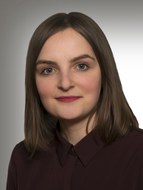
Prof. Dr. Nadine Lehnen is a Research Group Leader at the Department of Psychosomatic Medicine , Faculty of Medicine, Technical University of Munich (TUM). Her work bridges computational neuroscience and psychosomatic disorders, focusing on the central nervous system (CNS) mechanisms underlying functional symptoms that lack organic explanations. Research Focus : Functional somatic disorders, sensorimotor processing, vestibular system dysfunction, and computational modeling of symptom pathogenesis. Key Collaborations : EURONET-SOMA Group, interdisciplinary teams in neuroscience and clinical psychology. Her recent studies explore sensorimotor dysregulation in irritable bowel syndrome, post-COVID symptoms, and functional dizziness, emphasizing transdiagnostic mechanisms. Publications highlight translational approaches combining computational and experimental methods to redefine understanding of persistent physical symptoms. She mentors students such as Dr. Lena Schröder and Dr. Dina von Werder, contributing to training in psychosomatic research. While no specific awards are listed, her work has been supported by institutional affiliations and collaborative grants.
Mihir Gupta, MD, is an Assistant Professor of Neurosurgery at Yale School of Medicine. As a fellowship-trained spine surgeon with dual expertise in neurosurgery and orthopedics, he performs both traditional and minimally invasive procedures for complex spinal disorders including degenerative conditions, deformities, tumors, infections, and trauma-related issues. Dr. Gupta also specializes in revision spine surgeries for patients with persistent or new problems following previous operations. Dr. Gupta's educational background includes a BA from Harvard College, an MD from Stanford University School of Medicine, neurosurgical residency at the University of California San Diego, postdoctoral studies at Harvard Medical School, and an orthopedic spine surgery fellowship at Johns Hopkins University. His clinical philosophy emphasizes understanding each patient's unique story through thorough evaluation and physical examination before developing personalized treatment plans. His research interests focus on understanding how genetics contribute to different spinal disorders and how care can be personalized. Dr. Gupta's publications demonstrate expertise across multiple domains including brain tumor diagnostics (particularly CNS lymphoma and glioblastoma), spine surgery outcomes, gender diversity in academic medicine, and neuroimmunology. His work often bridges clinical practice with molecular diagnostics, emphasizing rapid testing methods that accelerate treatment decisions for brain tumor patients. Dr. Gupta collaborates extensively with multidisciplinary teams including physical therapists, pain management specialists, anesthesiologists, and interventional radiologists to develop comprehensive treatment approaches. He emphasizes that surgery is often the last resort, prioritizing nonsurgical options when appropriate. His clinical work at Yale Medicine focuses on highly personalized spine procedures using advanced robotics, navigation, and minimally invasive techniques to tailor solutions for individual patients.
Robert S. Allison is a Professor in the Department of Electrical Engineering & Computer Science at York University's Lassonde School of Engineering. His research focuses on human perceptual responses in virtual environments, stereoscopic vision, and eye movement analysis. He is affiliated with the York Centre for Vision Research, Sensorium (Digital Arts & Technology), and the Centre for Innovation in Computing at Lassonde. His research interests include depth perception in natural and virtual environments, human-computer interface design for VR, machine vision applications, and the measurement of human motion. He has supervised multiple graduate students and contributed to over 260 publications. His work spans topics like cybersickness mitigation, display lag effects, and perceptual adaptation in VR. Key grants include NSERC-funded projects on perception in virtual environments and collaborations with institutions like the Australian Research Council. His teaching includes courses on human perception in human-computer interaction and digital logic design. Recent articles highlight advancements in understanding motion perception, VR-induced sickness, and multisensory integration. He collaborates widely, with affiliations including the VISTA program and York's Connected Minds initiative.
Regan Harrell is an Assistant Professor in the Department of Physical Therapy at the University of Pittsburgh's School of Health and Rehabilitation Sciences (SHRS). She is concurrently completing her PhD in rehabilitation science while serving as a faculty member and co-coordinator of the Advanced Vestibular Physical Therapist Certificate Program at SHRS. Her research focuses on vestibular disorders in moderate-severe traumatic brain injury (TBI) and technology development for diagnostic and treatment applications. Education includes a Bachelor of Science and Doctor of Physical Therapy (DPT) from Duquesne University. She holds certifications as a Board-Certified Specialist in Neurologic Physical Therapy (NCS) and has been recognized with awards such as the Promotion for Doctoral Studies II Scholarship (2024) and Second Place at the 2023 American Physical Therapy Association Combined Sections Meeting for her work on TBI and BPPV laterality. Her professional affiliations include the Academy of Neurologic Physical Therapy and the International Neurologic Physiotherapy Association. Her research interests emphasize advancing clinical understanding of BPPV, improving rehabilitation protocols for vestibular dysfunction in TBI patients, and adapting telehealth strategies during crises like the pandemic. She has contributed to global discussions on telehealth delivery for vestibular care and published extensively on TBI-related vestibular disorders and clinical outcomes. Notable contributions include a case report on vestibular rehabilitation for cerebellar ataxia with neuropathy and vestibular areflexia syndrome (CANVAS) and a scoping review on vestibular disorder prevalence in TBI patients. She was part of the University of Pittsburgh Physical Therapy delegation to the 2024 Bárány Society Meeting, highlighting her engagement in international vestibular research networks.
Phil Pavilionis is an Associate Professor of Kinesiology in the School of Public Health at the University of Nevada, Reno. With over 20 years of clinical experience as a Certified Athletic Trainer (ATC) and Certified Strength and Conditioning Specialist (CSCS), he bridges academic research with practical applications in sports medicine. His roles include teaching undergraduate/graduate courses, conducting research in the Neuromechanics Laboratory, and serving as an adjunct clinical athletic trainer for Nevada Sports Medicine. Education: Ph.D. in Neuroscience, University of Nevada, Reno (2024) M.S. in Exercise Science, California University of Pennsylvania (2007) B.S. in Health Science, University of Nevada, Reno (1995) Dr. Pavilionis specializes in head injury prevention and virtual reality applications for concussion evaluation. His research leverages clinical experience to develop standardized assessment protocols, focusing on vestibular-ocular motor screening (VOMS) using virtual reality to reduce administrator variability. Key investigations include oculomotor deficits following concussion, head impact biomechanics in football using instrumented mouthguards, and minimal detectable change metrics for neurocognitive tests like ImPACT. His work integrates neuroscience, kinesiology, and engineering to improve concussion diagnosis and management. Analysis of his 45 publications (2022-2025) reveals three dominant trends: (1) Virtual reality standardization of concussion assessments, particularly VOMS protocols; (2) Head impact monitoring using instrumented mouthguards to evaluate protective equipment like Guardian Caps; and (3) Machine learning applications for objective concussion detection through eye-tracking and biomechanical data. These studies consistently address the critical need for objective, standardized tools to overcome subjective symptom reporting in sports concussion management. Dr. Pavilionis actively collaborates with the Neuromechanics Laboratory and Nevada Sports Medicine, translating research into clinical practice. While no specific grants are documented in the provided materials, his extensive publication record (including 15 articles in 2023 alone) demonstrates sustained research productivity and interdisciplinary collaboration across neuroscience, engineering, and sports medicine disciplines.
Virginia Polytechnic Institute and State UniversityUnited States
Michael L. Madigan is a Professor in the Grado Department of Industrial and Systems Engineering at Virginia Tech. His research focuses on human factors engineering, biomechanics, and ergonomics, particularly addressing issues related to slips, trips, falls, and musculoskeletal disorders. He leads the Madigan Biomechanics Group, which investigates the biomechanics of human motion and neuromuscular control to enhance occupational safety and elderly health. Education: Ph.D., Biomedical Engineering, Virginia Commonwealth University, 2001 M.S., Bioengineering, Texas A&M University, 1996 B.S., Bioengineering, Texas A&M University, 1994 Research Interests: Obesity’s impact on mobility, aging-related biomechanics, workplace ergonomics, and biomechanical interventions for fall prevention. His work combines experimental and computational methods to develop preventive measures like exercise interventions and ergonomic designs. Professional Roles: Editor-in-Chief, Journal of Applied Biomechanics (2017–present) Formerly Editor, Medicine and Science in Sports and Exercise (2013–2017) Secretary, American Society of Biomechanics (2009–2012) Awards: Kevin P. Granata Faculty Fellow (2013–2014) Virginia Tech College of Engineering Certificate of Teaching Excellence (2014) Finalist for International Society of Biomechanics Clinical Award (2005) Advising & Grants: Advised over 20 doctoral and undergraduate students since 2007. His grants support studies on obesity-related falls, exoskeleton design, and biomechanical modeling. Collaborates with the Virginia Tech-Wake Forest School of Biomedical Engineering and Sciences. Labs/Teams: Director of the Madigan Biomechanics Group and core member of the Occupational Ergonomics and Biomechanics Laboratories. Active in developing smart prosthetics and wearable technologies for injury prevention.
Caroline Ketcham is a Professor of Exercise Science and the Associate Dean of Elon College, the College of Arts and Sciences at Elon University. Her research focuses on movement neuroscience, neurodiversity, concussions, and mental health, with expertise in neuromusculoskeletal control and rehabilitative strategies across diverse populations including children, elderly, neurological patients, and athletes. Education: PhD in Exercise Science/Motor Control, Arizona State University (2003) MS in Exercise Science/Motor Control, Arizona State University (1999) BA in Biology/Psychology, Colby College (1996) Her work spans motor control, concussion management, and mental wellness, with over 87 undergraduate mentees and 65+ publications. She co-edited Concussion in Athletics and Cultivating Capstones , and co-directs the Elon BrainCARE Research Institute, which advocates for concussion awareness and mental health. Recent research trends include concussion baseline testing as mental health screening, dual-task gait analysis, and global mentoring frameworks. Scientific awards highlight her contributions: Distinguished Scholar (2023), Ward Family Mentoring Award (2017), and multiple teaching distinctions. Scientific Awards: Distinguished Scholar Award (2023), Elon University Ward Family Excellence in Mentoring Award (2017), Elon University Elon College Service Award (2014), Elon University School of Education Excellence in Scholarship Award (2010), Elon University Teacher of the Year (2007), Texas A&M University She actively mentors students in concussion advocacy and neurodiverse movement research, with hundreds advised in health professions. Her labs focus on neuromuscular control and mental wellness initiatives.
Cyriel Diels is a researcher at the Royal College of Art's Intelligent Mobility Design Centre (IMDC) , focusing on automotive and transport design at the intersection of human factors, technology, and sustainable mobility. His career spans academia (Coventry University, RCA) and industry (Jaguar Land Rover, Transport Research Laboratory). Expertise : Human-machine interaction in automated vehicles, motion sickness mitigation, passenger experience design Key Projects : DOMUS (EU), SIMUSAFE (EU), UK CITE (Innovate-UK) Recent research explores motion discomfort alleviation through design interventions and adaptive HMI solutions in autonomous vehicles. Funded by European Commission, Innovate-UK, and automotive industry partners, his work combines cognitive psychology with applied transport design . Publications analyze: Simulator sickness management Visual-motion cue conflicts Seating appearance effects on comfort Warning sign design for vehicle interfaces Multi-axis motion sickness mechanisms Automated driving trust compatibility Current students include Yi Li, Pooya Sareh, Robin Severs, and Selin Zileli. Collaborative projects span future cities , intelligent mobility , and human-centered vehicle design .
University of Texas Southwestern Medical CenterUnited States
Dr. S. Marshal Isaacs is a distinguished Professor of Emergency Medicine at the University of Texas Southwestern Medical School and a senior faculty member at Parkland Hospital's Emergency-Trauma Center. As Medical Director of the Dallas Fire-Rescue Department (DFR), he oversees one of the nation's busiest EMS systems (500 daily incidents, 400+ paramedics). His career includes 12 years as Medical Director for the San Francisco Fire Department, renowned for advancing prehospital care, AED programs, and clinical trials. He collaborates closely with EMS leaders like Drs. Ray Fowler and Kathy Rinnert to enhance Dallas' BioTel System, a 15-municipality EMS federation. Dr. Isaacs' academic roles include NIH-funded research through the ROC consortium and teaching EM residents. His clinical expertise spans otology/neurotology, surgical innovation (e.g., endoscopic ear surgery), and radiation oncology for skull base tumors. He co-authored key NAEMSP texts and pioneered bacteriophage therapy for mastoiditis. Awards include the prestigious Michael K. Copass Award for EMS excellence. Education: Union College, SUNY Stony Brook Medical School (1988), residency at Allegheny General Hospital (Pittsburgh), and a Stanford University EMS fellowship. He served as SFGH's Chief Flight Physician and UCSF faculty before joining UTSW. Current initiatives include the Dallas EMS Vision Process and interdisciplinary NIH projects.
Massimo Cenciarini is a Senior Lecturer in the Department of Mechanical Engineering at the Universitat Politècnica de Catalunya (UPC), affiliated with the School of Industrial Engineering (ETSEIB). He is an active member of the BIOMEC - Biomechanical Engineering Lab, TecSalut - Health Technologies Research Group, and CDEI - Industrial Equipment Design Centre. His work bridges engineering and biomedical applications, focusing on human movement and assistive technologies. Research Interests: Biomechanics and human balance Wearable robotics and exoskeletons System identification and control Assistive mobility technologies Mechatronics and simulation Postural control and motor adaptation His recent publications show a strong trend in wearable robotic devices, particularly knee exoskeletons, with emphasis on human-exoskeleton interaction, misalignment compensation, impedance identification, and gait assistance. His work integrates biomechanical modeling, experimental validation, and translational research for rehabilitation and mobility enhancement. Scientific Awards: 3r Premi UPC al Compromís Social He has participated in competitive R&D projects such as Xartec Salut and technology transfer initiatives, including the development of wearable knee exoskeletons. While no formal students are listed, his collaborative projects suggest mentorship roles within multidisciplinary teams. He is involved in research networks focused on health technologies and Industry 4.0 educational environments. Laboratories and Research Groups: BIOMEC - Biomechanical Engineering Lab (UPC) TecSalut - Health Technologies Research Group CDEI - Centre de Disseny d'Equips Industrials
Jianmin Guan, Ph.D., serves as Associate Professor of Kinesiology within the College for Health, Community and Policy at the University of Texas at San Antonio (UTSA). His academic work bridges physical education pedagogy, motivational psychology, and cross-cultural fitness assessment methodologies, with emphasis on student engagement in activity settings. Education: Ph.D. in Sport Pedagogy, Texas A&M University (2004) Master of Education in Measurement and Evaluation, Wayne State University (1999) Master of Education in Sport Pedagogy, Shanghai Institute of Physical Education (1993) Bachelor of Science in Kinesiology, Huizhou Normal College (1984) Dr. Guan's research centers on achievement goal theory applications in physical education, examining how work-avoidance and mastery-approach goals influence student persistence across developmental stages. His work extends to health-related fitness evaluation among minority populations and sensory integration interventions using sport-based protocols, with particular focus on Chinese student cohorts. Methodologically, he employs longitudinal growth modeling, MIMIC analyses, and cross-cultural validation techniques. His recent publications (2022-2025) demonstrate consistent investigation of achievement goal trajectories from elementary through college levels, alongside innovative comparative studies of global fitness testing frameworks. The research reveals persistent gender disparities in physical competence perception and identifies declining mastery-goal intensity during adolescent transitions, while establishing basketball training as an effective sensory integration modality. Scientific Awards: Research Fellow, Society of Health and Physical Educators (SHAPE America, 2007) Research Funding: Secured $29,732 across two grants (2018-2019) for Psychological Skills Inventory development targeting law enforcement populations. His presentations at AAHPERD conventions and Pre-Olympic conferences reflect extensive national and international scholarly engagement, particularly with Chinese research institutions on fitness knowledge assessment and sensory processing interventions. Dr. Guan maintains active international collaborations, especially with Chinese universities, developing culturally responsive physical activity interventions while addressing measurement challenges in diverse educational contexts.
Professor Gabor Halmagyi is a leading academic in neurology and neuro-otology, specializing in vestibular disorders. His research focuses on clinical neurophysiology, vestibular testing (e.g., vHIT), and the diagnosis of balance disorders such as Meniere’s disease, vestibular neuritis, and cerebellar ataxia. He has collaborated extensively on genetic studies and machine learning applications for diagnostic accuracy. His work bridges clinical practice and research, emphasizing bedside-to-bench approaches. Publications highlight advancements in vestibular testing methodologies, genetic diagnostics for neurodegenerative conditions like spinocerebellar ataxia, and the clinical management of complex cases such as vertebral artery dissection and pseudotumor cerebri. He has contributed to understanding the pathophysiology of conditions like superficial siderosis and the role of transverse sinus stenting in idiopathic intracranial hypertension. Key contributions include refining the video head impulse test (vHIT) as a diagnostic tool and exploring the interplay between vestibular dysfunction and neurological syndromes. His research spans collaborations in Australia and internationally, addressing both basic science and clinical applications in neurology.
Judith Josupeit (Dr. rer. nat.) is a Lecturer at the Faculty of Psychology, Technische Universität Dresden, Germany. She specializes in human factors research within virtual reality environments, focusing on interindividual differences in cybersickness susceptibility and physiological indicators of VR-induced discomfort.
Dr. Janet Helminski serves as a Professor in the Department of Physical Therapy within the College of Health Professions at Rosalind Franklin University. A dual-certified neurologic physical therapist and neuroscientist, she specializes in teaching neuroscience and developing evaluation/intervention protocols for adults with neurological deficits, with clinical expertise in vestibular and balance disorders management. Her educational credentials include: Doctor of Philosophy in Neuroscience, Department of Neurobiology and Physiology, Northwestern University, Evanston, IL Master of Science in Physical Therapy with orthopedics emphasis, Northwestern University, Evanston, IL Bachelor of Science in Physical Therapy, Marquette University, Milwaukee, WI Her research program focuses on vestibular rehabilitation, particularly the management of atypical BPPV variants, differential diagnosis of acute vestibular syndrome, and treatment of uncompensated peripheral vestibular deficits. Funded by the NIH National Institute on Aging, her work bridges clinical practice with neuroscience to improve diagnostic precision and therapeutic outcomes for balance disorders. Analysis of her 2016-2022 publications reveals a consistent emphasis on vestibular diagnostics, with 80% of articles addressing BPPV subtypes and nystagmus patterns. Her work demonstrates interdisciplinary integration of neurology, otolaryngology, and physical therapy, featuring rigorous methodology in reliability testing and novel insights into canalithiasis mechanisms. Her scientific recognition includes: Jack Walker Award (APTA, 2015) Best Article Award 2013 (APTA Neurologic PT Academy) Physical Therapy Alumni Research Achievement Award (Northwestern, 2011) Doctoral Education Fellowship (Illinois PTA, 1995) Geraldine S. Taylor Fellowship (Rehabilitation Institute of Chicago, 1990) Second Place Award for Best Instructional Reporting (1989) As a NIH-funded investigator, she serves as a scientist reviewer for the Department of Defense's Congressionally Directed Medical Research Programs. Her clinical mentorship extends through her role in graduate physical therapy education, though specific advisees are not documented. She actively contributes to professional standards through her service on the Vestibular Disorders Association's Medical & Scientific Advisory Board. Her clinical practice and research are anchored in translational vestibular science, with ongoing work focused on improving diagnostic algorithms for acute dizziness and developing evidence-based rehabilitation protocols for complex vestibular disorders.
State University of New York at BuffaloUnited States
David S. Wack is an Associate Professor at the University at Buffalo's Jacobs School of Medicine & Biomedical Sciences, Department of Radiology. His research focuses on medical image analysis and neuroimaging, particularly in auditory processing and parameter estimation from PET, MRI, and CT images. He has held academic positions since 1992, progressing from instructor roles to his current rank. His work includes NIH-funded projects on imaging technologies and collaborations with institutions like Canon Medical Systems and UBNS. Education: PhD in Communicative Disorders and Sciences (SUNY Buffalo, 2010) MA in Applied Mathematics (SUNY Buffalo, 1992) BA in Applied Mathematics and Music Performance (SUNY Buffalo, 1989) Research Interests: Development of parametric maps from medical images Machine learning applications in neuroimaging Neuroimaging of auditory and language processing Dynamic image noise reduction and segmentation algorithms Neural markers of top-down compensation in speech processing Recent Projects: NIH-funded self-collimating SPECT breast tomography system 4D flow MRI for intracranial atherosclerotic disease assessment Machine learning for neuroimage classification Grants & Service: Member of Jacobs School faculty council and UB Faculty Student Association board Editorial roles at Frontiers in Neuroscience (Brain Imaging Methods, Decision Neuroscience) Labs & Teams: Buffalo Neuroimaging Analysis Center Collaborations with UBNS, Canon Medical, and VA Western New York Health Care System