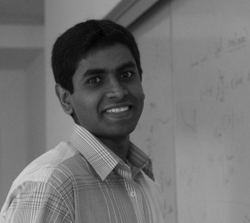
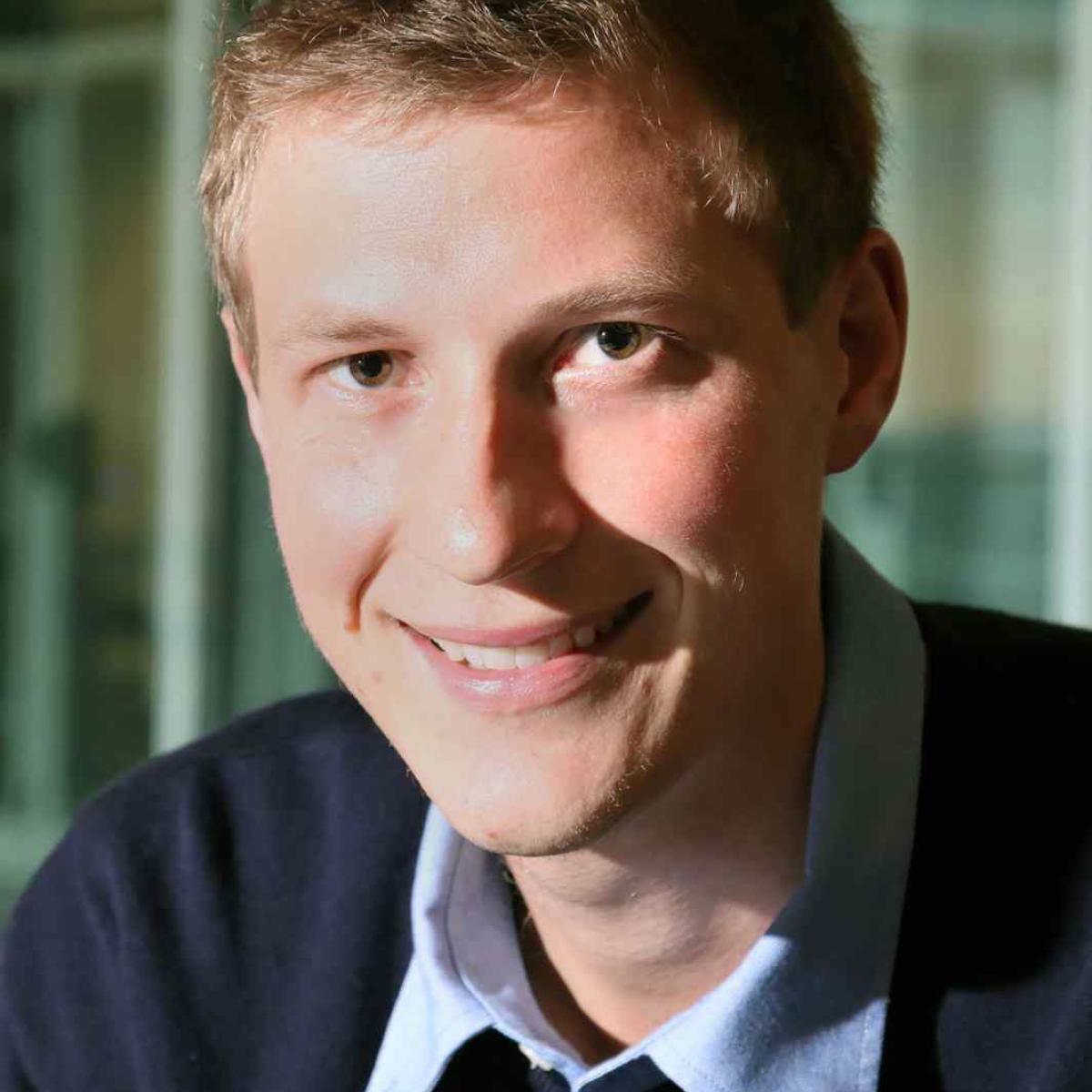
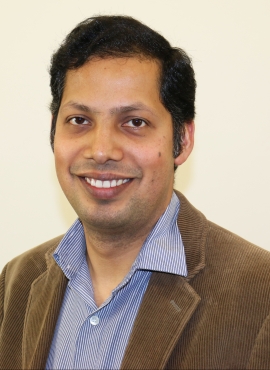
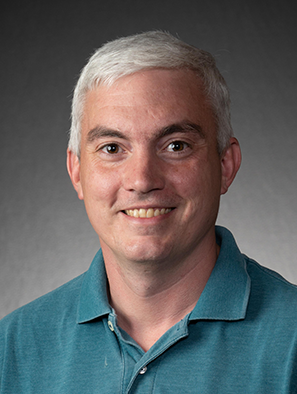
Yang P. Liu is an Assistant Professor at Carnegie Mellon University 's Department of Computer Science . He received his PhD from Stanford University under the supervision of Aaron Sidford and previously studied at MIT . Fields of Interest : Graph Algorithms, Optimization, High-Dimensional Geometry, Additive Combinatorics, Theoretical Computer Science. His research focuses on algorithmic design and analysis for graph problems, optimization, and combinatorics, with applications in machine learning and complexity theory. Recent work includes advancements in parallel repetition games , combinatorial lines , and dynamic graph algorithms . In 2024, his research spanned FOCS , STOC , and RANDOM conferences, addressing problems in k-CSPs , min-cost flow , and hypergraph sparsification . Earlier contributions (2023) included deterministic flow algorithms and spectral hypergraph techniques. Scientific Awards : NDSEG Fellowship (2018-2021), Google PhD Fellowship (2022-2023), FOCS Best Paper (2022), STOC Best Student Paper (2022), FOCS Best Student Paper (2021). He teaches CS 15-759 , a graduate course on convex optimization theory and applications, covering gradient descent, interior point methods, and algorithmic sparsification techniques.
Sergio Bermudo Navarrete is a Professor at the Department of Economics, Quantitative Methods and Economic History, Universidad Pablo de Olavide. His research spans combinatorics, graph theory, and operator theory. Education: PhD in Mathematics (2003, University of Seville) with thesis on functional models of operators in Hilbert spaces. Research Interests: Focus on graph theory, domination problems, topological indices, and operator theory. Publication Trends: Recent work includes vertex-degree-based indices for oriented graphs, domination parameters in product graphs, and differential analysis of line graphs. Keywords span Computer Science , Mathematical Chemistry , and Operations Research . Collaborations: Frequent co-authors: José María Sigarreta Almira, José Manuel Rodríguez García, Juan Alberto Rodríguez-Velazquez. Contact: Email sbernav@upo.es .
Chandra Chekuri is the Paul and Cynthia Saylor Professor in the Department of Computer Science at the University of Illinois Urbana-Champaign, situated within the Grainger College of Engineering. He has been actively contributing to theoretical computer science for over two decades, with significant leadership roles including serving as Editor-in-Chief of the prestigious SIAM Journal on Computing since May 2025. His academic journey began with a B.Tech in Computer Science from the Indian Institute of Technology, Madras in 1993, followed by a Ph.D. in Computer Science from Stanford University in 1998. Prior to joining UIUC, he spent eight years as a Member of Technical Staff at Bell Labs, Lucent Technologies. Chekuri's research focuses on theoretical computer science with particular emphasis on the design and analysis of algorithms, discrete and combinatorial optimization, approximation algorithms, mathematical programming, and graph theory. His work explores fundamental connections between discrete structures and optimization problems, with applications spanning network design, data analysis, and computational complexity. His recent publications demonstrate a continued focus on hypergraph algorithms, submodular function optimization, and graph partitioning problems, showing how theoretical insights can yield practical algorithmic improvements. His approach often combines continuous relaxations with discrete rounding techniques to develop approximation algorithms for NP-hard problems. As Editor-in-Chief of SIAM Journal on Computing, Chekuri leads one of theoretical computer science's most respected publications, which covers analysis and design of algorithms, algorithmic game theory, computational complexity, and other mathematical aspects of computer science. His editorial leadership follows previous service as Associate Editor for several major journals including SIAM Journal on Computing, Mathematics of Operations Research, and Mathematical Programming. ACM Fellow (January 2024) Scott Fisher Teaching Award (for year 2022-23) from CS Department Chekuri has advised numerous PhD students to completion, including Kent Quanrud, Vivek Madan, Shalmoli Gupta, and Chao Xu, with several currently in progress such as Tanvi Bajpai, ElFarouk Harb, Rhea Jain, and Weihao Zhu. His teaching portfolio includes graduate courses on Randomized Algorithms, Approximation Algorithms, Algorithms for Big Data, and Combinatorial Optimization. He has served as Director of the Graduate Program in the Department of Computer Science from May 2014 to August 2017, demonstrating significant administrative leadership within the department.
Ola Svensson is an Associate Professor at the School of Computer and Communication Sciences , EPFL. His research spans approximation algorithms, combinatorial optimization, computational complexity, and scheduling. He holds an ERC Consolidator Grant (2023–) and previously received an ERC Starting Grant (2014–2019) and SNF grant (2019–2023). Education: PhD in Computer Science from IDSIA, Università della Svizzera italiana (2009) M.Sc. from Uppsala University (2005) Research Focus: Svensson develops novel techniques for NP-hard problems, with emphasis on primal-dual methods, LP/SDP hierarchies, and hardness proofs. His work applies to clustering, scheduling, network design, and submodular optimization. Publications: His 15 most recent works (2018–2021) focus on learning-augmented algorithms, robust optimization, and improved approximations for clustering/TSP. Key trends include integration of ML with classical algorithms and quasi-polynomial methods for combinatorial problems. Awards: Best Paper Awards at FOCS (2011, 2017) and STOC (2018) I&C Teaching Award at EPFL Advising & Grants: He advises 6 current PhD students and graduated 8 others. Major grants include ERC Starting Grant 'OptApprox' (€1.4M) and ERC Consolidator Grant 'POTCO' (€2M). Teaching: Leads courses in Advanced Algorithms, Computational Complexity, and Approximation Algorithms. He developed pedagogical frameworks for scribe notes and project-based learning in theoretical computer science.
Ignasi Sau Valls is a Directeur de Recherche (DR2) at CNRS, affiliated with the LIRMM laboratory at Université de Montpellier, France. He is a member of the AlGCo team, focusing on algorithms for graphs and combinatorics. His academic background includes dual degrees in Mathematics and Telecommunications Engineering from UPC (Barcelona), a PhD in joint supervision between UPC and Projet Mascotte (Sophia Antipolis), and a postdoctoral position at the Technion (Israel). He has been with CNRS since 2010 and was promoted to his current role in October 2024. He also served as a Visiting Professor at UFC (Brazil) from 2016–2017. His research interests lie primarily in Graph Theory and Parameterized Complexity , with a focus on structural graph properties, kernelization, and algorithm design. He has made significant contributions to problems involving minor-closed graph classes, treewidth, and graph modification. His work bridges theoretical foundations with algorithmic applications, particularly in discrete optimization and network problems. The recent articles highlight a strong trend in parameterized algorithms, especially for graph modification, kernelization, and structural graph problems. Topics such as hitting minors, dynamic programming on tree decompositions, and edge contractions reflect a deep engagement with structural parameterizations and fixed-parameter tractability. His publications frequently appear in top-tier journals like SIAM Journal on Computing, Journal of Combinatorial Theory, and Algorithmica, as well as major conferences such as ICALP, SODA, and IPEC. Best paper award of Track C of ICALP'10 Best student paper award of WG'09 Ignasi Sau has been a principal investigator of the ANR JCJC project ELIT (ANR-20-CE48-0008-01), funded with 169k€ from 2021 to 2026. He serves as an editor for DMTCS and Information and Computation , and has held significant organizational roles, including PC member of numerous conferences (MFCS, WG, IPEC, COCOON) and as co-chair and main organizer of WG 2019, ICGT 2022, and JCALM 2023. He has delivered invited courses at international schools in France, Argentina, and Brazil. He is actively involved in the research community through editorial duties, conference organization, and collaborative research. His lab affiliation is the AlGCo team at LIRMM, a leading group in algorithmic graph theory and combinatorics.
Mohit Singh is the Coca-Cola Foundation Professor at the H. Milton Stewart School of Industrial and Systems Engineering, Georgia Institute of Technology. He previously held positions at Microsoft Research (2011-2016) and as an Assistant Professor at McGill University (2010-2012). PhD in Algorithms, Combinatorics, and Optimization (ACO) at Carnegie Mellon University His research focuses on discrete optimization , approximation algorithms , and convex optimization , with applications to combinatorial optimization, submodular functions, and network design. He has contributed to topics like Sticky Brownian Rounding, integrality gaps, and online adaptive algorithms. His recent work includes theoretical advancements in matroid constraints, dimensionality reduction, and submodular maximization. He has published extensively in top conferences such as FOCS, SODA, ICML, and NeurIPS. He has been recognized with the Coca-Cola Foundation Professorship and served as Director of the Algorithms and Randomness Center at Georgia Tech (2019-2023). He has also held editorial roles and organized key academic workshops like the Bellairs Workshop on Approximation Algorithms (2011). His teaching includes advanced courses on approximation algorithms, combinatorial optimization, and linear inequalities. He has collaborated with institutions such as Microsoft Research and McGill University.
Arya Mazumdar is a tenured Professor of Data Science and Computer Science at the Halıcıoğlu Data Science Institute (HDSI) , part of the School of Computing, Information and Data Sciences at the University of California San Diego (UCSD). He also holds affiliations with the Computer Science and Engineering and Electrical and Computer Engineering departments at UCSD. Previously, he was an Assistant and Associate Professor at the University of Massachusetts Amherst (2015–2021), and held a postdoctoral position at MIT (2011–2012). He is an IEEE Distinguished Lecturer (2023–2024) and recipient of the NSF CAREER Award (2015–2020). Education : PhD in 2011 from the University of Maryland, College Park (advisor: Alexander Barg) Postdoctoral scholar at MIT (2011–2012, advisor: Greg Wornell) Internships at IBM Almaden (2010) and HP Labs (2008) Research Interests : Focus on algorithmic and statistical aspects of machine learning, error-correcting codes, optimization, signal processing, and distributed systems. Key areas include clustering algorithms, compressed sensing, federated learning, and information-theoretic foundations of data science. He has contributed to theoretical guarantees for learning mixtures, distributed optimization, and robust coding schemes. Recent Articles Trends : Recent work emphasizes distributed optimization (e.g., vqSGD, Byzantine-resilient algorithms), sparse recovery in high-dimensional models, and theoretical foundations of learning (e.g., support recovery, parameter estimation). His research bridges information theory and machine learning, with applications in storage systems and large-scale data processing. Awards & Roles : 2020 EURASIP JASP Best Paper Award Co-PI and co-leader of the NSF AI Institute for Learning-Enabled Optimization at Scale Editorships: IEEE Transactions on Information Theory and Foundations and Trends in Communications Grants & Labs : Leads the EnCORE Institute as UCSD Site Lead, focusing on theoretical perspectives of large language models and computational-statistical gaps. Active in organizing workshops on topics like LLMs, clustering, and distributed optimization. His research is funded by NSF and industry collaborations. Teaching : Courses include Algorithms for Data Science , Probability and Statistics for Data Science , and Coding Theory , emphasizing foundational theory and scalable methods.
Ben Li is an Associate Professor in the Department of Computer Science at the University of Manitoba, Faculty of Science. His research focuses on combinatorics and theoretical computer science, including combinatorial design theory (e.g., Steiner triple systems, BIBDs, difference sets), graph theory, and algorithm design for combinatorial optimization problems. He also explores approximation algorithms for NP-Hard problems and subclasses of such problems with polynomial solutions. Dr. Li teaches a wide range of courses, including COMP 1010 (Introduction to Computer Science), COMP 2080 (Analysis of Algorithms), and advanced graduate courses like COMP 7720 on approximation algorithms and combinatorial optimization. His academic contributions span both theoretical computer science and interdisciplinary archaeological studies, as reflected in his publications. His recent work includes studies on ostrich eggshell beads' role in prehistoric social networks, archaeological site analysis in southern Africa, and medical education reforms in Canada. While his primary research aligns with computer science theory, his published articles also highlight interdisciplinary interests in anthropology, archaeology, and healthcare policy.
Paul Horn is a Professor and Associate Chair of Graduate Studies in the Department of Mathematics at the University of Denver, within the College of Natural Sciences and Mathematics. He earned his Ph.D. in Mathematics from the University of California, San Diego (2009), under the supervision of Fan Chung. Prior to joining DU in 2013, he held postdoctoral positions at Emory University and Harvard University. His research focuses on combinatorics, graph theory, and probability, with a particular emphasis on applying probabilistic, algebraic, and geometric methods to analyze networks and graphs. Dr. Horn co-organizes the Rocky Mountains-Great Plains Graduate Research Workshop in Combinatorics (GRWC) and contributes to the graph theory section of the Masamu Advanced Studies Institute in southern Africa. He also serves as the graduate coordinator in the Mathematics Department, overseeing graduate student advising and program administration. His work spans theoretical contributions to graph structure, stochastic processes on networks, and applications in multi-agent systems and sensor networks. Publications highlight his expertise in graph curvature, network robustness, and combinatorial optimization, reflecting his interdisciplinary approach to discrete mathematics and its real-world applications. His research bridges pure and applied mathematics, addressing challenges in algorithm design, network dynamics, and geometric graph theory. Horn’s advising and mentorship activities include guiding graduate and undergraduate students in mathematics, emphasizing hands-on research experiences through workshops and collaborative projects. His contributions to academic leadership and research dissemination are evident through editorial roles and conference organization in combinatorics and graph theory.
Lutz Warnke is a Professor of Mathematics at the University of California, San Diego, with prior affiliations at Georgia Institute of Technology (where he received tenure in 2021) and Peterhouse, Cambridge University (Junior Research Fellow until 2016). His research focuses on probabilistic combinatorics, random graphs, phase transitions, and combinatorial probability, with applications to extremal combinatorics and Ramsey theory. Education : Ph.D. in Mathematics from the University of Oxford (2012), supervised by Oliver Riordan. Dr. Warnke's research explores the structure and evolution of random graphs and processes, including Achlioptas processes, Ramsey numbers, and extremal problems. His work often bridges probabilistic methods with algorithmic applications and theoretical computer science. His publications from 2022–2025 reveal trends in random graph isomorphisms, clique coloring thresholds, extremal subgraph counts, and hardness of online algorithms. Key subfields include percolation, phase transitions, and probabilistic methods applied to combinatorial structures. Scientific Awards : Dénes König Prize (2016), Alfred P. Sloan Research Fellowship (2018), NSF CAREER Award (2020), Richard Rado Prize (2014). Dr. Warnke actively supervises PhD students and postdocs, including Matthew Cho (PhD ongoing), Erlang Surya (PhD 2025), Emily Zhu (PhD 2025), and He Guo (PhD 2021). He has received teaching accolades at Georgia Tech and contributes to graduate courses in probabilistic combinatorics, random graph theory, and stochastic processes.
Fabio Furini is an Associate Professor at the Department of Computer Science, Automatics, and Management (DIAG) at Sapienza University of Rome since September 2021. Prior to this position, he served as a CNR researcher at IASI-CNR in Rome (2020-2021), Maître de Conférences at Université Paris-Dauphine, France (2013-2019), postdoctoral researcher at Université Paris-13, France (2012-2013), and research fellow at the University of Bologna (2011-2012). His educational background includes a Ph.D. in Control Engineering and Operations Research from the University of Bologna in 2011. He further obtained the Habilitation à Diriger des Recherches (HDR) in France in 2017 and the National Scientific Qualification for Full Professor in Operations Research in Italy in 2019. Fabio Furini conducts theoretical and methodological research on Combinatorial Optimization and Operations Research. His primary focus is on developing exact algorithms based on decomposition and reformulation techniques for integer linear programming problems. His research spans various applications including network optimization, graph theory, and combinatorial problems such as the maximum clique problem, bin packing problem, and vertex separator problem. His work often bridges theoretical developments with practical applications in transportation, logistics, and network security. His recent publications demonstrate a strong focus on exact algorithms for combinatorial optimization problems, particularly in network interdiction, bin packing with temporal constraints, and graph-based problems. His work consistently combines integer programming techniques with combinatorial search methods to develop novel formulations and efficient solution approaches that advance the state-of-the-art in these domains. Among his notable scientific awards are the Prime d'encadrement doctoral et de recherche (PEDR), which he received annually from 2014 to 2020, recognizing him among the top 15% of researchers in the French university system. He also holds the prestigious Habilitation à Diriger des Recherches from France (2017) and the National Scientific Qualification for Full Professor in Operations Research from Italy (2019). Fabio Furini has been actively involved in supervising PhD students and has served as principal investigator for numerous national and international research projects. His extensive network includes over 60 co-authors across European and American universities. He is also a member of the editorial boards for three prestigious international journals: Omega, Annals of Operations Research, and Discrete Applied Mathematics. His research activities include collaborations with various institutions across Europe and the United States, including Imperial College London and the University of Colorado. These collaborations have resulted in a robust research program focused on advancing the theoretical foundations and practical applications of combinatorial optimization.
Professor Cem Evrendilek is a faculty member in the Department of Computer Engineering at Izmir University of Economics, Turkey, holding the rank of Professor with current active status. His institutional email is cem.evrendilek@ieu.edu.tr. His research spans algorithmic complexity and geometric computation, with primary focus areas including: Computational Geometry (specializing in orthogonal polygon covering problems) Wireless Sensor Network Localization (energy-efficient methods and trilateration) NP-hard Problem Analysis (proving complexity for geometric and network problems) Approximation Algorithms for combinatorial optimization Analysis of his 2008-2018 publications reveals consistent work on geometric covering problems and sensor network localization. Key trends include proving NP-completeness for orthogonal polygon covering variants, developing energy-efficient mobile beacon localization techniques, and analyzing trilateration with noisy measurements. His work frequently intersects computational geometry with practical wireless network applications, demonstrating strong theoretical foundations applied to real-world constraints. Collaborative patterns show frequent co-authorship with Hüseyin Akcan (on localization algorithms), Burkay Genç, and Brahim Hnich (on computational geometry problems).
Yannic Maus is a University Professor at the Faculty of Computer Science and Biomedical Engineering at Graz University of Technology (TU Graz), Austria, where he heads the newly founded Institute of Algorithms and Theory (established in 2025). He also serves as co-leader of one of the five fields of expertise at TU Graz (FoE Information, Communication & Computation). His academic journey includes: PhD in Computer Science from University of Freiburg, Germany (2014-2018) MSc in Mathematics from RWTH Aachen, Germany BSc in Mathematics and Computer Science from RWTH Aachen, Germany (with a year at National University of Singapore) Professor Maus specializes in theoretical computer science and algorithm design, with a particular focus on distributed computing. His research spans distributed graph algorithms, efficient algorithms, data structures, complexity theory, and geometric algorithms. He approaches problems with both theoretical rigor and practical applications in mind, seeking clean mathematical solutions to questions motivated by real-world systems. His recent publications show a strong focus on distributed and parallel algorithms, particularly in graph theory. The research trends include distributed graph coloring, symmetry breaking, vertex cover problems, and massively parallel computing models. His work often bridges theoretical computer science with practical distributed systems considerations, with applications to large-scale networks and highly parallel systems. Professor Maus has received numerous accolades for his research: 2020 Principles of Distributed Computing Doctoral Dissertation Award Wolfgang-Gentner-Nachwuchsförderpreis 2019 GI Dissertationspreis 2018 Best Paper Awards at SIROCCO 2016, DISC 2016, and DISC 2017 Professor Maus actively mentors PhD students and has secured significant research funding, including FWF grants P36280-N (2023-2027), DOC 183 (2024-2028), I6915 (2024-2028), and FFG grant No. 59263962. His research group maintains strong international collaborations with institutions across Germany, Finland, Iceland, Israel, and beyond, providing students with opportunities for international research visits. He leads the Algorithms & Complexity research group at TU Graz, which includes PhD students Manuel Jakob, Florian Schager, Malte Baumecker, and Kritika Kashyap, as well as postdoc Tijn de Vos. The group is actively involved in theoretical computer science research with a focus on distributed and parallel algorithms, particularly for large-scale networks and highly parallel systems.
Abraham Punnen is a Professor of Operations Research at the Department of Mathematics, Simon Fraser University (SFU), Surrey. He holds a Ph.D. in Operations Research from the Indian Institute of Technology, Kanpur (1990). His research focuses on discrete optimization, combinatorial optimization, and their applications in transportation, logistics, healthcare, and satellite systems. He has supervised numerous graduate students and postdoctoral fellows, contributing to impactful projects like satellite downlink scheduling and fiber optic network design. Education: Ph.D. in Operations Research, Indian Institute of Technology, Kanpur (1990). Research Interests: Operations Research, Combinatorial Optimization, Scheduling, Transportation Logistics, Healthcare Optimization, Satellite Mission Planning, and Network Design. Grants/Projects: Completed projects include satellite downlink scheduling, ferry scheduling, and fiber optic network design. He collaborates with industries on optimization challenges. Students/Advising: Supervised over 20 M.Sc., Ph.D., and postdoctoral researchers, many of whom now work in academia, industry, and consulting.
Nikhil Bansal holds the prestigious Patrick C. Fischer Professorship of Theoretical Computer Science in the Department of Computer Science & Engineering at the University of Michigan's College of Engineering. His research program has established him as a leading figure in theoretical computer science, with significant contributions to algorithm design and analysis, particularly in discrete optimization problems. Bansal's research focuses on theoretical computer science with emphasis on design and analysis of algorithms for discrete optimization problems. His work spans multiple areas including discrepancy theory, approximation algorithms, randomized algorithms, combinatorial optimization, complexity theory, machine learning theory, and probability. He has made significant contributions to understanding the limits of approximation algorithms and developing novel techniques for combinatorial optimization problems. Analysis of Bansal's recent publications reveals a strong focus on discrepancy theory, online algorithms, and combinatorial optimization. His work often bridges theoretical computer science with discrete mathematics and probability theory. A recurring theme across his publications is the development of novel algorithmic techniques for solving NP-hard problems with provable guarantees. His research has evolved from foundational work in approximation algorithms to more recent contributions in quantum computing complexity and stochastic optimization. Patrick C. Fischer Professor of Theoretical Computer Science Bansal has advised numerous PhD students including Marek Elias, Shashwat Garg, and Greg Koumoutsous, as well as mentoring several postdoctoral researchers. He has served on editorial boards for top journals including Journal of the ACM, Theory of Computing, and Stochastic Models, and has been active on program committees for major conferences such as STOC, FOCS, SODA, and ICALP, including serving as chair for ICALP 2021. Bansal has organized multiple academic workshops including the STOC 2020 Workshop on Recent Advances in Discrepancy and Applications, several SDP Days at CWI Amsterdam, and the Semester on Bridging Continuous and Discrete Optimization at UC Berkeley in Fall 2017.