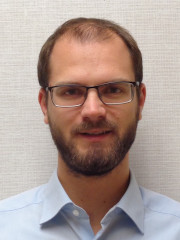
João Pedro Faria Mendonça Barreto is an Associate Professor at Instituto Superior Técnico (University of Lisbon) and a researcher in the Distributed Systems Group at INESC-ID. His work focuses on system support for persistent memory, exascale computing, transactional memory, and blockchain consensus protocols, with significant contributions to heterogeneous memory systems and NUMA optimization.
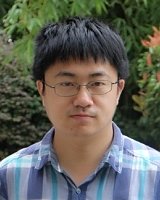
Amos H. C. Ng is a Professor at the School of Engineering Science, University of Skövde, specializing in simulation-based optimization and Industry 4.0 technologies. His research bridges production engineering with human-robot collaboration, ergonomics evaluation, and cloud-based cyber-physical systems for manufacturing efficiency. Key Affiliations: University of Skövde (School of Engineering Science), Uppsala University (Industrial Engineering and Management) Research Themes: Multi-objective optimization, Digital Twin frameworks, Human-centric production systems, Reconfigurable manufacturing, Throughput bottleneck analysis Projects: ACCURATE 4.0 (Knowledge Foundation), VF-KDO (Virtual Factories with Knowledge-Driven Optimization), EWASS (Wire Harness Assembly Optimization) His recent publications demonstrate expertise in applying evolutionary algorithms, machine learning models, and digital human modeling tools to solve complex manufacturing problems ranging from crankshaft machining to wood supply chain robustness. Current work integrates motion capture technology with DHM tools for objective ergonomic assessments in assembly stations. Amos collaborates extensively with industrial partners like Volvo Penta and academic institutions, utilizing simulation-based approaches to enhance decision-making in production systems. His methodological focus includes non-dominated sorting genetic algorithms, surrogate modeling, and parallel computing architectures for optimization tasks.
Associate Professor of Clinical Anesthesiology at Weill Cornell Medical College and Associate Attending Anesthesiologist at NewYork-Presbyterian Hospital specializing in Obstetrical Anesthesia. Board-certified by the American Board of Anesthesiology with clinical expertise in high-risk obstetric cases and pain management. Education: M.D., New York Medical College (2009) B.A., Cornell University (2002) Research focuses on eliminating racial and ethnic disparities in maternal health outcomes, optimizing labor analgesia, and improving cesarean delivery pain protocols. Current work examines policy impacts on maternal mortality following the Dobbs ruling and pandemic-related obstetric complications. Her publications reveal consistent emphasis on health equity, with 12 of 15 recent articles addressing disparities in anesthesia care, maternal outcomes, or policy impacts. Scientific Contributions: Led refinement of multimodal post-cesarean pain pathways (2024) Documented racial disparities in COVID-19 obstetric outcomes (2023) Developed protocols for cervical cerclage anesthesia (2024) Maintains active clinical practice on New York City's Upper East Side with appointments at NewYork-Presbyterian/Weill Cornell Medical Center. Collaborates across obstetrics, public health, and health policy disciplines to address systemic inequities in perinatal care.
Rachel Lyn-Salmon Frisbie is a Fixed Term Assistant Professor in the Department of Computational Mathematics, Science and Engineering at Michigan State University. Her research spans interdisciplinary domains, combining computational methods with astrophysics and educational innovation in software development. Research Focus: Astrophysics (galaxy clusters, X-ray astronomy, AGN jets) and computational education (sustainable software practices, collaborative learning). Teaching: Instructor for CMSE 201, focusing on computational modeling and data analysis. Publications: Contributions to galaxy cluster thermodynamics, AGN feedback, and pedagogical frameworks for computational education.
Hari Sundaram is a Professor in the Computer Science Department at the University of Illinois at Urbana-Champaign with affiliate appointments in the Charles H. Sandage Department of Advertising, the Institute for Communication Research, and the Center for Social & Behavioral Science. His academic journey includes positions as Associate Professor at the University of Illinois (2014-2021) and Arizona State University (2002-2014), where he also served as Associate Director of the Arts, Media and Engineering program (2012-2009). Dr. Sundaram's educational background includes a Ph.D. in Electrical Engineering from Columbia University (2002), an M.S. in Electrical Engineering from Stony Brook University (1995), and a B.Tech in Electrical Engineering from the Indian Institute of Technology, Delhi (1993). His research, conducted through the Crowd Dynamics Lab, focuses on designing computational systems that empower individuals to make better decisions. His work spans Applied Machine Learning (particularly recommender systems), Network Science (studying how platform rules induce strategic behavior), Human-Computer Interaction (developing systems to elicit truthful preferences), and Mechanism Design (creating rules to incentivize pro-social behavior). His research has significant implications for understanding fairness and discrimination in online markets. Dr. Sundaram's work has been recognized with numerous awards including multiple Best Paper Awards from ACM CSCW (2023), Best Article Award from the Journal of Interactive Advertising (2020), ACM Distinguished Member (2019), IEEE Senior Member (2019), and several IBM Faculty Awards. He has also been consistently recognized for teaching excellence, receiving the "Teacher Ranked as Excellent" award multiple times. As leader of the Crowd Dynamics Lab, Dr. Sundaram oversees research that bridges computer science with social sciences, focusing on how computational systems can enhance human decision-making while addressing fairness concerns. His work has practical applications in online marketplaces, social media platforms, and educational technologies.
Simone Lenti is an Assistant Professor (Ricercatore RTDa) at the Department of Computer, Control, and Management Engineering of Sapienza University of Rome. He is an active member of the A.WA.RE research group , which specializes in visual analytics. Lenti obtained his Ph.D. in 2021 with a dissertation on visual analytics techniques for cybersecurity. His research bridges cybersecurity , visual analytics , and human-computer interaction , focusing on: Developing computational methods for vulnerability analysis (e.g., NLP for CVE relevance, smart contract taxonomies) Designing visual tools for threat detection (e.g., attack graphs, firmware fuzzing) Enhancing interpretability in data-driven systems (e.g., partial dependence analysis, process mining) Lenti's publications (2019–2025) demonstrate a consistent focus on applying visual analytics to cybersecurity challenges , with recent expansions into bioinformatics and education. Key trends include automated vulnerability management, human-centered explainability, and scalable threat modeling. Awards: IEEE VizSec 2018 Best Paper for contributions to cybersecurity visualization. He contributes to academic infrastructure through tools like easyDeclare (declarative process modeling) and BUCEPHALUS (business-centric cybersecurity analysis), emphasizing practical applications of his research.
Prof. Dr.-Ing. Sebastian Esser serves as Group Lead for Information Management at the Chair of Computing in Civil and Building Engineering at Technical University of Munich. His research focuses on advancing Building Information Modeling (BIM) methodologies, particularly in infrastructure and railway applications. He contributes significantly to international standardization efforts including IFC-Road and IFC-Rail projects, and leads research initiatives such as RIMcomb and BauPuls360. Dr. Esser's research spans several critical areas in digital construction: Graph-based version control systems for BIM collaboration Digital twin development for infrastructure management Semantic modeling of built environments BIM-based regulation checking for railway infrastructure Interdisciplinary model coordination techniques Knowledge representation in civil engineering His work bridges theoretical computer science with practical civil engineering applications, focusing on improving data interoperability and workflow efficiency in construction projects. Analysis of his recent publications reveals a strong emphasis on graph-based approaches to BIM challenges. His research has evolved from foundational work on BIM programming interfaces to sophisticated implementations involving knowledge graphs, semantic reasoning, and digital twin architectures. Key trends include increasing integration of semantic web technologies with BIM standards, development of specialized query interfaces like GraphQL for construction data, and application of formal methods to infrastructure modeling problems. Dr. Esser actively supervises numerous bachelor's and master's theses annually, with recent topics covering graph-based entity alignment, BIM-GIS integration for flood assessment, incremental model updates, and digital twin implementations. His teaching portfolio includes courses such as Bau- und Umweltinformatik, BIM.fundamentals, BIM.infra, and Semantic Modeling of the Built World, demonstrating his commitment to educating the next generation of digital construction professionals. He is involved in multiple research initiatives including DFG FOR 5672 (The information backbone of robotized construction), SPP 2187 (Adaptive modularized constructions), and AM2PM (Additive to Predictive Manufacturing). His laboratory work spans the BIM-Lab and related computational infrastructure supporting his research in digital construction technologies.
Benedict Harder is a Researcher at the Chair of Computing in Civil and Building Engineering, Technical University of Munich, specializing in Building Information Modeling and Model-Based Systems Engineering. He contributes to the DFG SPP 2187 project on modular concrete bridges and maintains active roles in research and teaching. His educational foundation includes a 2024 Master's thesis on algorithmic design of modular precast structures and a 2021 Bachelor's thesis exploring train station design via parametric modeling. These works established his trajectory in computational civil engineering. Harder's research integrates semantic web technologies with infrastructure design, focusing on SysML-OWL interoperability, graph-based modular construction, and formal methods for BIM. His work bridges computer science formalisms with practical civil engineering challenges, particularly in bridge systems and precast structures. Publication trends reveal consistent advancement in formalizing design processes: early work centered on parametric regulation compliance (2021), evolving to SysML-based bridge representation (2024) and semantic reasoning frameworks (2025). Key themes include graph rewriting for modular design, incremental BIM updates, and MBSE applications in structural monitoring. He supervises graduate research including a 2025 Master's thesis on MBSE for bridge monitoring and teaches courses like Computer-Aided Modeling of Products and Processes. His academic activities align with TUM's BIM-Lab and research groups in Digital Twinning and Knowledge Representation.
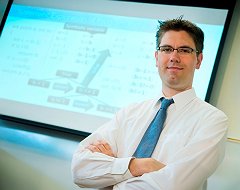
Jim Nelson is an Associate Professor and Analytics Program Coordinator at the College of Business, Southern Illinois University Carbondale (SIU), where he also directs The Pontikes Center for Advanced Analytics and Artificial Intelligence. Joining SIU in 2005 after over a decade in industry and fifteen years of academic experience, he holds a Ph.D. in Information Systems from the University of Colorado, Boulder. Nelson's educational background includes: Bachelor of Science in Computer Science from California Polytechnic State University Master's Degree in Information Systems from University of Colorado, Boulder Ph.D. in Information Systems from University of Colorado, Boulder His research specializes in conceptual modeling and cognitive science, focusing on behavioral aspects of modeling through real-world field studies. He pioneered "hunch mining" for cognitive analytics and explores object-oriented/fuzzy data models, text mining, and telecommunications. His work bridges cognitive theory with practical software engineering challenges. Nelson's publications (2005-2012) reveal a consistent focus on conceptual modeling quality, agile development documentation, and IT workforce dynamics. His studies examine human-model interactions across domains including credit unions and telecommunications policy, demonstrating how cognitive principles enhance modeling effectiveness and organizational IT strategy. Nelson's academic honors include: Dean's Summer Research Fellowship for 'Preconscious Quantum Shift Learning' (2004) Nomination for SIU College of Business Undergraduate Teacher of the Year (2005-2006) Fisher College of Business Undergraduate Teaching Award (2003) Finalist for Columbus Technology Council's TopCAT Award (2003) Nomination for Fisher College of Business Pace Setters Award (2003) His research funding comprises: Boeing Commercial Aircraft: $525,000 (2001) for "Studies of IT Effectiveness and E-Business Performance" Pontikes Center: $2,300 (2007) for "Objective Quantification of IT Job Definitions Through Latent Semantic Categorization" University of Utah: $6,000 (2000) for "The Business Value of Information Technology" As Pontikes Center Director, Nelson coordinates analytics curriculum across all business programs and liaises with the Center's Board of Advisors—comprising Midwest corporate analytics executives—to drive industry-academic collaboration in AI and advanced analytics education.
Prof. Dr. Patric Eichelberger is a Professor and Head of the Bern Movement Lab at the Bern University of Applied Sciences, School of Health Professions, Department of Physiotherapy. He leads the Foot Biomechanics and Technology Research Group, focusing on quantitative assessment of human movement and biomechanics in injury prevention and rehabilitation. His work bridges clinical practice with technological innovation, particularly in foot biomechanics and orthopedic technology applications. Dr. Eichelberger's research interests center on movement biomechanics of the lower extremity, with special emphasis on foot biomechanics, movement analysis techniques, and biomechanics applications in injury prevention and rehabilitation. His work explores how current technologies can be applied to transfer objective assessment of movement biomechanics from laboratory settings into clinical routine. Specific areas of investigation include footwear and orthoses for running-related injuries, the relationship between running biomechanics and injury, and the development of innovative measurement techniques for dynamic postural stability. His recent publication trends show a strong focus on clinical biomechanics applications, with particular emphasis on ankle and foot biomechanics, movement analysis in injury contexts, and innovative measurement techniques. His work frequently appears in journals related to biomechanics, physiotherapy, orthopedics, and sports medicine, demonstrating interdisciplinary collaboration across these fields. The research consistently applies quantitative methods to address clinically relevant questions in movement science. Prof. Eichelberger actively supervises master's thesis projects through the Bern Movement Lab and teaches across multiple health profession programs. His teaching portfolio includes Quantitative Research Methods and Applied Statistics, Movement Biomechanics, Gait Analysis, and Biomechanical Models. He is also involved in the Center Health Technologies as Co-Head and serves on the Committee for 'Human Digital Transformation' at BFH. His laboratory infrastructure includes the Bern Movement Lab, Bern Mobility Centre, and Bern Pain & Stress Lab, which provide comprehensive facilities for biomechanical assessment, movement analysis, and clinical testing. Through partnerships with institutions like Ortho-Team AG, Praxisklinik Rennbahn AG, and Bern University Hospital, his research maintains strong clinical relevance while advancing methodological approaches in movement science.
Dr. Philipp Grete is a postdoctoral research associate at the Hamburg Observatory (University of Hamburg), previously holding a Marie Skłodowska-Curie Fellowship at the same institution and a postdoctoral position at the Department of Physics & Astronomy, Michigan State University . His interdisciplinary research bridges astrophysics and computational methods , focusing on: Magnetohydrodynamic turbulence in astrophysical systems Performance-portable exascale simulation frameworks (Parthenon, AthenaPK) Cosmic ray transport mechanisms Anisotropic transport processes in weakly collisional plasmas Supercomputer-driven AGN feedback analysis He leads the XMAGNET project using DOE INCITE allocations on exascale systems and recently secured DFG funding for three years. His work has been recognized with the Postdoctoral Excellence in Research Award (MSU), SC23 Best Paper nomination, and CUG23 Best Paper Runner-up award.
Jifeng Xuan is a Professor and Deputy Dean at the School of Computer Science, Wuhan University, China. He leads the CSTAR (Centre of Software Testing, Analysis and Reliability) research group and has made significant contributions to software engineering, particularly in software testing, debugging, and analysis. Dr. Xuan completed his bachelor's degree and PhD at OSCAR Lab, School of Software, Dalian University of Technology, China, under the supervision of Prof. He Jiang. He also conducted postdoctoral research at SPIRALS Team in INRIA Lille - Nord Europe, France, working with Dr. Martin Monperrus and Prof. Lionel Seinturier. His research focuses on Software Analysis and Testing , with specific interests in software testing and debugging, software data analysis, and search-based software engineering. Dr. Xuan's work bridges theoretical foundations with practical applications, addressing real-world challenges in software quality assurance. His research has led to numerous publications in top-tier software engineering venues and has influenced both academic research and industrial practices. Dr. Xuan's recent publications demonstrate a strong focus on innovative approaches to software testing, debugging, and analysis. His work spans multiple subfields including log analysis, fuzz testing, bug triage, and automated program repair. He has made significant contributions to understanding software crashes, improving bug report quality, and developing techniques for more effective software testing and analysis. 2025 ACM SIGSOFT Distinguished Paper Award 2025 IEEE TCSE Distinguished Paper Award 2024 CCF NASAC Youth Software Innovation Award 2018 ACM SIGSOFT Distinguished Paper Award 2015 Young Talent Development Program of CAST and CCF 2015 Luojia Young Scholar Program of Wuhan University 2014 Outstanding Doctoral Dissertation of CCF Dr. Xuan actively mentors PhD and master's students through his CSTAR research group at Wuhan University. He has served on numerous program committees for major software engineering conferences including ICSE, FSE, ASE, and ISSTA. His editorial service includes roles on the editorial boards of Empirical Software Engineering (EMSE), PLOS One, and Frontiers of Computer Science. Dr. Xuan has also organized several workshops and conferences, demonstrating his leadership in the software engineering community. As founder of CSTAR (Centre of Software Testing, Analysis and Reliability), Dr. Xuan leads a research team focused on advancing the state of the art in software quality assurance. The group's work spans theoretical foundations and practical applications, with strong connections to industry challenges. CSTAR has established collaborations with both domestic and international research institutions, contributing to a vibrant research ecosystem in software engineering.
Peter Rosso is a Doctor of Philosophy researcher at the University of Bristol's School of Electrical, Electronic and Mechanical Engineering, specializing in Computer-Aided Design (CAD) systems and product development methodologies. His work bridges software engineering principles with mechanical design practices. His educational background includes a BEng in Mechanical Engineering from the University of Bristol (awarded July 19, 2017). Research focuses on addressing technical debt in CAD modeling , improving CAD editability and usability , and exploring graph database applications for design intent preservation. Key methodologies include adapting object-oriented programming principles to CAD systems and investigating variability impacts on model reusability. Current research trends show strong interdisciplinary connections between software engineering and mechanical design, particularly in applying version control concepts from software development to physical product lifecycles through digital twin paradigms. His work demonstrates significant citation impact with 15+ Scopus citations across recent publications. Scientific Recognition: No major awards or fellowships explicitly documented in source materials As Principal Investigator for the active CAD Refactoring project (since September 2018), he leads research on improving CAD model editability with collaborators including Prof. B.J. Hicks and Dr. S.C. Burgess. The project has generated notable academic engagement with 14 Mendeley readers and social media mentions. His research group maintains active collaborations across mechanical engineering and software domains, with particular emphasis on translating software engineering best practices to CAD environments and developing integrated version control systems for virtual-physical artifact management in product development cycles.
Yasutaka Kamei is a Full Professor at Kyushu University's Graduate School and Faculty of Information Science and Electrical Engineering, where he leads the POSL Lab (Process-Oriented Software Laboratory). He was promoted from Associate Professor to Full Professor in January 2024 after serving as Associate Professor from March 2015 to December 2023. He is also an InaRIS Fellow (2023-2033), receiving 10 million yen annually for his research on 'New paradigm for software development styles based on machine-human interaction.' Dr. Kamei's research focuses on Empirical Software Engineering (ESE) and Open Source Software Engineering (OSSE), with particular expertise in software reliability, testing, defect prediction, code review analysis, and mining software repositories. His work bridges empirical methods with practical software engineering challenges, emphasizing how data-driven approaches can improve software quality assurance processes. His recent publications demonstrate a strong trend toward understanding human factors in software development processes, analyzing modern code review practices, investigating technical debt, and exploring the application of large language models in software engineering tasks. His research spans both traditional software engineering challenges and emerging AI-driven approaches to software development. IPSJ/ACM Award for Early Career Contribution to Global Research (2019) Best industry paper award at ESEM 2018 Distinguished Paper Award at MSR 2014 InaRIS Fellow (2023-2033) Dr. Kamei actively serves the software engineering community as Tutorials Chair for ASE 2025 and has been a program committee member for numerous top-tier conferences including ICSE, FSE, ASE, ESEC/FSE, SANER, and MSR. He has secured multiple competitive grants from MEXT (Ministry of Education, Culture, Sports, Science and Technology) to support his research on test case generation, automated software testing for deep learning systems, technical debt engineering, and mining software repositories. His POSL Lab at Kyushu University serves as a hub for empirical software engineering research, focusing on data-driven approaches to improve software development processes and outcomes through rigorous analysis of software repositories and developer activities.
Christoph Csallner is a Professor in the Computer Science and Engineering Department at the University of Texas at Arlington (UTA). He previously worked at Google and Microsoft Research and holds a Diplom-Informatiker degree from Universität Stuttgart, Germany, and M.S. and Ph.D. degrees in Computer Science from Georgia Tech. His research has received numerous best paper awards at top software engineering conferences including ASE, ISSTA, and ISSRE. Dr. Csallner's research interests focus on software engineering, with particular expertise in program analysis, automated bug finding, software security, and mobile software development. His work bridges theoretical foundations with practical applications, developing tools that have real-world impact in improving software quality and security. Recent research has concentrated on analyzing Simulink models for cyber-physical systems, mobile app screen search and generation, and applying deep learning techniques to software testing problems. His publications show a consistent trajectory of innovation in software testing and analysis, with recent work exploring the intersection of machine learning and software engineering. The research spans from foundational program analysis techniques to practical tools addressing challenges in mobile development and cyber-physical systems. His work on Simulink model analysis has created valuable resources for the research community, including large open-source corpora of Simulink models. Scientific awards include: Best Paper Award at IEEE ISSRE 2010 ACM SIGSOFT Distinguished Paper Awards at ISSTA 2006 and 2012 Best Paper Award at PPREW 2014 ACM SIGSOFT Distinguished Paper Awards at ASE 2007 and 2015 Distinguished Referee Award at ASE 2019 Dr. Csallner has successfully advised numerous Ph.D. and Master's students who have gone on to prominent positions at companies like Meta, Google DeepMind, and Bloomberg. His research has been funded by the National Science Foundation, MathWorks, the Alzheimer's Association, and other organizations. He leads the Software Engineering Research Center (SERC) lab at UTA, where his team develops innovative tools for software analysis, testing, and development.