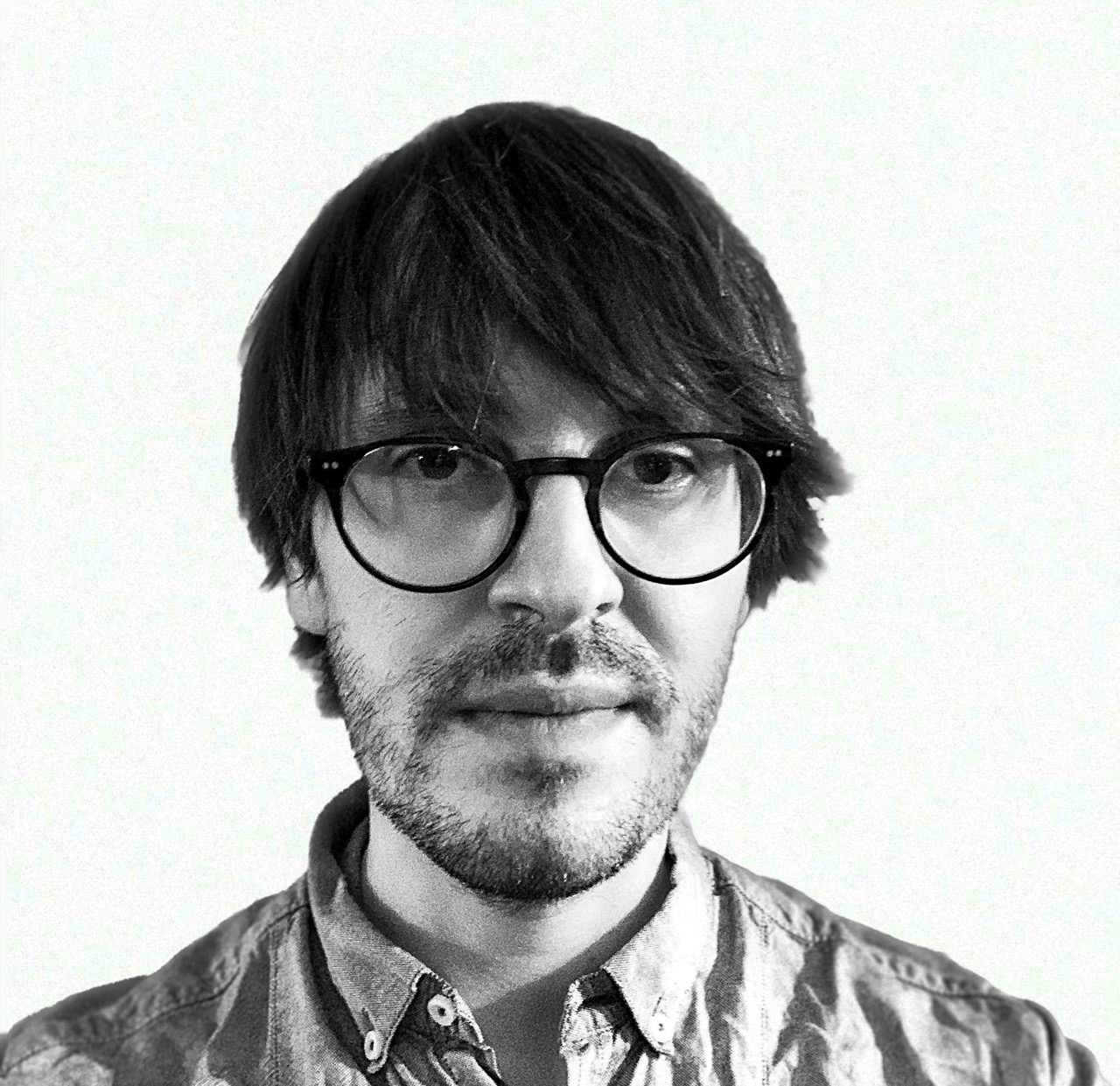
Aymeric Fromherz is a researcher at Inria Paris, focusing on formal methods for secure systems. He leads projects in Rust verification, high-assurance cryptography, and formalization of computational legal texts. Education includes a PhD from Carnegie Mellon University (co-advised by Bryan Parno and Corina Păsăreanu) and degrees from École Normale Supérieure. His research spans Rust verification (via Aeneas toolchain), verified cryptographic primitives , and computational law (through the Catala language). Recent publications address memory allocators, borrow-checking, and legal ambiguity detection. Major Scientific Awards : Distinguished Artifact Award (CAV 2025) Best Tool Paper Award (ESOP 2024) ACM SIGSAC Dissertation Award (2021) A.G. Milnes Dissertation Award (2021) He contributes to conferences like POPL, ICFP, and CPP, and participates in the Everest Project. The Prosecco Team at Inria Paris supports his research on formal methods and security.
Klaus von Gleissenthall is a tenured Assistant Professor in Computer Science at Vrije Universiteit Amsterdam, affiliated with the Theory Group and VUSec security lab. He holds a joint appointment with CWI's Computer Security group. Previously, he was a post-doc at UCSD and completed his PhD at TUM under a Microsoft Research scholarship. His research integrates programming languages , security , and systems to develop formally verified, low-overhead solutions for hardware/software correctness. Key focus areas include: Side-channel attack mitigation via leakage contracts Refinement-type systems for hardware verification Byzantine fault tolerance in distributed systems Publications demonstrate strong emphasis on hardware security (45% of recent papers), formal methods (30%), and distributed systems (25%), with consistent appearances in top-tier venues (S&P, CCS, OOPSLA). Awards & Honors: ERC Starting Grant (€1.5M, 2024) Intel Hardware Security Award Honorable Mention (2020, 2024) Distinguished Paper Awards: CCS'23, OOPSLA'23, POPL'21 He advises four PhD students and two post-docs, supported by his ERC grant. Current projects include refinement types for hardware and pre-silicon leak detection. His lab collaborates with VUSec and CWI, focusing on scalable verification tools like LLVM Blade and methodologies for constant-time execution guarantees.
Cătălin Hrițcu is a tenured faculty member and head of the Formally Verified Security group at the Max Planck Institute for Security and Privacy (MPI-SP) in Bochum, Germany. He also serves as Adjunct Professor in the Faculty of Computer Science at Ruhr University Bochum (RUB), where he is affiliated with HGI and the CASA Cluster of Excellence. His educational background includes: PhD from Saarland University in Saarbrücken, Germany Habilitation from ENS Paris Hrițcu's research focuses on developing rigorous formal techniques for security. His primary interests span three interconnected areas: Formal methods for security: secure compilation, compartmentalization, memory safety, speculative execution defenses, information flow control, and security protocols Programming-languages techniques: program verification, machine-checked proofs, dependent types, formal semantics, and property-based testing Design and verification of security-critical systems: compilation chains, reference monitors, tagged hardware architectures, and high-assurance cryptography His recent publications reveal a strong trajectory toward addressing real-world security challenges through formal methods, with increasing emphasis on hardware security aspects like speculative execution vulnerabilities and memory safety. Hrițcu has received significant scientific recognition: ERC Starting Grant on formally secure compilation Distinguished Paper Award at CSF 2025 for FSLH: Flexible Mechanized Speculative Load Hardening Distinguished Paper Award at CSF 2021 for SSProve As an advisor, Hrițcu has mentored numerous PhD students and postdoctoral researchers who have gone on to successful academic careers. His group receives substantial funding through projects like ERC SECOMP. He has co-authored volumes of the Software Foundations textbook series and actively teaches courses at RUB. Hrițcu leads the Formally Verified Security research group at MPI-SP, which includes PhD students, postdocs, and research interns working on cutting-edge problems at the intersection of programming languages and security. The group has made significant contributions to verification tools including F* and Coq, with applications in secure compilation and cryptographic verification.
Marian Lingsch-Rosenfeld is a researcher at the Department of Computer Science, Ludwig-Maximilians-Universität München (LMU Munich), affiliated with the Software and Computational Systems Lab. Based in Office Room F 012 at Oettingenstraße 67, Munich, they actively contribute to software verification research and mentor graduate students through thesis projects. Research interests focus on software verification , program analysis , and model checking , with specific expertise in predicate abstraction, constrained horn clauses, and deductive verification techniques. Their work bridges theoretical foundations with practical verification tools, particularly CPAchecker. Recent publications demonstrate significant contributions to verification witnesses, program transformations, and loop abstraction techniques. Conference participation includes active roles in ASE, ECOOP, and VMCAI as both author and committee member for artifact evaluation. As a thesis supervisor, they guide students through advanced topics including: Constrained-Horn-Clause export for CPAchecker BMC algorithm performance improvements Software Verification Witnesses extensions Deductive verifier development Compiler optimizations impact analysis Available for consultation via office hours by appointment through meet.lrz.de, with communication primarily via university email channels.
Đorđe Žikelić is an Assistant Professor of Computer Science at the School of Computing and Information Systems at Singapore Management University (SMU) in Singapore. He completed his PhD in 2023 at the Institute of Science and Technology Austria (ISTA) under Krishnendu Chatterjee and Petr Novotný, receiving both Outstanding PhD Thesis and Outstanding Scientific Achievement awards. Prior to his doctorate, he earned bachelor's and master's degrees in mathematics from the University of Cambridge. His educational background includes: PhD in Computer Science, Institute of Science and Technology Austria (ISTA), 2023 Bachelor's and Master's in Mathematics, University of Cambridge Dr. Žikelić's research focuses on advancing formal methods to ensure software and AI systems are correct, safe, and trustworthy. His work bridges theoretical aspects of formal reasoning about probabilistic systems with practical automated verification methods. His primary research interests span three interconnected areas: Program Analysis and Verification: He develops techniques for analyzing probabilistic programs, numerical programs, and efficient quantifier elimination methods, addressing fundamental challenges in verifying complex software systems. Trustworthy AI and Safe Autonomy: He creates formal verification frameworks for learning-enabled control systems and neural networks, ensuring AI operates safely in uncertain environments through methods like runtime monitoring and certificate repair. Probabilistic System Verification: He explores broader applications including bidding games on graphs and blockchain protocol analysis, extending formal methods to novel domains beyond traditional finite-state verification. His publication trajectory shows a consistent progression from theoretical foundations to practical applications, with recent work increasingly focused on integrating formal verification with machine learning. His 2024-2025 publications demonstrate growing expertise in verifying learning-based systems and developing practical tools like PolyQEnt for quantified entailment solving. His scientific achievements have been recognized with: Outstanding PhD Thesis Award at ISTA Outstanding Scientific Achievement Award at ISTA Distinguished Paper Award at FM 2024 Dr. Žikelić serves on program committees for major conferences including TACAS, PLDI, AAAI, and CAV. He actively mentors through the Programming Languages Mentoring Workshop (PLMW) at PLDI 2025. His research group at SMU focuses on developing novel algorithms for verifying correctness of programs and AI systems, with current projects spanning formal methods, artificial intelligence, and programming languages.