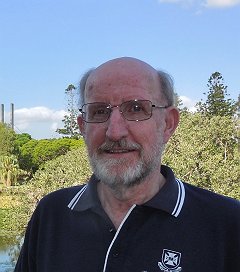
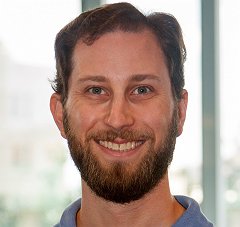
Ian J. Hayes is affiliated with The University of Queensland in Australia. His research focuses on software verification , compiler optimization , and concurrency . At POPL 2023, he contributed to the FormaliSE and CPP tracks with work on formal methods in compiler verification. Research Interests Software verification using formal logic Compiler optimization techniques Concurrency modeling and analysis Conference Contributions In 2023, Hayes presented three works: (1) a formal approach to local variables in concurrent systems using cylindric algebra; (2) a case study on differential testing of compiler optimization verification; and (3) term graph optimization verification via Isabelle/HOL. These contributions highlight his expertise in applying formal methods to compiler and concurrency challenges.
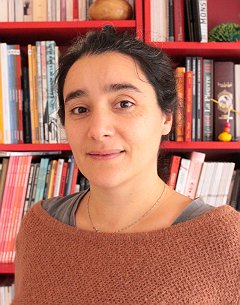
Assia Mahboubi is a tenured researcher at Inria in the Gallinette team , Nantes, France, and an endowed professor in the Algebra and Number Theory section at Vrije Universiteit Amsterdam , Netherlands. Her work bridges formal methods, type theory, and computer-aided mathematics. Research Interests: Her research centers on the formalization of mathematics in dependent type theory and the automated verification of mathematical proofs. She is particularly interested in the interplay between computer algebra and formal proofs, and in how formal representations enhance understanding of mathematical objects. She is a lead developer of the Mathematical Components libraries and a key user of the Coq proof assistant. Recent Research Trends: Her recent publications focus on diagram chasing in category theory, continuity in constructive type theory, proof transfer mechanisms (e.g., Trocq), and the formal verification of advanced mathematical results such as the irrationality of ζ(3) and the unsolvability of the quintic. These works demonstrate a consistent emphasis on foundational rigor, automation, and scalability in formal proofs. ERC Consolidator Grant: FRESCO (Fast and Reliable Symbolic Computation) Advising and Grants: Mahboubi supervises PhD students including Enzo Crance, Martin Baillon, and postdoc Matthieu Piquerez. She leads the FRESCO project funded by an ERC grant, supporting research in symbolic computation and formal verification. Team Affiliation: She is a core member of the Gallinette team at Inria, which focuses on the intersection of proofs and programs, promoting the development of reliable and verifiable software and mathematical systems.
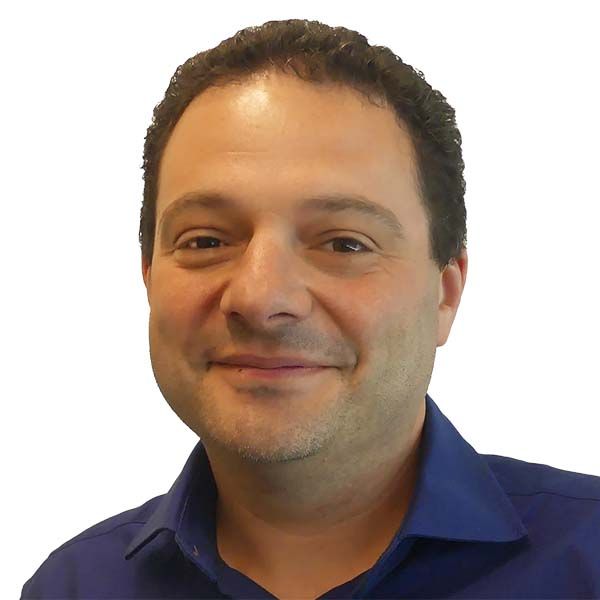
Amin Timany is an Associate Professor in the Department of Computer Science at Aarhus University, Denmark, where he conducts research in programming languages, type theory, and formal verification. He is a member of the Logic and Semantics Group and actively contributes to the development of logical relations, separation logic, and proof assistants such as Coq and Iris. He holds a PhD in Computer Science from KU Leuven (2018) and was previously a postdoctoral fellow with FWO at KU Leuven. His research focuses on mechanized semantics, program equivalence, concurrency, and distributed systems verification. He is particularly known for solving the long-standing problem of proving encapsulation in the ST monad using logical relations. His recent publications span top-tier venues including POPL, ICFP, PLDI, and CPP, with key contributions in guarded interaction trees, higher-order separation logic (e.g., Trillium), and modular verification of CRDTs and virtual machines. His work emphasizes formalization and mechanization in Coq, often within the Iris framework. He has served on numerous program committees and has chaired conferences such as CPP and sessions at CoqPL. Notably, his paper 'Modular Denotational Semantics for Effects with Guarded Interaction Trees' received a Distinguished Paper Award at POPL 2024. PhD, KU Leuven, 2018 MSc, TU Dresden, 2013 He teaches courses such as Compilation, Program Logics, and Advanced Topics in Programming Language Theory. He collaborates extensively with researchers like Lars Birkedal, Robbert Krebbers, and Derek Dreyer, and mentors students in formal methods and PL theory.
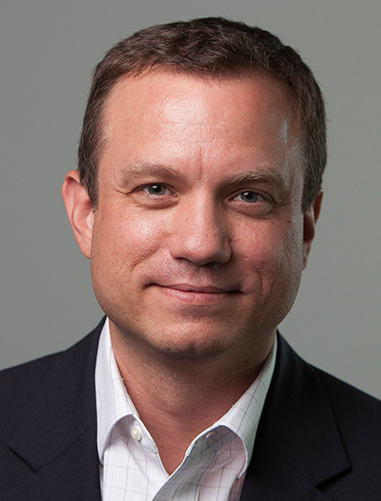
Francesco Regazzoni is a Senior Researcher at the Faculty of Informatics, Università della Svizzera italiana (USI), and affiliated with the Dalle Molle Institute for Artificial Intelligence (IDSIA USI-SUPSI). His work bridges embedded systems, cybersecurity, and artificial intelligence, with a focus on securing hardware and cyber-physical systems. Research Interests: His expertise spans embedded and cyber-physical systems security, side-channel attacks, post-quantum cryptography, hardware trojans, random number generators, and the security of AI and approximate computing. He also contributes to hardware/software co-design and operating systems security. The analysis of his recent publications reveals a consistent focus on hardware and system-level security , particularly in resource-constrained environments like IoT and embedded devices. His work integrates machine learning for attack detection and applies formal methods to ensure trust in hardware. A growing emphasis is placed on securing AI systems from physical and adversarial threats. Scientific Contributions: Over 100 peer-reviewed publications One book and one patent Extensive international collaboration (Belgium, Netherlands, USA, Switzerland, Singapore) Advising and Grants: While specific advisees and grants are not listed, his leadership in funded research projects and involvement with ALaRI and IDSIA suggest active mentorship and project coordination. His work has been supported by industry (e.g., ST Microelectronics, HP), the Swiss National Foundation, and the European Union. Labs and Teams: He is part of the Graph Machine Learning Group (GMLG) at IDSIA, which evolved from the Advanced Learning and Research Institute (ALaRI). This group focuses on graph machine learning, reinforcement learning, and dynamical systems, particularly in non-stationary environments.
Mohammed Alghazwi serves as an external researcher in the Information Systems department within the Faculty of Science and Engineering at the University of Groningen. His institutional affiliation is evidenced through his published research and university email address. His research focuses on the intersection of blockchain technology and genomic data analysis, with particular emphasis on privacy-preserving systems. Key areas include off-chain computation verification, ciphertext security, and genomic dataset management. His work bridges computer science with biomedical applications, addressing critical challenges in healthcare data privacy through cryptographic solutions. Alghazwi's publication record demonstrates specialization in systematic literature reviews and cryptographic implementations for genomics. His research outputs consistently address privacy concerns in genomic data handling, utilizing blockchain frameworks to develop secure off-chain computation methods. The fingerprint analysis of his work reveals strong connections between blockchain mechanisms and genomic data security protocols. His collaborative research approach is evident through co-authorship with multiple researchers across institutions. While no formal advising role is documented, his contributions to systematic reviews and cryptographic implementations indicate significant expertise in emerging healthcare data security paradigms.
Ed Solovey is an Associate Professor of the Practice in the Department of Electrical and Computer Engineering at Boston University. His primary appointment includes affiliations with both primary and affiliated faculty roles. He holds an M.Eng from the Massachusetts Institute of Technology. His research focuses on Software Engineering, Distributed Systems, Databases, and Scalability. Notable work includes advancements in event tracking methodologies and formal simulation techniques for composite systems. He teaches core courses such as EC 327: Introduction to Software Engineering and EC 400: Software Engineering in Practice. His publications explore practical and theoretical aspects of software systems and automation models.
Jasmin Blanchette is a Professor of Theoretical Computer Science and Theorem Proving at Ludwig-Maximilians-Universität München (LMU), where he also serves as the Dean of Studies for Computer Science since January 22, 2024. He is affiliated with the Institute for Informatics and leads the Theoretische Informatik und Theorembeweisen research unit. Additionally, he is a guest researcher in the VeriDis group at Loria, Nancy. Research Interests: His research centers on strengthening proof automation for general-purpose logics and enhancing the usability of proof assistants. He combines automatic and interactive methods, bridging human and artificial intelligence in formal verification. His work spans higher-order logic, automated and interactive theorem proving, formalization of mathematical results, and foundational mechanisms for (co)datatypes and (co)recursive functions. Key projects include Sledgehammer, Nitpick, Matryoshka, Nekoka, IsaFoL, and Lean Forward. Publication Trends: His recent publications (2023–2025) show a strong focus on higher-order automated reasoning, superposition calculus, proof automation in Isabelle/HOL, and formalization of logical and mathematical concepts. There is a consistent emphasis on verification, efficiency, and integration of SAT/SMT techniques into higher-order provers. Scientific Awards: FroCoS 2023 Best Paper Award (with Visa Nummelin and Sander Dahmen) CADE 2023 Best Paper Award for 'Verified given clause procedures' (with Qi Qiu and Sophie Tourret) IPA Dissertation Award (awarded to student Petar Vukmirović) Dutch Prize for ICT Research 2022 Advising and Grants: He supervises a large team of postdocs and PhD students at LMU and co-supervises students at other institutions. His leadership in major collaborative projects like Matryoshka indicates significant grant funding and collaborative research efforts. He is editor-in-chief of the Journal of Automated Reasoning and serves on numerous steering and program committees, reflecting strong academic leadership and visibility. Labs and Teams: He leads a research group at LMU’s Institute for Informatics, focusing on theorem proving and formal methods. He is also associated with the VeriDis group at Loria, Nancy, and collaborates widely across Europe in the automated reasoning community.
Greg Morrisett is the Jack and Rilla Neafsey Dean and Vice Provost of Cornell Tech, a graduate campus in New York City focusing on technology, business, law, and design. Previously, he served as Dean of Computing and Information Sciences at Cornell University and held the Allen B. Cutting Chair in Computer Science at Harvard University (2004–2015). He earned a B.S. from the University of Richmond and M.S./Ph.D. from Carnegie Mellon University. His research focuses on programming language technologies for secure, reliable software systems, including typed assembly language, proof-carrying code, and provably correct compilers. Notable projects include CertiCoq, GoNative, and CRASH-SAFE. He is an ACM Fellow and recipient of awards such as the Presidential Early Career Award and NSF Career Award. He has advised over 17 PhD students and mentored numerous postdocs. His work spans formal verification, cryptographic protocols, and secure systems design. Morrisett has served on editorial boards for journals like Communications of the ACM and advisory councils for NSF, DARPA, and Microsoft Research. Current research includes formal verification of cryptographic protocols with the INRIA Prosecco Team and advancing compiler correctness through projects like CertiCoq.
Amel MAMMAR is a Professor at Telecom SudParis, specializing in formal methods and software verification. Her work focuses on applying the Event-B method to model and verify critical systems such as automotive systems, railway signaling, and cloud applications. She has contributed extensively to the development of formal approaches for ensuring correctness in embedded systems, smart contracts, and security protocols. Her research integrates formal modeling with tools like SAGEMATH for hybrid systems analysis and ProB for policy validation. MAMMAR collaborates on projects involving requirements engineering, safety-critical systems, and access control mechanisms. Her key contributions include Event-B models for automotive exterior lighting systems, railway standards (ERTMS/ETCS), and cloud resource allocation. She has published widely in venues like the International Journal on Software Tools for Technology Transfer and IEEE Transactions, emphasizing formal verification techniques for safety and security. Her work bridges theoretical formal methods with practical applications in industry sectors like transportation and aerospace.
Djamal Zeghlache is a Professor at Telecom SudParis (now part of Institut Polytechnique de Paris), where he leads research in network virtualization, cloud computing, and software-defined networking. His work spans multiple domains including wireless communications, network security, and AI applications in networking systems. Affiliated with the SAMOVAR laboratory (Services and Architectures for Multimedia and Ubiquitous Access to Resources), he has established himself as a prominent researcher in network and service management. Professor Zeghlache's research interests focus on the intersection of networking and artificial intelligence, with particular emphasis on network virtualization, cloud computing, and software-defined networking. His work addresses critical challenges in network function virtualization, resource allocation, and optimization in distributed systems. In recent years, he has expanded his research to include AI-driven approaches for network management, healthcare monitoring using wireless technologies, and optical network control. His publications demonstrate a consistent trajectory from traditional networking challenges to more complex, AI-integrated solutions for modern network infrastructures. Analysis of his recent publications (2023-2025) reveals a strong trend toward integrating machine learning, particularly deep reinforcement learning and graph neural networks, into network management systems. His work spans multiple application areas including healthcare monitoring (using RF-based techniques for vital sign detection), transportation systems (bike-sharing optimization), and optical networking (disaggregated control frameworks). The interdisciplinary nature of his research connects computer networking with biomedical engineering, urban mobility, and formal methods for system verification. Professor Zeghlache has supervised numerous PhD students and collaborated extensively with researchers across Europe and internationally. His work has resulted in significant contributions to network virtualization, cloud resource management, and network security. He has been involved in multiple research projects focusing on next-generation networking technologies, including 5G, network slicing, and cloud-native network functions.
Dr. Kevin Lano is a Reader in Software Engineering at King's College London's Department of Informatics, part of the Faculty of Natural, Mathematical & Engineering Sciences. He serves as Editor of the Software Systems Modelling journal and has held roles as Principal Investigator in multiple EPSRC-funded projects. Education: PhD (Doctor of Science) in Mathematics of Vagueness and Approximate Reasoning from the University of Bristol (1989) and BSc from the University of Reading (1984). Research focuses on model-driven engineering, software sustainability, UML, and FinTech applications. Key interests include model transformations, agile methodologies, and applying AI (LLMs) to requirements engineering. His work on frameworks like AppCraft and MathOCL demonstrates expertise in mobile app development and financial modeling. Notable awards include the Best Paper Award (2022) and Highly Ranked Scholar (Lifetime) (2024) . His research spans 152 publications, with recent work on sustainable software re-engineering and LLM applications in reverse engineering. Grants/Projects: Led projects such as Financial Model Specification and Validation (EPSRC, 2024), Model Transformation Engineering and Verification Network (2016–2019), and VeriTrans (2013–2016). Current work emphasizes sustainable software practices and FinTech integration. Labs/Teams: Active in the Sustainability Hub and Finance Hub, advancing research in software sustainability and computational finance.
Claudia Schon is a Researcher at the Institute of Computer Science, Department 4, University of Koblenz-Landau. Her work focuses on automated reasoning, cognitive systems, and knowledge representation. She has contributed to projects like the Corg Project, exploring cognitive reasoning mechanisms and integrating commonsense knowledge into automated theorem provers. Her research bridges logic-based AI with human reasoning models, addressing challenges in uncertainty management, associative reasoning, and deontic logic. Key areas of research include commonsense reasoning, deductive systems, and the application of large language models to knowledge selection. She has published extensively on topics such as negation in cognitive reasoning, concept contraction in description logics, and intentional forgetting in AI systems. Her work often emphasizes interdisciplinary approaches, combining formal logic with cognitive science and philosophy. Her publications from 2019 to 2024 reflect a steady focus on advancing automated reasoning methodologies, integrating human-like cognitive processes into AI systems. Recent work explores the next generation of deduction systems and the use of word embeddings for axiom selection. She has also contributed to workshops on linguistic and cognitive approaches to dialog agents, highlighting her interest in human-AI collaboration. Despite no listed scientific awards, her contributions are recognized through active publication in top-tier conferences and journals. She is affiliated with the E-KRHyper project, developing reasoning tools for description logics. Her advising roles and grants are not explicitly documented in the provided text.
Magne Haveraaen is a Professor in the Department of Informatics at the University of Bergen, where he leads the Bergen Language Design Laboratory (BLDL). He is actively engaged in research on programming theory, formal methods, language design, and high-integrity systems. His work centers on algebraic specifications, generic programming, domain engineering, and the design of the Magnolia programming language. He has been a long-standing instructor of key courses such as INF220 (Program Specification) and INF222 (Programming Languages), and contributes to national and international academic forums. University: University of Bergen School: Faculty of Mathematics and Natural Sciences Department: Department of Informatics Academic Rank: Professor Email: magne.haveraaen@uib.no His research interests include programming language design, formal specifications, generic and mouldable programming, multicore and GPU computing, and algebraic methods in software development. He emphasizes correctness, reuse, and high-integrity software through theoretical and practical innovations. He has contributed extensively to the literature on algebraic reasoning, array programming, and domain-specific abstractions. The recent publications highlight a consistent focus on algebraic semantics, language design (especially Magnolia), array programming, and formal verification. Themes across these works include correctness by design, specification-driven development, and adapting programming models for modern architectures. His involvement in workshops like ARRAY, WGP, and CALCO underscores his leadership in programming language theory. No scientific awards are listed in the provided texts. He advises students and welcomes collaboration in programming theory, language design, and formal methods. He has led funded projects such as MoSIS and SHIP and is involved in the High Integrity Systems Forum. He organizes and participates in key conferences including NWPT, GPCE, and SCAM. He leads the Bergen Language Design Laboratory (BLDL), which focuses on experimental language design, and contributes to the SAGA initiative on scientific computing with algebraic abstractions. His work integrates theory with practical tooling and language implementation.
Sabrina Van Den Oever is a researcher at the Institute for Food Sciences, Department of Biotechnology and Food Sciences, University of Natural Resources and Life Sciences, Vienna (BOKU). She holds a Dr.nat.techn. and Dipl.-Ing. degree and is actively involved in research and teaching in food science. Research Interests: Her work centers on food chemistry and food analysis, with a strong focus on food authenticity, vitamin analysis (especially B12), milk protein characterization, and the application of ultra-high performance liquid chromatography (UHPLC) and mass spectrometry. She investigates food fraud, nutrient content in alternative foods (e.g., insects, algae), and the impact of processing and feed on dairy product quality. Recent Research Trends: Her recent publications and presentations (2017–2024) demonstrate a consistent focus on analytical challenges in food science. Key themes include the detection of pseudo-vitamin B12 in supplements, authentication of A2 milk, analysis of B-vitamins in novel foods, and monitoring the displacement of fresh milk by ESL milk in Austria. Her work bridges analytical chemistry with practical food safety and quality issues. Scientific Awards: ALVA Research Prize (2023) BOKU Young Teacher Award (2021) DER ALIMENTARIUS 2020 - Science Prize for best master's thesis in food analysis Preis des Hochschuljubiläumsfonds der Stadt Wien 2020 for research on pseudo-vitamin B12 in algae Advising and Grants: She served as a project leader for a research project on pseudo-vitamin B12 in algae, funded by the City of Vienna. She has also been a project member on other research initiatives, such as the optimization of UHPLC methods for nutrient quantification. While no formal students are listed, her role as a university assistant and awardee for teaching suggests involvement in mentoring and instruction. Labs and Teams: She is based at the Institute for Food Sciences at BOKU, located at Muthgasse 18 in Vienna. Her research is conducted within a team environment, often collaborating with Prof. Helmut Mayer and other colleagues on analytical food chemistry projects.
Michael Coblenz is an Assistant Professor in the Computer Science Department at University of California, San Diego. His research focuses on integrating user-centered design into programming language development, creating safer languages for blockchain and scientific computing. He completed his Ph.D. at Carnegie Mellon University under Jonathan Aldrich and Brad A. Myers, followed by a Basili postdoctoral fellowship at University of Maryland. Specializes in usability of programming languages Created Obsidian language for safer smart contracts Developed PLIERS methodology for iterative language design Active in Rust usability and REST API quality research His work bridges programming languages and human-computer interaction, with recent projects including Kale (safer spreadsheets) and climate change-focused programming tools. He has served on program committees for SPLASH, VL/HCC, and HATRA conferences. 2025: Graduate Consortium Co-chair at VL/HCC 2024: HATRA Organizing Chair 2023: Doctoral Symposium Chair at SPLASH