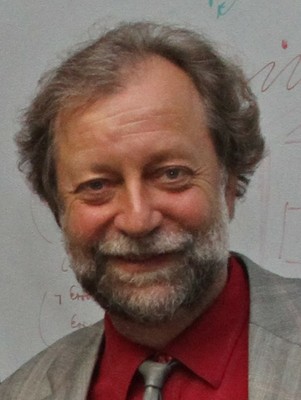
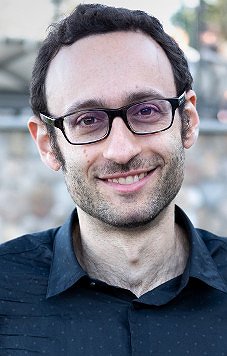
Philippa Gardner is a Professor in the Department of Computing at Imperial College London, holding a UK Research and Innovation Established Fellowship (2018–2023). She specializes in program specification, verification, and concurrent separation logics. Her Gillian platform unifies symbolic execution, verification, and testing for C and JavaScript. She was elected a Fellow of the Royal Academy of Engineering (2020) and directed the Research Institute on Verified Trustworthy Software Systems (VeTSS, 2017–2023). Her work includes foundational contributions to separation logic, concurrent program reasoning, and mechanised language specifications. Education: PhD in Computer Science from Edinburgh (1992), supervised by Gordon Plotkin. Key roles: General Chair of POPL 2024, organiser of the Isaac Newton Institute's 'Verified Software' programme (2022). Research interests span formal methods, concurrency, and tool development. Notable grants include £1.5M EPSRC Established Career Fellowship (2018–2023) and £500K Facebook Research gift (2020). Awards include Imperial’s President and Rector’s Teaching Award (2013).
Laura Fearnley is a Researcher in the Department of Computer Science at the University of York, actively contributing to the High Integrity Systems research group which specializes in developing rigorously verified safety-critical systems for high-risk domains. Her research spans Formal Methods for mathematical system specification, Safety-Critical Systems engineering for aviation/medical applications, Software Verification techniques, and Reliability Engineering principles. These disciplines focus on preventing catastrophic failures through mathematical modeling, validation protocols, and fault-tolerant design in systems where human safety depends on computational correctness. As part of the High Integrity Systems group, she engages in advancing verification methodologies for complex infrastructure including transportation control systems and medical devices, emphasizing mathematical rigor to ensure operational trustworthiness under all failure scenarios.
Adithya Murali is an Assistant Professor at the University of Wisconsin-Madison's Department of Computer Science. His research focuses on Formal Methods and Programming Languages , specifically democratizing software verification through data-driven logic learning and neuro-symbolic approaches. He holds a Ph.D. from the University of Illinois at Urbana-Champaign (UIUC), advised by P. Madhusudan Parthasarathy. Education: Ph.D. in Computer Science (UIUC, 2024), B.Tech. from BITS-Pilani (2017) Roles: Subreviewer for PLDI, CONCUR, ICALP, and LICS; Teaching Assistant for courses in Logic, Compilers, and Trustworthy AI His research interests center on reducing the cognitive burden of software verification, enabling non-experts to verify code through innovative techniques like logic learning from data. Cross-disciplinary work integrates machine learning with symbolic reasoning, exemplified in projects like the CLEVR VDP Dataset and GQA VDP Dataset for visual discrimination puzzles. Recent publications span formal verification frameworks (e.g., FO-Complete Heap Logics), neuro-symbolic systems, and automated reasoning. His work has received the ACM Europe Best Paper Award (OOPSLA 2023) . Awards: Ray Ozzie Fellowship (2018), Gold Medal (BITS-Pilani 2017), INSPIRE Scholarship (2012-2016) Grants: UIUC Travel Grants, SIGPLAN Funding He advises students across UIUC and UW-Madison, focusing on program synthesis, verification, and AI integration. Collaborations include the Formal Methods Seminar at UIUC and volunteer roles at major conferences.
Dr. Antonio Cau is a Senior Research Fellow at the School of Computer Science and Informatics, De Montfort University, United Kingdom, where he conducts research in the Software Technology Research Laboratory (STRL). He is actively engaged in formal methods for system specification and verification, with applications in security and critical systems. PhD, Christian Albrechts University of Kiel, Germany MSc, Eindhoven University of Technology, The Netherlands Dr. Cau's research centers on the application of formal methods—particularly interval temporal logic (ITL)—to verify and specify critical software systems. He has developed practical tools such as AnaTempura and FLCheck to support compositional verification. His work spans domains including access control, transactional memory, SQL injection prevention, and behavioral malware detection. The recent publications reflect a strong trend in applying formal logic to cybersecurity challenges, especially in runtime monitoring, policy enforcement, and industrial systems. These works demonstrate interdisciplinary integration of theoretical computer science with practical security solutions. Dr. Cau has served as a reviewer for top-tier journals such as Transactions on Computational Logic , Formal Methods in System Design , and Journal of Systems and Software , as well as conferences including TIME, CSL, and SEFM. He is a member of IEEE, ACM, and KIVI. He currently supervises several PhD students, acting as first supervisor for six and second supervisor for seven. He previously led the externally funded project Trust Management in Collaborative Systems (aToMICS) , supported by the Defence Technology Centre in Data and Information Fusion (MoD, QinetiQ), collaborating with institutions including Imperial College, BT, and QinetiQ. Dr. Cau teaches courses in rigorous systems and formal methods engineering, emphasizing mathematical precision in software development.
Prof. Dr. Rolf Hennicker is an Associate Professor and Academic Director at the Department of Computer Science, Ludwig-Maximilians-Universität München (LMU Munich). He leads the Software and Computational Systems Lab, focusing on formal methods, component-based software engineering, and environmental simulation systems. His research emphasizes system specifications, concurrency, and dynamic logics for verifying complex systems. He actively supervises academic activities, including lectures, seminars, and diploma theses. As project leader of GLOWA-Danube and RAJA , he develops decision support systems and authorization frameworks. Collaborations include the École Normale Supérieure de Cachan (France) on ensemble modeling and verification. His work spans theoretical contributions to formal methods and practical applications in distributed systems, environmental modeling, and autonomous computing. Recent projects involve ensemble architectures and Helena frameworks for autonomic cloud systems.
Stephan Merz is a Professor at the University of Lorraine, affiliated with Inria Nancy - Grand Est and the LORIA research laboratory. His work focuses on formal methods for the specification and verification of distributed systems, with a particular emphasis on the TLA+ specification language developed by Leslie Lamport. Merz has established himself as a leading expert in formal verification through decades of research and numerous collaborations with prominent figures in the field. Merz's research interests encompass several interconnected areas within theoretical and applied computer science: Formal specification languages and their theoretical foundations Distributed algorithms and fault-tolerant systems Model checking and theorem proving techniques Verification of consensus algorithms and synchronization protocols Security policy verification in modern network architectures His recent publications reveal a consistent research trajectory advancing both the theoretical underpinnings and practical applications of formal methods. The 2021-2023 publications demonstrate particular focus on extending PlusCal (a pseudo-algorithm language for TLA+), developing automatic verification techniques for distributed algorithms like the Bakery algorithm, and tackling synchronization challenges in dynamic networks. His award-winning work on synchronization modulo k highlights the practical significance of his theoretical contributions. Merz has received notable recognition for his research, including a best paper award at the 23rd International Symposium on Stabilization, Safety, and Security of Distributed Systems (SSS 2021) for his work on synchronization in dynamic networks. This award underscores the impact and innovation of his research within the distributed systems community. Throughout his career, Merz has collaborated extensively with researchers across institutions, co-authoring papers with Leslie Lamport and other leading figures in formal methods. His work on the TLA+ Proof System (TLAPS) has been particularly influential, bridging the gap between theoretical formal methods and practical verification tools. He has also contributed significantly to verifying real-world protocols like Pastry (a distributed hash table implementation). Merz is actively involved with the LORIA research laboratory, a joint unit of INRIA, CNRS, and the University of Lorraine, where he contributes to advancing research in formal methods and their application to critical systems. His work continues to influence both academic research and industrial applications of formal verification techniques.
Davide Ancona is an Associate Professor at the University of Genoa, Italy, in the Department of Computer Science, Bioengineering, Robotics, and Systems Engineering (DIBRIS). He holds key governance roles: Member of the School Council, School of Mathematical, Physical and Natural Sciences Member of the Department Board, DIBRIS His teaching portfolio spans Internet of Things, Healthcare IoT, Wearable Devices, Programming Languages, and Pervasive Computing across Computer Science and Bioengineering degree programs. His research concentrates on: Formal Methods and Programming Languages (specializing in corecursive streams and type systems) Runtime Verification for software correctness and multi-agent systems Internet of Things applications in healthcare contexts His work bridges theoretical foundations with practical verification tools for critical systems. Analysis of his 2023-2024 publications reveals: Foundational advances in corecursive stream equivalence and expressivity Novel applications of logic programming to runtime monitoring Techniques for verifying mutable object behavior in Java Extensions to robotic multi-agent frameworks like JaCaMo These contributions demonstrate a cohesive trajectory from theoretical programming language research to real-world IoT and healthcare validation systems.
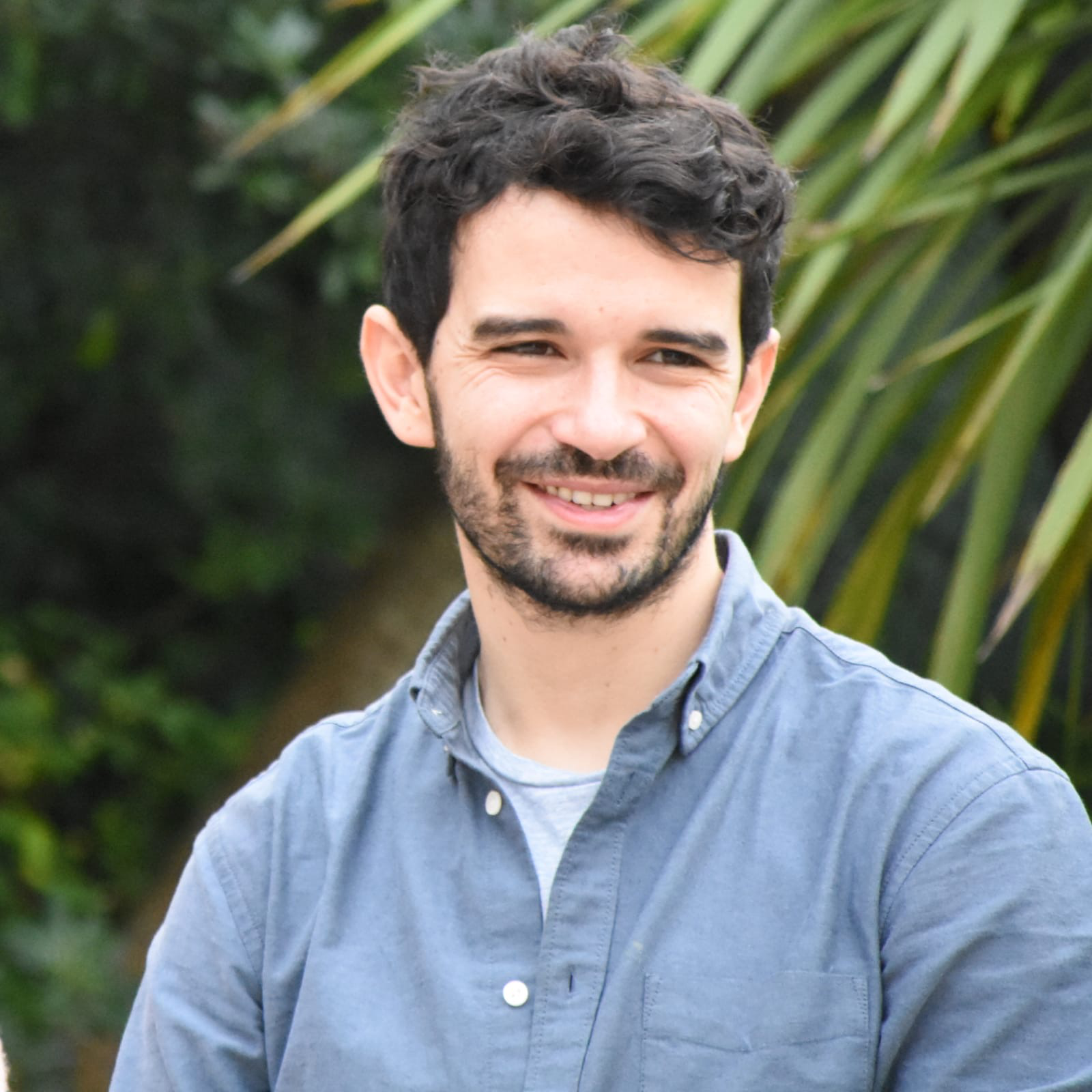
Welcome to my home page. I am an Assistant Professor at the Department of Computer Science and Engineering, Instituto Superior Técnico, University of Lisbon, and a researcher at INESC-ID's SAT group. My work focuses on embedding formal methods into software development, particularly for JavaScript programs. PhD in Computer Science, University of Nice Sophia Antipolis (2014) MSc in Information Systems and Computer Engineering, Instituto Superior Técnico (2008) My research spans JavaScript verification, symbolic execution, and separation logic. I developed JaVerT, the first separation-logic-based tool for JavaScript analysis, used by Amazon to verify the AWS Encryption SDK and recognized with a Facebook Research Award. Recent publications highlight trends in symbolic execution, JavaScript security, and WebAssembly analysis. Key projects include Gillian (multi-language symbolic execution platform), Rexstepper (regular expression debugger), and Wasmati (WebAssembly vulnerability scanner). Facebook Research Award Supervised students include PhD researcher Gabriela Cunha Sampaio and MSc students Pedro Lopes, Carolina Costa, and others. Current teaching subjects: Analysis and Synthesis of Algorithms, Object-Oriented Programming, Software Security. Affiliated with the SAT group at INESC-ID and the Verified Trustworthy Software Specification group at Imperial College London.
Douglas Wikström is a Lecturer in Theoretical Computer Science at the Royal Institute of Technology (KTH), specifically within the School of Electrical Engineering and Computer Science. He is based at Lindstedtsvägen 5, Floor 5, Stockholm, with contact information including phone +46 8 790 81 38 and email dog@kth.se. Dr. Wikström specializes in cryptography and theoretical computer science, with a strong focus on electronic voting systems, security protocols, and mix-net technologies. His research spans zero-knowledge proofs, verifiable computation, and cryptographic protocol design. His work demonstrates significant contributions to the theoretical foundations of secure voting systems and privacy-preserving technologies. His recent publications reveal a continued emphasis on cryptographic verification techniques, security analysis of voting protocols, and efficient implementations of cryptographic primitives. The research trajectory shows consistent contributions to both theoretical aspects of cryptography and practical implementations of secure systems. As an educator, Dr. Wikström teaches several advanced courses including Algorithms, Data Structures and Complexity (DD2350), Advanced Algorithms (DD2440), Fundamentals of Cryptography (DD2448), and Applied Cryptography (DD2520), where he serves as course coordinator, teacher, and examiner. His teaching portfolio demonstrates a strong commitment to both theoretical foundations and practical applications of computer science.
Rob Dickerson is an Assistant Professor of Computer Science at Augustana, specializing in programming languages and formal methods with a focus on practical software engineering applications. His research bridges theoretical principles and real-world implementation challenges. His primary research interests include relational verification , e-graph applications , and modular program logic . He develops techniques for aligning programs, inferring library specifications through data-driven methods, and verifying relational properties across multiple executions. Current projects include KestRel for program alignment and RHLE for relational ∀∃ properties. Key contributions span publications at premier venues including OOPSLA, APLAS, and PLDI workshops. His work on Elrond received a Distinguished Artifact Award at OOPSLA 2021. Notable publications examine relational verification (2025), e-graph-based alignment (2025), and modular verification of relational properties (2022). Distinguished Artifact Award (Elrond, OOPSLA 2021) Dickerson maintains active industry connections through prior work at Square and participates in academic service through venues like the PurPL seminar at Purdue. Outside academia, he engages in épée fencing and amateur piano/violin performance.
Jenna DiVincenzo is an Assistant Professor in the Elmore Family School of Electrical and Computer Engineering at Purdue University, where she conducts research at the intersection of programming languages, software engineering, and formal methods. Her work focuses on making verification techniques more usable and scalable for developers. Dr. DiVincenzo earned her PhD in Software Engineering from Carnegie Mellon University in December 2023, where she was co-advised by Dr. Jonathan Aldrich and Dr. Joshua Sunshine. Her dissertation focused on gradual verification technology for recursive heap data structures. She also holds a BS in Mathematics and Computer Science from Youngstown State University. Her primary research area is gradual verification, which seamlessly combines static (compile time) and dynamic (run time) verification techniques to support incremental specification and verification of code. She takes a holistic approach to research, exploring new techniques through mathematical formalizations, user studies, and tool development. Her current projects include gradual verification for Rust, proof synthesis and repair for gradual verifiers, educational impact of gradual verification, evaluating gradual verifiers' soundness, and gradual program analysis. Analysis of her recent publications reveals a strong focus on practical verification techniques that balance developer productivity with software assurance. Her work consistently bridges theoretical foundations with practical implementation, often incorporating empirical evaluation through user studies and performance measurements. She has made significant contributions to understanding how to make verification more incremental and accessible to developers. Google PhD Fellow NSF GRFP Fellow 2022 Rising Star in EECS Dr. DiVincenzo is actively mentoring PhD students in her research group, with recent student achievements including Craig Liu winning first place in the undergraduate category of the SPLASH'24 SRC and Conrad Zimmerman receiving an NSF GRFP award. She previously interned at IBM Research, MIT Lincoln Laboratory, and contributed to language designs for Penrose and Obsidian. Her research has been supported by various grants, though specific current grants aren't detailed in the provided text. Her lab focuses on building practical verification tools, with projects including Gradual C0 (a gradual verifier for recursive heap data structures) and developing gradual verification techniques for Rust. She collaborates with researchers across institutions, including Dr. Lin Tan at Purdue on LLM applications for verification.
Xinyu Feng is a Professor at the Department of Computer Science and Technology , Nanjing University , and collaborates with Huawei . His work focuses on programming languages and formal methods , particularly concurrent system software verification , separation logic , and certified compilation . His research has produced influential contributions in verifying low-level system software with hardware interrupts, preemptive threads, and concurrent data structures. Notable publications include work on progress guarantees for concurrent objects modular verification of synchronization primitives parameterized memory models . In professional activities, he has served on program committees for major conferences like PLDI'21 , POPL'18 , and CAV'16 . He received a Distinguished Paper Award at PLDI'19 .
Adam Chlipala is a Professor at the Massachusetts Institute of Technology working at the intersection of programming languages, formal methods, and computer systems. His research focuses on building practical verified systems with end-to-end machine-checked proofs, particularly using the Coq proof assistant. His educational background includes a Computer Science undergraduate degree from Carnegie Mellon University (2003) and a PhD in Computer Science from the University of California, Berkeley (2007). Following a postdoctoral position at Harvard University through 2011, he joined MIT as faculty. Chlipala's research spans multiple domains with strong emphasis on dependent types , verified compilation , and hardware-software co-verification . His work consistently bridges theoretical foundations with practical implementation, as evidenced by his development of the Ur/Web programming language and his focus on creating clean-slate hardware-software stacks with formal guarantees. Key research thrusts include cryptographic constant-time verification, side-channel security, and verified tensor compilation. His recent publications (2020-2025) reveal a clear trajectory toward increasingly complex verified systems, with growing emphasis on hardware-software integration, cryptographic implementations, and performance-critical applications. The work consistently leverages Coq for machine-checked proofs while addressing real-world constraints like timing channels and hardware interfaces. Chlipala is the author of the influential textbook Certified Programming with Dependent Types , which serves as a primary educational resource for Coq at numerous institutions worldwide. His professional activities include significant service to the PL community through program committees for major conferences including PLDI, POPL, ICFP, and CPP. He leads research initiatives connecting hardware and software verification, most notably through the DeepSpec project which aims to build fully verified computing stacks. His current work focuses on practical applications of dependent types for business applications through Ur/Web and verified cryptographic implementations.
Minki Cho is a Research Fellow in the Department of Computer Science and Engineering at Seoul National University, South Korea. Having completed their Ph.D. in August 2023 with a thesis titled "Simplifying Reasoning under Weak Memory Concurrency," they continue active research while maintaining institutional affiliation. Cho's educational background includes: Sep. 2017 - Aug. 2023: Ph.D. Computer Science and Engineering, Seoul National University Mar. 2014 - Feb. 2017: B.S. Computer Science and Engineering, B.S. Philosophy of Mathematics and Logics (double major), Seoul National University Mar. 2011 - Feb. 2014: Seoul Science High School Cho's research focuses on Verified Compilation , Relaxed Memory Concurrency , and Program Logic , bridging theoretical foundations with practical applications in programming language design and verification. Their work addresses fundamental challenges in weak memory models, compiler optimizations, and formal verification frameworks, with particular emphasis on developing rigorous semantic models that enable practical compiler optimizations while maintaining program correctness. Cho's publication record demonstrates consistent contributions to top-tier venues including PLDI, POPL, and OOPSLA from 2020-2025, showing evolution from foundational work on relaxed memory concurrency toward more comprehensive verification frameworks supporting complex language features like integer-pointer casting and liveness properties. Recognition for Cho's work includes: PhD Dissertation Award, Department of Computer Science and Engineering, Seoul National University (2023) Gold medal in University Students Contest of Mathematics, Korean Mathematical Society (2014) Prior to completing their Ph.D., Cho gained teaching experience as a TA for: Computational Civilization (2020 Spring) Programming Languages (2019 Fall) Principles and Practices of Software Development (2019 Spring/2018 Spring) Principles of Programming (2018 Fall)
Clément Pit-Claudel is an assistant professor at École Polytechnique Fédérale de Lausanne (EPFL) in the School of Computer and Communication Sciences, Department of Computer Science. He leads the SYSTEMF lab which he founded in January 2023. Prior to joining EPFL, he was a PhD candidate at MIT with Adam Chlipala and subsequently worked as a senior applied scientist at Amazon AWS. His academic journey began at École Polytechnique in France, followed by doctoral studies at MIT. Dr. Pit-Claudel's research focuses on programming languages, compilers, and formal verification, with broader interests spanning systems engineering, hardware design languages, security, performance engineering, databases, and type theory. His work centers around three main axes: extensible compilation (teaching compilers domain-specific optimization tricks), hardware design languages and verification, and tooling for proof assistants. He has developed several influential systems including Elk (a linear-time engine for JavaScript regexes), Warblre (a Coq translation of JS regex specification), Fiat (a library for correct-by-construction refinement), Narcissus (for verified binary encoders/decoders), F2F (a program extraction framework), Rupicola (a compiler-construction toolkit), Kôika (a rule-based hardware design language), Cuttlesim (a fast hardware simulator), and Alectryon (a literate programming system for Coq). His publications span top venues including PLDI, POPL, ICFP, ASPLOS, and SLE, with recent work focusing on verified JavaScript regular expressions, foundational integration verification of cryptographic servers, and relational compilation techniques. His research aims to build small, fast, and completely verified components for critical systems through a combination of machine-checked proofs, hardware-software co-design, low-level compiler engineering, and new tools for interactive theorem proving. His notable awards include the Distinguished Artifact award at SLE 2020 for 'Untangling Mechanized Proofs,' the William A. Martin Memorial Thesis Award from MIT in 2016, and the Frederick C. Hennie III Teaching Award from MIT in 2016. He has served on program committees for numerous conferences including PLDI, POPL, ICFP, and SPLASH, and has organized workshops such as the Coq Workshop and Proof Systems. As an educator, he teaches 'Software Construction' (undergraduate level, ~400 students) and 'Interactive Theorem Proving' (graduate level) at EPFL. His teaching philosophy emphasizes hands-on learning, continuous assessment through oral examinations, and designing assignments that lead students to build concrete artifacts they can be proud of. His approach is informed by hundreds of hours of in-class instruction in Europe and the US, resulting in stellar student reviews and multiple teaching awards.