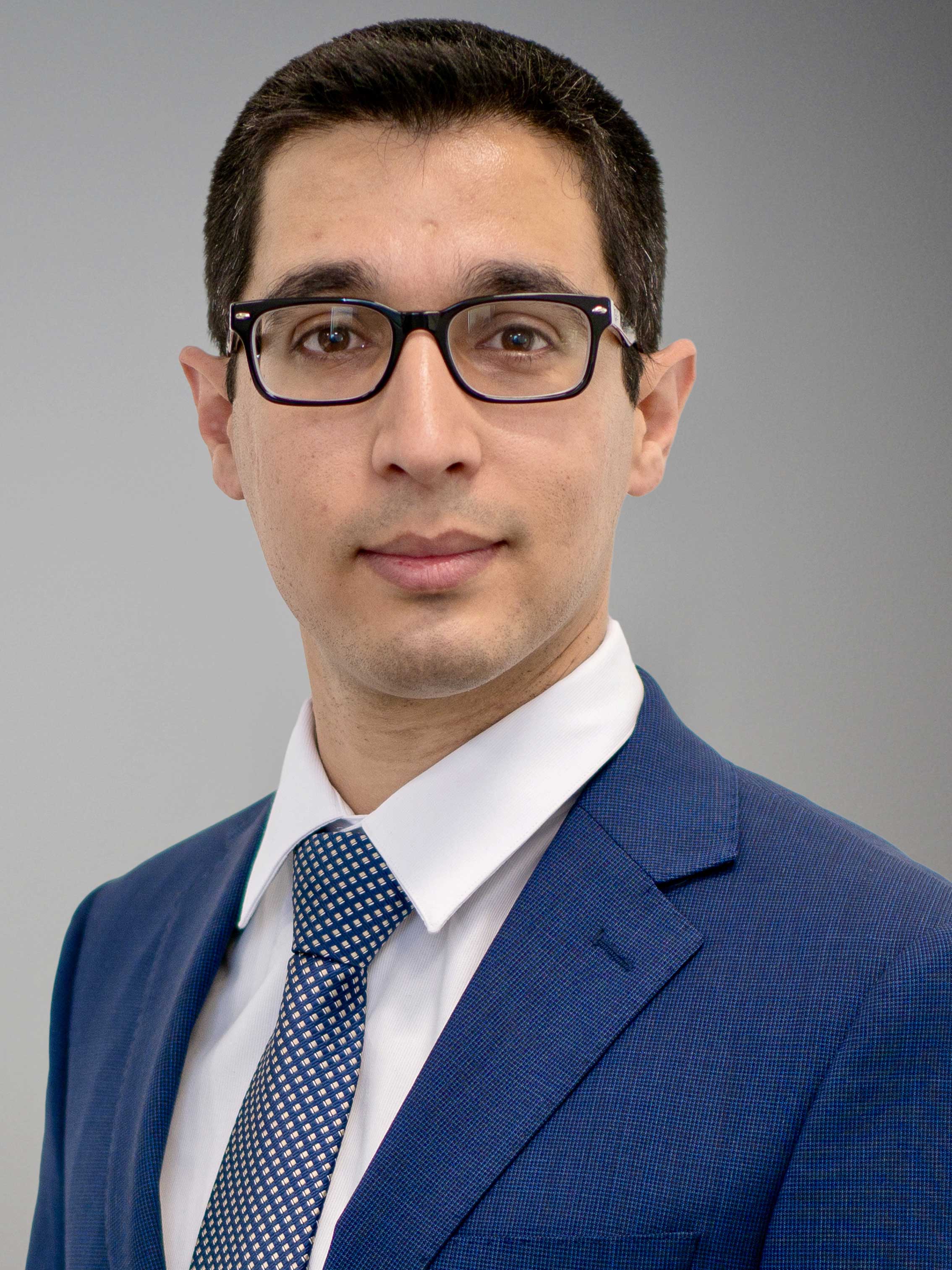
Jing Deng is the Associate Dean of the College of Arts and Sciences and Bank of America Distinguished Professor in the Department of Computer Science at the University of North Carolina at Greensboro (UNCG). He previously served as Head of the Computer Science Department (2019–2024). Educated at Cornell University (Ph.D., 2002) and Tsinghua University (M.E. and B.E., 1997/1994), his expertise spans wireless networks, network security, and online social networks. His research focuses on federated learning, UAV-assisted networks, and secure communication protocols. Notable awards include the ACM SIGSAC Test-of-Time Award (2013) and IARIA WEB Conference Best Paper Award (2015). He has authored over 100 publications, including recent work on accelerating large language models on resource-constrained UAVs and federated learning in edge computing. His work appears in top venues like IEEE INFOCOM, ICC, and Transactions on Mobile Computing. He has advised numerous graduate students and served on editorial boards for IEEE Transactions. Labs/Teams: Active in the UNCG Computer Science research group, focusing on network security and distributed systems. Collaborates with industry and academia on 5G, IoT, and edge computing initiatives.
Prof. Halid Žigić is a faculty member at the European University in Brčko District (BiH), affiliated with the Technical Faculty's Electrical Engineering and Information Technology Department. He holds the rank of Professor and specializes in telecommunications, intelligent transportation systems, and signal processing. His teaching includes courses like Electrical Engineering and Multimedia Systems, as evidenced by exam records from 2025. Research interests span transportation optimization, ICT applications in logistics, and environmental monitoring via satellite technology. Notable projects include electronic toll systems and climate change mitigation strategies through geospatial data analysis. He has authored over 20 technical publications focusing on engineering and applied technology solutions.
Hannes Frey is Professor and Head of the Computer Networks Research Group at the University of Koblenz and Landau. His research focuses on the controllability of complex dynamically networked systems including sensor networks, mobile autonomous robot teams, and connected vehicles. The group investigates fundamental theoretical questions and system-level practical issues, with emphasis on transferring theoretical results into practice through prototype implementations. Research interests include: Connectivity and percolation in wireless networked systems Local topology control under graph structure assumptions Cooperative distributed control for wirelessly networked mobile robots Reliable ultra-low latency communication for autonomous platforms Software Defined Networking for IoT systems The group maintains the UniKoRN laboratory for practical research in wireless communication and mobile distributed robotics, supporting research internships and student projects.
Ziwei Huang is an Assistant Professor at Southeast University's School of Information Science and Engineering, Department of Communication Engineering. With a prolific publication record from 2019-2025, Huang has established expertise in wireless communications, particularly in 5G/6G channel modeling, UAV communications, and vehicular networks. Recent work demonstrates a strategic expansion into AI/ML applications, computer vision, and large language models, showing interdisciplinary research growth. Huang's research interests focus on wireless communications channel modeling with particular emphasis on non-stationary characteristics, spatial consistency, and trajectory modeling for next-generation communication systems. Key areas include UAV communications , vehicular networks , intelligent sensing-communication integration , and multi-modal data fusion . Recent work has expanded into fundus image processing , text-to-image synthesis , and hallucination mitigation in vision-language models , demonstrating a strategic expansion into AI applications while maintaining core expertise in communications. The publication trends reveal a clear evolution from traditional wireless channel modeling (2019-2021) toward more integrated sensing-communication systems (2022-2023), with a significant pivot toward AI/ML applications in 2024-2025. Huang's work spans both theoretical channel modeling and practical implementation, with increasing emphasis on cross-disciplinary applications. The research shows strong collaboration patterns with Xiang Cheng and Lu Bai, suggesting membership in a well-established research group at Southeast University. Huang has contributed to numerous high-impact publications in IEEE journals including IEEE Transactions on Wireless Communications, IEEE Transactions on Vehicular Technology, and IEEE Communications Surveys & Tutorials, as well as top conferences like AAAI and ACL. The research demonstrates consistent funding support through collaborative projects focused on next-generation wireless communication systems. The work spans multiple laboratories and research teams, including wireless communications research groups at Southeast University, collaborations with medical imaging researchers for fundus analysis, and partnerships with AI research teams working on vision-language models. Recent publications suggest active participation in interdisciplinary research initiatives bridging communications engineering with artificial intelligence.
Ali Nauman is a researcher affiliated with Yeungnam University in Gyeongsan, South Korea, specializing in wireless communications, machine learning, and IoT systems. His work focuses on cutting-edge technologies for 5G/6G networks, UAVs, and biomedical applications. Co-author in 61+ academic publications (2019–2025) Collaborates extensively with scholars from King Saud University, University of Turku, and Yeungnam University Research Interests span Wireless Sensor Networks , Machine Learning for Communications , and AI-Driven Network Optimization . Key areas include electromagnetic emission management, underwater network topologies, and secure biometric systems. Recent publications highlight AI integration in 6G networks , UAV communication frameworks , and privacy-preserving biometrics . His work bridges theoretical advancements with practical implementations in smart cities and industrial IoT.
João Nuno Matos is affiliated with the Institute of Telecommunications at the University of Aveiro, Portugal. His research focuses on antenna design, RF engineering, and wireless communication systems. He has consistently published in top-tier journals and conferences since 1998, with notable contributions to reconfigurable antennas, 3D printing in antenna manufacturing, and vehicular communication systems. His work bridges theoretical advancements with practical applications in telecommunications, IoT, and satellite technology. Key contributions include innovations in polarization control, antenna miniaturization, and integration of thin-film technologies.
Edward Jones is a prominent academic researcher with a focus on interdisciplinary studies at the intersection of computer vision, biomedical engineering, and automotive systems. His work spans multiple domains including image processing, sensor optimization for autonomous vehicles, and medical imaging technologies. Collaborating extensively with institutions and researchers in Ireland and beyond, he has contributed to advancing perception systems in challenging environments and improving safety-critical applications in transportation. Research Interests: Automotive perception systems, medical imaging, low-light imaging, wireless communication for vehicular networks, and algorithm optimization for embedded systems. Key Contributions: Published over 90 papers in top-tier journals/conferences such as IEEE Transactions on Intelligent Transportation Systems, Sensors, and IEEE Access. Notable work includes low-light image enhancement algorithms, cyclist safety analysis via driver gaze tracking, and optimizing camera exposure for automotive applications. Recent trends in his publications emphasize cross-disciplinary solutions for autonomous systems, leveraging advances in computer vision and signal processing to address real-world challenges like adverse weather conditions and sensor degradation. Recipient of grants for projects involving automotive networks, breast cancer detection via microwave imaging, and distributed speech recognition systems.
Xiaojun Zhang is a Professor actively contributing to cloud computing, blockchain technology, data security, and educational technology. His work spans cybersecurity, signal processing, and wireless systems. Key Research Areas: Privacy-preserving data aggregation, machine learning for biomedical imaging, blockchain-based integrity auditing, and educational metacognition studies. Recent Article Trends (2022–2025): Focus on secure federated learning, data denoising algorithms, and blockchain applications in smart grids, healthcare, and education. Collaborations include institutions in China and international researchers.
Ehsan Hashemi is a Research Assistant Professor in the Department of Mechanical and Mechatronics Engineering at the University of Waterloo. His work bridges cyber-physical systems , distributed optimization , and predictive control , with applications in automotive systems and robotics. He earned his Doctorate from the University of Waterloo (2017), Master of Science from AmirKabir University of Technology (2005), and Bachelor of Science from Iran University of Science and Technology (2002). Research interests include fault tolerance , dynamical systems , and multibody dynamics , with a focus on enhancing system reliability through advanced control methodologies. His recent publications address topics such as adaptive control for musculoskeletal models, energy-harvesting technologies for automotive systems, and cooperative fault diagnosis in vehicles. Ehsan has taught ME 780 - Special Topics in Mechatronics in 2021. He is currently accepting graduate student applications, requiring a completed online submission for admission. No scientific awards were explicitly mentioned in the provided text.
Roua Youssef is an Assistant Professor at the University of Brest, France, and a member of the SI3 (Security, Intelligence and Integrity of Information) research team within Lab-STICC (CNRS UMR 6285). Her work focuses on advanced signal processing techniques for telecommunications, including UWB systems, compressive sampling, full-duplex communications, and drone detection. Education: She earned a Telecommunications Engineering diploma from the Lebanese University (Beirut, Lebanon) and an M.Sc. in Electronic Engineering from IMT Atlantique (Brest, France) in 2007. She completed her Ph.D. in Telecommunications at IMT Atlantique in 2011. Research interests include radar-based sensing for Industry 4.0 applications, robust heart rate detection in vehicular environments, and interference cancellation in full-duplex systems. Her work combines machine learning with UWB radar and compressive sensing to address challenges in indoor localization, collision avoidance, and non-cooperative signal detection. Recent contributions include experimental validation of IR-UWB radar systems for people detection in industrial settings and digital self-interference cancellation techniques for full-duplex transceivers. She has also explored low-complexity drone control signal detection and optimal Fourier coefficient selection for UWB channel estimation. Labs/Teams: Active member of Lab-STICC’s SI3 team, focusing on secure and intelligent information systems. Her research integrates hardware prototyping (e.g., USRP platforms) with algorithm development for real-world wireless communication problems.
Kaan Bür is a Senior Lecturer at the Department of Electrical and Information Technology, Lund University Faculty of Engineering. He is affiliated with the Secure and Networked Systems group and the LTH Profile Area: AI and Digitalization. His research focuses on wireless networks, vehicular ad hoc networks, and 5G communication systems. He has contributed to projects like IMMINENCE and AI@Edge, funded by Vinnova and Horizon 2020. Bür collaborates with institutions globally and has authored 29 research outputs including peer-reviewed articles and conference papers. His work addresses challenges in network scheduling, traffic safety, and IoT integration. Key collaborations include ELLIIT (Linköping-Lund initiative on IT and mobile communication) and projects such as H-OPTO (optical network deployment) and FU5ION (5G service capable networks). His research interests span Quality of Service optimization, multicast routing, and network security. Projects like A5GARD target 5G service assurance in residential domains, reflecting his expertise in next-gen network management. Notable contributions include studies on LTE downlink scheduling for vehicular communications and interference-aware scheduling in sensor networks. His work has been published in journals like Wireless Communications & Mobile Computing and presented at IEEE conferences. Bür maintains active roles in academic initiatives and policy discussions, as evidenced by his 2025 debate article on university governance.
Mahdi Imani is an Assistant Professor in the Department of Electrical and Computer Engineering at Northeastern University, with a courtesy appointment in the Khoury College of Computer Sciences. He holds a PhD in Electrical Engineering from Texas A&M University (2019), and MSc and BSc degrees in Electrical and Mechanical Engineering from the University of Tehran (2014 and 2012, respectively). His research focuses on machine learning, control theory, Bayesian statistics, and signal processing, with applications in gene regulatory networks, network security, and human-AI collaboration. Dr. Imani has received prestigious awards, including the NIH NIBIB Trailblazer Award (2022), the NSF CISE Career Award (2020), and the Outstanding Associate Editor Award from IEEE Transactions on Neural Networks and Learning Systems (2023 and 2024). He serves as an Associate Editor for IEEE Transactions on Neural Networks and Learning Systems and IEEE Transactions on Vehicular Technology, and is a Senior Member of IEEE. His research projects include DARPA-funded work on verified probabilistic reasoning in mixed reality systems, NSF-funded statistical inference methods, and ONR-funded studies on human-AI team synergy. He leads a lab focused on developing scalable Bayesian methods and reinforcement learning techniques for complex systems.
Dr. Aydin Azizi is a Senior Lecturer at Oxford Brookes University's School of Engineering, Computing and Mathematics. He holds a PhD in Mechanical Engineering and is certified as an instructor for the Siemens Mechatronic Certification Program. His expertise spans Control & Automation, Artificial Intelligence, and Simulation Techniques. Dr. Azizi has received notable awards, including Oman's National Research Award (2017) and the Royal Academy of Engineering's 'Exceptional Talent' recognition (2019). His research focuses on optimizing complex systems, with applications in robotics, mechatronics, and Industry 4.0. He has secured grants such as the 'Computer-Based Analysis of the Stochastic Stability of Mechanic Structures' (ORC/2015–2019) and led the 'Automated Guided Vehicle for Agricultural Purposes' project (2017–2018). Dr. Azizi also teaches as a visiting professor in Control & Automation at the German University of Technology in Oman and Simulation Techniques at Cyprus International University. He leads the Autonomous Driving and Intelligent Transport research group at Oxford Brookes.
Dr. Ali Jamali is a Research Fellow at RMIT University's School of Engineering. He previously held roles as a visiting professor at Kyungpook National University (South Korea) and associate professor at the University of Guilan (Iran). His research focuses on artificial intelligence, optimization, evolutionary algorithms, control systems, and energy systems. He has supervised multiple doctoral and master's students and teaches courses in complex systems modeling, dynamics, automatic control, and advanced vibration. His teaching interests include soft computing, game theory, and evolutionary algorithms, reflecting his expertise in interdisciplinary applications of AI and optimization. He has contributed to projects like enhancing EV charging infrastructure and intelligent transportation systems. His work often integrates computational intelligence with real-world problems in engineering and automation. Dr. Jamali has published extensively in journals such as IEEE Transactions on Vehicular Technology and Engineering Applications of Artificial Intelligence , addressing topics like adaptive control systems, energy management, and machine learning applications in engineering. He currently collaborates on research projects at RMIT and maintains international academic connections.
Dr Hoang Nga Nguyen is an Associate Professor in Cyber Security at Swansea University, UK. Affiliated with the School of Mathematics and Computer Science, his work focuses on cybersecurity for automotive and autonomous systems, formal verification, and embedded systems security. He leads research projects funded by EPSRC, RSSB, InnovateUK, and Digital Catapult, including AutoCHERI (2022-2024) and QRNG for CAV . Current research agenda: Cybersecurity in automotive systems Specialization: Model-based and simulation-based verification techniques Projects: VRBMAS, ACID, Ditto, Secure CAV His research contributions span: Cybersecurity frameworks for automotive systems Formal methods in railway safety Embedded systems threat landscapes Resource-bounded agent logic Android app collusion detection Scientific Awards and honors: None explicitly mentioned in the provided text. As a supervisor , he guides PhD students in topics like: Addressing Automotive User-Centric Privacy and Security Model-Based Security Testing Approaches for Hardware Security He also teaches modules including Software Security Engineering (CS-239) and Embedded Systems Security (CSCM68, CSCM868) . Nguyen works at the Computational Foundry on Bay Campus, Swansea, contributing to the Verification & Validation of Autonomous Systems network and the European Technical Working Group on Formal Methods in Railway Control.