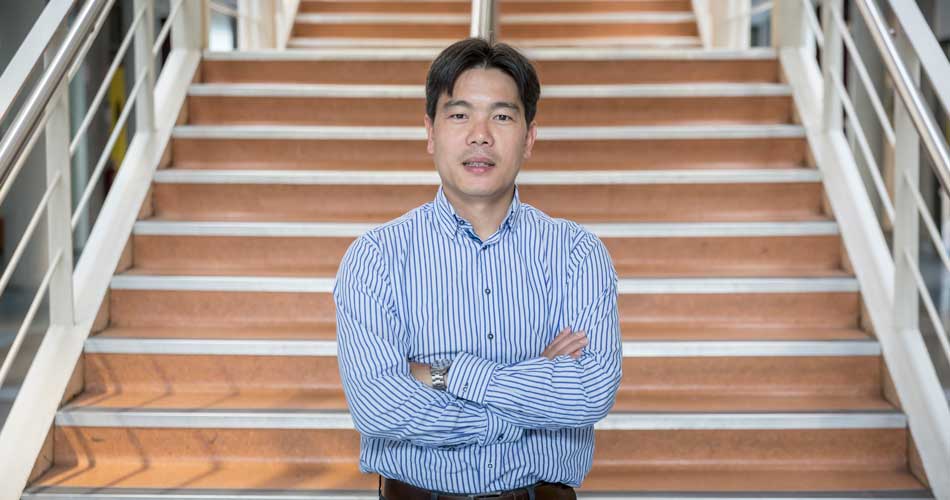
Dr. Le-Nam Tran is a researcher at the UCD School of Electrical & Electronic Engineering , University College Dublin. His work focuses on optimizing the last hop of 5G/6G wireless networks through mathematical programming, with emphasis on energy efficiency, interference management, and security against eavesdropping. Develops low-cost, low-complexity transmission techniques Projects supported by Science Foundation Ireland Career Development Award Author of over 80 peer-reviewed publications Research Keywords: Wireless Communications Network Security Signal Processing Energy-Efficient Systems Beamforming Optimization Interference Mitigation
Dr. Md Noor-A-Rahim is an Assistant Professor (Lecturer-Above the Bar) at the School of Computer Science and Information Technology, University College Cork (Ireland). He previously served as a Senior Researcher and Marie Curie Fellow at the same institution. His academic journey includes a PhD from the University of South Australia (2015) and the prestigious Michael Miller Medal for his outstanding thesis on wireless communication systems. His research focuses on Intelligent Transportation Systems, Machine Learning, IoT, Wireless Networks, and DNA-based data storage. He has published extensively on topics like 6G-V2X systems, time-sensitive networking, and error characterization in DNA storage. His work integrates cutting-edge technologies such as intelligent reflecting surfaces (IRS), federated learning, and ultra-reliable low-latency communication (URLLC). Research Interests : Dr. Rahim's research bridges theoretical advancements and real-world applications in vehicular networks, smart manufacturing, and next-generation communication systems. He explores challenges in autonomous driving, edge computing, and bio-constrained data storage. His contributions include novel coding schemes for anytime transmission and frameworks for mitigating big vehicle shadowing in V2X communications. Key Publications : His recent work includes a comprehensive survey on wireless TSN (2025), analysis of 6G-V2X systems (2022), and breakthrough studies on DNA data storage error modeling (2023). These publications highlight his expertise in both foundational research and industry-relevant solutions. Awards : Recipient of the Michael Miller Medal (2015) for doctoral research excellence. Grants & Labs : While specific grants are not listed in the text, his research portfolio suggests involvement in collaborative projects with industry partners and funding bodies. He leads interdisciplinary efforts in smart manufacturing and vehicular communication systems.
Siobhán Clarke is a Professor at the School of Computer Science and Statistics, Trinity College Dublin, specializing in software systems for smart urban environments . Her work addresses dynamic software adaptation in large-scale, mobile IoT ecosystems , with a focus on QoS optimization and collaborative agent models . Director, Enable : National SFI IoT Research Programme Director, Future Cities Centre for Smart & Sustainable Cities Co-Lead, ADVANCE : SFI Centre for Advanced Networks Co-PI, CONNECT (Future Networks) and Lero (Software Research) Her research spans smart city infrastructure , edge computing , and multi-agent coordination , informed by 15+ years of publications on service-oriented architectures , QoS prediction , and self-adaptive systems . Key project contributions include DIVERSIFY (2016) and TRANSFoRm (2015). Scientific awards include election to the Royal Irish Academy (2023) and a Best Student Paper at IEEE ICWS 2011. She has supervised 20+ PhD/MSc students, including Fan Li (2020: SLA Negotiation Systems), Gary White (2020: IoT QoS Forecasting), and Andrei Palade (2019: Stigmergic Optimization).
Hadi Tabatabaee is an Assistant Professor at the School of Computer Science, University College Dublin (UCD), leading the Sustainable Orchestration in Computing Continuum (SOC² Lab). His research focuses on sustainable orchestration of services across edge-cloud environments, emphasizing energy efficiency, carbon-aware systems, and AI-driven applications like large language models (LLMs). Key roles include Associate Editor for IEEE Access and Management Committee member of COST Action CA22151 (CYPHER). He holds a PhD in Computer Engineering from the University of Isfahan and has held academic positions at Maynooth University, Shahid Beheshti University, and Trinity College Dublin's CONNECT research program. Education: PhD (Computer Engineering, University of Isfahan), MSc (Computer Engineering), with a research visit at TU Delft (2010-2011). Certifications include Epigeum's Research Leadership and Research Integrity courses. Languages: Persian (fluent), Azerbaijani (spoken). Research Interests: Edge-cloud continuum, dynamic service placement, distributed AI workloads, LLM optimization, and sustainable resource management. Recent work includes zero-trust vehicular networks, parallel algorithms for recommender systems, and geospatial event processing. Awards: None explicitly listed, though his contributions include over 20 journal articles in IEEE/Elsevier/Springer venues. Professional Activities: IEEE Senior Member, TPC member for IEEE conferences, and reviewer for multiple journals. Teaching: Coordinates/teaches Cloud Computing, Computer Networks, and Principles of Computer Organization at UCD.
Viet Quoc Pham is an Assistant Professor in Networks and Distributed Systems at Trinity College Dublin's School of Computer Science and Statistics and a CONNECT Associate Investigator. His research integrates convex optimization, game theory, and machine learning to advance edge computing, wireless AI, and next-generation networking for 6G, IoT, and blockchain applications. Education: PhD in Telecommunications Engineering, Inje University, Korea (2017) His work centers on three interconnected thrusts: (1) Computing innovations in edge AI, aerial computing, and edge of things; (2) Intelligence through wireless AI and federated learning; and (3) Networking advancements in 6G, IoT, intelligent surfaces, metaverse, and blockchain. This cross-disciplinary approach optimizes cloud-edge systems and wireless infrastructure using mathematical frameworks. Recent publications (2021-2024) demonstrate applied impact across security (smart speaker intrusion detection), environmental science (satellite carbon monitoring), healthcare (mental disorder detection), and e-commerce (basket recommendation systems), reflecting his methodology of adapting AI/optimization to domain-specific challenges. Scientific Awards: Korea NRF funding for outstanding young researchers (2019-2024) Best Ph.D. Dissertation Award, Inje University (2017) Top Reviewer Award, IEEE Transactions on Vehicular Technology (2020) Golden Globe Award, Vietnam Ministry of Science (2021) IEEE ATC Best Paper Award (2022) Enterprise Ireland Coordination Support Award (2023) Dr. Pham secured competitive funding including Korea NRF and Enterprise Ireland grants. As Editor for Journal of Network and Computer Applications and Scientific Reports, and Lead/Guest Editor for IEEE Internet of Things Journal, IEEE Transactions on Consumer Electronics, and Computer Communications, he shapes discourse in networking and computer systems through rigorous peer review and special issues. Through the CONNECT Centre, he collaborates with industry partners on Ireland's national research initiative for future networks, focusing on practical implementations of 6G architectures, IoT security protocols, and edge AI frameworks for real-world deployment.
John Murphy is a Full Professor at the School of Computer Science, University College Dublin. He holds academic positions as an IBM Faculty Fellow and Fellow of multiple professional organizations, including the Institution of Engineering and Technology and Engineers Ireland. His research focuses on Performance Engineering, Telecommunication Systems, and Middleware, with a strong emphasis on cloud computing, distributed systems, and network optimization. Education: B.E. (Electronic Engineering) from University College Dublin (1988), M.Sc. (Electrical Engineering) from California Institute of Technology (1990), and Ph.D. (Electronic Engineering) from Dublin City University (1996). Research Interests: His work spans Performance Engineering, Telecommunication Systems, Enterprise Software, Middleware, Mobile Networks, and Queueing Theory. Notable contributions include energy-efficient cloud resource management and network-aware scheduling in data centers. Publications: Over 200 peer-reviewed articles, including recent work on intelligent computing in IoT, energy-efficient VM mapping, and load balancing in wireless networks. His research trends emphasize cloud optimization, distributed systems performance, and smart city infrastructure. Awards: Recognitions include the Real Time Correlation Engine award and prestigious fellowships. He has supervised 24 PhD students and secured over €9.5M in research grants. Teaching: Coordinates modules on Computer Networking, Databases, and Programming. He advocates for foundational learning to foster adaptability in students. Grants: Includes Horizon 2020 projects like NEO-QE and PRTLI grants for SimSci. Collaborates with industry partners for applied research. Labs: Leads the Performance Engineering Laboratory, advancing research in distributed systems and network performance.
Dr. Avishek Nag is an Assistant Professor in the School of Computer Science at University College Dublin, Ireland. His work focuses on network optimization, quantum communication, machine learning, and 6G technologies. He holds a PhD from the University of California, Davis, and has over 100 publications in journals, conferences, and book chapters. Education: B.E. (Honours) in Computer Science from Jadavpur University (2005) M.Tech. from Indian Institute of Technology Kharagpur (2007) Ph.D. in Computer Science from University of California, Davis (2012) Research Interests: Quantum Networks & Key Distribution (QKD) 6G Networks & Explainable AI IoT Security & Edge Computing Optical Network Optimization Machine Learning for Biometrics & Healthcare Recent Publications: Recent work includes hybrid noise modeling for quantum satellite communication, XAI-driven network slicing for 6G, and ECG-based biometric systems. His research bridges theoretical advancements with practical implementations in telecommunications and cybersecurity. Awards: 2008 IEEE Advanced Networks Best Paper Award Grants & Leadership: Outreach Lead for IEEE UK & Ireland Blockchain Group Coordinated Cross-Atlantic EU-US testbed experiments Teaching: Teaches Distributed Systems, Wireless Communications, and Software Engineering at UCD.
Dr. Xiaojun Wang is an Associate Professor at the School of Electronic Engineering, Dublin City University (DCU). He holds a BEng and MEng from Beijing University of Posts and Telecommunications (BUPT) and a PhD from Staffordshire University (UK). His research focuses on energy-efficient networking, hardware acceleration for packet classification/deep inspection, and cryptography algorithms. He has been instrumental in establishing China-Ireland academic collaborations, including the China-Ireland International Conference on Information and Communications Technologies (CIICT), and coordinated a successful joint Telecommunications Engineering program with Wuhan University (2006–2012). He is also a member of DCU's Entwine Research Centre. Key roles include Head of China Affairs at DCU (2002–2007), contributing to institutional partnerships. His technical work spans green energy solutions for networks, quantum computing protocols, and hardware-software co-design for cryptographic systems. He has led projects on edge computing security, vehicular communication optimization, and blockchain-based trust frameworks. Educations: BEng in Computer & Communications, BUPT (1984) MEng in Computer Applications, BUPT (1987) PhD in Engineering, Staffordshire University (1992) Affiliations: Member of Entwine Research Centre Former Head of China Affairs, DCU His recent publications emphasize secure edge computing, quantum steganography, and 5G resource orchestration. He has pioneered energy-efficient router architectures and contributed to standards for vehicular networks and blockchain trust systems.
Farhan Javed is a CONNECT PhD researcher at University College Cork (UCC), affiliated with the School of Computer Science & IT. His research is jointly supervised by Dr. Aisling O’Driscoll, Prof. Cormac J. Sreenan, and Dr. Andrew Hines, focusing on advanced wireless communication systems and AI-driven network customization. BSc in Telecommunication Engineering (UET Taxila, 2015) MSc in Electrical Engineering (Comsats University, 2022) Internships: Pakistan Telecommunication Company Limited (2015), Pakistan Broadcasting Corporation (2016) Work Experience: Research Analyst at Elegant Digital Signage (2018–2023) His research spans wireless networks, vehicular ad hoc networks (VANETs), edge computing, 6G network management, IoT, and energy-efficient systems, with applications in smart cities and healthcare. He contributes to dependable network design and tele-operated driving technologies. Farhan’s publications highlight interdisciplinary work, including a 2023 paper on edge computing in 6G vehicular networks and a 2016 study on organotin bioactivities. His expertise bridges telecommunications, machine learning, and computational biology.
Paolo Palmieri serves as a Lecturer in Cyber Security at University College Cork (UCC) and a Funded Investigator at CONNECT, the SFI Research Centre for Future Networks and Communications. He additionally holds roles as a Funded Investigator in Insight (SFI Research Centre for Data Analytics) and Supervisor for the SFI Centres for Research Training (ADVANCE and AI), while maintaining an External Affiliate position at the University of Bologna's Smart City Lab. His academic foundation includes a PhD in Cryptography from Université catholique de Louvain (UCLouvain), Belgium (2013), preceded by lecturing positions at Bournemouth and Cranfield Universities in the UK and postdoctoral research at Delft University of Technology in the Netherlands prior to joining UCC in 2017. Dr. Palmieri's research centers on cryptographic protocols for privacy and security , with pioneering contributions in secure multi-party computation on communication delays, homomorphic encryption, and location privacy systems. His location privacy protocols are actively deployed in satellite monitoring and smart transportation applications. He chairs two major international workshops: Malicious Software and Hardware in Internet of Things (Mal-IoT) and the Location Privacy Workshop (LPW) , demonstrating leadership in specialized cryptographic communities. Analysis of his 2024-2025 publications reveals a strong trajectory toward practical cryptographic implementations addressing critical infrastructure needs. Key thematic clusters include quantum-safe authentication for industrial control systems, health data privacy frameworks (particularly for ECG data), blockchain security for e-auctions and healthcare systems, and VANET security protocols. His work consistently bridges theoretical cryptography with real-world challenges, notably through empirical evaluations of differential privacy effectiveness and privacy-preserving machine learning architectures. As a research leader, he serves as Principal Investigator and co-Investigator for multiple projects funded by Science Foundation Ireland (SFI), Enterprise Ireland, and the Disruptive Technologies Innovation Fund. His supervision extends through the SFI Centres for Research Training (ADVANCE and AI), where he mentors next-generation cybersecurity researchers in data analytics and artificial intelligence applications. He maintains extensive international collaborations spanning over 10 countries, anchored by his External Affiliate role at the University of Bologna's Smart City Lab. His work within CONNECT and Insight research centres positions him at the forefront of Ireland's national cybersecurity research infrastructure, with growing influence in European health data privacy initiatives through the European Health Data Space framework.
Professor Mohand Tahar Kechadi is a Full Professor at the School of Computer Science, University College Dublin (UCD), where he has been since 1999. His research focuses on Data Mining, Distributed Systems, Digital Forensics, and Healthcare Informatics. He has published over 260 articles and serves on editorial boards of journals like Future Generation Computer Systems and IST Transactions . He also holds roles in academic leadership, including directing UCD’s international BSc program in Sri Lanka and previously serving as Head of Teaching and Learning (2007–2012). Education: PhD and DEA (MSc) in Computer Science from the University of Lille, France; HDip in University Teaching & Learning from UCD. Research: Explores challenges in big data processing, including distributed data mining, cloud computing, and privacy-preserving techniques. Recent work addresses applications in healthcare (e.g., wearable devices, medical imaging), agriculture (precision farming), and cybersecurity (blockchain, IoT trust management). Grants: Led a grant on evaluating sugar-sweetened beverage taxes (2018–2019). Collaborates on projects like BigO, a public health decision support system for pediatric obesity. Teaching: Coordinates modules in Cloud Computing, Data Mining, and Distributed Systems. Developed a code-free cloud service for biomedical signal processing and advocates inclusive assessment strategies. Awards: None explicitly stated. Recognized for contributions to interdisciplinary research and education.
Dr. Sobia Jangsher is an Assistant Professor at the School of Electronic Engineering, Dublin City University (DCU), Ireland. Prior to joining DCU, she held academic roles at the Institute of Space Technology, Islamabad (2015–2021) and Khalifa University, Abu Dhabi (2021–2023). She earned her PhD in Optimization for Wireless Communication from the University of Hong Kong (2015) and an MS in Communication Systems from NUST (2007). Her research focuses on resource allocation/optimization , AI/ML for wireless communication , and intelligent reflective surfaces (IRS) . She has authored over 50 peer-reviewed articles in top-tier journals and conferences, with recent work emphasizing IRS-assisted UAV networks, federated learning for vehicular edge computing, and secure communication protocols. Key research trends in her articles include: Integration of AI/ML techniques for dynamic resource allocation in mobile networks Optimization of IRS elements for UAV swarm communications Secure key generation using physical layer techniques Energy-efficient frameworks in heterogeneous networks (HetNets) Her teaching interests span Wireless Communication, Machine Learning, and Stochastic Processes . No awards or grants are explicitly listed in the provided materials.
Kapal Dev is an Assistant Professor at the Department of Computer Science, Munster Technological University (MTU), Ireland, where he has been serving since 2021. He also holds the position of Funded Investigator at CONNECT, Trinity College Dublin, one of Europe's top research centers funded by Science Foundation Ireland. Previously, he was a Postdoctoral Research Fellow with the CONNECT Centre at Trinity College Dublin and worked as a 5G Junior Consultant and Engineer at Altran Italia S.p.A. in Milan, Italy. Dr. Dev's research focuses on Wireless Networks, Security and Privacy, Agentic AI, and Industry 5.0 applications. His work centers on designing effective and efficient communication network protocols for 5G and 6G networks, with emphasis on computational complexity reduction and energy efficiency improvements. His research also addresses data and model privacy preservation, which is increasingly critical with the proliferation of AI services. His recent publications demonstrate strong trends in next-generation wireless networks, particularly 6G systems, UAV communications, federated learning, quantum networking, and AI security applications. His work bridges theoretical innovation with practical implementations for industry 4.0/5.0 applications. Dr. Dev has received numerous prestigious awards including the IEEE ComSoc EMEA Outstanding Young Researcher 2022, The Tom Brazil Excellence in Research Award 2023, and membership in the Global Young Academy (GYA) 2024 (top 45 researchers worldwide). He has also been recognized with the Best workshop Paper award at IEEE WCNC 2024 and the IEEE CTSoc CCN TC Outstanding Service Award 2024. IEEE ComSoc EMEA Outstanding Young Researcher 2022 The Tom Brazil Excellence in Research Award 2023 Global Young Academy (GYA) 2024 membership Best workshop Paper award at IEEE WCNC 2024 IEEE CTSoc CCN TC Outstanding Service Award 2024 2022 Irish Research Council Research Ally Prize Dr. Dev has supervised more than 25 master's and PhD students and secured over €1.5 million in research funding as Principal Investigator for Horizon Europe MSCA Staff exchange, Erasmus+ International Credit Mobility, and Capacity Building for Higher Education projects. He actively contributes to standardization efforts as a working group member of P1954 and serves as founding chair of the IEEE ComSoc special interest group on Industrial Communication Networks. His editorial service spans numerous high-impact journals including IEEE Transactions on Communications and Nature Scientific Reports.
Ivana Dusparic is an Ussher Associate Professor in Future Cities and the Internet of Things at the School of Computer Science and Statistics , Trinity College Dublin . She is also a Funded Investigator at the CONNECT SFI Research Centre and co-director of the Center for Doctoral Training in Artificial Intelligence . Previously, she held positions as Assistant Professor at University College Dublin (2015-2016) and Research Fellow at Trinity (2010-2015). Education: PhD in Computer Science, Trinity College Dublin (2010) Research Interests: Her research centers on leveraging Artificial Intelligence —particularly machine learning , intelligent agents , and multi-agent systems —to autonomously optimize large-scale heterogeneous infrastructures. A primary focus is on smart cities applications, including sustainable urban mobility, intelligent transport systems, autonomous car sharing, and smart energy grids. Research Projects & Labs: Surpass : Investigates how shared autonomous cars will transform cities, using Dublin as a case study. LAMP : Applies agent learning to smart grid management for renewable energy optimization. REALT : Real-time adaptive learning-based traffic control using multi-agent reinforcement learning. ClearWay : Optimizes travel-time reliability in mixed traffic using deep reinforcement learning and swarm intelligence. SATORI : Focuses on reinforcement learning in smart cities and moving networks. Grants & Funding: She has secured multiple high-profile grants, including Science Foundation Ireland (SFI) funding for CONNECT , ENABLE , and ClearWay . She has also launched initiatives like the IBM-TCD Pre-doc Fellowship in AI and the CRT in AI, offering 30+ funded PhD positions across Irish universities. Teaching & Supervision: She has taught courses such as Artificial Intelligence , Advanced Data Structures and Algorithms , and Computer Architecture at both Trinity and UCD. She actively supervises PhD students, postdocs, and interns across multiple projects.
Dr. Hadi Tabatabaee Malazi is an Assistant Professor at the University of College Dublin (UCD), leading the Sustainable Orchestration in Computing Continuum (SOC² Lab). He holds an Orcid identifier (0000-0002-2960-6896) and has extensive academic experience across institutions like Maynooth University, Shahid Beheshti University, and Trinity College Dublin. His research focuses on sustainable computing, edge-cloud continuum orchestration, AI/ML deployment (e.g., LLMs), and energy efficiency. He is a Senior Member of IEEE, serves as an Associate Editor for IEEE Access, and chairs the COST Action CA22151 (CYPHER) on decarbonizing energy-intensive industries. Education: PhD (2012): University of Isfahan (Computer Engineering) MSc (prior to 2012): University of Isfahan Research Visit (2010-2011): Delft University of Technology Research Interests: Sustainable edge-cloud systems, AI-driven workload optimization, carbon-aware resource management, distributed LLMs, and IoT interoperability. Key contributions include over 20 journal articles in IEEE, Elsevier, and Springer venues, with topics ranging from vehicular network security to smart city event processing. Professional Activities: Committee member of COST Action CA22151, IEEE Access Associate Editor, and Technical Program Committee member for IEEE conferences. Authored certifications on research leadership and research integrity from Epigeum. Labs/Teams: SOC² Lab (UCD), leading projects on edge-cloud sustainability and AI application deployment.