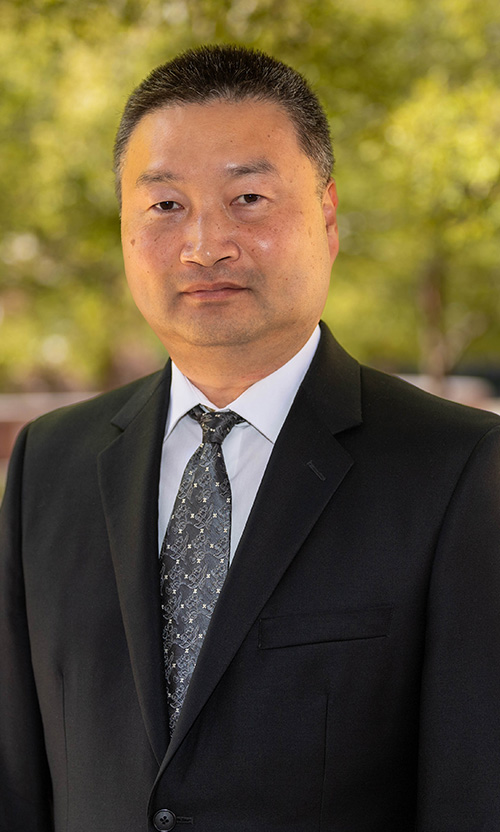
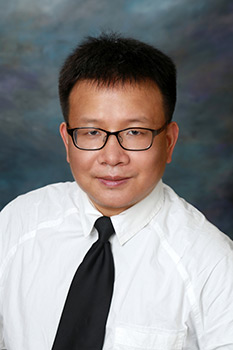
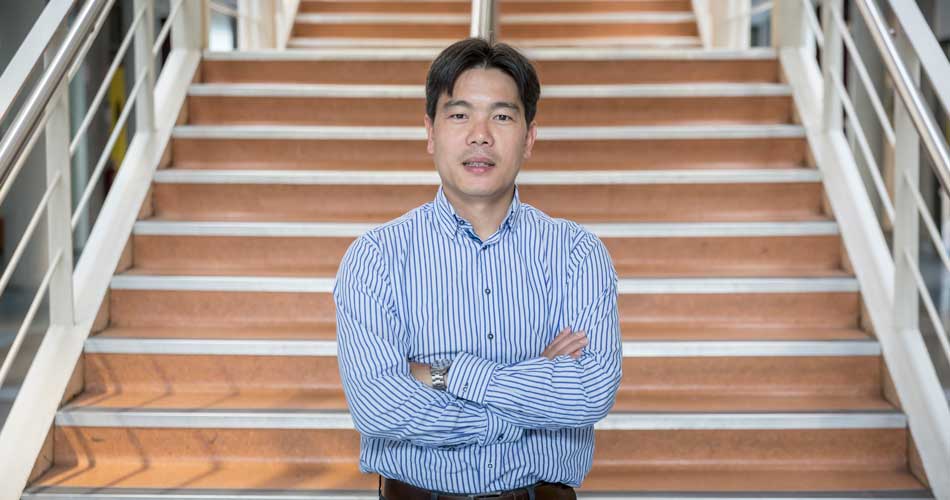
Lingxi Li is a Professor at the Elmore Family School of Electrical and Computer Engineering at Purdue University's Indianapolis campus. His research focuses on modeling complex systems, connected and automated vehicles, intelligent transportation systems, and parallel intelligence. He holds a Ph.D. from the University of Illinois at Urbana-Champaign (2008), and master's and bachelor's degrees from the Chinese Academy of Sciences (2003) and Tsinghua University (2000). Research Interests: Dr. Li's work bridges control systems, transportation engineering, and AI, with emphasis on human-machine interaction, autonomous vehicle systems, and scenario-based traffic modeling. His projects include developing frameworks for Industry 5.0 collaboration, enhancing traffic flow prediction through parallel learning, and advancing safety in micro-mobility systems like e-scooters. Recent Publications: Over 15+ articles (2023-2025) explore topics such as game-theoretic vehicle interaction modeling, vision-language systems for autonomous driving, and acoustic SLAM technologies. These studies reflect a focus on real-world validation and system integration in smart transportation. Labs & Initiatives: Leads research in autonomous mining systems and scenario engineering for intelligent vehicles, leveraging parallel intelligence concepts. Collaborates on projects like ParallelWorkforce (Industry 5.0 frameworks) and SceNDD++ (naturalistic driving datasets).
Dr. Tao Shu is an Associate Professor in the Department of Computer Science and Software Engineering at Auburn University. His research focuses on cybersecurity, wireless communication systems, federated learning, and IoT applications. He holds a Ph.D. in Electrical and Computer Engineering from the University of Arizona, and M.S. and B.S. degrees in Electronic Engineering from South China University of Technology. Dr. Shu's work emphasizes secure communication and distributed learning systems, including projects funded by the NSF such as a novel method to prevent cyberattacks on Low Earth Orbit (LEO) satellites. He has been recognized for academic excellence, including being named to Auburn University’s 2020 promotion and tenure list. His research interests span cybersecurity mechanisms for autonomous vehicles, privacy-preserving federated learning, and resource allocation in metaverse environments. He explores innovative solutions for sensor spoofing detection, adversarial machine learning, and energy-efficient IoT systems. Dr. Shu is affiliated with Auburn’s Center for Artificial Intelligence and Cybersecurity Engineering and actively contributes to interdisciplinary projects. His publications reflect a strong focus on practical applications of theoretical advancements in wireless systems and secure data transmission.
Khurram K. Afridi is a Professor in the Electrical and Computer Engineering Department at Cornell University's College of Engineering. With a BS from Caltech and SM/PhD from MIT, he leads the High-Frequency Power Electronics and Control (HFPEC) research group. His work focuses on high-frequency power electronics, wireless power transfer systems, and electric vehicle charging infrastructure. Dr. Afridi's research spans capacitive wireless power transfer systems for electric vehicles, high-frequency power converters , impedance control networks , and power density optimization . His team has developed innovative approaches for multi-MHz wireless power transfer, reduced-fringing-field systems, and high-efficiency power conversion architectures. Recent work emphasizes practical implementation challenges including thermal management, pavement-embedded systems, and dynamic charging applications. His publications reveal a strong focus on high-power-density systems , wireless charging technologies , and advanced power conversion techniques . The research spans both theoretical modeling and practical implementation, with numerous papers in top conferences like APEC, ECCE, and IEEE journals. Key themes include improving power transfer efficiency at multi-MHz frequencies, developing novel matching network designs, and creating practical systems for electric vehicle charging infrastructure. First Place Prize Paper Award, IEEE Journal of Emerging and Selected Topics in Power Electronics, 2023 First Place Best Contribution Award, IEEE WPTCE, 2023 Second Place Prize Paper Award, IEEE Transactions on Power Electronics, 2022 Distinguished Lecturer, IEEE Vehicular Technology Society, 2022 Cornell Engineering Research Excellence Award, 2021 NSF CAREER Award, 2016 Dr. Afridi has successfully advised numerous graduate students who have received multiple Outstanding Presentation Awards at major conferences. His research has been supported by significant funding including the NSF CAREER Award. The HFPEC group maintains strong industry connections and focuses on translating theoretical advances into practical power electronics solutions with real-world impact. Current research directions include electrified roadways, dynamic wireless charging systems, and high-power-density power conversion architectures for next-generation applications.
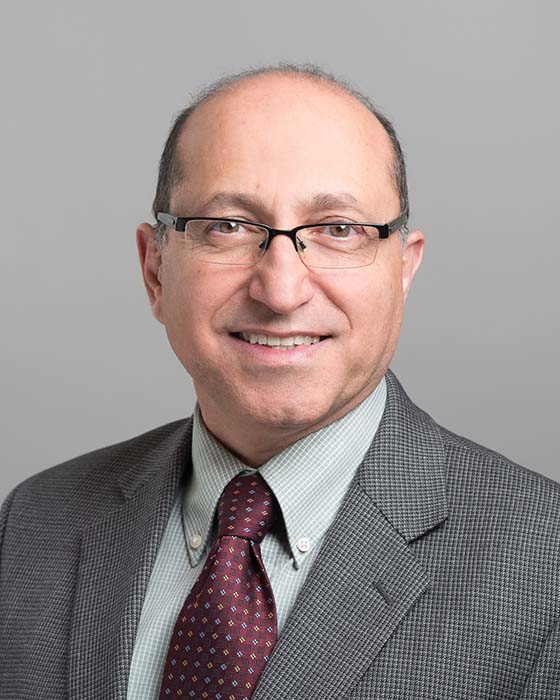
Ozan K. Tonguz is a Professor in the Department of Electrical and Computer Engineering at Carnegie Mellon University's College of Engineering. He holds appointments with CyLab and the Carnegie Mellon-Portugal program, focusing on advanced research in telecommunications, networking, and intelligent transportation systems. His educational background includes: Ph.D. in Electrical Engineering from Rutgers University (1990) M.S. in Electrical Engineering from Rutgers University (1986) B.S. in Electronic Engineering from the University of Essex (1980) Tonguz's research spans telecommunications and networking with emphasis on vehicular networks, wireless communications, cybersecurity, and smart infrastructure systems. His work bridges theoretical networking concepts with practical transportation applications, particularly in vehicle-to-vehicle and vehicle-to-infrastructure communications. He has published approximately 300 papers in IEEE journals and conference proceedings and authored the book 'Ad Hoc Wireless Networks: A Communication-Theoretic Perspective' (Wiley, 2006). His recent publications demonstrate a strong focus on vehicular networks and intelligent transportation systems, with particular attention to traffic flow optimization, virtual traffic light systems, and the application of wireless communication technologies to solve urban transportation challenges. His research has evolved from fundamental networking concepts to applied transportation solutions with real-world implementation potential. Tonguz actively mentors PhD students and has founded Virtual Traffic Lights, LLC, a CMU spinoff company addressing transportation problems through innovative communication paradigms. His work has received attention from IEEE Spectrum and other technical publications, highlighting the practical significance of his research in intelligent transportation systems. He leads research efforts in vehicular ad hoc networks, wireless ad hoc and sensor networks, self-organizing networks, smart grid applications, and security. His Virtual Traffic Lights technology has demonstrated potential to increase urban traffic flows by 60% during rush hours, with implications for reducing commute times, mitigating congestion, and supporting greener environments.
Professor Lyudmila Mihaylova is a distinguished academic at the University of Sheffield's School of Electrical and Electronic Engineering, where she holds the position of Professor of Signal Processing and Control. She has established herself as a leading researcher in the fields of signal processing, Bayesian methods, and autonomous systems, with significant contributions to particle filtering techniques for intelligent transportation systems. Her work bridges theoretical developments with practical applications across multiple domains including transportation, healthcare, and industrial automation. Prof. Mihaylova's research interests center on nonlinear filtering, sequential Monte Carlo methods, statistical signal processing, and sensor data fusion. Her work spans both theoretical advancements and practical implementations, with particular focus on high-dimensional problems including vehicular traffic flow estimation, image processing, and localization in sensor networks. She has extensive experience with various image modalities such as optical, thermal, LIDAR, SAR, and hyperspectral imaging. Her group actively develops novel methods for autonomous intelligent systems focusing on sensing, tracking, decision making, and machine learning applications. Analysis of Prof. Mihaylova's recent publications reveals a strong trend toward uncertainty quantification in machine learning models, particularly for safety-critical applications. Her work increasingly integrates traditional signal processing techniques with modern deep learning approaches, with applications spanning sewer inspection robotics, medical diagnostics (particularly sleep apnea detection), UAV swarm tracking, industrial manufacturing, and autonomous vehicle systems. A significant portion of her recent research focuses on developing robust methods that can handle incomplete or outlier-corrupted data while providing reliable uncertainty estimates. Among her notable professional achievements: President of the International Society of Information Fusion (ISIF) Senior member of the IEEE Signal Processing Society Associate Editor for IEEE Transactions on Aerospace and Electronic Systems Associate Editor for Elsevier Signal Processing Journal Prof. Mihaylova has successfully mentored numerous PhD students and postdoctoral researchers, many of whom have gone on to prominent academic and industry positions. Her research has been supported by major funding bodies including EPSRC, EU, MOD/DSTL, and industry partners, with recent projects including 'Protecting Environments with UAV Swarms' (InnovateUK, 2022-2024), 'ShiRAS: Towards Safe and Reliable Autonomy in Sensor Driven Systems' (NSF-EPSRC, 2019-2023), and 'Confident safety integration for Cobots' (Lloyd's Register Foundation, 2019-2020). Her research group follows a collaborative approach with the philosophy 'We share knowledge, we grow.' Prof. Mihaylova maintains active research collaborations with institutions worldwide and has held previous academic positions at Lancaster University (2006-2013) and University of Bristol (2004-2006), along with research visiting positions at the University of Ghent, Katholic University of Leuven, and the Bulgarian Academy of Sciences.
Andreas Malikopoulos is a Professor at Cornell University's School of Civil & Environmental Engineering and Director of the Information and Decision Science Lab (IDS Lab). Previously, he held roles as the Terri Connor Kelly and John Kelly Career Development Professor at the University of Delaware (UD) and founding Director of UD's Sociotechnical Systems Center. He also served as the Alvin M. Weinberg Fellow at Oak Ridge National Laboratory (ORNL), Deputy Director of ORNL's Urban Dynamics Institute, and Senior Researcher at General Motors R&D. His research focuses on cyber-physical systems (CPS), stochastic control, and learning-driven approaches for optimizing energy efficiency and sustainable mobility in smart cities and transportation systems. Education: PhD (Mechanical Engineering, University of Michigan, 2008), M.S. (Mechanical Engineering, University of Michigan, 2004), Diploma (National Technical University of Athens, 2000). Research Interests: Analysis and control of CPS, stochastic scheduling, game theory, and mechanism design applied to emerging mobility systems (e.g., autonomous vehicles, electric vehicles). He emphasizes integrating learning and control for socially optimal solutions in transportation networks. Awards: IEEE ITS Young Researcher Award (2019), UD’s Outstanding Junior Faculty Award (2020), Alvin M. Weinberg Fellowship (2010), and recognition as a NAS Kavli Frontiers of Science Scholar (2012). He is an IEEE Senior Member, ASME Fellow, and serves on editorial boards of leading journals. Teaching: Focuses on optimal decision-making, control theory, and emerging mobility systems. Courses include stochastic optimal control and game theory at Cornell. Labs: Leads the IDS Lab, which develops scalable frameworks for CPS and smart city applications. Current projects include coordinated routing for mixed-traffic systems and AI-driven recommendations for autonomous vehicles.
Scott T. M. Dawson is an Assistant Professor in the Mechanical, Materials, and Aerospace Engineering Department at Illinois Institute of Technology (Illinois Tech). He holds positions in the Armour College of Engineering and leads research at the intersection of fluid mechanics, dynamical systems, control theory, and data science. His work focuses on extracting dynamic models from large datasets to analyze and control turbulent flows and unsteady aerodynamic systems. Education includes a Ph.D. and M.A. from Princeton University (2017, 2013), and B.Eng. and B.S. degrees from Monash University (2010, 2009). Prior to Illinois Tech, he was a postdoctoral scholar at Caltech’s Graduate Aerospace Laboratories under Prof. Beverley McKeon. Research interests emphasize reduced-order modeling, data-driven techniques for fluid flows, and flow control applications. His group’s work is supported by NSF, AFOSR, and DOE grants. Recent projects include sparsity-promoting methods for flow analysis, wavelet-based resolvent analysis, and neural network-driven flow control systems. Publications span over 60 peer-reviewed articles, with a focus on turbulence modeling, transient flow dynamics, and machine learning integration in fluid mechanics. Key contributions include novel algorithms for isolating amplification mechanisms in wall-bounded flows and robust neural network frameworks for closed-loop flow stabilization. Grants and collaborations include multi-year NSF CAREER funding for automated distillation of coherent flow structures. Ongoing efforts explore time-localized spectral methods, nonlinear dimensionality reduction, and hydrogen decarbonization in vehicular systems.
Rongxing Lu is an Adjunct Professor at the Faculty of Computer Science, University of New Brunswick (UNB), Canada, since August 2016. Previously, he held positions at Nanyang Technological University (NTU), Singapore (2012–2016) and the University of Waterloo, Canada (PhD in 2012). His research focuses on applied cryptography, privacy enhancing technologies, and IoT-big data security. He has over 7,500 citations and received prestigious awards like the Governor General’s Gold Medal (2012) and the IEEE ComSoc Asia Pacific Outstanding Young Researcher Award (2013). He is an IEEE senior member and serves on editorial boards of journals like IEEE Network. **Education**: PhD in Electrical & Computer Engineering, University of Waterloo (2012), awarded Governor General’s Gold Medal Postdoctoral Fellow at University of Waterloo (2012–2013) **Research Interests**: Developing cryptographic protocols for IoT and big data systems Privacy-preserving techniques for distributed systems Secure communication in 5G/6G networks and vehicular systems **Awards and Recognition**: Recipient of multiple best paper awards in IEEE conferences 2016–2017 Excellence in Teaching Award at UNB **Editorial and Leadership Roles**: Symposium co-chair at IEEE Globecom’16 Secretary of IEEE ComSoc CIS-TC Organized special issues on fog computing security (Elsevier) and big data security (IEEE IoT Journal) **Key Contributions**: Pioneered privacy-aware data reporting schemes for vehicular networks Designed lightweight IoT authentication protocols Advanced secure machine learning frameworks with privacy guarantees
Riham AlTawy is an Associate Professor and MTIS Program Director at the Department of Electrical and Computer Engineering, University of Victoria. She previously held positions as an NSERC Postdoctoral Fellow at the University of Waterloo and an NSERC Canada Graduate Scholar at Concordia University. Her research focuses on IoT security, blockchain consensus mechanisms, lightweight cryptographic primitives, and privacy-preserving protocols. She leads the IoTSec group, which develops application-specific cryptographic solutions for IoT authentication and privacy challenges. Education includes postdoctoral training at the Communication Security (ComSec) group (University of Waterloo) and doctoral studies at Concordia University. Her work has led to publications in top venues such as IEEE Transactions and CANS conferences. She actively seeks PhD research assistants and postdoctoral fellows in cryptographic research. Key research areas include authentication protocols for edge computing, privacy in cross-domain systems, and lightweight algorithms for constrained devices. Her group emphasizes practical solutions for real-world IoT security challenges.
Maozhen Li is a Professor in the Department of Electronic and Electrical Engineering at Brunel University of London , within the College of Engineering, Design and Physical Sciences . He serves as the Vice-Dean of the NCUT Transnational Education (TNE) programme, overseeing a joint school with North China University of Technology. He has been at Brunel since 2002, progressing from Lecturer to Professor in 2013. Education: PhD, Institute of Software, Chinese Academy of Sciences (1997) Postdoctoral Research, School of Computer Science and Informatics, Cardiff University (1999–2002) His primary research interests lie in high performance computing, big data analytics, and artificial intelligence, with applications in smart grids, smart manufacturing, and cybersecurity. He focuses on developing interpretable, robust, and lightweight AI models, including work in causal AI, parallel machine learning, and edge computing. His research integrates advanced techniques such as deep learning, reinforcement learning, and blockchain for real-world system optimization. An analysis of his recent publications reveals a strong and consistent research trajectory in AI-driven solutions for environmental monitoring (e.g., PM2.5 prediction), industrial defect detection, IoT security, and intelligent transportation. His work frequently combines deep learning with graph-based modeling and federated or reinforcement learning, emphasizing scalability, efficiency, and robustness in distributed and edge environments. Scientific Awards and Recognition: Fellow of the Institution of Engineering and Technology (IET) Fellow of the British Computer Society (BCS) Shortlisted for the Computing UK BIG DATA EXCELLENCE AWARDS 2018 in the category of Most Innovative Big Data Solution Maozhen Li has successfully supervised 25 PhD students and examined over 30 PhD theses externally. He has secured significant research funding from EPSRC, the European Union (Horizon 2020), Innovate UK, and the Royal Society , with projects including Z-BRE4K, IoRL, and TDX-ASSIST. He serves as an Associate Editor for journals such as the Journal of Cloud Computing and the International Journal of Grid and High Performance Computing . Research Groups and Teams: He is affiliated with the Intelligent Engineering Frameworks (IEF) research group at Brunel, contributing to collaborative efforts in AI, IoT, and smart systems. His leadership in transnational education also fosters international research collaboration between Brunel and Chinese institutions.
Shahrokh Valaee is a Professor and Associate Chair for Undergraduate Studies in the Edward S. Rogers Sr. Department of Electrical and Computer Engineering at the University of Toronto, part of the Faculty of Applied Science and Engineering. He founded and directs the Wireless and Internet Research Laboratory (WIRLab). Education: BSc and MSc in Electrical Engineering from University of Tehran PhD in Electrical Engineering from McGill University Research Interests: Focuses on wireless networks (vehicular/sensor networks, B5G/6G), signal processing (indoor localization, machine learning for medical imaging), and integrated sensing/communication. His work spans: Localization in GPS-denied environments Machine learning for healthcare with limited/imbalanced data Reconfigurable Intelligent Surfaces (RIS) and drone networks Publications: Recent articles (2014-2016) show strong focus on indoor localization techniques, vehicular network protocols, and network coding, with emerging trends in machine learning applications for wireless systems and healthcare. Awards: Connaught Award (2012, 2013) NSERC Discovery Accelerator Award (2010) MaRS Innovations cPOP Award (2012) IEEE Fellow (FIEEE) Engineering Institute of Canada Fellow (FEIC) Leadership: Advises graduate students at WIRLab, where research combines theory with practical implementation (GPU-based ML, Android localization). Manages projects in integrated sensing/communication, ML for health, and B5G networks. Labs/Teams: Directs WIRLab with focus on wireless signal processing, networking, and ML implementations. Current team includes postdocs and PhD students working on localization, B5G networks, and medical ML applications.
Reza Curtmola is a Professor in the Department of Computer Science at NJIT. His research focuses on cybersecurity, distributed systems, and network security with an emphasis on secure routing, cloud computing, and privacy-preserving technologies. He holds a Ph.D. in Computer Science from Johns Hopkins University (2007), an M.S. from the same institution (2003), and a B.S. from the Politehnica University of Bucharest (2001). Dr. Curtmola’s work addresses challenges in wireless mesh networks, vehicular communication systems, and mobile-cloud integration. His contributions include innovative solutions for secure network coding, distributed resource management (e.g., parking assignment systems), and auditable data storage mechanisms. He has developed middleware frameworks like Moitree for mobile-cloud applications and has explored defenses against side-channel attacks, cache leaks, and entropy-based network vulnerabilities. His research also extends to privacy in vehicular DSRC protocols, dynamic traffic optimization, and verifiable code review systems. He has published extensively on topics ranging from cryptographic defenses in distributed systems to practical implementations of remote data checking in untrusted clouds. Current research activities include advancing secure cloud infrastructure, improving mobile crowdsensing reliability, and mitigating threats in IoT-enabled urban environments. His work often bridges theoretical foundations with practical system implementations, emphasizing real-world applicability in smart cities and critical infrastructure systems.
Professor Aniruddha Desai is a Research Professor and Director of the Centre for Technology Infusion (CTI) at La Trobe University. He holds a Bachelor’s in Industrial Electronics, a Master’s in Micro-electronics, and a PhD in Computer Science. His expertise spans microelectronics, AI, IoT, and sensor networks, with a focus on socially impactful applications like transportation, healthcare, and precision agriculture. Research Interests: Ultra-low power systems Micro-nano electronics AI/ML and edge computing IoT and sensor networks Transportation and logistics Major Projects: Led multi-million-dollar R&D programs in areas such as smart cities, energy management, and smart farming. Notable collaborations include the IIT Kanpur - La Trobe University Research Academy and the Asian Smart Cities Research and Innovation Network. Awards: Recipient of the 2016 Vice-Chancellor’s Award for Research Excellence and the 2020 Victorian Tall Poppy Award for Science. Served on advisory panels for the Australian Research Council and provided expert testimony in parliamentary inquiries. Labs/Teams: Directs the CTI, which delivers technology-based innovations to industry and government. Co-founded the Asian Smart Cities network to advance urban technology solutions.
Professor Glen Tian is a Professor at the School of Computer Science , Queensland University of Technology . He holds two PhDs: one in computer and software engineering from the University of Sydney (2009) and another in industrial automation from Zhejiang University (1993) . His academic career spans institutions including Hong Kong University of Science and Technology, Curtin University, and the University of Maryland at College Park. Editor-in-Chief of the Handbook of Real-Time Computing (Springer) Associate Editor for Information Sciences (Elsevier) and Asia-Pacific Journal of Chemical Engineering (Wiley) His research focuses on big data computing , cloud computing , computer networks , smart grid communication and control , networked control systems , and cyber-physical system security . Applications include power systems , medical big data , vehicular networks , and transport systems . Recent publications highlight advancements in smart grid communications , distributed optimization , secure multi-agent systems , and medical imaging analysis . He has led QUT's Big Data Lab and served as Leader of QUT's Networks and Communications Discipline . Scientific achievements include Over 20 research grants totaling >$6M 6 Australian Research Council (ARC) grants 1 MRFF-TTRA grant ($745,623) 1 ATN-DAAD Australia-Germany Collaborative Grant 1 DEST International Science Linkage grant He supervises PhD students in big data bioinformatics , smart grid optimization , and cyber-physical security , while mentoring 30+ postdocs and research fellows. Current projects include mitigating cyberattacks on power systems and developing AI-based atheroma diagnostic tools .
Dr. Le-Nam Tran is a researcher at the UCD School of Electrical & Electronic Engineering , University College Dublin. His work focuses on optimizing the last hop of 5G/6G wireless networks through mathematical programming, with emphasis on energy efficiency, interference management, and security against eavesdropping. Develops low-cost, low-complexity transmission techniques Projects supported by Science Foundation Ireland Career Development Award Author of over 80 peer-reviewed publications Research Keywords: Wireless Communications Network Security Signal Processing Energy-Efficient Systems Beamforming Optimization Interference Mitigation