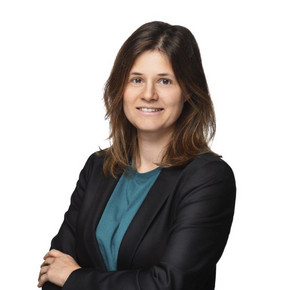
Associate Professor Vera Hemmelmayr is affiliated with the Institute of Transport Economics and Logistics at the Vienna University of Economics and Business . Her research spans Operations Research , Logistics , Supply Chain Management , and Circular Economy , with a focus on vehicle routing , city logistics , and metaheuristics . She has led major projects like CREATE_AT (circular timber supply chains) and Sustainable Urban Deliveries . Research trends in her recent work include real-time optimization algorithms for railway disruptions, sustainable urban freight solutions , and integrated railcar fleet management . Her publications often bridge transport policy with computational methods , emphasizing green supply chains and smart city logistics . 2025: Preis für innovative Lehre 2017: Best Application Paper Honorable Mentions (IIE Transactions) 2012: Dr.-Maria-Schaumayer-Habilitationsstipendium 2012: WU Visiting Fellow 2005: Prämierung ausgezeichneter Diplomarbeiten She has supervised research projects on topics including two-echelon delivery systems , railway disruption management , and digital transformation in logistics, while contributing to policy frameworks for circular economy in transportation.
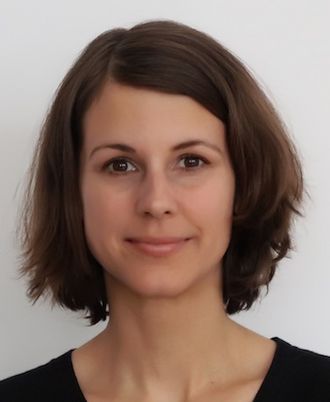
Sophie N. Parragh is Professor and Head of the Institute of Production and Logistics Management at Johannes Kepler University Linz, where she also serves as program director of the master's degree program in Economic and Business Analytics. She received her PhD from the University of Vienna in 2009 and completed her habilitation in 2016, following postdoctoral research at the IBM Center for Advanced Studies in Porto and a visiting professorship at the Vienna University of Economics and Business. Her research focuses on developing exact and heuristic optimization algorithms for complex logistics and transportation problems. Key areas include vehicle routing, green logistics, disaster relief distribution planning, scheduling, and multi-objective optimization. She has particular expertise in branch-and-bound, branch-and-price, column generation, and metaheuristics approaches to solve challenging combinatorial optimization problems. Dr. Parragh's publication record shows a consistent trend toward increasingly complex multi-objective problems, with recent work focusing on electric vehicle routing, multi-echelon production planning under uncertainty, and bi-objective facility location problems with applications in disaster relief. Her research bridges theoretical optimization methods with practical applications in logistics and transportation. Scientific Awards: ÖGOR (Austrian Society for Operations Research) dissertation prize doc.award from the University of Vienna Hertha Firnberg Postdoc fellowship from the Austrian Science Fund (FWF) Dr. Parragh has served as department editor for OR Spectrum and as associate editor for Transportation Science, Transportation Research Part B: Methodological, INFORMS Journal on Computing, and Networks. She has led and participated in numerous third-party funded research projects in operations research, including work in healthcare logistics, field staff routing, production planning, and electric vehicle routing. In 2021-2022, she co-organized the monthly VeRoLog webinar series, demonstrating her active engagement with the international operations research community. She maintains strong research collaborations across Europe, evidenced by her co-authored publications with researchers from institutions in Austria, France, Portugal, Denmark, and beyond. Her work consistently addresses both theoretical challenges in optimization and practical applications in industry and public service contexts.
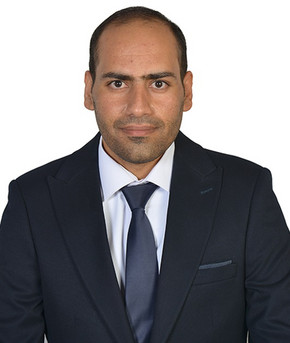
Dr. Adel Aazami is an Assistant Professor at the Institute of Transport Economics and Logistics at Vienna University of Economics and Business (WU Vienna) since 2023. His academic journey began with a B.Sc. in Industrial Engineering from University of Tehran (2010-2014), followed by an M.Sc. (2014-2016) and Ph.D. (2016-2021) from Iran University of Science and Technology (IUST), Tehran. Prior to his current position, he worked as a Postdoctoral Researcher at Sharif University of Technology (2021-2022) and was a Visiting Researcher at the University of Toronto (2020). His educational background includes: Ph.D. in Industrial Engineering (2016-2021) - Iran University of Science and Technology (IUST), Tehran, Iran M.Sc. in Industrial Engineering (2014-2016) - Iran University of Science and Technology (IUST), Tehran, Iran B.Sc. in Industrial Engineering (2010-2014) - University of Tehran, Tehran, Iran Dr. Aazami's research spans multiple interconnected domains within operations research and supply chain management. His primary focus areas include Operations Research and Optimization, Supply Chain and Logistics, Production and Distribution/Transportation Planning, Competition and Game Theory, Stochastic Programming, and Decomposition Algorithms. His work demonstrates a strong emphasis on developing mathematical models and optimization algorithms for complex supply chain problems, particularly those involving perishable goods, competitive environments, and sustainability considerations. He has made significant contributions to integrating environmental factors into traditional logistics problems and developing robust optimization approaches for supply chain networks. Analysis of Dr. Aazami's publication record reveals a consistent trajectory of increasingly sophisticated research in supply chain optimization. His work shows a clear progression from foundational mathematical optimization techniques to increasingly complex integrated problems involving multiple stakeholders, uncertainty, and environmental considerations. A notable trend is his focus on perishable products within supply chains, developing models that account for limited product lifetimes while optimizing across multiple echelons of the supply chain. More recently, his research has expanded to incorporate green logistics considerations, developing algorithms that balance economic and environmental objectives in transportation and distribution problems. His notable scientific achievements include: Winner of the 'Best Student' award among nationwide students evaluated by the Iranian Ministry of Science (2020) Winner of the Iranian Nobel Prize (known as the Alborz National Foundation Prize) (2019) Winner of the Best Student Award at IUST (2018) Winner of the Top Researcher Award at IUST (2018) Annual Awards of the National Elites Foundation Iran (2015-2020) Dr. Aazami has extensive teaching experience across multiple Iranian universities including Tehran University, Amirkabir Technical University, Isfahan University, Yazd University, Zanjan University, Damghan University, Abrar University and Iran Technical University. His peer review activities include reviewing for prestigious journals such as Soft Computing, Expert Systems with Applications, and Annals of Operations Research. While specific grant information isn't detailed in the provided text, his research output suggests active engagement with complex optimization problems relevant to transportation and logistics industries. At WU Vienna, Dr. Aazami is part of the research team at the Institute of Transport Economics and Logistics, working alongside other faculty members including Prof. Kummer and Prof. Wakolbinger. His research integrates theoretical optimization methods with practical applications in transportation and logistics, contributing to the institute's focus on sustainable and efficient supply chain solutions.
Markus Bader is a PostDoc Researcher at the Technische Universität Wien's Faculty of Informatics, Department of Automation Systems. He holds roles as Curriculum Coordinator for Master's programs in Automation Systems and Mobile Robotics, and serves on multiple academic committees including the Faculty Council and Curriculum Commissions for Informatics and Computer Engineering. He earned his Diplom-Ingenieur (2006) and Doctor Technica (Dr.techn.) from TU Wien. His research focuses on autonomous systems, mobile robotics, and control systems, with notable work on multi-robot coordination, path planning algorithms, and real-time navigation in human environments. Key projects include TransportBuddy (2018), exploring navigation in human spaces, and the Formula Student Driverless race car design (2017). Bader has led or contributed to funded projects such as the Austrian Research Promotion Agency (FFG)-supported Green Facade Digital Twin (2025–2027), Independent Wheel Offset Steering (2016–2017), and MPCv1 (2015–2017), emphasizing model predictive control and sensor integration. Research Highlights : Prioritized multi-robot route planning (MRRP), human motion prediction for autonomous navigation, and sensor fusion for vehicle localization. Grants : FFG-funded projects totaling over €2.5M, including autonomous vehicle coordination and mobile robotics tool development. He advises students on topics like ROS2-based route planning and independent steering systems, with 7+ supervised theses documented. Bader's work bridges theoretical robotics research with practical applications in industrial automation and autonomous vehicle systems.
Pamela Nolz is a Senior Researcher at the Carl Ritter von Ghega Institute for Integrated Mobility Research at St. Pölten University of Applied Sciences , where she has worked since 2022. She also serves as Head of the Circular Economy Research Network of the European University E³UDRES² since 2020. She completed her habilitation in Business Administration at the University of Vienna in 2021 and earned her doctoral degree in Social and Economic Sciences from the University of Vienna in 2010. Her education includes a Diploma in International Business Administration from the University of Vienna and the Universidad de A Coruña, Spain (2000-2006). Nolz's research focuses on Operations Research , Humanitarian Logistics , and Sustainable Mobility . Her work addresses the optimization of transportation systems, particularly focusing on eco-friendly transport modes , city logistics , and sustainable delivery systems . Her recent publications demonstrate expertise in aquaponics-based food production , vehicle routing problems with eco-friendly transport modes, sustainable city logistics with cargo bikes, and integrated mobility research . The work spans decentralized systems , load synchronization , and environmentally-friendly transportation solutions . She has been involved in various projects related to sustainable mobility including LAMORE (Cargo bike platform), comfort:zone (personal comfort zones in mobility), CLEA (Environmental Action), and BündelHeinz (Order and delivery process optimization). Her career history includes positions at the AIT Austrian Institute of Technology (2013-2020), WU Vienna University of Economics and Business (2011-2013 as Assistant Professor), and the University of Vienna (2005-2010 as research assistant). She has also worked internationally with institutions in France and Belgium.
Günther Raidl is an Associate Professor and Head of the Algorithms and Data Structures Group at the Institute of Computer Graphics and Algorithms, Faculty of Informatics, TU Wien. He holds a Dipl.-Ing. (1992), Ph.D. (1994), and Habilitation (2003) from TU Wien. His research focuses on combinatorial optimization, heuristic methods, and hybrid optimization techniques, addressing large-scale problems in transportation, network design, and cutting/packing. He leads a group of 1 PostDoc, 8 PhD candidates, and collaborates with institutions like the Vienna Graduate School on Computational Optimization (VGSCO). Education: Dipl.-Ing. in Computer Science (1992), TU Wien Ph.D. in Computer Science (1994), TU Wien Habilitation (2003), TU Wien Research Interests: Raidl’s work combines exact and heuristic optimization techniques, including mixed-integer programming, metaheuristics, and matheuristics. Applications span transportation systems (e.g., electric vehicle routing, bike-sharing systems), network design, and bioinformatics. His group leverages high-performance computing resources, such as the Vienna Scientific Cluster (VSC). Publications & Awards: Over 115 reviewed articles in journals/conferences like INFORMS Journal on Computing and Evolutionary Computation. Notable recognition includes the EvoStar 'Old Croc' Award (2012) for contributions to evolutionary computation. Advising & Grants: Supervises 8 funded PhD students and contributes to the Vienna Graduate School’s DK funding (€20,000/year for personnel and travel). Labs/Teams: Algorithms and Data Structures Group at TU Wien, collaborating with researchers like Monika Henzinger and Nysret Musliu.
Johannes Scholz is a researcher affiliated with the Institute of Geoinformation and Cartography at Vienna University of Technology . His work bridges GIScience, spatial data analysis, and user-centric technologies. Research Focus : GIS applications, web mapping, spatial scheduling, and data management. Contributions : Explored machine learning for tourism flow prediction, FOSS-GIS education tools, NoSQL databases for unstructured data, and GIS-integrated operations research for logistics. Collaborations : Engaged in interdisciplinary projects with colleagues like Norbert Bartelme and Gerhard Navratil.
Martin Hitz is a Full Professor for Interactive Systems at the University of Klagenfurt , where he founded the Interactive Systems research group (IAS) in 2000. He serves as Chairman of the University Senate (2022-2025) and previously as Vice Rector (2001-2006, 2012-2020) and Dean of the Faculty of Technical Sciences (2007-2012). His academic career includes assistant/associate professor roles at the University of Vienna and visiting positions at Politecnico di Milano, University of Ottawa, and University of Linz.
Thomas Rosenstatter is a Senior Lecturer and researcher at the Salzburg University of Applied Sciences (FH Salzburg/SUAS), where he works in the Department Information Technologies and Digitalisation at Campus Urstein. Prior to this position, he was a researcher at the Digital Systems division at RISE Research Institutes of Sweden from November 2021 to April 2023. He completed his Ph.D. in computer science and engineering at Chalmers University in Gothenburg, Sweden between 2016 and 2021. His educational background includes: Ph.D. in Networks and Systems, Computer Science and Engineering, Chalmers University, Sweden (2016-2021) M.Sc. in Embedded and Intelligent Systems, Halmstad University, Sweden (2016) Diplom-Ingenieur (DI) in Information Technology & Systems Management, Salzburg University of Applied Sciences, Austria (2016) B.Sc. in Information Technology & Systems Management, Salzburg University of Applied Sciences, Austria (2014) Research Focus: Dr. Rosenstatter's research centers on cybersecurity and resilience for cyber-physical systems, with particular emphasis on automotive systems and industrial automation. His work addresses critical questions in automotive cybersecurity, including how to express security demands and requirements when designing connected vehicles, how to identify suitable security and resilience techniques, and how to develop frameworks for anomaly detection. He has made significant contributions to vehicular security through mechanisms like improving freshness mechanisms for authenticated messages, developing trust-based solutions in VANETs, and designing frameworks for anomaly detection using peer-assessments of vehicles. Publication Trends: His publications demonstrate a consistent focus on automotive security challenges, with recent work expanding into industrial automation security. His research shows progression from foundational work on security frameworks and requirements to more applied research on specific security mechanisms and frameworks for attack detection and response. The trend in his publications indicates growing interest in collaborative security approaches and practical implementations of security solutions for real-world automotive and industrial systems. Awards: SAIS Best AI Master's Thesis Award 2017 for research on "Modelling the Level of Trust in a Cooperative Automated Vehicle Control System" Dr. Rosenstatter has extensive teaching experience in network security, computer security, routing and switching technology, and advanced topics in networking, privacy, and security. He is actively involved in the Josef Ressel Centre for Intelligent and Secure Industrial Automation (JRZ ISIA) at Salzburg University of Applied Sciences.
Philipp Hungerländer is an Associate Professor at the Institute of Mathematics, University of Klagenfurt. He is a member of the combinatorial optimization working group led by Prof. Franz Rendl, focusing on advanced optimization techniques for real-world industrial applications. Research Interests: His work spans three core areas: (1) semidefinite, conic, and polynomial optimization for nonlinear discrete problems, (2) quadratic programming and active-set algorithms for convex/nonconvex models, and (3) exact and heuristic methods for combinatorial optimization in routing and scheduling. Additionally, he explores game theory and dynamic games. Recent Publications: His 15 most recent articles reflect expertise in railway logistics, facility layout, home delivery services, and medical pandemic response. Topics include integrated freight routing, dial-a-ride optimization, and applications of mixed-integer programming. Contact: Email: Philipp.Hungerlaender@aau.at
Adam Letchford is a Professor in the Department of Management Science at Lancaster University, specializing in Operations Research and Optimization. His research focuses on combinatorial optimization, integer programming, and algorithm design, with particular contributions to vehicle routing, network design, and polyhedral theory. He has authored numerous peer-reviewed articles, including works on clique partitioning polytopes, knapsack problems, and matheuristics. Letchford is actively involved in academic conferences and editorial roles, contributing to the advancement of operational research methodologies and applications in logistics and decision sciences. His work bridges theoretical foundations with practical implementations, addressing challenges in both academic and real-world contexts.
Matthias Prandtstetter is an External Lecturer in the Department of Logic and Computation at TU Wien. His research focuses on optimization in logistics, transportation systems, and combinatorial problems. He has contributed to projects such as Algorithmic Discrete Optimization (EU-funded 2004–2008) and MyITS (2011–2013). His work integrates metaheuristics, integer programming, and semantic technologies to address challenges in warehouse logistics, home healthcare scheduling, and document reconstruction. Education: PhD in Hybrid Optimization Methods, TU Wien (2009) Diploma in Exact and Heuristic Methods for Car Sequencing, TU Wien (2005) Research interests include: Logistics optimization Metaheuristics and hybrid algorithms Multi-modal routing systems Document reconstruction from shredded fragments Production scheduling and car sequencing Key projects: Algorithmic Discrete Optimization (EU, 2004–2008) MyITS: Semantically Enriched Multi-Modal Routing (2011–2013) ASP and HEX-Programme (2008–2015) His research has addressed practical applications like cooperative delivery systems, spare parts warehouse routing, and cross-cut document reconstruction. Advising & grants: Supervised 8 students in optimization-related theses Received EU funding for Algorithmic Discrete Optimization Labs/teams: Active in TU Wien's operations research and logistics research groups, collaborating on projects involving semantic technologies and combinatorial optimization.
Nenad Mladenovic is a Professor at the Faculty of Organizational Sciences, University of Belgrade, and holds concurrent roles including Reader at Brunel University-London (United Kingdom) and Research Professor at the Mathematical Institute of the Serbian Academy of Sciences. His academic journey includes senior positions in institutions across Serbia, Canada, and the UK, with extensive visiting professorships in France, Canada, Hong Kong, and Spain. Professional Background: 2007–Present: Professor, Faculty of Organizational Sciences, University of Belgrade 2005–Present: Reader, School of Mathematics, Brunel University-London 2002–Present: Research Professor (Scientific Chancellor), Serbian Academy of Sciences Research Focus: His work centers on metaheuristic methods (e.g., Variable Neighborhood Search, Tabu Search) in combinatorial and global optimization, numerical algorithms, and mathematical programming. Applications span operational research, facility location, clustering, and data mining. Key Achievements: A prolific contributor with over 69 citation index (G-index 69), he is Coeditor-in-Chief of an international journal and holds editorial roles in ~10 journals. Awards include Fellowships from the Academy of Nonlinear Sciences (2008) and Scientific Society of Serbia (2003). He led major research projects, including one funded by the Serbian Ministry of Science (2002–2005). Grants & Collaboration: Secured grants from EPSRC (UK), NSERC (Canada), and CNRS (France). Coordinated over 20 industrial projects, emphasizing applied mathematics and optimization solutions.
Yujie Tang is an Assistant Professor in the Faculty of Computer Science at Dalhousie University, Halifax, Canada, where she has been serving since September 2022. Prior to this, she was an Assistant Professor at Algoma University from July 2019 to August 2022, and a Postdoctoral Fellow at the University of Waterloo from October 2017 to June 2019. Faculty of Computer Science, Dalhousie University (2022–Present) School of Computer Science and Technology, Algoma University (2019–2022) Department of Electrical and Computer Engineering, University of Waterloo (Postdoc, 2017–2019) Education: Ph.D., Electrical and Computer Engineering, University of Waterloo M.E., Harbin Institute of Technology, Shenzhen B.E., Lanzhou Jiaotong University Dr. Tang’s research centers on intelligent networking and computing technologies, with applications in B5G/6G networks, Internet of Vehicles (IoV), edge computing, and UAV-assisted systems. She leverages machine learning and AI to optimize resource management, spectrum allocation, and network performance in heterogeneous and dynamic environments. Her work bridges theoretical design with practical implementation in next-generation communication systems. The recent publications highlight a consistent focus on AI-driven solutions for wireless networks, particularly in vehicular communications, edge intelligence, and spectrum efficiency. Key themes include reinforcement learning for UAV deployment, deep learning for spectrum sensing, and cooperative edge caching in 5G/mmWave networks. These works span top journals such as IEEE TWC, TVT, IoT Journal, and JSAC, reflecting strong technical depth and real-world applicability. Scientific Awards and Honors: NSERC Discovery Grant (2021–2026) Faculty Research Startup Funds from Dalhousie and Algoma Universities Best Speaker Award, University of Waterloo (2017) Multiple awards including FoE Award, Graduate Scholarship, and Entrance Awards from University of Waterloo (2011–2017) Dr. Tang actively contributes to the academic community as a reviewer for leading IEEE journals and conferences, and has served on technical program committees for IEEE INFOCOM, GLOBECOM, ICC, and VTC. She is a member of IEEE, IEEE Communications Society, and IEEE Vehicular Technology Society. She is currently advising and recruiting MSc and PhD students for research in B5G/6G, IoV, and AI-empowered edge computing. Laboratory and Research Group: Dr. Tang leads a research group focused on intelligent networking and edge AI systems at Dalhousie University. Her lab investigates real-time decision-making, resource slicing, and autonomous vehicular networks, often integrating simulation with practical deployment considerations.
Wolfgang Wöber is a Professor at the University of Applied Sciences Wiener Neustadt, serving as Head of the Electrical Engineering Department. He leads research initiatives in sensor technology, IoT systems, and electronics optimization. Department: Electrical Engineering Projects: Zelos (IoT time-speed measurement system), Cable & Cabin Test Bench for vehicle systems His research focuses on developing IoT-based measurement stations for sports routes and gamification applications, incorporating cloud systems and LED temperature optimization. He also works on automated testing solutions for cable harnesses in electric and conventional vehicles. Wöber has co-authored three peer-reviewed papers in 2024, covering AI-driven sensor data analysis, person recognition, and student integration into research projects. He collaborates with researchers such as Hochrainer and Schattovich, and his work addresses technical challenges in LED control, microcontroller integration, and cross-platform compatibility for high-voltage systems.