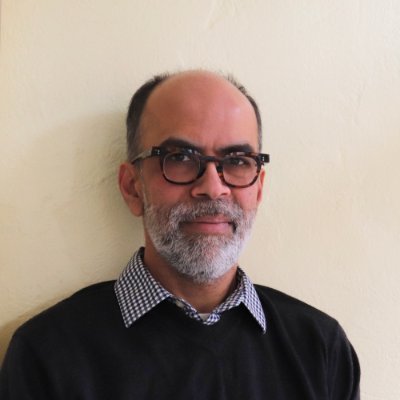
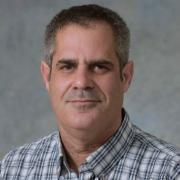
Anupam Gupta is an Adjunct Professor in the Computer Science Department at New York University's Courant Institute of Mathematical Sciences. Previously, he held a faculty position at Carnegie Mellon University. His research focuses on algorithms, complexity, and theoretical computer science, with an emphasis on network design, metric embeddings, and approximation algorithms. He has received notable awards, including the ACM Fellowship (2021) and the Herbert A. Simon Award for Teaching Excellence (2019). Education: Ph.D., University of California, Berkeley (2000); B.Tech., Indian Institute of Technology Kanpur (1996) Teaching: Taught courses on algorithms, theoretical computer science, and real-world applications at both undergraduate and graduate levels. Research: Explores algorithms for uncertain environments, stochastic optimization, and online algorithms. His work bridges theoretical foundations with practical applications in networking and combinatorial optimization. Awards: ACM Fellow, Sloan Fellowship, and multiple teaching awards. Students: Advised over 15 Ph.D. students, including notable researchers in algorithms and theoretical computer science. Grants: Supported by NSF grants, including a CAREER Award, and collaborates on projects like the Indo-US Algorithms under Uncertainty initiative. His work on metric embeddings and graph algorithms has had significant impacts, with contributions to approximation algorithms and competitive analysis. He actively participates in academic conferences and serves as an organizer for programs like the Simons Institute's Algorithms and Uncertainty initiative.
Jorge Augusto Meira is a Research Scientist at the University of Luxembourg's Interdisciplinary Centre for Security, Reliability and Trust (SnT), specifically within the Services and Data Management research group (SEDAN). He holds a PhD in Computer Science from the University of Luxembourg (2014) and has 15+ years of experience spanning industry and academic research roles including software development, system analysis, data science, project management, and principal investigator positions. His research focuses on machine learning applications in anomaly detection (e.g., anti-money laundering), big data analytics, recommendation systems, and database optimization. Notable areas include cybersecurity for blockchain networks, insurance risk modeling using Hawkes processes, and energy-efficient database architectures. Publications span topics like vehicle routing optimization, natural disaster prediction models, and privacy-preserving data systems. He has contributed to both theoretical advancements and practical implementations in areas like smart grid monitoring and aviation predictive maintenance. His work frequently bridges AI techniques with real-world infrastructure challenges across transportation, finance, and healthcare sectors. Led by Prof. Radu State, the SEDAN group focuses on service-oriented architectures and data management innovations. While no formal awards are listed, his extensive publication record reflects sustained contributions to interdisciplinary tech research.
Prof. Margaretha Gansterer is a full professor and Dean of the Faculty of Economics and Law at Alpen-Adria-Universität Klagenfurt. She leads the Institute for Production, Energy and Environmental Management and the Department of Production Management and Logistics. Her work focuses on production economics, logistics optimization, and collaborative transportation systems. Key research areas include supply chain resilience, vehicle routing problems, and disaster response logistics. Her research addresses challenges such as decentralized production planning, automated parcel locker networks, and emergency resource allocation during crises. Notable contributions include methodologies for demand uncertainty mitigation, horizontal collaboration in transportation, and optimization of multi-agent systems. Prof. Gansterer's recent publications (2023–2025) emphasize pandemic-related logistics, such as SARS-CoV-2 testing strategies in healthcare settings and contingency planning for driver absenteeism. She also explores innovative applications of combinatorial auctions and artificial intelligence in logistics decision-making. Research Priorities: Business Administration, Logistics, Production Management Leadership Roles: Senate Dean, Institute Head, Department Head Key Facilities: Production Management and Logistics Department (Campus South Wing East) Her work integrates simulation-based optimization with real-world supply chain modeling, contributing to both academic and practical advancements in operational efficiency and sustainability.
Professor Jonathan Thompson serves as Head of School in the School of Mathematics at Cardiff University. He holds multiple administrative roles including Year Three Director of Studies, Chair of School Board, and has significant teaching responsibilities for both undergraduate and postgraduate students. His academic career spans over two decades with previous positions at Edinburgh University (Lecturer in Statistics and Operational Research, 1996-97) and Swansea University (Research Assistant, 1994-96). Dr. Thompson's research focuses on operational research with particular expertise in graph theoretic modelling, meta-heuristics (especially ant systems, genetic algorithms and simulated annealing), and various scheduling problems including examination scheduling, sports fixture scheduling, and manpower planning. His work bridges theoretical computer science with practical applications in healthcare, transportation, and logistics. He has established strong industry connections, having completed projects with WH Smiths, John Menzies, and the International Rugby Board. His research demonstrates consistent evolution from foundational work in graph coloring and ant colony optimization toward increasingly complex real-world applications in dynamic environments. Operational Research group member External funding from Office of National Statistics (2005-2006) Editorial Board member of International Journal of Operational Research Programme Committee member for major conferences (GECCO, PPSN, PATAT) Professor Thompson has successfully supervised numerous PhD students since 2000, with completed theses covering examination timetabling, nurse scheduling, vehicle routing, and other operational research problems. His supervision portfolio reflects the breadth of his research interests, from theoretical graph theory to practical healthcare and transportation applications. He has secured external funding for research projects and maintains active collaborations with both academic and industry partners.
Gözde Yazgı Tütüncü is a Professor in the Department of Mathematics at İzmir University of Economics, where she has served as faculty since 2010. She earned her PhD in Operations Research and Statistics from Coventry University (UK) in 2006, following MSc degrees in Statistics (Ankara University, 2001) and Industrial Engineering (Başkent University, 2003). She previously held Assistant Professor positions at İzmir University of Economics (2006-2008) and IESEG School of Management, Lille Catholic University (France, 2008-2010). PhD: Operations Research & Statistics, Coventry University (2006) MSc: Statistics, Ankara University (2001) MSc: Industrial Engineering, Başkent University (2003) BSc: Statistics, Ankara University (1999) Her research spans Operations Research, Applied Probability, and System Optimization with emphasis on Reliability Engineering, Fuzzy Logic applications, Healthcare System Optimization, and Heuristic Algorithms for decision-making. She has developed innovative approaches in inventory control under fuzzy costs, vehicle routing optimization, and reliability analysis of complex systems. Her work bridges theoretical mathematics with practical applications in logistics, healthcare, and bioinformatics. Recent publications demonstrate evolving expertise from classical Operations Research (2008-2012) toward interdisciplinary applications in bioinformatics (RNA-Seq analysis since 2019) and advanced fuzzy mathematics (2024). Key publication venues include European Journal of Operational Research, OMEGA, and International Journal of Production Economics, with growing emphasis on computational methods for high-dimensional data. Her scholarly contributions appear in leading journals including: European Journal of Operational Research International Journal of Production Economics OMEGA: International Journal of Management Science Bioinformatics journals for genomic applications Professor Tütüncü has established collaborative research networks across Turkey, France, and international institutions, with significant contributions to reliability theory, fuzzy optimization, and vehicle routing algorithms. Her current work focuses on integrating machine learning with traditional Operations Research methods for complex system optimization.
Marc Salomon is a Professor at the Faculty of Economics and Business, University of Amsterdam, where he is affiliated with the Amsterdam Business School. His office is located at Plantage Muidergracht 12, room M4.27, in Amsterdam. He can be reached via email at M.Salomon@uva.nl or by phone at +31 (0)20 525 4221. Professor Salomon's research spans several key areas in operations research and supply chain management. His primary interests include reverse logistics, remanufacturing, inventory control, production planning, and scheduling. He has made significant contributions to the understanding of closed-loop supply chains, particularly in the context of remanufacturing and disposal. His work also extends to transportation and railway operations, where he has developed decision support systems for network design and rolling stock allocation. His publication record over the past three decades demonstrates a consistent focus on optimization problems in logistics and operations. Early work centered on lotsizing and scheduling, while later research expanded into reverse logistics and remanufacturing. A notable trend is the application of operations research techniques to real-world problems, as evidenced by his award-winning paper in the EURO best applied paper competition in 1997. His recent work includes studies on resistance to change in professional contexts and joint route planning under market fluctuations. His scientific achievements have been recognized with the following award: EURO best applied paper competition 1997 Information about Professor Salomon's advising activities and research grants is not available in the provided text. Details about specific research labs or teams led by Professor Salomon were not provided in the available information.
Manbir Sodhi is a Professor in the Department of Mechanical, Industrial & Systems Engineering at the University of Rhode Island. His research focuses on manufacturing optimization, supply chain modeling, IoT applications in production planning, and sustainability assessment of global products. Ph.D., University of Arizona, 1991 M.S., University of Arizona, 1987 B.S., Jadavpur University His research spans operations research, vehicle routing algorithms, and sustainability frameworks, with applications in additive manufacturing, battery supply chains, and autonomous systems. Key trends in his publications include AI-driven optimization, eco-industrial network design, and cyber-physical security. Recent grants include collaborations with the Office of Naval Research on additive manufacturing qualification, UUV swarm analysis, and mixed reality applications in advanced manufacturing. Sodhi holds a patent for laser-based surface smoothing technology (US Patent 8653409, 2014).
Resit Sendag is a Professor and Director of Graduate Studies in the Department of Electrical, Computer and Biomedical Engineering at the University of Rhode Island. He serves as Director of both the URI Computer Architecture Laboratory and the URI Generative AI Development Group, leading cutting-edge research in computer architecture and high-performance computing. His academic credentials include: Ph.D. in Computer Engineering from the University of Minnesota (2003) B.Sc. in Electrical Engineering from Hacettepe University, Ankara (1994) Professor Sendag specializes in computer architecture with research interests spanning processor design, memory systems, parallel computing, and hardware acceleration. His work focuses on improving computational performance through innovative techniques in cache management, prefetching, branch prediction, and specialized hardware implementations using FPGAs and GPUs. Recent research has expanded into applying these architectural principles to solve complex optimization problems like vehicle routing. His publication record demonstrates a consistent evolution from fundamental computer architecture research toward practical applications of architectural techniques. The most recent work shows strong emphasis on implementing genetic algorithms for vehicle routing problems using specialized hardware platforms (FPGAs and GPUs), while maintaining his foundational research on memory access optimization through sophisticated prefetching techniques. Professor Sendag has secured research funding from the Office of Naval Research through collaborative projects with the University of Connecticut focused on advanced manufacturing, shipbuilding processes, and material tracking systems. He actively mentors graduate students, with current advisees working on challenging computer architecture projects. His former students have achieved notable success at leading technology institutions including ETH-Zurich, Intel, NVIDIA, AMD, and various research laboratories. Professor Sendag leads key research initiatives including the URI Computer Architecture Laboratory, the Generative AI Development Group, and the PatternFinder project (an NSF-funded open-source tool for program behavior analysis).
J.E. Fokkema serves as a Lecturer and Researcher at the Faculty of Economics and Business , University of Groningen. His work focuses on renewable energy systems , hydrogen storage , and sustainable logistics , with specific emphasis on offshore wind parks, decentralized energy networks, and maritime fuel alternatives. University: University of Groningen Email: j.e.fokkema@rug.nl Research Interests: The articles highlight expertise in energy storage optimization, LNG vessel economics, and adaptive supply chain modeling. Key subfields include wind power hub design, constrained electricity distribution, and rural technology adoption. Publications Trends: Recent work (2024) addresses offshore hydrogen storage for North Sea wind parks, while 2022-2020 studies focus on seasonal energy storage and routing problems. Older 2017 papers examine LNG shipping and rural entrepreneurship. Technical Skills: Utilizes Markov decision processes, numerical experiments, and comparative investment appraisals. Research frequently intersects with UN Sustainable Development Goals through biogas integration and decentralized renewable systems.
Achim Koberstein is a Professor of Business Administration with a focus on Business Informatics and Operations Research at the Faculty of Economics and Business Administration (Wiwi) , European University Viadrina Frankfurt (Oder). His academic career spans multiple institutions, including Goethe-University Frankfurt and the University of Hamburg. Education: Doctorate in Business Informatics (Dr. rer. pol.) at the University of Paderborn (2005) Diploma in Computer Science (Minor: Business Administration) at the University of Paderborn (2002) His research centers on decision support systems , stochastic and deterministic optimization models , and applications in supply chain and automotive production planning . Recent work explores drug shortages, drone logistics, and hybrid electric vehicle routing. His publications highlight a focus on stochastic programming , MILP modeling , and real-world logistics challenges across healthcare, automotive, and maritime domains. Current affiliations include leadership roles in the Faculty of Economics and Business Administration's Dean's team. Contact: Email: koberstein@europa-uni.de Office: Main Building (HG) 043, Große Scharrnstraße 59, 15230 Frankfurt (Oder)
Christian Ackermann serves as Academic Staff at the Institute of Business Administration and Information Systems within the Faculty of Mathematics, Natural Sciences, Economics and Computer Science at the University of Hildesheim. His work focuses on operations research with particular emphasis on transportation logistics and optimization problems in dynamic environments. Dr. Ackermann's research spans dynamic transportation systems, with specialization in Dial-a-Ride Problems and ride-hailing optimization. His work combines theoretical operations research with practical applications in urban mobility and resource allocation. He has developed novel approaches for dynamic routing, vehicle repositioning, and real-time decision making in transportation systems. His research demonstrates strong methodological rigor while addressing real-world challenges in transportation logistics. His publication record shows a consistent trajectory of innovation in solving complex dynamic optimization problems. Ackermann's work reveals a pattern of developing multiple plan approaches and repositioning strategies that significantly improve efficiency in demand-responsive transport systems. His research bridges theoretical operations research with practical urban mobility challenges, making substantial contributions to both academic knowledge and practical applications. Dr. Ackermann has also contributed to educational initiatives, particularly through the development of optimization methods for university IT-Speed Dating events, which facilitate student-company matching and career development opportunities. His work with Professor Julia Rieck demonstrates strong collaborative research within the University of Hildesheim's operations research community.
Prof. Tal Raviv is an Associate Professor in the Department of Industrial Engineering at the Iby and Aladar Fleischman Faculty of Engineering, Tel Aviv University. He serves as head of the Shlomo Shmeltzer Institute for Smart Transportation and co-heads the Transportation and Logistics Lab. His educational background includes: BA in Economics from Tel Aviv University (1993) MBA from Recanati School of Business, Tel Aviv University (1997) PhD in Operations Research from Technion (2003) Postdoctoral fellowship at Sauder School of Business, University of British Columbia (2004-2006) Prof. Raviv's research focuses on operations research with emphasis on transportation and logistics, particularly smart transportation and sustainable logistics. His work develops optimization models for bike-sharing systems, vehicle routing, and urban mobility to enhance efficiency and user satisfaction while addressing sustainability challenges. Recent publications reveal a strong trend in shared mobility systems optimization, including inventory control and repositioning strategies for bike-sharing networks, analysis of user dissatisfaction due to unusable vehicles, and flexible delivery solutions using parcel lockers. His research bridges theoretical operations research with practical industry applications in transportation networks. Prof. Raviv has advised startup companies, applying his expertise to real-world business challenges. While specific grant details are not provided, his work demonstrates significant industry relevance through practical implementations. He leads the Transportation and Logistics Lab and the Shlomo Shmeltzer Institute for Smart Transportation, where his team develops innovative solutions for modern transportation challenges including data-driven routing, sustainable logistics, and smart infrastructure optimization.
Dr. Panagiotis Repoussis serves as Associate Professor of Operations Research and Supply Chain Management at the Department of Marketing and Communication within the School of Business at Athens University of Economics and Business (AUEB). Previously, he held positions as Assistant Professor at Stevens Institute of Technology and visiting Lecturer at the University of Piraeus and Bayes School of Business at City University of London. His academic foundation includes a Diploma in Chemical Engineering from the National Technical University of Athens (2002), followed by graduate studies at Imperial College London and AUEB where he completed his doctoral dissertation in November 2008. His educational trajectory reflects a strategic shift from chemical engineering to operations research specialization. Dr. Repoussis specializes in Operations Research with concentrated expertise in Supply Chain Management , Vehicle Routing and Scheduling , and Production Systems Optimization . His research integrates mathematical modeling with computational intelligence to solve complex combinatorial optimization problems across logistics networks, manufacturing operations, and transportation systems. Key methodological contributions include advanced algorithms for dynamic scheduling under uncertainty and real-time decision support frameworks. Analysis of his 15 most recent publications (2019-2025) reveals a strong research trajectory toward Industry 4.0 applications, with increasing focus on IoT/AGV integration in manufacturing, disruption-resilient logistics, and robust optimization under stochastic conditions. Vehicle routing problems remain his dominant research theme, now extended to cross-docking operations, profit-oriented routing, and humanitarian logistics contexts. As principal investigator, Dr. Repoussis has secured research funding from NSF, EU programs, non-profit organizations, and private sector partners across Europe and North America. His academic service includes editorial board membership for Transportation Research Part E and Advances in Operations Research, leadership roles in the Hellenic Operational Research Society and Production and Operations Management Society, and organization of major conferences including Odysseus and MathSports. His professional activities demonstrate deep engagement with both theoretical advancements and practical implementations, particularly through development of decision support systems for waste management, healthcare logistics, and energy-aware production scheduling. Current initiatives emphasize the convergence of prescriptive analytics with emerging digital technologies in operational planning contexts.
Dr. Wang Zhenkun is an Assistant Professor at the School of System Design and Intelligent Manufacturing, Southern University of Science and Technology (SUSTech), with a joint appointment in the Department of Computer Science and Engineering. He earned his PhD in Circuits and Systems from Xidian University in 2016 and held postdoctoral and research fellow positions at Nanyang Technological University (NTU), City University of Hong Kong, and its Shenzhen Research Institute. Research Interests: Multiobjective optimization, artificial intelligence-assisted design automation, supply chain management, deep learning, and UAV traffic scheduling. Grants & Recognition: Principal Investigator (PI) for a National Natural Science Foundation of China (NSFC) youth project and multiple grants; selected as a high-level C-category overseas talent in Shenzhen. Leadership Roles: Associate Editor of Swarm and Evolutionary Computation (JCR Q1); Chair of IEEE CIS Shenzhen Chapter Student Activities; Organizer of EMO 2021 Competition. Teaching: Courses include Fundamentals of Systems Engineering , Machine Learning System Design , and Intelligent Optimization Algorithms . Group Leadership: Founder of the Computational Intelligence and Advanced Manufacturing (CIAM) group, focusing on developing AI-driven optimization algorithms for logistics, manufacturing, and aerospace applications.
Yingqian Zhang is an Associate Professor in the Information Systems group at the Industrial Engineering and Innovation Sciences department of Eindhoven University of Technology (TU/e). She is affiliated with the Eindhoven Artificial Intelligence Systems Institute (EAISI), specifically with the EAISI High Tech Systems and EAISI Foundational groups. Her research focuses on applying Artificial Intelligence to solve complex decision-making problems across various domains including logistics, transportation, manufacturing, and e-commerce. Dr. Zhang received her PhD in Computer Science from the University of Manchester, UK. Prior to joining TU/e, she served as an Assistant Professor in the Econometrics Institute at Erasmus University Rotterdam and as a postdoc researcher in the Algorithmics group at TU Delft. She was also a visiting professor at the Institute for Advanced Computer Studies at University of Maryland, College Park, USA. Her research expertise lies at the intersection of Artificial Intelligence and optimization, with particular focus on machine learning, deep reinforcement learning, and trustworthy data-driven optimization. Dr. Zhang develops socially aware algorithms that can optimize decisions in data-rich environments. Her work bridges the gap between theoretical AI advancements and practical applications in industrial settings, addressing real-world challenges through innovative algorithmic solutions. She is particularly interested in how AI can support human decision-making while maintaining transparency and trustworthiness. Dr. Zhang's recent publications reveal a strong trend toward applying graph neural networks and reinforcement learning to complex scheduling and optimization problems. Her work demonstrates increasing sophistication in handling stochastic elements in decision-making processes, with applications spanning healthcare diagnostics, logistics, transportation, and manufacturing. She has made significant contributions to the field of neural combinatorial optimization, particularly for job shop scheduling problems and vehicle routing. Dr. Zhang has received several prestigious awards recognizing her contributions to the field: Winner of the MLVRP2023 GECCO competition (2023) Best Paper Award from Omega-International Journal of Management Science (2017) Best Industrial Paper Award (2020) Best Student Paper Award (2019) Best Student Paper Award of ICAART 2022 (2022) As a dedicated mentor, Dr. Zhang supervises numerous PhD students including Mohsen Abbaspour Onari, Abdo Abouelrous, Luca Begnardi, Xia Jiang, Chengpeng Hu, Minshuo Li, Robbert Reijnen, Jesse van Remmerden, Bart von Meijenfeldt, Ya Song, and Igor Smit. Her research is supported by various grants, including the LEO (Learning and Explaining Optimization) project co-funded by Holland High Tech | TKI HSTM via the PPP allowance scheme for public-private partnerships. Dr. Zhang actively contributes to the academic community as the Chair of the Benelux Association for Artificial Intelligence (BNVKI) and as a member of the Technical Board for the European Big Data Value Association (BDVA). She serves as an associate editor for the "Annals of Mathematics and Artificial Intelligence" journal and participates in the technical Program Committee for major AI conferences such as IJCAI, AAAI, AAMAS, and ECAI. She is also on the executive committee of the Data Science meets Optimisation (DSO) working group of EURO to promote collaboration between AI and Operations Research communities.