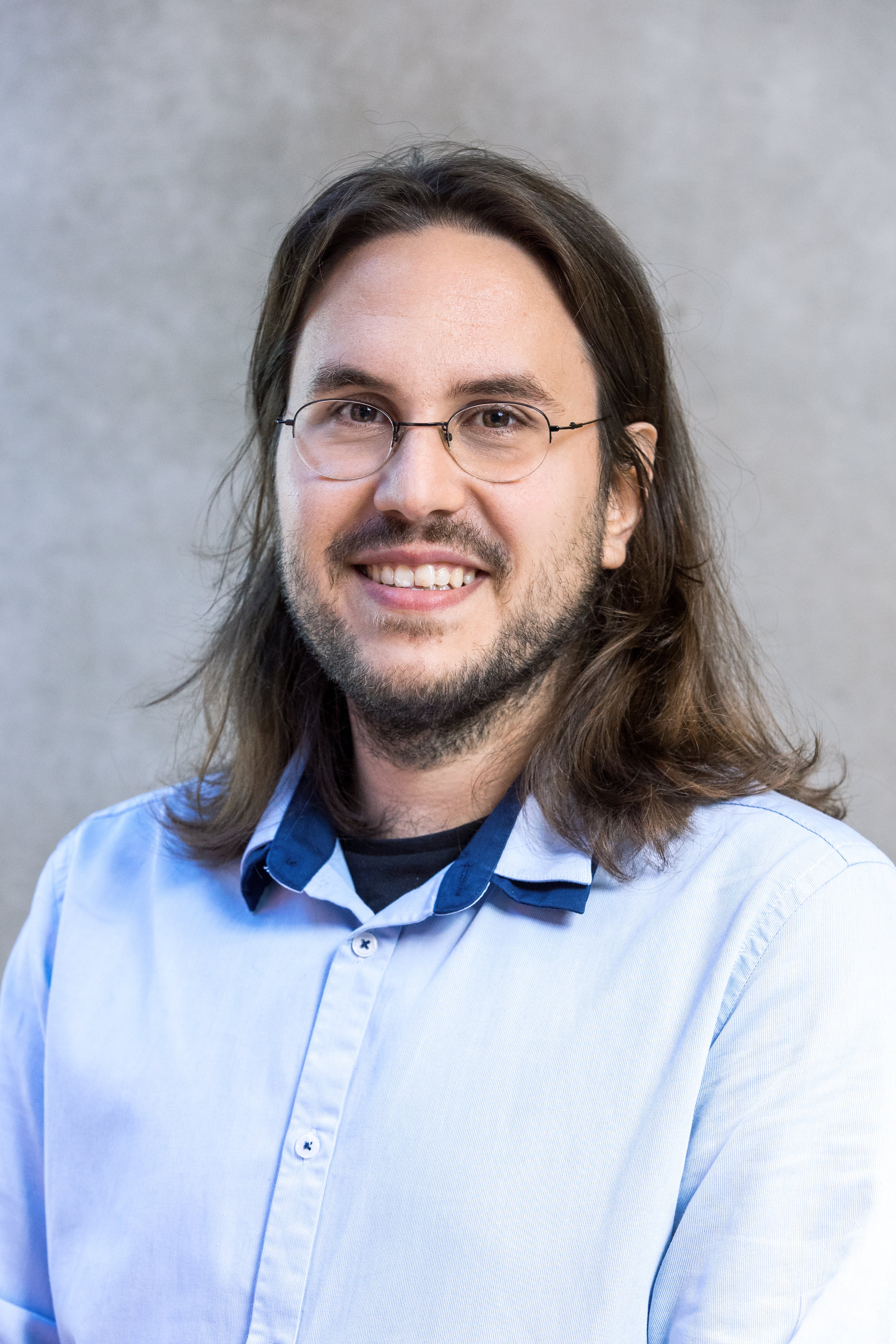
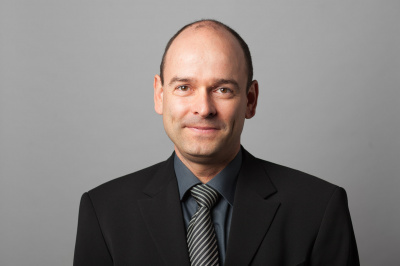
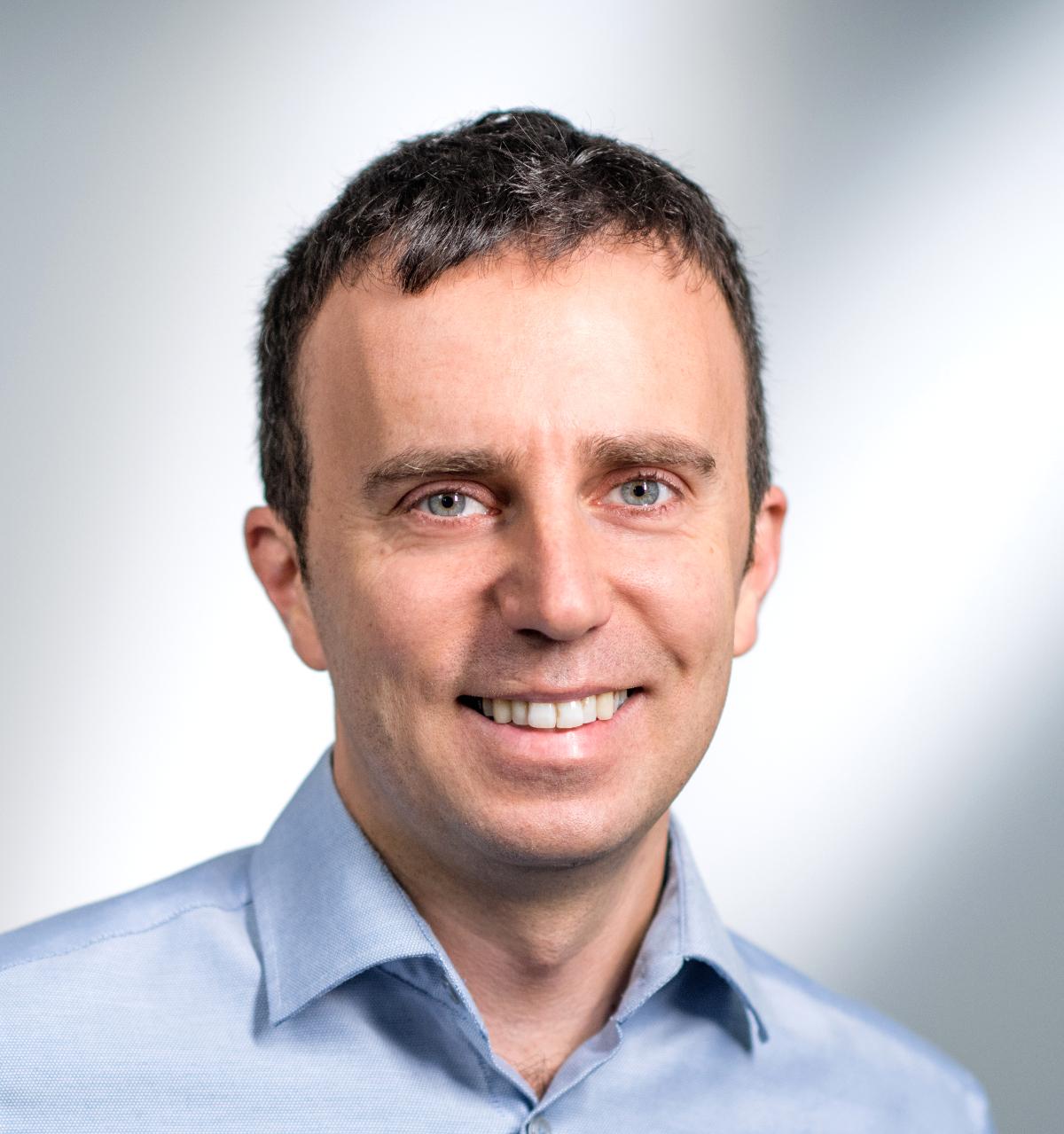
Sebastijan Dumancic is an Assistant Professor at Delft University of Technology, focusing on neuro-symbolic AI through program synthesis and probabilistic programming. He leads the RAIL lab and collaborates with institutions like Harvard, MIT, and CNRS. His research bridges symbolic AI and machine learning, applying program synthesis to scientific discovery, transportation, and robotics. He holds an FWO-funded PhD from KU Leuven and has participated in initiatives like ELLIS and the Symbolic Computation and Machine Learning Initiative. Program synthesis Probabilistic programming Neuro-symbolic AI Constraint-based learning His recent articles highlight advancements in program synthesis, neuro-symbolic integration, and constraint satisfaction. Projects like Find2Fix and Intelligent Greenhouse Horticulture (funded by NWO) demonstrate practical applications. ELLIS Membership University Teaching Qualification He supervises numerous MSc and PhD students in projects involving logic programming, program synthesis, and probabilistic modeling. Active in workshops and symposia, he contributes to neuro-symbolic AI and scientific discovery.
Nicolas Zufferey is a Full Professor of Operations Management at the University of Geneva, Switzerland, where he has served since 2008. He leads research in optimization methods for complex systems, focusing on applications in supply chain management, production planning, inventory control, and transportation logistics. His affiliations include the Research Institute of Management and collaborations with CIRRELT (Transportation & Logistics) and GERAD (Decision Analysis). Education: PhD in Operations Research (EPFL, 2002), MSc/BSc in Mathematics (EPFL) Prior Experience: Postdoc at University of Calgary (2003–2004), Assistant Professor at Université Laval (2004–2007) Research Interests: His work emphasizes developing advanced metaheuristics (e.g., VNS, Tabu Search, PSO) for challenging optimization problems. Key domains include: Multi-objective scheduling with resource constraints Inventory deployment under uncertainty Network design for supply chains and transportation systems Publications: Over 150 peer-reviewed articles across journals like European Journal of Operational Research , Transportation Research , and INFORMS Journal on Computing . Recent work addresses electric vehicle routing, drone integration in delivery systems, and robust decision-making under uncertainty. Collaborations: Engaged with 35+ universities and 27 private companies globally. Active in applying operations research to industrial problems (e.g., Swiss railways, luxury watch production, pharmaceutical networks).
Shervin Zakeri is a Research Fellow at the Research Institute for Statistics and Information Science, University of Geneva. His research focuses on multi-criteria decision-making (MCDM), integrating machine learning and artificial intelligence into decision support systems, particularly in transportation and supply chain contexts. He holds a Ph.D. from the University of Geneva. Key research areas include developing novel MCDM methodologies, such as the RWCVP and ARWEN methods, and applying these to real-world problems like autonomous vehicle integration and supplier selection. His work bridges theoretical advancements with practical applications in urban logistics, grey systems theory, and optimization algorithms. Publications highlight contributions to decision modeling in transportation (e.g., Geneva’s public transport systems) and material selection problems. Collaborations involve interdisciplinary teams addressing challenges in sustainable supply chains and urban planning. No scientific awards are listed, but his active research portfolio demonstrates significant contributions to operations research and decision analysis.
Dr. Kenan Zhang is a Tenure Track Assistant Professor at EPFL's School of Architecture, Civil and Environmental Engineering, leading the Laboratory for Human-Oriented Mobility Eco-system (HOMES). She holds dual roles in teaching Civil Engineering and contributes to the EDCE and SGC programs. Her research focuses on mathematical modeling, optimization, and operations management of urban transportation systems, with emphasis on emerging mobility services and technologies. Education: BSc in Civil Engineering, Tsinghua University MSc in Architecture-Engineering-Construction Management (AECM), Carnegie Mellon University PhD in Civil Engineering (Transportation System Analysis & Planning) and second MSc in Statistics, Northwestern University Postdoctoral Researcher at ETH Zurich Research Interests: Urban transportation systems, optimization algorithms, sustainable mobility, traffic flow theory, and emerging technologies like autonomous vehicles and MaaS platforms. Her work integrates data-driven approaches with theoretical models to address real-world challenges in urban mobility. Awards & Recognition: CEE Rising Star Award COTA Best Dissertation Award TRB Committee Membership (ACP 50) Editorial Advisory Board, Transportation Research Part C Teaching & Advising: Supervises PhD students Liu Xuhang & Ma Xinyu. Teaches courses on urban transport systems, transportation network modeling, and seminars in civil/environmental engineering. Active in curriculum development for interdisciplinary mobility studies. Labs & Collaborations: Directs HOMES Lab exploring human-centric mobility ecosystems. Engages in international collaborations and policy analysis for sustainable transport solutions.
Nikolaos Geroliminis is a Full Professor at École polytechnique fédérale de Lausanne (EPFL) holding multiple appointments across the institution. He serves as Full Professor at the Urban Transport Systems Laboratory (LUTS) within the School of Architecture, Civil and Environmental Engineering (ENAC), Full Professor at SGC-ENS (Teaching), and Full Professor at SHS-ENS (Teaching). Additionally, he is a Member of the Diversity Office at ENAC (DOENAC), PhD program committee member for both Civil and Environmental Engineering and Robotics, Control and Intelligent Systems doctoral programs, and Head of Unit for the ENAC Academic Evaluation Committee. Dr. Geroliminis received his Diploma in Civil Engineering from the National Technical University of Athens (NTUA) in 2003, followed by an M.S. in Civil and Environmental Engineering from the University of California, Berkeley in 2004, and completed his Ph.D. in Civil and Environmental Engineering from UC Berkeley in 2007. Prior to joining EPFL, he served as an Assistant Professor in the Department of Civil Engineering at the University of Minnesota. His research primarily focuses on urban transportation systems with particular emphasis on traffic flow theory, control, and optimization of large-scale networks. His work spans multiple domains including public transportation, logistics, ride-hailing systems, drone-based traffic monitoring, and the Macroscopic Fundamental Diagram (MFD) concept. Dr. Geroliminis has pioneered research using drone swarms for traffic monitoring through the pNEUMA experiment, which has generated high-resolution traffic data for studying congestion propagation, lane-changing behavior, and emission patterns. His recent work increasingly addresses emerging mobility systems including autonomous vehicles, electric vehicle charging management, and urban air mobility. His publication record demonstrates a clear evolution from fundamental traffic flow theory toward increasingly complex multimodal transportation systems. Recent publications (2023-2025) show strong emphasis on drone-based traffic monitoring, optimization of ride-sharing systems, integration of public transit with ride-hailing services, and applications of artificial intelligence to traffic forecasting and control. His work consistently bridges theoretical developments with practical applications for improving urban mobility. ERC Starting Grant 'METAFERW: Modeling and controlling traffic congestion and propagation in large-scale urban multimodal networks' Dr. Geroliminis serves as Associate Editor for Transportation Research Part C and is on the editorial boards of Transportation Research Part B, Transportation Letters, and Journal of ITS. He is actively involved in multiple doctoral programs at EPFL and serves on the Transportation Research Board's Traffic Flow Theory Committee. His research has been supported by the Swiss National Science Foundation, Board of the Swiss Federal Institutes of Technology, European Union, and Innosuisse – Swiss Innovation Agency. As head of the Urban Transport Systems Laboratory (LUTS), Dr. Geroliminis leads a research team focused on developing sustainable transportation solutions through innovative modeling approaches. His laboratory has been instrumental in conducting large-scale field experiments like pNEUMA, which employs drone swarms to collect unprecedented traffic data. The lab's work bridges transportation engineering, control theory, and data science to address pressing urban mobility challenges.
Olivier Gallay is a Lecturer and Invited Guest at École Polytechnique Fédérale de Lausanne (EPFL), with cross-disciplinary affiliations across Microengineering (STI), Humanities and Social Sciences (CDH), and Management of Technology (CDM). His work integrates Applied Probabilities, Queueing Theory, and Information Theory to solve complex problems in production networks and sustainable logistics. Teaching roles in Corporate Sustainability, Social Innovation, and Supply Chain Dynamics Research spans drought resilience, sweet potato supply chains, and hybrid truck-drone delivery systems Key methodologies: stochastic modeling, agent-based simulations, and combinatorial optimization Recent publications analyze nonlinear economic equilibria through van der Waals modeling, decentralized logistics platforms, and weariness dynamics in service networks.
Francesco Corman is an Associate Professor at the Department of Civil, Environmental and Geomatic Engineering at ETH Zürich, where he also serves as the Head of the Institute for Transport Planning and Systems (IVT). His academic career spans from his doctoral studies at Delft University of Technology to his current position at one of Europe's leading technical universities. He has established himself as a leading researcher in transport systems with a focus on railway operations and optimization. His educational background includes: Doctoral Degree (Ph.D.) from Delft University of Technology (2007-2010) Master's Degree in Management & Automation Engineering from Roma TRE University, Italy (2004-2006) Bachelor's Degree in Computer Science Engineering from Roma TRE University, Italy (2001-2004) Professor Corman's research focuses on analytics, optimization and control in transport systems, with particular emphasis on public transport, railway networks, and logistics systems. His work bridges the gap between theoretical optimization models and practical applications in real-world transportation networks. He has developed innovative approaches to railway traffic management, public transport operations, and freight logistics that address contemporary challenges in transportation systems. His recent publications demonstrate a strong trend toward data-driven approaches in transportation, with increasing integration of machine learning techniques, particularly deep learning and Bayesian networks, into traditional transportation optimization problems. There's also a growing emphasis on sustainability considerations in transportation systems, as evidenced by research on environmental impacts of railway infrastructure. His scientific contributions include: Development of advanced models for railway traffic management and optimization Innovative approaches to public transport disruption analysis and recovery Integration of on-board monitoring data for railway infrastructure management Probabilistic modeling of transportation operations under uncertainty Professor Corman leads several significant research projects including ESTRA (Efficient Safe Train Dynamics), LeRaBe (Learning railways for better schedules), NCCR (Dynamic stochastic learning of train dynamics as enabler to highly automated train operation), RaDiCa (Modeling the Impact of Digitalization on Railway Capacity), and UrbanEcho (Envisioning tomorrow - A digital twin technology for sustainable urban planning in data poor regions). He teaches multiple courses at ETH Zürich including Public Transport Design and Operations, Public Transport and Railways, Logistics and Freight Transportation, and contributes to doctoral seminars on Data Science and Machine Learning in Civil Engineering. His teaching reflects his research expertise, bridging theoretical concepts with practical applications in transportation systems.
Luca Maria Gambardella is a Full Professor at the Faculty of Informatics of Università della Svizzera italiana (USI) and serves as the Vice Rector for Innovation and Corporate Relations at USI. He is also the co-director of the Artificial Intelligence Master program and affiliated with IDSIA (Istituto Dalle Molle di studi sull'intelligenza artificiale USI-SUPSI). Additionally, he is the Co-Founder, CTO & Head of Applied AI at Artificialy SA, a Lugano-based company. His educational background includes a PhD in Engineering Sciences and Technology from ULB, École Polytechnique de Bruxelles, and a Master in Computer Science from the University of Pisa, Italy. Gambardella's research spans several cutting-edge areas in artificial intelligence and robotics. His work focuses on meta-heuristics algorithms , particularly Ant Colony Optimization, as well as machine learning and swarm intelligence . In operational research, he specializes in scheduling , vehicle routing and robust optimization . His robotics research emphasizes swarm robotics , mobile robots , and drones , with particular interest in human-robot interaction and visual anomaly detection. His recent publications (2023-2025) demonstrate a strong focus on optimization problems (particularly Traveling Salesman and Steiner Tree problems), robotics (swarm robotics, navigation, and human-robot interaction), and educational applications of computational thinking. A significant portion of his recent work combines traditional optimization techniques with modern machine learning approaches, reflecting the interdisciplinary nature of his research. Ranked by Stanford University in the top 2% of scientists worldwide (2021-2023) Special Swiss ICT Award 2016 (with Juergen Schmidhuber) "Watt d'Or", Swiss award for best energy projects 2015 Gambardella has supervised 14 PhD theses (with four in progress) and has secured over 61 million CHF in research funding, including 26 Swiss National Science Foundation projects (20 as principal investigator), 7 European Projects, and numerous industrial collaborations. He leads the Swarm Robotics Lab at IDSIA and has been instrumental in establishing several research units and master's programs in intelligent systems. His artistic endeavors include "the sense gallery" immersive space at FoxTown in Mendrisio, the interactive urban installation "Neuralrope#1" in Lugano-Besso pedestrian tunnel, and several published novels including "Sei Vite" (2013), "Il suono dell'alba" (2019), and "Segni particolari: tatuaggio con una stella a 5 punte sul polso sinistro" (2024).
Meritxell Pacheco Paneque is a Senior Researcher in the Department of Informatics at the University of Fribourg's Faculty of Management, Economics, and Social Sciences. Her research focuses on integrating advanced discrete choice models and optimization techniques to address complex decision-making problems in transportation and logistics. She holds a Ph.D. and actively contributes to both theoretical and applied research in operations research and transportation science. Her work emphasizes the development of mathematical frameworks that capture demand-supply interactions, particularly in contexts like waste collection routing, passenger satisfaction maximization, and railway disruption management. She employs methodologies such as Lagrangian decomposition, mixed-integer programming, and stochastic modeling to bridge behavioral sciences with optimization challenges. Key research outputs include pioneering work on choice-based optimization models, facility location under penalties, and traffic state estimation using connected vehicle data. Her research has been published in top journals like Transportation Research Part B and Computers & Operations Research . Pacheco Paneque collaborates with institutions and industry partners to advance practical applications of her models. Her ORCID profile (0000-0003-2192-7510) and email meritxell.pacheco@unifr.ch provide access to her full body of work.
David Schindl is a Lecturer in the Department of Informatics at the University of Fribourg's Faculty of Management, Economics and Social Sciences, with his primary appointment at Haute Ecole de Gestion (HEG) Geneva since 2008. His research bridges graph theory and combinatorial optimization with practical applications in logistics, vehicle routing, and academic timetabling systems. Education: PhD in Mathematics, EPFL, 2004 Research Interests: Dr. Schindl specializes in theoretical graph structures—including k-community detection, clique-width parameterization, and EPG graphs—with direct applications to transportation logistics, waste management, and educational scheduling. His work on course/exam timetabling at HEG since 2012 demonstrates his commitment to solving real-world operational challenges through mathematical optimization. Research Trends: Analysis of his 2020-2025 publications reveals sustained focus on community structures in graph classes and width-parameterized algorithms, alongside growing emphasis on sustainable logistics. His waste collection project exemplifies the environmental application of combinatorial optimization to reduce municipal fuel consumption and emissions. Grants and Projects: Efficient and sustainable waste collection (2019-2022): Funded by Innovation, this project developed optimization algorithms for waste collection routing in Swiss municipalities using electric vehicles and intermediate depots to minimize environmental impact. Teaching: At the University of Fribourg, he teaches decision support and graph theory courses. At HEG Geneva, he delivers instruction in statistics and mathematics for economics students, emphasizing practical applications of quantitative methods.
Reinhard Bürgy is a Part-Time Lecturer at the Department of Computer Science, Lucerne School of Computer Science and Information Technology, Hochschule Luzern (Lucerne University of Applied Sciences and Arts), Switzerland. He concurrently serves as a Solution Architect for Decision Support & Operations Research at Polypoint AG. His academic background includes roles as Senior Assistant and Postdoctoral Researcher at the University of Freiburg and Polytechnique Montréal. Education: PhD in Economics (Operations Research focus) from University of Freiburg (2014), Master in Business Informatics from University of Freiburg (2009). Research focuses on quantitative decision support systems for industry and services, exact/heuristic optimization methods, combinatorial optimization, integer programming, algorithms & data structures, and operations/service management. Key application areas include production planning, sustainable logistics systems, and workforce scheduling in retail and healthcare. His publications emphasize scheduling optimization (job shop, employee scheduling), logistics network design, and infrastructure resilience. Notable work includes convex cost job shop scheduling and decomposition heuristics for large-scale employee scheduling problems. Advising and grants: No specific students or grants mentioned. Active in industry-academia collaboration through Polypoint AG and prior academic roles.
Ataç Selin is a Researcher at the University of Applied Sciences and Arts Western Switzerland (HES-SO), affiliated with the Interdisciplinary Institute for Business Development (IIDE) at HEIG-VD. She holds a PhD in Transportation Science from EPFL (2023) and focuses on optimizing vehicle sharing systems, logistics, and sustainable urban mobility. Her work integrates simulation-optimization frameworks to address challenges in bike/car sharing systems, electric vehicle infrastructure, and craft beer distribution logistics. Education: PhD in Transportation Science (2023), École Polytechnique Fédérale de Lausanne (EPFL) MSc in Operations Research (2016), Middle East Technical University (METU) BSc in Industrial Engineering (2013), Middle East Technical University (METU) Research Interests: Her research spans vehicle routing optimization, demand forecasting in transportation networks, and decision-making frameworks for sustainable systems. She has pioneered a holistic management framework for vehicle sharing systems, emphasizing rebalancing strategies, clustering algorithms, and environmental impact mitigation. Key Projects: "Craft Beer Distribution Optimization" (2024), funded by Innosuisse, focuses on collaborative logistics platforms for Swiss craft breweries. "Light Electric Vehicle Sharing Systems" (2024), developing decision support tools for EV infrastructure. Awards: Recipient of the EPFL EDCE Mobility Award (2021) for contributions to VSS optimization and the METU Best Graduate Performance Award (2016).