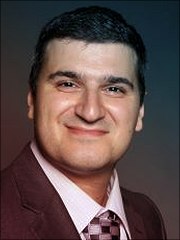
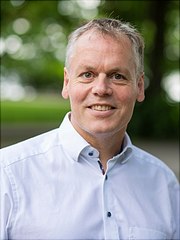
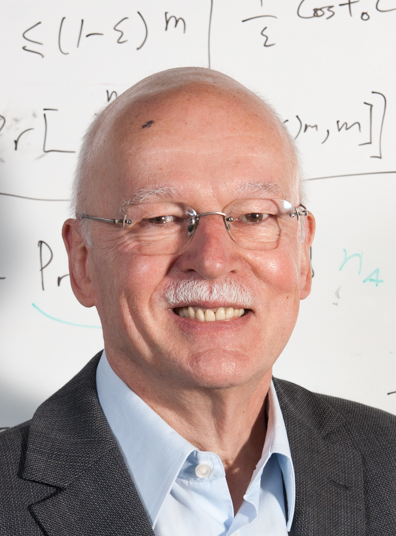
Nadine Wollenberg is affiliated with the Faculty of Mathematics at the University of Duisburg-Essen. She actively contributes to research in stochastic optimization applied to transportation and logistics, focusing on resource-efficient route planning in the Ruhr region. Her work is supported by the Mercator Research Center Ruhr (MERCUR) since 2012. For contact, she can be reached via email at nadine.wollenberg@uni-due.de or through her office at Thea-Leymann-Straße 9, D-45127 Essen. Research Areas: Stochastic optimization, vehicle routing, resource-efficient planning Projects: MERCUR-funded route planning initiative (since 2012) Contact: Phone: 0201 / 183 6889 Room: WSC-W-4.29 Office hours: By appointment
Prof. Dr. Christian Almeder serves as Professor and Head of the Chair of Supply Chain Management within the Faculty of Business Administration and Economics at Viadrina European University (Frankfurt (Oder), Germany). His research focuses on operations research applications in production planning, logistics, and supply chain optimization, with particular expertise in lot sizing, scheduling, and perishable goods management. He maintains active research output with publications spanning from 1997 to 2023. Almeder's research centers on mathematical modeling of complex production and logistics systems. His primary contributions involve developing heuristic and metaheuristic solutions for capacitated lot sizing problems, multi-level scheduling, and integrated production-distribution planning. Key specialties include handling perishability constraints, lead time uncertainties, and batch processing requirements using genetic programming, simulation-based optimization, and clearing function approaches. His work bridges theoretical operations research with industrial applications in supply chain management. Analysis of his 15 most recent publications (2013-2023) reveals a consistent focus on lot sizing and scheduling, with increasing emphasis on integrated supply chain problems and perishable goods logistics. Methodologically, he combines metaheuristics (genetic programming, simulated annealing) with simulation techniques to address real-world complexities like stochastic processing times and limited buffers. His work demonstrates strong application in production planning parameter tuning, vehicle routing integration, and robust operational planning under uncertainty.
Prof. Dr. Bernd Kaltenhäuser has been Professor of Technical Fundamentals at the Baden-Württemberg Cooperative State University (DHBW) Villingen-Schwenningen since 2014. Affiliated with the Faculty of Economics, he teaches a spectrum of courses spanning project management, quality and process management, financial mathematics, technical mechanics, electrical engineering basics, and physical principles. Education 1994-2003: Studies in Physics at Heidelberg, Ulm and Stuttgart Universities 2003-2007: Doctorate in Natural Sciences (Dr. rer. nat.), University of Stuttgart 2009-2014: M.Sc. in Economics, Fernuniversität Hagen Research Focus Prof. Kaltenhäuser’s research integrates system dynamics, blockchain technology in transportation, predictive modelling for autonomous vehicles, and empirical methods from applied social research and marketing. His interdisciplinary approach leverages physics, economics, and data science to address mobility challenges. He is particularly active in developing algorithms for fleet routing, ride-hailing optimisation, and evaluating market readiness for autonomous driving in Germany. Scientific Awards Artur Fischer Inventor Prize 2009 Heinrich Düker Prize 2004, Robert Bosch Foundation for Education and the Promotion of Disabled People Patents & Impact He holds two patents in flat-structure bioreactor design, demonstrating his earlier engagement with biofuel production technologies. His 2020 and 2018 market studies on autonomous driving provide key data for German transport policy stakeholders.
Professor Jörn Schönberger leads the Chair of Transport Services and Logistics, focusing on advanced transportation and logistics systems. His work spans rail freight, public transport, and supply chain optimization. Affiliation: Chair of Transport Services and Logistics, Dresden Research Interests Rail Transport: Eurasian container flows, service quality assessment, and international passenger rail potential. Supply Chain Management: Heterogeneous supply chains, production-routing coordination, and network design. Operations Research: Optimization models, vehicle routing, and robust decision-making under uncertainty. Sustainable Mobility: Eco-routing applications, zero-emission transport, and greenhouse gas reduction in logistics. Publication Trends Recent work emphasizes rail freight efficiency, sustainable transport systems, and machine learning applications in mobility. Key subfields include international logistics, vehicle routing algorithms, and cross-border transport planning.
Dr. Abtin Nourmohammadzadeh is a scientific assistant (Researcher) at the Institute for Business Information Systems, University of Hamburg Business School, since July 2019. He previously served as a doctoral researcher at Clausthal University of Technology (2014-2019) and holds a PhD in Informatics. Current Role: Researcher at University of Hamburg Education: Master's and Bachelor's in Industrial Engineering Research Focus: Optimization techniques, transportation logistics, and machine learning His research integrates meta-heuristic optimization (e.g., genetic algorithms, particle swarm optimization) with transportation problems (truck platooning, container terminals) and machine learning (ANNs, SVMs) for industrial fault diagnosis. Publications demonstrate applications of mathematical programming , swarm intelligence , and hybrid algorithms to logistics and engineering challenges. Recent work emphasizes fuel-efficient vehicle coordination , noise-resilient diagnostic systems , and port operations optimization . No specific scientific awards are mentioned in the provided text.
Grit Walther is a University Professor of Operations Management at the Faculty of Business and Economics, RWTH Aachen University since September 2012. She leads the Chair of Operations Management, focusing on application-oriented research in logistics and production systems. Her work bridges business administration with engineering disciplines to address sustainability challenges in value networks. Professor Walther's educational background includes a natural sciences degree in Geoecology followed by a doctorate in 2004 from the Chair of Production and Logistics at TU Braunschweig. Her academic career progressed from heading the 'Sustainable Value Networks' working group at TU Braunschweig (2004-2009), to completing her habilitation in 2009, and holding a professorship at the University of Wuppertal (2010-2012) before joining RWTH Aachen. Her research spans production, logistics, and supply chain management with a strong emphasis on sustainability. Professor Walther investigates sustainable supply chains, reverse logistics, sustainable mobility systems, and the transformation toward zero-emission industries. Her work integrates robust and multi-criteria optimization approaches to address uncertainties in regulatory, economic, and technological conditions across various sectors including non-ferrous metal industries, automotive, and energy markets. Professor Walther's publication record demonstrates consistent contributions to leading journals in operations research and management science. Her recent work shows increasing focus on sustainability challenges, particularly in recycling networks, green logistics, and sustainable mobility. She frequently collaborates with researchers across disciplines, addressing complex problems at the intersection of business, engineering, and environmental science. She actively engages with industry through research projects implemented in interdisciplinary cooperation with engineering and scientific research institutes, industrial companies, and political decision-makers. Her work on sustainable value networks has practical implications for companies seeking to optimize their operations while meeting environmental objectives.
Marco Lübbecke is a Professor at the Faculty of Business and Economics of RWTH Aachen University , Germany. He serves as the chairholder of the Lehrstuhl für Operations Research and holds the position of Studiendekan (Dean of Studies) for his faculty. His professional contact is marco.luebbecke@rwth-aachen.de, with additional administrative contact at luebbecke@or.rwth-aachen.de. Current academic rank: Professor Faculty: Business and Economics Department: Operations Research Marco Lübbecke's research focuses on Operations Research and Mixed Integer Programming . He develops and analyzes algorithms like Branch-and-Price , Dantzig-Wolfe Reformulation , and Decomposition Methods to solve complex optimization problems in industrial, transportation, and political science applications. Core research areas: Combinatorial Optimization, Mathematical Programming Application domains: Logistics, Rail Transport, Redistricting, Manufacturing Systems Methodological interests: Column Generation, Cutting Planes, Algorithm Engineering His recent publications highlight advancements in optimization software frameworks like the SCIP Optimization Suite and algorithmic techniques for solving large-scale linear and integer programs. Key research trends include automated decomposition methods, structural analysis of MIPs, and hybrid approaches combining classical optimization techniques with machine learning insights. Marco Lübbecke actively participates in academic conferences and serves as a co-author in numerous technical reports and journal publications, contributing to the development of efficient optimization algorithms and their practical implementation.
Jian Chen is a prolific academic researcher with affiliations across multiple institutions worldwide, primarily in China but also including international universities. The DBLP disambiguation page lists 47 distinct individuals with this name, working in various departments including Computer Science, Electrical Engineering, Telecommunications Engineering, and other technical fields at prestigious institutions such as Zhejiang University, Xidian University, Northeastern University, and Ohio State University. Research interests span a wide range of technical domains including artificial intelligence, machine learning, computer vision, network security, medical imaging, and electrical engineering. Recent publications indicate active research in deep learning applications, image processing, trajectory analysis, and biomedical informatics. The publication output is substantial, with numerous papers appearing in IEEE Access, Pattern Recognition, and other high-impact journals. The research trends show a strong focus on practical AI applications across multiple domains, with particular emphasis on medical imaging, network security, and intelligent control systems. Many publications involve collaborative work with researchers across different institutions, indicating an active research network. While specific awards are not listed in the provided DBLP information, the volume and quality of publications suggest recognition within the academic community. The research output demonstrates expertise in both theoretical development and practical implementation of computational methods. Jian Chen appears to be actively mentoring students, as evidenced by the numerous collaborative publications, though specific student names aren't detailed in the DBLP records. The research spans both fundamental algorithm development and applied problem-solving across various engineering and computer science domains.
Lilly Palackal is a Researcher and External PhD candidate at the Technical University of Munich (TUM) School of CIT, affiliated with the Department of Computer Science. She collaborates closely with Infineon Technologies AG on quantum computing research. Her work focuses on quantum algorithms for optimization problems, co-design of quantum software/hardware, and quantum error correction/mitigation. Education: BSc (2018) and MSc (2021) in Mathematics from TUM, with thesis topics in quantum error correction and interactive quantum communication. Current PhD research bridges academic and industrial quantum computing challenges. Research interests include developing quantum solutions for logistics (e.g., vehicle routing), optimization (e.g., knapsack problems), and hardware-aware algorithm design. She supervises multiple student projects across mathematics, physics, and engineering disciplines at TUM and partner institutions. Recent publications explore hybrid quantum-classical methods, QAOA applications, and efficient algorithm encodings for quantum systems. Her work emphasizes practical implementations of quantum technologies in real-world scenarios.
Kai Brüssau is a Lecturer at the University of Hamburg's Business School, specializing in Data Science and Optimization. His research applies computational methods to business problems including Large Language Models, production scheduling, and port logistics. He develops heuristic algorithms for real-world applications such as vehicle routing in port areas and machine scheduling for industrial clients. Publications include optimization techniques for manufacturing and emissions reporting frameworks. Teaches courses in computational planning, data mining, and information systems modeling.
Prof. Rolf H. Möhring is a Professor at the Department of Mathematics, Faculty II – Mathematics and Natural Sciences, Technical University of Berlin. He specializes in Combinatorial Optimization, Graph and Network Algorithms, and Operations Research with applications in industrial and transportation systems. His research bridges theoretical foundations and practical implementations, addressing challenges in scheduling, distributed computing, and algorithmic game theory. Key research interests include graph algorithms, project scheduling optimization, and robust optimization methodologies. Notable contributions span network flow analysis, traffic equilibrium design, and logistics optimization in container terminals and shipping routes. Awards: 2025 Research.com Mathematics in Germany Leader Award, 2010 EURO Gold Medal. Publications: Over 127 papers with 16,279 citations in Computer Science and 113 papers with 15,733 citations in Mathematics. His work frequently explores combinatorial structures, invariant theory, and practical applications in distributed systems. His advising focuses on PhD students in combinatorial optimization and algorithmic theory, with contributions to the Mathematics Genealogy Project. Collaborations include industrial projects like Kiel Canal ship traffic optimization and AGV routing in container terminals, emphasizing real-world problem-solving through mathematical frameworks.
Hao Chen is a Professor at the University of Chinese Academy of Sciences, School of Artificial Intelligence, with significant contributions across multiple research domains. His work spans computer science, networking, and artificial intelligence with applications in transportation, healthcare, and industrial systems. His primary research interests include Federated Learning , Blockchain Technology , Internet of Vehicles , Satellite Networks , Resource Allocation , and UAV Systems . His research program focuses on developing novel algorithms and frameworks for distributed systems, edge computing, and intelligent networking solutions. Recent work demonstrates particular strength in privacy-preserving techniques, multi-agent systems, and real-world applications of AI in transportation and healthcare domains. Analysis of his recent publications (2024-2025) reveals a strong emphasis on practical applications of theoretical concepts, with particular attention to vehicular networks, satellite communications, and medical imaging. His work frequently combines deep learning with traditional optimization techniques to address complex real-world problems. The interdisciplinary nature of his research connects computer science with civil engineering, medical diagnostics, and transportation systems. His leadership in federated learning and blockchain applications for Internet of Vehicles has established him as a significant contributor to these emerging fields. Recent publications show increasing collaboration with both academic and industry partners across multiple continents.
Professor Yi-Bing Lin is a distinguished faculty member in the Department of Computer Science at National Yang Ming Chiao Tung University, Taiwan, where he leads pioneering research in Internet of Things (IoT) systems and applications. His work primarily focuses on developing the IoTtalk platform and its numerous derivatives across various domains including smart agriculture, smart homes, environmental monitoring, and creative applications. His research interests span Internet of Things, Edge Computing, Smart Agriculture, Sensor Networks, AI Integration, Wireless Networking, and Smart Home Systems. Professor Lin has developed the IoTtalk framework that enables rapid development of IoT applications with numerous specialized implementations including VoiceTalk, SensorTalk, AgriTalk, and many others that address specific domain challenges. His work emphasizes practical implementations with real-world impact, particularly in precision agriculture where his team has developed systems for orchid disease detection, rice blast monitoring, turmeric farming, and watermelon ripeness prediction. Analysis of his recent publications (2023-2025) reveals a strong trend toward integrating AI with IoT systems, particularly for agricultural applications and smart environments. His work increasingly incorporates advanced techniques like continuous wavelet transform, deep learning, and computer vision to solve practical problems in precision farming and environmental monitoring. The publications also show growing interest in creative applications of IoT technology for performing arts, interactive experiences, and educational contexts. Professor Lin has received recognition through consistent high-volume publication output in top-tier venues including IEEE Internet of Things Journal, IEEE Access, and Sensors. His collaborative network is extensive, with frequent co-authorship with researchers like Yun-Wei Lin, Wen-Liang Chen, and Min-Zheng Shieh. His advising has produced numerous researchers who continue to work in IoT and related fields, with many former students maintaining collaborative relationships. Professor Lin's research has been supported by multiple grants enabling the development of practical IoT systems with real-world implementations. His lab has developed numerous specialized IoT applications through the IoTtalk framework, creating a cohesive research ecosystem. Current work shows expansion into new application domains including interactive miniature worlds, simultaneous performance across locations using IoT-based motion capture, and IoT-based musical instruments like piano playing robots and violin robots, demonstrating the versatility of his research approach.
Sabine Storandt is a Lecturer at the Department of Computer Science, University of Freiburg, with a focus on algorithm design and transportation systems. She has contributed significantly to research in route planning, electric vehicle navigation, and public transit optimization. Her work emphasizes practical applications of theoretical algorithms in real-world scenarios. Her research interests include algorithms for vehicle navigation, route optimization, and facility location problems. She has received notable awards, including the Best Paper Award at VLDB 2014 and the INFOS Award for her PhD thesis on 'Algorithms for Vehicle Navigation.' In teaching, she has led courses such as Information Retrieval (as a tutor), Randomized Algorithms (lecture + tutorial), and Information Extraction (seminar). She has also collaborated on projects like DORC (Distributed Online Route Computation) and Enabling E-Mobility, addressing challenges in transportation and energy efficiency. Her recent publications highlight advancements in electric vehicle infrastructure, public transit planning, and efficient route algorithms, reflecting her expertise in bridging theoretical computer science with practical transportation solutions.
Yu Wang is a Lecturer at Bielefeld University's Faculty of Linguistics and Literary Studies, affiliated with the Computational Linguistics department. He is associated with the research project Monitoring the understanding of explanations under Prof. Dr. Hendrik Buschmeier, focusing on digital linguistics and text technology. While his institutional affiliation highlights computational linguistics, his Google Scholar publications reveal interdisciplinary work in optimization algorithms, graph neural networks, and machine learning applications. Research Interests: Yu Wang's work bridges computational linguistics with advanced algorithmic techniques. His publications explore Multi-objective optimization Graph neural network architectures Swarm intelligence applications Evolutionary computation methods Sparse learning systems Biologically-inspired algorithms Labs & Projects: Yu Wang contributes to the Digital Linguistics Group at Bielefeld University, specifically working on explainability monitoring in explanatory processes. His technical publications suggest collaborations with researchers in optimization and machine learning domains.