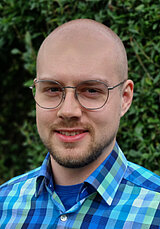
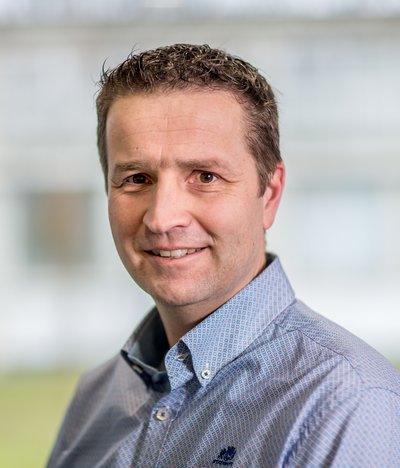
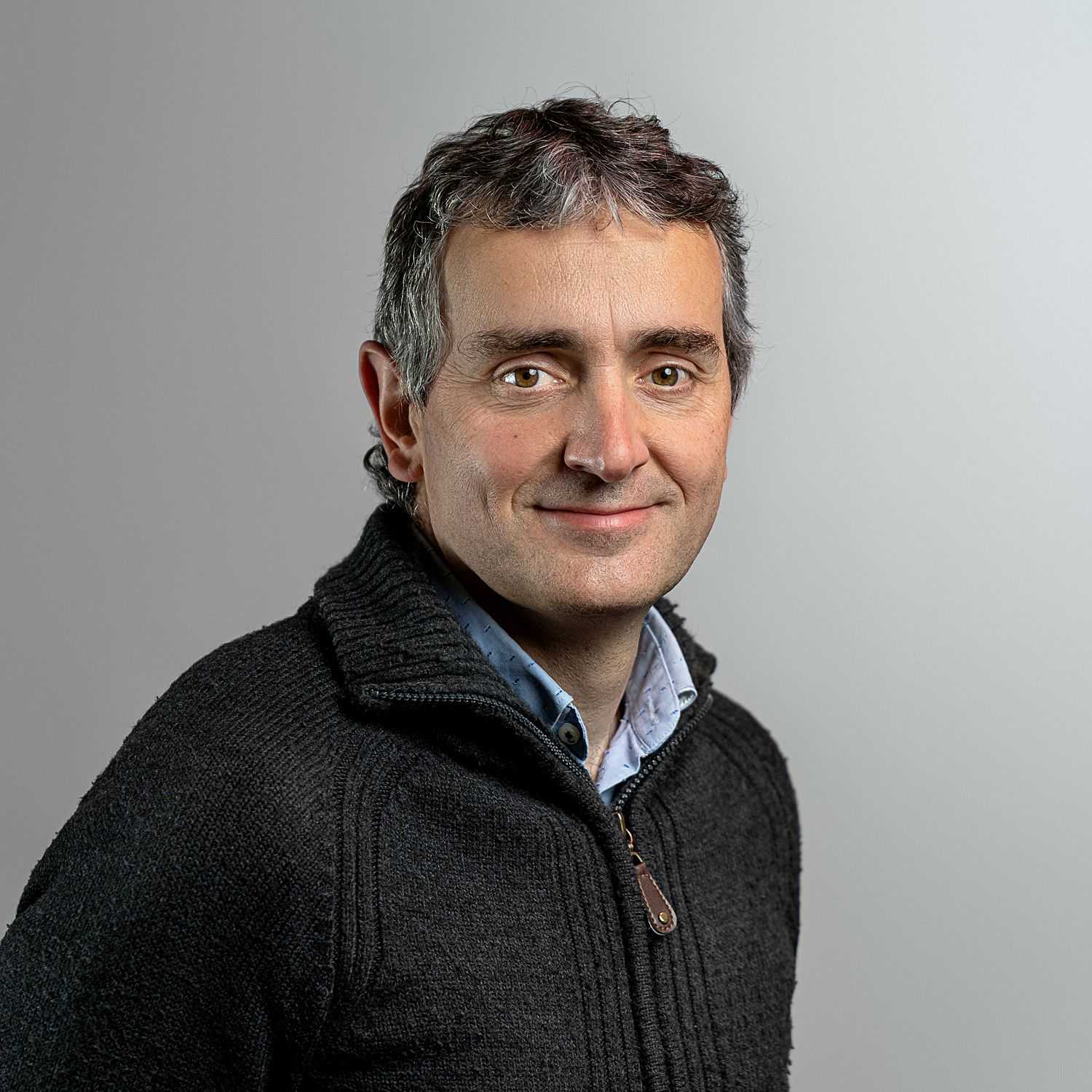
Marius Hadry is a doctoral researcher at the Chair of Software Engineering (Computer Science II) at the University of Würzburg, under the supervision of Prof. Samuel Kounev. He is affiliated with the Department of Computer Science within the Faculty of Mathematics and Computer Science. His research focuses on Self-aware Computing Systems , Sel-adaptive Systems , IoT and Cyber-physical Systems , Industry 4.0 , Platooning , and Intelligent Transportation Systems . Marius holds a Master's (2021) and Bachelor's (2019) in Computer Science from the University of Würzburg. Education: Master of Computer Science (2019-2021), Bachelor of Computer Science (2016-2019), both at the University of Würzburg. His work emphasizes practical applications of adaptive systems in transportation and logistics. Recent research explores traffic forecasting models, failure prediction in HDDs, and performance analysis of microservices. Marius actively contributes to international conferences like MASCOTS, SEAMS, UCC, and ICPE. Teaching activities include supervising Bachelor/Master theses, coordinating software architecture lectures, and organizing seminars on software engineering. He has also taught operating systems and contributes to academic initiatives like the Secure Software Systems Group.
Professor David M W Powers is a leading academic at Flinders University of South Australia, holding the Professor of Computer and Cognitive Science position. He serves as Visiting Professor at Beijing University of Technology and contributes extensively to editorial and program committees, including as Editor-in-Chief of Springer's Cognitive Science and Technology series. PhD in Computational Psycholinguistics (UNSW) Founding President of ACL SIGNLL and CoNLL conference series Recipient of 15+ major research grants including multiple ARC and NSF awards His research spans Artificial Intelligence, Cognitive Science, Robotics, and Biomedical Engineering with a focus on: Embodied Conversational Agents Brain-Computer Interfaces Parallel Logic Programming Evaluation Metrics in Machine Learning Assistive Technologies for disability support AI in Health and Education Recent publications emphasize optimization algorithms for autonomous systems (AUV routing models) and evaluation methodology advancements . Scientific awards include the Loebner Prize Bronze Medal and multiple ARC grants totaling over $30M in funding. Teaching roles include coordination of courses in Artificial Intelligence, Computational Intelligence, and Human-Computer Interaction . Professional engagements span leadership roles in ACL, ACM, and IEEE, with significant industry collaboration through startups like YourAmigo Pty Ltd.
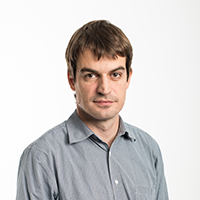
Dr. Scott R. Graham is the Dean for Research and Professor of Computer Engineering at the Air Force Institute of Technology . He earned his Ph.D. in Electrical Engineering from the University of Illinois at Urbana-Champaign (2004), M.S. in Electrical Engineering from AFIT (1999), and B.S. in Electrical Engineering from Brigham Young University (1993). Senior Member, IEEE (2011) Recipient of multiple awards including AETC Outstanding Scientist/Engineer (2022), AFIT Advising & Mentoring Award (2020), and AF Science & Engineering Team Awards (2010-2011) Active researcher in cyber physical systems security with 30+ peer-reviewed publications His research focuses on cyber physical systems security , computer architecture , and embedded computing . Key areas include hardware security, networked control systems, and security by design principles. Recent work examines microarchitectural monitoring for task identification, ransomware mitigation in critical infrastructure, and secure communication protocols for autonomous systems. Publications reveal trends in cybersecurity (20+ papers), embedded systems (10+ papers), and network security (15+ papers). Common subfields include hardware vulnerability analysis, RISC-V security, UAV threat modeling, and networked control system resilience. Scientific achievements include: Tau Beta Pi (1998) and Eta Kappa Nu (1998) honors IEEE Senior Member (2011) Air Force and AETC awards for research excellence Dr. Graham has advised numerous students, evident from 25+ publications with * (Master's) and ^ (PhD) student co-authors. His work impacts unmanned aerial vehicle security , smart grid protection , and cyber-physical system resilience across defense applications.
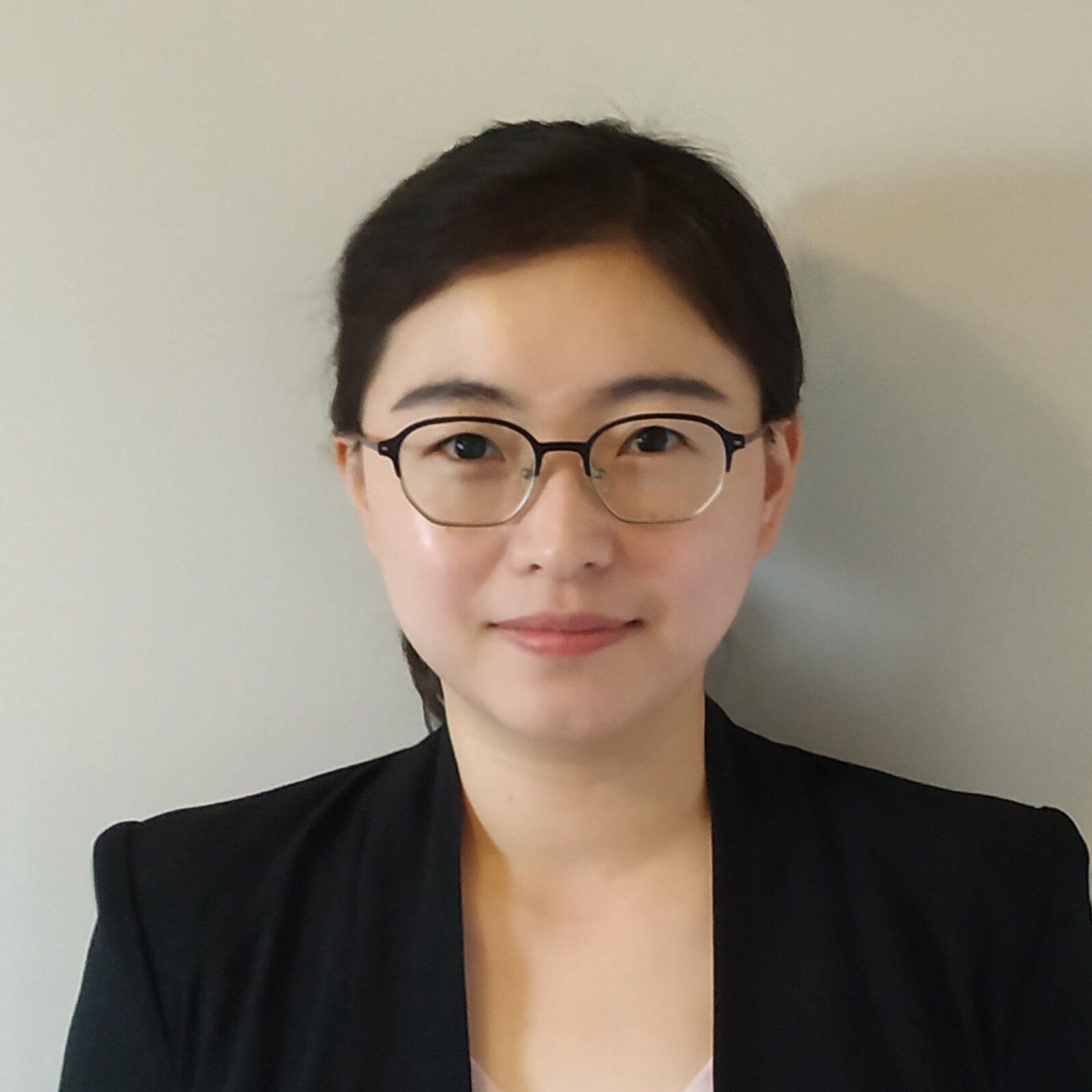
Yujie Tang is an Assistant Professor in the Faculty of Computer Science at Dalhousie University, Halifax, Canada, where she has been serving since September 2022. Prior to this, she was an Assistant Professor at Algoma University from July 2019 to August 2022, and a Postdoctoral Fellow at the University of Waterloo from October 2017 to June 2019. Faculty of Computer Science, Dalhousie University (2022–Present) School of Computer Science and Technology, Algoma University (2019–2022) Department of Electrical and Computer Engineering, University of Waterloo (Postdoc, 2017–2019) Education: Ph.D., Electrical and Computer Engineering, University of Waterloo M.E., Harbin Institute of Technology, Shenzhen B.E., Lanzhou Jiaotong University Dr. Tang’s research centers on intelligent networking and computing technologies, with applications in B5G/6G networks, Internet of Vehicles (IoV), edge computing, and UAV-assisted systems. She leverages machine learning and AI to optimize resource management, spectrum allocation, and network performance in heterogeneous and dynamic environments. Her work bridges theoretical design with practical implementation in next-generation communication systems. The recent publications highlight a consistent focus on AI-driven solutions for wireless networks, particularly in vehicular communications, edge intelligence, and spectrum efficiency. Key themes include reinforcement learning for UAV deployment, deep learning for spectrum sensing, and cooperative edge caching in 5G/mmWave networks. These works span top journals such as IEEE TWC, TVT, IoT Journal, and JSAC, reflecting strong technical depth and real-world applicability. Scientific Awards and Honors: NSERC Discovery Grant (2021–2026) Faculty Research Startup Funds from Dalhousie and Algoma Universities Best Speaker Award, University of Waterloo (2017) Multiple awards including FoE Award, Graduate Scholarship, and Entrance Awards from University of Waterloo (2011–2017) Dr. Tang actively contributes to the academic community as a reviewer for leading IEEE journals and conferences, and has served on technical program committees for IEEE INFOCOM, GLOBECOM, ICC, and VTC. She is a member of IEEE, IEEE Communications Society, and IEEE Vehicular Technology Society. She is currently advising and recruiting MSc and PhD students for research in B5G/6G, IoV, and AI-empowered edge computing. Laboratory and Research Group: Dr. Tang leads a research group focused on intelligent networking and edge AI systems at Dalhousie University. Her lab investigates real-time decision-making, resource slicing, and autonomous vehicular networks, often integrating simulation with practical deployment considerations.
Dr. Jeremy Qiu is a Senior Lecturer in Electrical Engineering at the School of Electrical and Computer Engineering, University of Sydney. He is a member of The Net Zero Institute and focuses on sustainable energy planning and electricity market analysis to facilitate Australia's low-carbon transition. His work combines advanced engineering methods with data science and artificial intelligence for optimizing power systems. Education: B.Eng. Electrical and Control Engineering, Shandong University (2008) M.Sc. Environmental Policy and Management, University of Manchester (2010) PhD Electrical Engineering, University of Newcastle (2014) Research Interests: Dr. Qiu specializes in low-carbon energy system planning, data analytics for electricity markets, and AI-assisted trading strategies. His work addresses critical challenges in renewable energy integration, electric vehicle charging infrastructure, and carbon emission reduction in coupled transportation and power networks. Recent Publications: His research spans solar power forecasting with AI, EV charging network optimization, peer-to-peer energy trading frameworks, and security analysis of AI applications in power systems. Articles emphasize hybrid modeling approaches combining machine learning, game theory, and robust optimization for sustainable energy solutions. Scientific Awards: Best Paper Award, IEEE Power and Energy Society General Meeting 2014 CSIRO Team Performance Cash Award 2017 Acknowledgment from Australian Prime Minister for energy policy impact Grants: He has secured over $6 million in research funding, including four ARC Discovery Projects, government grants, and industry partnerships focused on hydrogen-electricity systems, virtual power plants, and energy storage solutions.
Dr. Veselin Rakocevic is a Senior Lecturer in Electronic Engineering at City, University of London (post-merger with St George's). He holds a PhD in Telecommunications from Queen Mary, University of London (2002) and a Dipl-Ing in Electrical & Electronic Engineering from the University of Belgrade (1998). At City, he has served as Head of Department (2015-2018) and Associate Dean for Portfolio Development (since 2023). PhD: Telecommunications, Queen Mary, University of London (2002) Dipl-Ing: Electrical & Electronic Engineering, University of Belgrade (1998) His research focuses on multihop wireless networks , including optimal scheduling , dynamic clustering , cooperation mechanisms , and network self-organisation . Applications span vehicular networks , heterogeneous cellular networks , and energy network optimisation . Over 15 years, his publications demonstrate expertise in 5G/LTE-A protocols , VANET security , and transport-layer multipath tunneling . Recent article trends highlight 5G congestion control , machine learning for traffic identification , and game theory applications in rural wireless networks . He has supervised 12 PhD students with topics covering network optimization , QoS management , and mobile security . Major projects include REACH (EU-India rural broadband) and Wireless Networks for Moving Objects (EU COST Action).
Dr. Emre ÇANKAYA serves as an Assistant Professor in the Department of Industrial Engineering at Doğuş University's Faculty of Engineering, specializing in mathematical optimization and logistics systems. His academic journey spans doctoral research at Özyeğin University and professional experience at TÜBİTAK/TÜSSİDE. His educational credentials include: Ph.D. in Industrial Engineering, Özyeğin University (2022) Master's in Industrial Engineering, Özyeğin University (2017) Bachelor's in Industrial Engineering, Özyeğin University (2013) ÇANKAYA's research integrates mathematical modeling with practical applications in high-stakes domains. His work bridges theoretical optimization techniques and real-world implementation challenges, particularly in disaster response systems and industrial production environments. Methodologically, he specializes in developing heuristic algorithms for NP-hard problems while maintaining computational efficiency. Publication analysis reveals a consistent focus on combinatorial optimization with dual applications: manufacturing processes (label printing logistics) and humanitarian operations (disaster relief). His research demonstrates sophisticated adaptation of inventory routing frameworks to volatile environments, showing particular innovation in multi-phase heuristic development for time-sensitive supply chains. Teaching responsibilities encompass core industrial engineering subjects including Simulation Modeling, Supply Chain Management, and Operations Research, delivered primarily in English to international student cohorts. His industry experience at Kumport Port Services informs practical case studies in transportation network design.
Prof. Muammer ÖZKAN serves as Professor and Head of the Department of Mechanical Engineering at Yıldız Technical University's Faculty of Mechanical Engineering. He has held academic positions since 1990, progressing from Research Assistant to his current Professorship since 2015, with additional leadership as Head of Department since 2016. Doctorate in Mechanical Engineering, Yıldız Technical University (1992-1997) Postgraduate in Mechanical Engineering, Yıldız Technical University (1990-1992) Undergraduate in Mechanical Engineering, Yıldız Technical University (1984-1989) Prof. ÖZKAN's research focuses on automotive engineering with specialization in internal combustion engines, particularly diesel engine optimization, emission control, and fuel efficiency. His work extensively covers vehicle dynamics, brake systems, and energy balance analysis, with significant contributions to understanding the effects of multiple injection strategies on engine performance and emissions. He has pioneered research on biodiesel applications and developed advanced modeling techniques for public transportation systems. His publication record shows consistent research output with 15 recent articles (2020-2024) demonstrating strong focus on emission reduction strategies, low-temperature combustion techniques, and optimization of public transportation systems. His work combines experimental investigation with advanced computational modeling, including artificial neural networks and 3D road geometry approaches for fuel consumption modeling. Prof. ÖZKAN has supervised 33 theses (doctoral and postgraduate) and led numerous research projects, including TÜBİTAK-funded initiatives on diesel engine modernization and Euro6 heavy-duty engine development. His work has significant practical applications in urban transportation emissions reduction and sustainable vehicle technologies.
Marco Slikker is an Associate Professor of Operations Management and Game Theory at the Department of Industrial Engineering & Innovation Sciences (IE&IS) at Eindhoven University of Technology (TU/e). He is affiliated with the Operations, Planning, Accounting, and Control research group, where he focuses on applying game theory to operations management settings. His work bridges theoretical game theory concepts with practical applications in resource allocation, inventory management, and collaborative decision-making across various industries. Marco Slikker completed his education at Tilburg University, where he: Graduated in Econometrics with a specialization in Management Science in 1995 Conducted PhD research at the Department of Econometrics and the CentER research institute Obtained his doctorate in 2000 with the thesis 'Decision making and cooperation restrictions' Professor Slikker's research focuses on acknowledging individual decision makers in operations management settings through applications and extensions of game theory. His work spans both cooperative and non-cooperative game theory frameworks, examining how strategic behavior affects operational efficiency and resource allocation. Key areas include resource pooling, cost allocation mechanisms, sequencing games, and incentive system design. He particularly investigates how independent entities can collaborate effectively while addressing conflicts between individual incentives and collective benefits. Analysis of Professor Slikker's recent publications reveals a consistent focus on applying game-theoretic approaches to operations management problems. His work demonstrates an evolution from foundational theoretical contributions in network games and sequencing situations toward increasingly applied research in resource pooling, spare parts inventory management, and collaborative supply chains. A notable trend is his focus on core stability in cooperative games, with multiple papers establishing conditions under which stable cost allocation solutions exist. His research increasingly incorporates practical constraints and real-world considerations while maintaining strong theoretical foundations. While specific awards aren't detailed in the provided materials, Professor Slikker's work has garnered significant academic recognition through: Publications in top-tier journals including Operations Research, Management Science, and Mathematics of Operations Research Substantial citation counts (e.g., 51 citations for his 2015 Operations Research paper) Collaborative research with prominent scholars in operations management and game theory Professor Slikker teaches courses including 'Game theory with applications to operations management,' 'Proof techniques for IE,' and 'Microeconomics.' While specific PhD students aren't listed in the provided materials, his research group likely mentors graduate students working on game theory applications in operations management. His research has received funding including a joint grant from NWO and ProRail (Grant 438-12-305) supporting work on spare parts pooling. His collaborative approach is evident in numerous co-authored publications addressing practical industry challenges through game-theoretic frameworks. Professor Slikker is affiliated with the Operations, Planning, Accounting, and Control research group at TU/e's Department of Industrial Engineering & Innovation Sciences. His work appears connected to EAISI (Eindhoven Artificial Intelligence Systems Institute) High Tech Systems, particularly regarding spare parts inventory research. He collaborates extensively with researchers both within TU/e (including W.L. van Jaarsveld and G.J.J.A.N. van Houtum) and internationally, forming interdisciplinary teams that bridge theoretical game theory with practical operations management applications.
Prof. Tuba Yakıcı Ayan is a Professor of Econometrics at Karadeniz Technical University (KTU), Faculty of Economics and Administrative Sciences, where she has served since 1994. She currently acts as Deputy Head of the Department of Econometrics and coordinates both the Erasmus and Farabi exchange programmes for her faculty. Education Doctorate (1997–1999) – Atatürk University, Business Administration (Quantitative Methods) Postgraduate (1988–1990) – Karadeniz Technical University, Business Administration Undergraduate (1981–1986) – Istanbul Technical University, Business Engineering Undergraduate (1989–1992) – Karadeniz Technical University, Civil Engineering Research Interests Her scholarly work centres on econometrics , operational research and statistics , with particular emphasis on fuzzy decision-making models , efficiency and performance analysis , transportation optimisation , financial risk modelling , and energy-economic policy evaluation . A recurring theme is the application of advanced quantitative and artificial-intelligence techniques to socio-economic and managerial problems. Publication Trends Across more than thirty-nine refereed articles (2002-2024), a clear evolution emerges: early studies focused on Turkish banking efficiency and export performance; recent contributions integrate fuzzy logic, neural networks and gravity models into tourism demand, health-system benchmarking, sovereign credit rating, and sustainable-development assessments. Scientific Awards & Recognition Editorial board member and frequent reviewer for several SSCI/SCI journals (e.g., American Journal of Operations Research, Uluslararası İktisadi ve İdari İncelemeler Dergisi) Organiser and scientific committee member of 18th International Symposium on Econometrics, Operations Research and Statistics (2017) Advising & Grants Prof. Yakıcı Ayan has supervised five completed theses (one PhD and four master’s) on topics ranging from public-transport route optimisation to adaptive neuro-fuzzy credit-rating systems. She has participated in one funded TÜBİTAK-supported symposium project and regularly mentors students within the Erasmus and Farabi mobility programmes. Laboratories & Teams While no dedicated laboratory is listed, she actively leads the research group on quantitative methods within the Department of Econometrics, collaborates with colleagues across Turkey and Europe on multi-criteria decision-making projects, and supports data-driven policy analysis for regional development agencies.
Elvin Çoban serves as Associate Professor and Chair of the Industrial Engineering Department within Ozyegin University's Faculty of Engineering, specializing in optimization applications for healthcare systems, humanitarian logistics, and service operations. Her research bridges theoretical operations research with real-world implementation in critical infrastructure domains. Education Background: PhD in Operations Management and Manufacturing, Carnegie Mellon University (2012) MS in Operations Management and Manufacturing, Carnegie Mellon University (2010) MS in Industrial Engineering, Sabanci University (2008) BS in Manufacturing Systems Engineering, Sabanci University (2006) Dr. Çoban's research program focuses on developing mathematical models for complex decision-making under uncertainty, with significant contributions to disaster response logistics using drone technology and healthcare operations management. Her work integrates machine learning with combinatorial optimization to solve scheduling problems in medical facilities and vaccine distribution networks, while also exploring energy systems through electric vehicle charging infrastructure modeling. Current projects emphasize predictive analytics for post-disaster damage assessment and resource allocation during pandemics. Analysis of her 15 most recent publications (2019-2024) reveals three dominant research thrusts: (1) humanitarian logistics (35% of output), particularly drone routing for disaster assessment; (2) healthcare operations (50%), including operating room scheduling and vaccine distribution; and (3) energy systems (15%), focused on electric vehicle infrastructure optimization. Methodologically, her work combines stochastic programming, metaheuristics, and machine learning to address data-scarce environments. Research Funding and Advisory: Principal Investigator for TUBITAK 1001 project (2021-2024): Information Gathering and Damage Prediction for Post-Disaster Drone Assessment Researcher for TUBITAK 3501 project (2013-2016): Blood Supply Chain Optimization Consultant for TEA Networks (2018-2021) and TUBITAK 1507 workforce management project (2014-2016) Advises three graduate students: Kian Farajkhah (PhD candidate), Birce Adsanver (MSc 2020), and Gulsah Alper (MSc 2015) on optimization applications in disaster response and healthcare She leads an active research group at Ozyegin University that collaborates with government agencies and industry partners on projects involving real-time decision support systems. Current initiatives focus on integrating real-world constraints into optimization models for medical logistics and developing scalable algorithms for drone-based disaster assessment networks, with ongoing recruitment for TUBITAK-funded humanitarian logistics research positions.
Roberto Iglesias Rodríguez is an Associate Professor at the University of Santiago de Compostela, Spain, with a focus on robotics and machine learning. He holds a B.S. and Ph.D. in Physics from the same institution (1996, 2003). His work addresses lifelong robot learning, federated learning, and deployment of intelligent systems in heterogeneous environments. Current affiliation: University of Santiago de Compostela Academic rank: Associate Professor Education: B.S. and Ph.D. in Physics (1996, 2003) His research spans robotics, machine learning, and sensor fusion , emphasizing adaptive algorithms for non-IID data, concept drift, and real-time environmental interaction. Projects include service robots learning from humans, distributed control architectures, and federated learning strategies. Recent publications analyze continual learning , scene recognition , and human-robot collaboration . Key themes: robust navigation, multi-sensor systems, and explainable AI.
Achim Koberstein is an Assistant Professor at Johann Wolfgang Goethe University, Frankfurt am Main, where he holds the Detlef Hübner Endowed Chair for Business Administration, specializing in Logistics and Supply Chain Management within the Department of Economics. His research focuses on optimization methodologies applied to industrial and logistical challenges. Research Focus Professor Koberstein's work spans three primary domains: Optimization algorithms and solver technology, production and supply network planning systems, and gas market optimization frameworks. His research integrates mathematical modeling with practical applications in: Advanced algorithm development for large-scale linear programming Strategic planning in automotive manufacturing systems Risk-optimized procurement in liberalized energy markets Sustainable logistics network design Publication Analysis Koberstein's recent publications (2006-2010) demonstrate consistent focus on optimization techniques with industrial applications. His work evolves from foundational algorithm improvements (dual simplex enhancements, Gomory cut strengthening) to domain-specific implementations in automotive production planning, gas procurement, and logistics networks. A strong emphasis emerges on uncertainty modeling, resource optimization, and large-scale system design.
Maria Cândida Mourão is a full Professor in Operational Research at the Mathematics Department of ISEG - Lisbon School of Economics and Management, University of Lisbon. She serves on the Executive Committee and coordinates the Operational Research scientific area at ISEG, alongside active participation in CEMAPRE research center. PhD in Mathematics Applied to Economics and Management (1998) Aggregation in Mathematics, Operational Research (2010) Her research focuses on Combinatorial Optimization , Heuristics , and Mixed Integer Linear Programming to solve complex Arc Routing Problems in urban logistics, waste collection, and transportation. She has published extensively in top journals like European Journal of Operational Research , Networks , and Computers & Operations Research , contributing both theoretical models and real-world applications. Her work emphasizes bridging academic research with practical solutions for network design and logistics optimization . She has served on organizing committees for international conferences and acts as reviewer for major journals. Teaching responsibilities include coordinating curricular units in Operational Research and supervising over 25 Master's theses in optimization, scheduling, and routing applications across sectors like urban waste, energy distribution, and public safety.
Dr. Martin Behnke serves as a Research Fellow at the Chair of Production and Logistics within the Faculty of Law, Economics and Business at Martin Luther University Halle-Wittenberg, where he has worked since March 2016 following his PhD completion in December 2020. His academic focus centers on sustainable transportation systems with emphasis on urban logistics. His educational foundation includes a Bachelor of Science (2010-2013) and Master of Science (2013-2016) in Business Mathematics, both earned at Martin Luther University Halle-Wittenberg. Behnke's research investigates emission-oriented transport planning through advanced vehicle routing methodologies, analyzing path selection impacts on greenhouse gas emissions and evaluating emerging technologies like electric vehicles in last-mile delivery. His work bridges operations research with environmental sustainability in freight transportation. Publication analysis reveals consistent focus on green logistics innovation, particularly urban freight optimization where environmental considerations are integrated into routing algorithms. Key themes include heterogeneous vehicle fleets, customer preference modeling for emission allocation, and multigraph-based routing solutions. No scientific awards or fellowships are documented in the available information. He actively supervises student theses and seminar papers while contributing to the DFG-funded project "Emission-oriented management of land-based freight transports," which develops emission-reduction frameworks for freight logistics. His teaching portfolio includes Mathematics I and II courses across multiple semesters. As core faculty within the Chair of Production and Logistics, Behnke participates in research initiatives and academic events including the Logistics Management 2019 conference he co-organized in Halle.