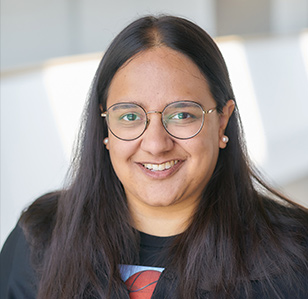
Dr Sjaanie Koppel is an Associate Professor at Monash University's Accident Research Centre (MUARC), specializing in road safety research. She leads MUARC's Behavioural Science team and holds multiple leadership roles including Board Director of AAAM, ACRS Executive Member, and Associate Editor for Traffic Injury Prevention . Her research focuses on vulnerable road users, driver health assessment, and emerging mobility technologies. She leads major projects like NORTISS and smart vehicle systems for dementia drivers. Koppel holds a PhD in Psychophysiology and has received awards including the 2024 Women in Road Safety Award. Key collaborations include Safe Kids Worldwide and TÜV SÜD. Her work addresses older driver mobility, child occupant safety, and workplace road safety through innovative methods like driving simulations and naturalistic studies. She manages the National Road Safety Partnership Program (NRSPP) to improve corporate road safety practices. Recent research includes rideshare safety, pregnancy seatbelt use, and automated vehicle takeover behavior. Koppel has published 227+ outputs since 2002 and actively engages in policy advocacy through 56+ professional activities.
David Logan is an Associate Professor and Senior Researcher at Monash University Accident Research Centre, leading the Traffic Engineering and Vehicle Safety team. With a PhD in Mechanical Engineering, his research focuses on road safety strategy modeling, pedestrian/intersection safety, crash investigation, and naturalistic driving studies. His publications emphasize practical applications of safety research, including naturalistic driving data analysis, child restraint systems, light rail safety, and emerging vehicle technologies. Recent work includes systematic reviews on driver drowsiness and infrastructure applications of driving data. Logan contributes to global road safety initiatives through collaborations with WHO and World Bank, including projects in Thailand and Bangladesh. He chairs Monash's Health, Safety, Wellbeing & Environment Committee and supervises PhD candidates investigating automated vehicle safety, enforcement optimization, and mobility shifts.
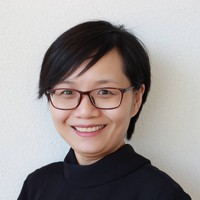
Nausheen Husain is an Assistant Professor in the Magazine, News and Digital Journalism department at Syracuse University's S.I. Newhouse School of Public Communication. She is a tenure-track faculty member specializing in data journalism, civil liberties issues, and coverage of Muslim communities in the context of the 'War on Terror.' As a 2023-2025 Lender Center for Social Justice faculty fellow, she leads research examining American news coverage of post-9/11 security infrastructures and their impact on Muslim communities. Her research interests focus on the intersection of data journalism and underrepresented communities, particularly examining how surveillance, incarceration, and civil liberties issues affect Muslim Americans. She investigates how media coverage shapes public understanding of 'War on Terror' infrastructures, including communication management units, FBI stings targeting young Muslim men, and surveillance operations in Muslim neighborhoods. Her work emphasizes using data analysis and documents-focused reporting to bolster stories about civil rights issues and inequities. Husain's recent publications demonstrate a consistent focus on civil liberties, incarceration systems, and the impacts of security policies on marginalized communities. Her investigative work often employs FOIA requests and data analysis to uncover patterns in prison conditions, surveillance practices, and policy implementation. She has developed expertise in using R and Python for data parsing, Datawrapper for visualization, and MAXQDA for research-based data analysis. Scientific Awards: 2023-2025 Lender Center for Social Justice faculty fellow Husain actively mentors students in data journalism practices and has incorporated Newhouse students into investigative projects, such as the analysis of Muslims affected by the 2017 Muslim Ban. Her academic research connects with practical journalism applications, focusing on how data can be used to cover underrepresented communities while maintaining ethical standards. She frequently speaks about news coverage of the 'War on Terror,' data journalism techniques, and the limitations of using data in reporting. Husain leads projects including 'Islam For Reporters,' which tracks anti-Muslim hate crime data and provides resources on Islam-related terminology, and 'Driving Force,' an investigation into New York state police vehicle crashes. Her approach combines technical data skills with deep community engagement, particularly with Muslim communities affected by security policies.
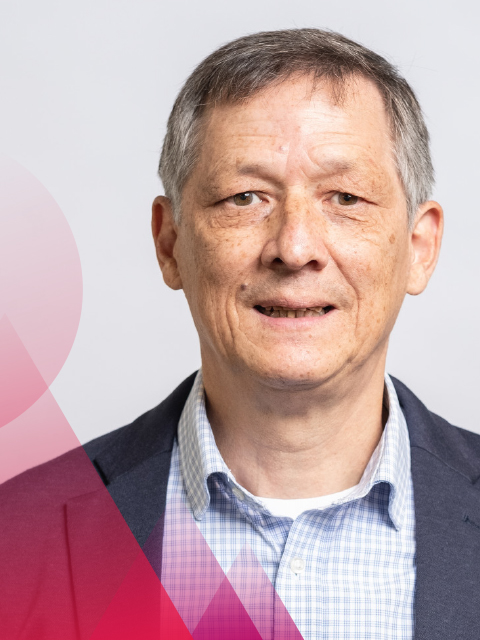
Denis Rancourt, a Professor at Université de Sherbrooke, specializes in biomechanics, mechanical engineering, and adaptive sports equipment design. His research spans musculoskeletal modeling, EMG-torque relationships, and innovative solutions for cancer therapy, vehicle safety, and Paralympic sports. Education: PhD (MIT, 1995), MSc (École Polytechnique de Montréal, 1989), BSc (Université Laval, 1986) Rancourt's work focuses on dynamic modeling of biological systems, vibration analysis, and biomedical device development. Recent projects include EMG-driven joint impedance estimation, tumor self-heating technologies, and wheelchair propulsion optimization. His publications highlight nonlinear tissue mechanics, Gaussian beam alignment algorithms, and ergonomic design innovations. Key grants include ATLAS structural lightweighting initiatives (2017-2021), cancer eradication research (2018-2020), and customized mattress technology (2016-2019), funded by NSERC and FRQNT. Collaborations span institutions like École Polytechnique de Montréal and industry partners including Bombardier Recreational Products. Scientific Awards Research Scholarship Award (1988) Dr. John Chapman Award General Motors Scholarship Award I.W. Smith Award for creative engineering Krashinsky Award Rancourt has mentored over 20 graduate students, including Stephane Martel and Francois Martel, across biomechanics, robotics, and materials science projects. His patents include EMG-based tumor heating devices and wheel chock systems.
Dr. Manuel Valdano is an Assistant Professor at the School of Engineering of Comillas Pontifical University, affiliated with the Institute for Research in Technology (IIT). His expertise lies in computational mechanics and biomechanics, focusing on crashworthiness and vehicle safety engineering using multibody and finite element models. Education: Mechanical Engineering (2018), Universidad Nacional de Rio Cuarto, Argentina Research Interests: Collision biomechanics of vehicle occupants Seatbelt system optimization E-scooter rider safety analysis Finite element modeling of human body responses Certification methods for automotive dummy models Key Projects (2021-2027): Development of High Dynamic Actuator (HDA) for crash simulation (EU-funded) Injury mitigation strategies for Vision Zero initiatives (European Commission) Cervical injury prevention in e-scooter users (Fundación Mapfre) WHO global road safety data analysis (2023) Grants & Collaborations: Línea Directa: Gender biomechanical differences in frontal impacts Autoliv: Simulation and active structures (2023 exchange) CEESAR: New occupant seating positions (2021-2024) Labs/Teams: Affiliated with IIT's Vehicle Safety and Biomechanics research groups, collaborating with Autoliv, WHO, and European automotive safety organizations.
Jason R. Kerrigan serves as Commonwealth Professor in Mechanical and Aerospace Engineering and Courtesy Professor in Orthopaedic Surgery at the University of Virginia's School of Engineering and Applied Science. He directs the Center for Applied Biomechanics (CAB), the world's largest injury biomechanics research facility with over 50 personnel and $6M annual funding operating from a dedicated 30,000 sqft laboratory complex. His educational background includes: B.S. in Integrated Science and Technology from James Madison University M.S. and Ph.D. in Mechanical and Aerospace Engineering from the University of Virginia Dr. Kerrigan's research spans injury biomechanics with emphasis on automobile safety, traffic injury prevention, athlete injury/performance, and medical device biomechanics. His work integrates field data analysis, computational modeling, multiscale tissue characterization, and impact experiments across diverse domains including occupant protection for automated vehicles, restraint design for obese/female occupants, lumbar spine/pelvis injury tolerance, pedestrian safety, and cartilage repair. The 15 most recent publications reveal strong focus on sex-specific injury risk functions, reclined seating biomechanics, obese occupant safety, and advanced computational modeling techniques. His scientific recognition includes: UVA Research Achievement Award (2023) Copenhaver Associate Professorship (2023-2026) SAE Forest McFarland Award (2017) IRCOBI Young Researcher Award (2008) As CAB Director, Kerrigan manages substantial research funding from global industry, government, and academic partners supporting projects like Toyota collaborative safety initiatives and US DOT roadway safety research. His teaching portfolio includes graduate Continuum Mechanics, Mechanical Vibrations at multiple levels, and undergraduate Strength of Materials. He actively serves on the UVa Faculty Senate and SEAS Faculty Council while leading CAB's comprehensive research infrastructure encompassing impact testing, tissue characterization, high-speed imaging, and 3D motion capture capabilities.
Xiaogai Li is an Associate Professor in the Department of Neuronic Engineering at KTH Royal Institute of Technology, Sweden. He is affiliated with the School of Technology and Health (STH) and the Digital Futures interdisciplinary research center. His roles include Co-Principal Investigator (Co-PI) for projects like the AI-based Positioning and Personalization Platform for Human Body Models (HBMs) and Seed funding for large grant proposals. He leads the Rich and Healthy Life working group within Digital Futures. Li holds a PhD in Neuronic Engineering from KTH (2012) and is a Docent in Technology and Health. His research focuses on finite element modeling, neuroimaging, and clinical applications, particularly in traumatic brain injury mechanisms (with emphasis on pediatric cases), forensic diagnosis, and protective strategies. Key projects include the EU-funded PIPER and HEADS ITN initiatives, and collaborations with RISE and Stockholm University. His research integrates computational methods, neuroimaging, and clinical data to advance injury understanding and develop protective technologies. Notable contributions include biomechanical visualizations for child restraint system (CRS) awareness campaigns, which have been adopted by public health practitioners. He also investigates helmet safety standards through finite element simulations and leads efforts in personalizing human body models for accident reconstruction. Education: PhD in Neuronic Engineering, KTH Royal Institute of Technology (2012) Grants: Swedish Research Council (VR) BioLEAP/BioSAVE, Vinnova, STINT, KTH Innovation Labs/Teams: Neuronic Engineering Division, Digital Futures, PIPER EU Project Li teaches courses such as Biomechanics and Neuronics, Simulation Methods in Medical Engineering, and oversees the CRS Awareness initiative, which uses biomechanical visualizations to enhance child safety education. His work bridges engineering and clinical practice, with applications in forensic pathology and public health interventions.
Johnathon P. Ehsani is an Associate Professor at the Johns Hopkins Bloomberg School of Public Health, with primary affiliation in the Department of Health Policy and Management and joint appointments in Health, Behavior and Society and the Whiting School of Engineering. He is actively engaged in research and teaching related to transportation safety and public health policy. PhD, University of Michigan, 2012 MPH, University of Sydney, 2003 BS, University of Technology, Sydney, 2000 Dr. Ehsani's research centers on injury prevention and transportation safety, utilizing policy analysis and behavioral research to reduce motor vehicle crashes. His work spans teen driving behavior , distracted driving policies , licensing systems , and the public health implications of emerging mobility technologies such as e-scooters, bike-share, and autonomous vehicles. He employs experimental, observational, and population-based methods, including naturalistic driving studies, to evaluate real-world driver behavior and policy effectiveness. His recent research emphasizes equity in transportation and the integration of public health principles into automated vehicle development. The 15 most recent publications reflect a strong focus on adolescent driving safety, mental health and driving risk, transportation equity, and the safety impacts of new mobility services. His work combines epidemiological rigor with policy relevance, often addressing vulnerable populations such as teenagers and children in rideshare vehicles. The research spans disciplines including public health, behavioral science, urban planning, and engineering. Scientific Awards and Honors: Leon S. Robertson Faculty Development Chair in Injury Prevention (2016–2019) NIH Intramural Research Training Award (2012–2016) Eno Transportation Fellow (2014) Outstanding New Researcher, University of Michigan School of Public Health (2009) Sir John Monash Scholar (2008–2011) Dr. Ehsani leads active research projects, including the Logbook Research Study on teen driver safety. He serves on the Academic Advisory Council of PAVE (Partners for Automated Vehicle Education), contributing expertise on public trust and safety in autonomous vehicles. While student advisement is not explicitly detailed, his leadership in funded research and collaborative projects indicates a supervisory role in training junior researchers. His work is supported by grants and institutional funding, though specific grant titles are not listed in the provided text. He is affiliated with interdisciplinary teams bridging public health, engineering, and policy, reflecting the integrative nature of his research on transportation systems and health outcomes.
Angelo D'Elia is a Research Fellow at the Monash University Accident Research Centre (MUARC) and a Statistical Consultant at the Victorian Injury Surveillance Unit (VISU). He holds a PhD in Public Health and Honours degrees in Mathematical Statistics and Mechanical Engineering. His expertise spans road safety evaluation, vehicle safety research, data linkage, and injury prevention. He leads and contributes to over 40 research projects, focusing on crash data analysis, countermeasure effectiveness (e.g., speed enforcement, airbags), and trauma trend modeling. D'Elia has authored 68+ publications and received awards for his work, including the 2024 Peter Vulcan Best Paper Award. He advises PhD students and collaborates internationally, contributing to policy through expert submissions to government inquiries. Education: Doctor of Philosophy in Public Health Bachelor of Science (Honours) in Mathematical Statistics Bachelor of Engineering (with Honours) in Mechanical Engineering Research Interests: Angelo’s work centers on optimizing administrative data for injury prevention, evaluating road safety programs (e.g., automated enforcement, vehicle safety tech), and developing advanced statistical models. He emphasizes translating data into actionable insights for policy, such as real-time injury tracking systems and baseline trauma models. Articles Trends: Recent work highlights vehicle safety regulations, injury severity scoring via linked data, and pandemic impacts on road safety. His analyses often combine large-scale datasets with time-series modeling to identify trends and inform policy. Awards: Peter Vulcan Best Paper Award (2024) MIRI Award for Best Early Career Paper (2013) Advising & Grants: Accepts PhD students and leads major grants evaluating NSW automated enforcement programs, crash avoidance technologies, and vehicle safety innovations. Collaborates with MUARC teams and external agencies on road trauma reduction initiatives. Labs/Teams: Member of the Injury Analysis and Data team at MUARC and VISU, focusing on statistical methodologies and interdisciplinary road safety solutions.
Dr. Francisco José López Valdés is an Associate Professor in the Department of Mechanical Engineering at the ICAI School of Engineering, Universidad Pontificia Comillas. He joined the faculty in 2017 and is an Associate Member of the Institute for Research in Technology (IIT). His research focuses on injury biomechanics, road traffic safety, and pediatric impact biomechanics. Education: Bachelor's degree in Mechanical Engineering, University of Valladolid (2002) PhD in Biomedical Engineering from the University of Virginia (2007), focusing on pediatric impact biomechanics Research Interests: Specializes in injury prevention, automotive safety, and biomechanical testing. His work includes crash test methodologies, cadaver testing ethics, and the mechanical properties of biological tissues. He leads projects on e-scooter rider safety, seatbelt systems, and elderly occupant protection. Articles Trends: Recent studies emphasize cervical spine mechanics, additive manufacturing for crash energy absorption, and real-world crash analysis. His work bridges computational models (e.g., PIPER HBM) with experimental validations to improve safety standards. Awards: Received the 2019 Elaine Wodzin Young Achiever Award and the 2018 Best Paper Prize at the AAAM conference. Advising & Grants: Supervised 6 PhD theses and led projects like the SENIORS EU initiative. Collaborates with industry (e.g., Autoliv, MAPFRE) and agencies (MCIN/AEI) on injury mitigation and safety technology. Labs & Teams: Leads the MOBIOS Lab, a European hub for injury biomechanics research. Active in interdisciplinary teams studying automated vehicle seating configurations and sustainable mobility safety.
Adrian SOICA is a Professor at the Department of Automotive and Transport Engineering, Faculty of Mechanical Engineering, Transilvania University of Brașov, Romania. His academic and research activities focus on vehicle dynamics, safety systems, and transportation-related environmental impact, with a particular emphasis on traffic accident reconstruction and emission reduction strategies. Research Focus: Vehicle-Pedestrian Collisions Research Focus: Automotive Composite Materials Research Focus: Traffic Emission Modeling Research Focus: Smart Transportation Systems His publications span accident reconstruction methodologies, composite material design, and sustainable mobility solutions, including studies on seatbelt mechanics, pretensioner systems, and biodiesel efficiency. Recent work explores AI-driven adaptive traffic control (2025) and metaverse integration for autonomous driving (2022). Scientific awards are not explicitly listed in the available data. Contact: Building N, Room NP12, Politehnicii street, no. 1, Brașov, Romania
Edyta Rola, an Assistant Professor at Warsaw University of Technology's Faculty of Power and Aeronautical Engineering, specializes in biomechanics and child safety systems. She holds a Ph.D. and is affiliated with the Department of Theory of Machines and Robots. Her research focuses on improving safety in automotive collisions, particularly for children, using methods like finite element analysis and multibody systems. She teaches courses in biomechanics and automation, and her work includes optimizing child restraint systems, analyzing injury mechanisms, and developing safety technologies. Key achievements include awards like the IRCOBI Travel Grant and recognition at international conferences. She has contributed to patents related to child transport devices and received accolades for her infant monitoring system, including a Gold Medal at Geneva Inventions 2023. Her research spans road safety, medical biomechanics, and ergonomics, with a strong emphasis on practical applications in vehicle safety and pediatric healthcare.
Linda Pipkorn is an Assistant Professor at the Design & Human Factors department of Chalmers University of Technology , Sweden. Her research focuses on human-machine interaction in automated driving systems, particularly driver response processes, take-over requests, and cognitive workload during automation transitions. Research Interests: Automated Driving Safety Human-Machine Systems Cognitive Psychology in Transportation Driver Behavior Analysis Human Factors Engineering Recent Publication Trends (2017-2024): Her work spans driver response optimization, automation aftereffects, take-over request timing, rear-end collision analysis, and ergonomic vehicle design. Key themes include cognitive load, safety-critical interventions, and real-world driver behavior. Projects: She was a key contributor to the L3Pilot project (2017–2021), a European Commission-funded initiative piloting automated driving on European roads. Her collaborations include SAFER, the Vehicle and Traffic Safety Centre at Chalmers.
Richard Frampton is a Senior Lecturer in Vehicle Safety at Loughborough University's School of Design and Creative Arts, and a Visiting Professor at Hasselt University. He holds roles as a Mental Health First Aider and Placement Tutor for the Design School. His research focuses on vehicle safety, crash injury analysis, and traffic safety engineering, with emphasis on real-world crash data, occupant protection, and safety system design. Education: BSc (University of Keele, 1984), MSc in Industrial Ergonomics (University of Birmingham, 1980s), PhD in crash test procedures (Birmingham, 1980s). His career includes roles as Ford Research Fellow and leadership in the Loughborough Road and Vehicle Safety MSc program. Research interests span automotive safety, motorcycle safety, elderly occupant protection, ergonomics, and safety policy. He contributes to global initiatives like the PISa project for motorcycle safety and BOSCOS bone scanning systems. His work bridges academia and industry, with collaborations at Ford, Hasselt University, and international bodies. Publications emphasize real-world crash analysis, safety system evaluation, and injury prevention strategies. His 2011 Fellowship in Automotive Medicine recognizes contributions to traffic injury control. He chairs international committees, serves on journal editorial boards, and advises EPSRC/Australian Research Council grants. Advising includes supervising PhD students and examining studies. His labs and teams focus on integrated safety systems, with projects in Dubai, Northern Ireland, and the UAE. He actively participates in media engagements and guest lectures globally.
Roy E. Allen serves as a faculty member in the Department of Economics within the School of Economics and Business Administration at Saint Mary's College of California. His office is located in Galileo Hall - 309 with contact details including phone (925-631-4604) and mail (P.M.B. 4230). His educational background includes: Ph.D. in Agricultural and Resource Economics from University of California - Berkeley (1984) B.A. in Environmental Studies and Business Economics from University of California, Santa Barbara (1979) Allen's research spans Financial Globalization, East-West Economics, and Effects of Export Restraints, with recent publications addressing homelessness through human ecology economics and CO2 credit policies. His work demonstrates consistent focus on real-world economic policy applications, particularly in California contexts and global financial systems. Current courses include International Economics, International Finance, International Trade, and Investments. Professional experience highlights include membership in the first major U.S. financial market delegation to the U.S.S.R. for financial reforms (1989) and ongoing consultancy for San Francisco Bay Area financial corporations since 1985. His publication trends show increasing emphasis on environmental economics and social capital frameworks alongside traditional financial crisis analysis.