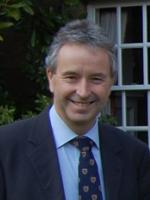
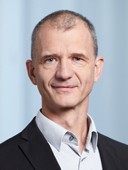
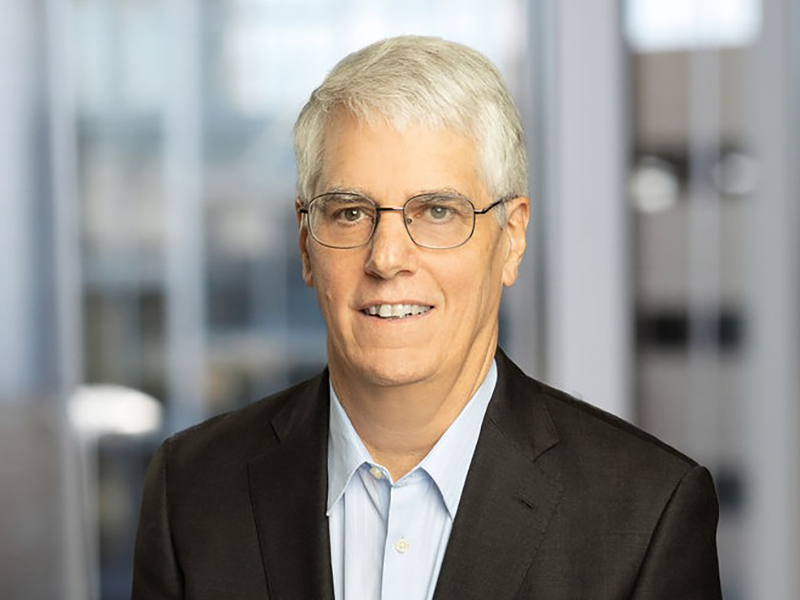
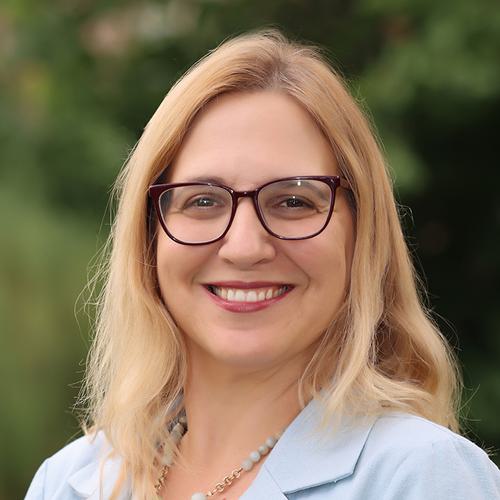
Professor Frank Kelly holds the Professor of the Mathematics of Systems at the University of Cambridge , affiliated with the Department of Pure Mathematics and Mathematical Statistics (DPMMS). His work bridges theoretical insights with practical applications in random processes , networks , and optimization . Academic Rank: Professor Department: DPMMS Research Themes: Stochastic systems, network resource allocation, mathematical modeling Kelly’s research focuses on stochastic networks , including congestion control in communication systems, fair bandwidth sharing , and electricity grid optimization . His work often incorporates proportional fairness principles and Markov models to analyze complex systems. Recent publications reveal a trajectory in network dynamics and resource allocation , with applications to electric vehicles, satellite routing, and virtualized networks. His work shows interdisciplinary impact across computer science , telecommunications , and energy systems . Kelly has contributed foundational works like Stochastic Networks (2014) and pioneered models for loss networks and congestion control . He maintains active collaborations and has advised on policy matters, including spectrum auctions and network regulation.
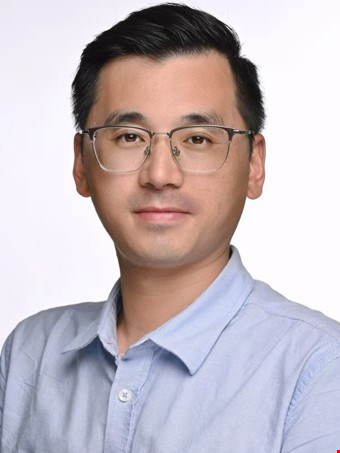
Professor Xinyan Wang is a leading academic at Brunel University London, affiliated with the College of Engineering, Design and Physical Sciences and the Department of Mechanical and Aerospace Engineering. He serves as a Principal Editor for Fuel (Elsevier) , editorial board member for multiple journals, and committee member for Hydrogen Europe Research and UK Chinese Society of Automotive Engineering. PhD, Power Machinery and Engineering, Tianjin University MSc, Power Machinery and Engineering, Tianjin University BEng, Thermal Energy and Power Engineering, Jiangsu University His research focuses on low-carbon fuel technologies for internal combustion engines, including hydrogen/ammonia combustion, biofuels, and nanobubble applications. He develops advanced hybrid electric systems and specializes in engine design optimization for alternative fuels. His work spans experimental investigations, computational modeling (CFD/MD/Chemkin), and optical diagnostics of combustion processes. Recent publications (2024-2025) highlight trends in hydrogen combustion analysis, nanofluid applications, dual-fuel strategies, and 2-stroke engine optimization. Key themes include emission reduction, ignition process decoupling, and integration of machine learning with molecular simulations for fuel characterization. UKRI Future Leaders Fellowship (2020) Editorial roles at Fuel , Highlights of Vehicles , and MDPI journals BSI committee member for fine bubble technology He supervises research on topics including zero-carbon fuel combustion, numerical simulations (chemical kinetics, CFD), and optical diagnostics for spray/combustion analysis. His teaching includes vehicle propulsion systems and major engineering projects at undergraduate/graduate levels.
Meyer Nahon is a Professor at McGill University specializing in dynamics and control systems with cross-domain applications in aerospace, underwater vehicles, and robotics. He maintains active affiliations with the Aerospace Mechatronics Lab, Centre for Intelligent Machines (CIM), and McGill Institute for Aerospace Engineering (MIAE). His academic credentials include: Ph.D. from McGill University M.ASc. from University of Toronto B.ASc. from Queen's University Research spans fundamental mechanical systems (cable dynamics, vehicle dynamics), aeronautical systems (tethered aerostats, autonomous vehicles), underwater systems (ROVs/AUVs), and robotics (parallel mechanisms, flight simulators). His work integrates sensor-based motion measurement using accelerometers, rate gyros, and GPS for comprehensive dynamic analysis across platforms. Recent publications (2015-2019) reveal concentrated UAV research including aerobatic maneuvering, slipstream dynamics, and propeller modeling, while extending to marine structures through mooring system analysis. This demonstrates consistent application of control theory across aerial, marine, and mechanical domains with emphasis on extreme maneuvering and system validation. As leader of the Aerospace Mechatronics Lab, he directs research in cable-actuated systems (cranes, elevators), UAV motion planning, and underwater vehicle dynamics within McGill's collaborative research ecosystem.
François Goulette is a Professor and Deputy Director of the Computer Science and Systems Engineering Unit (U2IS) at ENSTA Paris, part of Institut Polytechnique de Paris. His research focuses on 3D point cloud processing, LiDAR perception, and autonomous systems within the Robotics Center (CAOR). His primary research interests lie in 3D point cloud processing , LiDAR perception , and autonomous systems . His work spans fundamental algorithm development to practical applications in autonomous driving, cultural heritage digitization, and robotics. He has made significant contributions to domain generalization of LiDAR perception, semantic segmentation of 3D point clouds, and point cloud registration techniques. The analysis of his recent publications reveals a strong focus on domain generalization for LiDAR perception systems, with multiple papers addressing challenges in 3D semantic segmentation across different environments. His work combines multi-scale architectures , unsupervised learning , and dataset creation to advance the state-of-the-art in autonomous systems perception. The research spans both theoretical algorithm development and practical applications in urban environments. François Goulette leads research activities within the Robotics Center (CAOR) at ENSTA Paris. His team develops advanced techniques for 3D environment understanding, with applications in autonomous vehicles, cultural heritage preservation, and industrial robotics. The research combines computer vision, machine learning, and robotics to solve challenging problems in 3D perception and scene understanding.
Dr. Uma Pradhan is an Associate Professor at UCL's Institute of Education (IOE), Faculty of Education and Society, and serves as Deputy Programme Leader for BA Education, Culture, and Society. She also holds the position of Inclusion Co-Lead for the Department of Education, Practice and Society (EPS). At UCL, she is actively involved with the Centre for Education and International Development (CEID) and the Centre for the Study of South Asia and the Indian Ocean World. Prior to her current position, Dr. Pradhan was a Lecturer and Leverhulme Early Career Fellow at the University of Oxford from 2018 to 2022, and then a Lecturer at University College London from 2022 to 2024 before her promotion to Associate Professor in 2024. Dr. Pradhan's research spans multiple interconnected fields including Anthropology, Development Studies, Applied Linguistics, Humanitarian Disasters, Conflict and Peacebuilding, and Educational Technology. Her work particularly focuses on South Asian educational contexts, with extensive research on Nepal's educational landscape. She examines how educational policies intersect with social structures, linguistic diversity, and political transformations, with special attention to marginalized communities and post-disaster educational reconstruction. Her research demonstrates a consistent commitment to addressing educational inequality and exploring how education can serve as a vehicle for social justice. Dr. Pradhan's scholarly output reveals a strong focus on the intersections between language, technology, and education in South Asia. Her recent publications examine how artificial intelligence is being used for indigenous language preservation, the impact of the pandemic on educational systems across South Asia, and the bureaucratic mechanisms that can inadvertently reproduce social inequality through scholarship programs. Her work consistently connects theoretical frameworks with practical implications for educational policy and practice. Leverhulme Early Career Fellow Fellow of Higher Education Academy (FHEA) As an academic leader, Dr. Pradhan supervises research degrees and engages in collaborative projects and consultancy work. Her research aligns with several United Nations Sustainable Development Goals, particularly Quality Education (SDG 4), Reduced Inequalities (SDG 10), Peace, Justice and Strong Institutions (SDG 16), and Partnerships for the Goals (SDG 17). Her position at the intersection of multiple research centers at UCL enables her to foster interdisciplinary collaborations that address complex educational challenges in global contexts.
Christopher Onder is a Lecturer at the Department of Mechanical and Process Engineering at ETH Zürich, where he serves as Deputy Head of the Institute for Dynamic Systems and Control. His research focuses on control engineering, energy systems, and sustainable transportation solutions. Role : Lecturer, Deputy Head of Institute Department : Mechanical and Process Engineering Institute : Dynamic Systems and Control University : ETH Zürich His research interests include: Control systems for hybrid and electric vehicles Energy management optimization Thermal comfort in public transport Co-design of mechanical and racing strategies Nonlinear control in aerospace applications Model-based calibration for diesel engines Contact: onder@idsc.mavt.ethz.ch
Dr. Robert D. Moser is a Professor at the University of Texas at Austin and holds the W.A. "Tex" Moncrief, Jr. Chair in Computational Engineering and Sciences I. He is affiliated with the Thermal and Fluid Systems program, the Institute for Computational Engineering and Sciences (ICES), and serves as Director of the DOE-funded Center for Predictive Engineering and Computational Sciences (PECOS). Ph.D. in Mechanical Engineering from Stanford University (1984) His research focuses on computational methods for turbulence modeling, cardiovascular fluid mechanics, and uncertainty quantification in complex physical simulations. He develops large-eddy simulation techniques for aerospace applications and biological flow analysis, while pioneering methods to characterize uncertainties in reentry vehicle simulations and turbulence modeling. Dr. Moser leads interdisciplinary research at PECOS and ICES, combining computational engineering with biomedical applications. His work spans theoretical turbulence physics, numerical methods for Navier-Stokes equations, and practical implementations for aerodynamic and medical device design.
Mogens Fosgerau is a Professor at the Department of Economics, University of Copenhagen, with a research focus on discrete choice theory, rational inattention, transportation and urban economics, congestion modeling, and entropy-based frameworks. He has held an ERC Advanced Grant (2017-2023) and completed a Grand Solutions project for the Innovation Fund Denmark (2016-20). Education: Mathematical Economics (Aarhus University, 1990), PhD in Mathematics (University College London, 1992). Current affiliations: Department of Economics (University of Copenhagen), Faculty of Social Sciences. Former roles: Guest Professor at DTU (2022-2023), member of the Commission for Green Transition of Passenger Cars (2019-2021). His research explores the intersection of information theory and discrete choice models, addressing complex substitution patterns and endogeneity issues through generalized entropy frameworks. He applies these models to transportation planning, urban economics, and climate policy analysis. Recent publications focus on perturbed utility models, inverse product differentiation logit, and rational inattention in spatial choice contexts. His work bridges theoretical econometrics with practical transport and environmental policy challenges. Awards: Recipient of the 2021 Transportation Science Meritorious Service Award. Former Editor-in-Chief of Economics of Transportation (2012-2020). Advising and Grants: Leads research projects funded by the European Research Council and Innovation Fund Denmark. Has participated in policy committees including the Danish Environmental Economic Council (2019-2025) and the Committee on Public Transport Mobility (2023-24).
Kristin Y. Pettersen is a Professor at the Department of Technical Cybernetics, Norwegian University of Science and Technology (NTNU), and a Professor II at the Norwegian Defence Research Institute (FFI). She is a co-founder of Eelume AS, a company specializing in underwater robotics solutions. Education: Civil Engineering and PhD in Technical Cybernetics from NTNU Her research focuses on advanced control systems for marine and underwater vehicles, particularly snake robots and autonomous underwater vehicles (AUVs). Key areas include formation control, path following, adaptive guidance algorithms, and safety-critical control in dynamic environments. Recent work explores machine learning integration and energy-shaping techniques for robust locomotion. Publications highlight trends in Model Predictive Control (MPC) , Collision Avoidance , and Task-Priority Operational Space Control for redundant and underactuated systems. Her work bridges theoretical control theory with practical applications in marine robotics, including autonomous inspections and cooperative transport. Labs/Teams: Collaborates with NTNU's Faculty of Information Technology and Electrical Engineering and co-founded Eelume AS, advancing subsea robotic manipulation technologies.
Dr. Shabnam Sadeghi Esfahlani is an Associate Professor in Robotics at the School of Engineering and the Built Environment, Anglia Ruskin University , where she serves as Deputy Leader of the BORI research group and leads the Automation & Robotics MSc program. Her interdisciplinary expertise spans mechatronics, artificial intelligence, virtual reality, and serious games , with a focus on applications for rehabilitation, medical training, and autonomous systems . As a Chartered Engineer and Senior Fellow of the Higher Education Academy , she has secured significant funding from Innovate UK, Horizon 2020, and GCRF , with grants exceeding £3 million. Education PhD in Mechanical Engineering, Anglia Ruskin University BSc (First Class) in Statistics & Mathematical Science, Shahid Beheshty University Her research integrates AI with robotics for societal impact, exemplified by the open-source SROBO ground robot and projects like Rehabgame and the Assistive Feeding Robot . She has published over 45 peer-reviewed articles and contributes to academic communities as a journal guest editor and conference organizer . Key collaborations include IET, IMechE, and the Nuffield Foundation as a mentor for young students. Scientific Awards & Recognitions: Chartered Engineer (CEng), Engineering Council UK Senior Fellow (SFHEA), Higher Education Academy Student-Voted 'Made a Difference Award' (2018) Post-Graduate Certificate in Higher Education
Ricardo Aguilera Echeverria is an Associate Professor at the University of Technology Sydney (UTS), School of Electrical and Data Engineering . With a Ph.D. in Electrical Engineering from the University of Newcastle (2012), he has held academic positions at UNSW Australia (2014-2016) and UTS since 2016. His research focuses on model predictive control (MPC) applied to power electronics , renewable energy integration , and microgrid control systems . He actively supervises Masters and PhD students and has developed courses such as Control Studio A and Control Studio B . Education: PhD in Electrical Engineering (University of Newcastle, 2012) MSc in Electronics Engineering (Universidad Tecnica Federico Santa Maria, 2007) BSc in Electrical Engineering (Universidad de Antofagasta, 2003) Research Interests: Model Predictive Control (MPC) for power converters Microgrid stability and cybersecurity Second-life battery integration Hybrid DC-AC microgrid solutions Recent Research Trends: Advancements in modular multilevel matrix converters (M3C) for LFAC systems Development of per-phase instantaneous power theories for LVRT compensation Sliding mode observers (SMO) for cyberattack mitigation in AC microgrids Optimal control strategies for delta-connected CHB converters in energy storage Grants & Projects: Lead investigator in HORIZON Europe (2024-2027) on digital solutions for renewable energy systems ARC Discovery Project (DP240102646) on extending second-life battery life (2024-2026) Collaborative grants with Sovereign Propulsion Systems Pty Ltd and NSW Department of Industry for hybrid-electric vehicle control
Inna Sharf is a Professor at the Department of Mechanical Engineering, Faculty of Engineering, McGill University. She is affiliated with the Aerospace Mechatronics Laboratory, focusing on dynamics, control, and robotics. Her work spans space robotics, UAVs, forestry automation, and multibody systems. Ph.D., University of Toronto B.ASc., University of Toronto Her research interests include: Dynamics and control of robotic systems Space robotics for debris removal and on-orbit servicing Unmanned aerial vehicles (quadrotors, indoor airships) Forestry robotics for tree-harvesting automation Multibody dynamics and contact modeling Recent publications emphasize: Control algorithms for quadrotors and UAV swarms De-orbitation strategies using natural resonances Motion planning under dynamic constraints Thermalling and energy-efficient flight for gliders Collaborative payload transport and adaptive control Tether and net-based debris capture systems
Waseeq Siddiqui is a Doctoral Researcher at the Department of Energy and Mechanical Engineering, Aalto University. His academic affiliation aligns with the College of Engineering, focusing on interdisciplinary research in aerospace and mechanical engineering domains. Research Groups: Energy Conversion and Systems Email: waseeq.siddiqui@aalto.fi Phone: +358504340184 His research interests span computational fluid dynamics (CFD), aircraft stability analysis, and non-linear aerodynamic phenomena. Recent work includes studies on wing rock dynamics in blended wing–body aircraft and micro aerial vehicles, alongside crosswind stability control systems and vortex lattice method comparisons. Key trends in publications highlight advanced applications of CFD for both aviation and biomedical systems (e.g., vocal fold particle transport), with emphasis on numerical modeling and stability optimization in complex flight scenarios.
Xiaonan Lu is an Associate Professor of Electrical Engineering Technology at Purdue University's School of Engineering Technology, with a courtesy appointment in the Elmore Family School of Electrical and Computer Engineering. His research focuses on critical challenges in modern power systems dominated by inverter-based resources, particularly stability and control in microgrids and renewable-integrated grids. His research interests span power systems engineering with emphasis on small-signal stability analysis, dynamic modeling of hybrid AC/DC microgrids, and advanced control strategies for grid-forming and grid-following inverters. He investigates AI-assisted modeling techniques, resilience enhancement through hydrogen integration, and data-driven optimization of microgrid operations to address challenges in low-inertia power systems and distributed energy resource coordination. Analysis of his recent publications (2024-2025) reveals dominant trends toward AI-aided stability assessment, seamless control transitions between inverter modes, and quantifiable trade-offs in voltage regulation and power sharing. His work consistently addresses practical implementation challenges including communication delays, cyber resilience, and standardized testing methodologies for inverter-dominated systems.
Orit Shaer is a Professor and co-Chair of Computer Science at Wellesley College , where she founded and directs the Human-Computer Interaction (HCI) Lab . Her work bridges tangible interaction, human-AI collaboration, and mixed-reality interfaces, focusing on transforming work and learning environments through embodied technologies. Education : B.A. from Academic College of Tel-Aviv, M.S. and Ph.D. in Computer Science from Tufts University Research interests center on novel human-computer interaction paradigms : Human-AI collaboration frameworks Tangible and embodied interface design Mixed-reality applications for productivity Genomics collaboration tools STEAM education technologies Recent publications highlight human-AI co-creation (CHI 2024), temporal dynamics in automated work (CHIWork 2024), and pandemic-era remote interaction studies (IEEE Pervasive Computing 2021). Awarded: NSF CAREER Award Agilent Technologies Research Award Google App Engine Education Award Pinanski Prize for Excellent Teaching Best Paper Honorable Mention (ACM CHI 2014) Honorable Mention (CHIWork 2022) She co-founded the international CHIWork Symposium and chairs the ACM TEI conference. Her NSF IRES grant (2022) supports US-German collaboration on human-automation interaction.