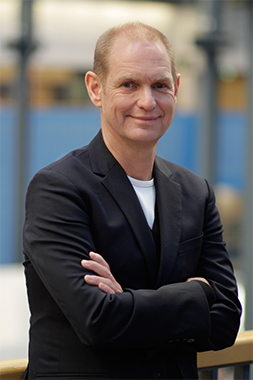
Ferdi Doğan is an Assistant Professor in the Department of Computer Engineering at Adıyaman University. He holds a PhD in Software Engineering (2021, Fırat University), an MSc in Computer Systems (2012, Sakarya University), and a BSc in Computer Systems (2002, Selçuk University). His research focuses on artificial intelligence, machine learning, deep learning, image processing, and cybersecurity. He has led TÜBİTAK projects on AI-driven solar panel defect detection, SCADA system security, and post-earthquake psychological analysis using AI. He is a member of IEEE and ACM, and has presented at over 10 international conferences. Professional Experience: Joined Adıyaman University as a Lecturer in 2007, became Department Head (2011-2019), and is currently Director of the Research and Application Center. He advises graduate theses and consults on TÜBİTAK projects. His applied research includes AI in agriculture, solar energy, and SCADA security algorithms. Teaching: Courses include Artificial Neural Networks, Internet Programming, and Software Engineering. He has taught at both undergraduate and graduate levels since 2002, with over 50 recorded courses in programming, algorithms, and web design. Awards: No specific awards listed but has secured TÜBİTAK grants and participated in international projects. His work has been cited over 12 times in peer-reviewed journals.
Dushani Perera is a Research Associate and PhD candidate at Cardiff University, UK, focusing on Human-Computer Interaction (HCI), Computer Supported Cooperative Work (CSCW), and Sustainability. Her work explores data physicalization to promote sustainable practices, particularly through the Grasping Data project targeting children's engagement with personal data. She previously served as an Assistant Lecturer at the University of Colombo School of Computing (UCSC), where she received the Best Final-Year Research award in Software Engineering (2019/2020). Her research bridges HCI, design, and social sciences to address real-world challenges like energy consumption and environmental sustainability. Key projects include Eco-garden , a data sculpture encouraging sustainable household habits, and co-design activities with children to understand their interaction with personal data. Awards include recognition for academic excellence at UCSC and contributions to impactful interdisciplinary research. She has also explored applications of AI in fashion design, wildlife conservation, and urban traffic management, showcasing a diverse technical expertise.
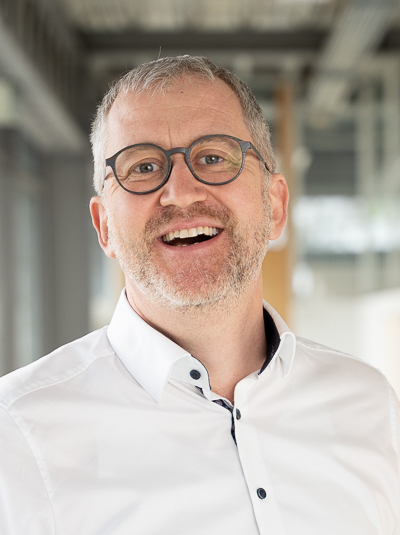
Dr. René van Egmond is a researcher at the Faculty of Industrial Design Engineering at Delft University of Technology, where he works in the Department of Industrial Design. His research is centered on human-centered design and perceptual intelligence, with a strong focus on improving user interfaces in automated vehicles and healthcare systems. His research interests lie at the intersection of cognitive ergonomics and interactive technology. He investigates how drivers perceive and understand automation in vehicles, particularly through visual and auditory interfaces. His work also extends to healthcare, where he applies user-centered principles to design ICU patient monitoring systems tailored to nurse profiles. These efforts reflect a broader commitment to designing intuitive, safe, and trustworthy interactions between humans and intelligent systems. The recent publications demonstrate a consistent trend in studying trust, acceptance, and comprehension in automated environments. His work spans both mobility and health domains, using multimodal interfaces to enhance user experience and system transparency. Themes include driver state awareness, interface customization, and perceptual fluency in complex systems. Dr. van Egmond is actively involved in significant research initiatives, including the Mediator project (MEdiating between Driver and Intelligent Automated Transport systems on Our Roads), the Hadrian project (Holistic Approach for Driver Role Integration and Automation Allocation for European Mobility Needs), and the Interreg ENERGE project focused on reducing greenhouse gas emissions through education. He contributes to academic education through teaching in cognitive ergonomics and supervising student research, though specific advisees are not listed. His collaborative work includes researchers from various institutions, indicating strong interdisciplinary engagement. He is associated with research labs focusing on Perceptual Intelligence and Human-Centered Design at TU Delft, contributing to the university’s leadership in design innovation for complex socio-technical systems.
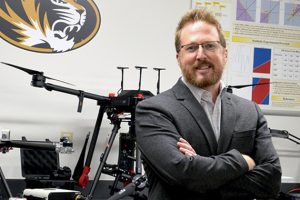
Derek Anderson is a Professor in the Department of Electrical Engineering and Computer Science at the University of Missouri, within the College of Engineering. He is a core faculty member of the MU Institute for Data Science & Informatics and leads the Mizzou INformation and Data FUsion Laboratory (MINDFUL). His research spans artificial intelligence, machine learning, information fusion, computer vision, and remote sensing, with applications in defense, healthcare, and humanitarian technology. Education: PhD, University of Missouri MS, University of Missouri BS, Wichita State University Anderson's research focuses on foundational AI challenges, particularly explainable AI (XAI) and the use of simulated data to train robust models under uncertainty. He investigates how AI systems make decisions and how to communicate those decisions clearly to humans, especially in high-stakes environments like medical imaging and autonomous vehicles. His work leverages tools like Unreal Engine and Infinite Studio to generate photorealistic and multispectral synthetic data, enabling broader and more diverse training sets than real-world data alone can provide. His recent publications and projects highlight trends in generative AI limitations , AI ethics , infrared sensor innovation , and AI for humanitarian demining . These works collectively emphasize transparency, robustness, and societal benefit in AI development. Scientific Awards and Leadership: Program Co-Chair, three national AI conferences (2023) Member, IEEE USA AI Committee Member, IEEE CIS Industry & Government (I&GA) Committee Member, IEEE Vertical on Societal Implications of AI Anderson is deeply committed to mentoring the next generation of AI scientists. He advises undergraduate, master’s, and PhD students, many of whom engage in hands-on research from their first year. His lab has secured approximately $29 million in funding across 25 projects from agencies like the U.S. Army ERDC and the National Science Foundation. He has published over 190 articles and is a sought-after leader in the AI research community. His lab, MINDFUL, focuses on information fusion and AI under uncertainty, with active projects in drone-based sensing, material design, and geospatial analytics. The team uses simulation as a core methodology to advance AI trustworthiness and performance across diverse domains.
Dr. Phillip Millar is a Lecturer in Civil Engineering specializing in Land Surveying & GIS at the Belfast School of Architecture & the Be, Ulster University. He earned his Doctorate from Ulster University in 2013 and maintains professional memberships with the Chartered Institution of Civil Engineering Surveyors and the City and Guilds of London Institute. Research Focus: Dr. Millar's expertise centers on contactless measurement technologies for transportation infrastructure. His primary research areas include: Contactless recovery of highway surfacings using photogrammetry and LiDAR Surface analysis of high-performance racing circuits (e.g., Yas Marina, Silverstone) Remote sensing applications for infrastructure assessment Development of novel testing methodologies for road-tire interaction Smart infrastructure monitoring systems Professional Contributions: Industrial Placement Tutor for civil engineering students Member of University's Employability Sub-Committee Collaborative research with Transport NI, Transport Infrastructure Ireland, and Highways England Peer reviewer for academic publications Awards & Recognition: Paper shortlisted for Best Overall Paper Award at 2019 CitA BIM Gathering
Dejan G. Ciric is a Full Professor at the Faculty of Electronics in Niš, University of Niš, Department of Telecommunications. He has been a central figure in acoustics and signal processing research, with a strong international presence through collaborations at Aalborg University (Denmark) and IRCAM (France). His work bridges theoretical acoustics and practical applications in industrial and automotive sound analysis. PhD, Master’s, and BSc in Telecommunications from Faculty of Electronics in Niš Specialization in Acoustics, Aalborg University, Denmark (2002–2003, 2003–2007) His research focuses on acoustics, room impulse response, sound measurement, and signal processing , particularly using image similarity measures, wavelets, and machine learning for sound analysis. He investigates nonlinear effects in measurements, truncation correction, and air absorption in scale models. His recent work emphasizes industrial product sound, vehicle noise, and DC motor diagnostics through spectrogram analysis and automated systems. The trend in his publications (2023–2002) shows a consistent focus on improving the accuracy and automation of acoustic measurements, especially in complex environments. He applies mathematical models, signal processing techniques, and cross-domain methods (e.g., treating sound as images) to solve real-world problems in audio engineering and diagnostics. He has received notable recognition: Research in Paris 2013 award (IRCAM, France) Young Investigator Award, International Commission for Acoustics (2007) Dejan Ciric has participated in 5 national and 5 international projects in the past, and is currently involved in 1 national and 1 international project . He has advised students and contributed to academic training in acoustics and telecommunications. His work has resulted in 18 publications in journals with impact factors . He has been affiliated with research teams at Aalborg University’s Department of Acoustics and the IRCAM Institute in Paris , contributing to projects on audiometric calibration, machine learning for sound directivity control, and advanced acoustic measurement systems.
Jorge Augusto Meira is a Research Scientist at the University of Luxembourg's Interdisciplinary Centre for Security, Reliability and Trust (SnT), specifically within the Services and Data Management research group (SEDAN). He holds a PhD in Computer Science from the University of Luxembourg (2014) and has 15+ years of experience spanning industry and academic research roles including software development, system analysis, data science, project management, and principal investigator positions. His research focuses on machine learning applications in anomaly detection (e.g., anti-money laundering), big data analytics, recommendation systems, and database optimization. Notable areas include cybersecurity for blockchain networks, insurance risk modeling using Hawkes processes, and energy-efficient database architectures. Publications span topics like vehicle routing optimization, natural disaster prediction models, and privacy-preserving data systems. He has contributed to both theoretical advancements and practical implementations in areas like smart grid monitoring and aviation predictive maintenance. His work frequently bridges AI techniques with real-world infrastructure challenges across transportation, finance, and healthcare sectors. Led by Prof. Radu State, the SEDAN group focuses on service-oriented architectures and data management innovations. While no formal awards are listed, his extensive publication record reflects sustained contributions to interdisciplinary tech research.
Prof. Dr. Markus Kley is a Professor at Aalen University in the Faculty of Mechanical Engineering and Materials Science, where he serves as the contact person for the Institute for Drive Technology Aalen (IAA). His research and teaching focus on drive technology and waste heat utilization, with a strong emphasis on applied mechanical engineering and system diagnostics. He is actively involved in research projects related to electrified powertrains, condition monitoring, and machine learning applications in mechanical systems. His research interests include vibration analysis, digital twin development, sensor integration, efficiency modeling of electric drive units, and fault detection in electromechanical systems. He applies machine learning and simulation techniques to improve the performance and reliability of drive systems, particularly in off-highway and special vehicles. His work bridges mechanical engineering with data science, focusing on real-world industrial applications. The trend in his recent publications (2019–2022) shows a strong focus on intelligent condition monitoring, using vibration data and machine learning for fault diagnosis in bearings and gearboxes. He also investigates efficiency optimization in electrified transmissions and develops digital twins for motor and drivetrain simulation. His work frequently appears in engineering conferences and journals related to mechanical systems, measurement technology, and applied computing. Prof. Kley collaborates with researchers across Germany and has contributed to numerous peer-reviewed publications and conference proceedings. While no scientific awards are explicitly mentioned, his sustained research output and leadership in projects indicate recognition in his field. He advises students on theses and dissertations and leads research projects in drive technology. His work involves experimental validation, simulation, and industrial collaboration, particularly in the development of advanced drivetrain components and diagnostic systems. He is affiliated with the Institute for Drive Technology Aalen (IAA), which serves as a hub for applied research in mechanical drive systems, partnering with industry to develop innovative solutions in power transmission and energy efficiency.
Asma Belhadi is a Postdoctoral Fellow at Oslo Metropolitan University's Faculty of Technology, Art and Design, Department of Computer Science. Her research focuses on Applied Artificial Intelligence, bridging domains like Neuroscience, Medical Technology, and Intelligent Transportation Systems through innovative methodologies such as Visual Transformers, Federated Learning, and Graph Algorithms. Primary affiliation: Oslo Metropolitan University Academic discipline: Computer Science Research areas: Deep Learning, Explainable AI, Biomedical Signal Processing, Sustainable Systems Her recent work explores cross-domain applications including: EEG classification using enhanced visibility graphs Medical imaging with ensemble fuzzy deep learning Secure pattern mining for Medical Internet of Things Knowledge-enhanced object detection for agriculture Metaverse security using transformer models and GANs
Professor Matthias Braun is a distinguished academic in the field of physical geography, specializing in remote sensing and GIS applications for glaciology and polar research. He holds a professorship at the Institute of Geography at Friedrich-Alexander University Erlangen-Nuremberg (FAU), where he leads the Chair of Geography (Remote Sensing and GIS) and serves as Chairman of the Examination Board for B.Sc./M.Sc. Physical Geography and BA/MA Cultural Geography since 2022. His research focuses on monitoring glacier dynamics, ice sheet changes, and climate impacts in polar and mountainous regions using advanced remote sensing techniques. Professor Braun has held several significant leadership positions including Chairman of the International Doctoral Program 'Measuring and Modelling Mountain Glaciers in a Changing Climate' in the Bavarian Elite Network funded by the Bavarian Ministry of Science & Art since 2022, and Coordinator of the DFG SPP Antarctic Research since 2017. His academic journey includes an Associate Professor position at the University of Alaska Fairbanks (2010-2011) and extensive field experience leading multiple Arctic and Antarctic expeditions since 1994/95, with research stays in Alaska, South America, West & East Africa, Himalaya & Karakorum. His research interests span glaciology, remote sensing, geographic information systems, climate change impacts, land use change, polar regions, and high mountain environments. Professor Braun's work integrates microwave and optical remote sensing data from satellite and airborne platforms to derive geobiophysical parameters and their spatiotemporal variations. He employs advanced digital image processing, pattern recognition, SAR interferometry, and polarimetry techniques in his research. His laboratory maintains active participation in major research initiatives including the TanDEM-X and TanDEM-L Science Teams since 2010. Professor Braun's extensive publication record demonstrates a clear progression from foundational work on glacier monitoring to sophisticated applications of machine learning and deep learning for glacier feature extraction. His recent work focuses on calving front detection using SAR imagery, glacier velocity mapping, and integration of multi-sensor data for comprehensive glaciological analysis. Key research themes include glacier mass balance, ice sheet dynamics, supraglacial hydrology, and climate change impacts on cryospheric systems across diverse regions including Antarctica, Patagonia, the Himalayas, and the European Alps. Among his notable recognitions is the 2009 Science Award for Physical Geography from the Prof. Dr. Frithjof Voss Foundation for Geography and his Habilitation at the Mathematical-Natural Science Faculty of the University of Bonn in 2009. He serves as an Associate Editor for Frontiers in Earth Sciences – Cryospheric Sciences and reviews for numerous peer-reviewed journals. Professor Braun has mentored numerous doctoral students to completion, with recent graduates including Dr. Christian Sommer (2022), Dr. David Farias Barahona (2021), Dr. Stefan Lippl-Seifert (2020), and Dr. Peter Friedl (2019). Several students are currently completing their dissertations under his supervision. His research is supported by various funding mechanisms including the Bavarian Elite Network, DFG research programs, and international collaborations. He maintains strong connections with national and international research institutions including membership in the International Glaciological Society (IGS), German Society for Photogrammetry, Remote Sensing and Geoinformation (DGPF), German Society for Polar Research (DGP), and German Society for Geography (DGfG).
Karl Meinke is a Professor at KTH Royal Institute of Technology, where he serves as Head of the Computer Science Department and Head of the Division of Theoretical Computer Science within the School of Electrical Engineering and Computer Science. His research focuses on applying machine learning techniques to software testing, particularly for safety-critical systems like autonomous vehicles and embedded systems. His research interests span machine learning, software testing, safety critical systems, embedded systems, autonomous driving, digital pathology, and graph neural networks. Meinke has developed innovative approaches like Learning-Based Testing that combine machine learning with formal methods for system validation. His work bridges theoretical computer science with practical applications in automotive systems and medical diagnostics. His recent publications show a strong trend toward applying graph neural networks to diverse domains including program analysis, digital pathology, and autonomous vehicle testing. His research demonstrates a consistent focus on solving the test oracle problem and generating meaningful test cases for complex systems where traditional testing approaches fall short. Meinke actively collaborates with Karolinska Institutet (KI), indicating interdisciplinary work between computer science and medical research. He is responsible for Masters level education in software testing at KTH and serves as examiner for several advanced courses including Degree Projects in Computer Science and Software Reliability. His research group has developed tools like LBTest for learning-based testing of reactive systems, and he has secured funding for projects such as the ITEA3 Testomat Project focused on next-level test automation. His work has significant implications for validating autonomous systems where safety is paramount. Meinke leads research in using machine learning to address fundamental challenges in software testing, particularly for systems where traditional test oracles are unavailable or impractical. His approach of combining active learning with formal specifications has created new pathways for validating complex cyber-physical systems.
Professor Douglas Creighton is a Deakin Distinguished Professor and Director of the Institute for Intelligent Systems Research and Innovation (IISRI) at Deakin University. With a career spanning complex systems modeling, AI, and agent-based simulation, he leads a 100-strong research team working on real-world defense, transport, med tech, and advanced manufacturing solutions. His current research program includes three pillars: systems thinking and quantitative analytics, computational intelligence, and agent-based modeling. PhD in Industrial/Systems Engineering from Deakin University Bachelor of Engineering (Systems Engineering) and Bachelor of Science (Physics) from Australian National University His research strengths include smart transport systems, simulation modeling, robotics, and data analytics. Recent publications focus on stress quantification via EEG analysis, video instance segmentation, and ethical AI implementation in rail systems. He has developed trust estimation algorithms for autonomous agents and contributed to frameworks for rural community health engagement. Scientific recognition includes: SAE Mobility Engineering Excellence Gold Award (2016) IISRI Excellence in Industry Collaboration Award (2020) Three best paper awards at IEEE conferences As a supervisor, he currently guides research on: Mental stress quantification using brain connectivity Multi-cloud decision architecture Immersive technology for Industry 5.0 repair engineers Causal loop diagram representation for public health His industry collaborations span Australian Defence, Alstom Transport, Boeing, and rail/water organizations. Current grants include projects with the Australian Electoral Commission, Flame Security International, and advanced aerial mobility research.
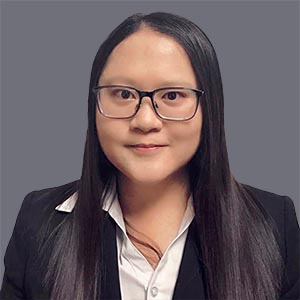
Luwen (Vivian) Huangfu serves as an Assistant Professor in the Management Information Systems Department at San Diego State University's Fowler College of Business. Holding a PhD from the University of Arizona (2019), she has published over 30 peer-reviewed articles in premier AI venues including IEEE Transactions and ACM conferences, accumulating 300+ citations. Her research bridges artificial intelligence with business analytics, public health, and transportation systems. Her educational foundation includes: PhD in Management Information Systems, University of Arizona (2019) Dr. Huangfu's research pioneers few-shot learning and generalized zero-shot recognition with applications spanning pavement distress detection , mental health intervention , and code search optimization . She develops novel architectures for multi-label image classification and document clustering using large language models, with significant contributions to weakly supervised learning and metric network design. Her work consistently addresses real-world challenges in transportation infrastructure, cybersecurity, and healthcare analytics. Recent publications (2023-2025) reveal a strategic focus on efficient deep learning for resource-constrained environments, particularly in transportation and medical imaging. She integrates spatial contextual awareness in multiple instance learning while advancing prompt-based refinement for long-tailed distributions. Her growing emphasis on LLM-driven security intelligence and social media mental health analysis demonstrates cross-domain impact. Her scientific accolades include: Corporation for Education Network Initiatives in California (CENIC) Award (2024) NIH-supported Summer Institute 2024/2025 Cohort NSF-supported University of Maryland Travel Award (2024) Department of Energy (DOE) Award (2022, 2023) NSF-DOE-Jointly-Supported Travel Award (2023) Management Information Systems Quarterly (MISQ) Scholarly Development Academy (2022) 24 total awards including multiple NIH/NSF grants and teaching fellowships As a principal investigator, she has secured funding from DOE, NIH, and NSA while serving as advisor for undergraduate and graduate research scholarships. Her service includes NSF ACCESS Program advisory, NIH/NSF grant review panels, and editorial roles for IEEE Transactions and Journal of Medical Internet Research. She actively mentors students through SDSU scholarship committees and DEI initiatives while maintaining rigorous peer-review commitments across 15+ journals and conferences.
Ella Peltonen is an Assistant Professor at the M3S research unit, University of Oulu, Finland. She joined the Ubicomp Oulu research centre and 6Genesis research programme in November 2018. Prior to this position, she was a postdoctoral researcher at the Insight Centre for Data Analytics in Cork, Ireland. She completed her PhD in the Nodes group at the University of Helsinki, Finland, working on the Carat project of collaborative energy diagnostics for mobile devices. Her educational background includes: PhD in Computer Science, University of Helsinki, Finland (Carat project on collaborative energy diagnostics) Ella Peltonen's research focuses on ubiquitous computing, large-scale data analysis, and applied machine learning. Her work particularly emphasizes everyday sensing and mobile and wearable devices. She aims to apply machine learning algorithms to large, complex data in real-time systems, with a focus on distributed machine learning and data analysis of smart devices. Her research spans various applications including energy consumption monitoring of mobile devices, wearable technology for measuring physiological signals, and exploring future sensing technologies. Peltonen has expressed interest in how future devices might sense human states, become smarter, and provide greater benefits, potentially through innovations like augmented reality glasses or subcutaneous chips. Analysis of her recent publications shows a strong focus on edge computing, vehicular networks, and sustainable computing systems. Her work bridges the gap between theoretical machine learning approaches and practical applications in transportation, healthcare, and environmental monitoring. Many of her papers address challenges in distributed systems, real-time data processing, and privacy-preserving techniques for edge intelligence. Her notable scientific awards include: Nominated to the list of 10 Rising Stars in Networking and Communications by N2 Women 2017 Selected as one of 50 Finnish Researchers by the Finnish Union of University Researchers and Teachers Nokia Scholarship 2015 and 2016 Jorma Ollila Grant 2018 Young Teacher of the Year 2012 Young Researcher of the Year 2015 Peltonen is actively involved in teaching and mentoring, with a teaching philosophy focused on supporting students' independent learning rather than lecturing from above. She enjoys guiding small groups where she can discuss topics together with students and get to know them personally. As a researcher, she describes herself as precise, detail-oriented, and committed to verifying the correctness of her work carefully. She values the combination of mathematical work with experimental work and creativity in technology, noting that research tasks are diverse and can apply different types of methodology. She is part of international research collaborations with several major universities worldwide, as required by Finnish Academy funding. Peltonen is also an advocate for diversity in technology fields, noting that technology is used by all kinds of people from various backgrounds, yet the producers of technology lack diversity. She has highlighted the importance of encouraging more women to pursue technology careers from an early age.
Manuela Battipede is Associate Professor of Flight Mechanics & Control at the Politecnico di Torino , Department of Mechanical and Aerospace Engineering (DIMEAS). Since 2002 she has led research and teaching in aerospace guidance, airworthiness, neural-network-based virtual sensors, and trajectory optimisation, coordinating EU H2020 and Clean Sky projects, industrial airworthiness certification contracts, and supervising PhD students in aerospace engineering. Education & Academic Career Joined Politecnico di Torino as a confirmed Associate Professor (Prof.ssa Associata Confermata). Visiting Researcher, West Virginia University, USA (April–September 2002). Research Interests Her work integrates control theory , flight mechanics , and artificial-intelligence-based sensing to enhance safety and efficiency of air and space vehicles. Key themes include: 4-D trajectory optimisation for climate-neutral aviation. Certifiable virtual air-data systems using neural networks. Flutter suppression and intelligent flight control for fixed-wing and rotary-wing aircraft. Low-thrust orbital mechanics, collision avoidance, and end-of-life disposal for satellites. Lighter-than-air platforms and VTOL hybrid drones for earth-observation and fire-monitoring missions. Scientific Awards & Recognition PoCN – Proof of Concept Network (2015), AREA Science Park, Italy. Regular evaluator for SESAR Joint Undertaking, EU H2020, and European Commission programmes. Doctoral Advising & Funding Since 2011 she has served on the PhD board of the Aerospace Engineering doctorate at Politecnico di Torino, currently supervising: Giorgio Antonio Orlando (39th cycle, 2023–) Gabriele Tarascio (39th cycle, 2023–) She has been Scientific Director of >20 competitively funded projects (EU Clean Sky MIDAS, ESA, MIUR-PRIN, EASA certification contracts, etc.) and commercial consultancy contracts exceeding €3 M. Laboratories & Teams Battipede leads the Modelling, Simulation and Control of Aircraft research group at DIMEAS, managing real-time hardware-in-the-loop test rigs, CubeSat development platforms, and an integrated multi-aircraft simulation laboratory for education and industrial validation.