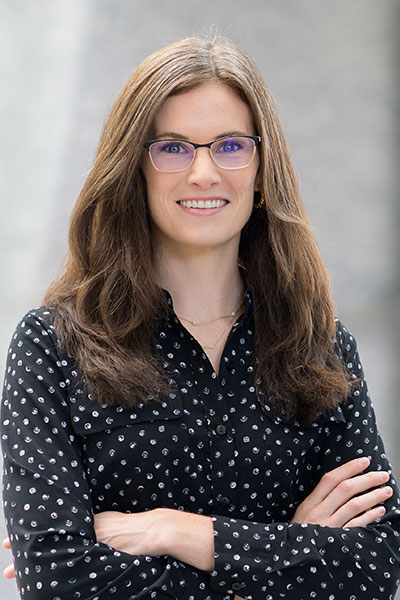
Sara Beery is an Assistant Professor at the Massachusetts Institute of Technology (MIT), affiliated with the Department of Electrical Engineering and Computer Science and the Computer Science and Artificial Intelligence Laboratory (CSAIL). Her research focuses on leveraging computer vision for environmental sustainability and conservation challenges. Beery's work spans computational vision, self-supervised learning, and multimodal AI systems. She has contributed to advancements in neural latent dynamics, face recognition bias analysis, and spatio-temporal dataset creation for autonomy. Her recent publications emphasize computer vision applications in conservation, medical imaging, and robotics. Notable topics include synthetic image generation, denoising low-SNR video, and cell segmentation using foundational AI models. Scientific Awards Resnick Graduate Scholar
Bülent Bölat is a Lecturer at Istanbul Technical University's Department of Mechanical Engineering, focusing on interdisciplinary research at the intersection of computer science and biomedical engineering. His work spans machine learning, neural networks, and signal processing applications. Research Trends: His recent publications highlight expertise in biometric authentication (ECG-based), federated learning for pedestrian detection, crowd density estimation via capsule networks, and wireless signal analysis using CNNs. Key themes include real-time systems, CNN architectures, and biomedical signal processing. Collaborations: Active in computer science and biomedical research, with partnerships in Turkey and international IEEE conferences. His work involves deep learning methods for smart systems (e.g., parking occupancy) and spectrum management.
Muhammed Enes Atik is an Assistant Professor in the Department of Geomatics Engineering at Istanbul Technical University (ITU), affiliated with the Faculty of Civil Engineering. His academic roles include teaching and research supervision. He holds a PhD (2018), MSc (2016), and BSc (2011) in Geomatics Engineering from ITU. His research focuses on remote sensing, deep learning applications in geospatial data, UAV-based photogrammetry, and point cloud processing. Education: PhD in Geomatics Engineering, Istanbul Technical University, 2011–2018 MSc in Geomatics Engineering, Istanbul Technical University, 2016–2018 BSc in Geomatics Engineering, Istanbul Technical University, 2011–2016 Research Interests: Enes Atik specializes in integrating deep learning techniques with geomatics engineering to enhance photogrammetric applications, UAV data analysis, and point cloud segmentation. His work bridges remote sensing, GIS, and computer vision to address challenges in urban planning, disaster management, and infrastructure monitoring. Key areas include: 3D modeling and semantic segmentation of point clouds Optimization of UAV-based photogrammetric workflows Machine learning for remote sensing image classification Flood susceptibility analysis using GIS and AHP Cultural heritage documentation via laser scanning and photogrammetry Awards: IEEE GRSS Türkiye Thesis Competition Award (2022) Muhammed Enes Atik Prize for Student Excellence (2021) 3-Minute Thesis Competition Award (IEEE GRSS, 2024) Grants & Projects: Principal Investigator: 'Deep Learning-Based Disparity Map Estimation and DEM Generation from UAV Imagery' (2023–2025) Co-Investigator: '3D Modeling of Historical Instruments' (2021–2023) Lead Researcher: 'Flood Simulation Using Game Engines' (2024–ongoing) Teaching: Enes Atik instructs courses in programming fundamentals, photogrammetry, geomatics projects, and laser data engineering at both undergraduate and graduate levels.
Vasileios Argyriou is affiliated with Kingston University, specifically within the Faculty of Science, Engineering and Computing, and the School of Computer Science and Mathematics. He is an active researcher with a prolific publication record in computer vision, image processing, machine learning, and IoT applications. His research interests span a wide range of topics including Computer Vision , Photometric Stereo , Motion Estimation , Federated Learning , Remote Sensing , UAV-based Smart Farming , 3D Reconstruction , and Human-Computer Interaction . His work often bridges theoretical advances with real-world applications in agriculture, healthcare, and cybersecurity. The recent publications (2024–2025) highlight a strong focus on AI-driven solutions in agriculture (e.g., water stress detection), anomaly detection in video , secure federated learning , and advanced face reenactment using GANs . His methodologies frequently involve deep learning, sensor fusion, and simulation-based training. Scientific Awards: No awards explicitly mentioned in the provided text. Advising and Grants: While no explicit list of students or grants is provided, his extensive collaboration with researchers such as Panagiotis Sarigiannidis, Thomas Lagkas, Ilias Siniosoglou, and others suggests active supervision and participation in funded research projects, likely in EU or national programs related to IoT, AI, and smart systems. Labs and Teams: He appears to be part of a research group focused on intelligent systems, possibly involving the Intelligent Systems Research Group at Kingston University, with strong ties to Greek academic institutions. His work on UAVs, IoT, and federated learning indicates involvement in interdisciplinary teams developing smart, secure, and scalable AI solutions.
Dr Ahmad Taha is a Lecturer in Autonomous Systems and Connectivity at the James Watt School of Engineering, University of Glasgow. He holds roles as an academic advisor to the Commonwealth Scholarship Commission and sits on the Glasgow Retrofit Advisory Board, focusing on energy efficiency in Scottish housing. His research centers on cyber-physical systems for energy management and digital healthcare, with a focus on smart energy systems, IoT-enabled healthcare, and AI-driven solutions. Education: Not explicitly stated in the text, but expertise spans UK, Egypt, and China institutions. Affiliations: Royal Academy of Engineering (Global Talent scheme), UK Young Academy, International Science Council (ISC) Global Roster of Experts. Research interests include smart energy systems, energy-conscious networks, and healthcare technologies. His work integrates AI and IoT for applications like contactless health monitoring, radar-based activity detection, and sustainable urban systems. Recent projects explore virtual power plants, 6G-enabled healthcare, and blockchain-based vehicular security. Notable achievements include contributions to £19M+ research grants and publications in Energy Reports , IEEE Sensors Journal , and Frontiers in Communications and Networks . Awards include FHEA and Royal Academy recognition. Grants and advising span energy policy, autonomous systems, and smart housing. Collaborations include NHS hospital energy studies and precision agriculture 6G use-cases. Labs/Teams: Involved in Glasgow’s Cyber-Physical Systems and Digital Twins initiatives, along with multi-institutional projects on net-zero carbon and 6G applications.
Dr. Tharindu Fernando Warnakulasuriya is a Research Fellow at Queensland University of Technology (QUT), affiliated with the School of Electrical Engineering & Robotics. He holds a PhD from QUT and a BSc (Special Degree in Computer Science) from the University of Peradeniya, Sri Lanka. His primary research focuses on Machine Learning, Deep Learning, Neural Memory Networks, Computer Vision, and Biomedical Signal Processing. He has received several awards, including the QUT Outstanding Doctoral Thesis Award (2019), QUT Early Career Researcher Award (2022), and EER Rising Star Award (2023). His work bridges interdisciplinary fields such as healthcare, neuroscience, and autonomous systems, with notable contributions to medical anomaly detection, autonomous vehicle behavior prediction, and surveillance systems. Teaching roles include coordinating EGH404 and lecturing in EGB103. He supervises PhD students in areas like deep learning for biosignal analysis and multimodal perception. His research outputs span over 50 publications in top-tier journals like IEEE Transactions and ACM Computing Surveys. Key collaborations include projects on neural memory plasticity, autonomous steering, and stress detection using wearable devices. He actively reviews for journals like IEEE Transactions on Neural Networks and Learning Systems, and is part of professional networks like IEEE.
Dr. Sierra Young is an Assistant Professor in the Department of Civil and Environmental Engineering and the Utah Water Research Laboratory at Utah State University, where she leads the DAISy (Digital Agro-environment and Intelligent Systems) Lab. Her research integrates robotics, computer vision, and environmental sensing to advance monitoring in agriculture and hydrology. PhD, Civil and Environmental Engineering, University of Illinois at Urbana-Champaign, 2018 MS, Civil and Environmental Engineering, University of Illinois at Urbana-Champaign, 2015 BS, Civil and Environmental Engineering, Cornell University, 2014 Dr. Young's research focuses on field robotics, automation, and optical sensing systems for environmental and agricultural applications. She specializes in unmanned aerial systems (UAS), developing robotic payloads for tasks such as aerial pollination, soil moisture measurement, and water quality sampling. Her work also emphasizes hyperspectral imaging and machine learning for non-destructive evaluation of crops like industrial hemp and loblolly pine, enabling high-throughput phenotyping and disease detection. Her recent publications demonstrate a strong trend in intelligent robotics for agriculture, computer vision for environmental monitoring, and sensor fusion for hydrological applications. Key themes include autonomous decision-making in UAS, hyperspectral analysis for plant health, and real-time data processing for operational field deployment. NSF CAREER Award, 2024 Outstanding Reviewer, Journal of Sustainable Water in the Built Environment, 2024 Educational Aids Blue Ribbon Award, ASABE, 2024 ASABE Outstanding Reviewer, 2023 Dr. Young mentors graduate students in civil, environmental, and electrical engineering, guiding research in robotics, sensing, and data science. She has secured funding from agencies including the U.S. Geological Survey and the National Robotics Initiative to support projects on camera-based hydrologic monitoring and autonomous water sampling. Her teaching includes courses in computer programming and computer vision for engineers. The DAISy Lab fosters interdisciplinary collaboration, particularly with NC State University, focusing on scalable robotic solutions for agricultural and environmental challenges. The DAISy Lab is actively developing mobile sensor systems for applications in precision agriculture, hydrology, and aquaculture. Current projects include autonomous water quality monitoring using aerial and surface vehicles, hyperspectral imaging for crop breeding, and low-cost camera networks for operational hydrology.
Marcin Maleszka is a researcher at the Faculty of Information and Communication Technology at Wrocław University of Science and Technology, specializing in collective intelligence , multiagent systems , knowledge diffusion , and knowledge integration . His work bridges computational models with social dynamics, focusing on group learning, recommendation systems, and secure data sharing. Current affiliation: Department of Applied Informatics, Wrocław University of Science and Technology Email: marcin.maleszka@pwr.edu.pl Office hours: Wednesday 13:30–15:00, Thursday 13:00–15:00, Saturday 16:45–17:45 His research explores how agent-based systems can model social collectives, optimize knowledge transfer, and enhance educational and healthcare technologies. Recent publications highlight applications in digital heritage , medical diagnostics , and urban mobility , with methodologies spanning GANs , ANNs , and agent modeling . Key publication trends include: Integration of Generative Adversarial Networks and Graph Neural Networks for heritage data Development of agent-based models for group learning Security mechanisms in peer-to-peer systems using attribute-based encryption Applications in medical imaging and traffic modeling Contact details: Address: ul. Z. Janiszewskiego 11/17, 50-372 Wrocław Room: C-3, 15 (Wrocław) and D-1, 30 (during Saturday office hours) Phone: +48 71 320 2938
Houda Harkat is an Assistant Professor at Universidade Lusófona, affiliated with the Associação para a Investigação e Desenvolvimento em Cognição e Computação Centrado nas Pessoas. She also holds research positions as a Researcher at Université Sidi Mohamed Ben Abdellah, Faculté des Sciences et Techniques de Fès, and as an Invited Auxiliary Researcher at UNINOVA Instituto de Desenvolvimento de Novas Tecnologias. Her academic foundation includes a PhD in Engineering Sciences, a Master’s in Telecom and Network Engineering, and a Licence in Mathematics, Informatics, and Physics, all from Moroccan institutions. PhD in Engineering Sciences, Physical Sciences, Mathematics and Computer Science – Université Sidi Mohamed Ben Abdellah (2018) Master in Telecom and Network Engineering – Université Sidi Mohamed Ben Abdellah (2013) Licence in Mathematics, Informatics, and Physics – Université Sidi Mohamed Ben Abdellah (2010) Her research spans two key domains: telecommunications and antenna systems , focusing on UWB antennas, beam steering, WiMAX/WLAN, and microstrip arrays; and artificial intelligence for environmental and human sensing , including wildfire detection using aerial imagery and deep learning (e.g., Deeplabv3+, MobileNetv2), and Wi-Fi-based gesture/sign language recognition via Channel State Information (CSI). Her work integrates simulation tools like HFSS and CST with optimization techniques such as genetic algorithms. The recent publications highlight a clear shift toward AI-driven solutions in cyber-physical systems, particularly in fire detection and segmentation using deep learning models, alongside continued contributions in wireless communication and antenna design. Her interdisciplinary work bridges signal processing, machine learning, and environmental monitoring, with growing emphasis on unmanned aerial systems and IoT-based decision support. Her scientific contributions include 11 journal articles, 4 book chapters, and numerous conference papers. She has participated in multiple research projects as a PhD and post-doctoral fellow, contributing to advancements in GPR signal processing, wireless sensing, and intelligent systems. Project participation: PhD Student Fellow in 1 project Post-doc Fellow in 1 project Organized 3 academic events Houda Harkat is actively involved in interdisciplinary research labs and teams focusing on intelligent systems, including UNINOVA’s Institute for New Technologies Development and wildfire monitoring initiatives such as the FIREFRONT project, which leverages aerial vehicles and AI for firefront forecasting and disaster management support.
Satnam Singh is a Professor at Newcastle University's School of Electrical and Electronic Engineering, UK. With a research career spanning over three decades from 1989 to present, Singh has established himself as a leading expert in hardware design, FPGA programming, and parallel computing systems. His research interests focus on hardware-software co-design , reconfigurable computing , and functional programming applications for hardware design. Singh has pioneered work in using functional languages like Haskell for hardware description and verification, particularly through his contributions to the Lava hardware description language. His work bridges theoretical computer science with practical hardware implementation challenges. Analysis of his publication history reveals a clear evolution from early work on formal verification and FPGA design in the 1990s, through substantial contributions to parallel programming models in the 2000s, to more recent applications of machine learning techniques in diverse domains including cheminformatics and sensory systems. His 2022-2025 publications demonstrate continued innovation in specialized processor programming, AI applications for olfactory systems, and health hazard classification using deep learning. Singh has maintained extensive collaborations throughout his career, notably with Krishna R. Pattipati (15 joint publications), Anuradha Kodali (8 publications), and David J. Greaves (5 publications), reflecting his ability to bridge theoretical computer science with practical engineering applications. His work spans multiple prestigious venues including FPGA, FCCM, ICFP, and IEEE Transactions on Systems, Man, and Cybernetics, demonstrating both theoretical depth and practical impact across computer architecture, programming languages, and applied machine learning domains.
Zayene Oussama is a Researcher at the HES-SO University of Applied Sciences and Arts Western Switzerland, affiliated with the Fribourg School of Engineering and Architecture and the Institute of Complex Systems (iCoSys). His work focuses on advancing video text detection, recognition, and OCR systems with a specialization in Arabic script challenges. He has contributed to the development of the AcTiV dataset and associated tools, widely used in international competitions like ICPR and ICDAR. Completed the 'Video Protector Smart AID' project (2021), integrating vision-based surveillance systems Collaborated with Morphean SA on intelligent video analysis PhD thesis (2018) developed novel Arabic text detection/recognition methods using deep learning Research interests include: Arabic text processing in videos Computer vision applications Machine learning for OCR Dataset standardization Recent work (2025) explores truck classification via YOLOv5 and evaluates Vision-Language Models for critical tasks.
João Mendes is a Researcher at the Center for Research in Digitization and Intelligent Robotics (CeDRI) , affiliated with the Polytechnic Institute of Bragança. He holds a bachelor's in Mechanical Engineering and a master's in Industrial Engineering from the same institution, followed by a PhD in Engineering and Systems from the University of Minho. He currently leads technical development for the project Olive Grove to Fork 4.0 , focusing on AI-driven agricultural solutions. Research Expertise His work integrates machine learning with agricultural technology, specializing in: Developing CNN-based software for olive cultivar classification using leaf analysis Implementing computer vision systems for precision agriculture Optimizing deep learning models for UAV-based crop monitoring Data processing pipelines for agricultural big data His publications (26 total) demonstrate consistent focus on applying computer vision and neural networks to agricultural challenges, with recent works exploring UAV-based disease detection, hyperparameter optimization for CNNs, and autonomous driving systems. Affiliations and Infrastructure Primary laboratory affiliation: CeDRI (Center for Research in Digitization and Intelligent Robotics)
İhsan Ömür BUCAK is a Professor at the Department of Electrical and Electronics Engineering, Faculty of Electrical and Electronics Engineering, Igdir University. His academic career spans over three decades, with a focus on machine learning, control systems, and robotics. He holds a Ph.D. from Oakland University (1997-2000) in Electrical and Systems Engineering, specializing in Nonlinear Learning Control. Education: Ph.D., Electrical and Systems Engineering, Oakland University (1997-2000) M.Sc., Control and Computer Engineering, Istanbul Technical University (1986-1992) B.Sc., Electronics and Communication Engineering, Istanbul Technical University (1980-1985) Research Interests: His work integrates machine learning with real-world applications, including intrusion detection systems, underground object detection via GPR, and medical diagnostics using neural networks. He has pioneered reinforcement learning algorithms for robotics and control systems, contributing to automotive engineering and environmental monitoring. Awards: Outstanding Support for the successful launch of the first Ford Hybrid Vehicle (Ford Motor Company, 2014) Altair's recognition award for extraordinary effort and performance (2014) Bilimsel Yayınları Teşvik Ödülü (TÜBİTAK, 2012) Advising & Grants: Supervised 7 master’s theses, including projects on cybersecurity, robotics, and bioinformatics. Collaborated on TÜBİTAK-funded projects for PCB inspection and hybrid vehicle torque monitoring. His research has been supported by industry partnerships with Ford and Altair. Labs & Teams: Active in automation and control systems research, contributing to interdisciplinary projects such as smart drug algorithms for cancer treatment (2023) and VR-based dyslexia diagnosis (2024).
Prof. Dr. Erhan A. İnce is a Professor at the Department of Electrical & Electronic Engineering, Eastern Mediterranean University (EMU). He holds a Ph.D. in Communications from Bradford University (1997) and has been at EMU since 1998, progressing through academic ranks from Assistant Professor (1998–2006) to Full Professor (2016–present). His research focuses on mobile communications, channel coding, OFDM techniques, and video/signal processing. He has supervised over 25 master's and doctoral students, including notable works on turbo codes, interference alignment, and image processing. Education: Bachelor's in Electrical Engineering, Bucknell University (1990) M.S. in Electrical Engineering, Bucknell University (1992) Ph.D. in Communications, Bradford University (1997) Research Interests: His work spans communications theory, signal processing, and multimedia applications. Key areas include turbo codes over fading channels, OFDM-based systems, facial recognition, and traffic surveillance using video analytics. Publications: Over 30 journal and conference papers in IEEE Transactions, Elsevier journals, and international conferences like CSDSP and EUSIPCO. Recent topics include blind interference alignment in cellular networks and tensor-based signal processing. Awards: Best Poster Award at CSDSP 1998. Service: Served as a reviewer for IEEE journals and conferences, and held administrative roles in EMU’s Faculty of Engineering, including Professor Representative (2018–present).
Sercan YALÇİN is an Associate Professor at the Department of Computer Engineering, Faculty of Engineering, Adiyaman University. He holds a PhD in Computer Engineering from Firat University (2021), with research focused on wireless sensor networks, machine learning, and AI applications in healthcare. Previously held roles include Research Assistant at Firat University (2014-2021) and Bayburt University's IT Department as a Computer Engineer (2013-2014). His expertise spans clustering algorithms, network optimization, and embedded systems design. Education: Bachelor's in Computer Engineering, Firat University (2013) Bachelor's in Business Administration, Anadolu University (2015) Master's in Computer Engineering, Firat University (2016) PhD in Computer Engineering, Firat University (2021) Research Interests: Specializes in wireless sensor networks, AI-driven healthcare solutions, cognitive radio networks, and optimization techniques. Recent work focuses on federated learning for edge computing, fault detection in industrial systems using deep learning, and energy-efficient routing protocols. Publications & Awards: Authored over 30 peer-reviewed papers in journals like Expert Systems with Applications and IEEE transactions. Notable awards include TÜBİTAK Project Support (2016-2021) and the ÖYP Scholarship during doctoral studies. Current projects include AI-based reservoir water level prediction and aortic disease diagnosis using deep learning. Grants & Roles: Deputy Head of Department at Adiyaman University. Active in interdisciplinary collaborations, including projects on climate dynamics estimation and EV battery management optimization. Supervises research on federated learning frameworks and wireless network security.