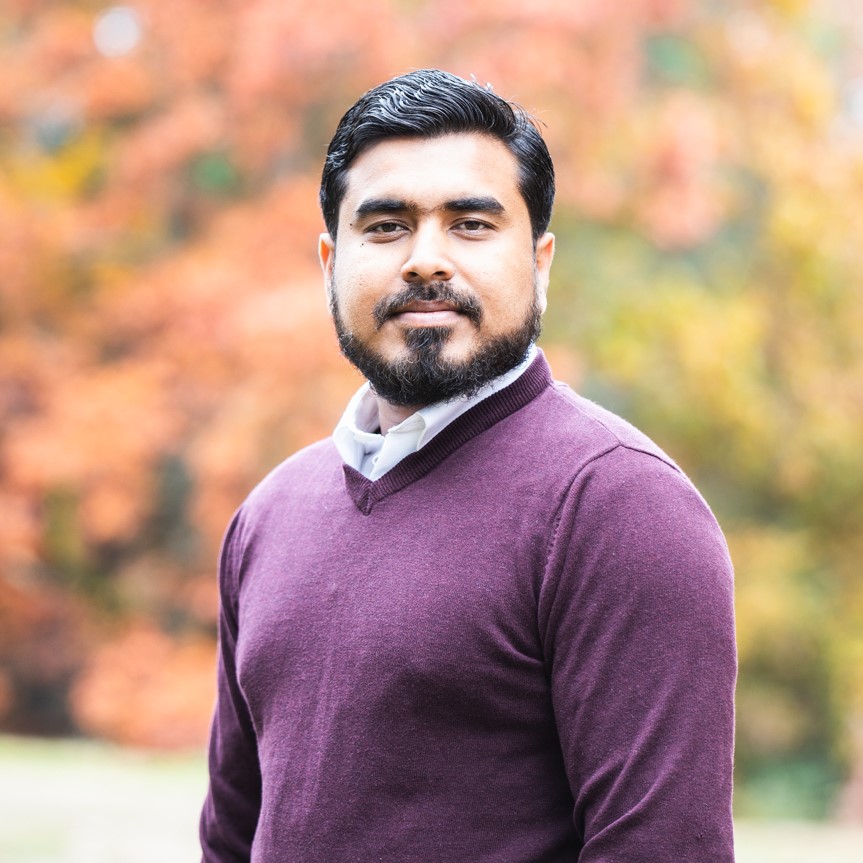
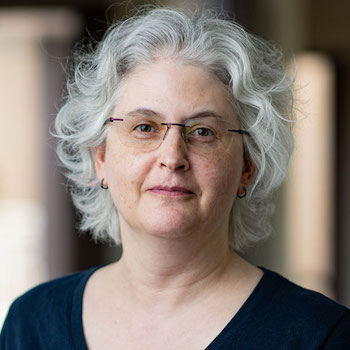
Arnaldo Delli Carri is an Associate Professor at the CEES School of Engineering, serving as Curriculum Lead and actively involved in academic leadership. His research focuses on Nonlinear Dynamics and Finite Element Analysis, with expertise in structural analysis, modal testing, and vibration dynamics. He is currently accepting PhD students in areas like Nonlinear Vibration Analysis and FE model validation. Research interests include advanced topics such as nonlinear system identification, model upgrading, and machine learning applications in structural performance prediction. Notable projects involve analyzing planetary gearboxes, 3D printing opportunities in Africa, and laser vibrometer-based nonlinear detection. His work integrates experimental and computational methods to address challenges in mechanical systems and biomedical engineering. Collaborations span international partnerships, focusing on structural dynamics and nonlinear systems. His contributions include over 17 publications since 2011, with a focus on vibration analysis, finite element validation, and additive manufacturing applications. He currently supervises PhD candidates exploring nonlinear dynamics and FE formulations.
Dr. Mohammad Razaur Rahman Shaon is an Associate Research Scientist at the Connecticut Transportation Institute (CTI), part of the University of Connecticut. Previously, he served as a Senior Research Specialist at the University of Arizona's Department of Civil and Architectural Engineering and Mechanics. He holds a Ph.D. in Transportation Engineering from the University of Wisconsin-Milwaukee, an M.Sc. from South Dakota State University, and a B.Sc. from Bangladesh University of Engineering and Technology (BUET). His research focuses on highway safety, crash data analysis, vulnerable road user protection, intelligent transportation systems, and driver behavior modeling. He has contributed to over 25 peer-reviewed publications and serves as a reviewer for journals like Accident Analysis and Prevention and the Journal of Transportation Engineering. Dr. Shaon’s work emphasizes the intersection of human behavior and safety, particularly in driver decisions and their impact on collision outcomes. His research on autonomous vehicles and pedestrian safety has garnered media attention for enhancing public safety awareness. He has led or co-PI’d numerous projects funded by federal, state, and local entities, addressing systemic safety, automated vehicle integration, and traffic management innovations. His current affiliations include CTI’s CAPLab, CTSRC, and T2Center, where he develops safety tools and evaluates advanced transportation systems. Recent studies highlight trends in autonomous vehicle interaction with pedestrians, E-scooter impacts on bike-sharing systems, and data-driven safety screening methodologies. His work bridges technical advancements with societal needs, aiming to improve transportation infrastructure and user safety through rigorous analysis and policy development.
Mostafa El Sayed is an Associate Professor in the Department of Mechanical and Aerospace Engineering at Carleton University. He serves as Director of the Aerospace Structures and Materials Engineering Laboratory (ASME-Lab). His academic credentials include a B.Sc. and M.Sc. from the Military Technical College and a Ph.D. from McGill University, supplemented by postdoctoral research at MIT. Prior to academia, he worked as an Aircraft Loads Engineering Specialist at Bombardier Aerospace, contributing to structural design and optimization of new aircraft programs. His research focuses on multiscale mechanics of meta-materials, additive manufacturing for green technologies, fluid-structure interaction, and structural optimization for aerospace applications. Key projects include developing lightweight materials for aircraft and spacecraft, enhancing energy absorption mechanisms, and optimizing designs for future transport concepts. Publications span topics such as lattice material characterization, aeroelasticity, and fatigue analysis. He actively mentors students through ASME-Lab, offering opportunities in cutting-edge research aligned with industry needs. His work bridges theoretical advancements with practical applications in aerospace structural design and materials innovation. El Sayed is a Professional Engineer (PEO) in Ontario and has contributed to industry collaborations through Bombardier and MIT affiliations. His lab emphasizes hands-on experience with advanced manufacturing techniques and computational modeling tools.
Prof. Ondrej Vaculin, Ph.D., is a Professor at Technische Hochschule Ingolstadt (THI), specializing in passive vehicle safety, mechatronic systems, and automated driving. He joined THI in 2018 and previously held roles at TÜV SÜD Prague (2008–2018) as Vice President for Safety and Security in Automotive, and as a researcher at Czech Technical University (2005–2008) and DLR Oberpfaffenhofen (2000–2005). His research focuses on enhancing vehicle safety through advanced simulation, sensor integration, and machine learning applications. Education: Ph.D. in Mechanics of Solids, Deformable Bodies and Continua from Czech Technical University in Prague (2001), and a degree in Technical Cybernetics from the Faculty of Electrical Engineering at the same university (1991). His work bridges theoretical research and practical implementation, addressing challenges in automated driving systems, crash simulation, and human body diversity in safety design. Research interests include passive safety systems, autonomous vehicle dynamics, and infrastructure integration for safety enhancements. Recent publications emphasize collaborative smart infrastructure, sensor fusion for free space detection, and machine learning in crash detection. He actively contributes to FISITA, serving as a Council Delegate and member of technical committees. Awards/memberships: Active in FISITA, holding leadership roles in technical committees. No explicit awards listed, though his contributions to automotive safety standards are notable. Grants and advising: While no specific grants or students are detailed, his extensive industry and academic collaborations (e.g., IN2Lab testing field projects) highlight his role in applied research and development.
Duane Cronin is a Professor and Tier 1 Canada Research Chair in Trauma Biomechanics and Injury Prevention at the University of Waterloo. His research focuses on computational biomechanics, human body modeling, and injury prevention strategies, with applications in automotive safety, sports safety, and military protection systems. He leads a lab investigating material characterization, finite element modeling, and biomechanical testing of musculoskeletal systems. Key areas of study include neck injury mechanisms in vehicle crashes, thorax response to ballistic impacts, and spinal cord biomechanics. He develops advanced computational models validated against experimental data to predict injury risks under various loading conditions. His work integrates multidisciplinary approaches combining engineering, medicine, and computer science. Recent research trends involve refining human body models with anatomically specific geometries and advanced material properties, particularly for vulnerable populations like elderly and pediatric patients. He also explores adhesive joint mechanics in automotive materials and synthetic turf performance in sports injury mitigation. His team collaborates on projects funded by industries and government agencies, aiming to translate biomechanical insights into real-world safety improvements. Active in academic leadership, he mentors graduate students in biomechanics and hosts international symposia to advance injury prevention research.
Professor Wafaa Saleh is affiliated with Edinburgh Napier University , where she contributes to the School of Computing Engineering and the Built Environment . Her research spans Transport Policy , Pedestrian Safety , and Travel Demand Management , with a focus on sustainable mobility and behavioral impacts of technology on road safety. Research Interests : Transportation sustainability, pedestrian behavior at junctions, motorcycle emissions, congestion pricing, and AI applications in transportation. Advisees : Supervised students in studies involving road safety in Qatar, bus passenger discomfort analysis, and mode choice modeling using behavioral theories. Grants & Projects include funding from the European Commission for gender inclusion in transport systems, the Qatar National Research Fund , and Tabuk University for Saudi Arabian transport behavior studies. Key publications address helmet compliance , pedestrian red-light violations , and congestion charging impacts . Collaborations span institutions in Taiwan, Saudi Arabia, and the UK, with work featured in journals like Transportation Research Part A and Accident Analysis and Prevention . Her Transport Research Innovation Centre involvement highlights interdisciplinary approaches to road safety and emissions reduction.
Alessio Gambi is a Researcher at the Austrian Institute of Technology (AIT) within the Security & Communication Technologies department, specializing in software engineering for autonomous systems. His current work focuses on testing methodologies for self-driving cars, self-adaptive systems, and cloud environments. His research interests center on Software Testing for Autonomous Vehicles , where he develops novel techniques for scenario generation, safety validation, and uncertainty management. Key areas include search-based procedural content generation, simulation-based testing, and the integration of large language models for test learning. His work bridges theoretical advances with practical tools like Flexcrash and TEASER for real-world validation. Analysis of his recent publications (2023-2025) reveals a strong trend toward autonomous vehicle testing with increasing incorporation of AI techniques. Approximately 60% of his work addresses self-driving car validation, 25% focuses on general software testing methodologies, and 15% explores AI/LLM applications in testing. His subfield specialization shows consistent emphasis on critical scenario generation, mixed-traffic simulation, and safety monitoring. Gambi actively contributes to the software engineering community through program committee roles at major conferences including ASE (2023-2025), ICSE (2024-2026), ISSTA (2021-2025), and ESEC/FSE. He has served as session chair, workshop organizer, and track committee member across these venues, demonstrating leadership in software testing research. His professional activities include developing open-source testing tools (visible on GitHub), teaching engagements like the Database Systems course at AIT (2024), and industry collaborations through AIT's research infrastructure. Current projects focus on predictive safety monitoring and uncertainty management for automated driving systems.
Harry Lahrmann is an Associate Professor and Research Group Leader at the Department of Construction, Urban and Environmental Engineering within Aalborg University's Faculty of Engineering and Science. He specializes in traffic safety research with a focus on cyclist-pedestrian interactions, vehicle inspection systems, and urban mobility solutions. Key Research Areas: Bicycle traffic, road safety analysis, traffic engineering, and data-driven transportation policy Recent Work Trends: Utilizes ambulance data and self-reporting mechanisms to identify hazardous road locations; investigates impact of vehicle inspection programs and cycling safety technologies Awards: 1994 - First prize in bicycle safety at intersections Advising & Grants: Supervises PhD students and secures funding from institutions like TrygFonden for projects such as "Better Data on Traffic Accidents." Labs & Teams: Leads the Traffic Research Group, collaborating with experts in infrastructure, hydraulic engineering, and environmental technology.
Miguel Costas Piñó serves as Associate Professor in the Department of Structural Engineering at the Norwegian University of Science and Technology (NTNU), where he has been faculty since 2017 and was promoted to Associate Professor in 2021. His research bridges computational mechanics with practical engineering applications in structural safety and material behavior. Education PhD in Civil Engineering, University of A Coruña (2016), thesis: "Crashworthiness analysis and design optimization of hybrid impact energy absorbers" (awarded Cum Laude, International Distinctions, and Extraordinary Doctorate Award) Master of Science in Civil Engineering, University of A Coruña (2011), specialization in Structural Engineering Research Focus Dr. Costas's work centers on computational and experimental solid mechanics , with particular expertise in metal plasticity , aluminium structures , and crashworthiness under extreme loading conditions. His laboratory investigates ballistic penetration phenomena and structural optimization for energy-absorbing systems, utilizing advanced finite element methods and physical testing protocols. Current projects integrate machine learning with traditional mechanics to model complex failure modes in multi-material systems. Publication Trends His 2020-2025 publications reveal three dominant trajectories: (1) ballistic resistance of additively manufactured metals for defense applications, (2) crash safety of electric vehicle battery systems, and (3) advanced modeling of mechanical joints. These works consistently combine experimental validation with computational innovation, particularly in neural network applications for large-scale structural simulations. Awards Cum Laude Doctorate International Distinctions (PhD) Extraordinary Doctorate Award Professional Activities Dr. Costas actively collaborates with industry partners on structural safety projects and serves as principal investigator for multiple NTNU research initiatives. His teaching includes graduate courses in materials mechanics, and he maintains dual professional engagement as a classical pianist with Norway's collaborative music community. Current work focuses on AI-driven crash simulation frameworks and next-generation armor materials.
Assoc. Prof. Dr. Murat Ergün currently serves at Istanbul Technical University's Faculty of Civil Engineering, Department of Civil Engineering, specializing in transportation planning, traffic engineering, and sustainable infrastructure. He holds a PhD in Transportation Engineering and has contributed extensively to urban mobility, pavement engineering, and risk assessment in transportation systems. PhD (1993): Transportation Engineering, Istanbul Technical University MSc (1985): Transportation Engineering (Mixed), Istanbul Technical University BSc (1981): Civil Engineering, Uludağ University His research focuses on GIS integration for spatial transport analysis, centroid optimization in planning, and sustainable asphalt materials. Recent projects include risk assessment for urban roadside assets and dynamic creep analysis of polymer-modified asphalt. Collaborations with İ. Adalıoğlu dominate his 2025 publications. Key projects span from 2005 BAP initiatives to 2025 studies on autonomous vehicles in public transport. Though no specific scientific awards are listed, his Scopus h-index of 8 reflects significant scholarly impact.
Jason F. Luck is an Assistant Research Professor in the Department of Biomedical Engineering at Duke University and a Faculty Network Member of the Duke Institute for Brain Sciences. His research focuses on impact biomechanics, traumatic brain injury, and spinal injury mechanisms. Ph.D., Duke University (2012) Dr. Luck's work investigates biomechanical responses to head and neck trauma, particularly in sports and vehicular contexts. Key areas include: Instrumented Mouthguard Validation: Assessing accuracy in measuring head kinematics during combat sports impacts. Pediatric Spinal Biomechanics: Analyzing cervical spine dynamics and failure properties in children. Trauma Epidemiology: Identifying mortality predictors in global traumatic brain injury cases. His recent publications emphasize sensor technology validation, sports-related concussion, and spinal injury thresholds. Dr. Luck collaborates with multidisciplinary teams on helmet design and impact mitigation strategies. Dr. Luck's laboratory (Hudson Hall Annex, Durham, NC) conducts experimental injury biomechanics using cadaveric and computational models.
Marina Epelman is a Professor in the Department of Industrial and Operations Engineering at the University of Michigan , where she has been a faculty member since Fall 1999. She also serves as the Associate Chair of Graduate Education . Her teaching includes graduate and undergraduate courses in linear and nonlinear optimization , such as Linear Programming II and Nonlinear Programming. PhD in Operations Research from MIT (1999) Her research focuses on mathematical programming , covering linear, semidefinite, and nonlinear optimization , with applications in healthcare operations (e.g., medical residency scheduling, radiation therapy optimization), automotive scheduling (e.g., crash test and vehicle prototyping), and algorithm design (e.g., simplex methods, sampled fictitious play, column generation). Recent publications highlight her work in stochastic optimization for healthcare scheduling, dose distribution in radiation therapy , and automotive production planning . Her methodologies often bridge dynamic programming , Markov decision processes , and network optimization .
John Gaspar serves as Director of Human Factors Research at the University of Iowa's Driving Safety Research Institute within the College of Engineering. His work bridges the Department of Industrial and Systems Engineering and the National Advanced Driving Simulator (NADS), where he leads critical research on driver-vehicle interactions. With a PhD in Psychology from the University of Illinois Urbana-Champaign, his academic foundation supports interdisciplinary work spanning engineering, cognitive science, and transportation safety. Gaspar's research focuses on human factors in vehicle automation systems, drowsy driving countermeasures, and driver monitoring technologies. He employs multimodal methodologies including high-fidelity simulation, naturalistic driving studies, and physiological monitoring to examine driver behavior in automated vehicles. His work specifically investigates mental model development around ADAS technologies, transition of control in conditional automation, and fatigue management strategies during long-haul driving. Analysis of his recent publications reveals dominant research themes in drowsy driving countermeasures (25% of recent work), ADAS mental model development (20%), driver monitoring system validation (15%), and rural automated vehicle deployment challenges (10%). His methodological approach consistently integrates simulation with real-world validation, particularly through NHTSA-funded projects examining human-automation interaction. As principal investigator on three active NHTSA projects, Gaspar leads research on automated vehicle HMIs, drowsiness countermeasures, and driver state detection systems. His work directly informs transportation safety policy through collaborations with the Transportation Research Board, Human Factors and Ergonomics Society, and Society of Automotive Engineers. The Driving Safety Research Institute under his direction operates multiple high-fidelity simulators including NADS-1 and NADS-2, supporting both fundamental human factors research and applied vehicle safety development. Gaspar's laboratory infrastructure includes the National Advanced Driving Simulator complex with motion-base platforms, instrumented on-road vehicles, and rural driving scenario capabilities. His team specializes in multimodal data collection combining eye-tracking, physiological monitoring, vehicle dynamics, and behavioral coding to create comprehensive driver state models. Current projects emphasize real-world applicability of laboratory findings, particularly for vulnerable populations including older drivers and those operating in rural environments.
Jordanka Kovaceva is a Researcher at Chalmers University of Technology's Division of Vehicle Safety within the Mechanics and Maritime Sciences school. She has been with the institution since 2015 and is also affiliated with the SAFER Vehicle and Traffic Safety Centre, where she leads a project focused on active safety for vulnerable road users. Her work connects with numerous EU-funded initiatives including SAFE-UP, PROSPECT, and MeBeSafe. Her research centers on traffic safety analysis using naturalistic driving data from major international datasets including euroFOT, UDrive, and SHRP2. She specializes in developing methodologies to analyze real-world crash data with particular emphasis on vulnerable road users such as cyclists and pedestrians. Her work bridges engineering, data science, and human factors to improve active and passive safety systems. Recent efforts focus on micromobility safety, automated emergency braking systems, and the impact of infrastructure design on pedestrian safety in winter conditions. Analysis of her publication trends shows consistent focus on vulnerable road user protection, with increasing attention to micromobility vehicles (e-scooters) in recent years. Her work combines naturalistic driving studies, simulation modeling, and real-world crash data analysis to inform safety system development. She frequently collaborates with international partners across EU projects, demonstrating strong integration of research with practical safety applications. As a project leader within SAFER, she oversees research initiatives addressing active safety for vulnerable road users. Her funding portfolio includes multiple European Commission grants and Swedish Transport Administration projects, reflecting her prominence in traffic safety research. She actively contributes to the development of safety assessment methodologies that bridge academic research and automotive industry applications. Her laboratory work centers around the Vehicle Safety division's facilities at Chalmers, utilizing naturalistic driving data analysis platforms and collaborating with the SAFER research center. She works within interdisciplinary teams that include engineers, data scientists, and human factors specialists to address complex traffic safety challenges through both fundamental and applied research approaches.
Shohini Kundu is an Assistant Professor of Finance at the UCLA Anderson School of Management and holds a courtesy appointment at UCLA School of Law. Her research focuses on financial intermediation, macroeconomics, corporate finance, and regulation, with a particular interest in emerging markets, especially India. She earned a PhD in Finance and MBA from the University of Chicago Booth School of Business, and a B.A. in Economics (Magna Cum Laude) from Cornell University. Education: Ph.D. Finance, 2021, University of Chicago Booth School of Business MBA, 2020, University of Chicago Booth School of Business B.A. Economics (Magna Cum Laude), 2016, Cornell University Her research investigates financial fragility, including how covenants in CLOs amplify systemic risks through fire sales, and their impact on asset prices and corporate decisions. She explores topics like deposit insurance expansion, banking network effects, and historical institutions’ role in economic outcomes. Her work has been recognized with awards such as the BlackRock Applied Research Award and Forbes 30 Under 30. Key Research Themes: Security design and contractual externalities Financial intermediation and macroeconomic linkages Emerging market finance and policy relevance Her recent articles analyze banking sector dynamics, deposit insurance reforms, and the geographic impact of liquidity shortages. She collaborates with institutions like the Centre for Economic Policy Research (CEPR) and engages in policy-oriented research to strengthen financial systems.