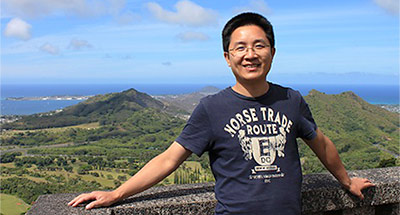
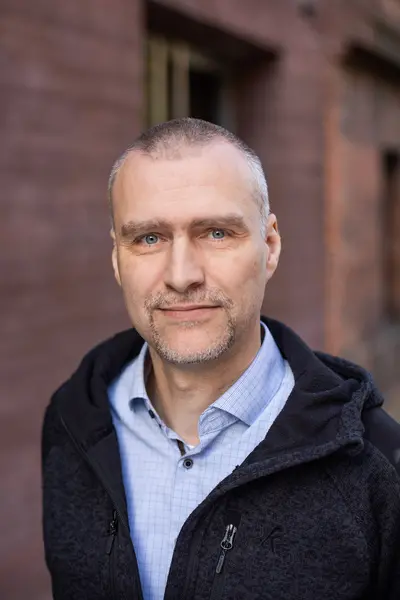
Qi Chen is a Professor in the Department of Geography at the University of Hawaii at Mānoa, specializing in remote sensing and geospatial technologies. His office is located in Saunders Hall, and he teaches undergraduate and graduate courses including GEO 370 (UAV and Aerial Photography), GEO 388 (Introduction to GIS), GEO 470 (Remote Sensing), GEO 489 (Applied GIS), and GEO 762 (Research Seminar: Remote Sensing. His research focuses on transforming earth observation data into actionable knowledge for environmental monitoring. Primary interests include: LiDAR applications for vegetation analysis and biomass estimation Climate change impacts on land cover and coastal systems Machine learning integration with geospatial data High-resolution mapping of agricultural and forest ecosystems Drone and satellite-based environmental assessment Chen's recent publications (2020-2025) demonstrate a strong focus on advancing remote sensing methodologies, particularly through: AI-driven approaches (GANs for vegetation indices, deep learning for marine debris) Multi-sensor fusion (LiDAR with camera systems, hyperspectral-multispectral integration) Novel applications in precision agriculture and infrastructure monitoring Hawaii-specific environmental studies incorporating indigenous knowledge systems He leads the Smart Remote Sensing Lab (smartremotesensing.org) where he mentors graduate students in developing cutting-edge geospatial solutions for ecological and societal challenges.
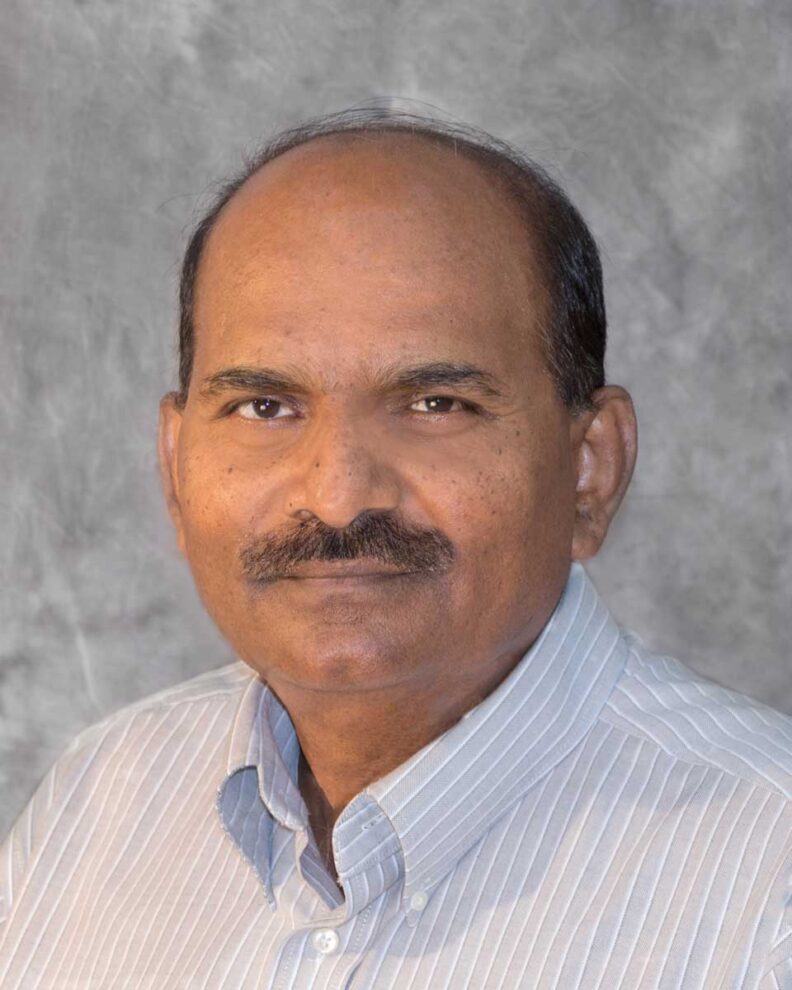
Dr. Naidu Rayapati is a Professor of Virology at Washington State University (WSU), where he serves as Director of the Prosser Irrigated Agriculture Research and Extension Center. He is affiliated with the Department of Plant Pathology within the College of Agricultural, Human, and Natural Resource Sciences. Dr. Rayapati leads the Grape Virology program at WSU-IAREC in Prosser, focusing on management strategies for virus diseases impacting fruit quality and vine health in Washington's wine grape industry. Dr. Rayapati's research focuses on virus diseases of horticultural, vegetable and food crops, with particular emphasis on virus characterization, diagnostics, plant-virus-vector interactions, and development of integrated crop improvement strategies. His current work centers on virus diseases of grapevines and vegetables, addressing critical challenges for Washington State's agricultural industry. He has established an integrated program of research, extension, and education through the Grape Virology program at WSU-IAREC. Analysis of Dr. Rayapati's recent publications reveals a strong focus on grapevine viruses, particularly Grapevine leafroll-associated viruses and Grapevine red blotch virus. His research spans molecular characterization of plant viruses, epidemiology of viral diseases, development of diagnostic tools, and management strategies for virus diseases in agricultural settings. There is also significant work on emerging viruses in legumes and other vegetable crops, reflecting his broader interest in plant virus diseases across multiple cropping systems. Scientific Awards: CAHNRS Land Grant Mission Award (2020) WSU's Top Industry Engaged Researchers (2017) International IPM Excellence Team Award, The 6th International IPM Symposium (2009) International Service Award, American Phytopathological Society (2007) Dr. Rayapati actively mentors graduate students and postdoctoral researchers, with current lab members including Sridhar Jarugula, Sudarsana Poojari, Tefera Mekuria, Linga Reddy Gutha, and Olufemi Alabi. His research program has received funding from various sources, supporting interdisciplinary collaborations that draw expertise from multiple institutions. Through his extension work, Dr. Rayapati translates scientific knowledge into practical applications for the grape and wine industry stakeholders and regulatory agencies. Dr. Rayapati leads the Grape Virology Program at WSU-IAREC, which employs a 3-D approach: Discovery of knowledge, Development of tools and techniques, and Deployment of knowledge-based strategies. The program works closely with the Washington State Grape and Wine Industry to address virus disease management as a key research priority for achieving the industry's goal of tripling economic value. His team conducts fundamental and applied research on wine grape virus diseases through interdisciplinary collaborations, creating experiential education opportunities for Viticulture and Enology students.
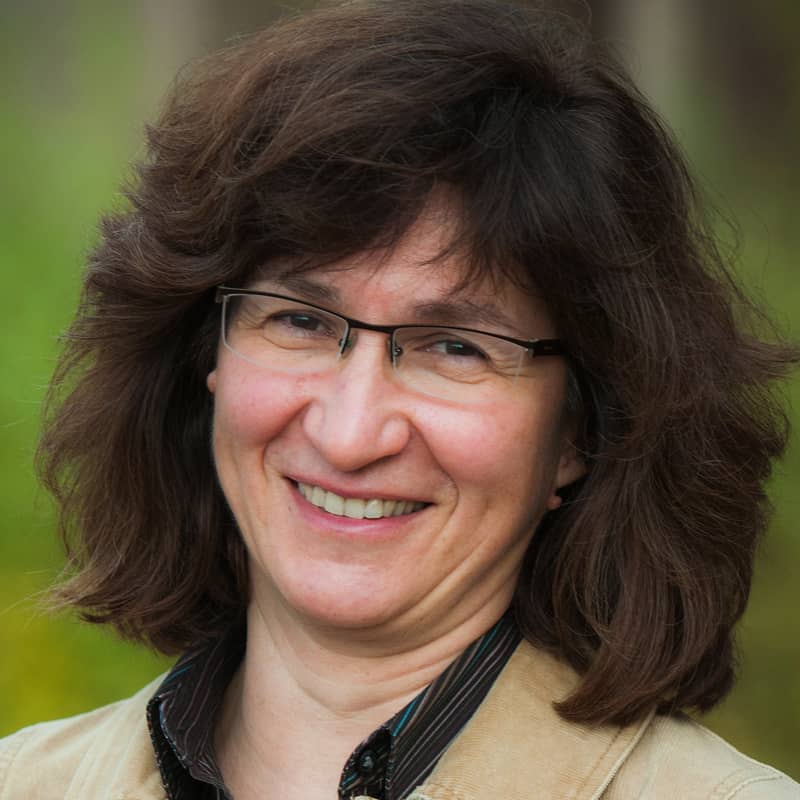
Dr. Maja Krzic is a Professor at the Department of Forest and Conservation Sciences within UBC's Faculty of Land and Food Systems. Her research bridges soil science with sustainability education through community engagement and digital innovation, focusing on human impacts on soil properties across agricultural, grassland, and forest ecosystems. She develops cutting-edge teaching tools like the Digging into Canadian Soils open textbook and SOILx interactive platform. PhD (University of British Columbia, 1997) MSc (University of Belgrade, 1990) BSc (University of Belgrade, 1986) Her publications (2010-2025) explore greenhouse gas dynamics in agricultural systems, soil carbon sequestration in elevation gradients, and innovative educational approaches including problem-based learning and augmented reality. Recent work addresses climate-resilient soil management in coastal British Columbia and gender parity in soil science academia. Major awards include: 3M National Teaching Fellow (2016) UBC Killam Teaching Prize (2006) Fellow, Soil Science Society of America (2023) Platinum AVA Digital Award for SOILx (2015) She has mentored 28 graduate students and postdocs, including Amy Wells (2024), Clara Roa-Garcia (PhD, 2018), and Preston Cumming (Postdoc, 2015). Current projects focus on climate change adaptation in Delta farmland and regenerative agricultural practices.
Dr. Christoph Müller is a leading scientist at the Potsdam Institute for Climate Impact Research (PIK), Germany, where he has served as working-group leader of the Land Biosphere Dynamics group since 2012. He also co-leads the Global Biosphere and Water Modeling team and acts as the scientist-in-charge for the internationally renowned LPJmL global vegetation and crop model. Additionally, he is Co-lead of the Ag-GRID initiative within the Agricultural Model Intercomparison and Improvement Project (AgMIP) and serves as Topical Editor for Geoscientific Model Development . Education Diploma in Geoecology, University of Potsdam (2002) PhD in Geoecology, University of Potsdam & International Max Planck Research School (IMPRS) (2007) Research Interests Dr. Müller’s research centres on understanding and modelling the interactions between climate, land use, and the biosphere to support sustainable food-system transformations. His work integrates global-scale vegetation and crop models with climate projections, socio-economic scenarios, and observational data to assess: Impacts of climate change and extreme events on crop yields and food security Carbon, nitrogen, and water cycles in managed and natural ecosystems Land-based climate-mitigation strategies and their co-benefits or trade-offs Adaptation options for agriculture under global change He promotes open science and reproducible modelling workflows, exemplified by the LPJmL open-source ecosystem model and associated toolkits. Publication Profile & Trends Since 2014 he has authored or co-authored more than 200 peer-reviewed articles. Recent work (2024-2025) highlights three dominant themes: (1) quantifying underestimated negative impacts of climate extremes on crop yields, (2) assessing the sustainability of large-scale land-based mitigation measures, and (3) advancing model intercomparison frameworks (e.g., AgMIP, ISIMIP) to reduce uncertainty in global yield projections. His studies increasingly integrate economic and health perspectives, examining how dietary shifts and food-system transformations can achieve climate, environmental, and social co-benefits. Scientific Awards & Recognition While no formal awards are explicitly listed, several publications have received notable recognition: “Soil quality both increases crop production and improves resilience to climate change” (Nature Climate Change, 2022) – listed among China’s top ten major advances in agricultural science in 2023. “Large potential for crop production adaptation depends on available future varieties” (Global Change Biology, 2021) – top-downloaded article. “Climate change impacts on global agriculture emerge earlier in new generation of climate and crop models” (Nature Food, 2021) – widely cited in IPCC AR6. Leadership, Grants & Collaboration Dr. Müller leads or co-leads multiple international projects and working groups: Working Group Leader – Land Biosphere Dynamics, PIK Research Department 2 Co-Lead – Ag-GRID, Agricultural Model Intercomparison and Improvement Project (AgMIP) Scientist-in-Charge – LPJmL model development and application Topical Editor – Geoscientific Model Development journal These roles involve coordinating multi-institutional consortia, securing competitive grants, and mentoring early-career researchers. Laboratory & Data Resources Dr. Müller’s “team” is essentially the LPJmL modelling group at PIK, comprising post-docs, doctoral researchers, and software engineers who maintain and extend the LPJmL code-base, develop satellite-data fusion products, and provide model-driven policy support to governments and international organisations such as the IPCC, FAO, and World Bank.
Dr. Tim Pagella is a Senior Lecturer in Forestry at Bangor University's School of Environmental and Natural Sciences. He serves as Programme Lead for three undergraduate forestry programs and Module Leader for DXX-1003 (Forestry in the 21st Century) and DXX 4505 (Natural Resource Management). His teaching contributes to modules including DDL-4004, DXX1001, and others. As a systems scientist, Pagella specializes in agroforestry systems, focusing on trees outside woodlands delivering ecosystem services and livelihood resilience. His research spans tropical and temperate regions, emphasizing local knowledge integration, socio-ecological dynamics, and gender-transformative land restoration. Collaborations include World Agroforestry (ICRAF), Natural Resources Wales, and international projects in Rwanda, Vietnam, and Indonesia. Current projects: Trilateral Agroforestry Network (2024-2025), Landscape Resilience in Comoros (2022), Climate-Smart Woodlands in Wales (2018-2023) PhD supervision: 5 current students researching topics like farmer extension models, agricultural change management, and food security metrics Key contributions: Polyscape GIS tool for ecosystem valuation, RHoMIS survey framework for smallholder analysis
Addie Thompson is an Assistant Professor at Michigan State University's College of Agriculture & Natural Resources , affiliated with the Department of Plant, Soil and Microbial Sciences , Plant Resilience Institute , and Plant Breeding, Genetics, and Biotechnology Program . Her expertise spans maize genetics, genomics, and phenomics, with a focus on genotype-environment interactions. B.S. from Iowa State University Ph.D. from University of Minnesota Postdoctoral work at University of Minnesota & Purdue University Research focuses on drought stress adaptation , high-throughput phenotyping , and quantitative genetics in maize and sorghum systems. Current projects include computational modeling of crop traits, field phenotyping technologies, and cross-species stress response analysis. She leads maize genetics research while participating in national initiatives like the Genomes-to-Fields Initiative , with recent publications on phenotypic plasticity, hyperspectral imaging applications, and climate-resilient breeding strategies. Her work connects molecular genetics to agricultural productivity through advanced data modeling and field experimentation. Thompson directs the Thompson Maize Lab which focuses on: Maize and sorghum genotype-environment interactions Phenomics technologies for trait analysis Development of computational breeding tools Climate resilience trait discovery Historical genetic diversity patterns Agricultural workforce development
Genhua Niu is a Professor at Texas A&M AgriLife Research and Extension Center in Dallas and the Department of Horticultural Sciences, Texas A&M University. Her research focuses on controlled environment agriculture, indoor vertical farming, and plant stress physiology. She holds a B.S. and M.S. in Agricultural Engineering from Zhejiang University and a Ph.D. in Horticultural Engineering from Chiba University. Education: B.S. Agricultural Engineering, Zhejiang University M.S. Agricultural Engineering, Zhejiang University Ph.D. Horticultural Engineering, Chiba University Research Interests: Genhua’s work addresses sustainable crop production through advanced technologies like hydroponics, biostimulants, and vertical farming systems. She investigates how light quality, temperature, and nutrient management impact plant growth and stress tolerance. Her studies include optimizing controlled environments for high-value crops such as lettuce, basil, and watermelon, while exploring solutions for salinity and nutrient deficiencies. Recent work highlights innovative uses of agricultural waste as biofertilizers and the physiological mechanisms underlying crop responses to environmental stressors. Publications: Her recent articles emphasize interdisciplinary approaches to plant factory systems, biostimulant applications, and environmental control in horticulture. Key themes include optimizing light spectra and thermal regimes for leafy greens, assessing organic fertilizer efficacy, and leveraging waste materials for sustainable agriculture. Awards: No awards explicitly listed in the provided text. Grants & Advising: While specific grants are not detailed, her research aligns with Texas A&M’s focus on agricultural innovation. No advisee names are listed in the text. Labs/Teams: Affiliated with Texas A&M AgriLife Research and Extension Center, Dallas, focusing on urban agriculture and horticultural engineering solutions.
Teis Nørgaard Mikkelsen is an Associate Professor in the Department of Environmental and Resource Engineering at the Technical University of Denmark (DTU), specializing in the Waste, Climate & Monitoring section. His research integrates plant ecophysiology with environmental monitoring to address climate change and air pollution challenges. Institution: Technical University of Denmark (DTU) School: Department of Environmental and Resource Engineering Department: Waste, Climate & Monitoring Position: Associate Professor Location: Bygningstorvet 115, 110, 2800 Kgs. Lyngby, Denmark Email: temi@dtu.dk ORCID: https://orcid.org/0000-0001-7470-6522 Website: https://sustain.dtu.dk/ His research focuses on plant responses to environmental stressors such as tropospheric ozone, UV radiation, elevated CO2, and temperature. He investigates how vegetation can act as a filter for air pollution and contribute to urban climate regulation. His work spans controlled experiments to field studies and contributes significantly to UN Sustainable Development Goals related to climate action and sustainable cities. The recent publications highlight a strong trend in climate change impacts on agriculture, urban air quality, and innovative pollution mitigation technologies. Key themes include the effects of abiotic stress on crop nutrition, the use of ecotrons for ecosystem analysis, photocatalytic degradation of pollutants, and life cycle assessments of emission control technologies. Teis Nørgaard Mikkelsen actively supervises PhD students and participates in national and international research projects such as UVWarm and AnaEE, Denmark. He also serves as an external examiner for academic theses, demonstrating his role in academic governance and mentorship. PhD Supervision: V. Sobejano Paz (project: Diffuse radiation and temperature effects on crop water use efficiency) External Examiner: Swedish boreal forest BVOC emissions, wheat grain quality under ozone and CO2 He is involved in collaborative research networks and has held leadership roles, such as Chairman of the Ministry of Higher Education and Science (2019–2021). His activities include conference presentations, participation in workshops, and contributions to expert groups, reflecting a strong engagement with the scientific community. Chairman, Ministry of Higher Education and Science (2019–2021) Guest Lecturer, 2023 onward Participant, Forests and Climate Symposium (2018) Attendee, International Conference on Ozone and Plant Ecosystems (2018)
Brian Pickles is an active academic researcher affiliated with the University of Reading, School of Biological Sciences, where he contributes to research in ecology, mycorrhizal symbioses, and environmental conservation. His work spans forest ecology, urban biodiversity, paleontology, and forensic science, reflecting a highly interdisciplinary approach to ecological challenges. University: University of Reading School: School of Biological Sciences Department: Department of Ecology and Evolutionary Biology Academic Rank: Senior Lecturer His research focuses on mycorrhizal fungi and their role in plant-soil interactions, forest resilience under climate change, and biodiversity conservation. He investigates how ectomycorrhizal networks influence tree communities, how urban trees affect microclimates, and how decomposition processes alter soil ecosystems. His work integrates field experiments, molecular ecology, and remote sensing techniques. Recent publications show a strong trend in applying ecological theory to practical conservation, including reptile habitat management, invasive species policy, and urban green space planning. His studies often employ robust experimental designs such as before-after control-impact (BACI) and leverage large collaborative networks. Brian Pickles has co-authored numerous high-impact papers in journals like New Phytologist , Proceedings of the Royal Society B , and Frontiers in Forests and Global Change . His work on ectomycorrhizal networks, forest carbon dynamics, and urban tree radiative performance demonstrates both theoretical depth and applied relevance. He has also contributed book chapters on mycorrhizal mediation of soil processes and spatial ecology of fungal communities. Brian Pickles collaborates extensively with researchers across the UK, Canada, and globally. Notable collaborators include Suzanne Simard, Melanie D. Hart, Ian C. Anderson, and Miranda M. Hart. These collaborations span topics from fungal community assembly to inter-plant communication via mycorrhizal networks. No formal scientific awards or prizes are mentioned in the provided text. However, his consistent publication record in top-tier journals suggests recognition within the ecological research community. Brian Pickles contributes to research grants and collaborative projects focused on forest resilience, urban ecology, and soil biodiversity, though specific grant titles or funding bodies are not listed. His leadership in experimental design and data interpretation indicates an active role in securing and managing research funding. He is involved in several research teams and labs, particularly those focused on mycorrhizal ecology and forest dynamics. His work with the Simard Lab (University of British Columbia) and collaborations with UK-based environmental monitoring groups highlight his integration into major ecological research networks. He also contributes to urban ecology initiatives using remote sensing and ground-based validation.
Stefan Julich is a Professor of Landscape Studies at Eberswalde University for Sustainable Development, where he has held a professorship since 2022. He is affiliated with the Faculty of Landscape Management and Nature Conservation, contributing to both teaching and research activities. His academic career spans multiple prestigious institutions across Europe, including TU Dresden, Justus-Liebig University Giessen, and the Potsdam Institute for Climate Impact Research. Dr. Julich earned his Diploma in Geography with minors in Geology and Soil Science from Martin-Luther University Halle-Wittenberg (1998-2004), followed by a Dr. rer. nat. (magna cum laude) from Justus-Liebig University Giessen in 2010. His dissertation focused on uncertainties in modeling water and nitrogen cycles in micro- and mesoscale river catchments. His research primarily investigates soil physics and hydrology, with particular emphasis on the influence of land use on soil hydraulic properties, dynamics of water and material cycles in landscapes, and ecosystem services of soils. He employs advanced modeling techniques to simulate water and material flows from soil to landscape scales and develops innovative monitoring concepts and laboratory methods for environmental assessment. Analysis of his recent publications reveals a strong focus on tropical and temperate hydrology, with particular attention to land use change impacts, soil erosion processes, and water resource management in data-scarce regions. His work often bridges theoretical modeling with practical applications in environmental management, particularly in African and European contexts. Professor Julich actively contributes to long-term environmental observation systems, notably the Ecosystemic Environmental Observation (ÖUB) in Brandenburg's biosphere reserves, which monitors 136 sites across various ecosystem types. His research integrates abiotic (soil and water) and biotic (vegetation and fauna) components in comprehensive ecosystem assessments. He teaches courses in soil science, hydrology, and soil-water science within the Bachelor's programs in Landscape Use and Nature Conservation and Organic Agriculture and Marketing. His research projects focus on long-term ecosystem monitoring in biosphere reserves, examining how regional ecosystems evolve under changing environmental conditions.
Max Zhang is the Irving Porter Church Professor at Cornell University's Sibley School of Mechanical and Aerospace Engineering, with joint affiliation to the Cornell Atkinson Center for Sustainability. His research focuses on energy-environment interactions, renewable energy systems, and IoT applications for sustainable development. His educational background includes: B.S. in Thermal Engineering, Tianjin University (1998) B.A. in English Language, Tianjin University (1998) Ph.D. in Mechanical Engineering, University of California-Davis (2004) Dr. Zhang leads research in: Air pollution modeling using the CTAG framework Sustainable solar farm design integrating energy/ecosystem dynamics Distributed energy resource management Development of statewide IoT networks for environmental monitoring Community-engaged solutions for food security and STEM education His recent publications (2023) demonstrate strong focus on renewable energy optimization, air quality improvement, and sustainable infrastructure design through computational modeling and experimental validation. Significant honors include: Cornell Town-Gown Achievement Award (2022) EPA Scientific Achievement Award (2015) Engaged Scholar Prize (2017) He directs the Energy and Environment Research Lab (EERL) and has secured major grants from NSF and NYSERDA for projects including agrivoltaic system development and hyperlocal weather forecasting systems for rural communities.
Robert F Grant is a Full Lecturer at the Faculty of Agricultural, Life and Environmental Sciences at the University of Alberta. His research focuses on process-based ecosystem modeling to study soil-plant-atmosphere interactions, particularly in the context of climate change and land management impacts on carbon and water cycles. He is affiliated with major initiatives such as the Canada Carbon Project, North America Carbon Project (NACP), Climate Impacts on Canadian Arctic Tundra (CICAT-IPY), Arctic Development and Adaptation to Permafrost in Transition (ADAPT-NSERC), and NitroEurope. He co-leads the Land Reclamation International Graduate School (LRIGS) program sponsored by NSERC CREATE. Research Focus: Simulation modeling of physical, chemical, and biological processes in ecosystems Key Projects: Canada Carbon Project, NACP, CICAT-IPY, ADAPT-NSERC, NitroEurope Dr. Grant's work aims to predict ecosystem responses to climate and management changes through the development of the ecosys model. His research spans diverse environments including arctic tundra, boreal forests, and agricultural systems. He has contributed to modeling initiatives like NGEE Arctic, SPRUCE, and NGEE Tropics to evaluate climate change impacts on productivity and greenhouse gas exchange. Alberta Emerald Awards Order of Excellence - Finalist (2009) Ed and Peggy Tyrchniewicz Award for Innovation in Teaching (2008) McCalla Professor (2005) Contact: rgrant@ualberta.ca | Phone: (780) 492-6609 | Address: 430B Earth Sciences Building, University of Alberta
Franco Maximiliano Bilotto is a Postdoctoral Associate in the Department of Global Development at Cornell University, focusing on enhancing the sustainability of agri-food systems. His research addresses climate change mitigation and adaptation, especially in livestock systems, with an emphasis on environmental conservation, emissions reduction, and socio-economic feasibility. Education: Doctor in Animal Science, Universidad Nacional del Centro de la Provincia de Buenos Aires (Argentina) Ph.D. in Agriculture, University of Tasmania (Australia) Doctorate in Veterinary Medicine, Universidad Nacional del Centro de la Provincia de Buenos Aires (Argentina) Research Interests: Climate change adaptation and mitigation strategies Sustainable agriculture and nutrient cycling in agroecosystems Soil carbon dynamics and grazing system management His work bridges transdisciplinary collaboration with industry, farmers, and policymakers to address complex agri-food challenges. Recent Research Trends: Franco's recent publications emphasize climate-driven agricultural transformations, livestock emissions reduction, and smallholder resilience in developing regions. He explores innovative solutions like biochar and feed additives while critically evaluating model predictions against real-world outcomes. Contact: Located in Bruckner Hall, Ithaca, NY, Franco can be reached at fmb59@cornell.edu .
Prof. Martijn Bezemer is a Professor of Ecology of Plant-Microbe-Insect Interactions at Leiden University's Institute of Biology Leiden (IBL), Department of Plant Sciences. His research focuses on understanding how plants influence soil biota and how these changes affect subsequent plant growth and insect interactions. Key areas include grassland ecosystems, horticultural soils, and soil microbiome applications in restoration and agriculture. He leads a team of PhD students and postdocs conducting experiments in greenhouses, growth chambers, and field settings. Current projects include TRIPS (Thrips Reduction In Production Systems), Self Defense (mimicking plant defense mechanisms), and Soils2Guts (soil microbiome health impacts). Collaborations with restoration practitioners aim to enhance grassland biodiversity through soil inoculation and plant-driven soil improvements. Recent work includes studies on blue-green roof vegetation dynamics, plant community legacy effects on decomposition, and steering crop microbiomes via soil feedback principles. His research bridges fundamental ecology with applied solutions for sustainable agriculture and ecosystem restoration.
Ayşe Nur Şavkan serves as Assistant Professor in the Department of Horticulture at Kırşehir Ahi Evran University's Faculty of Agriculture since 2025, following her tenure as Lecturer (2020-2025) at the same institution. Her academic foundation includes a PhD (2018-2023), MSc (2015-2018), and BSc (2011-2015) in Horticulture from Selçuk University, establishing her expertise in vegetable crop improvement. Her educational qualifications: PhD in Horticulture, Selçuk University (2018-2023) MSc in Horticulture, Selçuk University (2015-2018) BSc in Horticulture, Selçuk University (2011-2015) Dr. Şavkan's research integrates molecular biotechnology with traditional breeding to enhance vegetable crops' resilience. She specializes in developing stress-tolerant genotypes through molecular marker-assisted selection, with particular emphasis on salinity and cold tolerance in peppers and squash. Her work bridges laboratory techniques with field applications to address climate-related agricultural challenges, focusing on both morphological characterization and physiological mechanisms of stress adaptation. Analysis of her 14 publications (2020-2025) reveals consistent thematic progression in vegetable breeding. Early work established foundational knowledge in dihaploidization techniques for squash, while recent studies demonstrate sophisticated integration of machine learning for germination analysis and molecular screening for dual virus resistance in peppers. Her research trajectory shows increasing methodological complexity—from basic morphological characterization to multi-omics approaches—while maintaining focus on practical crop improvement for Turkish agriculture. Dr. Şavkan has not received documented scientific awards to date. Her research leadership is evidenced through principal investigatorship of a current Kırşehir Ahi Evran University project (2025-2026) investigating low-temperature pepper germination using machine learning. As co-investigator, she has contributed to nine additional projects including TÜBİTAK-funded initiatives on salt-tolerant pepper development and virus-resistant vegetable breeding, demonstrating sustained research productivity. She operates within a robust collaborative network centered at Kırşehir Ahi Evran University, with particularly strong partnerships with Önder Türkmen (13 joint publications) and Ayşe Çandar (7 collaborations). This interdisciplinary team combines expertise in molecular biology, plant physiology, and field horticulture to address complex agricultural challenges through integrated research approaches.