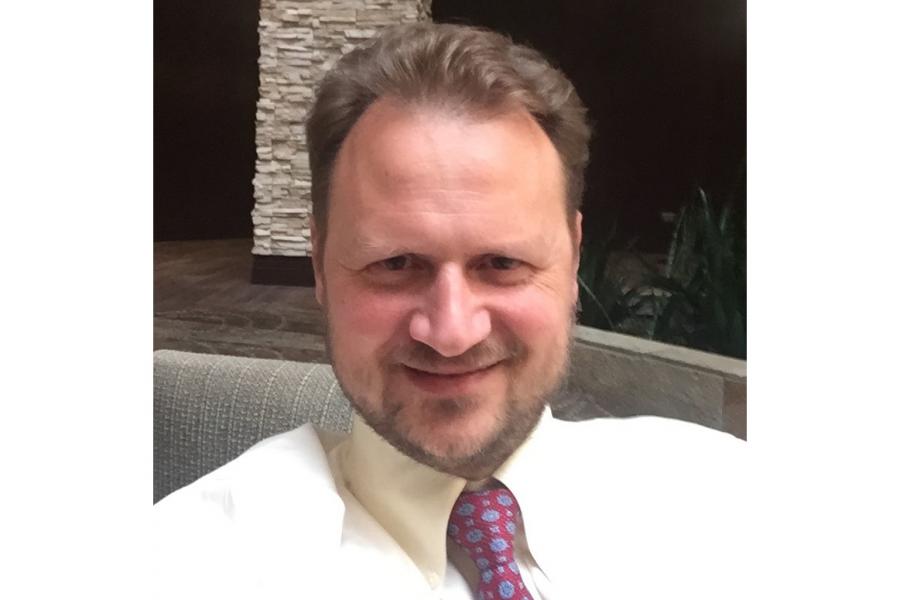
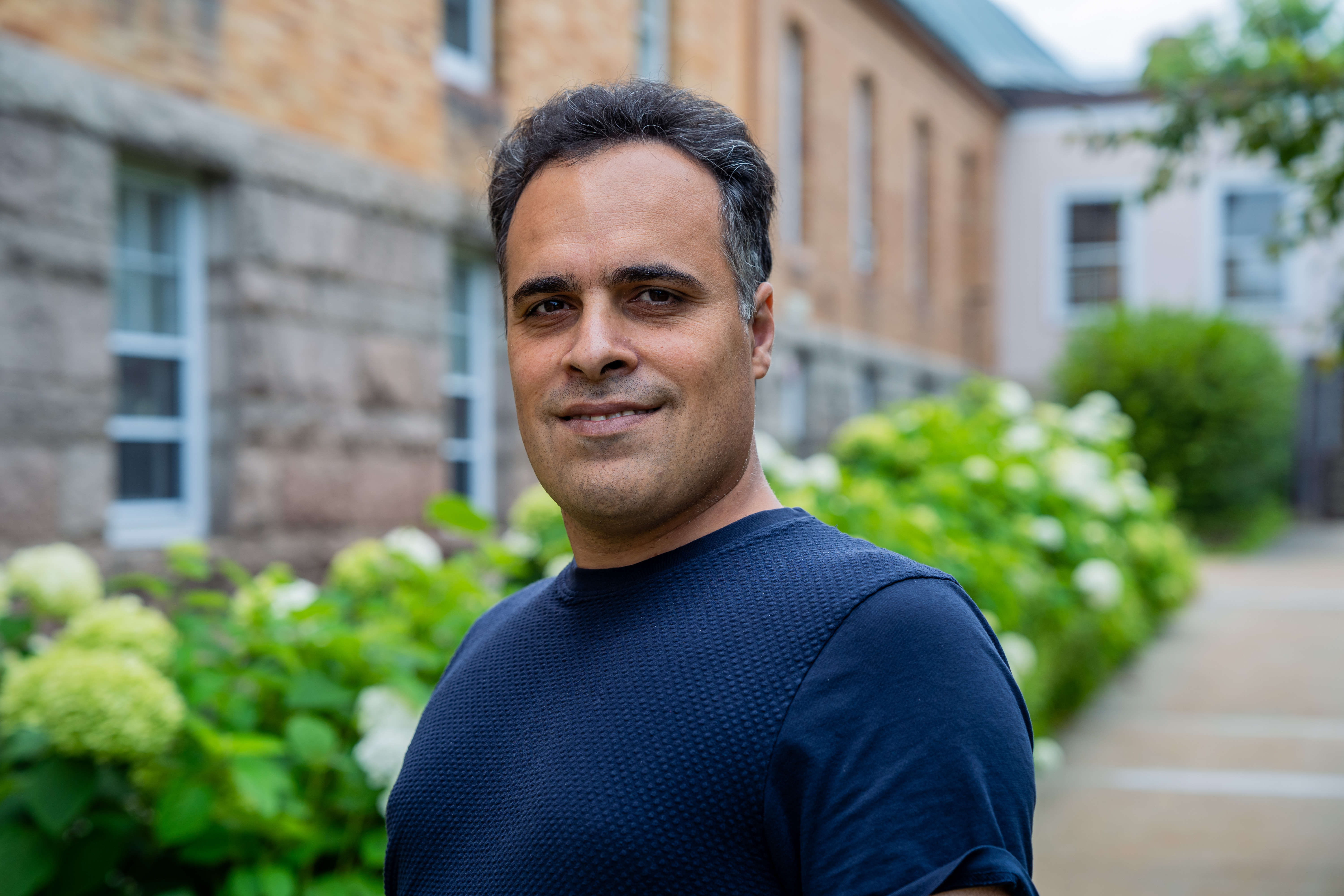
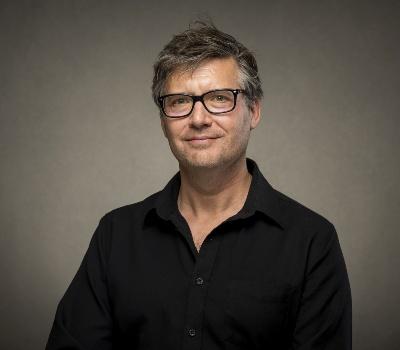
Professor Guy Williams is a leading academic at the University of Cambridge with a focus on imaging science and clinical neurosciences, affiliated with Downing College and the Wolfson Brain Imaging Centre . Holding a PhD in Physics from his initial Natural Sciences degree, he specializes in nuclear magnetic resonance (NMR) and MRI techniques for brain imaging. Education: BA, PhD in Physics His research centers on non-invasive imaging of brain structure and function, particularly in traumatic brain injury (TBI) and dementia. His work involves developing novel MRI pulse sequences and advanced data analysis algorithms, including AI-based diagnostic tools. He leads studies on white matter integrity post-trauma, longitudinal dementia assessment, and applications of MRI in disorders of consciousness and addiction. Recent publications highlight collaborations in traumatic brain injury outcomes, AI-guided dementia prediction, and neuroimaging of post-COVID cognitive deficits. His team's work on ultra-high field laminar fMRI and distortion correction methods has advanced clinical neuroscience applications. Key techniques include diffusion tensor imaging (DTI), 7 Tesla MRI, and positron emission tomography (PET/MR). His research spans from basic NMR physics to clinical translation, with a strong emphasis on multi-site studies and real-world diagnostic implementation.
Daniel A. Klain is a Professor in the Department of Mathematics & Statistics at the University of Massachusetts Lowell , part of the College of Sciences. His career focuses on geometric and discrete mathematics, with significant contributions to Convex Geometry and its intersections with probability and combinatorics. Education: Ph.D. in Mathematics (1994), Massachusetts Institute of Technology B.S. in Mathematics (1990), Massachusetts Institute of Technology Research Interests span Convex Geometry, Geometric Tomography, Integral Geometry, and Combinatorics. His work explores geometric inequalities, valuations, and symmetrization techniques, often bridging classical geometry with modern probabilistic and discrete methods. Article Trends highlight his focus on Convex Geometry and Integral Geometry, with studies on Steiner symmetrization, shadow covering, and valuations. His publications also reflect interests in geometric probability, number theory, and educational insights. Scientific Awards and Grants: Mathematical Sciences Teaching Excellence Award (2010, 2003) Sigma Xi Young Faculty Award (2000) Jon A. Bucsela Prize in Mathematics (1990) NSF Graduate Fellowship (1990) National Merit Scholar (1986) NSF grants (2003, 1998, 1996) for convex geometry and geometric analysis Service and Collaborations: Active in teaching, research, and academic service, Klain has co-authored works in geometric probability and presented at numerous international workshops and seminars. His career integrates rigorous mathematical inquiry with educational innovation.
Dr. Vladimir Okhmatovski is a Full Professor in the Department of Electrical and Computer Engineering at the University of Manitoba, affiliated with the Price Faculty of Engineering. His research focuses on fast algorithms in electromagnetics, quantum computing, and high-performance computing. He holds a Ph.D. from the Moscow Power Engineering Institute and has held academic and industry roles globally. He has received prestigious awards including the 2017 Intel Outstanding Researcher Award. Education: Ph.D., Antennas and Microwave Circuits, Moscow Power Engineering Institute, 1997 M.S., Radiophysics and Electronics, Moscow Power Engineering Institute, 1996 Research Interests: Dr. Okhmatovski develops advanced computational methods for electromagnetics, including tensor train decompositions and quantum algorithms. His work addresses challenges in signal integrity, layered media analysis, and inverse scattering. He leads efforts in applying quantum computing to solve matrix equations and has pioneered fast direct solvers using H-matrices. Awards: 2017 Intel Outstanding Researcher Award 1996 Best Young Scientist Report (VI International Conference on Mathematical Methods in Electromagnetic Theory) 2007 Outstanding ACES Journal Paper Award Advising & Grants: He mentors students in climate change research through collaborations with the Centre for Earth Observation Science. His funded projects include quantum computing applications and Arctic sea ice remote sensing. He chairs technical committees for IEEE MTT-S and AP-S. Labs/Teams: His research group focuses on electromagnetic modeling, quantum algorithms, and layered media analysis. Collaborations include the Churchill Marine Observatory for Arctic studies.
Mojtaba Zarei is a researcher at the Department of Clinical Research, Faculty of Health Sciences, University of Southern Denmark, with additional affiliations at Odense University Hospital (OUH) and Karolinska Institutet (KI). His primary research unit is the Neurology Research Unit in Odense, focusing on advanced neuroimaging techniques and their applications in neurological and sleep disorders. Dr. Zarei's research spans multiple domains within neuroscience, with particular expertise in Positron Emission Tomography (PET), Diffusion Tensor Imaging (DTI), and cognitive function assessment. His work frequently addresses Alzheimer's Disease, Parkinson's Disease, and insomnia disorders, utilizing both clinical and computational approaches. His fingerprint analysis shows strong activity in neuroscience (100% for PET), diffusion tensor imaging (66%), cognitive function (45%), and Alzheimer's Disease (40%). His recent publications reveal a clear trajectory toward integrating multimodal imaging techniques with machine learning approaches for improved diagnosis and understanding of neurological conditions. The work on OPETIA (Odense-Oxford PET Image Analysis) demonstrates his contribution to developing standardized tools for neuroimaging analysis. His research increasingly bridges computational methods with clinical neuroscience, as evidenced by his work on image stitching algorithms and machine learning applications for insomnia classification. Dr. Zarei actively collaborates with researchers across multiple institutions, with notable external collaborations visible on the international network map. His work has been mentioned by peer review sites, picked up by news outlets, and shared across social media platforms, indicating growing impact in his field. Within his research unit of Neurology in Odense, Dr. Zarei appears to be part of a multidisciplinary team working at the intersection of clinical neurology, advanced imaging, and computational analysis, contributing to both methodological development and clinical applications of neuroimaging techniques.
Mohammad Javad Latifi is a Researcher at Dartmouth College's Department of Mathematics. He holds a PhD in Mathematics from the University of Arizona and focuses on Mathematical Physics, Geometry, Applied Mathematics, and Data Science. His research bridges theoretical work in quantum field theory and dynamical systems with applied areas like machine learning and numerical modeling of physical systems. Research Highlights: Developed kernel smoothing techniques for sea-ice dynamics modeling. Advanced the theory of star transforms and V-line tomography in imaging and inverse problems. Contributed to tensor network approximations of Koopman operators in nonlinear dynamics. Collaborated on multi-level graph spanners and optimization algorithms. Teaching: Taught undergraduate courses including Differential Equations (Math 23) and Linear Algebra (Math 22). Designed visualizations for vector calculus and ODEs, emphasizing conceptual understanding and real-world applications. Software & Projects: Developed KSPoly , a Python package for smooth field approximations in polygonal geometries. Created a sound visualization tool exploring numerical sequences as musical patterns. Contributed to Lunewave's radar and autonomous vehicle software, implementing C++ algorithms for object tracking and data analysis.
Christian Mendl is a Rudolf Mößbauer Tenure Track Assistant Professor at the Technical University of Munich (TUM) , affiliated with the School of Computation, Information and Technology and the Institute for Advanced Study (TUM-IAS) . His career includes a postdoctoral position at Stanford University (2015-2017) under a Feodor Lynen Fellowship from the Alexander von Humboldt Foundation, a Junior Professorship at TU Dresden (2017-2019), and a PhD in Physics from LMU Munich (2012). Education : Physics and Mathematics (TUM) Appointments : Rudolf Mößbauer Assistant Professor (TUM, 2019), Junior Professor (TU Dresden, 2017), Postdoc (Stanford, 2015-2017) Research Focus : Mendl specializes in Quantum Computing , Computational Physics (tensor networks, quantum Monte Carlo, neural-network quantum states), Statistical and Non-Equilibrium Physics , and Numerical Simulation . His work bridges quantum information theory with condensed matter physics, emphasizing efficient quantum algorithms and simulators for complex systems. Scientific Contributions : Recent publications highlight advancements in quantum circuit optimization , tree tensor network simulations , block encoding of operators , and quantum-assisted optimization for problems like the capacitated vehicle routing and Toda lattice dynamics. His methods often integrate machine learning with quantum information to address challenges in Hamiltonian simulation and quantum error analysis . Awards : Alexander von Humboldt Feodor Lynen Fellowship, Boehringer Ingelheim Fonds PhD Fellowship, TopMath Graduate Program, Studienstiftung des deutschen Volkes Grants : Rudolf Mößbauer Tenure Track Fellowship (TUM-IAS), Dieter Schwarz Fellowship
Dr. Alexandru Tamasan is a Professor in the Department of Mathematics at the University of Central Florida. His research focuses on theoretical and computational aspects of inverse problems for partial differential equations. Research Interests: Specializes in inverse problems for partial differential equations, particularly reconstruction methods for radiative transport, ray transforms, and X-ray tomography. Recent work develops inversion techniques for momentum ray transforms, attenuated Doppler transforms, and radiative source reconstruction from partial boundary measurements. Publication Trends: Current research (2022-2024) emphasizes inversion formulas for tensor field tomography and momentum ray transforms. Earlier work established numerical methods for radiative source reconstruction (2020-2021) and characterization of transform ranges (2022). Techniques combine functional analysis, integral geometry, and numerical computation for solving ill-posed inverse problems. Teaching: Instructs courses in Partial Differential Equations and Complex Variables. Maintains active research program in mathematical methods for tomography and transport theory.
Brian Wood is a Professor in the Department of Chemical, Biological, and Environmental Engineering at Oregon State University (OSU), part of the College of Engineering. His research focuses on multiscale systems analysis, particularly in transport phenomena, tissue modeling, and environmental engineering applications. He holds a Ph.D. in Civil and Environmental Engineering from the University of California, Davis (1999), an M.S. in Environmental Engineering from Washington State University (1990), and a B.S. in Civil Engineering from Washington State University (1988). Wood’s research interests span transport of mass, momentum, and energy in natural and engineered systems, including multiscale tissue analysis and cancer biology modeling. His work integrates computational methods with experimental data to address challenges in porous media dynamics, biofilm growth, and environmental remediation. Notable contributions include studies on non-equilibrium transport, chemotaxis in granular media, and biofilm architecture visualization using synchrotron-based X-ray tomography. His recent publications (2020–2025) emphasize advancements in upscaling techniques for porous media flow, machine learning applications in biomedical modeling, and regulatory frameworks for end-user control systems. He leads the Computation and Simulation research group at OSU, fostering interdisciplinary approaches to multiscale hydrogeologic modeling. Wood’s research has been supported by collaborative grants focusing on bacterial transport in heterogeneous environments and hybrid multiscale methods. His work bridges theoretical developments in continuum mechanics with practical applications in environmental engineering and biomedical systems.
Manuel Guizar Sicairos is an Associate Professor of Physics at École Polytechnique Fédérale de Lausanne (EPFL) in the School of Basic Sciences (SB), Institute of Physics (IPHYS), and leads the Computational X-ray Imaging group at the Paul Scherrer Institut (PSI). He has held these joint positions since January 2023, following a progression from Postdoctoral Fellow (2010) to Senior Scientist (2021) at PSI. B.Sc. in Physics Engineering, Tecnológico de Monterrey, Mexico (2002) M.Sc. in Electronic Systems, Tecnológico de Monterrey, Mexico (2005) M.Sc. in Optics, University of Rochester, USA (2008) Ph.D. in Optics, University of Rochester, USA (2010) His research centers on computational imaging, particularly for synchrotron X-ray sources, with a focus on phase retrieval, ptychography, coherent diffractive imaging, holography, tomography, and scanning small-angle X-ray scattering (sSAXS). He has co-developed key techniques such as 3D nanoscale ptychography, magnetization vector nanotomography, and small-angle scattering tensor tomography (SASTT). His work emphasizes experimental design, novel imaging configurations, and algorithm development for hyperspectral and dynamic nanotomography. The recent articles highlight a consistent trend in high-resolution 3D imaging of complex materials using correlative X-ray techniques. His publications span topics from integrated circuits and magnetic materials to hierarchical composites, demonstrating expertise in both algorithmic innovation and experimental application. The integration of ptychography with sSAXS and vector tomography enables multiscale, multimodal investigations across materials science and biology. Innovation Award on Synchrotron Radiation (2014, 2021) ICO Prize (2019) Fellow of The Optical Society (2021) Fellow of SPIE SPIE Community Champion (2019) Multiple Optics & Photonics Education Scholarships (2004–2009) He advises PhD students including Fang Wenxuan and Karabay Aknur at EPFL. He has secured institutional support for advancing imaging research at both PSI and EPFL. His group develops open-source algorithms such as those for subpixel registration, Hankel transforms, and tomographic reconstruction (e.g., GridrecMS). He is a confidential advisor for the Respect@PSI campaign, promoting diversity and inclusion in scientific research. His leadership supports large-scale facility research at PSI and academic training at EPFL. He leads the Computational X-ray Imaging group at PSI, which collaborates closely with the cSAXS beamline and focuses on advancing computational methods for synchrotron-based imaging. The team integrates algorithm development with experimental validation, fostering interdisciplinary research across physics, materials science, and bioimaging.
Manuel Guizar-Sicairos is an Associate Professor of Physics at École Polytechnique Fédérale de Lausanne (EPF Lausanne), affiliated with the School of Basic Sciences (SB) and the Institute of Physics (IPHYS). He leads the Computational X-ray Imaging group at the Paul Scherrer Institute (PSI) in a joint position with EPF Lausanne since January 2023. His work bridges advanced X-ray imaging techniques and algorithm development for synchrotron sources. Education B.Sc. in Physics Engineering (2002), Tecnológico de Monterrey, Mexico M.Sc. in Electronic Systems (2005), Tecnológico de Monterrey, Mexico M.Sc. in Optics (2008), Ph.D. in Optics (2010), Institute of Optics, University of Rochester, NY His research focuses on computational X-ray imaging , particularly phase retrieval, holography, and ptychography. He has pioneered 3D nanoscale imaging techniques like SASTT and magnetization vector tomography, enabling applications in biomedical imaging (synaptic-resolution brain imaging), energy storage (3D operando batteries), and materials science (catalysts, bone structures). Selected publications since 2015 highlight his expertise in ptychography , nanotomography , and scattering techniques , with a recurring emphasis on synchrotron-based imaging and reconstruction algorithms . His work often intersects with materials science and semiconductor analysis . Scientific Awards Innovation Award on Synchrotron Radiation (2014, 2021) ICO Prize (2019) Fellow of The Optical Society (2021) and SPIE (2022) SPIE Senior Member Multiple Optics & Photonics Education Scholarships (2004–2009) As a confidential advisor for the Respect@PSI campaign since 2022, he advocates for diversity and inclusion in research. His group at PSI develops open-source algorithms for X-ray imaging, including quasi-discrete Hankel transforms and subpixel registration tools.
Andreas Metz is a Professor of Physics at Temple University, specializing in Theoretical Nuclear and Hadronic Physics. His research focuses on the quark and gluon structure of strongly interacting particles like protons, with an emphasis on QCD factorization, lattice-QCD calculations, and Monte Carlo-based data analysis. He has contributed significantly to understanding parton correlation functions, power corrections, and the proton's mass decomposition. Education: Ph.D. in Physics, University of Mainz (1997) Research Interests: Multi-dimensional quark/gluon structure of hadrons QCD factorization and non-perturbative effects Lattice QCD applications Proton spin and mass decomposition Parton fragmentation functions Publication Trends: His work emphasizes Generalized Parton Distributions (GPDs), lattice-QCD studies of proton structure, and theoretical support for upcoming Electron-Ion Collider (EIC) experiments. Recent studies explore axial-vector GPDs, twist-3 effects, and proton tomography via lattice methods. Awards: 2023 APS Fellow (Topical Group on Hadronic Physics) Advising & Grants: While no advisees are listed, his research aligns with major initiatives like the EIC Theory Alliance and Jefferson Lab projects. Collaborative efforts focus on interpreting experimental data from high-energy facilities. Labs/Teams: Involved in LHCSpin project and EIC-related theoretical collaborations, though specific lab affiliations are not explicitly stated.
Gaik Ambartsoumian is an Associate Professor in the Department of Mathematics at The University of Texas at Arlington. He holds a Ph.D. in Applied Mathematics from Texas A&M University (2006) and a B.S. in Mathematics from Obninsk Institute of Nuclear Power Engineering (2001). His research focuses on computerized tomography, integral geometry, inverse problems, and mathematical methods in imaging. His research spans integral geometry, inverse problems, and mathematical foundations of imaging technologies, with applications in medical tomography and remote sensing. Recent publications demonstrate a consistent focus on developing novel mathematical transforms (V-line, conical, spherical mean) for tomographic reconstruction, with increasing emphasis on higher-dimensional generalizations and tensor tomography. The works feature sophisticated numerical implementations and theoretical advancements in inversion algorithms. Scientific Awards: Guest Editor for Inverse Problems journal (2018-2019) Plenary speaker at Radon Transform centennial conference (2017) US Junior Oberwolfach Fellow (2014) Outstanding Faculty Teaching Award (2012-2013) Multiple research fellowships and prizes including the L.F. Guseman Prize He has supervised 25+ graduate students (PhD and Master's) and numerous undergraduates, securing significant grant funding including NSF DMS-1616564 ($197,628) and serving as PI on a $385,127 NIH BRAIN Initiative subaward. Leads research in computational tomography and mentors students through the Institute for Scientific Computation.
Jian Qiu Zhang is a Professor at Fudan University in the School of Information Science and Technology , affiliated with the Key Laboratory for Information Science of Electromagnetic Waves and Research Center of Smart Networks and Systems in Shanghai, China. Previously, he was at the University of Greenwich (1999-2002) and earned his PhD in 1996 from Harbin Institute of Technology in the Department of Electrical Engineering . His research interests span Signal Processing , Image Analysis , and Machine Learning , with a focus on applications in Biomedical Imaging , Hyperspectral Data Analysis , and Smart Network Systems . His work often integrates Wavelet Transforms , Tensor Decomposition , and Bayesian Filtering to solve complex problems in Medical Imaging and Wireless Sensor Networks . Recent publications highlight advancements in Deep Learning for 3D Ultrasound , PARAFAC Decomposition , and Graph Neural Networks for Hyperspectral Classification . His technical contributions include Adaptive Filtering Algorithms , Nonlinear Unmixing , and Wavelet-Based Sensor Analysis . Key collaborations include researchers from institutions such as Harbin Institute of Technology, University of Greenwich, and international teams in IEEE Transactions and IGARSS conferences.
Prof. Dr. Thomas Schuster is a Full Professor of Numerical Mathematics at Saarland University, leading the chair for Numerical Analysis and Applied Mathematics. His work is affiliated with the Department of Mathematics and is located at the Saarbrücken campus in building E1 1. He specializes in inverse problems, regularization methods in Banach spaces, numerical analysis, and applications in tomography and material science. His research emphasizes theoretical foundations and practical algorithms for vector/tensor tomography, defect detection in composites, and elastic wave equations. Research interests include dynamic refractive tensor tomography, iterative solvers for split-feasibility problems, and sequential subspace optimization. He has contributed to the book Regularization Methods in Banach Spaces . Teaching activities span numerical methods, computerized tomography, and inverse problems in elasticity. His team includes research assistants like Lukas Vierus, Alice Oberacker, and Dean Zenner, with former members such as JProf. Dr. Anne Wald. Prof. Schuster’s office is in room 4.14, with consultation hours on Tuesdays 10:30-11:30 AM. The group’s projects focus on bridging theory and applications in inverse problems, with collaborations extending to industrial and medical fields.
Prof. Dr. Thomas Schuster is a Full Professor of Numerical Mathematics at Saarland University, affiliated with the Faculty of Mathematics and the Department of Mathematics. His research focuses on inverse problems, including vector/tensor tomography, terahertz tomography, parameter identification for elastic wave equations, regularization techniques in Banach spaces, and applications in magnetic particle imaging. He leads a research group involving collaborators from institutions like the University of Würzburg, DLR, and Helmut-Schmidt-Universität Hamburg, funded by DFG and BMBF projects. Key projects include non-destructive material testing for fiber composites, terahertz tomography development with SKZ, and deep learning integration in tomography. His work combines theoretical advancements with applied numerical methods and optimization. Prof. Schuster supervises research assistants such as Alice Oberacker and Dean Zenner and collaborates on grants like (MPI)2 for magnetic particle imaging. His office is located in building E1 1, room 4.14, Saarbrücken campus.