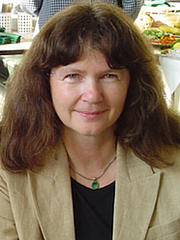
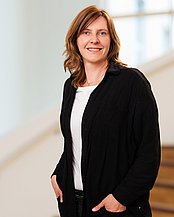
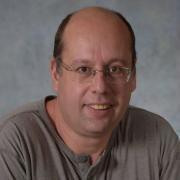
Christiane Tammer is a full Professor at the Institute of Mathematics , Faculty of Natural Sciences II, Martin Luther University Halle-Wittenberg. Her research spans variational methods, optimization, nonlinear functional analysis, approximation theory, duality principles, location theory, and inverse problems. She is actively involved in editorial roles as Editor-in-Chief of Optimization and serves on multiple journal editorial boards. Current affiliation: Theodor-Lieser-Str. 5, Halle (Saale), Germany Email: christiane.tammer@mathematik.uni-halle.de Her funded research includes projects on novel algorithms for combined tour and location optimization and multicriteria stochastic optimization and stochastic control theory . Recent publications focus on vector optimization under uncertainty, nonconvex separation techniques, and proximal gradient methods for multiobjective problems.
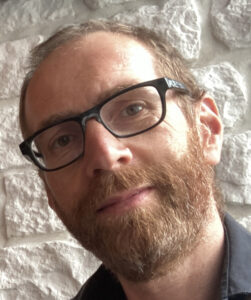
Frank Vallentin is a full professor of applied mathematics (computer science) at the Mathematical Institute of the University of Cologne, Germany. He has held academic positions at Technische Universiteit Delft, Centrum Wiskunde & Informatica (CWI), and the Hebrew University of Jerusalem. His research spans optimization, discrete geometry, harmonic analysis, and computational mathematics. Research Interests: His primary mathematical interests include semidefinite programming, combinatorial optimization, harmonic analysis, discrete geometry, combinatorics, geometry of numbers, special functions, computational complexity, and coding and information theory. These areas reflect a deep integration of theoretical mathematics with algorithmic and computational techniques. The 15 most recent publications reveal a strong focus on geometric optimization, lattice problems, energy minimization, and semidefinite programming bounds. Key themes include chromatic numbers of lattices, symplectic capacities, polarization phenomena, and algorithmic solutions to geometric problems. His work often involves recursive SDP hierarchies, extremal configurations, and computational verification of theoretical bounds. Scientific Awards and Grants: SIAG/Optimization Prize (2011, with Christine Bachoc) NWO VIDI Grant (2010–2015): Semidefinite programming and harmonic analysis DFG Project: Symplectic capacities of polytopes (2017–) EU Horizon 2020 MINOA Project: Optimization with limited quantum resources (2017–) DFG Project: Spectral bounds in extremal discrete geometry (2019–) Advising and Grants: Vallentin has advised numerous PhD and master’s students at TU Delft and the University of Cologne, covering topics in discrete geometry, optimization, coding theory, and quantum information. He has secured major research funding from NWO, DFG, and the EU, supporting interdisciplinary projects in algorithmic optimization and mathematical physics. He is actively involved in organizing workshops and summer schools. Labs and Teams: He leads a research group at the University of Cologne focusing on optimization and discrete geometry, with strong collaborations with CWI Amsterdam, TU Delft, and international institutes. His team works on theoretical and computational aspects of geometric optimization, often using symmetry reduction and harmonic analysis.
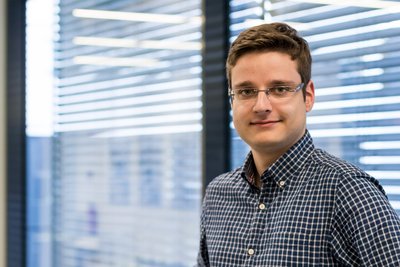
Florian Vogelsang is a Researcher at the Ruhr University Bochum , affiliated with the Faculty of Electrical Engineering and Information Technology and the Integrated Systems department. His work focuses on high-frequency electronics, terahertz technology, and microwave circuit design. Research Interests: Microwave and terahertz signal generation Silicon Germanium (SiGe) and Indium Phosphide (InP) device integration Millimeter-wave radar systems and phased arrays High-efficiency RF circuits and frequency multipliers Compact and energy-efficient sensor modules Scientific Contributions: Over 15 publications (2016–2025) in IEEE journals and conferences Key work on 0.48 THz FMCW radar sensors and ultra-wideband transceivers
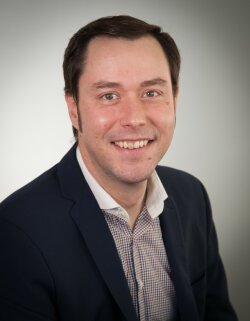
Anxiang Zeng is a researcher affiliated with the University of Kansas School of Business , Department of Management and Leadership. His work focuses on machine learning applications in e-commerce , particularly in search engines, recommender systems, and preference optimization.
Kevin Bönisch is a researcher at the Text Technology Lab, Goethe University Frankfurt. With a background in software development (5 years as C# .NET full-stack developer) and concurrent Master's studies in Computer Science, he bridges practical software engineering with academic research through projects like the Unified Corpus Explorer and Viki LibraRy virtual reality systems. His work spans NLP, 3D visualization, and machine learning applications. DFG New Data Spaces program contributor Kaggle competition participant GitHub demonstrator Research focuses include annotation-based corpus exploration , causal inference in LLMs , and collaborative hypertext systems . His 2025 NAACL Best Demo Paper showcased UCE system innovations, while 2024 LIRAI workshop work demonstrated legal document retrieval via SVR ensembles. Notable awards include IAV-Coding competition first place , DESIGNRUSH website design recognition , and Goethe-University Innovation Prize finalist . Key projects: ROBERT dialogue system , BIOfid biodiversity service , and Bundestags-Mine legislative analysis .
Olivier Festor is a Researcher at INRIA (French National Institute for Research in Digital Science and Technology), specializing in network security, cloud computing, and IoT. His work focuses on developing scalable solutions for modern network challenges, including in-network computation, cloud service security, and anomaly detection. Research Interests: Dr. Festor investigates vulnerabilities in distributed systems, designs protocols for efficient data processing (e.g., stateful in-network computation), and pioneers frameworks for IoT threat emulation. His recent work emphasizes cloud gaming optimization, automated security for service migrations, and darknet-based threat intelligence. Publication Trends: Over 200 publications (1993–2024) reflect a shift toward cloud/IoT security and programmable networks. Recent articles prioritize machine learning for traffic classification, TOSCA-based cloud orchestration, and P4-enabled data planes, highlighting applied research with industry relevance.
Carlo Curino is a researcher at Microsoft Research , focusing on database systems, cloud computing, and machine learning integration. He has collaborated extensively with institutions including MIT, Microsoft, and the University of Wisconsin-Madison. His research spans Geo-distributed data analytics Automated configuration tuning Tensor-based database systems Data lake optimization Spark performance engineering Recent publications highlight his work on AI-driven systems like MotherNet and Rockhopper , alongside contributions to query processing over compressed data and log-structured tables. Collaborators include prominent figures such as Raghu Ramakrishnan and Jesús Camacho-Rodríguez . Key projects involve LST-Bench (cloud storage benchmarking), AutoComp (data compaction), and PyFroid (commodity workstation analytics). His work bridges database optimization with modern machine learning demands in enterprise environments.
Dr. Roland Pusch is a researcher affiliated with the Department of Biopsychology at Ruhr University Bochum's Faculty of Psychology. His work focuses on the neurophysiological basis of cognitive behavior, utilizing controlled behavioral experiments combined with electrophysiology and optogenetics in pigeon models (Columba livia). He investigates extinction learning, object categorization, and working memory mechanisms through comparative studies of birds and mammals. Education : PhD in Neuroethology and Sensory Ecology from Bonn University (2007–2013); studies in Biology and Social Science (2000–2006). Career : Postdoc at Ruhr University Bochum (2013–present); student teacher (2012–2013); associate member of University of Bonn's Graduate School 'Bionics' (2009–2012). His research spans electrophysiology , sensory physiology , and neurobiology , with recent articles exploring extinction learning dynamics, optogenetic vector optimization, and computational modeling in avian cognition. Publications since 2008 highlight his expertise in sensory systems (electric fish, pigeons) and neural mechanisms of behavior. He received a Friedrich-Ebert-Foundation fellowship during his PhD. His 2012–2025 publications reveal trends in: (1) extinction learning and memory (2020–2025), (2) comparative neuroanatomy (2012–2021), (3) optogenetics and neural imaging (2012–2021), and (4) sensory adaptation in extreme environments (2008–2013). Collaborations with Güntürkün, Cheng, and Rose underscore his role in avian cognition research. Scientific Awards Friedrich-Ebert-Foundation post-graduate fellowship (2007–2010) While no explicit student list is provided, his publications with multiple co-authors suggest mentorship roles. His work involves awake animal neuroimaging , 3D-printed neural implants , and machine learning integration in cognitive studies. The lab employs electrophysiological single-cell recordings and optogenetic interventions to dissect neural processes.
Dr. Luis Espath is an Assistant Professor of Applied Mathematics at the University of Nottingham, affiliated with the School of Mathematical Sciences. His research spans theoretical and computational mechanics, uncertainty quantification, and machine learning. He has held postdoctoral and research scientist roles at KAUST and RWTH Aachen, respectively, and authored the Springer Nature book Mechanics & Geometry of Enriched Continua . Education : Engineering Diploma (2007) at PUCRS, Brazil; Master’s and Ph.D. (2013) at UFRGS, Brazil; Habilitation in Mathematics (2021) at RWTH Aachen, Germany. Dr. Espath’s research focuses on the application of phase-field and continuum mechanics to model complex systems, with an emphasis on thermodynamic consistency and computational efficiency. He integrates stochastic optimization and machine learning into fluid dynamics and structural modeling. His recent publications highlight expertise in phase-field gradient theory, fluid-structure interaction, and Bayesian experimental design. The 2021 articles reflect his work on Navier-Stokes equations, reactive Cahn-Hilliard systems, and divergence-free fluid flow approximations.
Aleksandar Zeljić is a Researcher at Stanford University's Center for Automated Reasoning and Center for AI Safety . He holds a PhD from Uppsala University's Department of Information Technology, supervised by Philipp Ruemmer, Christoph M. Wintersteiger, and Wang Yi. Research Focus: Automated reasoning (SAT/SMT solvers), formal verification of deep neural networks, and machine arithmetic analysis. Projects: Marabou (neural network verification), UppSAT (SMT approximation framework), mcBV (bit-vector SMT solver), and SmallFloats (Z3-based floating-point approximation). His recent publications focus on bit-vector interpolation, neural network optimization, and parallel verification techniques. Articles reveal expertise in formal methods , symbolic computation , and AI safety . Notable recognition includes the IJCAR Best Paper Award (2014) . Contributions to theoretical computer science include: Developing approximation frameworks for SMT solvers Advancing bit-vector and floating-point arithmetic verification Creating parallelization strategies for neural network analysis He has served as PC member for conferences like VSSTE, PAAR, and FOMLAS, and reviewed for journals including TCS and JAR.
Prof. Dr.-Ing. Jørgen Barsett is a University Professor leading the Chair of Biochemical Engineering at the Faculty of Mechanical Engineering, RWTH Aachen University since April 2023. His research focuses on characterizing processes in bioreactors of all scales—from microtiter plates to fermenters—with emphasis on developing and applying innovative methods for online process analysis and control. Key research areas include syngas fermentation and the production of sustainable products through fermentation. His research interests span across multiple areas of biochemical engineering: Bioprocess monitoring and control Online process analysis Scale-up of bioprocesses from microtiter plates to industrial fermenters Syngas fermentation technologies Sustainable production of biochemicals Cell and gene therapy manufacturing Prof. Barsett's recent publications demonstrate a strong focus on advanced bioprocess monitoring, characterization, and optimization across various microbial systems. His research spans from fundamental microbial metabolism studies to applied bioprocess engineering solutions for pharmaceutical and industrial applications. The work covers diverse organisms including Komagataella phaffii (yeast), Vibrio natriegens (bacteria), CHO cells (mammalian), Ustilago maydis (fungus), and Corynebacterium glutamicum (bacteria), addressing challenges in oxygen transfer, carbon source utilization, and product formation. His scientific contributions include: Development of novel multiparameter sensors for shake flask cultivations Advanced methods for online monitoring of bioprocess parameters Studies on gas fermentation and syngas utilization Optimization of microbial lipid production Scale-up strategies from microtiter plates to industrial bioreactors Prof. Barsett actively supervises students and collaborates with industry partners on bioprocess development projects. His laboratory focuses on bridging the gap between fundamental biochemical research and industrial application, with particular emphasis on developing sustainable bioprocesses and improving biomanufacturing efficiency.
Prof. Dr. Claudia Hagedorn is a Professor at the Chair of Biochemistry and Molecular Medicine within the Faculty of Health, Department of Human Medicine. Her work bridges molecular biology, biochemistry, and gene therapy, focusing on nuclear architecture, chromatin organization, and vector development. Research Interests Her research emphasizes: Adenoviral and nonviral episomal vector engineering Chromatin dynamics in gene therapy CRISPR/Cas9 for gene editing Immune checkpoint modulation in cancer therapy miRNA delivery and circadian gene regulation Recent Article Trends Her 15 most recent publications (2017–2025) highlight advancements in: Adenoviral vector capsid modifications for cancer immunotherapy Low-cost epithelial cell isolation techniques Epigenetic regulation of replicons miRNA transport mechanisms in neonates Circadian rhythm studies in peripheral organs Nonviral vector transgene persistence
Prof. Jørgen Magnus serves as Chair of Bioprocess Engineering at RWTH Aachen University, Germany, with his primary affiliation in the AVT (Aachener Verfahrenstechnik) department under the university's Molecular Science & Engineering (MSE) profile area. He holds a Professor rank and maintains active duties as evidenced by his office location in Research Building NGP2 (Room A-307, Forckenbeckstraße 51, Aachen) and direct contact channels including email jorgen.magnus@avt.rwth-aachen.de. His research program centers on advancing bioprocess engineering through three interconnected domains: biopharmaceutical manufacturing (viral vectors, CHO cell cultures), fermentation innovation (gas fermentations, microbial strain optimization), and process analytics (real-time monitoring, scale-up methodologies). Key specialties include adeno-associated virus (AAV) production, metabolic engineering of hosts like Vibrio natriegens and Komagataella phaffii , and development of novel sensors for dissolved oxygen, biomass, and metabolite tracking across cultivation systems from microtiter plates to industrial bioreactors. Analysis of his 15 most recent publications (2024-2025) reveals consistent emphasis on solving industry-critical bottlenecks in biomanufacturing. A dominant trend involves bridging scale gaps —demonstrated in studies translating microtiter plate data to stirred-tank reactors—and stress mitigation in cell cultures (e.g., hydromechanical stress in CHO cells). His work increasingly integrates renewable feedstocks (e.g., syngas, molasses) with real-time analytics to optimize carbon utilization and product yields, reflecting industry shifts toward sustainable, data-driven bioprocessing.
Marc Adrat is an Honorary Professor at RWTH Aachen University and Head of the Software Defined Radio research group at Fraunhofer Institute for Communication, Information Processing and Ergonomics (FKIE). His dual role combines academic teaching with cutting-edge industrial research in communications engineering. Education: Diplom-Ingenieur in Electrical Engineering (1997), RWTH Aachen University Dr.-Ing. (PhD) in 2003 from Institute of Communication Systems and Data Processing (IND), RWTH Aachen Research Focus: Prof. Adrat specializes in channel coding , modulation techniques , and iterative decoding with particular emphasis on polar codes , BICM-ID systems , and EXIT chart analysis . His work bridges theoretical foundations with practical implementations in software-defined radio systems. His recent research directions include applying machine learning techniques (particularly genetic algorithms) to optimize communication systems, developing autoencoder-based signal enhancement methods, and advancing spectrum monitoring technologies for cognitive radio applications. Awards & Recognition: Best Paper Award at ICMCIS 2022 for work on spectrum monitoring techniques Appointed Honorary Professor by RWTH Aachen University in June 2024 Teaching & Supervision: Since 2009, he has taught courses on Modern Channel Coding for Wireless Communications and Advanced Coding and Modulation at RWTH Aachen. His teaching covers both theoretical foundations and practical implementations of modern communication systems. Laboratories & Teams: At Fraunhofer FKIE, he leads the Software Defined Radio research group, focusing on developing flexible, reconfigurable radio systems for military and civilian applications. The group works extensively on real-time implementations of advanced coding and modulation schemes.
Prof. Shmuel Avidan serves as a Professor in the School of Electrical Engineering at Tel Aviv University's Iby and Aladar Fleischman Faculty of Engineering. Holding a Ph.D. from Hebrew University's School of Computer Science (1999), he brings extensive industry experience from Adobe, Mitsubishi Electric Research Labs, MobilEye, and Microsoft Research to his academic role. His educational trajectory features: Ph.D. in Computer Science, Hebrew University of Jerusalem (1999) Avidan's research centers on pixel-centric computational problems, with seminal contributions in video object tracking and 3D object modeling from 2D images. His work spans computer vision, image processing, and machine learning, emphasizing practical applications in industrial settings. Current investigations explore neural rendering, foundation models, and diffusion-based architectures for visual understanding. Recent publications (2023-2025) demonstrate concentrated innovation in neural radiance fields (NeRF), category-agnostic pose estimation, and texture-aware segmentation. These works increasingly integrate foundation models with domain-specific applications in medical imaging, autonomous systems, and materials science, reflecting a strategic shift toward scalable vision systems. Though specific awards aren't documented in source materials, his prolific publication record and sustained industry partnerships signify substantial field impact. His research group maintains active collaboration with leading technology firms, translating academic discoveries into real-world solutions. Professor Avidan mentors graduate students in computer vision while securing competitive grants for projects at the intersection of theoretical computer vision and industrial implementation. His lab focuses on developing robust algorithms for challenging visual environments, particularly in autonomous driving and medical imaging contexts. Leading an active research group within Tel Aviv University's Electrical Engineering department, he drives innovation in neural rendering and vision-language models. The team regularly contributes to premier conferences including CVPR, ICCV, and ECCV, maintaining strong industry ties through ongoing partnerships with automotive and imaging technology companies.