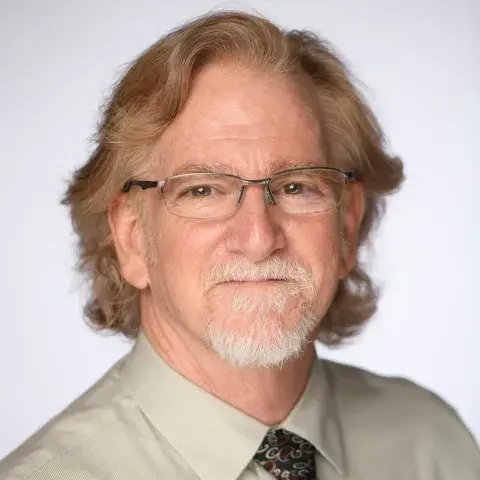
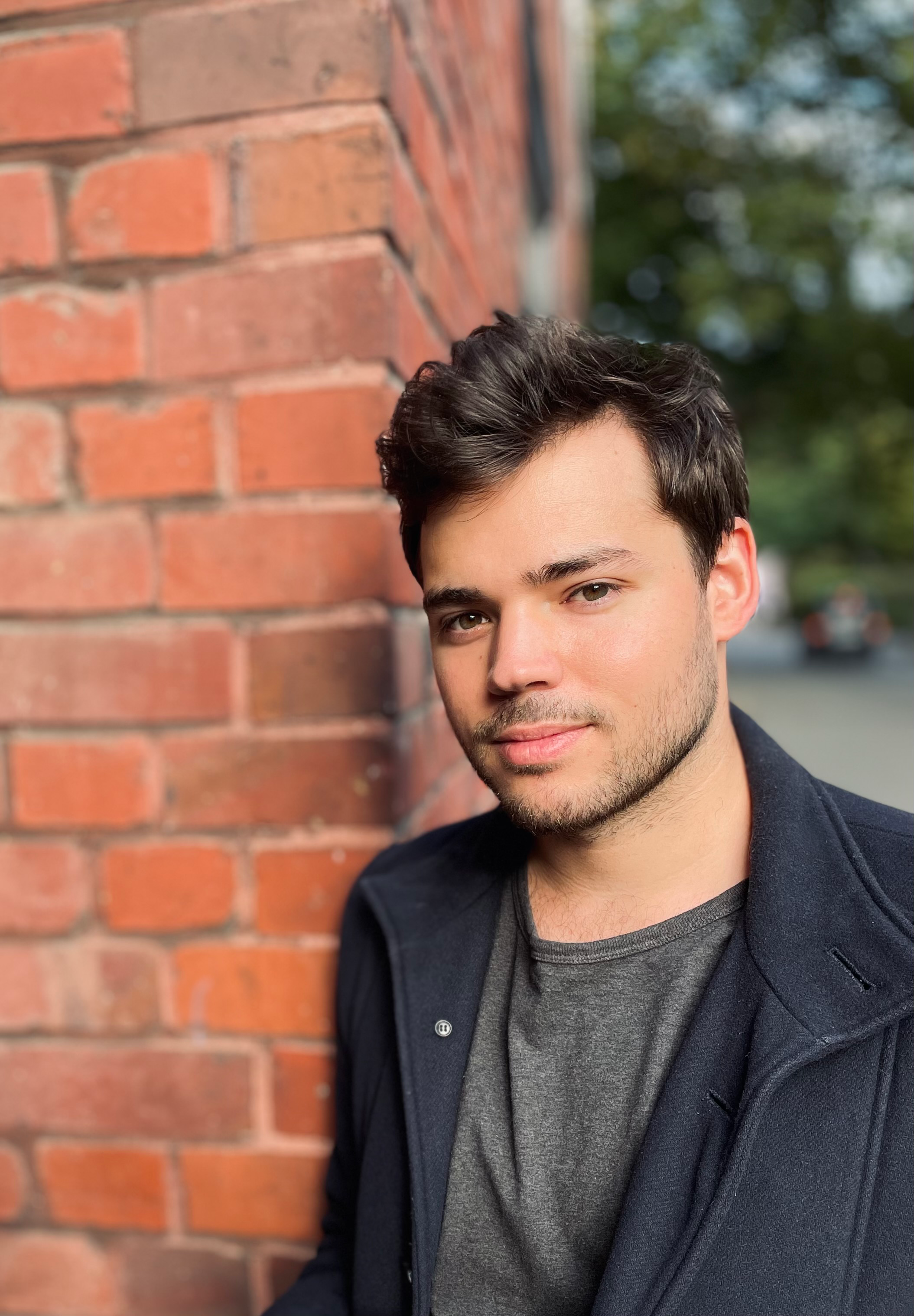
Angus Macintyre is a Professor of Mathematics at Queen Mary University of London. He has held academic positions at the University of Edinburgh (1999–2002), the University of Oxford (1985–1999, as Professorial Fellow of Merton College), and Yale University (1973–1985). Elected as an Ordinary Member of the Academy of Europe in 2008, his research focuses on mathematical logic, group theory, algebraic geometry, number theory, and neural methods. Education: PhD in Mathematics from Stanford University (1968), thesis: "Classifying Pairs of Real-Closed Fields". Research interests include model theory applied to algebraic structures, p-adic fields, finite fields, and analytic fields with exponentiation. His work bridges abstract algebra, logic, and geometry, addressing foundational questions in mathematics. Notable awards include Fellow of the Royal Society (1993), Pólya Prize (2003), and membership in Academia Europea (2008). His leadership roles include President of the London Mathematical Society (2009–2011). No specific grants or advising details are provided in the text.
Boris Goldfarb is a Professor and Director of Data Science Programs in the Department of Mathematics & Statistics at University at Albany (SUNY). He holds office in Hudson Building 143 and can be reached at 518-442-4633. PhD, 1996, Cornell University Professor Goldfarb's research spans algebraic and geometric topology, K-theory, geometric group theory, and their applications to topological data analysis and explainable AI methods. His work demonstrates how abstract mathematical concepts can be applied to practical computational problems, particularly in robotics and data science. He has developed novel approaches using topological methods for robot motion path planning and data analysis. His publication record shows a clear evolution from pure mathematical research in K-theory and geometric group theory toward more applied work intersecting with computer science and robotics. Recent papers focus on applying topological data analysis to robot motion planning, discrete Morse theory for path optimization, and computational methods for persistent homology. This trajectory reflects the growing importance of topological methods in modern data science and AI applications. As Director of Graduate Data Science Programs, Professor Goldfarb oversees the MS degree in Data Science and graduate certificates in Machine Learning and Topological Data Analysis. He maintains active collaboration with students and researchers, with numerous papers co-authored with Gunnar Carlsson and others. His work has received support from organizations including the Simons Foundation, highlighting its significance in the mathematical community.
Noah Riggenbach is a Postdoctoral Scholar at Northwestern University conducting advanced research in algebraic topology and arithmetic geometry. His work centers on algebraic K-theory and trace methods, with publications spanning topological cyclic homology applications to diverse algebraic structures. Education: PhD in Mathematics, Indiana University Bloomington (2021). Thesis: "The S1 Assembly Map on K-Theory and Topological Cyclic Homology" supervised by Michael Mandell. Riggenbach's research bridges abstract homotopy theory with arithmetic geometry, specializing in computational approaches to algebraic K-theory through trace methods. His investigations frequently employ cyclotomic spectra and synthetic techniques to analyze rings and schemes, with particular emphasis on p-adic geometries and singular varieties. This work establishes critical connections between chromatic homotopy theory and arithmetic properties of algebraic objects. Analysis of his publication trends (2021-2024) reveals consistent focus on applying topological cyclic homology to compute K-theory for specialized structures: truncated polynomials, cuspidal curves over perfectoid bases, double points, and p-adic unit disks. His methodology increasingly integrates cyclotomic synthetic spectra and perfectoid space theory, reflecting the field's evolution toward derived techniques and chromatic approaches. Scientific Awards: No awards documented in source materials. Riggenbach's current postdoctoral role emphasizes independent research without documented student advising or grant leadership. His collaborative work with established researchers like Benjamin Antieau and Elden Elmanto indicates integration into leading K-theory research networks. No specific laboratories or structured research teams are referenced, though his office location (Lunt 304) situates him within Northwestern's mathematical research environment.
Juhan Aru is an Associate Professor in the Department of Mathematics at the École Polytechnique Fédérale de Lausanne (EPFL), affiliated with the Random Geometry (RGM) group. His research focuses on random geometry, Gaussian Free Fields (GFF), and stochastic processes , with applications to statistical mechanics and mathematical physics. He teaches courses such as Analysis IV, Probability, Gaussian Processes, and Introduction to Random Geometry. Affiliations: SB MATH RGM (Random Geometry Group) EDMA - Enseignement (Mathematics Education) SMA - Enseignement (Mathematics Teaching) His research investigates critical phenomena in 2D statistical physics, including SLE processes, Liouville quantum gravity, and multiplicative chaos. Recent work explores the interplay between GFF properties and geometric/topological structures like excursion decomposition and thick points. He advises PhD students including Philémon Bordereau and Han Xiao, and has directed Guillaume Charles Woessner's thesis. His lab's website is https://www.epfl.ch/labs/rgm/ .
Dr. Lennart de Groot is an Associate Professor at Utrecht University's Faculty of Geosciences, Department of Earth Sciences, leading the Paleomagnetic Laboratory at Fort Hoofddijk. His academic journey includes a BSc (2007), MSc (2008), PhD (2013, Cum Laude), and postdoctoral research at Utrecht University. Specializing in geomagnetism and paleomagnetism, his work focuses on understanding rapid fluctuations in Earth's magnetic field using advanced techniques like micromagnetic tomography and multi-method paleointensity approaches. Research Interests: Geomagnetic field dynamics, paleointensity determination, rock magnetism, and micromagnetic analysis. Key Projects: Development of pymaginverse for geomagnetic modeling, study of Mid-Miocene geomagnetic reversals, and analysis of Devonian volcanic records. His articles highlight innovations in paleomagnetic measurement techniques and their applications to ancient geomagnetic field behavior. Notable awards include the ERC Starting Grant (2019), NWO-Vidi (2019), and the William Gilbert Award (2018). He advises on grants and mentors researchers in geophysics and rock magnetism, contributing to the UN Sustainable Development Goals through Earth science research. Lab affiliations include the Paleomagnetic Laboratory Fort Hoofddijk, where cutting-edge equipment enables high-resolution studies of magnetic minerals and their paleoenvironmental records.
Michael Leitner is a part-time Professor at the Department of Geoinformatics (Z_GIS) within the Faculty of Digital and Analytical Sciences at the University of Salzburg. His work bridges geospatial technology with interdisciplinary applications in criminology and health geography. Research Focus: Geographic Information Systems (GIS), spatial analysis/modeling/mapping of crime and health geographies. Current Projects: Spatiotemporal crime forecasting, geospatial privacy, and fine-scale data collection using video geonarratives and physiological measurements. Interdisciplinary Reach: Collaborative studies in biology, chemistry, and urban studies demonstrate his cross-domain impact. His recent publications highlight trends in crime modeling , health geography , and molecular biology , with keywords spanning Geography , Criminology , Biology , and Physics . Sub-fields include Crime Forecasting , Vector-Borne Diseases , and Urban Safety .
Juan J. Manfredi is a Professor of Mathematics at the University of Pittsburgh's Department of Mathematics, part of the Dietrich School of Arts and Sciences. He holds a PhD from Washington University in St. Louis, focusing on quasiregular mappings and partial differential equations. His research emphasizes elliptic and parabolic PDEs of p-Laplacian type, sub-Riemannian manifolds, and game-theoretic interpretations of equations like the infinity Laplacian. He explores regularity properties of p-harmonic functions and their applications in stochastic processes and signal processing. His work spans nonlinear potential theory, subelliptic equations, and geometric analysis. Notable contributions include studies on Monge-Ampère equations, viscosity solutions, and the interplay between stochastic games (e.g., tug-of-war) and PDEs. He has collaborated on topics like Carnot groups, Heisenberg group geometry, and Riemannian approximations in sub-Riemannian settings. Recent publications highlight advancements in asymptotic mean-value formulas, BMO estimates for solutions, and convergence principles for dynamic programming. His research bridges pure analysis and applied problems, including mass transport and optimal control. While no formal awards are listed, his extensive bibliography and academic roles reflect significant scholarly impact. Manfredi maintains an active online presence with resources like the QuasiWorld page, offering lecture notes and computational tools. His work often intersects with probability, geometric analysis, and numerical methods, positioning him at the forefront of modern nonlinear PDE research.
Gerald Roberts is a full Professor of Earthquake Geology at Birkbeck, University of London, within the School of Natural Sciences. He has held leadership roles as Head of the Department of Earth and Planetary Sciences (2012–2018) and serves on the NERC Core Panel. His research focuses on active fault dynamics, seismic hazard assessment, and Mars geology, supported by a £811,925 NERC grant (2021–ongoing). Education: PhD, University of Durham, 1991 BSc Geology, University of Wales, Cardiff, 1987 Research Interests: Active fault slip-rates and earthquake recurrence Cosmogenic 36Cl and U/Th dating of fault scarps Stress modeling of fault systems Seismic hazard quantification Planetary geology of Mars Grants & Projects: NERC Standard Grant NE/V012894/1 (2021–2025) : Investigates fault interactions in Greece using fieldwork, cosmogenic dating, and Coulomb stress modeling. Past projects include studies in Italy, Crete, and Mars, with a focus on linking fault geometry to seismic behavior. Students & Supervision: Current PhD students: Sam Mitchell (Greece), Tom Wigley (Greece), Brian Kneller (Mars), and Jason Brown (Mars). Alumni include Jennifer Robertson (2021), Francesco Iezzi (2020), and Marco Meschis (2019). Teaching: Leads modules on structural geology, field mapping, and planetary science.
Eric Torrence is a Professor in the Department of Physics at the University of Oregon , affiliated with the Institute for Fundamental Science . His research focuses on Experimental High Energy Physics , particularly within the ATLAS Collaboration at CERN. He holds a Ph.D. from MIT (1997) and has been at the University of Oregon since 2000. His work centers on particle physics experiments at the Large Hadron Collider (LHC), including studies of the Higgs boson, supersymmetry, and rare particle interactions. Key contributions include measurements of Higgs boson properties, top quark physics, and searches for new phenomena using ATLAS detector data. Notable projects involve analyzing collisions at 13 TeV, exploring topics like jet quenching, boson decays, and lepton flavor violation. Prof. Torrence collaborates extensively with global teams, contributing to detector development, data analysis, and theoretical interpretations. His recent work includes studies on charge asymmetry in top-quark production, neutrino cross-section measurements with FASER, and detailed maps of Higgs interactions. His research bridges experimental and theoretical physics, advancing our understanding of fundamental particles and interactions. Publications span over 1,850 articles, emphasizing precision measurements and explorations of physics beyond the Standard Model. He mentors graduate students and contributes to the ATLAS experiment’s strategic direction and technological advancements.
Justin Talley is a Professor in the Department of Entomology & Plant Pathology at Oklahoma State University (OSU), serving as Department Head and Interim Director of the Institute of Biosecurity and Microbial Forensics (IBMF). He holds a Ph.D. in Entomology from Kansas State University (2008). His research focuses on pest management of livestock parasites, pathogen transmission via arthropods, and biosecurity, particularly in relation to African Swine Fever and other zoonotic diseases. Dr. Talley has served as the State Extension Specialist for Veterinary Entomology (2006–2022) and leads programs addressing stable flies, tick-borne pathogens, and carcass management during disease outbreaks. Education: Ph.D. in Entomology, Kansas State University (2008) Research Interests: His work spans integrated pest management, vector-borne disease dynamics, and the ecological impacts of invasive plants. Key areas include mosquito ecology in encroached habitats, bacterial communities in house flies, and tick biology in livestock systems. He emphasizes translational research to benefit both agricultural production and public health. Grants & Projects: "Improving best practices for mass large animal mortality associated with virus outbreak" (2024–2026) "Pathogen Survival in Large Scale Carcass" (2019–2022) "Natives: Native Americans Trained in Various Entomological Sciences" (2017–2022) Teaching & Extension: Teaches courses such as Livestock Entomology and Entomology Capstone. Develops educational materials for livestock producers on pest management, including extension publications on tick prevention and fly control. Institute of Biosecurity and Microbial Forensics (IBMF): Oversees research in agriculture biosecurity, advanced diagnostics, and food safety. IBMF houses dedicated research faculty focusing on computational biology, pathogen diagnostics, and virology.
Don Spence is an Assistant Professor in the Department of Classical and Liberal Education and Core Curriculum at Flagler College. His work focuses on tree health, risk assessments, and promoting native landscapes. He holds a Ph.D. in Plant Pathology from the University of Florida, along with multiple advanced degrees in Biology. Spence's research emphasizes invasive species management, particularly regarding laurel wilt disease and ambrosia beetles, alongside ecological studies of plant communities in Florida's natural and urban environments. Education: Ph.D., Plant Pathology – University of Florida M.S., Biology – University of Central Florida B.S., Biology – Stetson University A.A., Science – Daytona Beach Community College Research interests span plant pathology, forest health, and ecological conservation. His work integrates field surveys, disease management strategies, and collaborative efforts to address invasive species impacts. Publications highlight topics like laurel wilt pathogen survival, ambrosia beetle biology, and floristic inventories in protected areas. Scientific contributions include over 20 peer-reviewed articles, technical reports, and books on plant ecology, forestry threats, and educational initiatives. His affiliations with organizations like the Florida Native Plant Society and the International Society of Arboriculture reflect his commitment to applied research and environmental stewardship.
Dr. Tim Gerrits is a researcher at the Institute for Visualization (VIS) at RWTH Aachen University, where he leads the Visualization Team. His work bridges scientific visualization, high-performance computing, and immersive technologies, with a strong focus on in-situ and in-transit analysis for large-scale simulations. University: RWTH Aachen University Institute: Institute for Visualization (VIS) Role: Lead of the Visualization Team Tim Gerrits' research centers on developing tools and frameworks for efficient and interactive visualization of complex scientific data. His interests include ensemble data analysis, uncertainty visualization, virtual reality interaction techniques, and leveraging game engines like Unreal Engine for scientific applications. He is particularly active in the domain of neuronal network simulations and oceanographic modeling. His recent publications highlight a strong trend toward accessible, real-time, and hybrid visualization workflows. He has contributed to the development of DaVE, a curated database of visualization examples to support HPC users, and Insite, a lightweight pipeline for in-transit processing in neuroscience simulations. His work emphasizes usability, performance, and integration with existing scientific workflows. Scientific Awards: Best Paper Award at IEEE Uncertainty Visualization Workshop, 2024 Honorable Mention Award at Eurographics Workshop on Visual Computing for Biology and Medicine (VCBM), 2022 Dr. Gerrits actively mentors and collaborates on interdisciplinary projects involving computational neuroscience and climate modeling. He has led the curation of datasets for the IEEE SciVis Contest and promotes open science through Zenodo-hosted resources. His lab focuses on building scalable, user-centered visualization systems that empower domain scientists to gain early insights from massive simulations.
Philipp Bringmann is a Researcher at the Institute of Analysis and Scientific Computing (E 101) at TU Wien, Austria. His work focuses on numerical methods for partial differential equations (PDEs), with specializations in adaptive finite element methods (FEM), least-squares formulations, and discontinuous Petrov-Galerkin techniques. He holds a PhD in Mathematics from Humboldt-Universität zu Berlin (2020) and has held postdoctoral positions at both TU Wien and Humboldt-Universität. Research Interests : Numerical solution of PDEs Least-squares finite element methods Adaptive mesh refinement Iterative linearization techniques Applications in computational mechanics Teaching : Current: Least-Squares Finite Element Methods (Winter 2024/25) Past: Numerical methods for PDEs (Winter 2023/24) Software Contributions : octAFEM3D: 3D adaptive finite element software MooAFEM: MATLAB-based adaptive FEM toolkit Recent Talks : Presented work on adaptive FEM with inexact solvers at the Chemnitz Finite Element Symposium 2024 .
Georgios Manis is an Associate Professor in the Department of Computer Science and Engineering at the School of Engineering, University of Ioannina, Greece. He holds a PhD from the National Technical University of Athens and has been a faculty member at the University of Ioannina since 2002, progressing from Lecturer to Associate Professor in 2018. He has also served as temporary teaching staff at the University of Patras, University of Crete, and University of Ioannina in the late 1990s and early 2000s. Education: B.Sc. in Computer Engineering (Diploma), National Technical University of Athens (NTUA), 1987–1992 MSc in Advanced Methods in Computer Science (Distributed and Parallel Systems), Queen Mary, University of London, 1992–1993 PhD in Computer Engineering, NTUA, School of Electrical and Computer Engineering, 1993–1997 His research interests lie at the intersection of Biomedical Engineering and Computing Systems , with a strong emphasis on Biomedical Signal Processing , Entropy Analysis , and Machine Learning . He has pioneered work in Bubble Entropy —a parameter-free entropy measure—and developed fast algorithms for entropy computation. His work also extends to compiler design and parallel computing, particularly in the automatic parallelization of recursive functions and loops. The trends in his recent publications reflect a dual focus: (1) biomedical applications involving entropy, heart rate analysis, and disease diagnosis using machine learning (especially Random Forests and SVMs), and (2) high-performance computing, including parallelization techniques and compiler optimizations for multi-core and SVP architectures. His research is highly interdisciplinary, combining signal processing, algorithm design, and clinical applications. Scientific Leadership and Recognition: Guest Editor, Special Issue on “Entropy in Biomedical Engineering”, Entropy (MDPI) Member of the IPAN Laboratory, University of Ioannina Active contributor to IEEE, Elsevier, and MDPI journals He has supervised several graduate students and is involved in funded research projects such as Palimpsest and Homore , focusing on smart systems for cultural interaction and elderly monitoring. His advising contributions are evident in co-authored papers with students like Evanthia Tripoliti and Aristeidis Mastoras. He teaches both undergraduate and postgraduate courses, including Compilers I/II and Biomedical Data Analysis . Laboratories and Teams: He is a member of the IPAN lab at the University of Ioannina, which supports interdisciplinary research in informatics and biomedical applications. His collaborative network includes researchers from Greece and abroad, particularly in the fields of biomedical signal analysis and entropy-based methods.
Dr. Michael Barson is a Research Fellow in the School of Physics and Astronomy at Monash University. His research focuses on leveraging solid-state defects, particularly the nitrogen-vacancy (NV) center in diamond, for quantum technologies including nanoscale quantum microscopy, metrology, and quantum information processing. His work lies at the intersection of several advanced fields: High-resolution optical microscopy Spin physics (EPR, NMR, MRI) Nanotechnology Condensed matter physics Atomic and quantum optics He has led multiple research projects funded by the Australian Army and the Office of National Intelligence (ONI), including the development of quantum vector magnetometers and optical magnetometer prototypes, demonstrating strong applied research impact. His recent publications explore the fine structure and temperature dependence of NV centers, nanomechanical sensing with diamond spins, and defect pairs in diamond. These works reflect a consistent focus on fundamental quantum properties with applications in sensing and metrology. While no formal scientific awards are listed, his research has been cited over 149 times in Scopus for key articles, referenced in patents, and picked up by news outlets and blogs, indicating recognition in both scientific and broader communities. Dr. Barson is actively involved in research leadership and supervision, serving as a Primary Chief Investigator on multiple projects. He has not been described as advising formal students, but his role involves guiding research teams and likely mentoring junior researchers. He leads projects involving quantum magnetometry and microscopy, contributing to the advancement of quantum sensing technologies at Monash University and in collaboration with national defense and intelligence agencies.