Prof. Dr. Oliver Krüger is a behavioral ecologist and evolutionary biologist at Bielefeld University 's Faculty of Biology , where he leads the Department of Animal Behaviour since 2013. His research spans avian and marine mammal systems, focusing on life history strategies, parasite-host interactions, and environmental adaptation. Education: Biology studies at Bielefeld University (1994-1996) MSc in Oxford (1996-1997) PhD at Bielefeld University with Fritz Trillmich and Jan Lindström (1998-2000) Research Themes: Behavioral ecology, evolutionary biology, and population dynamics across tropical and temperate ecosystems. Key projects include NC³ (Niche Choice/Construction) and studies on Galápagos sea lions, common buzzards, and pinniped species. Scientific Leadership: Spokesperson, SFB TRR 212 "NC³" (2018-2025) Advisory Board member: German Ornithologists Union, IUCN SSC pinniped group, German Primate Centre Peer review roles: Humboldt Foundation, DFG, HFSP, NSF Awards: Leopoldina Prize (2001) Niko Tinbergen Award (2008) DFG Heisenberg Professorship (2010-2015)
Dr. Anil Kumar is an Assistant Professor in the Department of Biochemistry, Microbiology & Immunology at the University of Saskatchewan's College of Medicine. He specializes in molecular virology, focusing on positive-stranded RNA viruses and their interactions with host immune systems. His research employs high-throughput genetic screens and reverse genetics systems to identify host factors critical for viral infection. Education includes a BSc in Agricultural Sciences (1999, Kerala Agricultural University), MSc in Plant Pathology (2001, Indian Agricultural Research Institute), and PhD in Molecular Virology (2010, University of Heidelberg). Postdoctoral training included stints at the University of Heidelberg (2010–2013) and the University of Alberta (2014–2020). Research interests center on Eastern Equine Encephalitis virus (EEEV) and Enterovirus D68 (EV-D68). For EEEV, his lab investigates immune evasion mechanisms and host-virus protein interactions to identify therapeutic targets. For EV-D68, they study CNS invasion mechanisms and novel host dependency factors linked to acute flaccid myelitis (AFM). Recent work includes studies on SARS-CoV-2, uncovering roles for host proteins like Argonaute 2 in viral restriction. His lab integrates molecular biology, virology, and systems biology approaches, with a focus on translational research for antiviral drug development. Collaborations include work on respiratory syncytial virus (RSV) entry mechanisms and dengue virus replication regulation.
Dr. Gary Brewer is a Professor in the Department of Entomology at the University of Nebraska-Lincoln, with a 60% research and 40% teaching appointment. He has served as department head at NDSU (1997-2006) and UNL (2006-2018). His research focuses on field crops entomology, IPM of pasture cattle flies, salt creek tiger beetle conservation, and pollinator health. He has pioneered a push-pull strategy using coconut oil-derived repellents and led curriculum design for Rwanda’s Conservation Agriculture program. Education: B.S. in Zoology, University of Nebraska-Lincoln (1974) M.S. in Entomology, University of Nebraska-Lincoln (1978) Ph.D. in Entomology, Kansas State University (1984) Research Interests: Brewer’s work spans insect ecology, pest management, and conservation. Key areas include stable fly and horn fly control, pollinator protection, and endangered species recovery (e.g., Salt Creek tiger beetle). His lab develops natural product-based pest repellents and evaluates biopesticides for sustainable agriculture. Grants & Contributions: $362,150 USDA grant for undergraduate research in beneficial insect protection (2018) $325,000 USDA grant for multi-tactic stable fly control (2017) NE Game and Parks funded salt creek tiger beetle reintroduction programs Labs & Teams: Brewer’s team collaborates with industry (e.g., Vestergaard Frandsen) and international partners to advance IPM strategies. His work bridges field research with applied solutions for farmers and conservationists.
Jeff Schorey is the George B. Craig Jr. Professor and a full Professor in the Department of Biological Sciences at the University of Notre Dame, where he has been a faculty member since 2004. He currently serves as Director of the Integrated Biomedical Sciences (IBMS) graduate program and previously held leadership roles including Chair of the Institutional Animal Care and Use Committee (IACUC) and Associate Director of the Eck Institute for Global Health. His research focuses on the pathobiology of mycobacterial diseases, particularly Mycobacterium tuberculosis and M. avium . His work investigates the molecular interactions between mycobacteria and host macrophages, with a special emphasis on the role of exosomes in immune modulation, diagnostics, and vaccine development. He also explores novel antibiotic development in collaboration with chemists at Notre Dame and global partners. His recent publications reveal a strong trend in extracellular vesicle biology, host-pathogen signaling, and translational applications in TB diagnostics and treatment. The articles span immunology, microbiology, and molecular biology, with recurring themes in exosome function, RNA sensing, and antimicrobial development. George B. Craig Jr. Collegiate Professor Dr. Schorey has advised graduate students and leads an active research lab focused on mycobacterial pathogenesis. His work is supported by collaborations across disciplines and institutions, particularly in drug development and clinical translation. He has contributed significantly to understanding how exosomes can serve as both biomarkers and therapeutic tools. His lab employs cellular immunology, animal models, and clinical sample analysis to study mycobacterial infections. He leads the IBMS program, shaping graduate education in biomedical sciences at Notre Dame.
Michael Z. Levy is a Professor of Epidemiology in the Department of Biostatistics and Epidemiology at the University of Pennsylvania Perelman School of Medicine. He co-directs the University of Pennsylvania/Universidad Peruana Cayetano Heredia Zoonotic Disease Research Laboratory in Arequipa, Peru, and holds secondary affiliations with the Center for Clinical Epidemiology and Biostatistics, Center for Public Health Initiatives, History and Sociology of Science, and Latin American and Latinx Studies. His research spans interdisciplinary domains including vector-borne diseases, computational biology, urban ecology, and social justice. Education: B.A. in Philosophy and Biology from Amherst College (1998), PhD in Population Biology, Ecology, and Evolution from Emory University (2007). Levy's work focuses on urban zoonotic diseases , particularly Chagas disease and canine rabies , integrating ecology, epidemiology, and computational methods. He investigates how insect vectors interact with social systems, housing policies, and climate change, extending to pandemic modeling during the Covid-19 crisis. His research group (28 members) collaborates with Peruvian Ministry of Health to control Chagas and rabies outbreaks in Arequipa. Notable contributions include novel geospatial surveillance models , behavioral economics applications for vector control, and bed bug epidemiology linking infestations to public health challenges. Recent publications highlight 2025-2024 trends in Chagas vector dynamics , zoonotic rabies control , vaccine strategies , and genomic outbreak analysis , emphasizing interdisciplinary approaches to urban disease ecology. He has participated in cluster randomized trials and behavioral design studies to improve community engagement in vector control campaigns in Peru, focusing on incentive mechanisms and surveillance equity . The Zoonotic Disease Research Lab in Arequipa employs interdisciplinary methods combining biological research , social science , and computational modeling to address urban disease transmission.
Philippe Christe is an Associate Professor in the Department of Ecology and Evolution at the University of Lausanne (UNIL), Faculty of Biology and Medicine. His research centers on host-parasite interactions, with a focus on bats, birds, and their ectoparasites, integrating behavioral, physiological, and genetic approaches. He leads the Christe Group, which investigates evolutionary and ecological dynamics in host-parasite systems, particularly avian malaria and bat-mite relationships. He is actively involved in conservation initiatives, including the Jorat Peri-Urban Nature Park, and collaborates with KORA on human-wildlife interactions. Bachelor's degree in biology, UNIL (1989) PhD in Zoology and Animal Ecology, UNIL (1994) Philippe Christe’s research interests lie at the intersection of parasitology, evolutionary ecology, and conservation biology. He investigates how host defenses evolve in response to parasitic pressures, examining trade-offs between immunity and life history traits such as reproduction and survival. His work often integrates field studies with experimental and molecular techniques. Key model systems include Parus major (great tit) and Culex pipiens in avian malaria, and bat species with their ectoparasitic mites. He also explores broader ecological interactions, including predator-prey dynamics and wildlife conservation in human-modified landscapes. His recent publications reflect a strong emphasis on disease ecology, wildlife conservation, and molecular methods. Articles span topics such as avian malaria transmission, lynx population dynamics, snow leopard behavior, and habitat fragmentation effects on insects. These works employ advanced techniques like DNA metabarcoding, spatial modeling, and long-term monitoring, demonstrating a trend toward interdisciplinary, data-driven ecological research with direct conservation applications. Dubois Foundation Prize for an educational CD-Rom on bats (2004) Communication Award from the Faculty of Biology and Medicine of UNIL (2017) Philippe Christe has supervised numerous PhD and Master’s students, contributing significantly to training the next generation of ecologists and evolutionary biologists. His group collaborates widely with institutions such as the Museum of Zoology in Lausanne and KORA, and participates in large-scale conservation projects involving snow leopards, lynx, and bats. He has been involved in research grants related to host-parasite coevolution, wildlife monitoring, and conservation strategies. His leadership in establishing the Jorat Peri-Urban Nature Park and involvement in the UNIL Interdisciplinary Center for Mountain Research highlight his commitment to applied science and environmental stewardship. He leads the Christe Group, which conducts research on host-parasite coevolution, with a focus on bats and their ectoparasites, and birds affected by avian malaria. The group combines fieldwork, laboratory experiments, and molecular analyses, and includes post-docs, PhD students, and technical staff. Collaborations extend to researchers in Bern, Paris, and Spain, fostering an international and interdisciplinary research environment.
Professor Dieter Hochuli leads the Integrative Ecology research group in the School of Life and Environmental Sciences at the University of Sydney. His research focuses on biodiversity conservation in urban environments, with particular emphasis on arthropod ecology, habitat management, and the ecological dynamics of human-dominated landscapes. His work bridges community ecology and landscape-scale conservation strategies. Research interests center on urban biodiversity conservation, insect-plant interactions, ecosystem function in modified environments, and the ecological impacts of invasive species. Current projects examine how urban planning decisions affect biodiversity, the role of green infrastructure in supporting ecosystem services, and human-wildlife interactions in urban fringes. Analysis of recent publications reveals consistent themes: urban pollinator ecology, wildlife disease ecology at the urban interface, experimental approaches to urban green space management, and biodiversity responses to urbanization. His work integrates ecological theory with practical conservation applications. Professor Hochuli leads field-based ecology projects across Sydney's urban environments and collaborates with local councils on biodiversity mapping initiatives. He currently supervises graduate students researching urban arthropod communities, wildlife conservation, and ecosystem restoration.
Rachel Sippy is a Research Fellow at the University of Cambridge , specializing in epidemiology and infectious disease dynamics within the Department of Psychiatry . Her work bridges public health, climate science, and computational methods.
Vera D'Urso is an Associate Professor of Zoology at the Department of Biological, Geological and Environmental Sciences, University of Catania, where she has been employed since 1994. Her academic career began with a CNR scholarship from 1977-1980, followed by work as a Confirmed Researcher at the Faculty of Natural and Mathematical Sciences, University of Catania from 1980-1994. She has received DAAD scholarships for research at the University of Marburg in Germany in 1984 and 1987. Dr. D'Urso earned her Degree in Biological Sciences from the University of Catania with a grade of 110 cum laude. She furthered her expertise with postgraduate courses in "Quantitative Methods in Ecology" at the International Center of Theoric Physics in Miramare, Trieste in 1980. Dr. D'Urso is a leading expert in several entomological fields, with primary research interests in: Insecta Homoptera Auchenorrhyncha (leafhoppers and related insects) Insecta Diptera Phlebotominae (sand flies) Systematics and biodiversity of Mediterranean insects Insect vectors of phytoplasmas affecting economically important plants Alien species and their ecological impact Tardigrades and their taxonomy Her extensive publication record spanning over 95 scientific papers demonstrates her expertise in insect systematics, morphology, and ecology. Recent research has focused on Mediterranean biodiversity, particularly examining alien species like Balclutha brevis and their impact on local ecosystems. She has also made significant contributions to understanding phytoplasma transmission in grapevines, sandfly vectors of leishmaniasis in Sicily, and tardigrade taxonomy in extreme environments including Antarctica. Dr. D'Urso has served on numerous scientific committees including the editorial board of Biodiversity Journal, and has been a referee for multiple prestigious journals. She has participated in research projects including "Morphology, Systematics, Biology and Biogeography of Rhynchota Insects" (1994-99) and studies on sandflies in areas with high canine leishmaniasis endemicity (2004-06). Her academic service includes membership on doctoral committees at the University of Catania, participation in national evaluation committees for associate professor positions in Zoology, and serving on the Department Board of the Department of Biological, Geological and Environmental Sciences (2018-2020). She has also conducted numerous entomological collection missions in Italy and abroad including Greece, Bulgaria, Macedonia, former Yugoslavia, Germany, Tunisia, Libya, and Malta.
Heidi Brown is a Professor and Program Director at the University of Arizona , affiliated with multiple programs including the Mel and Enid Zuckerman College of Public Health, Entomology and Insect Science, Remote Sensing and Spatial Analysis, and the School of Geography and Development. PhD in Epidemiology of Microbial Diseases (Yale University) MPH in International Health Promotion (George Washington University) Postdoctoral experience at Oxford University (Zoology) and CDC (Bacterial Diseases Branch) Her research focuses on infectious disease epidemiology , emphasizing the spatial and temporal dynamics of diseases, vector-borne/zoonotic transmission, and environmental determinants of health. She integrates epidemiological and spatial analysis to address climate change impacts on disease patterns. Recent publications highlight her work linking climate variability to infectious diseases like Campylobacter, stakeholder engagement in climate adaptation, and dual hazard response strategies during the 2020 heat-COVID overlap. Her 2019 Fulbright in Brazil and 2023 sabbatical at Heidelberg Institute of Global Health underscore her international expertise. Scientific Awards: Fulbright (2019) She leads projects such as Adaptation Mal-Adaptation Assessment , Climate and Health Adaptation Monitoring Program (CHAMP) , and initiatives on heat health resilience. Her work bridges academic research with practical implementation for state and local health departments.
Dinesh Bhandari serves as a Research Fellow at Monash University's School of Nursing and Midwifery. He is an early career public health researcher with a specific interest in global environmental health and infectious disease epidemiology. His research focuses on health risk assessment of climate change and identification/designing of sustainable adaptation strategies to protect human health from climate impacts. His research interests include: Climate change and human health Environmental epidemiology Child health Infectious diseases epidemiology Water Sanitation and Hygiene (WaSH) Dr. Bhandari's recent publications demonstrate a strong focus on climate-health linkages, disease burden analysis, and environmental determinants of health. His work spans multiple continents with particular attention to vulnerable regions in Asia. The research outputs show consistent productivity with 73 publications from 2015-2025, reflecting increasing contribution to the field of environmental health and climate change impacts on human health. His scientific recognition includes: 3rd International Young Researcher Travel Award (2015) Adelaide Scholarship International (ASI) (2017) ESCMID Attendance Grant (2015) Multiple International Society for Environmental Epidemiology Travel Awards (2019, 2020) Dr. Bhandari actively contributes to the academic community through peer review for journals including The Lancet Planetary Health, Nature Communications, and the British Medical Journal. He serves on the editorial board of PLOS Global Public Health and has participated in grant review responsibilities for disease elimination initiatives. He is currently accepting PhD students and serves as Chief Investigator on the Maternal and Child Health Climate Resilience in Indo-Pacific Region project.
Ananias A. Escalante is a Professor in the Department of Biology at Temple University's College of Science and Technology, and a core faculty member of the Institute for Genomics and Evolutionary Medicine (iGEM). He holds a PhD in Biology from the University of California, Irvine (1995), and has held roles at the CDC (1995–2005) and Arizona State University (2005–2015). His research integrates population genetics with epidemiology, focusing on malaria parasites' evolution, drug resistance mechanisms, and biodiversity. Key areas include Plasmodium falciparum resistance mutations, primate malaria origins, and molecular tools for surveillance. Education: PhD in Biology, University of California, Irvine (1995) MSc in Ecology, Universidad Simón Bolívar, Venezuela Bachelor's Degree in Biology, Universidad Simón Bolívar, Venezuela Research interests span evolutionary genomics, malaria parasite diversity, and the application of genomic tools to epidemiology. He investigates how genetic diversity in parasites influences drug resistance and transmission dynamics, with a focus on nonhuman primate malaria as a model for human malaria origins. His work includes phylogenetic studies of Plasmodium species and the development of mitochondrial genome protocols for pathogen analysis. Notable contributions include studies on Plasmodium vivax population genetics in the Americas, the impact of drug resistance mutations (e.g., pfhrp2/pfhrp3 deletions), and the molecular characterization of novel malaria parasites in reptiles and birds. He collaborates on initiatives like the Amazonian International Center of Excellence for Malaria Research. Advising and grants: While specific student names aren’t listed, his research team likely includes graduate students focused on evolutionary parasitology. Grants support projects on malaria genomics and vector ecology. He leads Temple’s iGEM lab, advancing interdisciplinary research in genomics and evolutionary medicine. Labs/Teams: Core faculty at Temple’s Institute for Genomics and Evolutionary Medicine (iGEM), collaborating on projects integrating genomics, epidemiology, and evolutionary biology.
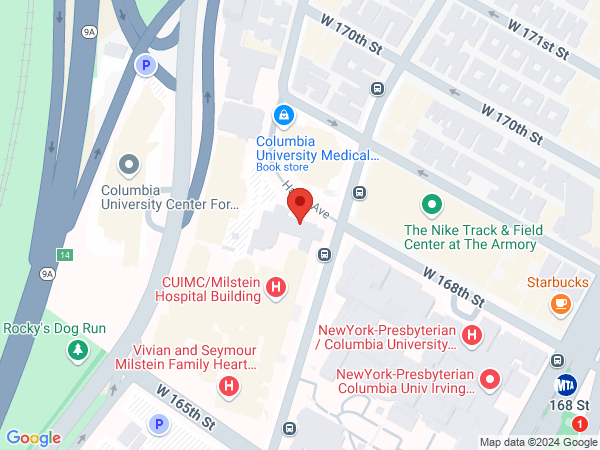
Dr. Kiran T. Thakur serves as the Herbert Irving Associate Professor of Neurology at Columbia University Irving Medical Center and practices as an inpatient neurologist at NewYork-Presbyterian/CUIMC. Her clinical expertise spans neuroinfectious diseases, neuroimmunology, emergency neurology, and global health, with active clinical and research engagements across eight countries in Africa, Southeast Asia, and the Caribbean. She holds leadership roles including Neurology Clerkship Director at Perdana University Graduate School of Medicine (Malaysia) and serves as a neurology consultant for the World Health Organization. Her educational background includes an MD from Tufts University School of Medicine (2008), internship at Johns Hopkins Hospital's Osler Medical Service, neurology residency at Harvard's Brigham & Women's Hospital (where she served as chief resident), and fellowship in neuroinfectious disease/neuroimmunology at Johns Hopkins Hospital. She is additionally pursuing a Master of Science in clinical trials at the London School of Tropical Medicine and Hygiene. Dr. Thakur's research program focuses on improving detection and management of neuroinfectious diseases in hospital settings, with particular emphasis on vulnerable populations including HIV-positive individuals and immigrants. Her work integrates clinical, translational, and implementation science approaches to address cerebral malaria, tuberculous meningitis, Zika-related complications, and SARS-CoV-2 neurological outcomes. Current projects investigate novel diagnostics for infectious meningoencephalitis, risk factors for neuroinvasive infections, and therapeutic strategies for viral encephalitis. Analysis of her 15 most recent publications reveals consistent focus on neuroinfectious disease epidemiology (particularly in resource-limited settings), diagnostic challenges in immunocompromised patients, and global health implementation strategies. Her work prominently features Zika virus complications, tuberculous meningitis management, and CNS infections in travelers, reflecting her dual expertise in tropical medicine and neuroimmunology. Scientific recognition includes: Lewis P. Rowland Teaching Award (Columbia University, 2016) CDC Nakona Citation Award (2014) Dr. Thakur directs the NIH NINDS K23-funded study on pathogen identification in neurological infections (2018-2023) and leads Columbia's post-doctoral neuroinfectious disease fellowship for physician-scientists from low/middle-income countries. Her research program receives support from the NIH, World Federation of Neurology, and American Academy of Neurology, with implementation studies conducted in collaboration with WHO, PAHO, and CDC. The Thakur Laboratory at Columbia's Neurological Institute coordinates international research networks across Malawi, Vietnam, Bangladesh, Uganda, and the Dominican Republic. Her team conducts clinical trials on antimicrobial dosing, develops diagnostic algorithms for resource-limited settings, and implements training programs to build neuroinfectious disease capacity in underserved regions, with current emphasis on SARS-CoV-2 neurological sequelae and tropical disease management.
Cynthia C. Lord is an Associate Professor specializing in population modeling at the University of Florida's Institute of Food and Agricultural Sciences (UF/IFAS), specifically at the Florida Medical Entomology Laboratory (FMEL) in Vero Beach, Florida. Her academic appointment is within the Entomology and Nematology Department, where she contributes to research on vector-borne diseases and pathogen transmission dynamics. Dr. Lord's research focuses on medical entomology with particular expertise in vector-borne diseases transmitted by ticks and mosquitoes. Her work encompasses population modeling of disease vectors, analysis of transmission dynamics for pathogens including Rickettsia, Ehrlichia, Anaplasma, and Zika virus, and investigation of vector-pathogen-host relationships. Her research has significant implications for public health interventions and vector control strategies. Her recent publications demonstrate expertise in analyzing the epidemiology and transmission patterns of vector-borne diseases. Her work on Rickettsia pathogens provides comprehensive information on disease-causing species in the United States, while her research on Zika virus examines the emergence and spread of this mosquito-borne pathogen in the Americas. Her publications serve as valuable resources for vector control agencies, public health officials, and medical professionals. Dr. Lord's research has contributed to understanding the distribution and transmission of vector-borne diseases in Florida and throughout the United States, with particular attention to the ecological and epidemiological factors that influence disease emergence and spread.
Staffan Bensch is a Professor at Lund University, holding roles in the Molecular Ecology and Evolution Lab, Lund Migration Group, and Immunogenetics and Infection Biology. His research focuses on evolutionary biology, particularly bird migration genetics and host-parasite interactions of avian malaria. He leads projects on migratory divides in willow warblers and chiffchaffs, and maintains the MalAvi database of bird malaria lineages. Education: PhD in 1993 from Lund University, with postdoctoral work at UC San Diego. Techniques: Molecular Ecology methods including genomics and tracking technologies. Research Interests: Genetic basis of migration Host-parasite evolution Avian malaria biodiversity Publications: Over 267 articles, including recent work on migratory genetics and parasite population structures. Awards: Rosén Linnaeus Prize (2019), Katma Award (2016), Elliott Coues Award (2014). Grants: Active projects on climate adaptation in willow warblers and comparative studies of migration genetics. Supervised 11 students including Violeta Caballero-Lopez (PhD). Labs/Teams: Molecular Ecology and Evolution Lab, Lund Migration Group.