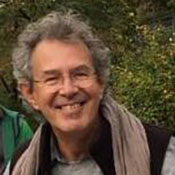
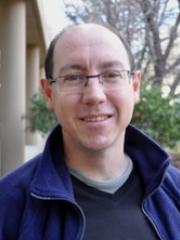
Nicholas Evans is a Distinguished Professor in the Department of Linguistics at the School of Culture, History & Language, Australian National University. He is an ARC Laureate Fellow and serves as Director of the ARC Centre of Excellence for the Dynamics of Language (CoEDL), reflecting his leadership in integrating typology, descriptive linguistics, and cognitive science. His work spans linguistic diversity, endangered languages, and the interplay between language and culture. His research focuses on Australian and Papuan languages, with extensive fieldwork in remote communities. Key interests include linguistic typology, historical and contact linguistics, semantics, and the cognitive underpinnings of grammar. He has published foundational grammars and dictionaries of Kayardild, Bininj Gun-wok, and Dalabon, contributing significantly to the documentation of endangered languages. His recent publications reveal a strong trend in cross-linguistic studies of social cognition (SCOPIC), syntactic typology, and phylogenetic modeling of the Yam languages. These works integrate linguistic, cognitive, and genetic data, highlighting interdisciplinary approaches to understanding language evolution and human diversity. ARC Laureate Fellow Fellow of the Australian Academy of the Humanities (FAHA) Fellow of the Academy of the Social Sciences in Australia (FASSA) Fellow of the British Academy (FBA) Evans supervises research students and leads major projects such as 'The Wellsprings of Linguistic Diversity' and CoEDL, which involve extensive collaboration across institutions and disciplines. His grants include modeling Pacific creoles and phonemic analysis of Tok Pisin. He is also involved in digital archiving initiatives like PARADISEC and the Language Data Commons of Australia, ensuring long-term preservation of linguistic data. He leads and contributes to research teams focused on Southern New Guinea languages, paradigm syncretisms (PARABANK), and cultural heritage preservation. His work emphasizes reciprocal engagement with speech communities and training the next generation of language documenters.
Felicity Meakins is a Professor of Linguistics at the University of Queensland, affiliated with the School of Languages and Cultures. She specializes in documenting First Nations languages in northern Australia, focusing on language contact processes, revitalization, and the impact of English on Indigenous languages. Her work bridges academic research and community engagement, including consulting on Native Title claims and language revitalization programs. Education: She studied at the University of Queensland between 1995–2001, completing her PhD in 2008. Prior to her academic career, she worked as a community linguist with Diwurruwurru-jaru Aboriginal Corporation (2001–2004) and as a PhD researcher with the Aboriginal Child Language Project (2004–2008). Research Interests: Meakins explores language contact, mixed languages, and Indigenous knowledge systems. Her projects include the 'Dingo Lingo' study tracing canine terminology across Australia and co-authored works like Tamarra: A Story of Termites on Gurindji Country (2023) and Understanding Linguistic Fieldwork (2018). She has compiled dictionaries and grammars for languages such as Gurindji, Bilinarra, and Mudburra. Grants & Recognition: Recipient of the Eureka Award (2021), LSA’s Hale Award (2021), and a Fellow of FASSA/FAHA. She led the UQ node of the ARC Centre of Excellence for the Dynamics of Language (2022). Labs/Teams: Collaborates with the Language Data Commons of Australia (LDaCA) and Indigenous communities in Northern Territory projects like the Wave Hill Walk-Off documentation.
Nicholas Evans is Distinguished Professor of Linguistics and Director of the ARC Centre of Excellence for the Dynamics of Language (CoEDL) at the Australian National University’s School of Culture, History & Language. His work bridges fieldwork-based language documentation with theoretical questions in typology, cultural evolution, and social cognition. Focus on endangered Australian and Papuan languages Director of ARC Laureate Project on 'The Wellsprings of Linguistic Diversity' Co-leader of SCOPIC (Social Cognition Parallax Corpus) study Collaborator in global linguistic diversity initiatives His research explores how micro-level community multilingualism shapes macro-level linguistic diversity, with fieldwork spanning seven years in remote Indigenous communities. Recent projects include PARABANK (paradigm syncretism analysis) and Southern New Guinea language studies, particularly Nen and Yam family languages. Scientific recognition includes the Ken Hale Award (Linguistic Society of America), Anneliese Maier Forschungspreis, and fellowships in the Australian Academy of Humanities, Australian Social Sciences Academy, and the British Academy.
Scientia Professor Gary Froyland is a Professor at the University of New South Wales (UNSW), affiliated with the School of Mathematics & Statistics. He leads the ARC Laureate Centre for Dynamical Systems and Data and holds an Einstein Visiting Fellowship from the Einstein Foundation Berlin. His academic credentials include a BSc (Hons 1, Medal) in Pure and Applied Mathematics from the University of Queensland and a PhD in Mathematics from the University of Western Australia. Professor Froyland's research spans two primary domains: dynamical systems and optimization. In dynamical systems, he investigates the interplay of probability and geometry in nonlinear and chaotic systems, employing tools from ergodic theory, functional analysis, and differential geometry. His work extends to applications in oceanography, atmospheric science, and granular flows. In optimization, he focuses on decision-making in complex systems with uncertain information, developing novel approaches in mathematical programming that have been applied to mining, logistics, and medical treatment planning. His recent publications demonstrate a strong focus on coherent structures in dynamical systems, linear response theory, and applications to geophysical phenomena. The research shows increasing interdisciplinary collaboration, particularly with climate scientists and data analysts, reflecting a trend toward applying advanced mathematical techniques to real-world problems in environmental science and engineering. J.D. Crawford Prize (2025) Elected Member of the Academy of Europe / Academia Europaea (2024) ARC Laureate Fellow (2024-2029) Fellow of the Society for Industrial and Applied Mathematics (SIAM) (2021) Fellow of the Australian Academy of Science (2020) Vice-Chancellor's Award for Teaching Excellence - Postgraduate Research Supervision (2015) Professor Froyland actively supervises PhD and honors students, with current advisees including Kevin Felipe Kühl Oliveira, Nicholas Peters, and Kathrin Völkner. His research is supported by multiple grants, including an ARC Laureate Fellowship (2024-2029) for "Breakthrough mathematics for dynamical systems and data," an Einstein Visiting Fellowship (2022-2026), and several ARC Discovery Projects. His work has practical applications in climate science, mining optimization, and medical treatment planning, particularly in radiotherapy. He leads the ARC Laureate Centre for Dynamical Systems and Data, which brings together researchers to develop new mathematical approaches for analyzing complex dynamical systems. The center focuses on creating methods to identify coherent structures in spatiotemporal data, with applications spanning environmental science, social science, health science, and engineering.
David Blair is a Professor at James Cook University, specializing in parasitic flatworms, molecular systematics, and evolutionary biology. His research focuses on understanding the genetic diversity, phylogeography, and host-parasite interactions of species such as Schistosoma, Paragonimus, and Opisthorchis. He has contributed extensively to studies on the molecular evolution of parasitic organisms and their implications for human and wildlife health. Key research areas include: molecular taxonomy of trematodes, phylogenetic analysis of parasitic flatworms, and genomic studies of host-parasite coevolution. Collaborations span global institutions, addressing public health challenges like paragonimiasis and fasciolosis. His work integrates field studies, lab-based molecular techniques, and computational biology to unravel evolutionary dynamics and ecological adaptations. Recent studies focus on the genetic diversity of Daphnia species, dugong population genetics, and drug-resistant Mycobacterium tuberculosis. His publications in journals like *Parasitology*, *Molecular Phylogenetics and Evolution*, and *Scientific Reports* highlight interdisciplinary approaches to parasitology and conservation biology.
Scientia Professor Robert Kohn is a distinguished academic at the University of New South Wales, holding a position in the School of Economics within the UNSW Business School. With a career spanning several decades, Professor Kohn has established himself as a leading expert in statistical methodology and econometric modeling. His research has significantly contributed to Bayesian statistics and computational methods for complex data analysis. Professor Kohn's research focuses on advanced statistical methodologies including Bayesian methodology, variable selection and model averaging, nonparametric regression models, time series modeling, multivariate Gaussian and non-Gaussian regression, and Markov chain Monte Carlo simulation algorithms. His work bridges theoretical statistics with practical applications across economics, finance, and cognitive science. His research demonstrates a consistent trajectory toward developing more efficient computational methods for complex statistical models, with recent work emphasizing variational Bayesian methods, particle filtering techniques, and applications to time series analysis. Analysis of his recent publications (2022-2025) reveals a strong focus on advancing computational statistical methods, particularly in Bayesian inference for complex models. His work shows increasing integration of machine learning techniques with traditional statistical methods, especially in handling high-dimensional data and complex time series structures. Professor Kohn has made significant contributions to variational inference methods, particle-based computational techniques, and applications to financial time series and cognitive modeling. Professor Kohn has maintained an exceptionally productive research career with continuous publication output since the 1970s, demonstrating remarkable longevity and adaptability in his research focus as statistical methodologies have evolved. His work shows strong international collaboration, particularly with researchers in Australia, the United States, and Europe, reflecting his standing in the global statistical community.
Professor Anthony Richardson is a mathematical ecologist at the University of Queensland , holding a joint position with CSIRO Environment since 2005. He leads the Mathematical Marine Ecology Lab , focusing on marine conservation through mathematical, statistical, and computational modeling. School of the Environment, Faculty of Science, University of Queensland Affiliate, Centre for Marine Science Affiliate, Centre for Biodiversity and Conservation Science Research Interests span marine spatial planning (climate-smart protected areas, 3D ocean zoning), marine ecosystem modeling (lower trophic levels, plankton-dynamics), and climate change impacts (carbon sequestration, fisheries productivity, and marine diseases). His work has been cited in IPCC Assessment Reports and emphasizes international collaboration through projects like the Global Working Group on Climate Change Synthesis . Recent Publications focus on Zooplankton's role in carbon cycling Climate-smart marine protected area design Ecosystem modeling under climate uncertainty Marine megafauna connectivity patterns Supervision is offered for >250 peer-reviewed papers and advanced projects in climate-smart conservation planning, with established funding from ARC Discovery Projects and Norwegian Polar Institute .
Professor Behzad Fatahi is a distinguished academic in Civil and Environmental Engineering at the University of Technology Sydney (UTS), specializing in geotechnical engineering, railway infrastructure, and sustainable construction technologies. With a career spanning over 16 years at UTS, he has served as Deputy Head of School - Teaching and Learning (2024-present), Head of Discipline (2020-2024), and School Research Coordinator (2012-2017). His research focuses on unsaturated soil mechanics , dynamic soil-structure interaction , and green infrastructure solutions . Academic Appointments : Professor (2024-present), Associate Professor (2017-2024), Senior Lecturer (2011-2017), Lecturer (2008-2011) Research Leadership : Supervised 21 PhD students to completion, developed groundbreaking techniques for landfill waste reuse and tyre-derived aggregates in railway construction His work on seismic resilience of LNG tanks and bioengineered soil stabilization has received international recognition, including the 2023 Best Research Paper Award at the Australasian Association for Engineering Education conference. Professor Fatahi's industry experience includes geotechnical engineering roles at Coffey International and SES Engineering prior to academia. Key Research Contributions : Developed green corridor models for railway lines using coupled flow-deformation equations Pioneered AI-integrated teaching frameworks for civil engineering education Advanced machine learning techniques for intelligent compaction and structural buckling analysis As a Category 1 supervisor , he mentors graduate researchers in Civil Engineering , Geomechanics , and Earthquake Engineering . His peer-reviewed work (>240 publications) demonstrates technical excellence and innovation across multiple geotechnical domains.
Richard DUNCAN is a Professor in Conservation Biology at the University of Canberra's Science School and Department of Centre for Conservation and Ecology Genetics. His research focuses on the ecology of invasive species, particularly understanding how introduced species arrive, establish, and spread in new environments. Key areas include invasive weeds and pests, ecological community structure, and applying quantitative methods to address both fundamental and applied ecological questions. Education: PhD in Forest Ecology, University of Canterbury (1989, award date noted as 2024 in text) Research Interests: His work spans invasive species ecology, population dynamics, and restoration strategies. He employs diverse methods including field experiments, modeling, and genomics, with recent focus on grasslands and aquatic systems. Current projects address amphibian chytrid fungus, carp invasions, and rodent control. Articles Trends: Recent publications emphasize invasive species impacts on ecosystems, pathogen-driven niche contractions, and conservation tools like geospatial modeling and genomic simulations. Themes include species distribution modeling, pest management, and restoration ecology. Awards & Grants: Lead investigator on 35+ projects, including ARC Plant Biosecurity Training Centre and chytrid fungus mitigation efforts Associate Editor for Proceedings of the Royal Society B and Diversity and Distributions Advising: Accepting PhD students in invasive species ecology, with focus on using biological invasions to explore ecological theory and management applications. Labs/Teams: Collaborates widely on conservation genetics, aquatic invasions, and biosecurity, including work with the Biological Heritage Science Challenge and Indigenous Grasslands Trust.
Professor Brendan Choat is a leading plant physiologist and Professor at the Hawkesbury Institute for the Environment, Western Sydney University. With a distinguished career in plant hydraulics and water relations research, he has established himself as a global expert in understanding how plants respond to drought stress. His work spans both natural ecosystems and agricultural systems, with particular emphasis on Australian native forests and crop species. Choat's research focuses on the intricate relationship between plant water transport systems and environmental stressors, particularly drought. His work examines how the xylem tissue functions as a hydraulic system that must balance water delivery to leaves while avoiding cavitation (embolism) that can lead to plant mortality. His groundbreaking research has demonstrated that many woody plant species operate close to their physiological safety margins with respect to drought, making them vulnerable to future climate changes. His laboratory employs cutting-edge non-invasive imaging techniques, including X-ray Micro Computed Tomography (microCT) and Magnetic Resonance Imaging (MRI), to directly visualize xylem function in living plants. This approach has allowed his team to address fundamental questions about how cavitation forms and spreads through plant vascular systems during drought stress. Analysis of Professor Choat's extensive publication record reveals a consistent focus on plant drought responses, with particular emphasis on Eucalyptus species and mangrove ecosystems. His research has increasingly incorporated large-scale monitoring approaches, remote sensing data, and trait databases to understand vegetation responses to climate extremes across broader spatial scales. Clarivate Highly Cited Researcher (2018-2024) ARC Future Fellowship (2013) Humboldt Fellowship for Experienced Researchers (2010) Thomson Reuters Citation and Innovation Award (2015) Professor Choat leads multiple significant research projects examining tree dieback in Australian forests, particularly focusing on Eucalyptus species. His work with citizen scientists through the 'Dead Tree Detective' project has provided valuable data on drought impacts across diverse forest biomes. He maintains active collaborations with researchers across Australia and internationally, contributing to large-scale initiatives like the AusTraits plant trait database. His research has direct implications for forest management, conservation strategies, and predicting ecosystem responses to climate change.
Associate Professor Sunny-Boy Ahmar Mahboob is a distinguished linguist at the University of Sydney, where he serves as Degree Coordinator for the Master of Crosscultural and Applied Linguistics program within the Department of Linguistics, Faculty of Arts and Social Sciences. With extensive experience in applied linguistics and language education, Dr. Mahboob has established himself as a leading expert in World Englishes, TESOL, and language variation research, both nationally and internationally. Dr. Mahboob's educational background includes: BA from Karachi MA from Karachi MA from Indiana University MEd from Sydney PhD from Indiana University (2003) Dr. Mahboob's primary research focuses on language variation in global contexts, with particular attention to World Englishes, the NNEST (Non-Native English Speaking Teachers) movement, language policy, and decolonial approaches to linguistics. His work critically examines how language policies and practices affect educational outcomes and social justice, especially in postcolonial contexts like Pakistan and the Middle East. He pioneered 'appliable linguistics' - an approach that bridges theoretical linguistics with practical applications in education and policy, emphasizing the need for linguistic theories to address real-world problems. His recent publications reveal a strong trajectory toward decolonial linguistics, with increasing focus on subaltern perspectives, environmental connections to language diversity, and critical examinations of colonial legacies in language education. Dr. Mahboob's work consistently addresses power dynamics in language teaching and the need for more inclusive approaches that value linguistic diversity across educational contexts from primary schools to universities. Dr. Mahboob has received numerous prestigious awards: 2019: Australia's Research Field Leader in English Language and Literature (The Australian's Research magazine) 2012: Fellow of the National Talent Pool; President's Programme for Highly Qualified Overseas Pakistanis 2006: Faculty of Arts and Social Sciences Teaching Award, University of Sydney 2005: Teaching Initiative Award and Fellow of the Association of Pacific Rim Universities 2004: ECU Research and Creativity Award 2002: 'Distinguished President Award' from INTESOL, Indianapolis As an academic mentor, Dr. Mahboob supervises research students including Ruohong CAO (Developing Mandarin Learning Materials for Young Learners in Australia through Positive Discourse Analysis) and Tracy GAO (Evaluating Chinese Language Textbooks: A Sociosemiotic Perspective). His editorial work includes serving as Editor of TESOL Quarterly (2014-2017) and Associate Editor for multiple linguistics journals. Dr. Mahboob has secured significant research funding for projects including the SLATE (Scaffolding Literacy in Academic and Tertiary Environments) project and indigenous language funding initiatives in Australia. Dr. Mahboob founded and leads the International Free Linguistics Conference series, which has become an important platform for critical and alternative approaches to linguistics. His 'SLATE project' focuses on genre-based pedagogy for academic writing, and he actively collaborates with researchers across multiple continents through the World Englishes research network. His recent work increasingly explores the connections between language diversity and environmental sustainability, positioning linguistic ecology as a critical component of broader ecological concerns.
Rachel Nordlinger is a Professor of Linguistics and Director of the Research Unit for Indigenous Language at the University of Melbourne's School of Languages and Linguistics. Her research focuses on documenting and describing Australian Indigenous languages, with a particular emphasis on syntactic and morphological theory. She has conducted extensive fieldwork with communities speaking Bilinarra, Wambaya, Gudanji, Murrinhpatha, and Marri Ngarr, contributing to language preservation efforts. She holds a PhD from Stanford University and has authored influential works including A Grammar of Wambaya and co-edited volumes like The Languages and Linguistics of Australia . Nordlinger is a Fellow of the Australian Academy of Humanities (2017) and leads major grants like the ARC Centre of Excellence for Dynamics of Language (2014-2026). Her work integrates linguistic theory with community-driven language revitalization projects, emphasizing the interconnectedness of language and cultural knowledge. Key research grants include projects on polysynthetic language processing (2021-2025), Indigenous language documentation, and cross-linguistic syntactic analysis. Nordlinger collaborates with institutions such as PARADISEC and the Kanamkek-Yile Ngala Museum to preserve endangered language materials. Her interdisciplinary approach bridges formal linguistic analysis with applied community linguistics.
Professor David Taubman is a distinguished academic serving as Professor and Deputy Head of School (Research) at the School of Electrical Engineering and Telecommunications (EE&T) at the University of New South Wales (UNSW) in Sydney, Australia. He is also co-director of Kakadu Software Pty. Ltd. and its affiliates Kakadu R&D and Kakadu GPU. With a career spanning over three decades, Professor Taubman has made significant contributions to the field of image and video compression, most notably as the author of the EBCOT coding algorithm adopted in the JPEG2000 international standard. Professor Taubman earned his B.Sc. in Mathematics and Computer Science (1986) and B.E. (Medal) in Electrical Engineering (1988) from the University of Sydney, followed by an M.Sc. (1992) and Ph.D. (1994) in Electrical Engineering from the University of California at Berkeley. His professional journey includes engineering work at the Electricity Commission of N.S.W. (1988-1990), research positions at Hewlett-Packard Laboratories in Palo Alto (1994-1998), and an academic career at UNSW where he progressed from Senior Lecturer (1998-2003) to Associate Professor (2004-2009) and finally to Professor (2009-present). He has held various leadership roles including Head of the EE&T Telecommunications Research Group (2003-2014), Head of the EE&T Signal Processing Research Group (2014-present), Director of Research for the School of EE&T (2011-2016), and Deputy Head of School (Research) since 2017. Professor Taubman's research interests center on image and video compression, with particular expertise in JPEG2000 standards and implementations. His work spans signal processing, wavelet transforms, scalable video coding, motion modeling, and multimedia systems. He has pioneered numerous compression algorithms and frameworks, including the EBCOT coding algorithm that became central to the JPEG2000 standard. His recent research focuses on efficient motion modeling with cuboidal partitioning, learned lifting-based transform structures, and high-throughput implementations of JPEG2000 for video applications. His work bridges theoretical foundations with practical implementations, as evidenced by the commercially successful Kakadu Software tools that have garnered around 500 commercial licensees. Analysis of Professor Taubman's recent publications reveals a consistent focus on advancing compression technologies with particular emphasis on scalability, efficiency, and adaptability. His work spans traditional image compression (JPEG2000 extensions), video coding (cuboid-based partitioning for UHD/360-degree video), and emerging applications (nanopore sequencing data compression). A notable trend is the integration of machine learning techniques with traditional compression frameworks, as seen in his work on learned lifting-based transform structures. His research maintains strong connections to real-world applications across diverse domains including medical imaging, astronomical data processing, and genomic sequencing. IEEE Fellow Engineers Australia Fellow (by invitation) Professor Taubman has served as Associate Editor for the IEEE Transactions on Image Processing for two four-year appointments (2003-2005 and 2010-2013). He has been actively involved in numerous research grants focused on image and video compression technologies, particularly those related to the JPEG2000 standard and its extensions. His work has received significant industry support, reflected in his consultancy with various U.S., Japanese, and Australian corporations. He has also contributed to international standards development as a member of Standards Australia Technical Committee MS-065 (mirroring ISO TC42 on Digital Photography) and as a constitutional member of Standards Australia Technical Committee IT-029 (Coded Representation of Picture, Audio and Multimedia/Hypermedia Information). Professor Taubman co-directs Kakadu Software Pty. Ltd. and its research affiliates Kakadu R&D and Kakadu GPU, which have developed the commercially successful Kakadu Software tools for JPEG2000. His research group at UNSW focuses on advanced image and video compression techniques, with particular expertise in wavelet-based methods, scalable coding, and motion modeling. The group maintains strong industry connections and has contributed significantly to the development and standardization of image compression technologies worldwide.
Dr. Holger Scheib is an Honorary Associate Professor in the School of the Environment at The University of Queensland. His research focuses on venom evolution, toxinology, and biomedical applications, particularly in reptiles, cnidarians, and other venomous organisms. He collaborates extensively with international researchers on projects involving venom structure-function relationships, evolutionary biology, and clinical implications of venom variation. Research interests span venom evolution, toxin structure and function, and their applications in biomedical contexts. He investigates venom diversity across species, including reptiles, sea anemones, and cnidarians, focusing on how these toxins interact with biological systems. His work also explores the intersection of venom components with allergens and their structural similarities, contributing to a deeper understanding of venom’s ecological and medical significance. His recent publications highlight advancements in understanding venom evolution, toxin structures, and clinical implications. Studies include comparisons of venom proteins with allergens, analyses of venom variation in rattlesnakes, and investigations into the molecular mechanisms of bacterial secretion systems. These works contribute to both basic biological research and potential applications in medicine and biodiscovery. No scientific awards or grants are explicitly mentioned in the provided text. Dr. Scheib’s research is primarily conducted through collaborations within the School of the Environment and international academic networks. No specific lab or team affiliations are detailed.
Claire O'Brien is an Associate Professor in Biomedical Science (Virology) at the University of Canberra, leading the Host-Microbe Interactions research group. Previously, she held positions at the Australian National University (ANU) Medical School as a Lecturer and Senior Lecturer at the University of Wollongong. She earned her PhD from ANU in 2012, focusing on microbiological aspects of Crohn's disease. Her research investigates gut microbiome dysbiosis in diseases like inflammatory bowel disease (IBD), using in vitro co-cultures of bacteria and macrophages. Key projects include studying antimicrobial resistance in retail meat and microbial resilience in IBD patients. Dr. O'Brien has received prestigious awards, including the Australian Academy of Science France-Australia Fellowship and NHMRC Peter Doherty Biomedical Research Fellowship. Her work spans translational research, such as the 'GUTSY' project addressing sarcopenia in Crohn’s disease, and collaborations on microbiome dynamics. She actively supervises Honours and higher-degree research students in IBD and microbiome-related fields. Research interests include host-microbe interactions, Crohn's disease pathogenesis, and the role of the microbiome in health. Her lab employs genomic, transcriptomic, and microbiological techniques to uncover mechanisms linking microbial imbalances to disease. She is also engaged in public health initiatives, such as optimizing preconception care and reducing pregnancy complications in women with polycystic ovary syndrome (PCOS).