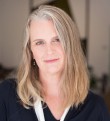
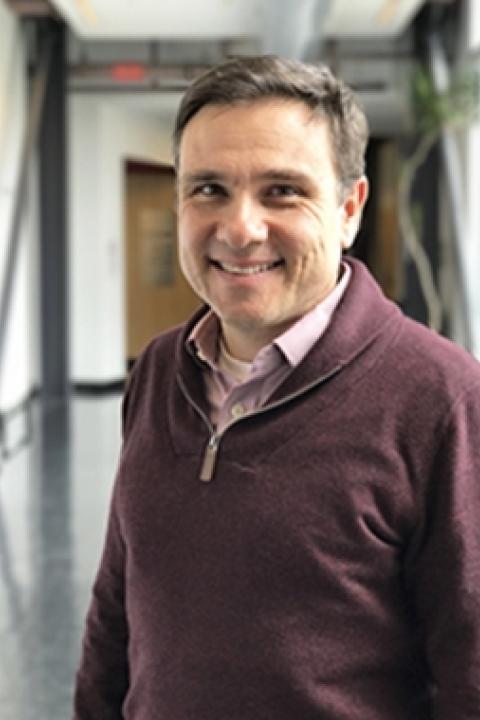
Kristin Andrews is York Research Chair in Animal Minds and Professor of Philosophy at York University, with affiliations in the Cognitive Science program. She is a CIFAR Fellow in the Future Flourishing program and was elected to the College of the Royal Society of Canada. Her research examines animal consciousness, social cognition, and ethics, with implications for conceptions of human nature. She directs the Greater Toronto Area Animal Cognition Discussion Group and serves on the board of the Borneo Orangutan Society Canada, supporting conservation and education. Her publications include foundational works like 'The Animal Mind' and 'Chimpanzee Rights: The Philosophers Brief'. Current projects explore animal cultures and normative behaviors across species. Her educational background includes a PhD in Philosophy from the University of Minnesota (2000), an MA from Western Michigan University (1995), and a BA from Antioch College (1992). Awards include the York Research Chair and Royal Society fellowship. Community contributions include amicus briefs supporting personhood for chimpanzees and elephants with the Nonhuman Rights Project.
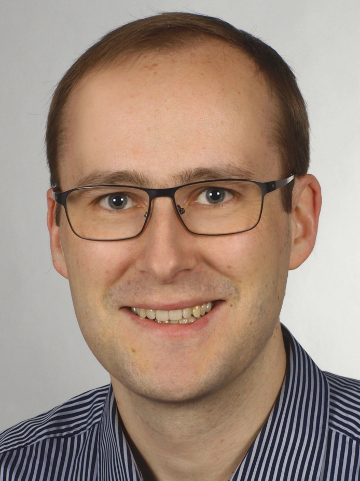
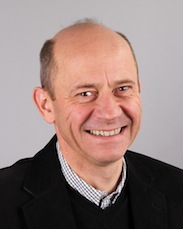
Dr. Manfred Sauter is a permanent academic staff member at the University of Ulm , affiliated with the Institute of Applied Analysis within the Faculty of Mathematics and Economics. Since 2014, he has taught foundational and advanced mathematics courses for physics, engineering, computer science, economics, and mathematics programs, including Analysis I-III , Linear Algebra , and specialized lectures like Geometric Analysis and Elements of Complex Analysis . As co-organizer of conferences such as the 2023 Mini-Konferenz Elliptic and Parabolic Equations , he contributes to academic collaboration. Education: PhD (2013, University of Auckland), Diploma Thesis (2008, University of Ulm). Research: Focuses on elliptic operators in irregular domains, spectral theory, and inverse problems, developing approximation-based trace concepts for Sobolev functions. His work bridges operator theory, form methods, and differential equations. Teaching Innovations: Co-developed the PASST! project for mathematics colloquia, earning the 2017 Teaching Bonus. Leads online courses via Moodle and coordinates international internet seminars. Scientific Awards: Teaching Bonus (2017, PASST! project) NZMS Student Travel Grant (2010) Prize for Best Talk at AGFA+IAA Workshop (2016) Publications with Wolfgang Arendt, A.F.M. ter Elst, and others explore maximal regularity, Dirichlet-to-Neumann operators, and form methods. Current habilitation research extends his approximative trace theory to irregular domains.
Dr. Juan Juan Cai serves as an Associate Professor in the Department of Econometrics and Data Science at Vrije Universiteit Amsterdam's School of Business and Economics and holds a Research Fellow position at the Tinbergen Institute. Her academic leadership spans statistical methodology development and interdisciplinary applications in high-impact domains. Education: PhD in Statistics from Tilburg University (2012), dissertation: "Estimation concerning risk under extreme value conditions" Research Focus: Dr. Cai pioneers advanced techniques in Statistics of Extremes and Asymptotic Statistics , specializing in probabilistic forecasting of rare events. Her work bridges theoretical rigor with practical solutions for financial risk modeling, epidemiological analysis (including SARS-CoV-2 viral load studies), and cancer survival prediction, employing non-parametric frameworks and quantile-based methodologies. Publication Trends: Recent output (2023-2025) reveals a strategic expansion from core extreme value theory into machine learning integration (e.g., gradient boosting for quantile regression) and cross-disciplinary health applications. Over 80% of her work addresses multivariate regular variation and extreme event modeling, with growing emphasis on causal inference frameworks for real-world data. Honors: NWO Open competition grant (2024) for "Predicting cure chances and long term survival of cancer patients" Research Leadership: As Principal Investigator for the NWO-funded "Startersbeurs" project (2023-2028), she directs a team advancing statistical methods for finance and survival analysis. Her grant portfolio combines theoretical innovation with translational health research, evidenced by media coverage and interdisciplinary citations. Professional Ecosystem: Through the Tinbergen Institute, she cultivates collaborations across Dutch economic research institutions, leveraging networks in both academia and public health sectors to drive methodological advancements in extreme event modeling.
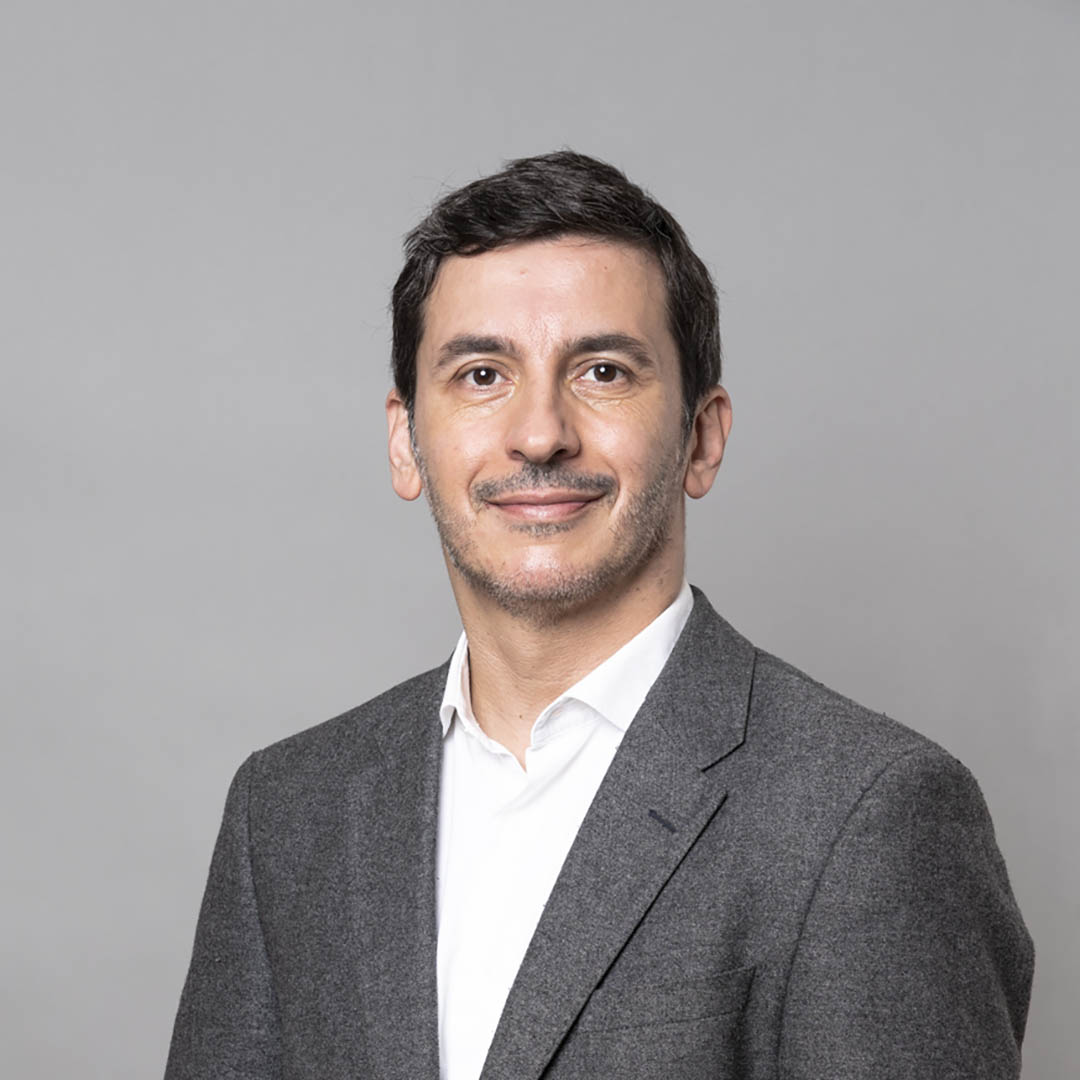
Prof. Filipe Serra de Oliveira is a Mathematics Professor at ISEG (Lisbon School of Economics and Management) within the University of Lisbon. He holds an Aggregation in Mathematics from the University of Lisbon and a Doctorat in Mathematics from Université Paris Sud. His research focuses on nonlinear partial differential equations, mathematical physics, and dispersive systems. He has served as course coordinator, research group member (REM/CEMAPRE), and master's program coordinator. His work includes studies on Schrödinger systems, kinetic models, and fluid dynamics, with over 40 publications in top journals like SIAM and Nonlinearity. He actively participates in academic governance roles and has supervised at least one master’s thesis in optimal control theory. Research interests: His work spans dispersive equations (e.g., Schrödinger, Boussinesq systems), soliton dynamics, and nonlinear optics. He explores theoretical aspects like well-posedness, stability, and scattering behavior while addressing applied problems in fluid dynamics and chemical reaction modeling. Recent trends include analyzing critical cases and coupled systems. Teaching contributions include leading courses like Mathematical Analysis I and Calculus for economics and management programs. His pedagogical materials emphasize practical problem-solving in calculus and differential equations.
Dr Erdun Gao is a Grant-Funded Researcher at the Australian Institute for Machine Learning (AIML), part of the Faculty of Sciences, Engineering and Technology at the University of Adelaide. His research focuses on machine learning, causal discovery, multimodal systems, and data hiding techniques. He is eligible to supervise Masters and PhD students as a co-supervisor. Key research interests include cross-modal learning, domain generalization, federated learning, and scalable causal inference methods. His work addresses challenges such as missing data imputation, adversarial model behavior, and secure information embedding in images. Notable contributions span technical areas like DAG structure learning, diffusion model bias mitigation, and high-order score estimation in incomplete datasets. Publications from 2019-2025 showcase advancements in both foundational AI theory and applied data science solutions. His team develops algorithms for real-world applications in healthcare, image processing, and secure data transmission. Dr Gao’s current projects involve: Exploring multimodal LLM vulnerabilities through adversarial 'distraction' techniques Developing scalable causal discovery frameworks for mixed data types Innovating reversible data hiding methods for medical imaging applications
Anthony Claes is an Associate Professor in Equine Reproduction at Utrecht University's Faculty of Veterinary Medicine, Department of Clinical Sciences (Equine Sciences). He leads the Equine Reproduction team and has been at Utrecht since 2015. His academic career includes roles at UC Davis (USA) and the Gluck Equine Research Center (University of Kentucky, USA). His research focuses on equine reproduction, particularly in vitro embryo production, semen quality, and reproductive endocrinology. Key contributions include studies on embryo cryopreservation, blastocyst development, and the impact of inbreeding on equine semen quality. Claes is a Diplomate of the American College of Theriogenologists (2008) and has published extensively in journals like Theriogenology and Reproduction, Fertility and Development . He teaches in courses such as Outpatient Clinic and Reproduction and supervises clinical rotations in equine health care. His work bridges clinical practice and research, addressing challenges in equine reproduction through advanced techniques like OPU-ICSI and ultrasound-guided interventions. Collaboration with global institutions (e.g., Hokkaido University) highlights his international impact in veterinary reproductive sciences.
Dr. Themin Suwardy is a Full-time Associate Professor of Accounting (Practice) and Associate Provost (PGP Education) at Singapore Management University's School of Accountancy (SOA). He previously served as Dean of Postgraduate Professional Programmes (2016–2021), overseeing over 1,400 annual postgraduate students. With a career spanning academia and professional practice, he transitioned from auditing at KPMG to academia. Educations: PhD, Monash University, Australia Bachelor of Business (Accountancy) (Honours), Monash University Bachelor of Computing (Information System), Monash University Research Interests: Focuses on Accounting Education , Corporate Governance , Fraud Detection , and Digital Transformation . His work emphasizes practical applications in audit practices, financial reporting quality, and resilience in higher education post-pandemic. His publications address topics like audit committee effectiveness, financial fraud detection, and international accounting standards. He has been widely recognized for teaching excellence, including multiple Best MBA Core Teacher and EMBA Outstanding Faculty awards. Awards: Republic of Singapore's Public Administration Medal (2011) CPA Australia Lifetime Achievement Award (2015) Forbes Heroes of Philanthropy (2010) Advising & Governance: Currently serves as Vice Chairman of SATA CommHealth and chairs its Investment & Finance Committee. Chairs GMAC's Membership Committee and sits on Singapore's Goods and Services Tax Board of Review. Previously led CPA Australia's Singapore Division (2013–2014). Media Engagement: Regular contributor to The Business Times and Straits Times , writing on CFO roles in crises, corporate governance, and audit opinions.
Thomas Pock is a Professor of Computer Science at Graz University of Technology, holding the AIT Stiftungsprofessur for Mobile Computer Vision. He is affiliated with the Institute for Computer Graphics and Vision (ICG) within the Faculty of Computer Science and serves as a principal scientist at the Austrian Institute of Technology (AIT), Center for Vision, Automation & Control. He leads the Vision, Learning and Optimization (VLO) research group, which focuses on mathematical modeling and optimization in computer vision. His research interests lie at the intersection of computer vision, image processing, and mathematical optimization. Specifically, he develops mathematical models for computer vision and efficient convex and non-smooth optimization algorithms , particularly for mobile scenarios. His recent work increasingly integrates variational methods with deep learning, especially in solving inverse problems in imaging such as medical reconstruction and deblurring. The trends in his recent publications show a strong emphasis on deep learning for inverse problems , variational networks , and learned optimization . His group explores how to combine classical mathematical models with data-driven deep learning approaches to achieve stable, interpretable, and high-performance solutions in image reconstruction and processing. His scientific achievements have been recognized with several prestigious awards: START Prize, Austrian Science Fund (FWF), 2013 German Pattern Recognition Award, DAGM, 2013 ERC Starting Grant, European Research Council, 2014 Thomas Pock actively mentors students and leads a research group of 10 PhD students and 2 postdocs. He has secured significant research grants, including the ERC Starting Grant, which supports his foundational work. He is also engaged in scientific communication, giving invited talks at international venues such as SIAM and co-organizing the IMAGINE One World seminar series to foster global collaboration in imaging and inverse problems. He leads the Vision, Learning and Optimization (VLO) group at the Institute for Computer Graphics and Vision. The group develops mathematical models and efficient algorithms for computer vision and image processing, with a focus on mobile applications. The team includes multiple PhD students and postdoctoral researchers and has produced notable software and publications in top venues.
Gregory Chini is a Professor in the Department of Mechanical Engineering at the University of New Hampshire (UNH), where he has been a faculty member since 1999. He also serves as the Director of the Integrated Applied Mathematics (IAM) Ph.D. program and holds affiliations with the College of Engineering and Physical Sciences. He has been a visiting researcher at the California Institute of Technology and the University of Nottingham, and is a regular participant in the Woods Hole Summer Program in Geophysical Fluid Dynamics. Ph.D., Aerospace and Aeronautical Engineering, Cornell University M.S., Aerospace and Aeronautical Engineering, Cornell University B.S., Aerospace and Aeronautical Engineering, University of Virginia Prof. Chini's research lies at the intersection of fluid dynamics and applied mathematics, with a focus on modeling geophysical, environmental, biological, and industrial flows. He investigates the stability and dynamics of coherent structures such as vortices, waves, and boundary layers using asymptotic, variational, and spectral methods. His work emphasizes reduced-order modeling to understand complex systems like turbulent convection and porous media flows. The recent publications highlight a strong trend in multiscale modeling, turbulent transport, and mathematical analysis of fluid systems. His articles frequently address Rayleigh-Bénard convection, stratified turbulence, boundary layer dynamics, and optimal transport, often employing quasilinear and asymptotic frameworks to extract physical insights. The research spans from theoretical analysis to computational modeling, with applications in oceanography, geophysics, and soft matter. He has been awarded multiple research grants from the National Science Foundation (NSF) and the U.S. Department of Defense (Navy), supporting projects on high Reynolds number turbulence, wall-bounded flows, and multiscale oceanic modeling. These grants reflect sustained funding and leadership in fundamental fluid mechanics research. National Science Foundation (NSF): Development of Asymptotically-Reduced Multi-Scale Models (2014–2019) National Science Foundation (NSF): Multiscale Modeling of Oceanic Mixed Layer (2009–2015) U.S. DOD, Navy: Predicting Non-Equilibrium Wall-Flow Phenomena (2017–2023) Mentis Sciences Inc: Cooling System for Laser Enclosure (2018) Prof. Chini teaches core courses such as Fluid Dynamics (ME 608), Thermodynamics (ME 503), Viscous Flow (ME 909), and Asymptotic Methods (IAM 940), and supervises doctoral research in applied mathematics and mechanical engineering. He advises Ph.D. students and collaborates widely, particularly with researchers like Christopher White. His lab and research group focus on theoretical and computational fluid dynamics, with an emphasis on model reduction and predictive simulation of complex flows.
Verena Bögelein is a Professor at the Department of Mathematics , University of Salzburg, within the Faculty of Natural and Life Sciences . She serves as Deputy Head of Department and leads the Analysis Working Group , focusing on mathematical analysis, partial differential equations (PDEs), and calculus of variations. Her work bridges pure mathematics with applications in fluid dynamics, nonhomogeneous media, and glacial evolution. Her research emphasizes existence and regularity theory for nonlinear elliptic/parabolic equations and systems, particularly those with singular or degenerate behavior. She explores connections between geometry, topology, and analysis through functionals like Willmore/Helfrich (for surfaces) and knot energies, contributing to geometric analysis. While no explicit scientific awards are listed, Bögelein actively mentors doctoral students and postdocs, including current advisees Michael Strunk, Calvin Stanko, and visiting researchers. Her team has organized the Salzburg Workshop on Nonlinear PDEs and published in journals such as The Mathematical Intelligencer and Analysis & PDE .
Prof. Dr. Paul Steinmann is a full Professor and Chair of Engineering Mechanics (LTM) at Friedrich-Alexander-Universität Erlangen-Nürnberg (FAU), Faculty of Engineering. Since December 2020, he serves as Special Representative for Strategic Development at FAU, supporting academic positioning and research excellence. He is also Director of the Glasgow Computational Engineering Centre (GCEC), UK, reflecting his international leadership. Research Interests: His work focuses on advanced computational and theoretical mechanics, including materials modeling, multiscale and multiphysics problems, fracture mechanics, biomechanics, and finite element methods. He develops robust mathematical and numerical frameworks for complex material behavior under extreme conditions. Publication Trends: His recent research emphasizes cross-scale fracture modeling, phase-field methods, thermomechanical coupling, chemo-mechanical degradation, and configurational mechanics. These reflect a strong trend toward unified, thermodynamically consistent frameworks applicable across engineering and biological systems. Scientific Awards: Fellow Award from IACM (2006) Fellow Award from EUROMECH (2006) Timoshenko Visiting Scholar Award, Stanford University (2007) ERC Advanced Grant (2011) Royal Society Wolfson Research Merit Award (2017) Advising and Grants: As spokesperson for the DFG Research Training Group FRASCAL and former leader of multiple DFG projects, he has supervised numerous PhD students and postdocs. He has secured major grants including the ERC Advanced Grant and led collaborative research across Germany and internationally. He has served on DFG and DAAD committees, contributing to national research policy and funding decisions. Labs and Teams: He leads the Chair of Engineering Mechanics at FAU and is deeply involved in the DFG Research Training Group FRASCAL, fostering interdisciplinary research across mechanics, materials science, mathematics, chemistry, and physics. His international role as Director of GCEC strengthens computational engineering collaborations between FAU and UK institutions.
Jonas Sauer is a Junior Professor (Assistant Professor) at the Institute of Mathematics , Friedrich Schiller University Jena. His research focuses on stochastic partial differential equations (SPDEs) , particularly on regularization by noise, Navier-Stokes equations , and nonlinear PDEs in fluid mechanics. He leads the Literatur-Rundschau podcast, interviewing mathematicians in analysis and discussing literature and research narratives. Contact: jonas.sauer@uni-jena.de Research Interests : Singular SPDEs, fluid mechanics, maximal regularity, critical spaces, harmonic analysis, and nonlinear dynamics. Teaching : Analysis-focused seminars and courses at FSU Jena. The Literatur-Rundschau podcast explores topics such as: Random dynamical systems with Maximilian Engel (FU Berlin) Data clustering and material science with Tim Laux (Regensburg) Stochastic reaction-diffusion equations with Antonio Agresti (IST Austria) Time-periodic fluid flows with Thomas Eiter (WIAS Berlin) Energy scaling in Tartar squares with Angkana Rüland (Heidelberg) Stochastic sewing techniques with Máté Gerencsér (TU Wien) Sparse domination with Emiel Lorist (University of Helsinki) p-elliptic operators with Moritz Egert (TU Darmstadt) Free boundary problems with Patrick Tolksdorf (Mainz) His work intersects SPDEs with critical space methodologies, and he collaborates with institutions including Max Planck Institute for Mathematics in the Sciences, Hausdorff Center for Mathematics, and universities in Berlin, Munich, and Oxford. Recent articles emphasize transport noise effects on blow-up, diffusion, and turbulence.
Dr. Joan Duran Grimalt is an Associate Professor at the University of the Balearic Islands (UIB) , affiliated with the Department of Mathematical Sciences and Computer Science . He is a member of the Mathematical Image Analysis (TAMI) research group and Institute for Community Code Computing Applications (IAC3) . His work bridges nonlinear functional analysis , calculus of variations , and deep learning for applications in image processing and computer vision . PhD in Mathematics (2016) from UIB MSc in Advanced Mathematics and Mathematical Engineering (2011) from UPC BSc in Mathematics (2010) from UIB His research integrates partial differential equations , convex optimization , and deep unfolding architectures to solve problems in satellite imaging , hypersharpening , and low-light image enhancement . Recent work focuses on nonlocal regularization, multi-head attention mechanisms, and model-guided neural networks. He has led two research projects and collaborated with institutions such as the French National Centre for Space Studies (CNES) and the Balearic Islands Oceanographic Centre . Key contributions include: State-of-the-art methods for pansharpening and hypersharpening using nonlocal modules Unfolding frameworks combining variational models with deep learning Retinex-based enhancement techniques for low-light imaging He has supervised PhD students Daniel Torres and Francesc Alcover and taught courses like Partial Differential Equations , Fundamentals of Mathematics , and Mathematical Models for Image Restoration across multiple degrees including Mathematics, Computer Engineering, and Chemistry. His personal website provides further details.
Miguel Angel Navarro Burgos is a PartTime Lecturer in the Department of Mathematics at the University of León , affiliated with the College of Industrial, Informatics and Aerospace Engineering. His research spans Partial Differential Equations , Functional Analysis , Quantum Theory , and Operator Theory , with a focus on stability of radial solutions, geometric quantization, and mathematical physics. He earned his Ph.D. from the Universidad de Granada (2016) under the supervision of Dr. Salvador Villegas Barranco. His recent publications analyze k-Hessian and p-Laplace equations , emphasizing semistable radial solutions , Liouville-type theorems , and geometric constraints . Additional work includes unitary operators in von Neumann algebras , Hölder norm-preserving mappings , and quantum field theory in curved spacetime . Co-authors include Victor Aldaya, Manuel Calixto, and Justino Sánchez. Key trends in his work: Stability and symmetry in PDEs Operator theory in quantum systems Geometric methods in mathematical physics Nonlinear elliptic equations Functional analysis applications No scientific awards are listed in the zbMATH Open database. His email is mnavb@unileon.es .
Paul Stephan is a researcher at the University of Konstanz, Department of Mathematics and Statistics, specializing in partial differential equations and variational problems on limiting function spaces. He focuses on coercive inequalities, boundary value problems with critical data, and applications in energy systems modeling. Supervised by Prof. Dr. Franz Gmeineder Collaborates with Prof. Dr. Robert Denk Former student research assistant at HTWG Konstanz (Faculty of Mechanical Engineering) His research bridges advanced mathematical analysis with practical applications in energy systems. Recent work includes partial regularity for quasiconvex functionals, KMS inequalities, and decentralized energy grid modeling. Scientific recognition includes the MPI Prize and MfO Prize for best presentation at Stukon (2024), LUKS Prize for teaching excellence (2024), and VEUK Prize for outstanding thesis (2023). Teaching roles span Analysis I/II, Function Theory, and mathematics preparatory courses. He also organizes seminars on Fourier analysis and contributes to science communication through Campuls.Online articles.