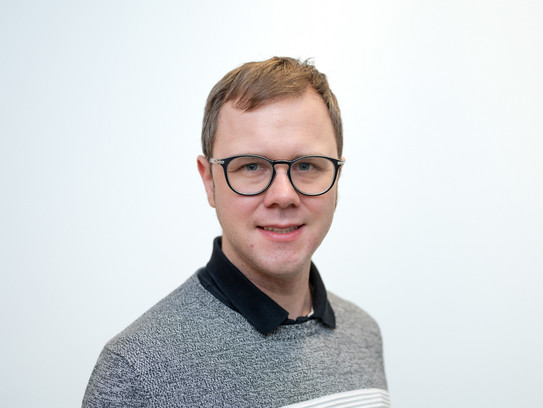
Paul Manns is an Assistant Professor of Optimization at TU Dortmund University's Department of Mathematics, appointed in 2021. His research specializes in mathematical optimization involving partial differential equations and integer constraints, with emphasis on regularization techniques and trust-region algorithms. Education includes: Ph.D. in Mathematics, TU Braunschweig (2019) Computational Engineering studies, TU Darmstadt Prior research experience includes positions at Heidelberg University, TU Braunschweig, and Argonne National Laboratory (USA), including a James H Wilkinson Fellowship. Recent publications develop novel methods for mixed-integer control problems, domain decomposition, and convergence analysis in non-convex optimization spaces.
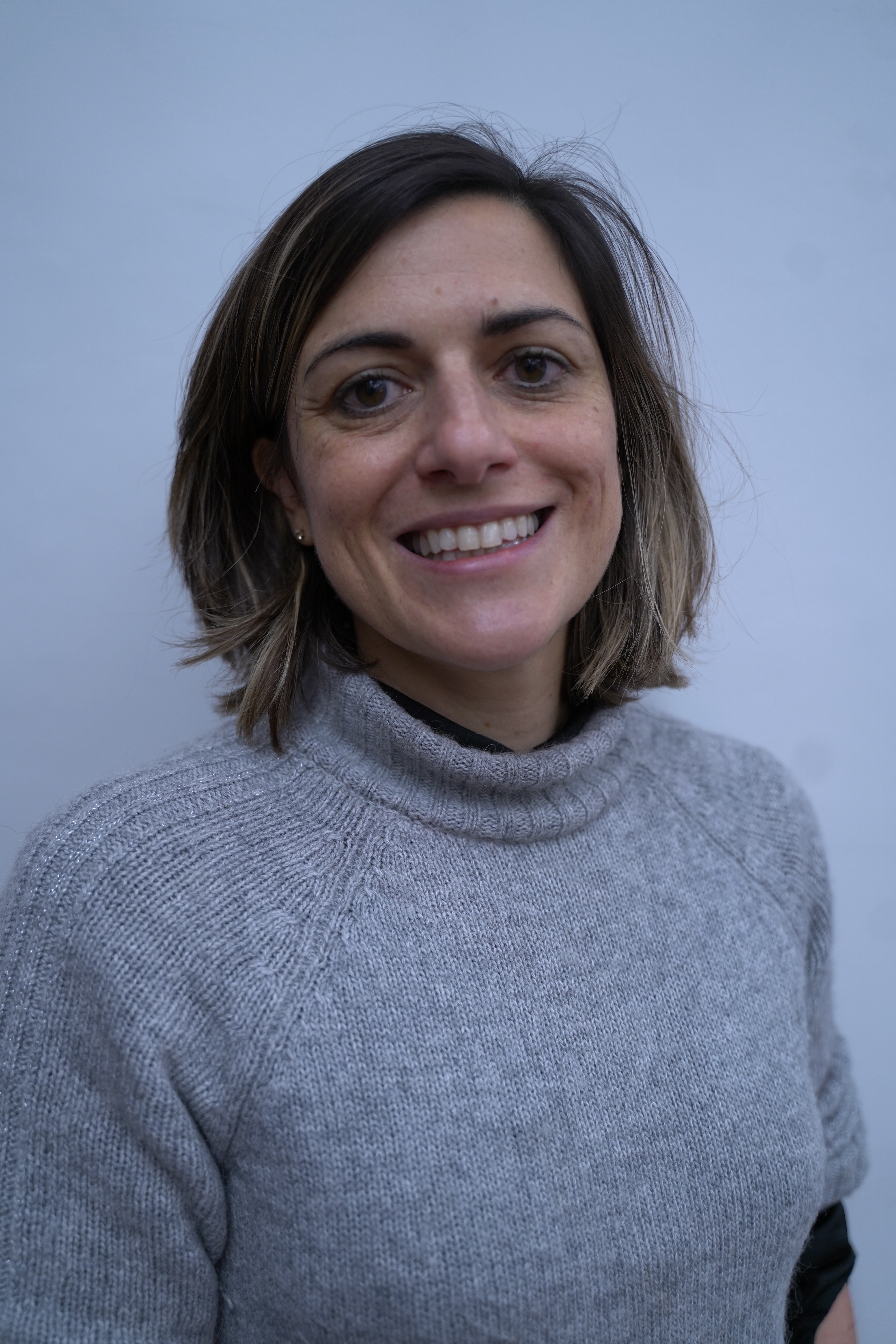
Dr. Virginia Agostiniani is Associate Professor of Mathematics at the University of Trento. Her research focuses on theoretical aspects of partial differential equations with applications to materials science and relativity. Agostiniani specializes in variational methods, Riemannian geometry, and mathematical physics. Her work investigates boundary value problems in overdetermined systems with connections to nematic elastomers and black hole physics.
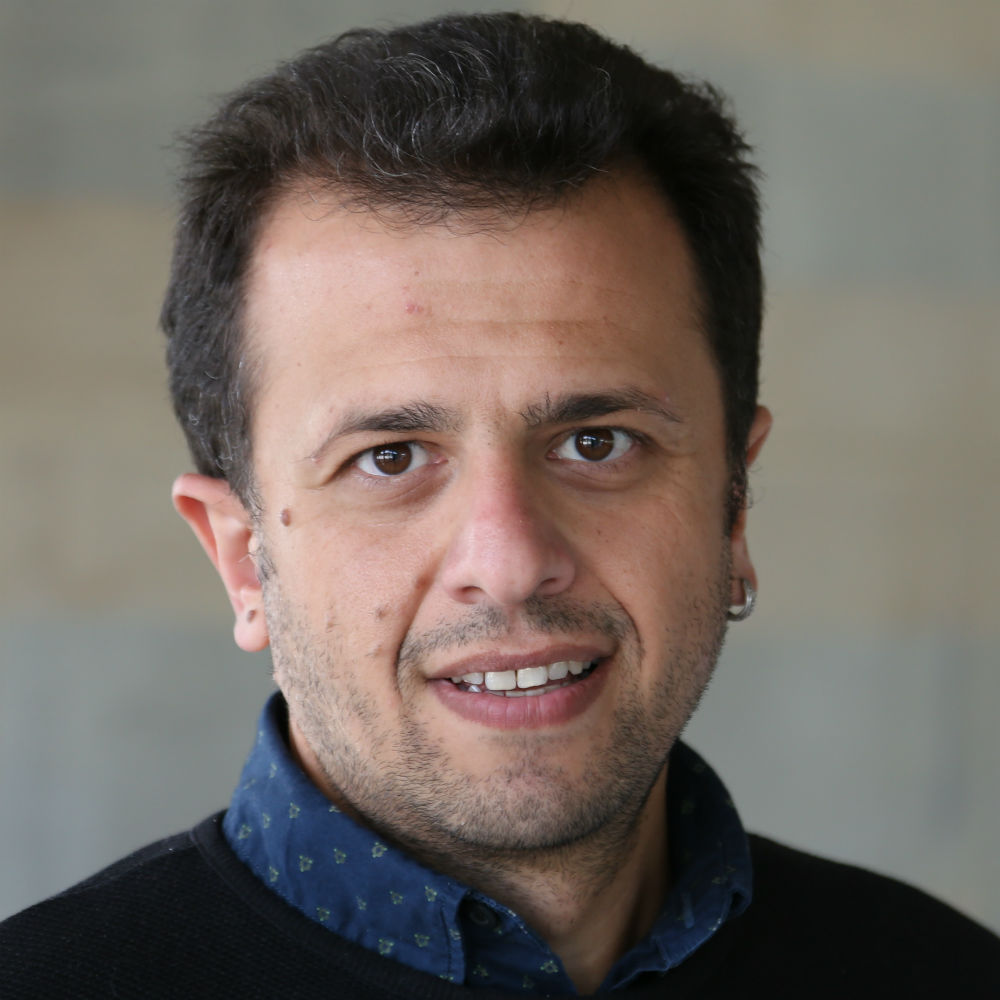
Dr. Murat Akman is a Senior Lecturer in the Department of Mathematical Sciences at the University of Essex, UK. He holds a PhD from the University of Kentucky (2014) and a BSc from Middle East Technical University (2006). His academic journey includes postdoctoral roles at the University of Connecticut, MSRI Berkeley, and the Instituto de Ciencias Matemáticas in Madrid. His research focuses on the intersection of harmonic analysis, elliptic/parabolic PDEs, potential theory, and geometric measure theory, with particular emphasis on variational methods, regularity theory, and geometric inequalities. His work explores topics such as free boundary problems, conformal densities, Brunn-Minkowski inequalities, and Minkowski-type problems. He has contributed to understanding the interplay between geometric structures and solutions to nonlinear PDEs. His recent publications highlight advancements in elliptic operator perturbations, boundary behavior of solutions, and the application of geometric measure theory to PDE analysis. Acknowledging his expertise, he has held fellowships at Institut Mittag-Leffler and MSRI Berkeley. His teaching and supervision activities reflect his dedication to academic mentorship, supported by an open-door policy at the University of Essex.
Axel Flinth is an Assistant Professor in the Department of Mathematics and Mathematical Statistics at Umeå University, focusing on mathematical foundations of machine learning for pattern recognition in large datasets. Education: PhD in Mathematics from Technische Universität Berlin (2018) His research centers on compressed sensing—reconstructing signals from incomplete data using structural assumptions—and equivariance in deep neural networks, investigating how data symmetries can be leveraged to enhance model performance. He actively contributes to geometric deep learning and statistical inference for spatio-temporal data through membership in specialized research groups. Recent publications (2022-2025) reveal a cohesive trajectory in mathematical optimization and symmetry-aware deep learning, with applications spanning computer vision (e.g., rotation-equivariant architectures for point clouds), wireless communication security, and signal reconstruction. His work consistently bridges theoretical mathematics with practical machine learning implementations. Scientific Awards: No awards documented in available sources Grants and Projects: Lead Researcher: Trade-offs in Nonconvex Learning (April 2022 - March 2027) Research Affiliations: Geometric Deep Learning Group Statistical Learning and Inference for Spatio-Temporal Data
Professor Dominique Vaufreydaz holds a position in Computer Science at Grenoble Alpes University and leads the Multimodal Perception and Sociable Interaction (M-PSI) team at the LIG laboratory. His academic career includes roles as Associate Professor (2005–2023) and Head of the M-PSI team. He specializes in multimodal perception, affective computing, and sociable human-robot interaction, with projects like ARAS dataset and TokenCut object discovery. Education details are not explicitly provided, but his research spans robotics, autonomous systems, and healthcare technologies. He has published extensively in top-tier conferences (CVPR, ICMI) and journals (ACM Transactions, IEEE TPAMI). Over 30 PhD students have been supervised, with current advisees exploring activity recognition, head motion generation, and emotion analysis. Teaching roles include 300+ hours annually across computer science courses (C++, databases, mobile programming) and numerical literacy for non-specialists. He co-leads the MOSIG Master's GVR specialty and manages transversal courses at the Grenoble Faculty of Economics. His labs, notably M-PSI, focus on smart spaces, ambient assisted living, and ethical teaching analytics. Notable collaborations include EU projects (FAME, CHIL) and industry partnerships like Orange Labs. His work bridges cognitive science and machine learning, with applications in healthcare and urban autonomous systems.
Professor Stamatina Iliodromiti is a Professor of Obstetrics and Gynaecology at Queen Mary University of London's Wolfson Institute of Population Health, where she serves as Unit Lead for Women's Health and Deputy Lead for the Centre of Public Health and Policy. She is also a Consultant Obstetrician and Gynaecologist at the Royal London Hospital with special expertise in reproductive endocrinology and menopause. Her educational background includes a PhD from the University of Glasgow, an MSc in Epidemiology from the London School of Hygiene and Tropical Medicine, and a Masters in Medical Education from the Karolinska Institute. After completing her training in Obstetrics and Gynaecology in Glasgow, she was appointed as a Senior Lecturer and Consultant in London in 2018. Professor Iliodromiti's research focuses on reproductive and perinatal epidemiology, with expertise in big data analysis, data linkage, metabolic medicine, and reproductive endocrinology. Her work spans reproductive health across the life course, cardiometabolic outcomes, and prediction modeling. She has published extensively in high-impact journals including The Lancet , Plos Medicine , European Heart Journal , and BMJ . Her recent publications demonstrate expertise in reproductive epidemiology, ethnic health disparities, menopause research, and pandemic-related pregnancy outcomes. She has contributed significantly to large-scale studies including the RECOVERY trial for COVID-19 treatments and the COMMA initiative for standardizing menopause research outcomes. She is actively involved in teaching and mentoring medical and postgraduate students, leading the module on life-course approach in sexual and reproductive health, and providing PBL (Problem-Based Learning) for medical students.
Pei-Yong Wang is a Professor in the Department of Mathematics at Wayne State University's College of Liberal Arts and Sciences. His office is located at 1111 FAB, and he can be contacted via phone (313-577-2479) or email (pywang@wayne.edu). Education Ph.D. in Mathematics, New York University (1999) Research Focus Professor Wang specializes in partial differential equations and harmonic analysis . His work centers on degenerate/singular elliptic/parabolic PDEs and free boundary problems, investigating: Existence and uniqueness of solutions Regularity and symmetric properties Applications in physics, engineering, and economics Publication Themes His research output predominantly explores free boundary problems and nonlinear elliptic equations , with consistent focus on theoretical foundations of PDEs. Recent works emphasize bifurcation phenomena, inhomogeneous formulations, and regularity analysis in multi-phase systems.
Alan Chang is an Assistant Professor of Mathematics at Washington University in St. Louis. His research focuses on geometric measure theory and harmonic analysis, exploring topics such as Nikodym sets, maximal functions, and fractal structures. He holds a Ph.D. in Mathematics from the University of Chicago (2020) and a B.A. from Princeton University (2014). Previously, he was an Instructor at Princeton University under Assaf Naor. Chang has been awarded the NSF Graduate Research Fellowship (2014) and the NSF Mathematical Sciences Postdoctoral Fellowship (2020, declined). His work includes grants like NSF Grant DMS-2247233 (2023–2026). His research interests span geometric measure theory, harmonic analysis, and fractal geometry. Notable contributions include studies on Besicovitch sets, decoupling theory, and the Whitney extension theorem. Chang’s publications address diverse areas such as analytic capacity, Minkowski sums, and Kakeya needle problems, reflecting his expertise in geometric and analytic methods. Grants: NSF Grant DMS-2247233 (2023–2026) Awards: NSF Graduate Research Fellowship (2014), NSF Postdoctoral Fellowship (2020, declined) Chang advises no listed students but has contributed to mentoring through his roles as an instructor and researcher. His work intersects with labs and teams focused on geometric analysis and harmonic functions.
Ari Stern is a Professor of Mathematics at Washington University in St. Louis , specializing in Geometric Numerical Analysis . His work bridges geometry, applied analysis, and computational mathematics, focusing on numerical methods that maintain global accuracy for differential equations through modern geometric principles. He earned his B.A. and M.A. in Mathematics from Columbia University and a Ph.D. in Applied and Computational Mathematics from Caltech (2009), advised by Jerrold E. Marsden and Mathieu Desbrun. Prior to WashU (2012), he was a postdoc at UCSD with Michael Holst. Research Interests : Geometric integration, finite element exterior calculus, symplectic geometry, and applications to physics and machine learning. His recent publications address multisymplecticity, functional equivariance, and hybrid finite element methods. Collaborations span topics from Alzheimer’s disease modeling via machine learning to Hamiltonian mechanics and geometric electrodynamics. Awards : NSF Grant (2019). Teaching : Courses include Numerical Methods for Differential Equations, Measure Theory, and Honors Mathematics.
Lia Bronsard is a Professor in the Department of Mathematics & Statistics at McMaster University. She holds a PhD from New York University (1988) under Robert V. Kohn and has held positions at Brown University, the Institute for Advanced Study, and Carnegie Mellon University before joining McMaster in 1992. She served as President of the Canadian Mathematical Society (2014–2016) and is a Fellow of the CMS (2018). Her research focuses on geometric flows, applied mathematics, and calculus of variations, with notable contributions to interface dynamics, vortices in superfluids, and superconductivity models. She has been a plenary speaker at major conferences, including SIAM (2016) and the Mathematical Congress of the Americas (2017). Education: Bacc., Université de Montréal (1983) M.S. & Ph.D., New York University (1988) Research Interests: Bronsard applies geometric flows to study reaction-diffusion systems, pattern formation, and grain boundaries. Her work on vortices in superconductors and liquid crystals has advanced understanding of phase transitions and material science. Key topics include Ginzburg-Landau models, isoperimetric problems, and nonlinear partial differential equations. Awards & Editorial Roles: 2010 Krieger–Nelson Prize Editorial Board Member: Nonlinear Analysis , Mathematics in Science and Industry , and Canadian Applied Math Quarterly Teaching & Academic Leadership: Bronsard teaches advanced courses in analysis and applied mathematics, including Real Analysis II, Functional Analysis, and graduate-level topics. Her academic leadership includes editorial roles and national society presidencies.
Dr. Lehana Thabane serves as Professor of Biostatistics at McMaster University's Faculty of Health Sciences, holding primary appointment in the Department of Health Research Methods, Evidence, and Impact. He concurrently holds leadership roles as Vice President of Research and Scientific Director at St. Joseph's Healthcare Hamilton, with cross-departmental affiliations spanning Pediatrics, Medicine, Surgery, Psychiatry, and multiple health science schools. His research integrates advanced biostatistical methodology with clinical applications across orthopedics, cardiology, and public health domains. Dr. Thabane pioneers frameworks for clinical trial design and evidence synthesis, with particular emphasis on osteoporosis management, fracture prevention systems, and healthcare delivery optimization through rigorous methodological approaches. Recent publication analysis reveals dominant themes in orthopedic trauma management (38%), infectious complications in surgical contexts (25%), and addiction medicine methodology (15%), consistently applying biostatistical innovation to complex clinical problems across diverse patient populations. His accolades include: 2020 Anne & Neil McArthur Annual Research Award Fellowships from American Statistical Association and Society for Clinical Trials International Statistical Institute membership Canadian Academy of Health Sciences fellowship Academy of Science of South Africa honorary membership Mentoring over 200 graduate students and junior faculty, Dr. Thabane directs biostatistics at St. Joseph's Healthcare while leading major collaborative initiatives including the Canadian Longitudinal Study on Aging. His editorial leadership as Editor-in-Chief of Pilot and Feasibility Studies shapes methodological standards across clinical research. Current work focuses on fracture management protocols, opioid treatment optimization, and cardiovascular outcomes through interdisciplinary teams bridging statistical methodology with clinical application across McMaster University and partner healthcare institutions.
Tapan Mukerji is a Professor (Research) at Stanford University with joint appointments in the Department of Energy Science & Engineering, the Department of Earth & Planetary Sciences, and the Department of Geophysics within the School of Earth Sciences. He co-directs the Stanford Center for Earth Resources Forecasting (SCERF), the Basin Processes and Subsurface Modeling (BPSM) consortium, and the Stanford Rocks and Geomaterials Project (SRGP), and previously co-directed the Stanford Rock Physics and Borehole Geophysics Project (SRB). His educational background includes: Ph.D. in Geophysics from Stanford University (1995) M.Sc.(Tech) in Geophysics from Banaras Hindu University, India (1989) B.Sc. in Physics from Banaras Hindu University, India (1986) Tapan Mukerji's research focuses on integrating rock physics, wave propagation physics, spatial data science, and machine learning to address challenges in remote sensing of subsurface systems, stochastic geomodeling, uncertainty quantification, and value of information analysis in Earth sciences. His work uses theoretical, computational, and statistical methods to discover fundamental relations between geophysical data and rock properties, quantify uncertainty in subsurface models, and address decision making under uncertainty. He is particularly interested in forging links between geosciences, engineering, and decision sciences, believing these interdisciplinary connections are critical for the future of energy resources research. His research has broad applications in hydrocarbon exploration, geothermal energy, carbon sequestration, and critical mineral exploration. His recent publications demonstrate a strong trend toward integrating advanced machine learning techniques with traditional geophysical methods. There's increasing focus on physics-informed neural networks, generative models for geological facies simulation, and uncertainty quantification in subsurface characterization. His work bridges the gap between theoretical rock physics and practical applications in energy resource development, with particular emphasis on making robust decisions under uncertainty. Professor Mukerji has received numerous scientific awards and recognitions: Karcher Award for Outstanding Young Geophysicist, Society of Exploration Geophysicists (2000) ENI Award 2014: New frontiers of Hydrocarbons - upstream, ENI - Italy (2014) Best paper, honorable mention, Society of Exploration Geophysicists (2020) Best paper, International Association of Mathematical Geosciences (2010) Multiple best paper awards from various geophysical societies Invited keynote speaker at numerous international conferences Haider Fellowship and Green Fellowship from Stanford University Professor Mukerji actively advises and mentors graduate students, serving as Doctoral Dissertation Advisor for Jaehong Chung and Jiayuan Huang, Doctoral Dissertation Reader for several students, and Postdoctoral Faculty Sponsor for Qi Hu and Suihong Song. His research has been supported by multiple industrial consortia including the Stanford Rock Physics and Borehole Geophysics Project (SRB), Stanford Center for Earth Resources Forecasting (SCERF), Basin Processes and Subsurface Modeling (BPSM), Stanford Rocks and Geomaterials Project (SRGP), and Smart Fields Consortium (SFC). He has also received funding from the Department of Energy and various fellowship programs throughout his career. Professor Mukerji co-directs several major research groups at Stanford including the Stanford Center for Earth Resources Forecasting (SCERF), the Basin Processes and Subsurface Modeling (BPSM) consortium, and the Stanford Rocks and Geomaterials Project (SRGP). These groups bring together faculty, researchers, and industry partners to tackle complex problems in subsurface characterization, reservoir modeling, and energy resource development. His labs focus on developing computational methods for integrating geophysical data with rock physics models, creating advanced uncertainty quantification frameworks, and building decision support tools for subsurface resource management.
Antoine Song is an Assistant Professor of Mathematics at the California Institute of Technology (Caltech). He earned his B.S. (2014) and M.S. (2015) from Pierre and Marie Curie University, followed by a Ph.D. from Princeton University in 2019. Before joining Caltech in 2022, he was a postdoctoral researcher at UC Berkeley and held a Clay Research Fellowship (2019-2024). His office is located in 177 Linde Hall and can be reached at 626-395-4323 or via email at aysong@caltech.edu. Song's research focuses on Differential Geometry and Geometric Analysis , with specific interests in minimal surfaces, harmonic maps, and their connections to representation theory, geometric group theory, and random matrices. His work explores geometric optimization problems, stability phenomena in manifold theory, and probabilistic methods in geometry. His recent publications predominantly investigate minimal hypersurfaces, hyperbolic manifolds, and geometric flows. Common themes include stability analysis in Riemannian geometry, entropy quantification in topological spaces, and variational methods in geometric PDEs. The works frequently bridge geometric analysis with topology and probability theory. Awards and Fellowships: Sloan Research Fellowship Clay Research Fellowship (2019-2024) Song maintains an active research group exploring connections between geometric analysis and other mathematical fields, though no specific students or grants are detailed in available sources.
Graeme Trousdale is a Professor of Cognitive Linguistics at the University of Edinburgh, affiliated with the School of Philosophy, Psychology and Language Sciences. He holds a Personal Chair and has been at the university since 1995. His academic roles include Teaching Director in LEL and Associate Dean (Widening Participation) in CAHSS. Education: PhD (2000), MSc (1994), and BA (1993) from the University of Edinburgh and University of Manchester. Research Focus: Specializes in cognitive linguistics, historical linguistics, and the intersection of language and music. Key areas include constructionalization, morphological change, and diachronic grammar. He leads projects like Constructionalization: a usage-based approach to the emergence of grammar (ongoing since 2011) and co-ordinates the UK Linguistics Olympiad. Grants & Projects: Principal Investigator on multiple grants including the British Academy-funded UK Linguistics Olympiad (2012–2013) and the Innovation Initiative grant (2015–2016). Active in collaborative projects like Telling Stories (2017–2018) focusing on narrative analysis in education. Public Engagement: Leads initiatives such as the Mind Games workshop to integrate linguistics and mathematics in schools. Active in science communication through events like Talking Maths in Public .
Jill Adler is a Professor of Mathematics Education at the University of the Witwatersrand in South Africa and an Honorary Research Fellow at the Department of Education, Oxford University . Her career spans large-scale teacher development projects, including the Wits Maths Connect Secondary (WMCS) Project and the Nuffield-funded “Developing Language-Responsive Mathematics Classrooms” . She served as President of the International Commission on Mathematical Instruction (ICMI) from 2017-2020 and held the SARChI Mathematics Education Chair (2010-2019). Education: PhD in Mathematics Education. Awards: 2015 ICMI Hans Freudenthal Medal 2012 ASSAf Gold Medal for Science in the Service of Society 2015 Svend Pedersen Lecture Award 2003 Vice Chancellor’s Research Award 2003 Vice Chancellor’s Academic Citizenship Team Award Research Interests focus on mathematics teacher development in multilingual and resource-constrained settings. She has pioneered frameworks like Mathematical Discourse in Instruction (MDI) and Mediating Primary Mathematics (MPM) to analyze classroom practices, emphasizing coherence in explanations, representation transformations, and language-responsive pedagogy. Her work bridges curriculum reform , pedagogical theory , and teacher identity formation . Publications highlight trends in language-responsive teaching , variation theory , and teacher professional development . Key themes include exemplification strategies , mathematical discourse , and policy implementation challenges in diverse educational systems.