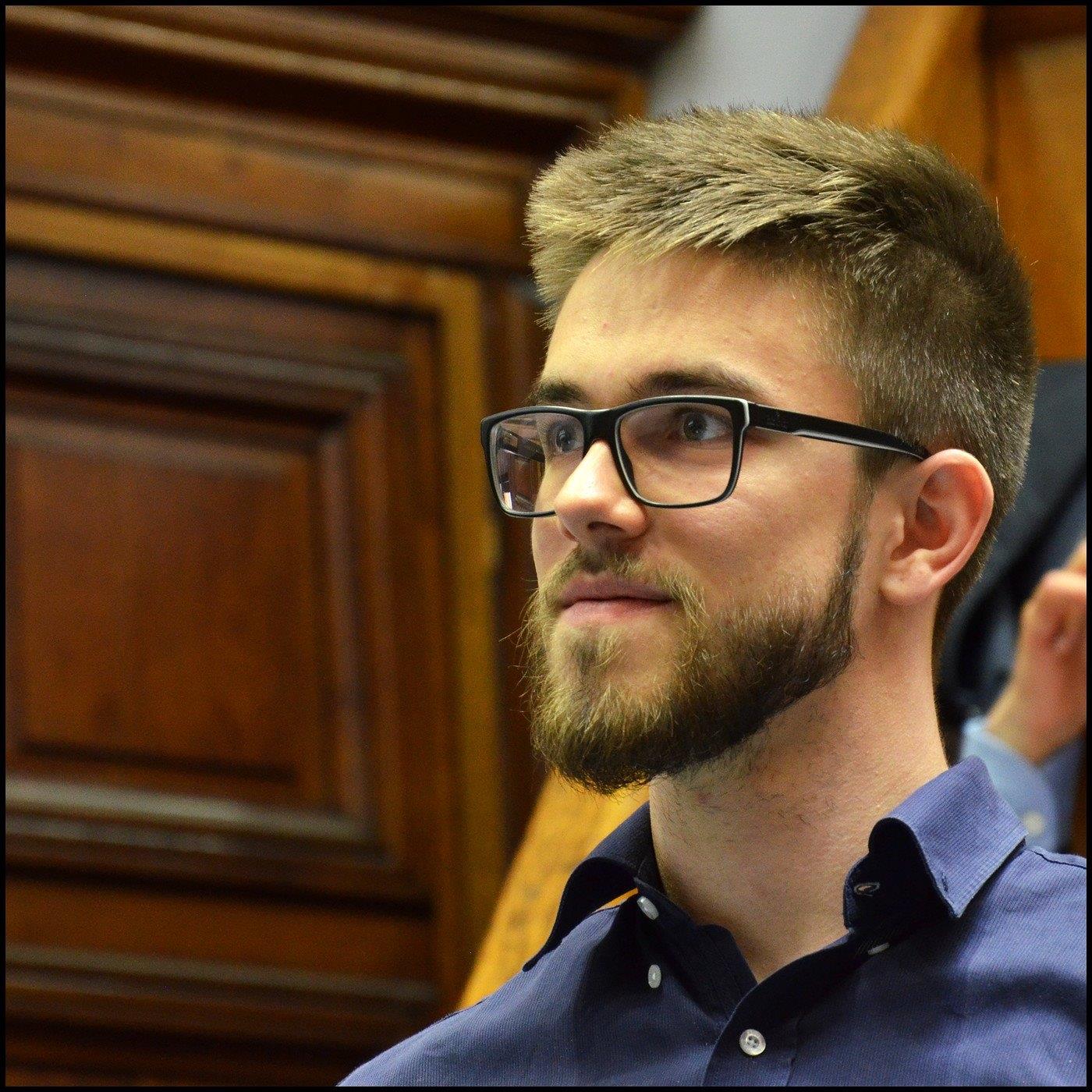
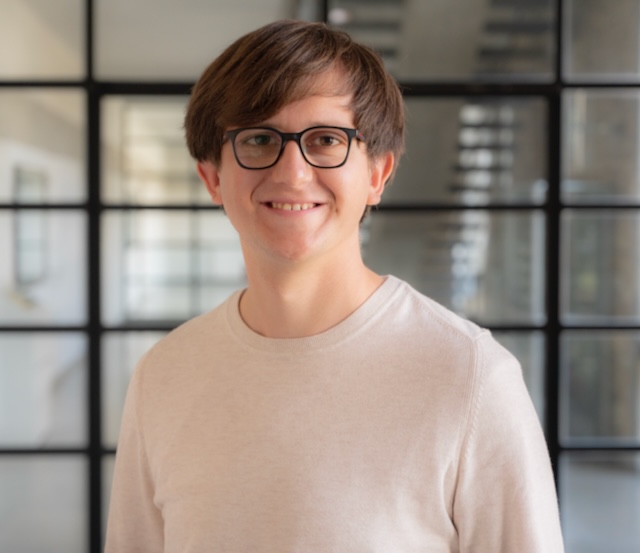
Gregorio Baldi is a Research Fellow (Chargé de Recherche) at the French National Center for Scientific Research (CNRS), affiliated with the Institut de Mathématiques de Jussieu - Paris Rive gauche. His research centers on Arithmetic Geometry , with expertise in Shimura varieties, variational Hodge theory, and the Zilber-Pink conjecture. He also investigates connections between homogeneous dynamics, Teichmüller dynamics, and geometric Diophantine problems. Baldi has authored significant publications in premier mathematical journals, including: Annals of Mathematics (2023, 2025) Inventiones mathematicae (2024) Ergodic Theory and Dynamical Systems (2025) His recent work (2023–2025) focuses on Hodge loci distribution, non-arithmetic ball quotients, and o-minimality in Hodge theory, demonstrating consistent contributions to foundational problems in geometry and number theory.
Prof. Dr. Ralf Kornhuber is a faculty member at the Freie Universität Berlin , affiliated with the Department of Mathematics and Computer Science and the Numerical Analysis of Partial Differential Equations institute. His research focuses on advanced numerical methods for multiscale problems and applications in geosciences, biomechanics, and materials science. Education: Dr. rer. nat. in Mathematics (1986) and Diploma in Mathematics (1979), both from TU Berlin. Academic Career: Senior Professor at Freie Universität Berlin (since 2023), Full Professor (C4) at the same institution (1998-2022), and prior roles at University of Stuttgart, WIAS Berlin, and TU Berlin. Research Interests: He specializes in adaptive finite element methods, subspace correction techniques, and multiscale modeling of partial differential equations (PDEs). His work addresses nonsmooth elliptic/parabolic problems, geometric PDEs, and domain decomposition strategies, with applications spanning geoscience simulations, biomechanics, and material science. Scientific Boards & Committees: Chair of CRC 1114 Scaling Cascades in Complex Systems (2021-2022), leadership roles in MATH+, Berlin Mathematical School, and Helmholtz Research School GeoSim, alongside editorial positions at journals like SIAM Journal on Multiscale Modeling and Simulation . Recognition: Awarded the International Multigrid Prize in 2022 for collaborative contributions to multigrid methods.
Samir Adly serves as a Professor and doctoral advisor at a German academic institution, as evidenced by his role supervising PhD candidates through the eDiss electronic dissertation platform. His academic activities include serving as a referee for doctoral theses. Professor Adly specializes in advanced mathematical research with focus areas in variational problems and discrete geometry. His work particularly examines convergence behavior in parametric variational problems and discrete minimal surfaces, bridging theoretical mathematics with computational applications. His research shows strong connections to differential geometry and numerical analysis methodologies. Professor Adly has successfully supervised at least one doctoral candidate to completion. Henrik Schumacher completed his dissertation titled 'Variational Convergence and Discrete Minimal Surfaces' under Adly's supervision in November 2015. This work investigated sequences of variational problems arising from discretizations of infinite-dimensional systems.
Professor Michael Schroeder is a Professor in Bioinformatics at the Biotechnology Center (BIOTEC) and Department of Computing at Technische Universität Dresden. He serves as Director of the Biotechnology Center since 2012, with specific periods as Director (2012-2014, 2019-2021), and Director of the Center for Molecular and Cellular Bioengineering (CMCB) from 2022-2023. He is also CSO of Transinsight.com since 2006 and co-founder of PharmAI GmbH since 2019. His research focuses on developing machine learning algorithms exploiting large protein structure and sequence data to improve diagnosis and treatment of disease. Key areas include: Computational drug repositioning using networks, structures, text, and ontologies Pancreas cancer drug and biomarker prediction through AI analysis of blood samples (90%+ accuracy) Antibiotic resistance analysis in wastewater E. coli through genomic variations Development of novel lead compounds for cancer chemotherapy resistance, autoimmune disease, and Chagas disease Prof. Schroeder's publication record demonstrates consistent application of network analysis, structural bioinformatics, and machine learning to solve biomedical problems, with particular emphasis on pancreatic cancer and drug repositioning. His work bridges computational approaches with experimental validation through collaborations with medical researchers. Notable achievements include: Publication of over 230 scientific papers Hirsch index over 45 on Google Scholar Two granted patents Development of PLIP, a widely used open-source tool for analyzing molecular interactions Co-founding pharmAI GmbH, focusing on structure-based drug-target prediction Prof. Schroeder has supervised over 25 PhD students, with 10 receiving distinctions. Eight former group members have become professors or group leaders. His lab is currently funded by multiple projects including Kiwi, Ebira, and Scads.ai from BMBF, as well as EU and DFG grants. The Schroeder Group maintains extensive collaborations worldwide, including Yves Moreau (Leuven) for autoimmune disease research, Gildardo Rivera Sanchez (Reynosa) for Chagas disease, and Christian Pilarsky (Erlangen) for cancer research, demonstrating his strong international network and interdisciplinary approach.
Dr. Ian Henderson is a Reader (equivalent to Associate Professor) in Plant Sciences at the University of Cambridge, where he has maintained an active research program since 2008. His work focuses on fundamental mechanisms of plant genome organization, transmission, and evolution. His research interests span several interconnected areas: Meiotic recombination mechanisms in plants Centromere structure, function, and evolution Epigenetic regulation of genome stability Transposable element dynamics and impact on genome architecture Chromatin organization in plant genomes Dr. Henderson's laboratory employs Arabidopsis thaliana as a primary model system but extends findings to other plant species including maize and wheat. His research has revealed critical insights into how chromatin structure influences crossover formation during meiosis, the evolutionary dynamics of centromeres across plant species, and the role of epigenetic modifications in regulating genome stability. Recent work has utilized advanced genomic technologies including CRISPR-based approaches, long-read sequencing for complex genomic regions, and sophisticated computational analysis. His publication record demonstrates consistent high-impact research output, with numerous papers in top-tier journals including Nature Communications, PNAS, and Nature Plants. His work shows an increasing trajectory of research impact, with multiple significant publications appearing in 2025. The research often involves international collaborations across Europe and North America. Dr. Henderson's lab provides training opportunities for graduate students and postdoctoral researchers interested in plant genomics, meiosis, and epigenetics. Students in his laboratory develop expertise in molecular genetics, genomic analysis, and computational approaches to complex biological problems. The research has implications for both fundamental biological understanding and potential applications in plant breeding and agricultural biotechnology.
Dominik Stöger is an Assistant Professor (tenure-track) in the Department of Mathematics at KU Eichstätt-Ingolstadt since 2021, affiliated with the Mathematical Institute for Data Science and Machine Learning (MIDS). His research bridges mathematical theory and data science applications. His educational background includes: B.Sc. in Mathematics, Technical University of Munich (2013) M.Sc. in Mathematics, Technical University of Munich (2015) Ph.D. in Mathematics, Technical University of Munich (2019) Stöger's research centers on mathematical foundations of data science, with emphasis on non-convex optimization in machine learning, theoretical analysis of overparameterized models, and low-rank matrix recovery. He combines optimization theory and high-dimensional probability to develop rigorous guarantees for modern algorithms, addressing critical challenges in deep learning theory. His recent publications (2020-2025) demonstrate consistent output in top venues including COLT, NeurIPS, and ICLR, with particular focus on implicit regularization phenomena and non-convex recovery guarantees. The 2025 pipeline shows active work extending theoretical boundaries in matrix sensing and neural network analysis. Stöger has received significant recognition: NeurIPS 2021 Spotlight Paper (top 3% of submissions) COLT 2025 paper presentation As a tenure-track faculty member, he maintains active collaborations across institutions (USC, TUM) and likely advises graduate students. His research program shows strong momentum with multiple concurrent projects advancing theoretical machine learning. He contributes to the research ecosystem through affiliation with MIDS, fostering interdisciplinary work in mathematical data science at KU Eichstätt-Ingolstadt.
Farren Isaacs is a Professor of Molecular, Cellular and Developmental Biology at Yale School of Medicine with extensive affiliations across Yale University. His primary appointments include the Department of Molecular, Cellular and Developmental Biology, Microbiology, and the Yale Cancer Center. He also participates in the Center for RNA Science and Medicine, Genomics, Genetics and Epigenetics Program, Molecular Cell Biology, Genetics and Development, Yale Combined Program in the Biological and Biomedical Sciences (BBS), and Yale Ventures. Dr. Isaacs received his BS in Bioengineering from the University of Pennsylvania, followed by MS and PhD degrees in Biomedical Engineering and Bioinformatics from Boston University. He completed postdoctoral training at Harvard Medical School before establishing his independent research program at Yale. His research focuses on developing and applying genome engineering technologies to understand and reprogram biological systems. His lab has pioneered approaches like MAGE (Multiplex Automated Genome Engineering) and has made significant contributions to genome recoding, CRISPR-based editing, and synthetic genetic circuit design. Recent work includes engineering genomically recoded organisms with simplified genetic codes and developing precision multiplexed base editing techniques with potential therapeutic applications. Dr. Isaacs' publication record demonstrates sustained innovation in synthetic biology and genome engineering, with high-impact papers spanning from foundational work in the early 2000s to multiple 2025 publications in journals like Nature, Nature Communications, and Science. His research trajectory shows a clear progression from developing basic genome engineering tools to applying these technologies to increasingly complex biological problems. Beckman Young Investigator Award (2012) Rising Young Stars of Science (2008) Dr. Isaacs maintains an active research program with multiple current grants supporting work in genome engineering and synthetic biology. His lab trains graduate students and postdoctoral fellows in cutting-edge genomic technologies while fostering interdisciplinary collaborations across Yale and with external institutions. The lab operates across two locations - at Yale's main Science Hill campus and at the West Campus facility. The Isaacs Lab focuses on developing next-generation genome engineering technologies and applying them to fundamental biological questions and potential therapeutic applications. Current research directions include expanding the genetic code, developing precision editing tools, and creating synthetic biological systems with novel properties and enhanced biocontainment features.
Dr. Nallakkandi Rajeevan is a Senior Research Scientist in the Department of Biomedical Informatics & Data Science at Yale School of Medicine, where he also serves as Associate Director for Bioinformatics at the Yale Center for Medical Informatics. He holds additional affiliations with the Genomics, Genetics, and Epigenetics Program at Yale Cancer Center and the Yale-BI Biomedical Data Science Fellowship. Dr. Rajeevan received his B.E., M.S., and Ph.D. from Indian Institute of Science, Bangalore, India, with educational background in Electrical Engineering and Electronics and Communications. He completed a post-doctoral fellowship in Nuclear Medicine from University of Massachusetts Medical Center in 1993. His research focuses on applying theoretical computer science, algorithm development, statistical estimation theory, and biostatistics to problems in genomics, bioinformatics, nuclear medicine, and functional brain imaging. Dr. Rajeevan has established a robust research program analyzing veteran health data, particularly related to infectious diseases and post-acute outcomes. His work bridges computational methods with clinical applications to generate actionable insights for healthcare delivery and policy. Dr. Rajeevan's recent publications (2023-2025) demonstrate a strong focus on methodologically rigorous studies of COVID-19 outcomes using target trial emulation approaches. His research spans vaccine effectiveness, post-COVID conditions, healthcare utilization patterns, and comparative mortality analysis across respiratory viruses, primarily using Veterans Health Administration data. Senior Member, Institute of Electrical and Electronics Engineers (IEEE), 2021 Lifetime Service Award, Indo-American Society of Nuclear Medicine, 2010 Dr. Rajeevan maintains an active research program with numerous collaborations, particularly with researchers like Mihaela Aslan, Lei Yan, and Hongyu Zhao. His interdisciplinary approach combines computational expertise with clinical insights to address complex questions in public health and healthcare delivery, with particular emphasis on generating real-world evidence to inform clinical decision-making.
Professor Alexander Mielke is a leading applied mathematician at the Weierstrass Institute for Applied Analysis and Stochastics (WIAS) in Berlin, with extensive involvement in Germany's premier mathematical research initiatives. His career centers on developing rigorous mathematical frameworks for complex physical phenomena, particularly through leadership roles in major DFG-funded programs including Priority Programmes and Collaborative Research Centers. His research spans critical areas of modern applied mathematics: Multiscale modeling of material behavior Mathematical theory of plasticity and hysteresis Continuum mechanics of multifield systems Pattern formation in coupled differential equations Variational methods for rate-dependent processes Professor Mielke's scientific leadership is demonstrated through his role as speaker of Priority Programme SPP 1095 'Analysis Modeling and Simulation of Multiscale Problems' and Collaborative Research Center SFB 404 'Multifield Problems in Continuum Mechanics'. Currently, he drives research as a participating scientist in the Cluster of Excellence MATH+ and sub-project manager for multiple Collaborative Research Centers, maintaining WIAS's prominence in mathematical research. His work consistently addresses fundamental challenges in connecting microscopic mechanisms to macroscopic material properties. Through the Berlin Mathematical School and MATH+, Professor Mielke actively mentors the next generation of applied mathematicians while securing sustained DFG funding for cutting-edge research. His collaborative approach spans theoretical development, numerical implementation, and physical application, particularly in materials science and engineering contexts.
Prof. Dr. Korbinian Schneeberger is a Research Professor and Group Leader at the Department of Plant Developmental Biology, Max Planck Institute for Plant Breeding Research in Cologne, Germany. His research focuses on genome plasticity and computational genetics, developing cutting-edge technologies to explore genome evolution. He leads a multidisciplinary team consisting of bioinformaticians, biologists, and biotechnologists driven by curiosity and passion for new genomic technologies. Dr. Schneeberger's research group pioneers genomic biotechnology for crop biology, addressing real-world problems in genomics-assisted science and breeding using Arabidopsis, potato, and fruit trees as model systems. They study genomic differences, how to find and describe them, and their relevance to phenotype. The group specializes in single-cell sequencing technologies to understand controlled (recombination) and uncontrolled (mutations) events that drive genomic diversity. His research spans four main areas: Optimizing Plant Performance by Mapping the Interface between Development and Metabolism, Plant Microbiota Metabolic Networks and Edaphic Adaptation, Synthetic and Reconstruction Biology, and Theoretical Plant Biology and Data Science. The group has developed several important bioinformatics tools including SyRI for finding genomic rearrangements, plotsr for visualization, SHOREmap for mapping-by-sequencing, and findGSE for genome size estimation. Genome Assembly: Developing new methods for genome assembly, particularly using long-read sequencing data Genomic Variation: Studying mutation accumulation and its role in evolution and adaptation Computational Genetics: Bridging genotype and phenotype using next-generation sequencing Association Studies: Creating methods that associate morphological differences to genomic differences Dr. Schneeberger's recent publications focus on somatic mutations in fruit trees, pan-genome analysis of Arabidopsis, and chromosome-scale genome assembly of potato. His work has significant implications for understanding plant evolution and improving crop breeding strategies. He mentors several PhD students and postdocs, with alumni who have gone on to successful careers in academia and industry. His laboratory maintains the Plant Metabolism and Metabolomics Facility and an Imaging Platform.
Hidde Schönberger is a mathematical researcher at Katholische Universität Eichstätt-Ingolstadt, affiliated with the Faculty of Mathematics and Geography within the Department of Mathematics. He works as part of the Chair of Analysis research team, focusing on advanced theoretical mathematics with applications to complex systems. His primary research interests center around Calculus of Variations , Partial Differential Equations , Nonlocality , Inverse Problems , and Fractional Derivatives . Schönberger's work bridges theoretical mathematics with practical applications, particularly in developing mathematical frameworks for nonlocal phenomena and fractional calculus. His research has significant implications for modeling complex physical systems where traditional local models are insufficient. Analysis of his publication record from 2019-2024 reveals a consistent focus on nonlocal mathematical structures, with increasing specialization in fractional calculus and variational methods. His work demonstrates strong international collaboration, particularly with researchers from Utrecht University and other European institutions. The publications show progression from foundational work on variational obstacle problems to sophisticated analyses of nonlocal gradients and fractional models. Graduate School of Natural Sciences Best Master's Thesis Award 2021-2022, Utrecht University (Sept. 2022) Young Talent Incentive Award from the Royal Dutch Society of Sciences, Koninklijke Hollandsche Maatschappij der Wetenschappen (Nov. 2017) Schönberger has established himself as a promising researcher in mathematical analysis through his productive publication record and recognition from academic institutions. His work continues to contribute to the theoretical foundations of nonlocal mathematical models, with potential applications across physics, engineering, and data science.