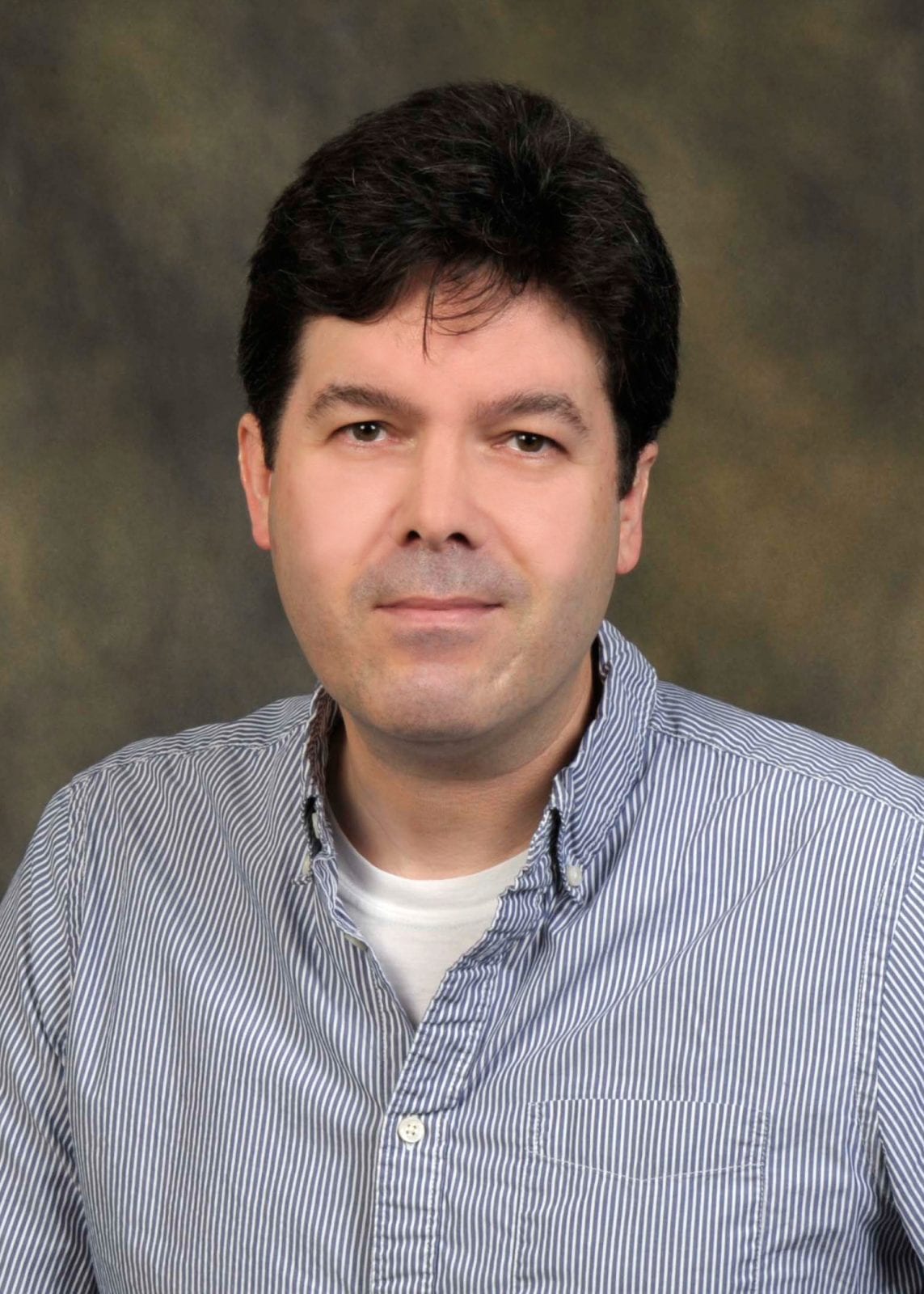
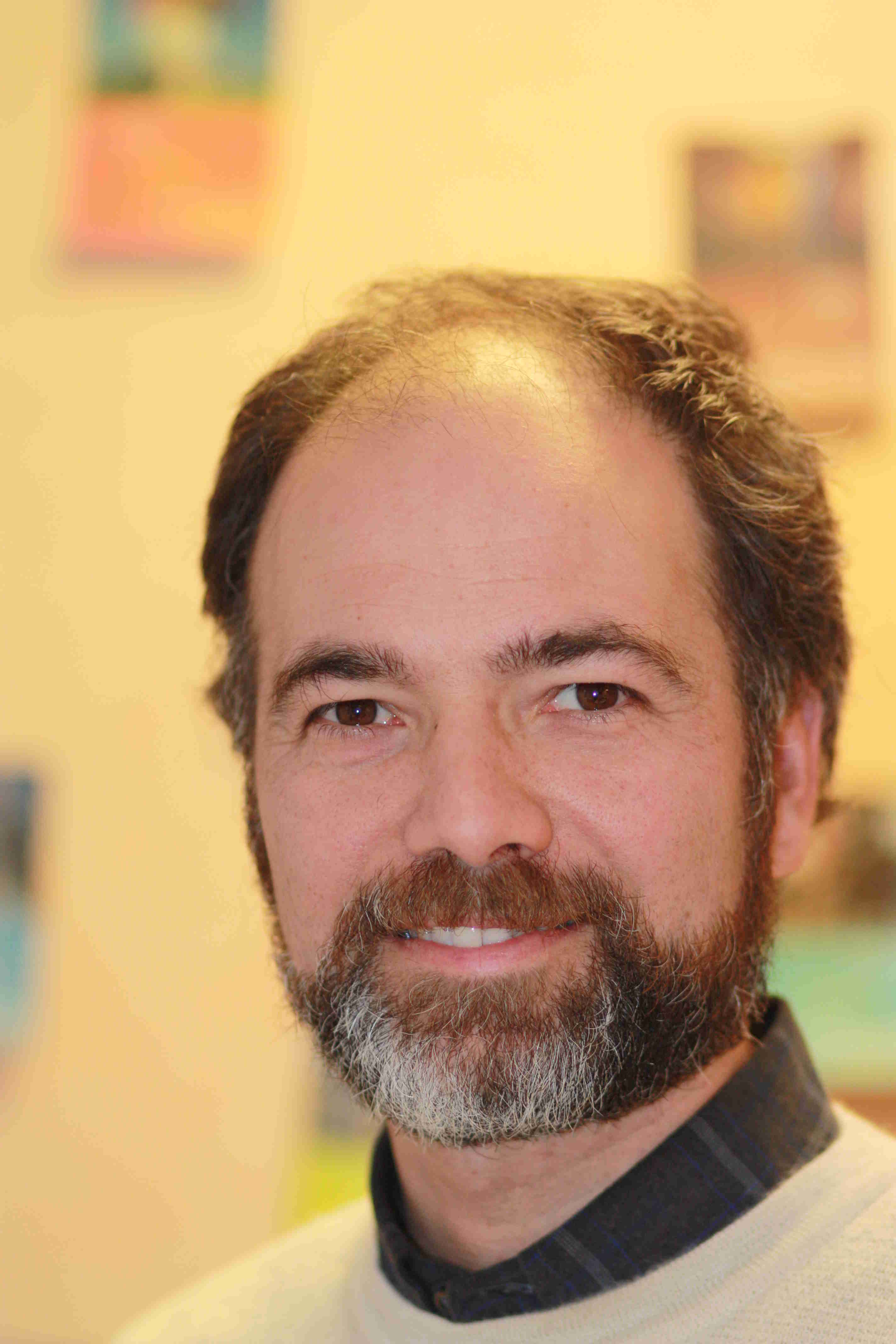
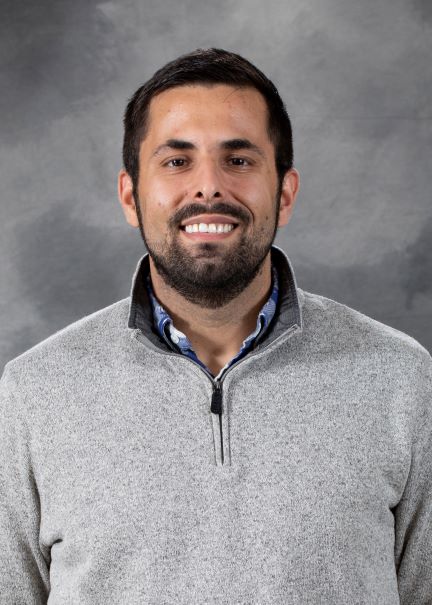
Jason Swanson is an Associate Professor in the Department of Mathematics at the University of Central Florida, specializing in stochastic processes and probability theory. His research encompasses stochastic differential equations, fractional Brownian motion, and the foundations of probability. Recent work includes developing the iterated Dirichlet process for Bayesian inference and extending representations for row-exchangeable arrays. He maintains an active research program connecting mathematical logic with probability theory. Teaching responsibilities include graduate courses in Measure and Probability (MAA 6238) and undergraduate probability (MAP 4113). His lecture notes on measure-theoretic probability are publicly available.
Melvin Leok is a Professor of Mathematics at the University of California, San Diego (UCSD). He directs the Computational Geometric Mechanics group, affiliated with the Center for Computational Mathematics and the Computational Science, Mathematics, and Engineering (CSME) Program. His research focuses on computational geometric mechanics, combining differential geometry and numerical analysis to develop stable and robust methods for modeling and controlling engineering systems. Leok holds a Ph.D. in Control and Dynamical Systems from Caltech (2004). Before joining UCSD in 2009, he was an assistant professor at Purdue University and a visiting researcher at Caltech and the University of Michigan. He has received prestigious awards, including the Simons Fellowship, DoD Newton Award, and NSF CAREER Award. His research interests include numerical differential equations, geometric control theory, and computational methods for interconnected systems. He has authored over 100 publications and serves on editorial boards for journals like Journal of Nonlinear Science . Leok teaches advanced courses such as optimization on manifolds and numerical analysis, emphasizing geometric principles. Key achievements include co-authoring the monograph Global Formulations of Lagrangian and Hamiltonian Dynamics on Manifolds , developing variational integrators for mechanical systems, and leading projects in geometric uncertainty propagation and structure-preserving algorithms for plasma physics. He actively collaborates on NSF-funded initiatives like the TILOS AI Research Institute. Leok advises doctoral students, including Brian Tran, who won the Chancellor's Dissertation Medal. He also mentors postdoctoral researchers through the Alexander von Humboldt Foundation's Feodor Lynen Program.
Professor Massimiliano Gubinelli is the Wallis Professor of Mathematics at the University of Oxford and a Professorial Fellow at St. Anne's College. He leads the Stochastic Analysis Group within the Mathematical Institute, where his research focuses on stochastic analysis, constructive quantum field theory, and the intersection of probability theory with partial differential equations (PDEs) and renormalization group methods. His work spans statistical mechanics of multiscale systems, analysis of PDEs with random terms, homogenisation theory, mathematical quantum mechanics, path-integral formalisms, and non-commutative probability/geometry. He has pioneered paracontrolled distribution techniques to study singular stochastic PDEs and explored rough paths in ramification and transport equations. Recent publications highlight advancements in the sine-Gordon model via stochastic quantization, nonlinear PDEs with modulated dispersion, and ρ-irregularity in stochastic systems. His research bridges stochastic analysis, quantum field theory, and PDEs, emphasizing pathwise behavior and renormalization. Scientific Awards Junior member of the Institut Universitaire de France (2013–2018) Invited session speaker at the 2018 International Congress of Mathematicians (ICM) in Rio He contributes to scientific software development as a lead developer of TeXmacs , an open-source platform for technical documents, and teaches courses such as C8.1 Stochastic Differential Equations (MT22). No formal student advisement or grant details are provided.
Prof. Mihai Nica is an Assistant Professor in the Department of Mathematics and Statistics at the University of Guelph, affiliated with the CARE-AI institute and Vector Institute. His research focuses on probability theory, stochastic processes, and their applications to machine learning, particularly deep neural networks (DNNs). He explores scaling limits of DNNs, numerical methods using neural networks, and phase transitions in high-dimensional learning problems. Education: B.Math in Pure & Applied Math with Physics Option, University of Waterloo PhD in Mathematics, Courant Institute of Mathematical Sciences, New York University Postdoctoral Fellow at University of Toronto (supervised by Jeremy Quastel) Research Interests: His work bridges mathematical theory and practical AI applications, emphasizing topics like the neural tangent kernel, KPZ universality class, and stochastic processes in machine learning. Notable contributions include studies on neural network dynamics, random matrices, and directed polymers. Publications: Over 15 peer-reviewed articles in journals like Communications in Pure and Applied Mathematics and Electronic Journal of Probability , with a focus on theoretical foundations of AI and stochastic systems. Recent work explores infinite-width limits of neural networks and their connections to differential equations. Labs/Teams: Affiliated with CARE-AI (bridging mathematics, engineering, and philosophy) and the Vector Institute, fostering interdisciplinary collaborations.
Prof. Dr. Wolfgang Reichel is a faculty member at the Karlsruhe Institute of Technology (KIT) , affiliated with the Department of Mathematics and leading the Workgroup Nonlinear Partial Differential Equations . He serves as deputy speaker of the Collaborative Research Center (CRC) 1173 "Wave Phenomena: Analysis and Numerics", and is a speaker for the KIT-Center MathSEE "Mathematics in Sciences, Engineering, and Economics". His research focuses on nonlinear partial differential equations, mathematical modeling, and numerical analysis of wave phenomena. His workgroup includes postdocs, doctoral researchers, and master students, and he collaborates with colleagues like Thomas Bartsch, Bernd Kawohl, Michael Plum, Guido Sweers, and Tobias Weth. Regular events organized by Prof. Reichel include the Karlsruhe PDE-Seminar and annual Nonlinear PDE Days summer/winter schools. He has taught courses such as Rand- und Eigenwertprobleme, Functional Analysis, and Analysis of PDEs across multiple semesters. Scientific publications reveal a focus on nonlinear wave equations (e.g., Maxwell's, Klein-Gordon, Lugiato-Lefever), soliton dynamics, frequency comb generation, and symmetry properties in elliptic PDEs. Articles often address existence proofs, stability analysis, and numerical methods for wave phenomena in periodic media and nonlinear optics. Collaborative work spans institutions like MacMaster University, University of Stuttgart, and University of Connecticut.
Stefano Scialo' is an Associate Professor in the Department of Mathematical Sciences "G.L. Lagrange" (DISMA) at the Polytechnic University of Turin. He is also a member of the Interdepartmental Center Ec-L - Energy Center Lab and serves as the contact person for the Bachelor's Degree Program in Mathematics for Engineering (L3). His academic journey began with a Master’s in Aerospace Engineering (2007), followed by a PhD in Mathematics for Engineering (2014), both from the same institution. After his PhD, he held postdoctoral and Assistant Professor positions at DISMA before being promoted to Associate Professor. Education: PhD in Mathematics for Engineering, Politecnico di Torino, 2014 Master in Aerospace Engineering, Politecnico di Torino, 2007 His research focuses on advanced numerical methods for partial differential equations, particularly in the context of complex multiscale and multiphysics systems. Key areas include the Virtual Element Method (VEM), domain decomposition techniques based on PDE-constrained optimization, and the simulation of flows in fractured porous media. He has made significant contributions to 3D-1D coupled problems, with applications in geosciences and biomedical modeling such as tumor-induced angiogenesis. His methodological work emphasizes robustness, scalability, and applicability to non-conforming and polygonal meshes, enabling high-performance computing solutions. The trend in his recent publications reveals a strong emphasis on developing and analyzing mixed virtual element methods, optimization-based coupling strategies, and their applications to engineering and biological systems. His work bridges theoretical numerical analysis with practical implementations in fluid dynamics and subsurface flow. Scientific Contributions: Principal Investigator of the FREYA project (2023–2026) on hybrid numerical approaches for fault reactivation. Coordinator of the INdAM-GNCS research project (2018–2019). Member of the research group "Numerical Analysis and Scientific Computing" at DISMA. Stefano Scialo' actively supervises doctoral students, including Matteo Trombini in the PhD program in Mathematical Sciences. He teaches a range of courses such as Advanced Scientific Programming in MATLAB, Numerical Methods and Scientific Computing, and specialized topics on Virtual Element Methods. He also contributes to curriculum development and academic governance through roles in doctoral colleges and degree program committees, including those for Mathematical, Mechanical, Aerospace, and Automotive Engineering. Laboratories and Research Groups: Member, Interdepartmental Center Ec-L - Energy Center Lab Research Group: Numerical Analysis and Scientific Computing (DISMA)
Yannan Shen is an Associate Professor in the Department of Mathematics at the University of Kansas. Her research focuses on applied mathematics, particularly models from physics and engineering involving optical systems, metamaterials, plasmas, and Bose-Einstein condensates. She employs methods such as asymptotics, variational approximations, rigorous analysis, numerical analysis, and scientific computing to study existence, stability, and dynamics of solitary wave solutions. Her work has been supported by an NSF grant (DMS-206218, 2022-2025). Recent research emphasizes nonlinear wave equations, including the Camassa-Holm system, Novikov equation, and short-pulse equations. She teaches advanced courses like Applied Partial Differential Equations and Numerical PDE, reflecting her expertise in applied mathematics and computational methods. Key research areas: Dynamical systems, mathematical physics, numerical analysis, and nonlinear PDEs Expertise in models involving metamaterials, plasmas, and optical systems Recipient of NSF funding supporting studies on wave systems and liquid crystals
Dana Cobzas is an Associate Professor at the MacEwan University in the Department of Computer Science , with adjunct appointments at the University of Alberta. Her academic journey includes a PhD in Computer Science (University of Alberta, 2004) MSc in Mathematics (Babes-Bolyai University, 1998) BSc in Mathematics (Babes-Bolyai University, 1997) . Her research focuses on imaging and computer vision , particularly mathematical models for medical image processing . Key areas include Medical image segmentation and registration 3D modeling from uncalibrated images Sparse classification for population studies Dynamic vision (tracking and modeling) Medical applications in neuroimaging and oncology . She has developed advanced techniques like deep learning-integrated level set methods and FEM-based segmentation. Scientific recognition includes: NSERC Discovery Grant (2015, 2010) Best Vision Paper at IEEE ICRA 2005 Best Student Paper at Vision Interface 2003 . She is actively involved in teaching and mentoring , with experience supervising senior students’ independent studies and contributing to collaborative projects in robotics and biomedical engineering .
Maurice S. Fabien is an Assistant Professor in the Department of Mathematics at the University of Wisconsin-Madison and a SIAM-MGB Early Career Fellow. In 2025, he will join MIT's Schwarzman College of Computing as an MLK Assistant Professor while on leave from UW-Madison. His research focuses on computational mathematics with specialization in partial differential equations, high-performance computing, and numerical methods including discontinuous Galerkin formulations and multigrid solvers. Research interests span: Development of structure-preserving discretizations for hyperbolic systems GPU-accelerated computational algorithms Hybridizable discontinuous Galerkin (HDG) frameworks Multiscale modeling in porous media and biomechanics Numerical analysis of nonlinear PDEs Publications demonstrate strong focus on: High-order methods for conservation laws Efficient solvers for elliptic/parabolic systems Applications in fluid dynamics and materials science GPU-based performance optimization Error analysis of energy-stable schemes Awards & Honors: SIAM-MGB Early Career Fellowship (2025) Research Team: Austin Anyanwu (Undergraduate) - Finite precision arithmetic Alexis Liu (Alumni) - GPU-accelerated elliptic solvers Patrick Li (Undergraduate) - GPU-based mesh refinement Neer Mehta (Alumni) - Adaptive mesh refinement algorithms Significant involvement since 2007 in STEM diversity initiatives focused on recruitment/retention of underrepresented groups in academia.
Andrea Barth is a W3-Professor of Computational Methods for Uncertainty Quantification at the University of Stuttgart, leading the Research Group for Computational Methods for Uncertainty Quantification within the Excellence Cluster for Simulation Technology. She holds a Ph.D. from the University of Oslo (2009) and has held positions at ETH Zürich and the University of Stuttgart. Her work focuses on stochastic partial differential equations, numerical methods for uncertainty quantification, and applications in engineering and natural sciences. Education: Ph.D. in Mathematics, University of Oslo (2006–2009) Lecturer/Postdoc at ETH Zürich (2010–2013) Junior Professor at University of Stuttgart (2013–2017) Research Interests: Stochastic PDEs, uncertainty quantification, Monte Carlo methods, Bayesian inverse problems, and numerical analysis of random fields. Her work bridges stochastic analysis and numerical simulations, addressing challenges in modeling and simulating complex systems with uncertainties. Grants & Funding: Principal Investigator in projects like 'Data-Integrated Simulation Science' (ExC 2075) and 'Quantitative Methods for Visual Computing' (SFB/TRR 161). Her research also explores applications in porous media, carbon dioxide storage, and optical flow analysis. Supervision: Advised PhD students including Oliver König, Fabio Musco, and Robin Merkle. Current students focus on topics like deep learning for stochastic PDEs and continuous level Monte Carlo methods.
Emilio Musso is a Full Professor in the Department of Mathematical Sciences "GL Lagrange" (DISMA) at Politecnico di Torino, Italy. His research spans differential geometry, exterior differential systems, integrable systems, and submanifold theory, with strong applications in geometric analysis and mathematical physics. Research Interests: Differential Geometry, Conformal Geometry, Lorentzian and CR Geometry, Integrable Systems, Elasticae, Variational Problems on Curves and Surfaces. Academic Leadership: Scientific Director of the PRIN projects (2013–2016, 2019–2022) and ReCoMa (2023–2025); Scientific Manager of the Erasmus+ ECCUM project (2015–2018). External Appointments: Full Professor at Turin Polytechnic University in Tashkent (2011–2021). His research focuses on the geometric properties of curves and surfaces under conformal and pseudohermitian structures, including null curves in anti-de Sitter space, elasticae in the hyperbolic plane and 2-sphere, and Legendrian curves in the 3-sphere. He frequently employs integrable systems techniques and exterior differential systems to analyze geometric evolution equations and variational problems. The recent publications reveal a consistent focus on conformal invariants, geometric flows, CR geometry, and the interplay between differential geometry and soliton theory. His work often involves collaboration with Lorenzo Nicolodi, Álvaro Pámpano, and Gary R. Jensen. Scientific Awards: IOP Select (2015) ANASSILAOS Award (2015) Professional Service: Member of the Italian Mathematical Union (2015–2021), Interuniversity Consortium for Higher Education in Mathematics (2021), and the F. Severi Institute of Higher Mathematics (1986–2021). Former editor-in-chief (2018–2021) and editorial board member (2015–2018) of Mathematical Seminar Reports . Active participant in scientific committees of international conferences in differential geometry. Teaching and Mentorship: Longstanding involvement in doctoral programs at the University of Turin, Politecnico di Torino, and the University of L’Aquila. He has taught courses such as Linear Algebra and Geometry and Differential and Computational Geometry, and served as a collaborator in the PhD course Fundamentals of Differential Geometry . Research Groups: Functional Analysis and Differential Geometry (DISMA), with active projects in harmonic analysis, discrete differential geometry, and submanifolds in Lorentzian conformal and Cauchy-Riemann geometries.
Alexandre Ern is a Senior Researcher at CERMICS (École des Ponts ParisTech) and INRIA Paris (SERENA team), where he has contributed since 1995 and 2016, respectively. He holds a professorship at École des Ponts (since 1997) and previously served as Associate Professor at École Polytechnique (2010–2022). Since 2015, he heads the Master's program in Applied Mathematics at École des Ponts. Ern is Co-Editor-in-Chief of the IMA Journal of Numerical Analysis (since 2024) and Associate Editor for multiple top journals including SIAM Journal on Scientific Computing and ESAIM Mathematical Modelling and Numerical Analysis. His research focuses on numerical methods (finite elements, discontinuous Galerkin, hybrid high-order schemes), a posteriori error estimation , and applications in fluid/solid mechanics and environmental flows (hydrology, porous media). He develops structure-preserving discretizations for complex PDEs and explores computational geosciences and wave propagation. Ern's publications emphasize robust error analysis , high-order discretizations , and computational efficiency for elliptic, parabolic, and hyperbolic systems. Recent work explores hybrid high-order methods for wave equations, Maxwell's equations, and interface problems, often leveraging polynomial-degree-robust techniques and unfitted meshes. Scientific Awards: Paul Caseau Prize (2020) Nominee, AMIES Prize (2020) ENPC Best PhD Award (supervision) UPE Best PhD Award (supervision) Frontiers of Science Award, Int. Congress Basic Science (2024) He actively advises PhD students (31+ supervised) and postdocs, with projects funded by industrial partners including CEA, EDF, and Safran. His team collaborates with CERMICS and INRIA's SERENA lab, focusing on computational mechanics, model reduction, and large-scale fracture networks.
Patrick Ciarlet is a Professor at ENSTA Paris, part of the Institut Polytechnique de Paris, where he is a member of the POEMS (Wave Propagation, Mathematical Study and Simulation) research team within the Applied Mathematics Unit (UMA). He also serves as the responsible person for the Master's degree in Mathematics and Applications at the Institut Polytechnique de Paris. His research is structured around two main poles in applied mathematics: Modeling in electromagnetism, neutron scattering and fluid mechanics Numerical analysis of PDEs and scientific computing Professor Ciarlet's work demonstrates a strong focus on mathematical methods for solving problems in wave propagation and electromagnetism, particularly with challenging materials such as metamaterials that have sign-changing coefficients. His research spans theoretical mathematical analysis and practical numerical implementations, with applications in nuclear engineering (neutron diffusion equations) and plasma physics. His publication record shows consistent contributions to finite element methods, with particular expertise in stability analysis, error estimation, and specialized approaches like T-coercivity for handling problems with sign-changing coefficients. He has also developed educational resources through lecture notes on Maxwell's equations and variational methods for non-coercive problems. As an academic leader, he plays a significant role in shaping mathematics education at the graduate level through his responsibility for the Master's degree program in Mathematics and Applications, contributing to ENSTA Paris's research focus on cutting-edge areas with applications in sustainable energy, transportation, and defense.
Christopher Janjigian is an Assistant Professor in the Department of Mathematics at Purdue University, specializing in probability theory with a focus on random walks in random environments, KPZ universality class phenomena, and stochastic partial differential equations. He holds a Ph.D. from the University of Wisconsin-Madison (2016) and has held postdoctoral positions at Université Paris Diderot (2016–2017) and the University of Utah (2017–2020). His research explores the infinite volume structure of random walks in random potentials and connections to models like the Kardar-Parisi-Zhang equation. He organizes the Purdue University Probability Seminar and has taught advanced courses including Stochastic Processes, Probability Theory, and Stochastic Calculus. His work bridges theoretical probability with applications in mathematical physics, emphasizing geometric and dynamic properties of stochastic systems. Recent research focuses on geodesic structures in percolation models, Busemann functions, and ergodic properties of directed polymer models. His articles investigate topics like exit point bounds in last-passage percolation and synchronization in the KPZ equation, contributing to the understanding of universal behaviors in stochastic systems.
Peter Constantin is a Professor in the Department of Mathematics at Princeton University, specializing in mathematical physics and applied mathematics. His research focuses on fluid dynamics, partial differential equations, and nonlinear systems, with particular emphasis on Navier-Stokes equations, surface quasi-geostrophic (SQG) equations, and magnetohydrodynamics (MHD). He explores critical aspects of fluid behavior, including singularity formation, turbulence, and inviscid limits. Key areas of study include global regularity analysis for hydrodynamic models, stability of plasma equilibria, and coupled systems such as Nernst-Planck-Navier-Stokes. His work bridges theoretical analysis and applications in geophysical fluid dynamics and plasma physics. Recent research highlights include studies on the inviscid limit of vorticity distributions, magnetic relaxation in MHD systems, and the mathematical foundations of complex fluid models. He has contributed to understanding electrokinetic phenomena, electrodiffusion, and the interplay between fluid dynamics and particle interactions. His publications reflect a deep engagement with both foundational PDE theory and applied problems, addressing topics like singularity conditions in Euler equations, blow-up criteria, and the role of symmetry in fluid and plasma systems.