

Benjamin Harrop-Griffiths is an Assistant Professor in the Department of Mathematics and Statistics at Georgetown University. His research focuses on partial differential equations (PDEs) and analysis, particularly nonlinear waves and fluid dynamics. He investigates topics such as integrable PDEs, vortex filaments, wave turbulence, and degenerate dispersive equations. His work has been supported by grants like the NSF DMS-2406816 and the Simons Foundation Junior Fellowship. He has taught courses including Differential Geometry, Real Analysis, and Complex Variables at Georgetown. Previously, he held positions at UCLA and NYU’s Courant Institute. He earned his PhD from UC Berkeley under Daniel Tataru and his undergraduate degree from Magdalen College, Oxford. Key research contributions include studies on the derivative nonlinear Schrödinger equation, Navier-Stokes vortex filaments, and compactons. His awards include the Simons Society of Fellows Junior Fellowship. He currently resides in Washington, D.C., with his family.
جستوجوی استاد و پژوهشگر
استاد راهنما، استاد دانشگاه یا پژوهشگر مناسب برای مسیر پژوهشیتان را پیدا کنید و با او ارتباط بگیرید.
نمایش ۷۲۱-۷۳۵ از ۷۷۴ استاد راهنما
اطلاعات این پروفایلها از صفحات عمومی دانشگاهها جمعآوری شده و ممکن است بهروز نباشد.

Denis Belomestny is a Professor of Applied Stochastics at the Department of Mathematics, University of Duisburg-Essen. His academic journey includes a PhD from Lomonosov Moscow State University (2002), postdoctoral work at the University of Bonn, and research positions at WIAS Berlin and Humboldt University Berlin. He currently leads research at the intersection of stochastic processes and financial mathematics. PhD in Mathematics, Lomonosov Moscow State University (2002) W3 Professorship in Applied Stochastics, University of Duisburg-Essen (2011–present) His research focuses on statistics of stochastic processes , optimal stopping/control , and Monte Carlo methods , with applications in financial mathematics and machine learning. Key collaborations include work with John Schoenmakers on multilevel approximation algorithms and Alexey Naumov on variance reduction techniques. Recent publications (2025–2023) explore deep neural networks for SDEs , generative adversarial networks , and nonparametric estimation in complex stochastic models. His work spans stochastic differential equations , financial derivatives pricing , and machine learning-driven statistical inference . He supervises doctoral students, including Sascha Nolte (research: robust optimal stopping without reference models). Current projects involve McKean-Vlasov SDEs , gamma-driven processes , and reinforced optimal control .

Wuchen Liمشاهده پروفایل
استادیار
- Transport information geometry
- Complex dynamical systems
- Partial differential equations (PDEs)
- +۸ مورد دیگر
Wuchen Li is an Assistant Professor in Mathematics at the University of South Carolina , specializing in Transport information geometry and its applications across Complex Dynamical systems, PDEs, Statistics, Optimization, Control and Games, Mathematical Data science, Graphs and Neural networks , and Scientific Computations . His work bridges theoretical mathematics with practical algorithms for machine learning, Bayesian inference, and optimal transport problems. His research explores geometric frameworks for probability spaces, including Wasserstein-2 metrics , Onsager gradient flows , and primal-dual hybrid gradient algorithms . Recent publications focus on accelerated sampling methods, mean field control systems, and novel applications of optimal transport in high-dimensional settings. 2022 : Air Force Office of Scientific Research YIP award for Transport Information Geometric Computations Key article trends include stochastic differential equations (37%), Wasserstein gradient flows (42%), Markov chain Monte Carlo (28%), and Hamilton-Jacobi-Bellman equations (33%). Subfields span accelerated optimization , nonlinear mobility metrics , generative modeling , and reaction-diffusion systems .
Professor Dame Alison Etheridge DBE OBE FRS is a Professor of Probability at the University of Oxford , affiliated with the Mathematical Institute and Magdalen College . Her work bridges infinite dimensional stochastic analysis , mathematical ecology , and mathematical population genetics , with applications to evolutionary dynamics and genetic variation.

Prof. Dr. Rudolf Scherer is a faculty member at the Department of Mathematics, Karlsruhe Institute of Technology (KIT). He specializes in Numerical Analysis , Applied Mathematics , and Mathematical Modeling , with a focus on Ordinary and Partial Differential Equations and Fractional Differential Equations . His research spans geometric integration, symplectic methods, and computational techniques for physical systems. Affiliation: Institute for Applied and Numerical Mathematics, KIT Research Interests: Numerical Analysis, ODE/PDEs, Fractional Calculus, Symplectic Integration His work includes collaborations with institutions such as the Chinese Academy of Sciences, Tsinghua University, and Kuwait University, with extended stays across multiple years. Publications highlight applications in stochastic Hamiltonian systems , Maxwell’s equations , and Protter-Morawetz problems for mixed-type PDEs.

Matthias Langerمشاهده پروفایل
مدرس ارشد
Matthias Langer is a Senior Lecturer in the Department of Mathematics and Statistics at the University of Strathclyde, part of the Faculty of Science. He received his PhD from the Vienna University of Technology and has held postdoctoral positions at the University of Leicester, the University of Bremen, and Vienna University of Technology before joining Strathclyde in 2004. He was a Visiting Professor at Vienna University of Technology in 2013 and 2014 and has been a Visiting Fellow at the Isaac Newton Institute three times. His research lies at the intersection of functional analysis, operator theory, and differential equations, with applications in mathematical physics and engineering. Key areas include spectral theory of block operator matrices, inverse problems, coagulation-fragmentation equations, and differential operators with singular coefficients. He applies these theories to problems in non-destructive testing, liquid crystals, quantum mechanics, and networks. The recent publications highlight a strong focus on canonical systems, Weyl coefficients, spectral analysis, and nonlinear PDEs arising in material science. His work combines deep theoretical analysis with practical modeling, particularly in systems governed by evolution equations and spectral problems with indefinite inner products. Scientific Awards and Recognitions: Three-time Visiting Fellow, Isaac Newton Institute for Mathematical Sciences Visiting Professor, Vienna University of Technology (2013, 2014) Advising and Grants: Dr. Langer has supervised several doctoral researchers including Grant Jamieson Ross, Sophie McLauchlan, and Michael Doherty. He has been Principal Investigator on multiple EPSRC-funded projects, including Doctoral Training Partnerships (DTP) and research on differential operators with singularities and indefinite inner product spaces. His projects span from 2007 to ongoing work extending to 2025. Professional Engagement: He serves on the editorial boards of Quaestiones Mathematicae and Complex Analysis and Operator Theory , and has been an invited speaker and organizer at international conferences such as IWOTA and the Nordic Congress of Mathematicians.
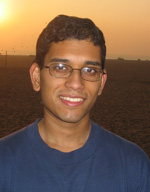
Akil Narayan is a Professor in the Department of Mathematics and a member of the Scientific Computing and Imaging (SCI) Institute at the University of Utah. His office is located in WEB 4666 (SCI) and LCB 116 (Math). He has previously held positions as Assistant Professor at the University of Massachusetts Dartmouth (2012-2015) and Visiting Assistant Professor at Purdue University (2009-2012). His educational background includes: Ph.D. in Applied Mathematics from Brown University (2009) M.Sc. in Applied Mathematics from Brown University (2004) B.S. in Engineering Sciences and Applied Mathematics from Northwestern University (2003) B.S. in Electrical Engineering from Northwestern University (2003) Akil Narayan's primary research interests lie in numerical analysis, scientific computing, and approximation algorithms. His work spans multiple domains including uncertainty quantification, multifidelity modeling, optimization, and computational methods for partial differential equations. He has made significant contributions to the development of numerical methods for solving complex computational problems across various scientific and engineering disciplines. His research often bridges theoretical mathematics with practical applications in fields such as biomedical engineering, ecology, and power systems. Analysis of his recent publications reveals a strong focus on uncertainty quantification, multifidelity methods, and scientific machine learning. His work increasingly integrates traditional numerical methods with modern machine learning techniques, particularly in the development of physics-informed neural networks. There's also a notable emphasis on structure-preserving numerical methods and optimization techniques for computational models. His research has significant applications in biomedical imaging, particularly in electrocardiographic imaging and cardiac modeling. While specific scientific awards are not detailed in the available information, his extensive publication record in top-tier journals demonstrates recognition in his field. His work appears regularly in prestigious journals such as SIAM Journal on Scientific Computing, Journal of Computational Physics, and SIAM Review. Professor Narayan has advised numerous graduate students through the Department of Mathematics and the School of Computing at the University of Utah. His current advisees include Filip Belik, Haoyu Chen, John Turnage, and Yinqian Yu, working on topics ranging from numerical methods for PDEs to operator learning and uncertainty quantification. His former students have gone on to positions at institutions including General Motors, Amazon, Intel Corporation, and various academic institutions. He has also secured research funding supporting his work in computational mathematics and scientific computing, though specific grant details are not provided in the available text. He is actively involved with the Scientific Computing and Imaging (SCI) Institute at the University of Utah, where he collaborates with researchers across disciplines. His work through the UncertainSCI project focuses on uncertainty quantification for computational models in biomedicine and bioengineering, particularly in cardiac applications. He frequently collaborates with researchers in the Department of Mathematics, School of Computing, and the SCI Institute on interdisciplinary projects that combine mathematical theory with practical computational applications.

Jon Jacobsen is a Professor of Mathematics at Harvey Mudd College, specializing in nonlinear analysis, mathematical ecology, dynamical systems, and pedagogical theory. He holds a PhD from the University of Utah and has served as Associate Dean for Academic Affairs (2010–2015), Vice President for Student Affairs (2015–2018), and Chair of the Mathematics Department (2019–2024). His research explores mathematical biology, PDEs, and ecological modeling, with notable contributions to integrodifference equations and river ecosystem dynamics. Education: BSc and MSc from California Polytechnic State University (SLO); PhD in Mathematics from the University of Utah (studying bifurcation theory for Monge-Ampère and k-Hessian equations). Research interests include applying mathematics to ecological systems, exploring Polanyi’s theory of personal knowledge, and improving pedagogical practices in STEM education. He co-founded the Pathways Program to engage K-12 students in mathematics and created the Math Demo Lab featured on NPR’s Science Friday. Recipient of the Henry T. Mudd Prize (2018) for extraordinary service to Harvey Mudd College. Advisees include T. McAdam, V. Camacho, and others highlighted in his publications. Active in grants and outreach, including collaborations with ecologists and educators. Labs/Teams: Leads the Mathematics Department’s outreach initiatives and ecological modeling research group.
Paolo Tilli is a Full Professor in the Department of Mathematical Sciences "G. L. Lagrange" (DISMA) at Politecnico di Torino, Italy. He is actively involved in research, teaching, and doctoral supervision, with a strong presence in mathematical analysis and its applications. His research focuses on calculus of variations , partial differential equations , shape optimization , and phase space analysis with applications to quantum mechanics. He is a member of the Analysis and Quantum Theory research group at DISMA, and his work spans theoretical analysis of singular models, spectral theory, and nonlinear dynamics on networks and metric graphs. The recent publications of Paolo Tilli reveal a consistent and high-impact research trajectory in nonlinear PDEs , time-frequency analysis , and quantum graphs . His work frequently appears in top journals such as Inventiones Mathematicae and Advances in Mathematics , with a focus on Faber-Krahn inequalities, localization operators, and ground states in nonlinear Schrödinger equations. These contributions reflect deep analytical techniques and interdisciplinary relevance, particularly in mathematical physics and signal processing. He has supervised PhD students including Federico Riccardi and has been a long-standing member of doctoral college committees for the PhD programs in Mathematical Sciences at Politecnico di Torino and the University of Turin. His teaching includes core courses such as Metodi Variazionali e Applicazioni and Analisi Matematica II across various engineering and mathematics programs. His research groups include: Analysis and Quantum Theory Group (DISMA)
Vicente Fco Candela Pomares is an Associate Professor in the Department of Mathematics at the Faculty of Mathematics, University of Valencia, Spain. His academic career has been centered on numerical analysis and computational mathematics, with a focus on iterative methods for nonlinear equations and multiresolution techniques. His research interests lie primarily in Numerical Analysis , especially iterative root-finding methods such as Halley, Chebyshev, and Steffensen-type algorithms. He has contributed significantly to the convergence analysis of these methods, particularly in Banach spaces and for ill-conditioned problems. His work extends to multiresolution analysis , wavelets , and image restoration , where he applies fractional regularization and nonlinear approximation frameworks. The trends in his recent publications show a sustained focus on derivative-free iterative methods , convergence theory , and applications in image processing . His work often bridges theoretical numerical analysis with practical computational challenges. He earned his PhD from the University of Valencia in 1988 under the supervision of Dr. Antonio Marquina Vila, with a thesis on a priori error estimators for iterative methods. He has collaborated extensively with researchers including Sergio Amat, Sonia Busquier, and Rosa Peris. Notable co-authors include Pantaleón D. Romero and Francesc Aràndiga. His publications appear in high-quality journals such as Journal of Computational and Applied Mathematics , Applied Mathematics and Computation , and SIAM journals. He is actively affiliated with the University of Valencia, as evidenced by his institutional email and ongoing publications. There is no indication of part-time status, retirement, or awards in the available data.
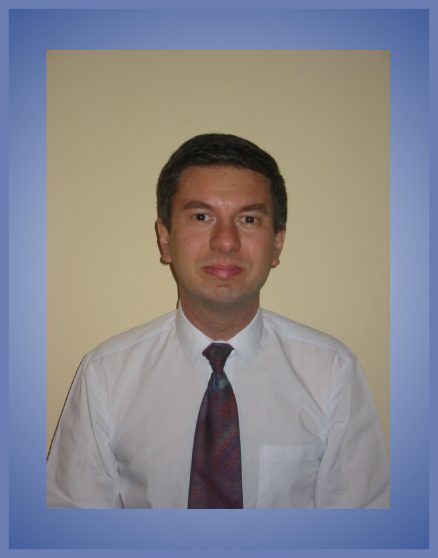
Sorin Micu is a Professor in the Department of Mathematics at the Faculty of Mathematics and Natural Sciences, University of Craiova, Romania. He is actively involved in research and teaching, with a strong focus on partial differential equations and their control. University: University of Craiova School: Faculty of Mathematics and Natural Sciences Department: Department of Mathematics Email: sd_micu@yahoo.com Office: Room 309, Central Building, AI Cuza 13, 200585 Craiova, Romania Research Interests: His primary research areas include the control of partial differential equations (PDEs), numerical analysis of PDEs, and mathematical modeling. He investigates controllability properties of various PDEs such as the heat, wave, Schrödinger, and Korteweg-de Vries equations, often using tools like Carleman estimates, duality methods, and finite element approximations. His work bridges theoretical analysis with numerical simulation, particularly in the context of semidiscretized and discrete systems. Publication Trends: The articles span from 1995 to 2017, showing sustained contributions in control theory for PDEs. The research evolves from classical equations (heat, wave) to more complex models (nonlocal, degenerate, nonlinear), with increasing focus on numerical approximation and discrete controllability. Keywords consistently revolve around controllability , stabilization , numerical methods , and nonlinear dynamics . Scientific Projects: Bilateral Contract Romania-France (2009–2010), Capacities Program, Module III Bilateral Project Romania-France (English version) Project PN-II-ID-PCE-2011-3-0257 Teaching and Advising: Professor Micu teaches courses such as Numerical Analysis, Algorithmics and Numerical Simulation in C++, Modeling and Simulation, and Finite Element Methods at both undergraduate and master’s levels. While formal advisees are not listed, his teaching and research supervision likely involve mentoring graduate students. He offers consultations every Thursday from 15:00 to 16:00 in Room 309. Laboratories and Teams: He is affiliated with research groups working on PDE control and numerical analysis at the University of Craiova. His collaboration with French institutions indicates participation in international research networks focused on applied mathematics and control theory.
Daria Kotovaمشاهده پروفایل
پژوهشگر ارشد
- Molecular Biology
- Biochemistry
- Neurochemistry
- +۵ مورد دیگر
Daria Kotova is a Research Fellow at Leiden University's Leiden Institute of Chemistry (LIC), part of the Faculty of Science. She works in Professor Sylvestre Bonnet's group, focusing on optimizing photoactivated chemotherapy for in vivo cancer treatment. Her research combines biochemistry with advanced optogenetic tools developed during her PhD in Molecular Biology, which explored redox processes in brain cells. Concurrently, she contributes to mathematical analysis through studies in Harmonic Analysis and Partial Differential Equations, addressing problems like extremizers for Fourier inequalities and water wave dynamics. Kotova has published extensively in peer-reviewed journals, with notable work on Schrödinger equations, KdV systems, and Strichartz inequalities. Her dual expertise bridges biological and theoretical domains, reflecting her interdisciplinary approach to scientific inquiry.
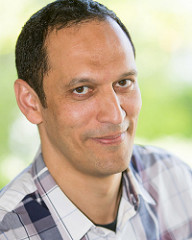
Slim Ibrahim is a Professor in the Department of Mathematics and Statistics at the University of Victoria. He holds a PhD from the University of Tunis. His research focuses on Applied Mathematics, particularly the Analysis of Partial Differential Equations, with emphases on Nonlinear PDEs from Quantum Mechanics, Fluid Dynamics, Geophysical flows, and Kinetic Models. Core research themes include existence of solutions, asymptotic behavior, and blow-up analysis. His work bridges mathematical rigor and real-world applications, addressing topics such as nonlinear Schrödinger equations, Navier-Stokes-Maxwell systems, and Vlasov-Poisson dynamics in curved spaces. Recent interests include time-periodic forcing in fluid dynamics and scattering theory for energy-critical equations. Publications span prestigious journals like Communications in Mathematical Physics and Archive for Rational Mechanics and Analysis , reflecting contributions to nonlinear PDE theory and mathematical physics. His research has implications for understanding complex systems in physics, engineering, and geophysics.

Elisa Davoli is a Professor at TU Wien, affiliated with the Multiscale Calculus of Variations Research Group (E101-01-3). Her work focuses on calculus of variations, micromagnetics, and material science, with applications in phase transitions, nonlocal models, and stochastic homogenization. She collaborates extensively with researchers such as Irene Fonseca, Manuel Friedrich, and Ulisse Stefanelli. Her recent research includes studies on fractional Cahn-Hilliard systems, sharp-interface limits, and optimal control in nonlocal frameworks. She also investigates stochastic homogenization in micromagnetics and structural changes in nonlocal denoising models through bilevel learning. Key contributions include existence results in large-strain magnetoelasticity, two-scale convergence methods for composite materials, and the derivation of linearized fracture models under non-interpenetration constraints. Her work bridges mathematical analysis with applications in solid mechanics and image processing.
Kevin Sturmمشاهده پروفایل
دانشیار
- Topology Optimization
- Partial Differential Equations (PDEs) on Surfaces
- Shape Optimization
- +۳ مورد دیگر
Kevin Sturm is an Associate Professor at TU Wien's Department of Numerical Analysis. His research focuses on topology optimization, partial differential equations on surfaces, and their applications in engineering and biomedical contexts. He leads projects involving topological derivatives, shape optimization algorithms, and numerical methods for complex systems. Key research interests include developing automated computational techniques for topological sensitivity analysis, with applications in nonlinear elasticity, reaction-diffusion systems, and structural mechanics. His work bridges theoretical mathematics (e.g., variational inequalities) with practical engineering problems (e.g., actuator design, membrane mechanics). Recent publications highlight advancements in Lagrangian-based optimization frameworks, adjoint methods for high-order derivatives, and numerical implementations in software like NGSolve. He advises graduate students Albert Vlasak and Philipp Wörle on shape optimization for parabolic problems and variational inequalities. His lab contributes to interdisciplinary projects at the intersection of computational mathematics, material science, and biomedical engineering. Current efforts focus on optimizing geometries for vibration control, membrane behavior, and imaging modalities like electrical impedance tomography.
فقط ۷۵۰ نتیجه اول نمایش داده میشود. برای رسیدن به نتایج دقیقتر، جستوجو را با فیلترها محدودتر کنید.