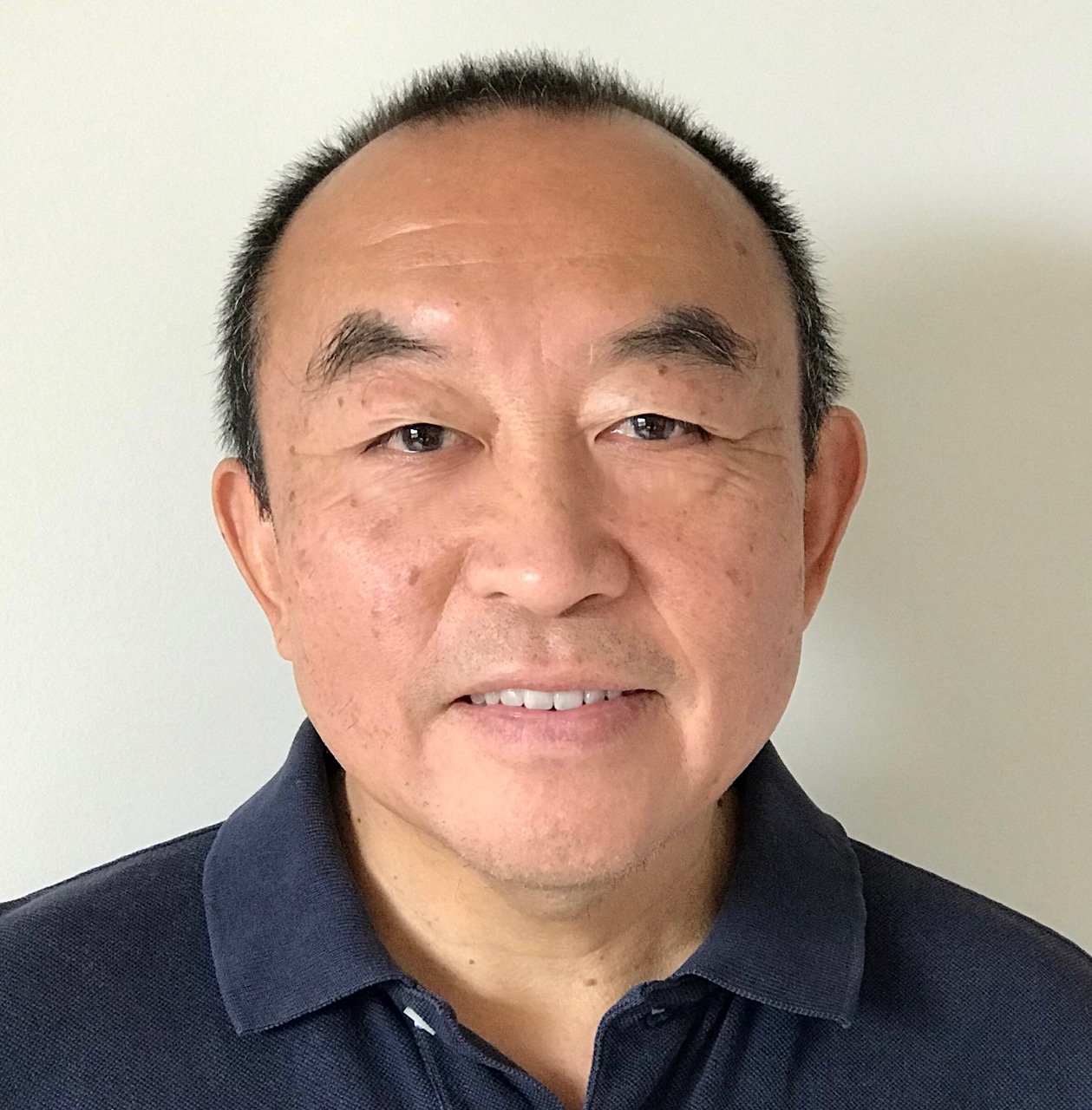
Betsy Stovall is a Professor of Mathematics at the University of Wisconsin–Madison and holds the Letters and Science Mary Herman Rubenstein Professor chair. She serves as the AMS Associate Secretary for the Central Section . Education : Not explicitly stated in provided text. Appointments : Regular faculty at UW–Madison since at least 2012 Organizer of graduate analysis seminars Research Interests : Stovall specializes in harmonic analysis , focusing on operators involving curvature, oscillatory integrals, and Fourier restriction phenomena. Her work intersects with partial differential equations (PDEs) through the study of dispersive equations and geometric analysis problems. Teaching : Complex Analysis (Math 623) - Fall 2021 Calculus III (Math 234) - Fall 2020 Graduate Analysis Seminar - Spring 2022 Organized UW Madison undergraduate summer school in Analysis (2018) Scientific Contributions : Sole or joint author of 15+ publications NSF RTG grant in Analysis and PDE Active in harmonic analysis seminars and educational initiatives Administrative Roles : AMS Associate Secretary Co-organizer of RTG/Student seminars Summer school director
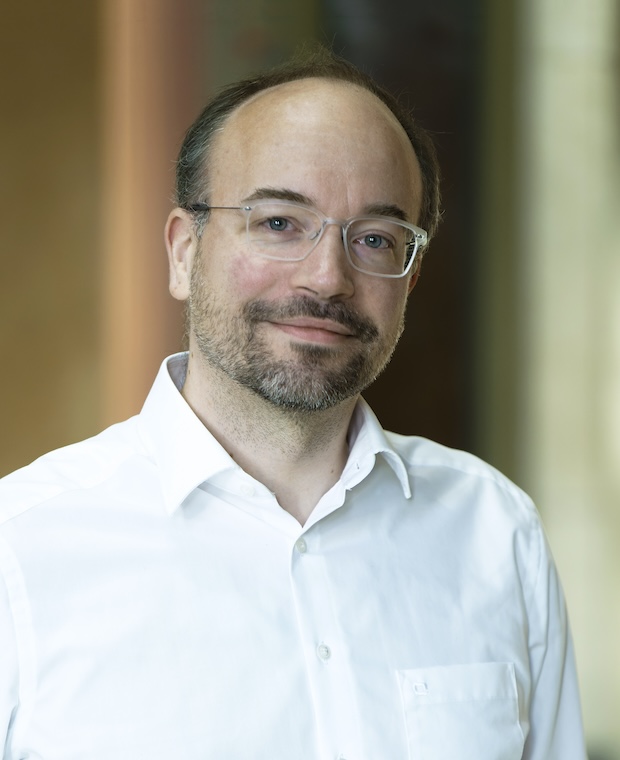
Prof. Dr. Kai Cieliebak is a Professor of Mathematics at the University of Augsburg, where he holds the Chair of Analysis and Geometry within the Institute of Mathematics under the Faculty of Mathematics, Natural Sciences, and Materials Engineering. He has been at Augsburg University since 2012, following a professorship at Ludwig-Maximilians-Universität München from 2001-2012. His research group includes several researchers and postdocs working on symplectic geometry and related fields. Dr. Cieliebak earned his Diplom in mathematics summa cum laude from Ruhruniversität Bochum in 1992, with thesis on "Pseudo-holomorphe Kurven und periodische Orbits auf Cotangential Bündeln" under advisor H. Hofer. He completed his PhD in mathematics at ETH Zürich in 1996, with thesis "Symplectic boundaries: closed characteristics and action spectra," also advised by H. Hofer. His academic journey included positions at Harvard University, Stanford University, and research at IBM Zürich before his professorships in Munich and Augsburg. Prof. Cieliebak's research focuses on symplectic and contact geometry , with significant contributions to understanding symplectic manifolds, Lagrangian and Legendrian knots, Stein manifolds, and string topology. His work in Hamiltonian dynamics explores variational methods, periodic orbits, and celestial mechanics problems, particularly the restricted three-body problem. In global analysis , he investigates solution spaces of elliptic PDEs and symplectic field theory. His approach often bridges differential geometry, topology, and dynamical systems, with applications to mathematical physics. Over the past decade, Prof. Cieliebak's publications reveal a consistent focus on symplectic homology, Floer theory, and their applications to geometric problems. His work shows increasing integration of algebraic structures with geometric methods, particularly in cyclic homology and string topology. Recent research demonstrates strong collaboration with Urs Frauenfelder on celestial mechanics problems, applying symplectic techniques to the restricted three-body problem and related orbital dynamics. Prof. Cieliebak has secured significant research funding throughout his career, including multiple DFG grants under project codes CI 45/1 through CI 45/12, NSF grants, and participation in European Science Foundation networking programs. His most notable grants include "Foundations of Symplectic Field Theory" (2009-2015) and the current "Rabinowitz Floer Homology" project (since 2023), both in collaboration with U. Frauenfelder. He has mentored numerous researchers and maintains an active research group at Augsburg University, including postdocs and collaborators working on symplectic geometry problems. His team includes researchers such as Dr. Filip Broćić, Zhen Gao, Dr. Hanna Häußler, Emilia Konrad, Shuaipeng Liu, Dominik Meidert, Dr. Airi Takeuchi, Dr. Evgeny Volkov, Milan Zerbin, and PD Dr. Lei Zhao. Prof. Cieliebak has also organized numerous workshops on symplectic geometry, including the annual "Symplectic Field Theory" workshop series.
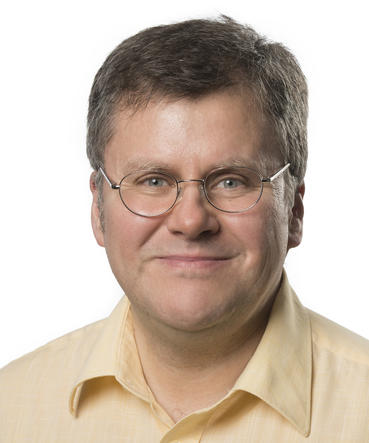
George Yin is a Professor in the Department of Mathematics at the University of Connecticut (since 2020). Previously, he held the position of Distinguished Professor at Wayne State University (2017–2020) and has been a faculty member there since 1988. He earned his Ph.D. in Applied Mathematics from Brown University in 1987, along with M.S. degrees in Applied Mathematics and Electrical Engineering, and a B.S. in Mathematics from the University of Delaware (1983). His research focuses on stochastic optimization, control theory, stochastic systems, and numerical methods, with applications to biology, finance, and engineering. He has held editorial roles at journals such as SIAM Journal on Control and Optimization and has received prestigious awards including SIAM Fellow (2015), IEEE Fellow (2002), and IFAC Fellow (2014–2017). Key funding includes continuous NSF support since 1989, grants from the Air Force Office of Scientific Research, and others. His work spans theoretical advancements in stochastic systems and practical applications in energy systems, control engineering, and data science. He has advised numerous students and maintains active collaborations internationally. Labs/Teams: Goldenson Center for Actuarial Research, Quantitative Learning Center. Grants: NSF, AFOSR, ARO, NSA, and multiple institutional grants.
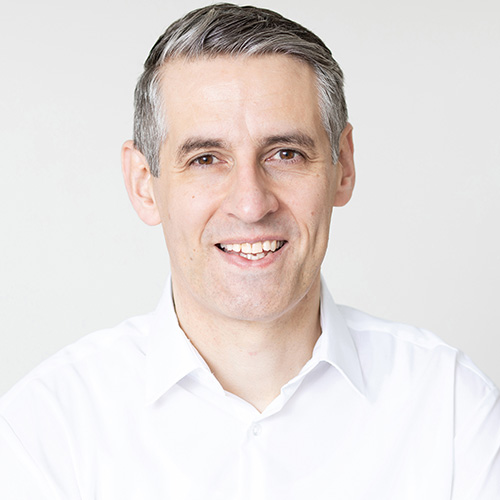
Peter Schroeder is the Shaler Arthur Hanisch Professor of Computer Science and Applied and Computational Mathematics at the California Institute of Technology (Caltech). He holds a B.S. from the Technical University of Berlin (1987), M.S. from MIT (1990), M.A. and Ph.D. from Princeton University (1992–1994). His academic roles at Caltech include Assistant Professor (1995–1998), Associate Professor (1998–2001), Professor (2001–2013), and Hanisch Professor since 2013. He served as Division Deputy Chair (2012–2015) and Acting Director of the Center for Advanced Computing Research (2013–2014). Schroeder’s research focuses on numerical algorithms for computer graphics, geometric modeling, and physical simulation. His work emphasizes Discrete Differential Geometry, rebuilding classical differential geometry for computational applications. Key areas include cloth deformation, fluid dynamics, and vortex simulations. Notable contributions include 'Schrödinger’s smoke' and fluid visualization techniques using Clebsch maps. His publications span ACM Transactions on Graphics and address topics like constrained Willmore surfaces, filament-based plasma models, and shape reconstruction from metrics. He has received the ACM Fellowship and Best Paper in Geometry Processing Award. His research often bridges computational mathematics with artistic and engineering challenges, such as simulating ink chandeliers and solar flares. Schroeder’s academic leadership includes co-founding the ACM SIGGRAPH Academy and mentoring students like James R. McLaughlin and Yanke Song, both recipients of the Henry Ford II Scholar Award.
Per Christian Hansen is a Professor at the Department of Applied Mathematics and Computer Science (DTU Compute), Technical University of Denmark (DTU), where he leads the Section for Scientific Computing. He is a VILLUM Investigator and heads the CUQI (Computational Uncertainty Quantification for Inverse Problems) research initiative, aiming to develop accessible computational platforms for uncertainty quantification in inverse problems. His expertise lies in numerical analysis, numerical linear algebra, iterative reconstruction methods, and computational inverse problems, with applications in tomography, signal analysis, and plasma physics. His research integrates theoretical analysis—such as perturbation and convergence analysis—with the development of robust, adaptive, and efficient computational methods. He has co-authored five books, over 100 scientific papers, and several widely used MATLAB software packages, including IR Tools and Regularization Tools. His recent work (2023–2025) emphasizes uncertainty quantification, Bayesian inversion, and high-dimensional tomography in fusion plasmas, reflecting a strong trend toward probabilistic and robust modeling in inverse problems. He is a SIAM Fellow (2015) for his contributions to computational methods for rank-deficient and discrete ill-posed problems and regularization techniques. His scientific leadership is evident in both theoretical advances and practical software implementations. He actively collaborates across disciplines, particularly in nuclear fusion and medical imaging, and continues to supervise PhD students and publish in top-tier journals such as Inverse Problems , SIAM Journal on Scientific Computing , and Nuclear Fusion . SIAM Fellow (2015) VILLUM Investigator He advises PhD and Master’s students in computational mathematics and inverse problems, and his research is supported by major grants, including the VILLUM Investigator award. He leads the CUQI team, which develops open-source tools for non-experts to apply uncertainty quantification in inverse problems. His lab focuses on creating modeling frameworks that bridge theory, computation, and real-world applications in materials science, imaging, and plasma diagnostics.
Prof. Dr. Markus Bachmayr is a full professor at the Institute for Geometry and Practical Mathematics, RWTH Aachen University, holding the chair for Applied Mathematics. His research focuses on nonlinear approximation, high-dimensional partial differential equations (PDEs), uncertainty quantification, and numerical methods in quantum chemistry. He leads the ERC Consolidator Grant project Computational Complexity of Highly Nonlinear Approximations (COCOA) and contributes to CRC 1481 Sparsity and Singular Structures, and RTG 2326 Energy, Entropy, and Dissipative Dynamics. His recent work emphasizes adaptive low-rank and sparse approximation techniques for parametric and stochastic PDEs, including applications in radiative transfer and poroviscoelastic flow modeling. He serves as Editor-in-Chief of Foundations of Computational Mathematics and Associate Editor for multiple journals. Scientific Awards: John Todd Award 2013 Borchers Plakette 2014 Erwin Wenzl Preis 2007 He has taught courses such as Numerische Analysis I/II, Numerische Mathematik für Elektrotechniker, and seminars on numerical methods and approximation theory.
Antonio De Rosa is an Associate Professor in the Department of Decision Sciences at Bocconi University, Italy. Previously, he held positions at the University of Maryland, College Park (2020–2024), and the Courant Institute of Mathematical Sciences, New York University (2017–2020). He earned his Ph.D. in Mathematics from the University of Zurich in 2017 under Camillo De Lellis and Guido De Philippis. Education: Ph.D. in Mathematics, University of Zurich (2017). His research spans Geometric Analysis , Partial Differential Equations , Calculus of Variations , Geometric Measure Theory , Optimal Transport , and Non-convex Optimization . Recent work focuses on anisotropic geometric variational problems, including existence, regularity, and uniqueness of anisotropic minimal surfaces and CMC (constant mean curvature) surfaces. He has also contributed to interdisciplinary applications in Explainable Risk Assessment and Data Analysis . The 15 most recent articles highlight advancements in anisotropic surfaces , min-max theory , optimal transport , and mathematical programming (e.g., K-means clustering, linear programming). Key trends include the intersection of geometric measure theory with nonlinear PDEs and applications in machine learning and transportation networks . Scientific Awards and Grants: 2023 Maryland Research Excellence Carlo Ciliberto Prize (2019) ERC Starting Grant ANGEVA (101076411, 2023–2028) Air Force Office of Scientific Research (AFOSR) grant (FA9550-23-1-0123) NSF CAREER Award (DMS-2143124) NSF DMS Awards (DMS-1906451, DMS-2112311) AMS Simons Travel Grant Antonio actively supervises research and teaches courses such as Optimization and Introduction to Partial Differential Equations . His work is supported by significant funding totaling approximately €3 million.
Joachim Weickert is a Professor of Mathematics and Computer Science at Saarland University where he heads the Mathematical Image Analysis Group since 2001. He received his diploma and Ph.D. in mathematics from the University of Kaiserslautern (1991, 1996), and a habilitation degree in computer science from the University of Mannheim (2001). Prior to his current position, he worked as a research assistant at the University of Kaiserslautern, as a post-doctoral researcher at the universities of Utrecht and Copenhagen, and as an assistant professor at the University of Mannheim. His research focuses on image processing, computer vision, and scientific computing, with special emphasis on techniques based on partial differential equations, variational principles, wavelets, morphological and nonlocal methods, as well as neuroexplicit approaches. He has developed mathematical models and efficient numerical algorithms for image restoration, enhancement, segmentation, compression, optic flow computation, stereo reconstruction, shape from shading, and signal processing methods for tensor fields. These ideas have been successfully applied in industry, biomedical image analysis, and other fields. Analysis of his recent publications reveals a strong trend toward combining traditional PDE-based methods with modern deep learning approaches, particularly in the areas of image inpainting and compression. His work increasingly explores the connections between numerical algorithms for partial differential equations and neural network architectures, demonstrating how mathematical foundations can inform cutting-edge AI techniques while maintaining strong theoretical guarantees. Gottfried Wilhelm Leibniz Prize (2010), considered the most important research award in Germany ERC Advanced Grant (2017) for "Inpainting-based Compression of Visual Data" Elected member of Academia Europaea - The Academy of Europe Jan Koenderink Prize for Fundamental Contributions in Computer Vision (2014) Multiple DAGM Prizes and Best Paper Awards throughout his career AAIA Fellow (2021) and Highly Ranked Scholar (2024) distinctions Professor Weickert has supervised over 250 bachelor's and master's theses and initiated the Master Programme in Visual Computing at Saarland University, the first of its kind in Germany taught in English. He has established numerous interdisciplinary collaborations with colleagues from medicine, bioinformatics, pharmacy, physics, mechatronics, and mechanical engineering. As Principal Investigator for Visual Computing within the Multimodal Computing and Interaction Cluster of Excellence, and former dean of the Faculty of Mathematics and Computer Science (2008-2010), he has played a significant leadership role in advancing visual computing research and education. He heads the Mathematical Image Analysis Group, which has been at the forefront of developing mathematical methods for image analysis. The group maintains strong connections with both theoretical mathematics and practical applications, bridging the gap between fundamental research and real-world implementation across various domains including medical imaging, industrial inspection, and multimedia processing.
Mohd Fikree Hassan is a Lecturer at the School of Information Technology, Monash University Malaysia, joining in June 2023. He holds a Ph.D. and Master's from the University of Malaya, and a B.Eng. in Electronics Engineering from Multimedia University. With over 14 years of academic experience, he is actively engaged in research, teaching, and supervision. B.Eng. in Electronics Engineering (Telecommunications), Multimedia University, 2004 M.Eng. in Engineering (Telecommunications), University of Malaya, 2015 Ph.D. in Signal and Systems, University of Malaya, 2018 His research focuses on image and signal processing , particularly in image enhancement, restoration, computer vision, and human color vision . His work contributes to improving image visibility, removing color casts, and developing algorithms for noisy or degraded images. He applies mathematical and computational techniques to solve real-world imaging challenges. The recent publication trends (2021–2025) show a strong focus on image restoration using variational methods (e.g., total variation, ℓ0 regularization), color enhancement in HSI space, and video analysis for sports applications. His work bridges theoretical optimization and practical computer vision systems. He actively contributes to the academic community through peer review for journals such as Neurocomputing , Journal of Imaging , and International Journal of Computational Intelligence Systems , as well as for IEEE conferences. Mohd Fikree is currently accepting PhD students and serves as an external examiner for academic programs. His consistent research output and editorial service reflect a growing impact in the field of image processing and computer vision. While no formal lab or team is mentioned in the text, his collaborations with researchers like R. Paramesran, T. Adam, and G. Krishnasamy suggest active research partnerships in signal and image processing.
Prof. Dr. Martin Burger is a leading scientist at DESY and a Full Professor in the Department of Mathematics at Universität Hamburg, where he leads the Computational Imaging Group. His research bridges applied mathematics, imaging sciences, and machine learning, with a focus on inverse problems, mathematical modeling, and partial differential equations. He has held professorial positions at Universität Münster and FAU Erlangen-Nürnberg prior to his current dual appointment. Full Professor, Universität Hamburg (2023–present) Leading Scientist, DESY, Hamburg (2023–present) Full Professor, FAU Erlangen-Nürnberg (2018–2023) Full Professor, Universität Münster (2006–2018) His research interests include inverse problems, variational regularization, optimal transport, kinetic models, and mathematical modeling in biology and social sciences. He has made significant contributions to imaging reconstruction, sparse neural networks, and the analysis of transformer architectures. His work often integrates theoretical analysis with computational methods, influencing both pure and applied mathematics. The most recent articles reflect a strong trend toward interdisciplinary applications, combining deep learning with PDE-based modeling, analyzing social and biological systems via kinetic and mean-field models, and advancing mathematical imaging through graph-based and optimal transport methods. His publications span high-impact venues in applied mathematics and computational science. Calderon Prize, Inverse Problems International Association (IPIA) ERC Consolidator Grant (2014) Invited speaker at ECM (2021), ICM (2022), and ICIAM (2023) Editor-in-Chief, European Journal of Applied Mathematics (since 2017) Prof. Burger has supervised numerous PhD students and postdoctoral researchers, many of whom appear as co-authors in his publications. His research is supported by major grants, including funding from the German Federal Ministry of Education and Research (BMBF). He is actively involved in collaborative projects across mathematics, physics, and engineering disciplines. He leads the Computational Imaging Group at DESY, fostering a collaborative environment for developing novel mathematical tools in imaging science. The group works on both theoretical foundations and practical implementations, contributing to advancements in tomography, machine learning, and data analysis.
Prof. Rama Cont is a Statutory Professor of Mathematics at the University of Oxford and a Professorial Fellow at St Hugh's College . He serves as Director of the Centre for Doctoral Training in Mathematics of Random Systems , Faculty Member of the Stochastic Analysis Group , and Senior Research Fellow at the Institute for New Economic Thinking . Additional roles include Director of the Oxford Martin Programme on Systemic Resilience , Principal Investigator at the Oxford Suzhou Centre for Advanced Research , and Editor-in-Chief of Mathematical Finance . His research interests span pathwise methods in stochastic analysis, rough analysis, functional Ito calculus, mathematical modeling in finance, systemic risk, and data-driven decision systems. Recent publications focus on causal transport, rough volatility, and deep residual networks, reflecting his interdisciplinary approach to mathematics and finance. Functional Ito calculus and pathwise integration Rough volatility and financial market dynamics Systemic risk in financial networks Deep learning applications to finance and stochastic processes He has received prestigious awards including the Louis Bachelier Prize , SIAM Fellowship, Royal Society APEX Award, and IMA Fellowship. His editorial roles and seminar leadership underscore his influence in mathematical finance and stochastic analysis.
Ilaria Perugia is a University Professor (Univ.-Prof.) and Chair of Numerics of PDEs at the Department of Mathematics, Faculty of Mathematics, University of Vienna. She also serves as Deputy Head of the Research Platform Erwin Schrödinger International Institute for Mathematics and Physics. Her research focuses on numerical methods for partial differential equations with applications in computational physics and engineering. Professor Perugia's primary research interests include: Numerical methods for PDEs Finite element methods Discontinuous Galerkin methods Trefftz methods Virtual element methods Space-time methods Computational electromagnetics Wave propagation problems Nonlinear reaction-diffusion problems Her work spans theoretical analysis, algorithm development, and practical implementation of numerical methods for solving complex physical phenomena. Her recent publications demonstrate a strong focus on space-time methods, virtual element methods, and structure-preserving discretizations for wave equations, heat equations, and other PDEs. She has made significant contributions to the development of stable and efficient numerical schemes that preserve important physical properties of the underlying continuous problems, particularly in the context of wave propagation and computational electromagnetics. Professor Perugia leads a research group comprising several researchers and students including Mattia Corti, Matteo Ferrari, Monica Nonino, Andrea Scaglioni, Paul Stocker, Enrico Zampa, and Marco Zank. Her group actively collaborates on projects related to numerical analysis and scientific computing, with particular emphasis on developing novel discretization techniques for challenging PDE problems.
Martin Berggren is a Professor at the Department of Computing Science , Umeå University , Sweden. His work focuses on Computational Design Optimization , combining computer simulations and numerical optimization to enhance engineering designs for devices like antennas, microwave components, and loudspeakers. Berggren is also active in mathematical modeling of physical phenomena, particularly wave propagation and fluid mechanics, with a strong emphasis on finite-element methods . His research addresses large-scale conceptual design problems using thousands to millions of design variables, relying on gradient-based algorithms and adjoint-based computations of design sensitivities—similar to back-propagation in deep learning. Key application areas include acoustic and electromagnetic devices, where he investigates damping mechanisms, boundary conditions, and material distribution. Other interests, though less active, involve flow control and unsteady fluid–structure interaction . Berggren collaborates extensively on projects such as Structured Regularization , Topology Optimization of Acoustic Black Holes , and Design of Microstrip-to-Waveguide Transitions . His publications span journals like Journal of Computational Physics , Pattern Analysis and Applications , and IEEE Transactions on Antennas and Propagation , often co-authored with researchers like Linus Hägg , Eddie Wadbro , and Disi Lin .
Julie Clutterbuck is an Associate Professor in the School of Mathematics at Monash University. Her research focuses on geometric analysis, partial differential equations, and spectral theory. She has led major projects funded by the Australian Research Council, including studies on curvature flows, spectral estimates, and optimal shapes. Clutterbuck has been recognized with the Gavin Brown Prize (2014) for outstanding mathematical research. She contributes to academic activities as a conference organizer and speaker, including roles at the AMSI Winter School and the New Zealand Mathematical Society Colloquium. Her teaching commitments include advanced courses in metric spaces and multivariable calculus. Her research explores geometric evolution equations, eigenvalue problems, and capillary surfaces. Notable projects include analyzing the fundamental gap conjecture and studying ancient solutions to curvature flows. Collaborations span international institutions, reflecting her contributions to global mathematical research networks.
Michele Dolce is a Lecturer and Scientist at the École Polytechnique Fédérale de Lausanne (EPFL), affiliated with the School of Basic Sciences (SB) and the Chair of Mathematical Analysis, Calculus of Variations and PDEs (AMCV). He previously held positions as a Postdoc at EPFL and a Research Associate at Imperial College London, where he worked under Prof. Michele Coti Zelati. His academic journey includes a PhD from the Gran Sasso Science Institute. Current affiliation: EPFL, School of Basic Sciences (SB), Department of Mathematics (MATH), AMCV Past affiliation: Imperial College London His research focuses on the mathematical analysis of Partial Differential Equations (PDEs) in fluid dynamics and kinetic theory. Key areas include hydrodynamic stability, long-time behavior of viscous vortex systems, and time-decay properties of kinetic models like the Boltzmann and Wave Kinetic Equations. Recent work explores vortex merging phenomena and Taylor dispersion in rotationally symmetric flows. Scientific activities include organizing workshops such as "Long time dynamics in random and deterministic systems" (2025) and co-organizing events like the "Deterministic and random features of fluids" summer school (2023) and the "Enjoying Probability and Fluids in Lausanne" workshop (2023). His publications span journals including Communications in Mathematical Physics, Archive for Rational Mechanics and Analysis, and Journal of Mathematical Fluid Mechanics. Supported by Swiss National Science Foundation (SNF Ambizione grant PZ00P2_223294) Partially funded by GNAMPA (INdAM group)