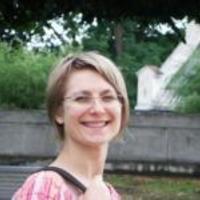
Anna Rogos-Hebdaمشاهده پروفایل
استادیار
Dr. Anna Rogos-Hebda is an Assistant Professor at the Faculty of English, Adam Mickiewicz University in Poznań, Poland. She is actively involved in research and teaching in the fields of cognitive and historical linguistics, with a strong emphasis on diachronic semantics, emotion terminology, and corpus-based analysis. Faculty of English, Adam Mickiewicz University Researcher in Cognitive and Historical Linguistics Active contributor to international academic conferences Her research interests center on the language of emotions , conceptual metaphor theory , and the diachronic development of abstract categories in English and Polish. She employs corpus linguistics and cognitive semantics to investigate semantic change, particularly in Middle and Late Modern English. Her work explores how emotions such as hope, belief, and hate are linguistically encoded and evolve over time. The recent articles reflect a consistent focus on diachronic cognitive linguistics , with themes including semantic change in emotion terms , conceptualization of social categories (e.g., beggars, refugees, immigrants), and political and ideological discourse . Her methodology is predominantly corpus-based, often involving quantitative and multivariate analysis of lexical usage across time and cultures. She has not been awarded any formal scientific prizes or fellowships mentioned in the text. Dr. Rogos-Hebda has served as an assistant editor for Studia Anglica Posnaniensia (2001–2010) and has been actively involved in organizing academic events such as the History of English Language in Poznań (HEL-P) and Figurative Thought and Language (FTL) conferences. She has received research support through scholarships from the University of Helsinki and Otto Friedrich Universität, Bamberg, as well as a conference grant from the Foundation for Polish Science. She is a member of several professional organizations, including Societas Linguistica Europea (SLE), Polish Association for the Study of English (PASE), International Society for the Linguistics of English (ISLE), and The Philological Society (TPS). She regularly presents her work at major international conferences and contributes to collaborative research projects, particularly with scholars like Małgorzata Fabiszak and Karolina Krawczak-Glynn.