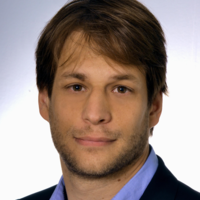
Thomas Banitz is a Researcher in the Department of Ecological Modelling at the Helmholtz Centre for Environmental Research (UFZ) in Leipzig, Germany. His work focuses on developing computational models to study ecological systems, population dynamics, and ecosystem functions. Key research areas include grassland biodiversity responses to environmental changes, microbial ecology, and causal reasoning in social-ecological systems. He leads projects like BioDT (biodiversity digital twin) and contributed to CauSES (causation in social-ecological systems). Education: PhD in Environmental Sciences from Universität Osnabrück (2011), Dissertation: 'Modelling bacterial growth, dispersal and biodegradation'. Research Highlights: Developed individual-based models for microbial systems (e.g., McComedy tool) Investigated microbial interactions and ecosystem processes in disturbed environments Advanced causal explanation frameworks for complex systems Explored spatiotemporal dynamics of biodiversity under environmental stressors Labs/Teams: Member of FORMIND vegetation model team and EcoEpi ecological epidemiology initiative. Collaborates with interdisciplinary groups on digital twins and sustainability science.
Prof. Dr.-Ing. Fritz Busch holds the Professorship of Traffic Engineering and Control at the Department of Civil, Geo and Environmental Engineering at Technische Universität München (TUM). His research focuses on urban transportation systems, traffic dynamics, and sustainable mobility solutions. He leads projects such as RASCH (RAdSCHnellwege) and RadOnTime, exploring efficient bicycle infrastructure and traffic management strategies. His work integrates advanced simulation techniques, data-driven methodologies, and cooperative vehicle-infrastructure systems to enhance urban mobility resilience and reduce environmental impacts. Educational Background: While specific academic qualifications are not detailed here, his title of Professor Dr.-Ing. indicates a doctoral degree in engineering and significant academic contributions. His professorship at TUM underscores expertise in traffic engineering and control systems. Research Interests: Busch’s research spans macroscopic traffic dynamics, bicycle and pedestrian traffic management, emissions reduction through electric vehicle integration, and the application of smart technologies (e.g., V2X communication) for traffic optimization. His projects often involve interdisciplinary collaboration, combining engineering, data science, and urban planning to address complex mobility challenges. Awards and Recognition: While no specific awards are listed, his prolific publication record and involvement in high-profile TUM initiatives reflect his scholarly impact and leadership in transportation engineering. Advising and Grants: Though specific grants are not mentioned, his active participation in projects like UR: BAN (Urban Road Network) and numerous collaborations suggest extensive grant-funded research. Advising activities are inferred through his role as a professor and project leader but are not explicitly detailed here. Labs and Teams: His work leverages the TUM-VT bicycle simulator and SUMO (Simulation of Urban MObility) tools for traffic simulation studies. He collaborates with interdisciplinary teams on projects such as eco-sensitive traffic management and automated vehicle integration.
Dr. Mhaned Oubounyt is a Postdoctoral Researcher at the University of Hamburg, affiliated with the Computational Systems Biology (CoSy.Bio) group within the Faculty of Mathematics, Informatics and Natural Sciences. His work focuses on developing computational methods for analyzing single-cell and spatial transcriptomics data, particularly in the context of disease mechanisms and drug repurposing. He is actively involved in the NetMap project, advancing dimensionality reduction techniques using differential regulatory networks. Research interests include gene co-expression networks, spatial single-cell analysis, and systems medicine applications. His methodologies bridge computational biology with clinical and agricultural challenges, such as vaccine responses in pregnancy, plant disease resistance, and cardiovascular pathophysiology. Key contributions include the SCANet and Drugst platforms for drug candidate identification and network-based analysis. Publications highlight a strong focus on network biology applications across domains: from immune system modeling to plant stress responses, leveraging single-cell multi-omics integration. His work emphasizes translational research, with implications for personalized medicine and crop improvement. Collaborations span academic and clinical institutions, reflecting his interdisciplinary approach. Current projects aim to enhance predictive modeling of disease progression and therapeutic interventions through systems-level insights.
Prof. Dr. Thomas Lengauer is a leading figure in computational biology and applied algorithmics at the Max Planck Institute for Informatics, part of the Max Planck Society in Saarbrücken, Germany. He heads the Department of Computational Biology and Applied Algorithmics, where he drives research at the intersection of computer science, genomics, and medicine. His work integrates algorithm development with biological applications, particularly in viral genomics, epigenetics, and personalized treatment prediction. Research Interests: His research focuses on computational methods for analyzing complex biological data. Key areas include HIV and hepatitis virus evolution, antiretroviral therapy outcome prediction, DNA methylation and epigenomic analysis, machine learning applications in medicine, and the integration of big data in biological research. He has made significant contributions to understanding viral drug resistance and host-pathogen interactions through computational modeling. The recent publications (2019–2025) reflect a strong trend toward integrating temporal genomic data, machine learning, and public health surveillance. His work spans from fundamental algorithm development (e.g., RnBeads, MeDeCom) to applied clinical research (e.g., dolutegravir resistance, SARS-CoV-2 interventions). Key domains include epigenomics , virology , machine learning in healthcare , and biological database systems , increasingly incorporating AI-driven approaches. Scientific Awards: No specific awards are mentioned in the provided text. Advising and Grants: While no formal list of students is provided, Prof. Lengauer leads a large collaborative research group, evidenced by frequent co-authorship with researchers such as Walter, Bock, Müller, Kaiser, and Pirkl. He participates in major consortia (e.g., DEEP Consortium, Respiratory Virus Network), suggesting leadership in funded collaborative projects. His work is likely supported by Max Planck Society core funding and competitive third-party grants, though specific grants are not listed. Labs and Teams: He leads the Computational Biology and Applied Algorithmics group at the Max Planck Institute for Informatics. The team develops computational tools for epigenomic data analysis (e.g., RnBeads, DecompPipeline), viral resistance prediction, and public health modeling. The group collaborates extensively with clinical and biological researchers across Europe, functioning as a hub for interdisciplinary bioinformatics research.
Prof. Dr.-Ing. Joachim Denzler is a Professor leading the Chair for Digital Image Processing (Lehrstuhl für Digitale Bildverarbeitung) at Friedrich-Schiller-Universität Jena. His research spans computer vision, machine learning, medical imaging, and remote sensing applications across diverse domains including biomedical analysis, environmental monitoring, and facial recognition systems. His research interests focus on explainable AI, causal discovery, physics-informed neural networks, and bias mitigation in deep learning models. He has made significant contributions to fine-grained classification, concept activation vectors, and privacy-preserving techniques in facial recognition. His work often bridges theoretical computer vision with practical applications in medical diagnostics, environmental science, and infrastructure monitoring. His recent publications demonstrate a strong trend toward causal discovery methods, physics-informed neural networks, and addressing bias in machine learning systems. His work spans both theoretical advancements in model interpretability and practical applications in medical imaging, environmental monitoring, and infrastructure safety. The interdisciplinary nature of his research is evident from collaborations with ecologists, neuroscientists, and civil engineers. Best Paper Award at International Conference on Pattern Recognition (ICPR) 2024 Prof. Denzler actively mentors numerous PhD students and postdoctoral researchers, with frequent co-authors including Maha Shadaydeh, Niklas Penzel, Gideon Stein, and Tim Büchner appearing as first authors on significant publications. His laboratory has secured research funding across multiple domains including medical imaging, environmental monitoring, and AI safety. His work on CausalRivers represents a major contribution to benchmarking causal discovery methods with real-world time series data. The Chair for Digital Image Processing maintains strong industry and clinical partnerships, particularly in medical imaging applications for facial palsy analysis and neonatal care. Prof. Denzler's team has developed novel techniques for dam deformation monitoring using remote sensing data and created advanced methods for analyzing plant diversity effects on ecosystem functioning.
Prof. Dr. Mingya Liu is a W1-Professor for Empirical English Linguistics (EEL) at the Department of English and American Studies, Humboldt-Universität zu Berlin. Her research focuses on the intersection of lexicon, syntax, semantics, and pragmatics, with applications to language processing, acquisition, and sociolinguistic variation. Key projects include investigations into polarity sensitivity, modality, negation, and register effects in language use. Her work employs experimental, cross-linguistic, and socio- and psycholinguistic methods. Notable contributions include studies on modal concord (e.g., 'must certainly'), negative concord variation, and the social meanings of linguistic constructions in English, German, and Chinese. She is a core member of the CRC 1412 'Register: Language Users’ Knowledge of Situational-Functional Variation,' contributing to interdisciplinary research on language variation and cognitive modeling. Publications emphasize experimental findings on linguistic and social meaning correlations, register sensitivity in language use, and the role of interlocutor relations in formality perception. Collaborative efforts with institutions like HU Berlin and international scholars further highlight her commitment to advancing theoretical and experimental linguistics.
Dr. Michiel Renger is a researcher at the Department of Mathematics, Technische Universität München (TUM), within the School of Computation, Information and Technology. His research focuses on variational calculus, partial differential equations, large deviations theory, non-equilibrium thermodynamics, and chemical reaction networks. He has contributed to advancing the understanding of macroscopic fluctuation theory, gradient flows, and their applications in stochastic systems. Teaching responsibilities include courses on higher mathematics for engineering students at TUM and specialized lectures on large deviations and convex analysis at TU Berlin. His work bridges theoretical mathematics with applications in physics and engineering, emphasizing interdisciplinary approaches. Renger’s publications span peer-reviewed journals in mathematics and physics, with a focus on rigorous probabilistic and analytical methods. He holds a PhD in Mathematics from Technische Universiteit Eindhoven (2013) and has collaborated on projects in collaboration engineering, addressing challenges in collaborative modeling and organizational design. His research also extends to applied problems like node counting in wireless networks and statistical consulting for industry.
Prof. Dr. Göran Kauermann is a Full Professor of Statistics at the Ludwig-Maximilians-University Munich , holding the Chair of Applied Statistics in Social Sciences, Economics and Business . His research spans nonparametric models, generalized linear models, and network data analysis, with applications in economics, epidemiology, and data science. Education: Diplom in Economic Mathematics (1991, TU Berlin), PhD in Statistics (1994), Habilitation (Venia Legendi) in Statistics (2000) Kauermann’s research interests focus on penalized regression , network analysis , and statistical modeling in economics, social sciences, and public health. Recent work explores label uncertainty in machine learning , spatio-temporal conflict diffusion , and dynamic network models for economic and social data. Scientific trends in his publications include penalized splines for nonlinear modeling, network flow estimation in social and economic contexts, and label variation analysis in machine learning. His collaborations span climate zone classification , Covid-19 mortality modeling , and smart city parking analytics . Scientific Awards: Bruce Russett Award (2020) for political network research Leadership Roles: He served as Dean of the Faculty of Mathematics, Informatics and Statistics (2019–2021), Speaker of the Elite Master Program in Data Science (2016–2026), and Chair of the German Statistical Society (2005–2013). He also held editorial roles in journals like AStA Advances in Statistical Analysis and Statistical Modelling .
Isabel Valera Martínez is a full Professor of Machine Learning at the Department of Computer Science, Saarland University, and an Adjunct Faculty at the Max Planck Institute for Software Systems (MPI-SWS). She holds a PhD in Machine Learning from the University Carlos III of Madrid and has held prestigious fellowships including the Humboldt Postdoctoral Fellowship and the Minerva Fast Track Fellowship from the Max Planck Society. Her research focuses on developing interpretable, robust, and fair machine learning methods, with applications in healthcare, social systems, and consequential decision-making like hiring and loan approvals. Education: PhD in Machine Learning (2014) and MSc in Multimedia and Communications (2012) from University Carlos III of Madrid; Master’s work at Leibniz University Hannover (2009); Telecommunications Engineering from the Technical University of Cartagena (2009). Research Interests: Fairness in AI, Bayesian nonparametric models, robust machine learning, and applications in healthcare and social systems. She co-leads the ELLIS Robust Machine Learning program and the Saarbrücken AI & Machine Learning (SAM) Unit. Key Publications: Contributions to fair classification frameworks, automatic discovery of data types, and modeling psychiatric comorbidity. Notable venues include AAAI, NIPS/NeurIPS, JMLR, and ICML. Awards: Humboldt Fellowship, Minerva Fellowship, Best Paper Honorable Mention at WWW 2017. Labs & Collaborations: Active in the ELLIS Society and MPI-SWS, focusing on interdisciplinary AI applications.
Zaiwen Feng is a researcher actively contributing to data governance, semantic modeling, and causal inference. His work focuses on knowledge graphs, graph-based methods, and service-oriented architectures through collaborations with institutions like the University of Queensland and universities in China. Research Focus : Graph Differential Dependencies, Entity Resolution, Causal Effect Estimation, and Ontology Alignment Methodologies : Machine Learning, Variational Autoencoders, Prompt Engineering, and Semantic Retrieval Application Areas : Biomedical Data, Property Graph Recommendation, and Process Model Repositories Key trends in his publications include automated semantic modeling , neural approaches for entity resolution , and causal inference with graph structures . He frequently collaborates with researchers like Keqing He, Wolfgang Mayer, and Selasi Kwashie across conferences such as HPCC, BIBM, and WISE.
Michel Besserve is a Senior Research Scientist in the Empirical Inference department at the Max Planck Institute for Intelligent Systems in Tübingen, Germany. His research bridges machine learning theory with applications in neuroscience and complex systems analysis. He leads a research group focused on developing causal machine learning tools to uncover the internal structure and transformations of complex artificial, physical, and socioeconomic systems. Dr. Besserve's primary research interests center on causal machine learning and its applications to understanding complex systems. His work investigates how causality can provide principled ways to study and improve AI algorithms, particularly focusing on the identifiability of causal models and the principle of Independence of Causal Mechanisms (ICM). He develops theoretical frameworks and practical tools for causal inference in complex equilibrium systems, neural circuits, and socioeconomic contexts. His research has significant implications for building trustworthy and interpretable AI systems that can reliably handle real-world complexity. Analysis of Dr. Besserve's recent publications reveals a strong focus on causal representation learning, with significant contributions to independent mechanism analysis and the identifiability of nonlinear generative models. His work spans both theoretical foundations and practical applications, connecting machine learning with neuroscience to understand brain function through causal inference. The interdisciplinary nature of his research is evident in publications spanning top machine learning conferences (NeurIPS, ICML, ICLR) and leading neuroscience journals (Nature, PLOS Biology). Dr. Besserve has established productive collaborations across multiple institutions, particularly with researchers at the Max Planck Institute and ETH Zurich. His work demonstrates how integrating causal principles with machine learning can address fundamental challenges in AI robustness and interpretability, with applications ranging from brain network analysis to economic modeling. His research group focuses on developing the Causal Computational Model (CCM) framework, which aims to create digital representations of real-world systems that integrate data, domain knowledge, and interpretable causal structure. This work has potential applications in climate modeling, industrial digital twins, and economic simulation.
Dr. Philip Bittihn serves as Group Leader and Scientist at the Max Planck Institute for Dynamics and Self-Organization in Göttingen, Germany, heading the Emergent Dynamics in Living Systems research group within the Department of Living Matter Physics. His work bridges physics and biology to decipher complex emergent behaviors in biological systems through innovative interdisciplinary approaches. His research spans nonlinear dynamics in biological systems , initially focusing on cardiac arrhythmia mechanisms where he identified novel termination strategies for life-threatening rhythms through topological defect analysis. Current work centers on growth-driven phenomena in cellular active matter , investigating mechanical interactions, expansion flows, orientational order, and shape development coupled with gene regulation and metabolism. He employs reaction-diffusion modeling, synthetic biology, and microfluidic experimentation to study pattern formation in microbial colonies and cardiac tissue. Analysis of recent publications reveals a dominant trend toward active matter physics in multicellular systems , particularly geometry-induced nematic order, phase separation in proliferating matter, and nutrient-mediated antibiotic responses. His group consistently explores how non-equilibrium growth processes generate complex patterns, with increasing emphasis on mechanical stress anisotropy and motility-induced transitions in confined cellular environments. The Emergent Dynamics in Living Systems group operates at the physics-biology interface, utilizing genetically engineered E. coli models (as demonstrated in their Nature Microbiology 2020 work on oscillating growth patterns), advanced microfluidic chambers, and computational frameworks to investigate fundamental principles of biological organization with potential biomedical applications.
Prof. Dr. Uwe Schlink is a leading Professor at the Institute of Meteorology, University of Leipzig, and Senior Researcher at the Department of Urban & Environmental Sociology, Helmholtz Centre for Environmental Research - UFZ. His work focuses on urban climate research , thermal comfort , urban air quality , and statistical modelling with Bayesian inference. He leads the working group on urban climate and personal exposure, bridging environmental science with societal resilience. Affiliation: University of Leipzig (since 2009) and UFZ (since 2013) Research Themes: Urban heat islands, personal exposure to environmental stressors, statistical climate models, and health impacts of air pollution His research spans environmental health , urban climatology , and resilient city planning , with significant contributions to understanding thermodynamic interactions between urban structures and climate. He has pioneered methods for high-resolution land surface temperature analysis and green infrastructure performance in mitigating heat stress. Recent publications (2023-2025) highlight his work on PM2.5-bound PAH exposure , anthropogenic heat impacts in Beijing, and Asian plateau climate dynamics . Collaborative projects address urban heat stress , green roofs , and health-focused urban planning .
Prof. Stefan Trautmann is a Professor of Behavioral Finance and Contract Theory at Heidelberg University's Alfred Weber Institute. He holds leadership roles including Head of Department (2023-) and Board Member of the Alfred Weber Institute. His research focuses on behavioral economics, experimental finance, and decision-making under uncertainty. He co-leads the experimental economics group, organizing workshops and maintaining a data repository (AWI HeiDATA). Research interests include financial decisions under risk, social preferences, and the economics of religion. He has published in top journals like Journal of Risk and Uncertainty and European Economic Review , and received the 2024 Heinrich-Wiemer-Prize for Economics. He serves on editorial boards of journals such as Journal of Economic Behavior and Organization and Management Science . Teaching includes corporate governance and behavioral finance courses. He advises institutions like the German Federal Institute for Risk Assessment and chairs behavioral finance sessions at the Swiss Society for Financial Market Research. His work bridges theoretical insights with practical applications in policy and finance.
Dr. Shinichi Nakajima is a Senior Research Lead at the Technical University of Berlin, affiliated with the BIFOLD (Berlin Institute for the Foundations of Learning and Data) and the AIP – RIKEN Center of Advanced Intelligence Project . He leads the research group “Probabilistic Modeling and Inference” at BIFOLD. His academic journey includes a Master’s in Physics from Kobe University (1995) and a PhD in Computer Science from Tokyo Institute of Technology (2006). Prior to academia, he worked at Nikon Corporation (1995–2014) on statistical analysis, image processing, and machine learning. His research focuses on Bayesian inference , generative modeling , explainable AI , and quantum computing , with applications in computer vision, natural language processing, and scientific computing. Notable projects include developing NeuLat (a neural sampling toolbox for lattice field theories) and advancing techniques for symbolic XAI to enhance AI transparency. Dr. Nakajima has published extensively on topics such as diffusion models, federated learning, and physics-informed neural networks. His work bridges theoretical foundations (e.g., Bayesian learning) with practical applications in quantum computing and biomedical imaging. He actively contributes to open-source tools and collaborates with industry and academic institutions globally. Key technical achievements include improving sampling efficiency in quantum eigensolvers, enhancing brain source reconstruction via 3D neural networks, and developing anomaly detection systems using self-supervised autoencoders. His research emphasizes computational efficiency and robustness against adversarial attacks, leveraging Langevin dynamics and gradient-based optimization methods.