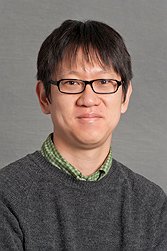
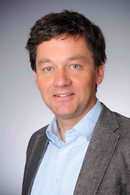
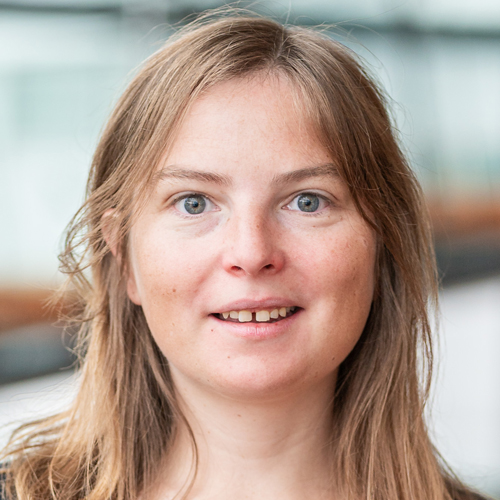
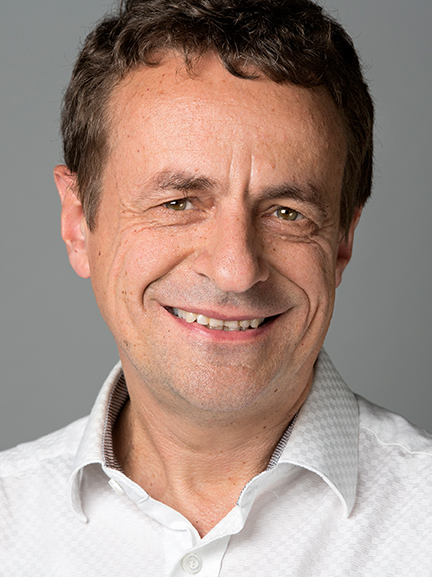
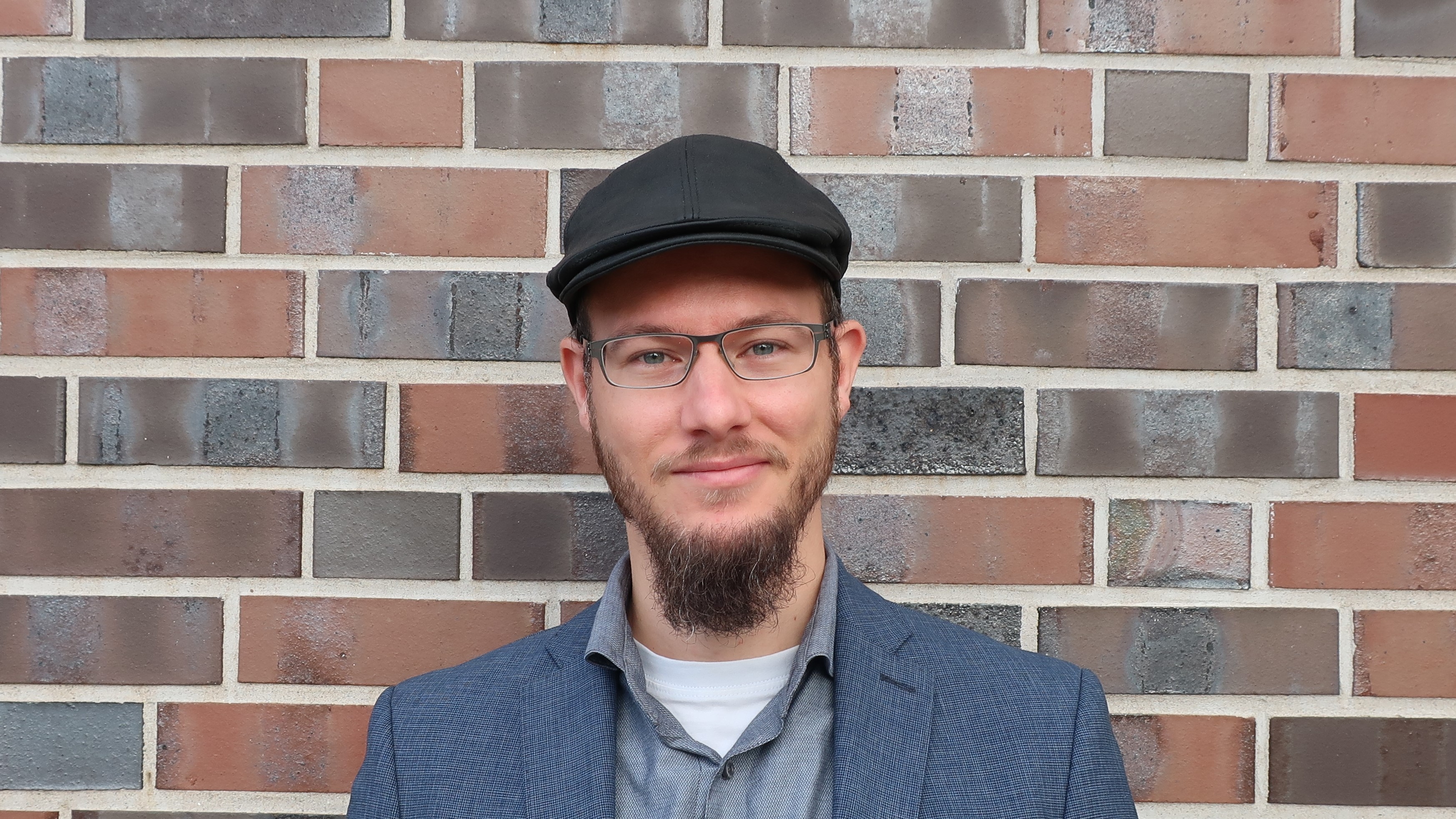
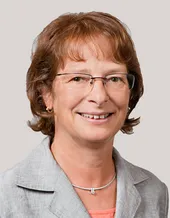
David Brady is a Professor at the Sol Price School of Public Policy, University of Southern California. Previously, he held roles including Professor and Director of the Blum Initiative on Global and Regional Poverty at UC Riverside (2015-2024), Visiting Research Professor at the WZB Berlin Social Science Center (2020-2024), and Adjunct Professor at Indiana University's School of Public and Environmental Affairs since 2013. Education: Ph.D. in Sociology with minor in Public Management, Indiana University (2001) M.A. in Sociology, Indiana University (1997) B.A. in Sociology with minor in Political Science, University of Minnesota (1994) Research focuses on poverty, inequality, social policy, globalization, and labor markets. Key themes include cross-national comparisons of welfare systems, immigration impacts, unionization effects, and racial disparities in economic outcomes. His work bridges sociology, political science, and public policy, emphasizing empirical analysis of structural and institutional drivers of inequality. Major contributions include books like The Oxford Handbook of the Social Science of Poverty (2016) and Rich Democracies, Poor People (2009). His articles analyze topics ranging from refugee integration in Germany to Medicaid's role in reducing racial health gaps. Labs/Teams: Associated with the WZB's Inequality and Social Policy research unit and the Blum Initiative. Active in policy-oriented research collaborations focusing on global poverty trends and social policy frameworks.
Claire Vernade is a Group Leader at the University of Tübingen in the Cluster of Excellence Machine Learning for Science. She leads an active research group focused on theoretical aspects of sequential decision making, with particular expertise in bandit problems and reinforcement learning theory. Her work bridges theoretical foundations with practical applications in scientific discovery. Her research interests span sequential decision making, bandit problems, theoretical Reinforcement Learning, Learning Theory, and principled learning algorithms. She has made significant contributions to understanding non-stationary environments, lifelong learning frameworks, and the theoretical foundations of bandit algorithms. Her work on "Eigengame: PCA as a Nash Equilibrium" received an Outstanding Paper Award at ICLR 2021. Dr. Vernade has been awarded prestigious grants including an Emmy Noether award (2022) for her FoLiReL project and an ERC Starting Grant (2024) for her ConSequentIAL project. Her current ERC project explores the role of Reinforcement Learning in developing Continual Learning agents, with applications to scientific domains like drug discovery and micro-chemistry. Emmy Noether award under the AI Initiative call (2022) ERC Starting Grant (2024) Outstanding Paper Award at ICLR 2021 She currently supervises three PhD students and actively recruits postdocs and PhD candidates through the IMPRS-IS and ELLIS doctoral programs. Her group collaborates extensively with the broader machine learning community, organizing workshops like FoRLaC at ICML 2024 and serving as co-chairs for tutorials at major conferences. Dr. Vernade is also deeply committed to diversity and inclusion in machine learning, co-leading initiatives like Women in Learning Theory and Tübingen Women in Machine Learning.
Shin Yoo is a tenured Full Professor in the School of Computing at Korea Advanced Institute of Science and Technology (KAIST), where he leads the Computational Intelligence for Software Engineering (COINSE) research group. He received his PhD from King's College London in 2009 under the supervision of Prof. Mark Harman. Currently, he serves as the General Chair for ASE 2025, which will be held in Seoul, Korea. Professor Yoo earned his PhD in Computer Science from King's College London (2009), following an MSc in Software Engineering with Distinction from the same institution (2006). His academic journey includes positions as Tenured Associate Professor (2021-2025), Associate Professor (2018-2021), and Assistant Professor (2015-2018) at KAIST, as well as Lecturer and Research Associate positions at University College London and King's College London. His research focuses on the intersection of software engineering and artificial intelligence, particularly in search-based software engineering, software testing, automated debugging, SE4AI (Software Engineering for AI), and AI4SE (AI for Software Engineering). Professor Yoo's work bridges theoretical foundations with practical applications, developing innovative techniques for fault localization, test case generation, and debugging using machine learning and genetic programming approaches. His research has significant implications for improving software reliability and development efficiency in both traditional software systems and AI-powered applications. Professor Yoo's recent publications demonstrate a clear trend toward leveraging large language models and deep learning techniques for software engineering tasks. His work spans fault localization, automated debugging, GUI testing, and program analysis, with increasing focus on the challenges and opportunities presented by AI systems. His research shows a consistent evolution from traditional search-based software engineering to AI/ML-enhanced approaches, reflecting the broader trends in the field. ACM SIGEVO HUMIES Silver Medal (2017) for human competitive application of genetic programming to fault localization research IEEE TCSE Most Influential Paper Award (ICST 2024) for work on mutation-based fault localization Professor Yoo has supervised five PhD students to completion, with his former students now holding positions as assistant professors, post-doctoral researchers, and software engineers at institutions including Kyoungpook National University, Max-Planck Institute Security & Privacy, Università della Svizzera Italiana, Roku Korea, and NUS. He currently serves as an associate editor for the Journal of Empirical Software Engineering and ACM Transactions on Software Engineering and Methodology, and has held significant leadership roles in major software engineering conferences including Program Co-chair for SSBSE (2014), ICST (2018), and ICSE NIER track (2020), General Chair for SSBSE (2022), and Testing & Analysis Area Chair for ICSE (2024). As leader of the Computational Intelligence for Software Engineering (COINSE) group at KAIST, Professor Yoo directs research that combines computational intelligence techniques with software engineering challenges. The group focuses on developing novel approaches to software testing, debugging, and analysis using search-based and AI-driven methods. Their work spans both theoretical foundations and practical implementations, with strong connections to industry challenges and applications.
Michael Nothnagel is a Professor at the University of Cologne, where he leads the Department of Statistical Genetics and Bioinformatics within the Cologne Center for Genomics (CCG). His work spans statistical genetics, genetic epidemiology, and forensic genetics, focusing on methodological development and large-scale genomic data analysis. His research interests encompass theoretical and applied statistical genetics, with emphasis on human genetic diversity, disease etiology, and forensic applications. Key areas include Y-chromosomal phylogeography, genome-wide association studies for complex diseases, development of statistical methods for variant interpretation, and forensic marker optimization. His group leverages next-generation sequencing data and specialized forensic markers to address questions in population history, disease mechanisms, and identification systems. Recent publications reveal a strong focus on computational approaches to genetic analysis, including spatial frequency interpolation for haplogroup mapping, polygenic risk score applications for behavioral traits, and advanced methods for variant classification. His work demonstrates consistent integration of statistical theory with practical applications in medical and forensic genetics, often through international collaborations like the VISAGE Consortium. Nothnagel maintains active involvement in the Cologne Center for Genomics, contributing to seminars and collaborative projects including the upcoming 34th International Genetic Epidemiology Society meeting. His research group operates at the intersection of computational biology and medicine, with particular strengths in handling complex genomic datasets and developing novel analytical frameworks for genetic epidemiology.
Xinyu Jia is currently a Humboldt Research Fellow at the Engineering Risk Analysis Group, Technical University of Munich since June 2024, and concurrently serves as Associate Professor in the Department of Mechanical Engineering at Hebei University of Technology, China since October 2022. Her research focuses on advancing uncertainty quantification, structural reliability, and risk assessment methodologies for engineering systems. Her academic background includes: PhD in Mechanical Engineering, University of Thessaly, Greece (2018-2021) Bachelor of Engineering and Master of Science in Mechanical Engineering, Hunan University, China (2011-2018) Dr. Jia specializes in Bayesian learning frameworks for physics-based models, with particular expertise in uncertainty propagation in structural dynamics and industrial robotics applications. Her work develops hierarchical Bayesian approaches that integrate multi-level data to enhance predictive accuracy for complex engineering systems, addressing critical challenges in structural health monitoring and risk-informed decision making. Analysis of her 2022-2023 publications reveals a concentrated research trajectory in applying Bayesian inference to structural dynamics, with emphasis on hierarchical modeling techniques, variational inference schemes, and nonlinear model updating. These contributions predominantly appear in top-tier mechanical engineering journals, demonstrating methodological innovations that bridge theoretical statistics with practical engineering reliability problems. Her scientific recognition includes: Humboldt Research Fellowship (2023) Marie Curie Early Stage Researcher Fellowship (2018) No specific student advisement records are documented, though her Associate Professor role implies teaching responsibilities. Her fellowship awards represent significant research funding supporting her work in uncertainty quantification. As an active member of TUM's Engineering Risk Analysis Group, she contributes to high-impact projects including digital twins for ships, S3UQDyn, Navigating Risk, and infrastructure resilience initiatives like BIG-ROHU and INFRA.RELEARN, focusing on probabilistic risk modeling across civil and mechanical engineering domains.
Marine Cazenave is a Group Leader at the Department of Human Origins, Max Planck Institute for Evolutionary Anthropology, Leipzig. Her research focuses on the functional and adaptive evolution of the postcranial skeleton in fossil hominins, emphasizing locomotor behavior reconstruction through bone structure analysis. She holds a PhD in Anthropobiology from Universities of Toulouse and Pretoria, with postdoctoral fellowships at the American Museum of Natural History (USA) and University of Kent (UK). PhD in Anthropobiology (University of Toulouse/University of Pretoria, 2015-2018) Postdoc: Richard Gilder Graduate School (2022-2024); Fyssen Foundation (2020-2022) Her research integrates virtual imaging (e.g., micro-CT scanning), comparative studies of living primates, and fieldwork to decode locomotion patterns in hominins. Key focuses include hip/knee joint adaptations, trabecular bone architecture, and the interplay between bone structure and environmental interactions. Recent work highlights locomotor diversity in South African australopiths, Paranthropus robustus hip loading differences, and the functional significance of calcar femorale variation. Awards include the 2022 Journal of Human Evolution Early Career Prize. Collaborations span institutions globally, advancing projects like the Bakeng se Afrika Digital Skeletal Repository. Her methodologies emphasize multi-disciplinary approaches, combining fossil analysis with experimental frameworks (e.g., captive primate studies).
Emtiyaz Khan is a Researcher at the RIKEN Center for AI Project in Tokyo, Japan. His work focuses on Bayesian deep learning, optimization, and variational inference methods. He leads research on the Bayesian Learning Rule framework, which bridges deep learning optimization with Bayesian principles. His research interests include developing scalable Bayesian methods for large neural networks, uncertainty quantification in deep learning, optimization algorithms (natural gradients, variational inference), and applications to foundation models. Key areas are efficient adaptation methods, model sensitivity analysis, and Bayesian principles for deep learning. Khan's publications demonstrate strong focus on Bayesian deep learning, optimization techniques, and uncertainty estimation, with applications ranging from large-scale models (GPT-2, ImageNet) to theoretical foundations of variational inference. He leads the Team Approx-Bayes research group focused on approximate Bayesian inference methods and maintains collaborations through JST CREST-ANR and Kakenhi grants.
Aron Hirsch is a researcher and Assistant Professor specializing in Semantics & Pragmatics , with affiliations including the ERC project Realizing Leibniz’s Dream: Child Languages as a Mirror of the Mind (Research Area 4). His work bridges theoretical linguistics and cognitive modeling. Current Role: Assistant Professor (since August 2023) Past Role: Researcher in the ERC project on child language and semantics Research Interests Aron Hirsch investigates the syntax-semantics interface, particularly focus particles like 'only,' type disambiguation, and logical strength in language. His research explores how cognitive constraints shape linguistic structures and how pragmatic principles interact with formal semantics. Recent Publications Aron’s publications (2022–2024) focus on semantic operators, cumulativity in questions, and register variation. He collaborates with leading scholars such as Bernhard Schwarz and Itai Bassi , contributing to major venues like Proceedings of Semantics and Linguistic Theory (SALT) and Sinn und Bedeutung . Labs & Collaborations He works within the ERC project Realizing Leibniz’s Dream , focusing on child language as a window into the mind, and collaborates with international teams at institutions including University of Rochester and Universidad Nacional Autónoma de México .
Marc Toussaint is Full Professor leading the Learning & Intelligent Systems Lab at TU Berlin's EECS Faculty. His research integrates machine learning, optimization, and AI reasoning to solve fundamental robotics problems like physical reasoning and human-robot interaction. He holds a physics diploma from University of Cologne and PhD from Ruhr-Universität Bochum. Key research themes include: Task-motion planning integration Reinforcement learning for robotics Physical simulation and control Probabilistic inference methods Recent publications focus on efficient kinodynamic planning, belief space planning under uncertainty, and neural policy learning. He develops open-source robotic tools like the 'robotic python package' used in academic courses worldwide. Toussaint collaborates with Amazon Robotics and MIT CSAIL, and has held positions at Max Planck Institute and University of Stuttgart.
Bernd Sturmfels is a leading mathematician serving as Director of the Max Planck Institute for Mathematics in the Sciences in Leipzig since 2017. He is also Professor Emeritus of Mathematics, Statistics, and Computer Science at the University of California, Berkeley, and holds honorary professorships at the Technical University of Berlin and the University of Leipzig. His research bridges pure and applied mathematics, with foundational contributions to algebraic geometry, combinatorics, and computational biology. Education: Sturmfels earned dual Ph.D. degrees in 1987 from the University of Washington and Technische Universität Darmstadt, followed by an honorary doctorate from Goethe University Frankfurt in 2015 and additional honorary doctorates from the University of Bern (2023) and the University of Chicago (2024). Research Interests: His work spans algebraic geometry , combinatorics , commutative algebra , algebraic statistics , convex optimization , and computational biology . He explores deep connections between abstract algebraic structures and practical applications in statistics, optimization, and the life sciences. Publications and Trends: With over 300 research articles and 11 books, his recent work (2022–2025) focuses on advanced topics like Grassmannian geometry, tropical implicitization, quantum chemistry applications, and algebraic statistics. His research increasingly integrates computational methods with theoretical insights, addressing problems in machine learning, phylogenetics, and optimization. Awards and Honors: Sturmfels has received numerous prestigious awards, including: George David Birkhoff Prize in Applied Mathematics (2018) SIAM von Neumann Lecturership (2010) Humboldt Senior Research Prize (2007–2008) David and Lucile Packard Fellowship (1992–1997) Fellowships of the AMS and SIAM Membership in the Berlin-Brandenburg Academy of Sciences and Humanities Mentoring and Grants: He has supervised 60 doctoral students and numerous postdocs, with many securing positions at leading institutions. His mentoring philosophy emphasizes diversity and excellence, as highlighted in his Notices of the AMS article. Funding sources include the NSF, DARPA, and the German National Science Foundation (DFG). Labs and Teams: At the Max Planck Institute, he leads the Nonlinear Algebra group, fostering interdisciplinary collaboration between mathematics and the sciences. His team focuses on developing algebraic methods for data analysis, optimization, and theoretical physics.
Vicky Fasen-Hartmann is a Professor at the Karlsruhe Institute of Technology (KIT) within the Department of Mathematics, specifically affiliated with the Institute of Stochastics. She has held her W3 Professor position since October 2012, with two periods of parental leave (August 2016-August 2017 and October 2018-October 2019). Prior to her current position, she held postdoctoral research positions at ETH Zurich (RiskLab), TU Munich, Université Pierre et Marie Curie, and Cornell University. Her educational background includes: Habilitation (2010) in Heavy Tails in Finance, Insurance and Telecommunication from TU Munich Ph.D. (2004) in Extremes of Lévy Driven Moving Average Processes with Applications in Finance from TU Munich Diploma in Mathematics (2002) from Karlsruhe Institute of Technology Professor Fasen-Hartmann's research spans multiple areas of theoretical and applied statistics with a focus on extreme value theory, heavy-tailed distributions, and their applications in finance and risk management. Her work bridges theoretical probability with practical financial applications, particularly in modeling rare events and systemic risks. She has made significant contributions to the understanding of Lévy processes, continuous-time ARMA models, and multivariate extremes. Her research combines rigorous mathematical theory with practical applications in financial mathematics, insurance, and telecommunications networks. The trends in her recent publications (2020-2025) show a clear evolution toward high-dimensional extreme value theory, financial network risk contagion, and advanced modeling of continuous-time processes. Her work increasingly addresses the challenges of modern financial systems, including systemic risk measurement, high-dimensional dependency structures, and the statistical properties of extreme events in complex systems. She has developed innovative methodologies for analyzing multivariate extremes, risk contagion, and continuous-time state space models. Professor Fasen-Hartmann has served in significant editorial roles including Associate Editor for the Scandinavian Journal of Statistics since 2014, Managing Editor of Lévy Matters (2008-2014), and Editor of Bernoulli News (2009-2011). She has also been active in academic service through committee work, including the Steering Committee of the Probability and Statistics Group in Germany (2014-2016) and the Examination Board of the Department of Mathematics at KIT (since 2017). She has supervised numerous doctoral and master's students, with current PhD candidates including Lucas Butsch (since 2021) and previously Lea Schenk, Celeste Mayer, Markus Scholz, and Sebastian Kimmig. Her teaching portfolio includes advanced courses in Time Series Analysis, Continuous Time Finance, Extreme Value Theory, and Asymptotic Stochastics. She regularly organizes workshops and conferences on specialized topics in probability and statistics, demonstrating her leadership in the academic community.
Summary Prof. Tim Kacprowski is a Professor and Head of Data Science in Biomedicine at the Peter L. Reichertz Institute for Medical Informatics (PLRI), jointly affiliated with TU Braunschweig and Hannover Medical School. His research focuses on integrating computational methods with biomedical challenges, particularly in network medicine, federated learning, and alternative splicing analysis. Key projects include the development of the NeDRex platform for drug repurposing and the FeatureCloud framework for privacy-preserving federated learning in healthcare. Research Interests His work spans multiple domains: Network Medicine: Leveraging molecular networks for disease module identification and drug discovery. Data Science: Advanced analytics for biomedical data, including ECG monitoring, microbiome studies, and flow cytometry. Federated Learning: Developing decentralized AI systems to protect patient data while enabling collaborative research. Alternative Splicing: Investigating splicing patterns in diseases like cancer and kidney disorders. Publications Trends Recent publications emphasize tools for drug repurposing (NeDRex-Web), ethical AI in clinical decision-making, and microbiome dynamics in chronic diseases. His work bridges computational methods with clinical applications, addressing challenges in precision medicine and healthcare technology. Labs & Collaborations As head of the Data Science group at PLRI, he leads interdisciplinary teams advancing biomedical informatics. Collaborations span institutions in Germany and internationally, focusing on translational research and AI-driven healthcare solutions.
Marcel Kollovieh is a researcher at the Technical University of Munich (TUM), affiliated with the TUM School of Computation, Information and Technology and the Department of Computer Science . He is part of the Data Analytics and Machine Learning (DAML) Lab under the mentorship of Prof. Dr. Stephan Günnemann. Education B.Sc. and M.Sc. in Informatics from TUM Research Interests : Marcel focuses on generative models (including variational autoencoders, diffusion models, and score-based models), graphs , and time series , with additional work on hierarchical structures , robustness , and Bayesian learning . His publications span conferences like ICML , ICLR , and NeurIPS , alongside journals such as TMLR . Themes include token merging , flow matching , and adversarial robustness in temporal data, alongside probabilistic clustering and diffusion models . Lab and Team : Marcel works within the DAML Lab at TUM.
Claudia Klüppelberg is a Professor and Chair of Mathematical Statistics at the Center for Mathematical Sciences, Technische Universität München (TUM). Her academic journey includes positions at ETH Zurich, University of Mainz, and TUM since 1997. She holds a Carl von Linde Senior Fellowship at TUM-IAS, focusing on Risk Analysis and Stochastic Modeling. Her research bridges applied probability, statistics, and their applications in finance and insurance, emphasizing extreme value theory, risk processes, and stochastic networks. She has received prestigious awards such as the New Frontiers in Risk Management Award (2007) and Cross of Merit (2001). Her work addresses real-world challenges in financial risk management, including systemic risk in networks and operational risk modeling. Her recent publications explore causal analysis of extreme risks in networks, max-linear models, and Bayesian networks for extreme events. She contributes to academic leadership as an editorial board member and advisor, promoting interdisciplinary stochastic sciences.
Vladimir V. Terzija is a prominent researcher specializing in power systems engineering with a focus on smart grid technologies, synchronized measurement systems, and power system protection. His extensive publication record spans over two decades, demonstrating continuous contributions to the field of electrical power engineering across numerous IEEE journals and conferences. Terzija's research primarily centers on advanced power system monitoring, protection, and control methodologies. His work has significantly contributed to the development of synchronized measurement technology applications, fault analysis algorithms, and state estimation techniques for modern power systems. He has pioneered approaches for wide-area monitoring systems, transmission line fault analysis, and integrating renewable energy resources into power grids while maintaining stability and reliability. His research spans from fundamental power system theory to practical implementations addressing contemporary challenges in grid operation. Analysis of his recent publications reveals a strong focus on integrating artificial intelligence and machine learning techniques into power system applications, particularly for condition monitoring, anomaly detection, and predictive maintenance. His work increasingly addresses challenges posed by the energy transition, including grid stability with high renewable penetration, multi-energy system integration, and advanced control strategies for low-inertia power systems. The interdisciplinary nature of his research connects power engineering with data science, optimization theory, and cybersecurity. Throughout his career, Terzija has collaborated extensively with researchers across Europe and internationally, as evidenced by his numerous co-authored publications with institutions worldwide. His work appears consistently in top-tier IEEE publications, indicating recognition by the power engineering community. While specific awards aren't documented in the available publication records, his sustained research productivity and influence in the field suggest significant professional recognition. Terzija has supervised numerous research projects focused on power system monitoring and control, with particular emphasis on practical implementations that bridge theoretical developments with real-world grid applications. His work on WAMS (Wide Area Monitoring Systems), fault location algorithms, and state estimation techniques has contributed to advancing grid operational capabilities. The research trajectory shows increasing focus on addressing challenges associated with renewable energy integration, grid digitalization, and maintaining stability in modern power systems. His research group appears to focus on developing advanced monitoring and control systems for power networks, with particular expertise in synchrophasor technology applications. The collaborative nature of his work suggests involvement in international research consortia addressing contemporary power system challenges, particularly those related to grid stability in systems with high renewable penetration and the development of intelligent monitoring solutions for power infrastructure.